



Por que a iluminação LED é tão agressiva? Como a Iluminação Antireflexo Melhora o Conforto Visual
Por Vincent
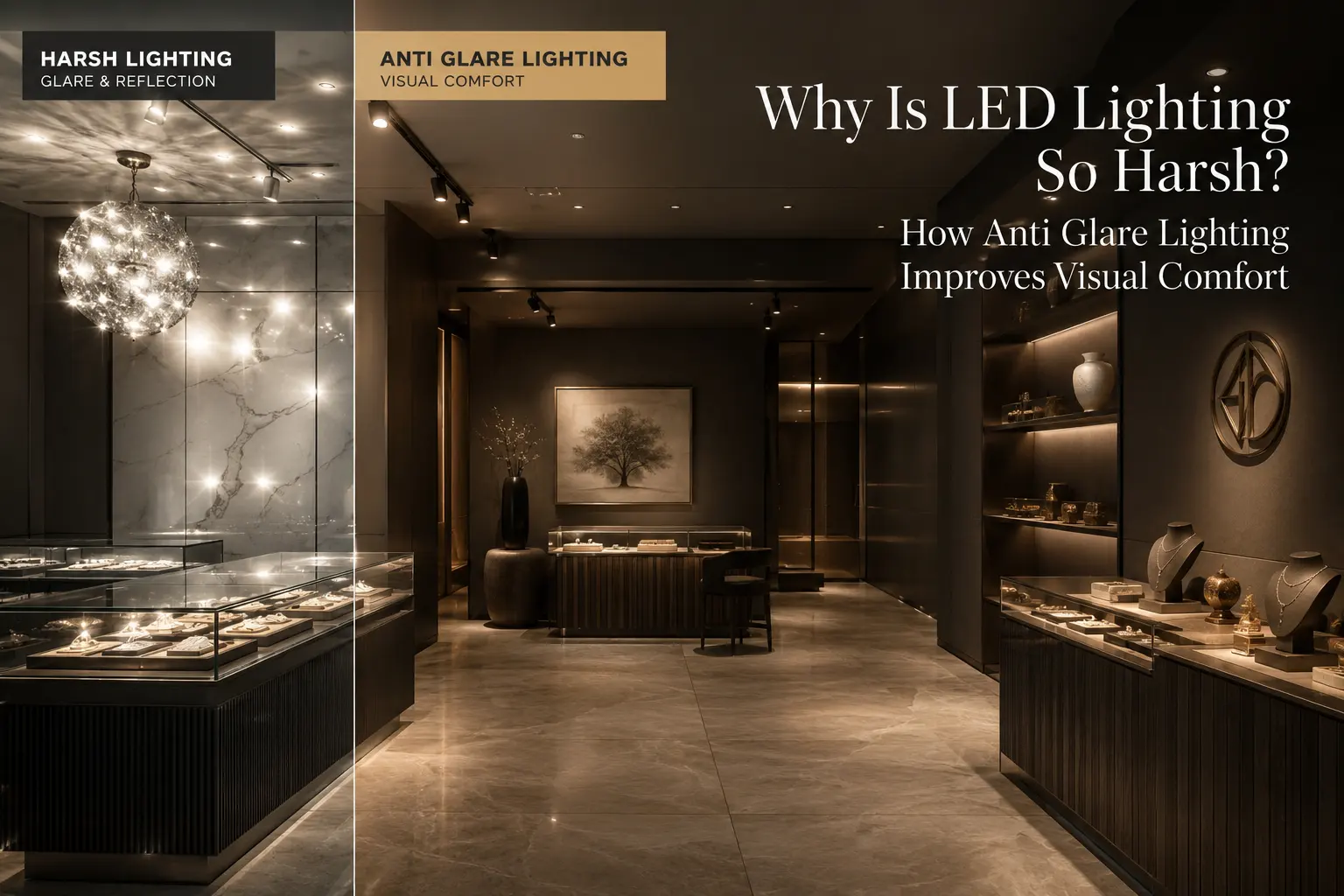
À medida que a tecnologia LED continua dominando a arquitetura moderna, Iluminação antirreflexo tornou-se um dos temas mais importantes no design de iluminação comercial e residencial. De lojas de varejo de luxo e prédios comerciais a restaurantes e galerias de arte, Luminárias de LED estão por toda parte devido à sua alta eficiência, Longa vida útil, e tamanho compacto.
Mas apesar de todas essas vantagens, Muitos espaços modernos ainda parecem visualmente desconfortáveis.
Você entra em um showroom recém-reformado ou numa loja premium esperando um ambiente sofisticado, Mas a primeira coisa que você percebe é um brilho forte, Fadiga ocular, e um olhar fulminante.
Então, por que a iluminação LED moderna às vezes parece mais desconfortável do que as tecnologias de iluminação mais antigas?
A resposta geralmente se resume a uma única questão: Olhar.
Sem controle óptico adequado, até mesmo luminárias LED de alta qualidade podem causar brilho excessivo e desconforto visual. É exatamente por isso que soluções de iluminação de baixo brilho estão se tornando essenciais nos projetos arquitetônicos atuais.
Por que a iluminação antireflexo importa na era dos LEDs
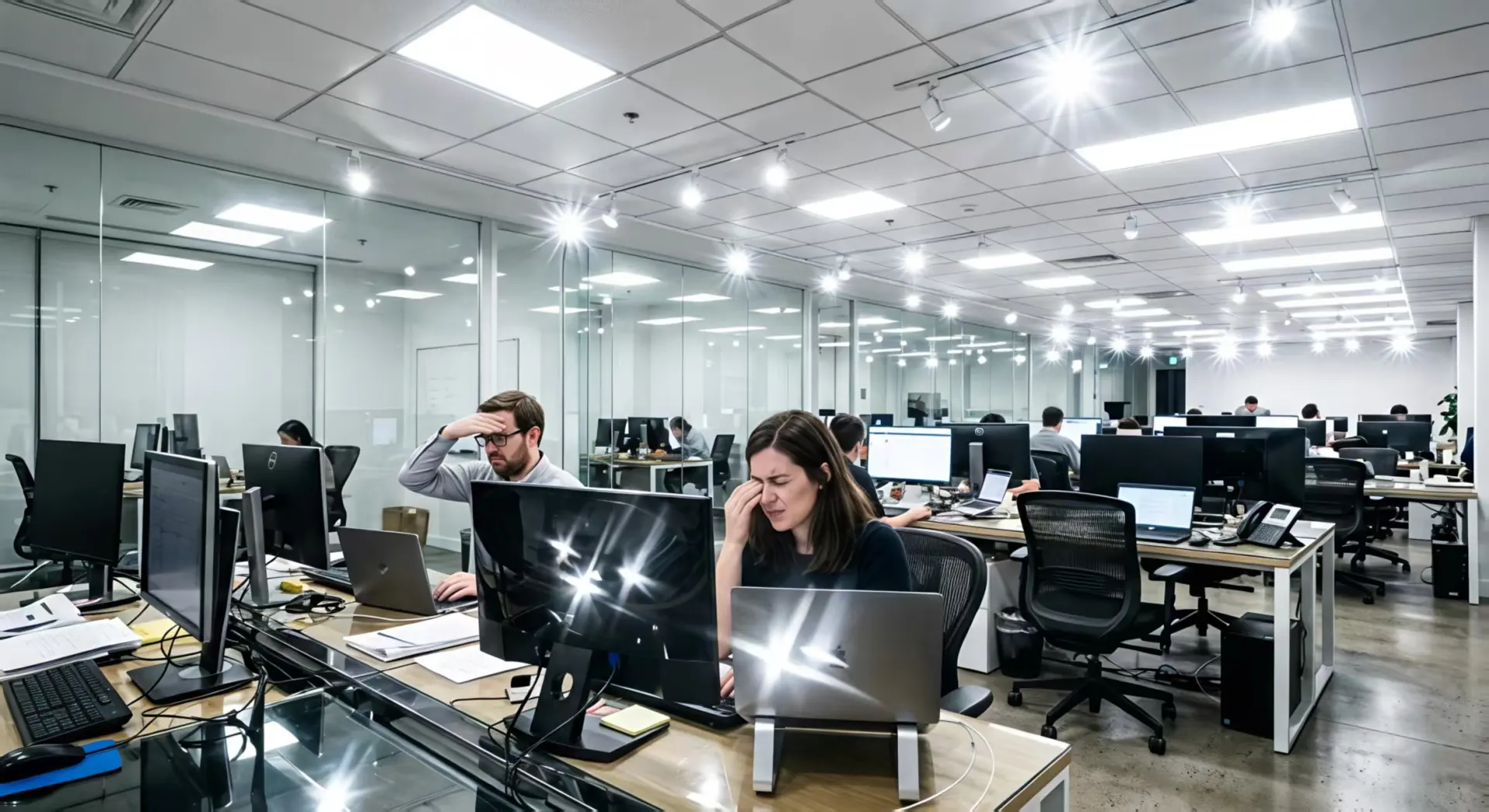
A iluminação fluorescente tradicional e incandescente produzia uma iluminação mais suave porque suas fontes de luz eram maiores e mais difusas.
LEDs funcionam de forma diferente.
A maioria das luminárias comerciais de LED utiliza tecnologia pontual altamente concentrada, especialmente COB (Chip-on-Board) Leds. Uma quantidade massiva de luz é concentrada em uma área de superfície muito pequena.
Isso cria um grande desafio:
Alto brilho em uma área pequena pode facilmente sobrecarregar o olho humano.
O resultado é frequentemente:
- Contraste visual forte
- Reflexo direto
- Fadiga ocular
- Ambientes desconfortáveis de varejo ou escritório
É por isso que muitas pessoas buscam termos como:
- por que as luzes de LED são tão intensas
- como reduzir o brilho das luzes de LED
- Melhor iluminação antirreflexo para escritórios
- Iluminação comercial de baixo brilho
- Iluminação embutida anti-reflexo
Essas palavras-chave de cauda longa refletem uma preocupação crescente com o conforto visual em espaços modernos.
O que causa o reflexo no design de iluminação anti-reflexo?
Entender o brilho começa com entender como luminárias mal projetadas lidam com luz.
Fontes de luz LED expostas
Uma das maiores causas de reflexo são os chips de LED expostos.
Muitas luminárias de baixo custo permitem que a fonte de luz permaneça diretamente visível. Quando o olho olha diretamente para um LED de alta intensidade, O desconforto acontece quase instantaneamente.
Esse problema é comum em:
- Luzes de entrada baratas
- Holofotes recuados rasos
- Iluminação de trilhos de baixa qualidade
O espaço pode parecer brilhante, mas raramente é confortável.
Controle óptico ruim
Boa iluminação não é só sobre brilho.
Trata-se de controlar para onde a luz vai.
Muitos aparelhos baratos usam lentes ou refletores de baixa qualidade que dispersam a luz em direções descontroladas. Em vez de focar a iluminação com precisão, Eles criam luz parasita excessiva que entra diretamente no olho.
Essa é uma das razões pelas quais os fabricantes profissionais de iluminação arquitetônica investem fortemente em engenharia óptica.
De acordo com o Comissão Internacional de Iluminação (CIE), O controle de enlhuescamento é uma parte crítica dos padrões de conforto visual no design moderno de iluminação.
Reflexo Refletido em Espaços Comerciais
Interiores modernos frequentemente incluem materiais reflexivos, como:
- Pisos de mármore
- Exposições de vidro
- Acabamentos metálicos
- Telas de computador
Quando feixes fortes de LED atingem essas superfícies, O reflexo de reflexo se torna um grande problema.
Isso é especialmente problemático em:
- Lojas de varejo de luxo
- Concessionárias de carros
- Escritórios modernos
- Museus e galerias
Mesmo que a luminária em si pareça estilosa, Reflexos descontrolados podem arruinar a experiência visual geral.
Como a Iluminação Antireflexo Reduz o Desconforto Visual
Iluminação profissional de LED antirreflexo não foi projetada para reduzir o brilho.
Em vez disso, Ele controla a luz de forma mais inteligente.
O objetivo é simples:
Mantenha uma iluminação forte enquanto minimiza o desconforto visual direto.
Design de Iluminação Profunda Embutida
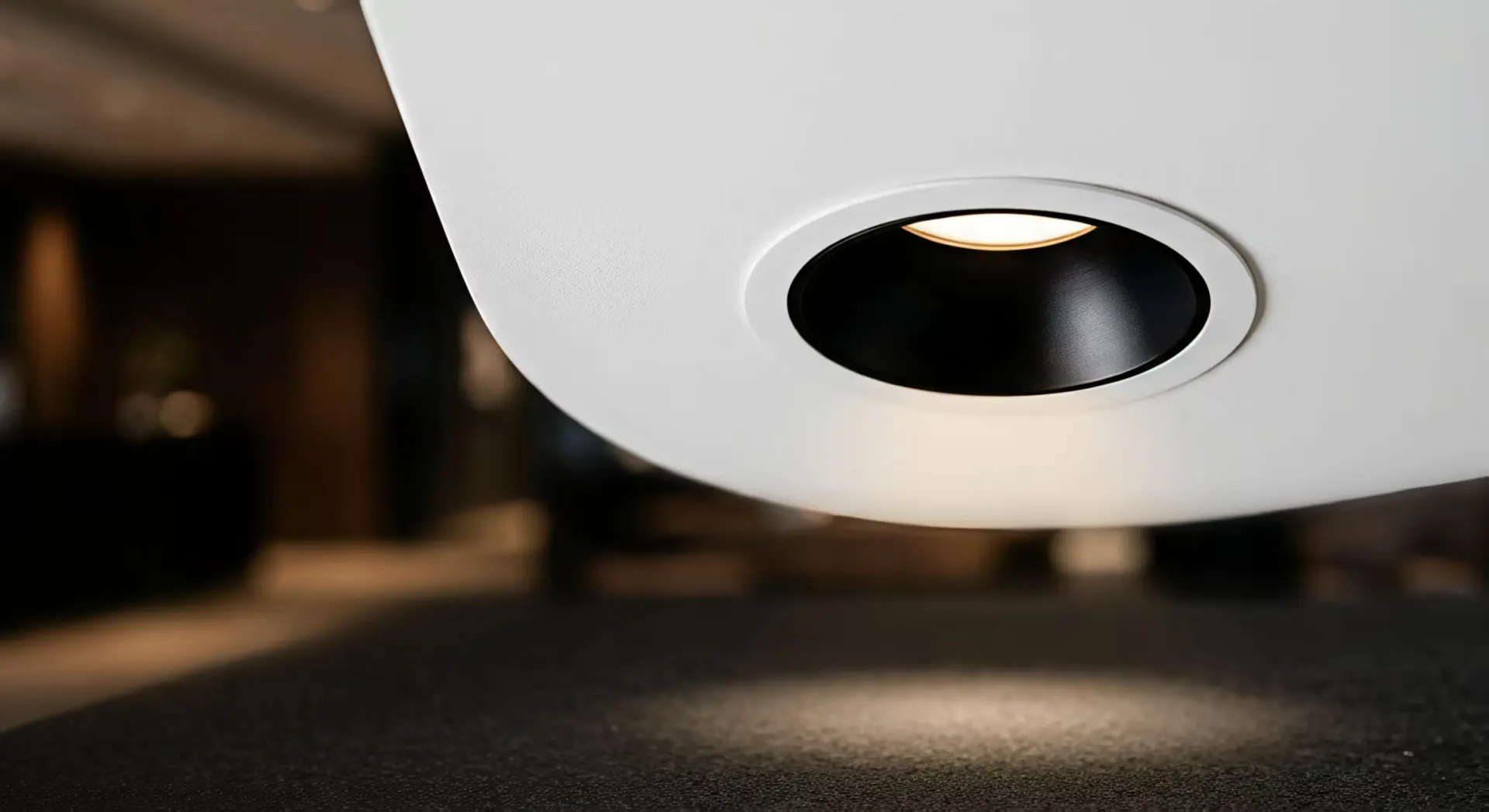
Uma das soluções mais eficazes é a construção em profundidade embutida.
Colocando a fonte de LED mais profundamente dentro da luminária, a fonte de luz se torna menos visível a partir dos ângulos normais de visão.
Isso cria um ângulo de corte maior e ajuda a alcançar o prêmio de "ver a luz", não o efeito fixture" frequentemente encontrado em projetos comerciais de luxo.
Luzes anti-reflexo profundas embutidas agora são amplamente usadas em:
- Lojas de varejo
- Espaços de hospitalidade
- Galerias de arte
- Interiores residenciais premium
Refletores Escuros e Refletores Pretos
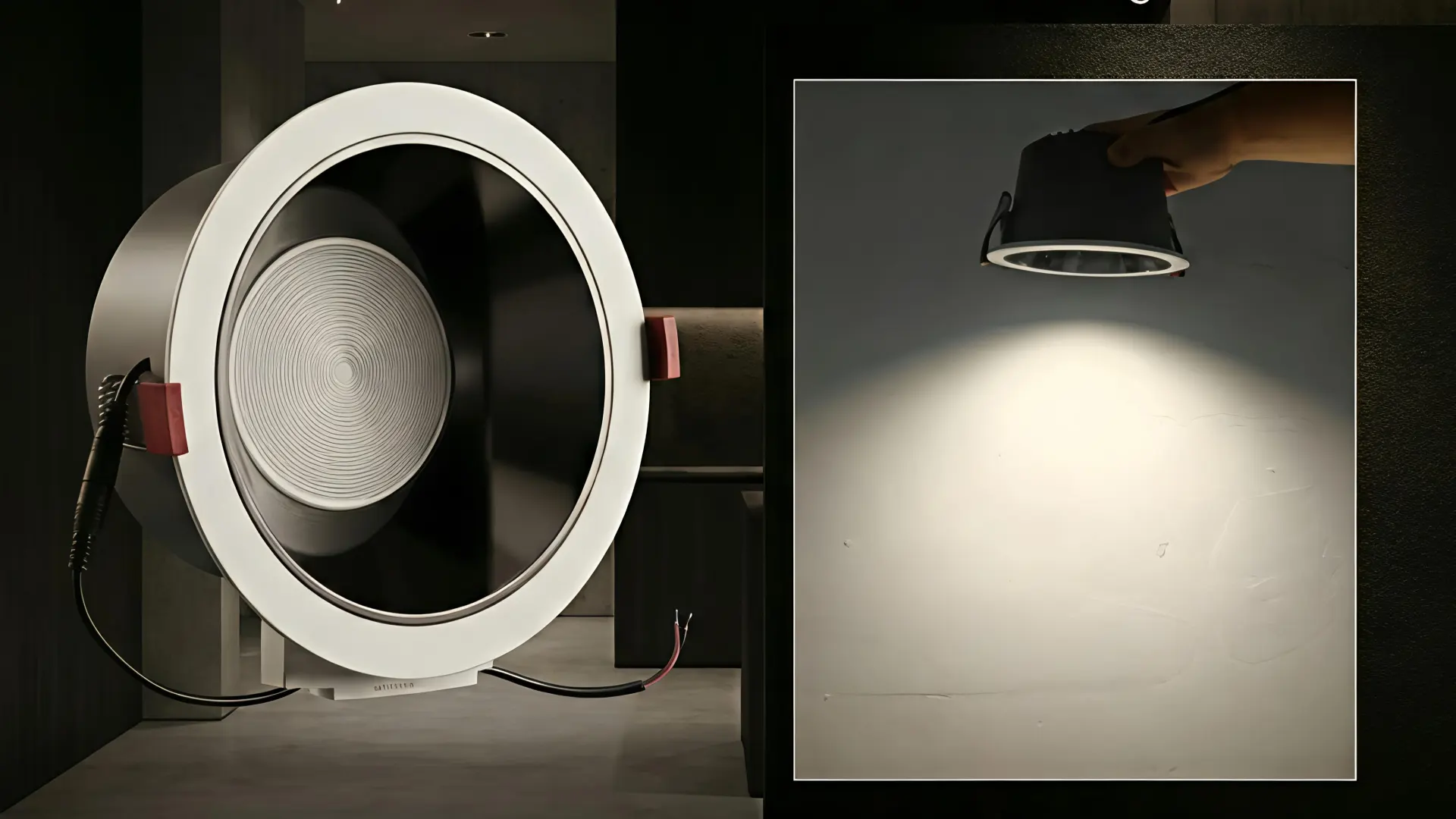
Outra técnica importante envolve refletores de luz escura.
Copos refletivos tradicionais frequentemente criam reflexos laterais indesejados. Refletores pretos e deflectores escuros absorvem o excesso de luz parasita em vez de espalhá-la para fora.
Isso produz feixes mais limpos e uma aparência visual mais suave.
O resultado é uma iluminação que parece controlada, em vez de agressiva.
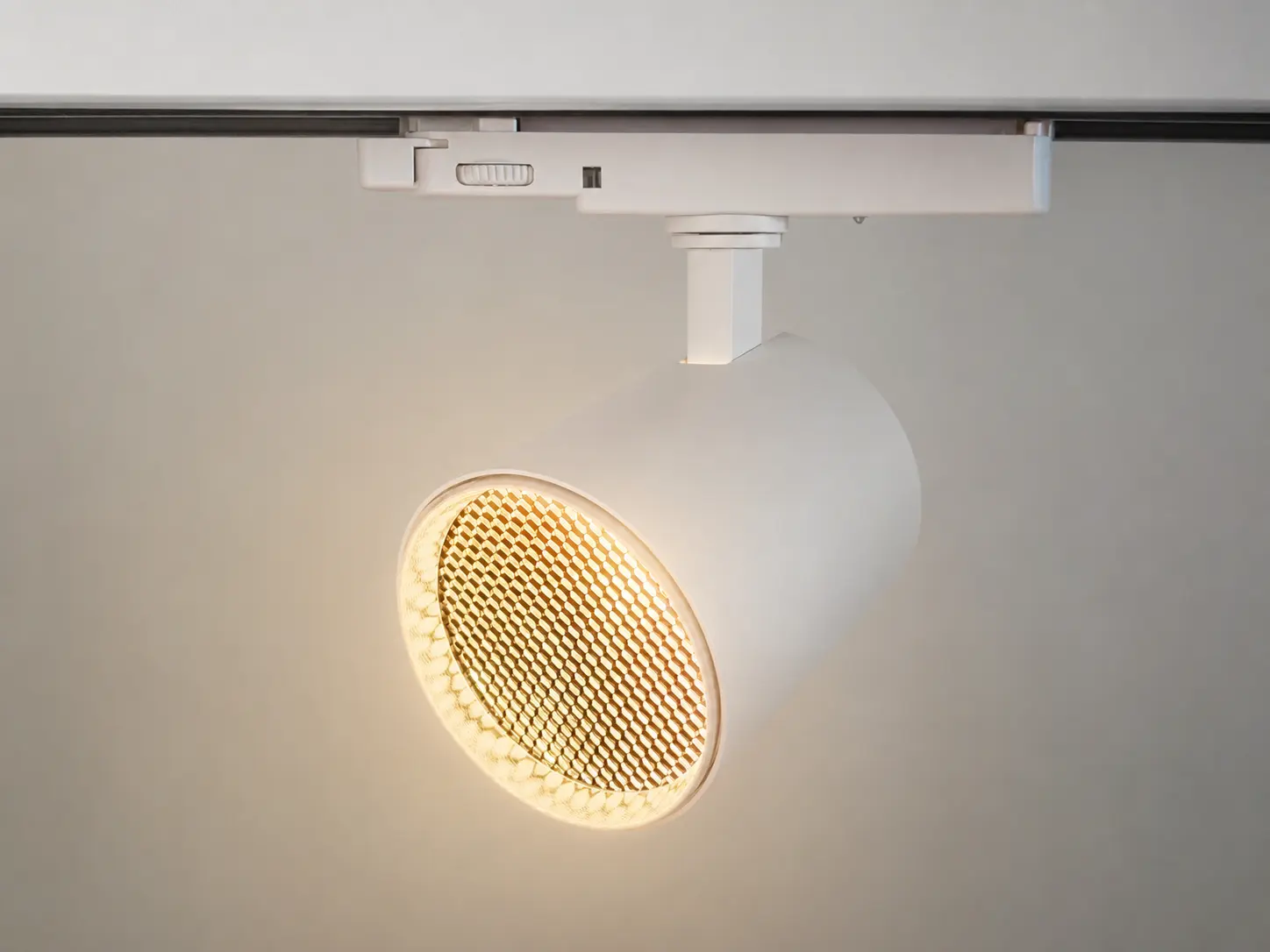
Persianas em favo de mel para melhor controle de reflexo
Muitas luminárias ajustáveis agora incluem persianas em favo de mel.
Esses acessórios bloqueiam fisicamente a luz dispersa em ângulo, mantendo a precisão do feixe.
Acessórios antirreflexo em favo de mel são particularmente úteis para:
- Iluminação LED para trilhos
- Holofotes ajustáveis
- Iluminação da galeria
- Aplicações de iluminação de destaque
Iluminação Anti-Reflexo e Padrões UGR
No design profissional de iluminação, O encandeamento é medido usando UGR (Classificação Unificada de Reflexo).
Valores mais baixos de UGR indicam melhor conforto visual.
A tabela abaixo mostra como os níveis de UGR normalmente afetam a percepção humana.
| Nível UGR | Experiência Visual | Aplicações Típicas |
|---|---|---|
| UGR > 22 | Reflexão perceptível e desconforto | Espaços industriais |
| UGR < 19 | Confortável para uso diário | Escritórios e interiores comerciais |
| UGR < 16 | Experiência premium de baixo brilho | Varejo e hospitalidade de alto padrão |
| UGR < 13 | Iluminação extremamente confortável | Museus e galerias de luxo |
Muitos projetos arquitetônicos modernos agora exigem UGR<19 Como padrão mínimo.
Você também pode explorar recomendações de iluminação do Sociedade de Engenharia Iluminadora (IES) Para diretrizes profissionais de gerenciamento de reflexo.
Por que projetos de alto padrão preferem iluminação com pouco brilho
Espaços comerciais de luxo não são mais projetados apenas para o brilho.
Hoje, O conforto visual desempenha um papel fundamental na experiência do cliente.
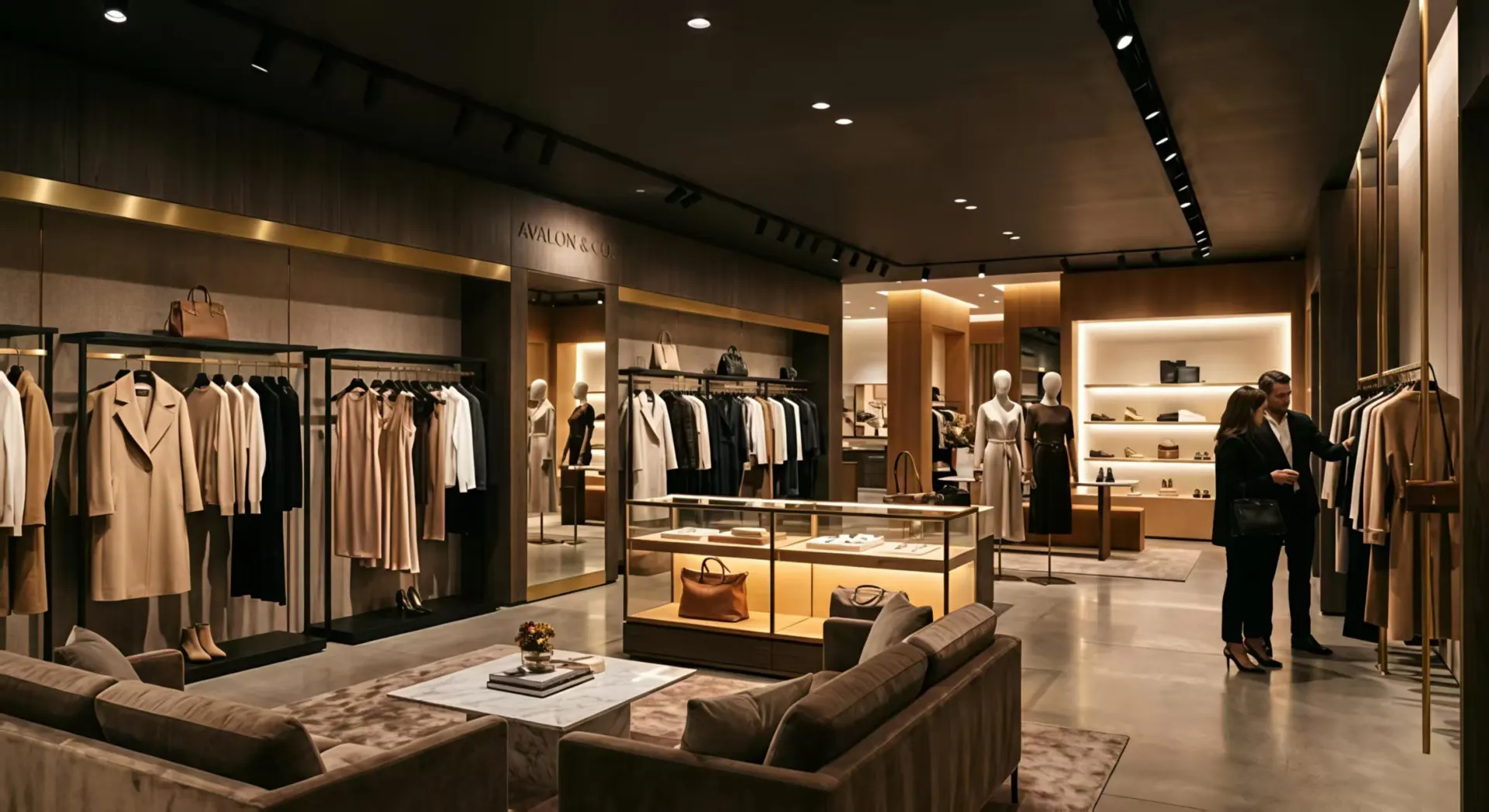
Iluminação Anti-Reflexo para Lojas de Varejo
Em ambientes de varejo, A iluminação forte pode reduzir o tempo de permanência do cliente e reduzir a qualidade percebida dos produtos.
Iluminação fraca ajuda:
- Melhorar a apresentação do produto
- Crie um ambiente premium
- Reduzir a fadiga visual
- Incentive um tempo de navegação mais longo
É por isso que a iluminação de trilho anti-reflexo se tornou cada vez mais popular em boutiques de moda e lojas de luxo.
Iluminação Anti-Reflexo para Restaurantes e Hospitalidade
Os restaurantes dependem muito do ambiente.
Uma iluminação excessivamente agressiva pode fazer até interiores caros parecerem frios e desconfortáveis.
Uma iluminação quente e fraca cria:
- Sombras mais suaves
- Melhor humor
- Experiências gastronômicas mais relaxadas
- Texturas de materiais aprimoradas
Muitos projetos de hospitalidade combinam luminárias profundas embutidas com temperaturas de cor quentes entre 2700K e 3000K para um conforto ideal.
Iluminação Anti-Reflexo para Escritórios
A iluminação de escritórios afeta diretamente a produtividade e o bem-estar.
O mau controle do encandeamento frequentemente causa:
- Fadiga ocular
- Reflexos na tela
- Fadiga mental
- Concentração reduzida
O design de iluminação centrado no ser humano agora foca fortemente no conforto visual, especialmente em ambientes de trabalho híbridos e interiores corporativos modernos.
Equilibrando Alta Eficiência e Baixo Brilho
Um dos maiores desafios na fabricação de iluminação é manter a eficiência enquanto reduz o brilho.
Luminárias baratas geralmente reduzem o brilho simplesmente bloqueando a saída de luz com difusores ou coberturas foscas. Embora isso reduza o desconforto, Também reduz drasticamente a eficiência do lúmen.
Fabricantes de alto padrão adotam uma abordagem diferente.
Usando:
- Lentes ópticas de precisão
- Geometria avançada de refletores
- Premium COB LEDs
- Revestimentos ópticos multicamada
Eles podem alcançar ambos:
- Alta eficácia luminosa
- Excelente controle de reflexo
A tabela abaixo destaca a diferença.
| Tipo de luminária | Controle de Reflexo | Eficiência | Conforto visual |
|---|---|---|---|
| Luminária Básica de LED | Pobre | Moderado | Duro |
| Luminária Difusora Fosca | Melhor | Baixo | Mais suave, mas ineficiente |
| Luminária Profissional Anti-Reflexo | Excelente | Alto | Confortável e premium |
Esse equilíbrio é o que separa a iluminação arquitetônica profissional da iluminação básica e commodity.
Considerações finais sobre iluminação anti-reflexo
A tecnologia LED em si não é o problema.
O verdadeiro problema é como a luz é controlada.
Soluções antirreflexo bem projetadas permitem que os espaços pareçam iluminados, elegante, e visualmente confortável ao mesmo tempo.
À medida que a iluminação comercial continua a evoluir, A indústria está se afastando de uma mentalidade simples de "mais brilhante é melhor".
Hoje, Os melhores designs de iluminação focam em algo muito mais importante:
Como as pessoas realmente se sentem dentro do espaço.
Porque uma iluminação realmente incrível nunca deveria lutar por atenção.
Isso deve melhorar silenciosamente toda a experiência.
FAQ sobre iluminação antirreflexo
Q: O que é iluminação anti-reflexo?
Um: Iluminação antirreflexo refere-se a sistemas de iluminação projetados para reduzir o desconforto visual causado por brilho excessivo ou fontes de luz expostas. Ele melhora o conforto visual sem reduzir significativamente os níveis de iluminação.
Q: Por que as luzes de LED causam reflexo?
Um: LEDs são fontes de luz pontual altamente concentradas. Sem controle óptico adequado, Elas podem criar um brilho intenso que irrita diretamente o olho humano.
Q: Qual é uma boa classificação UGR para iluminação comercial?
Um: Para a maioria dos escritórios e interiores comerciais, UGR<19 é considerado confortável. Ambientes de varejo e galerias de luxo frequentemente buscam a UGR<16 ou até menos.
Q: A iluminação antirreflexo reduz o brilho?
Um: Não necessariamente. Luminárias antirreflexo de alta qualidade são projetadas para manter uma iluminação forte enquanto controlam a luz dispersa e reduzem o brilho direto.
Q: Onde a iluminação antirreflexo é mais importante?
Um: É especialmente importante em:
- Lojas de varejo
- Escritórios
- Restaurantes
- Hotéis
- Museus
- Galerias de arte
- Espaços residenciais de alto padrão
Esses ambientes exigem tanto conforto visual quanto atmosfera premium.

