



Boost Retail Sales: The Secret Link Between Wellbeing Lighting Design and Consumer Behavior
By Powerstar
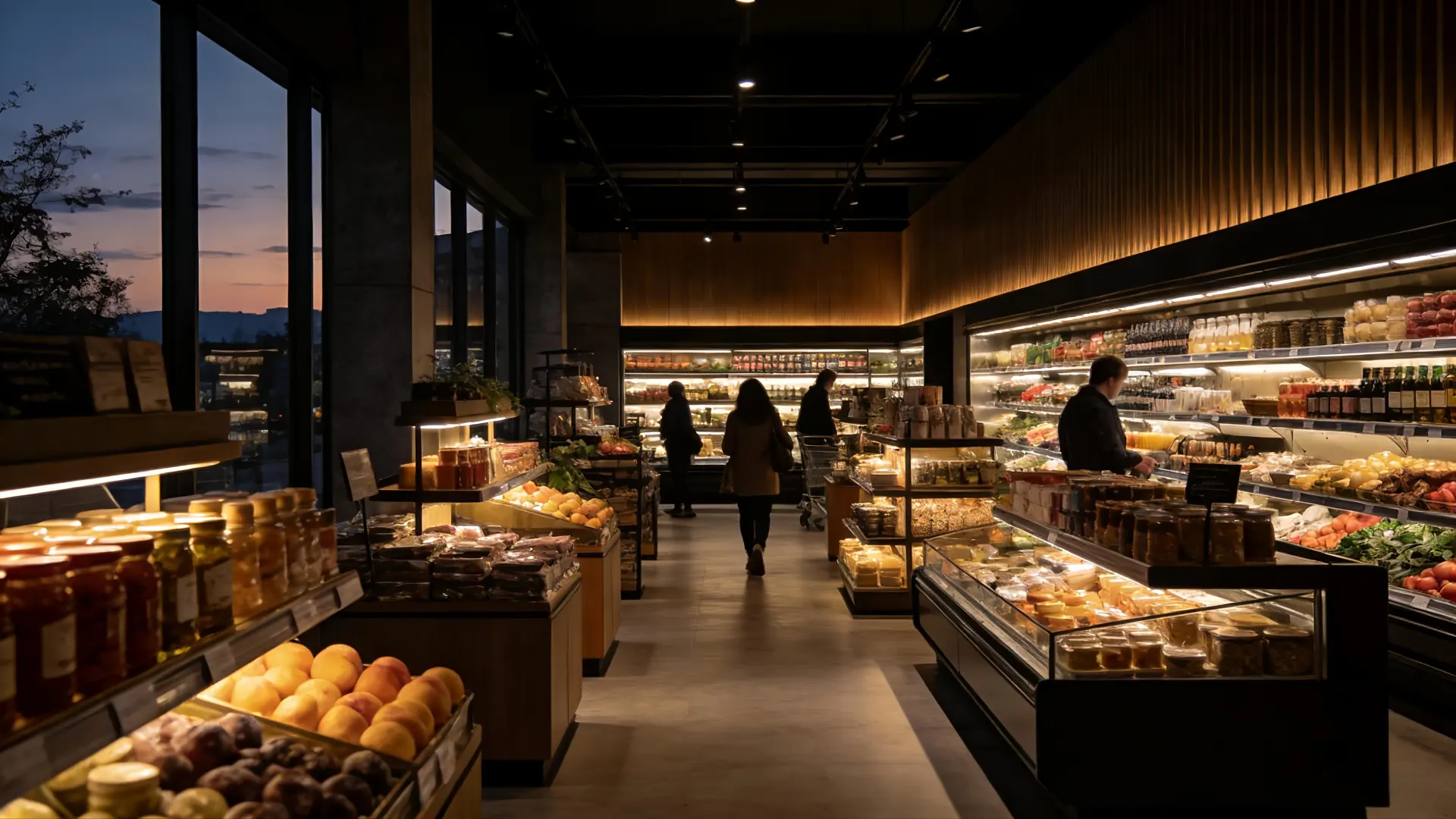
Introduction: In the Second Half of Retail, Light Becomes the Silent Salesperson
In today’s highly competitive retail landscape, where e-commerce platforms rely on data-driven algorithms and instant personalization, physical stores must rediscover what cannot be replicated online: human sensory experience. This is where Wellbeing Lighting Design begins to redefine retail environments.
While many retailers continue to invest heavily in product assortment, pricing strategies, and interior aesthetics, one of the most powerful influences on consumer behavior often goes unnoticed — light. Traditional retail lighting focuses on visibility. Wellbeing Lighting Design, by contrast, focuses on how people feel inside a space.
By shaping mood, comfort, and biological response, lighting quietly influences how long customers stay, how relaxed they feel, and ultimately how willing they are to buy.
Wellbeing Lighting Design: From Illuminating Products to Supporting People
Wellbeing Lighting Design goes beyond energy efficiency or visual appeal. It is a human-centered approach that integrates principles from physiology, psychology, and behavioral science.
In retail environments, this approach emphasizes:
- Visual comfort over excessive brightness
- Emotional stability over sensory overload
- Behavioral guidance rather than visual chaos
Instead of asking “Is the space bright enough?”, Wellbeing Lighting Design asks:
“Does this lighting support how people think, move, and decide?”
How Lighting Influences Consumer Behavior in Retail Spaces
Human purchasing decisions are rarely rational alone.
They are deeply influenced by emotional and physiological states — both of which are strongly affected by lighting conditions.
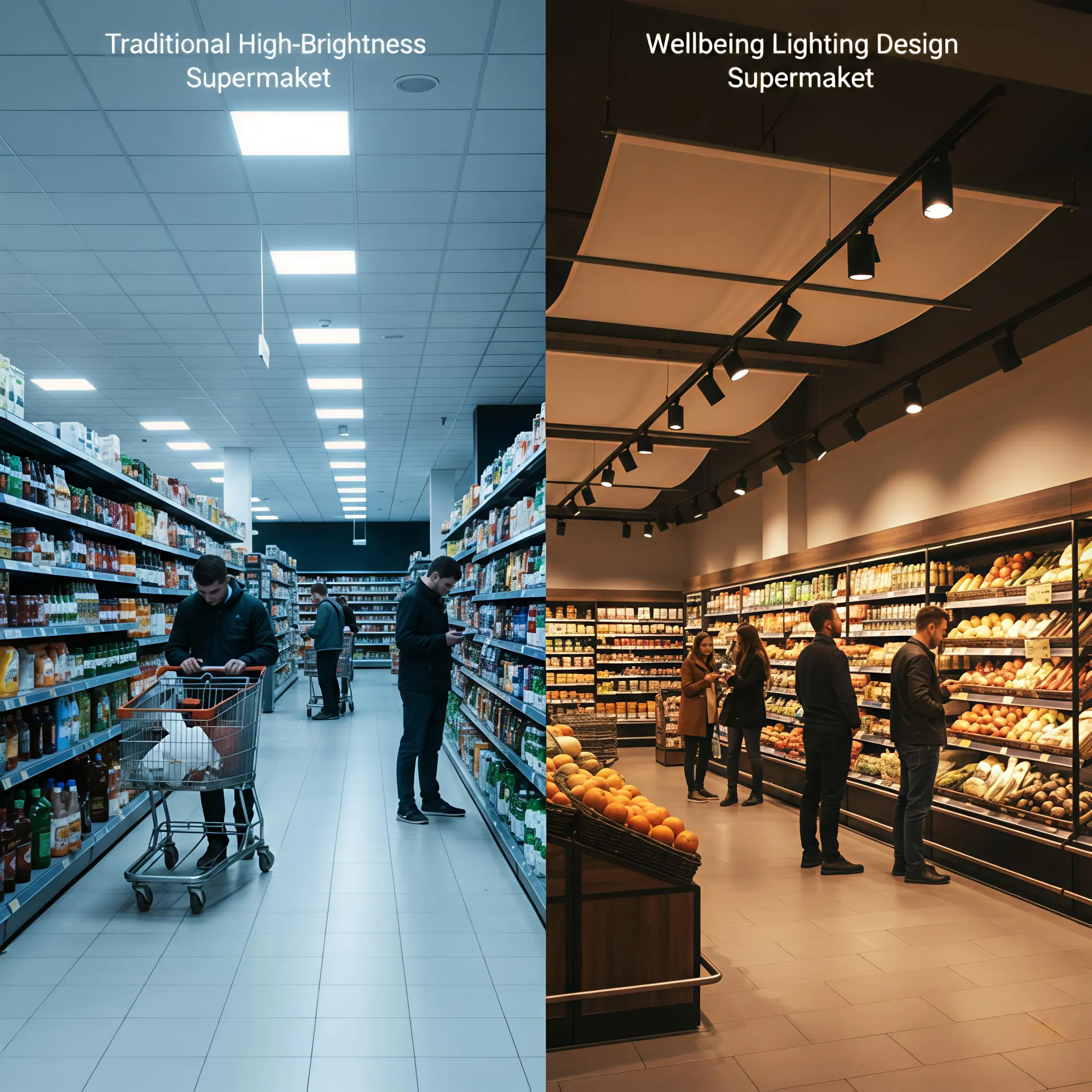
In poorly designed retail lighting environments, customers often experience:
- Subconscious stress or visual fatigue
- Increased walking speed
- Reduced browsing behavior
- Task-oriented purchasing only
In contrast, retail spaces designed with Wellbeing Lighting principles tend to encourage:
- Longer dwell time
- Exploratory shopping behavior
- Higher emotional engagement
- Increased impulse purchases
Light does not force customers to buy — but it determines whether they are willing to stay long enough to consider buying.
The “Slow Shopping Effect”: How Visual Comfort Extends Dwell Time
Retail psychology consistently shows a direct relationship between time spent in-store and basket size.
Cortisol, Stress, and the Instinct to Leave
Many conventional retail lighting systems prioritize cost efficiency, resulting in:
- High glare (UGR)
- Invisible low-frequency flicker
- Direct light exposure to the eyes
From a biological perspective, such lighting continuously stimulates the autonomic nervous system.
Physiological response
Excessive glare and harsh brightness can trigger cortisol release — the body’s stress hormone.
Behavioral outcome
Customers feel uneasy, move faster, and focus only on essential purchases before leaving the store.
Creating Visual “Safe Zones” Through Wellbeing Lighting Design
Wellbeing Lighting Design focuses on glare control, soft transitions, and precise beam distribution.
By directing light onto products and surfaces — not into customers’ eyes — visual stress is reduced. As a result, the body naturally shifts into a relaxed, exploratory state.
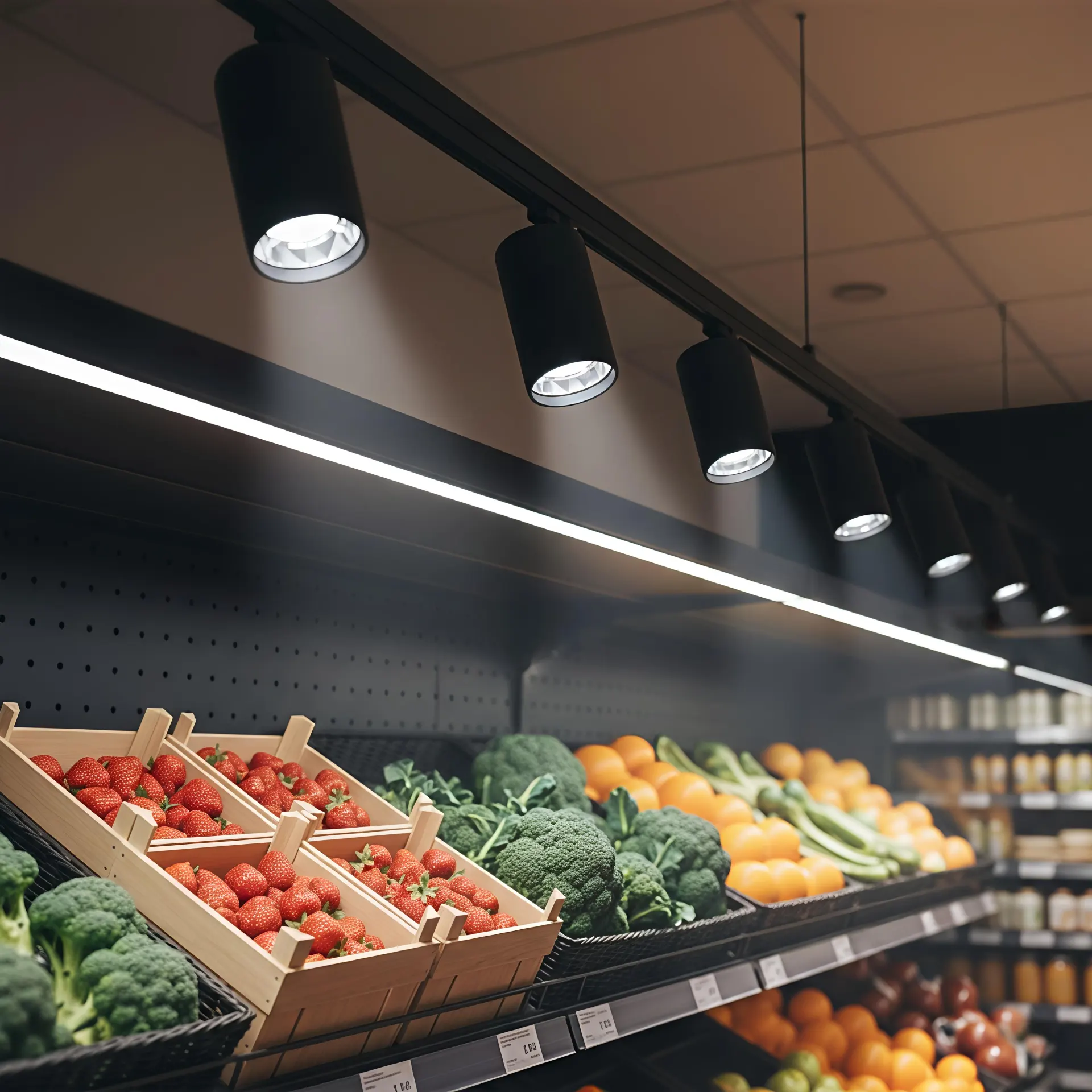
Documented effects include:
- Slower breathing and heart rate
- Increased browsing behavior
- 18–25% longer average dwell time
In retail, every additional minute spent inside the store increases opportunities for conversion.
Dopamine Retail: How Light Spectrum Drives Purchase Desire
Human vision evolved to detect freshness and nutritional value through color perception.
In food retail zones such as fresh produce, meat, and bakery sections, lighting becomes a silent persuader.
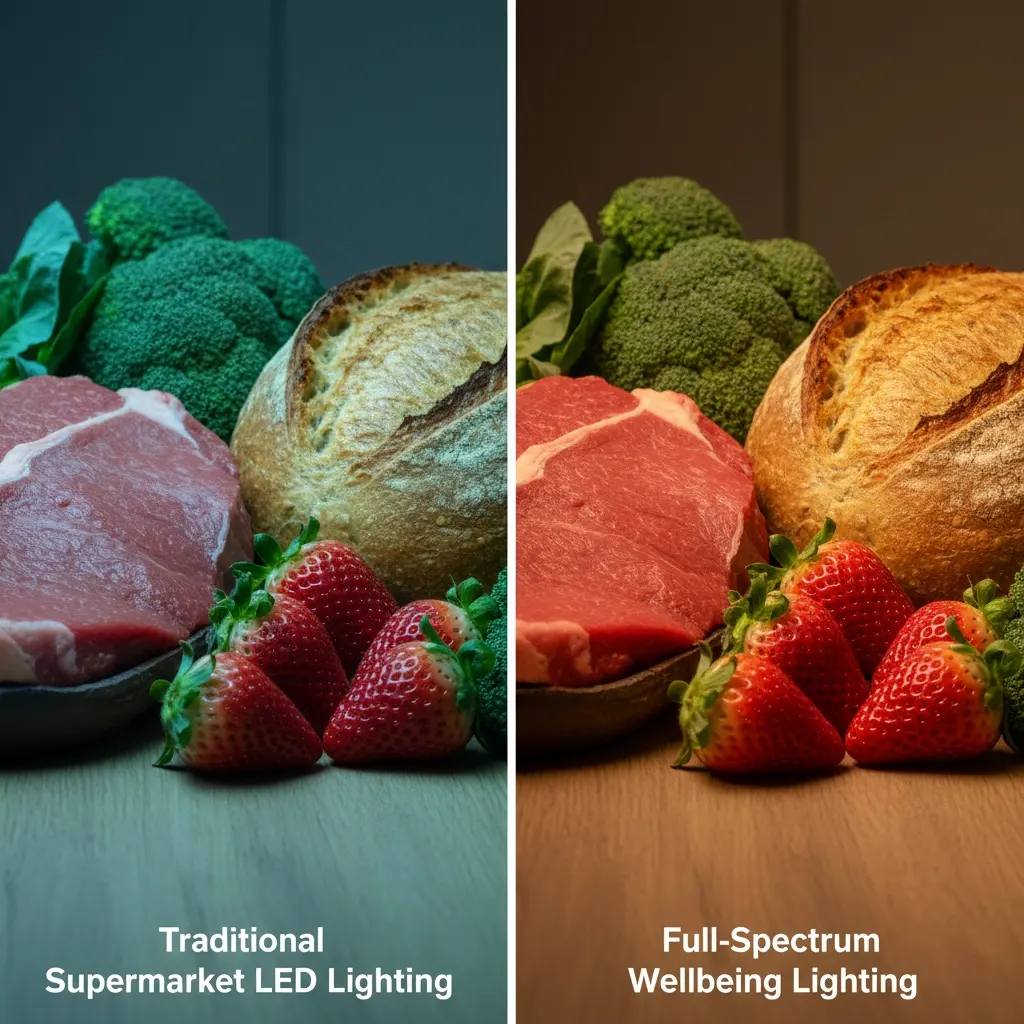
Why CRI and R9 Matter in Retail Lighting
Standard LED lighting often lacks sufficient saturated red (R9), which is critical for rendering foods accurately.
Wellbeing Lighting Design typically incorporates full-spectrum LED technology, delivering light that closely resembles natural daylight.
This improves:
- Color saturation
- Perceived freshness
- Product attractiveness
When the brain receives high-quality visual signals, it activates the reward system and releases dopamine — the neurotransmitter associated with desire and motivation.
Studies consistently show that optimized spectrum lighting can increase conversion rates in fresh food areas by 15–20%.
Circadian-Friendly Retail Lighting: Overcoming the “Bunker Effect”
Large retail spaces are often enclosed and disconnected from natural daylight. Constant, unchanging artificial lighting can lead to fatigue and time disorientation — a phenomenon sometimes referred to as the bunker effect.
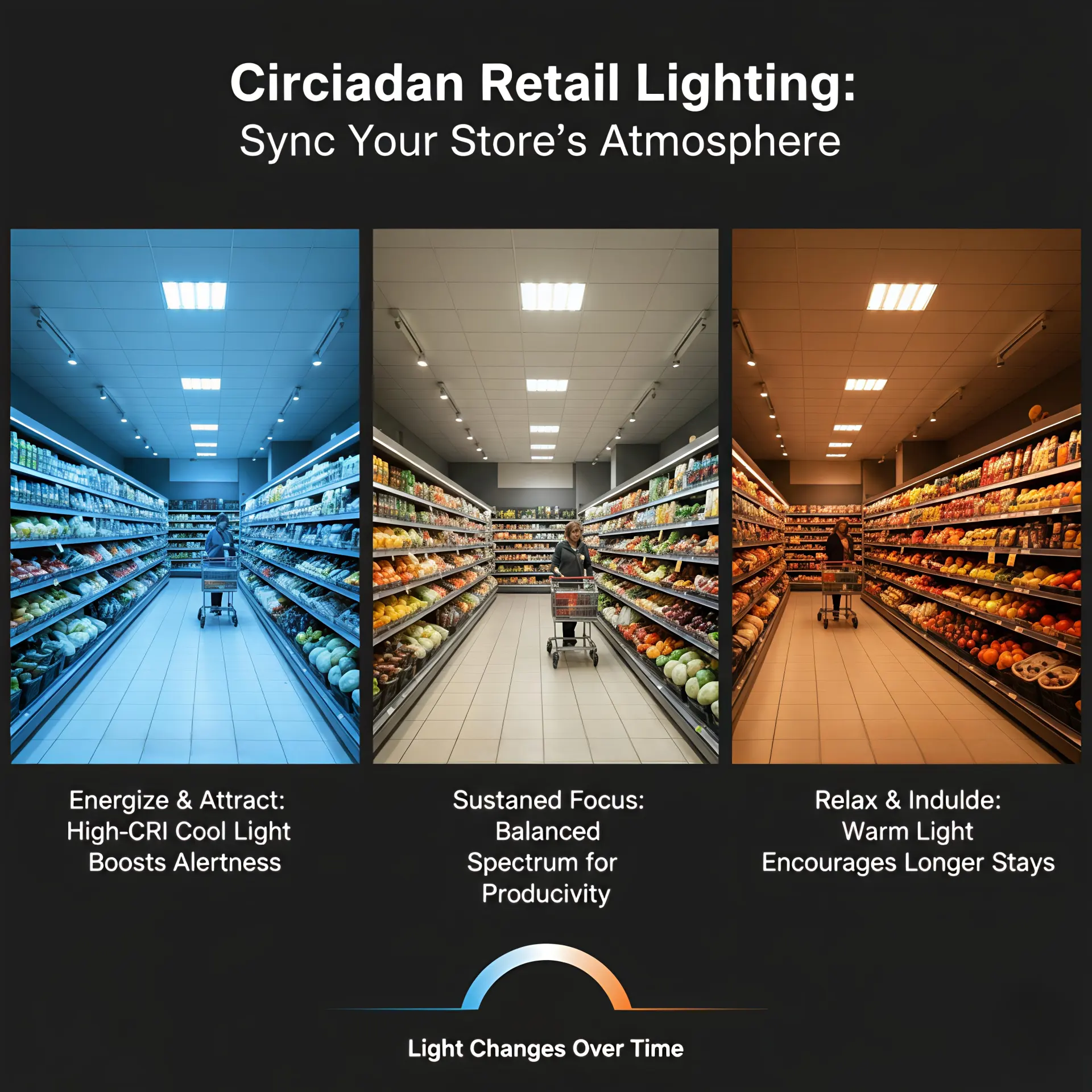
Human-Centric Lighting as a Solution
Wellbeing Lighting Design often integrates Human-Centric Lighting (HCL) principles, aligning indoor lighting with natural circadian rhythms.
| Time of Day | Lighting Strategy | Behavioral Impact |
|---|---|---|
| Morning–Midday | Higher illuminance, cooler white | Alertness and engagement |
| Afternoon | Balanced spectrum | Sustained comfort |
| Evening | Warm white (2700–3000K) | Relaxation and emotional warmth |
Circadian-aligned lighting helps customers feel comfortable and grounded, particularly during evening shopping hours.
For further reading on circadian lighting principles, see:
🔗 International WELL Building Institute – Lighting Concepts
Retail Zoning Through Light: Guiding the Customer Journey
Wellbeing Lighting Design does not mean uniform lighting everywhere. Instead, it uses contrast and rhythm to subtly guide movement and behavior.
Entrance Zones: Psychological Transition Spaces
Entry areas benefit from softer, warmer lighting that eases the transition from outdoor brightness to indoor environments.
Shelf and Aisle Areas: Vertical Illumination Matters
Rather than focusing solely on floor illuminance, Wellbeing Lighting Design emphasizes vertical lighting to improve shelf visibility.
This reduces cognitive effort and encourages deeper product exploration.
Checkout Zones: Reducing Decision Fatigue
At checkout, balanced and glare-free lighting helps minimize anxiety and abandonment behavior during waiting times.
Technology Foundations of Wellbeing Lighting Design in 2026
Effective Wellbeing Lighting Design relies on integrated technology, not static fixtures.
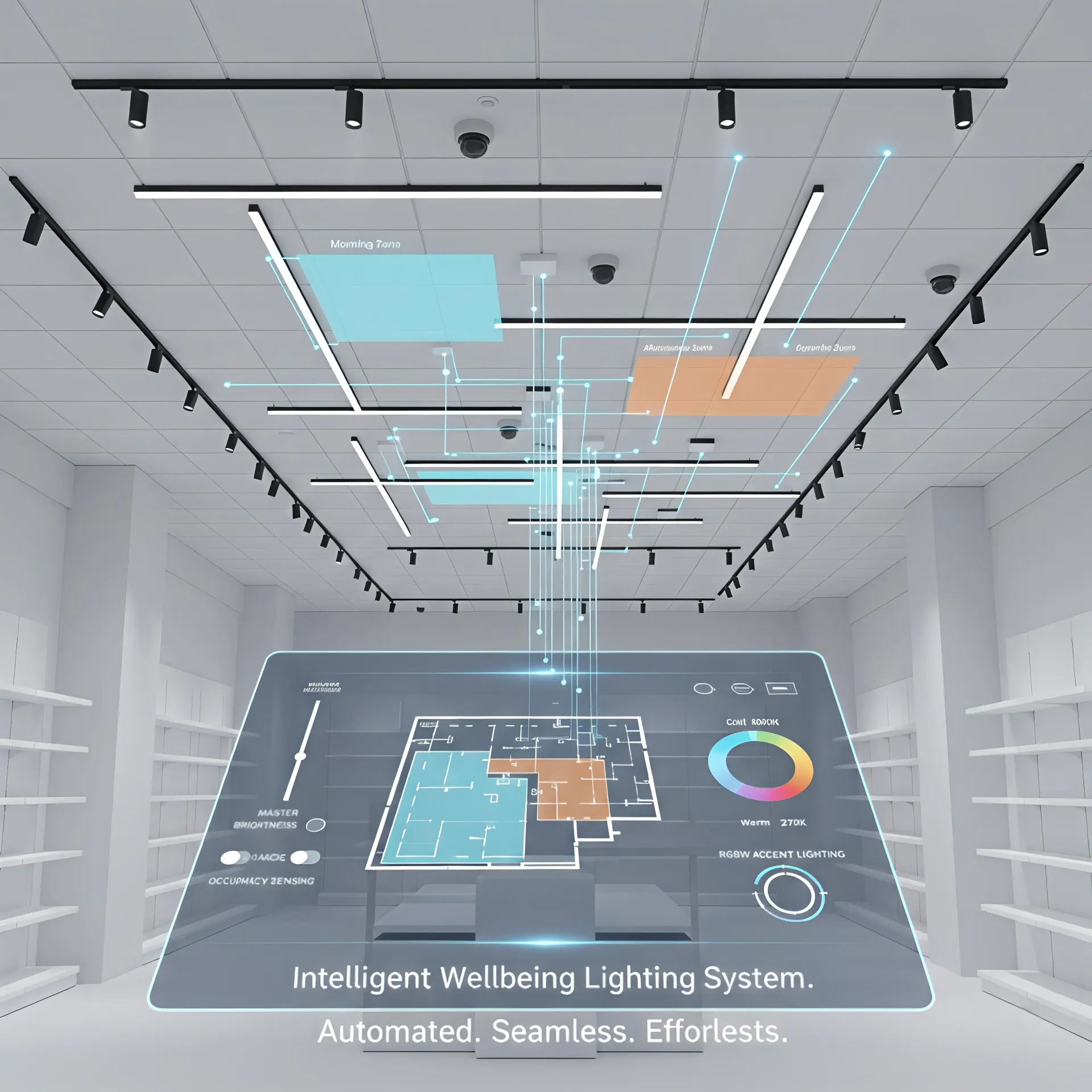
Key components include:
- Daylight harvesting sensors for adaptive brightness
- DALI-2 or Matter protocols for precise, smooth control
- Advanced optical glare reduction for long-term visual health
These systems allow lighting to respond dynamically to time, occupancy, and available daylight.
For technical guidance on lighting standards, reference:
🔗 CIE – International Commission on Illumination
Beyond Sales: The Long-Term ROI of Wellbeing Lighting Design
Retailers adopting Wellbeing Lighting Design benefit in multiple dimensions:
- Brand perception: Spaces feel more premium and human-centered
- Reduced product waste: Improved spectrum slows visual deterioration of fresh goods
- Staff wellbeing: Lower fatigue and absenteeism
- ESG alignment: Demonstrates commitment to health and sustainability
Wellbeing lighting is not a luxury — it is a strategic investment.
Conclusion: Light as Retail’s Quiet Competitive Advantage
Boost Retail Sales: The Secret Link Between Wellbeing Lighting Design and Consumer Behavior is not just a headline — it reflects a proven shift in retail strategy.
In an era where products are easily replicated and prices instantly compared, emotional comfort becomes a decisive factor. When lighting supports human wellbeing, retail spaces become places customers want to stay in — not rush through.
In the second half of retail’s evolution, light is no longer just infrastructure.
It is the most silent — and most persistent — salesperson in the store.

