



Comprehensive Guide to DALI DT8 Smart LED Downlights: Control, Benefits, and Applications
By Powerstar
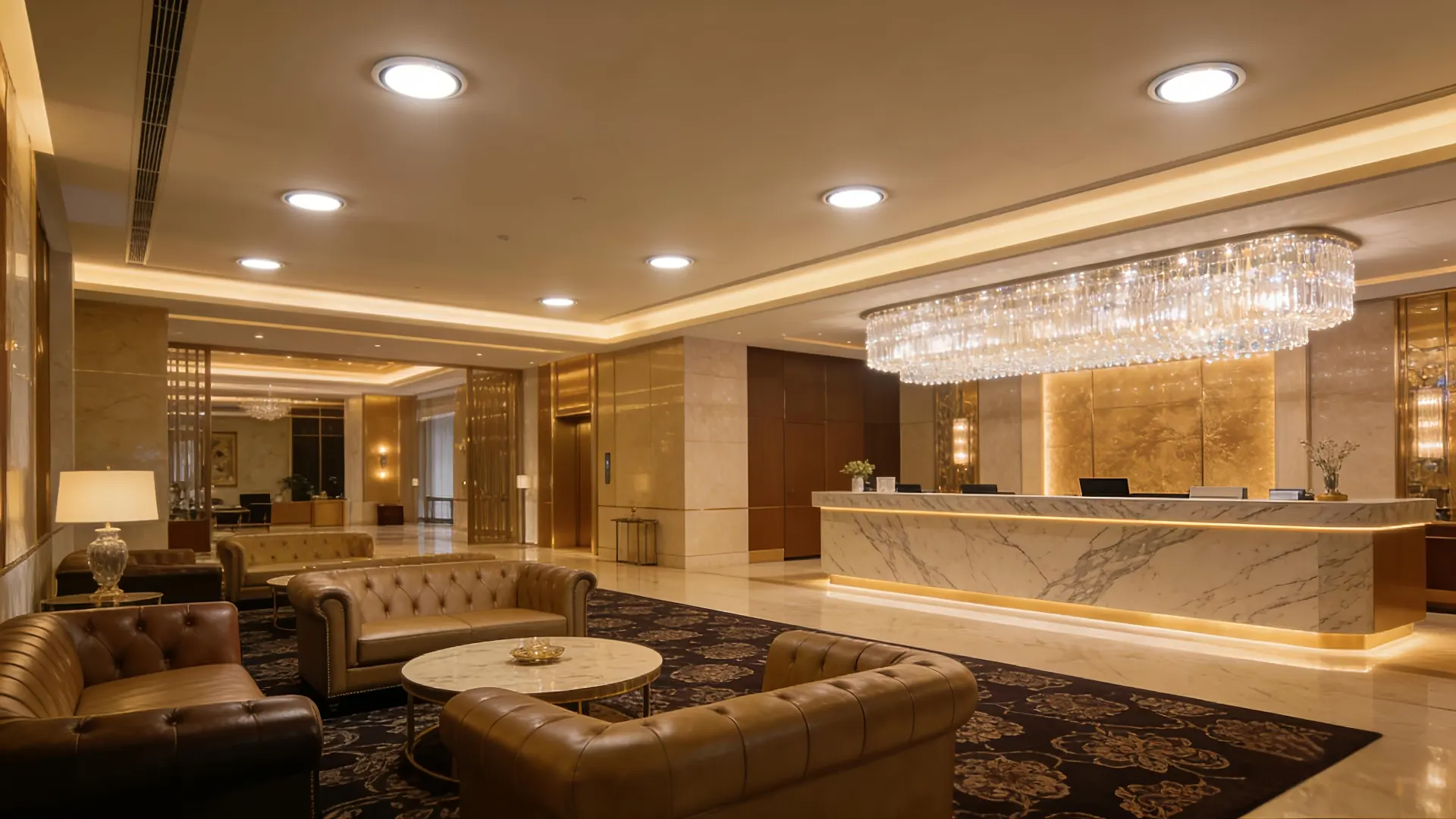
Introduction: The Rise of DALI DT8 Smart LED Downlights
In today’s rapidly evolving lighting industry, the pursuit of light has gone far beyond simply illuminating a space. From basic switch controls to analog dimming, and now to fully digital intelligent systems, lighting has become a key element in spatial design. Among various control protocols, DALI DT8 Smart LED Downlights (Digital Addressable Lighting Interface Device Type 8) have emerged as a preferred choice for high-end commercial and residential projects, thanks to their precise color management and seamless system integration.
These advanced downlights not only deliver adjustable brightness but also provide tunable white capabilities, human-centric lighting (HCL), and energy efficiency, making them ideal for offices, retail environments, hotels, and healthcare facilities.
Understanding the Control Logic of DALI DT8 Smart LED Downlights
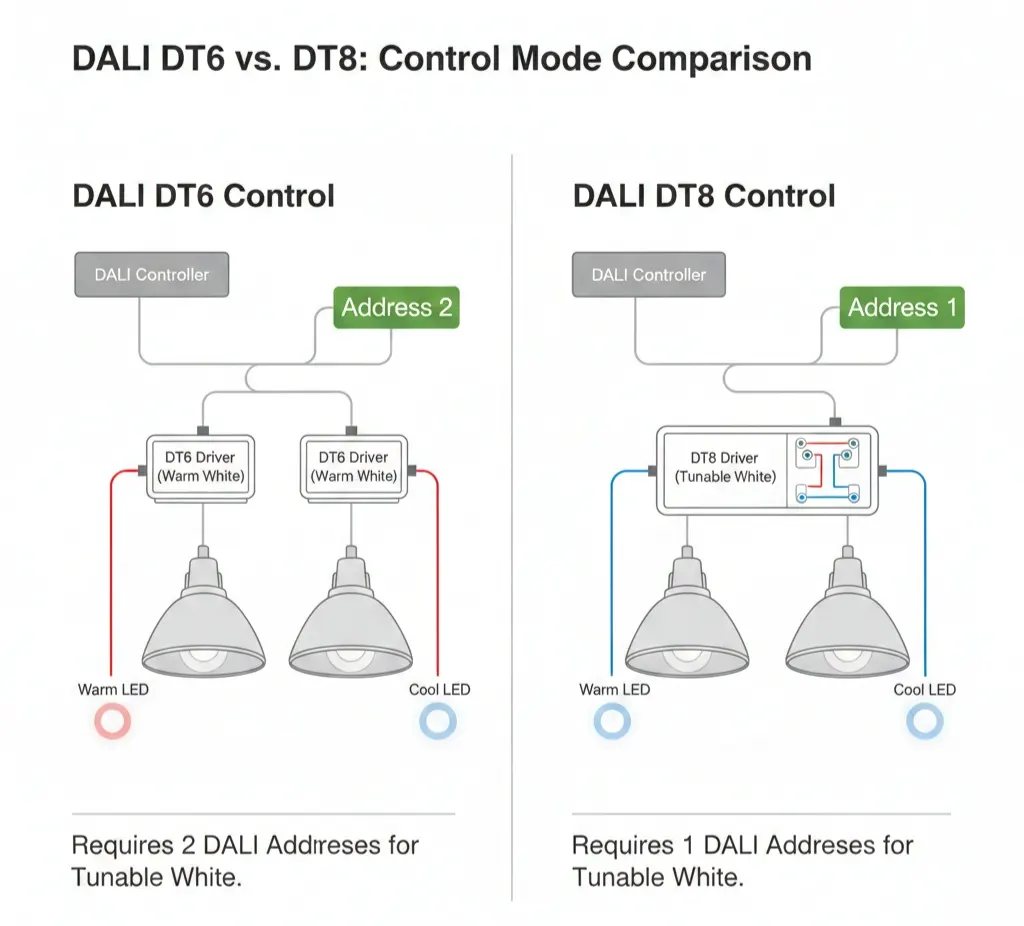
Evolution from DT6 to DT8
Earlier DALI versions commonly used DT6, which required two separate addresses to control tunable white downlights—one for warm white and another for cool white. This approach increased wiring complexity and consumed more DALI address resources.
DALI DT8 protocol solves this with single-address, multi-channel control:
- Single Address: Each DT8 downlight occupies only one DALI address.
- Integrated Command Set: Controllers send color temperature or brightness commands, and the driver internally calculates the appropriate ratio of cool and warm light currents.
- Control Modes:
- Tc (Color Temperature): For tunable white lighting
- RGBWAF: For independent or mixed control of red, green, blue, and white light
- XY Coordinates: High-precision color consistency based on the CIE color space
This logic significantly simplifies network configuration while improving operational efficiency in large-scale projects.
Digital Precision and Multi-Dimensional Control
DALI DT8 Smart LED Downlights use a two-way digital communication system with three key advantages:
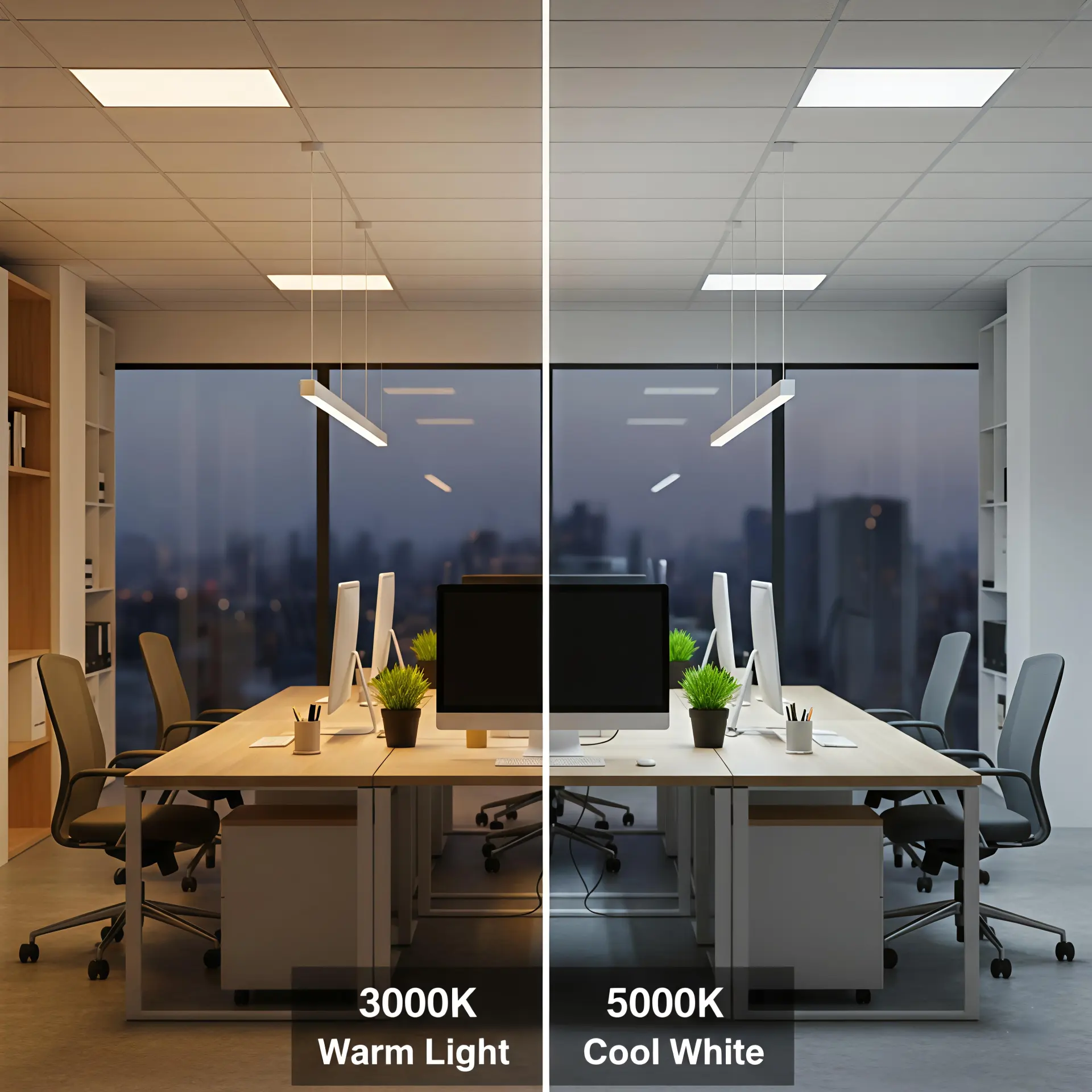
- Brightness and Color Temperature Control: Smooth dimming from 0.1% to 100%, color temperature range from 1800K to 16000K
- Two-Wire Bus Communication: Simplified wiring, hot-swappable, and dynamic device addition/removal
- Real-Time Monitoring: Collects data on power consumption, operating temperature, usage hours, and device faults
- Multiple Control Methods: Supports local controllers, mobile apps, motion and daylight sensors, NFC programming, and custom scene presets
Moreover, DT8 is backward compatible with DT6 devices, allowing seamless integration into existing systems.
Key Advantages of DALI DT8 Smart LED Downlights
Technical Precision, Stability, and Compatibility
- Accurate Light Control: Digital communication eliminates voltage drop issues found in analog systems; multiple lights can dim simultaneously with ≤1% variation
- Low Glare and Flicker-Free: UGR<9, aligned with human-centric lighting standards, reducing eye strain
- Expandable Network: A single DALI bus can support hundreds of lights and various control devices
- Global Compatibility: Wide input voltage (90~277V) and certifications such as CE and RoHS
Economic and Energy Benefits
- Reduced Hardware Costs: Single-address control lowers driver count and wiring complexity, saving 15%-20% in project costs
- Energy Efficiency: Time-based dimming, daylight harvesting, and deep dimming can reduce energy use by over 50%
- Extended Lifespan: High-quality LED chips and digital drivers ensure >50,000 hours of operation; bi-directional communication enables fault alerts and light compensation
Enhanced User Experience
- Fast Programming: NFC-based commissioning can reduce setup time by 60%
- Scene-Based Control: Predefined lighting modes allow one-touch adjustments for different scenarios
- Personalized Light: Tunable white enables high color temperatures to enhance focus in offices and warmer tones for relaxation
Human-Centric Lighting Integration
DALI DT8 Smart LED Downlights can mimic natural light cycles:
| Time of Day | Light Setting | Effect |
|---|---|---|
| Morning | High brightness, cool white | Stimulates alertness and suppresses melatonin |
| Evening | Low brightness, warm white | Encourages melatonin release and relaxation |
| Night | Minimal glow | Safe guidance without disturbing sleep |
Comparison with Other Dimming Technologies
| Technology | Core Feature | Advantages | Disadvantages |
|---|---|---|---|
| DALI DT8 | Digital control, single address, dual-channel | Precise, compatible, supports intelligent management | Slightly higher initial hardware cost |
| DALI DT6 | Digital, single-channel | Stable, widely used | Requires two addresses for tunable white |
| 0-10V Analog | Voltage-controlled dimming | Low cost, simple | Voltage drop affects consistency, no feedback |
| ZigBee | Wireless RF control | Flexible installation | Large-scale network instability, interference-prone |
For commercial projects, DT8 provides superior precision, network capacity, and smart management.
Typical Applications of DALI DT8 Smart LED Downlights
Offices
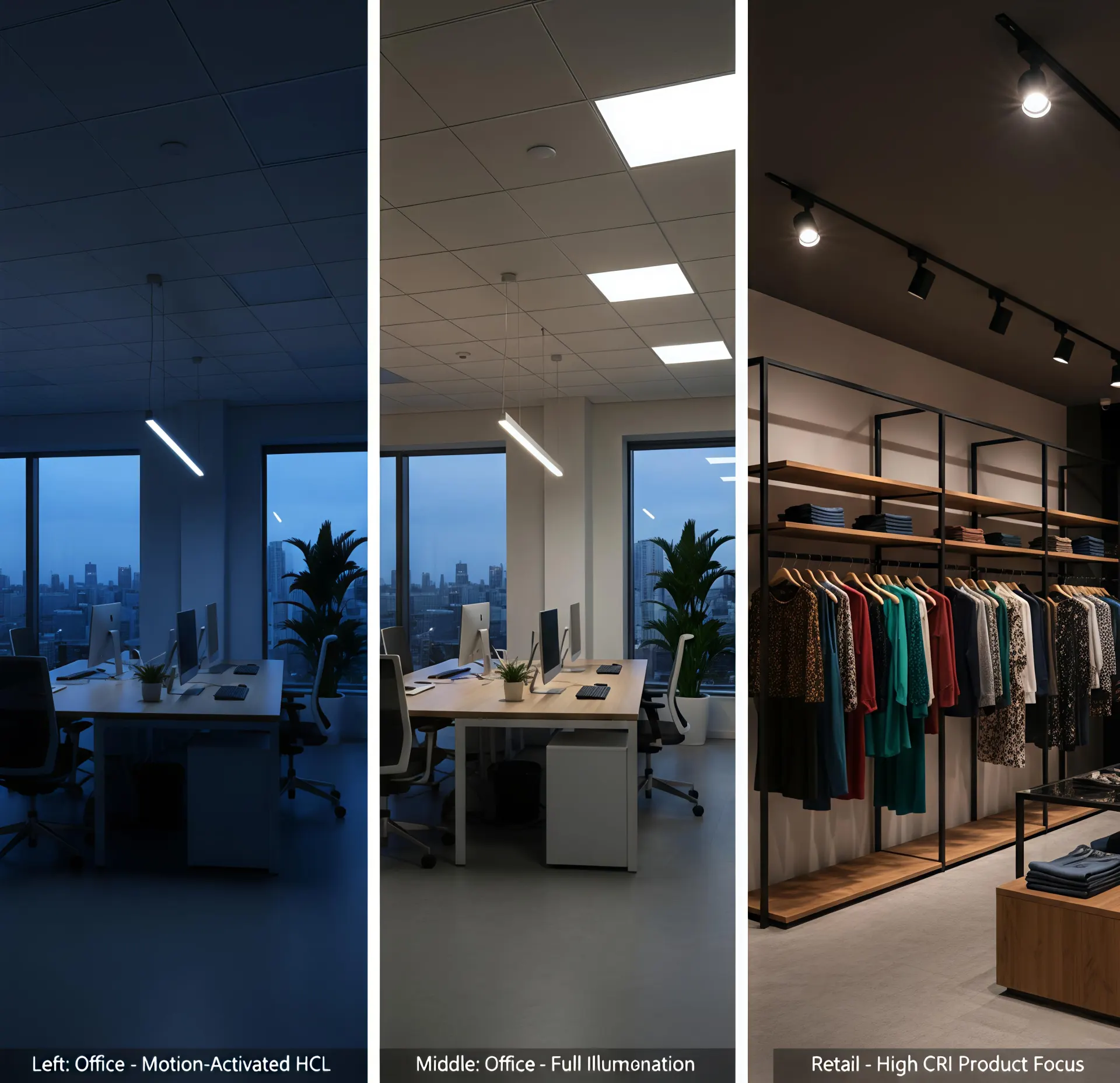
- Adaptive Lighting: Motion and daylight sensors maintain constant illuminance
- Focus Enhancement: 4000K–5000K during peak hours; 3000K–3500K for break periods
- Low Glare and Flicker-Free: Protects employees’ eyes during long working hours
Retail and Shopping Malls
- High CRI (>90): Accurate color rendering for products
- Scene-Based Ambiance: Holiday or promotional modes can adjust light temperature and brightness
- Centralized Control: Dynamically adjusts brightness based on foot traffic for efficiency
Hotels and Hospitality
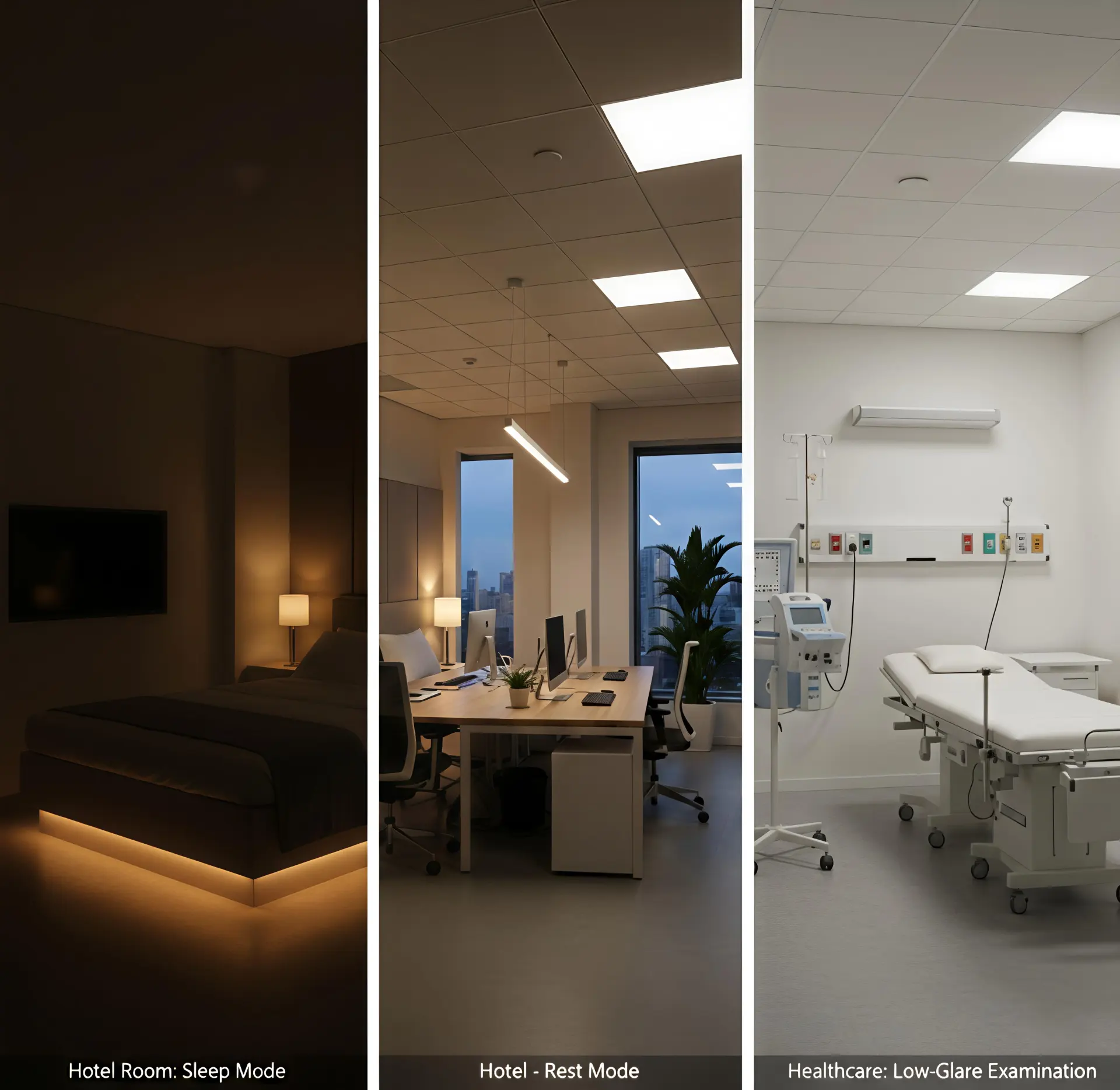
- Guest Room Scenes: Wake-up, washing, leisure, sleep modes
- Lobby and Corridors: Low-glare, gradual dimming enhances atmosphere
- Motion Sensors: Efficient energy use in less-occupied areas
Healthcare and Wellness Centers
- Examination Rooms: Bright, high color temperature for accuracy
- Patient Rooms: Adjustable light without disturbing rest
- Public Areas: Precise dimming protects artifacts and enhances display quality in museums or exhibition spaces
Summary Table of Key Applications
| Application | Typical Setup | Benefits |
|---|---|---|
| Office | Sensor + DT8 downlights | Constant illuminance, human-centric lighting |
| Retail | High CRI, scene presets | Product visibility, ambiance control |
| Hotel | Scene modes, lobby dimming | Guest comfort, energy savings |
| Healthcare | Tunable brightness & color | Clinical accuracy, patient comfort |
Installation and Operational Tips
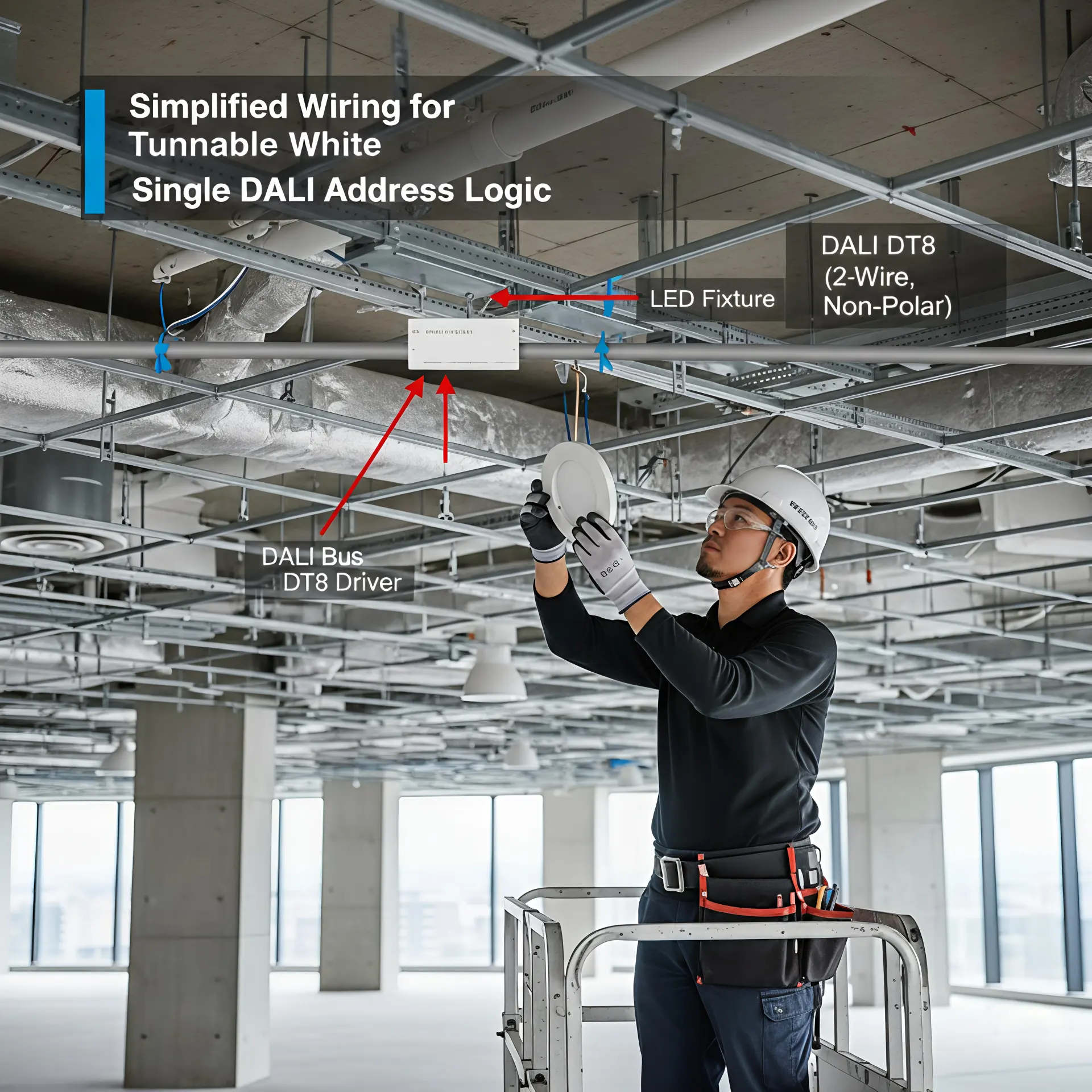
- Pre-Installation Planning: Confirm drivers are DALI-2 certified; select appropriate power and optical parameters
- Wiring & Mounting: Two-wire DALI bus with strong/weak separation; maintain adequate spacing for uniform lighting
- Commissioning & Maintenance: Scan devices, assign addresses, set dimming/color curves, verify bus communication; monitor performance and update firmware regularly
For detailed DALI DT8 installation guidelines, consult the DALI Alliance official documentation.
Conclusion: The Smart Lighting Future with DALI DT8
DALI DT8 Smart LED Downlights provide high-precision digital control, flexible networking, and scene adaptability, addressing the limitations of traditional commercial lighting in accuracy, compatibility, and energy consumption.
By integrating intelligent control and personalized lighting scenarios, DT8 transforms lighting from a basic necessity into a value-enhancing system that improves user experience while reducing operational costs. As human-centric lighting, IoT, and AI technology advance, DT8-compatible lighting systems are positioned for further innovation, enabling adaptive learning and intelligent management in commercial and residential projects. Choosing DALI DT8 downlights ensures current and future-proof solutions for modern lighting design.

