



Cut 60% Utility Bills by Track Linear Light for Supermarkets
By Powerstar
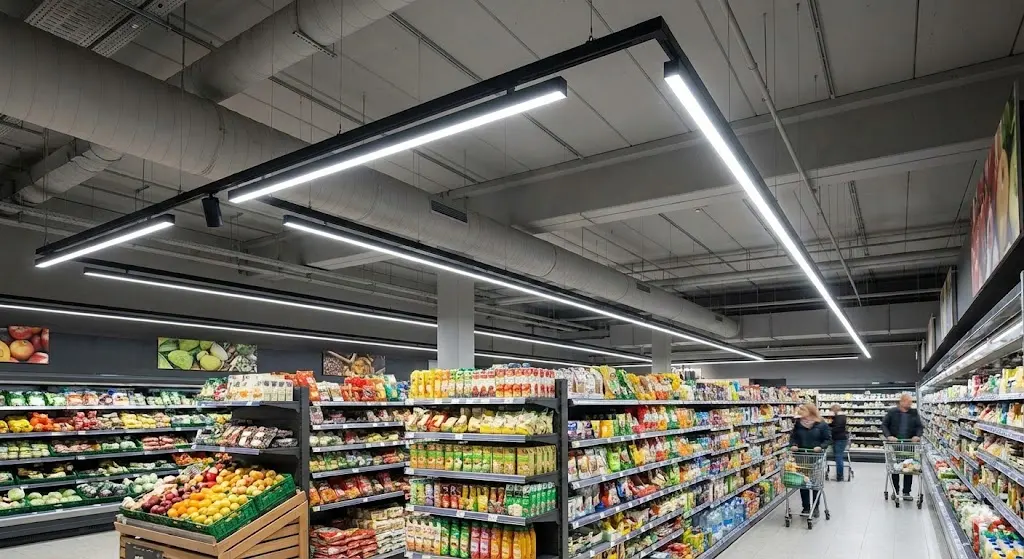
The proven energy saving of track linear light for supermarkets makes it the top choice for these modern retrofits. Energy consumption is one of the largest operational costs for supermarkets. Long operating hours, wide floor areas, and continuous lighting requirements make energy-efficient lighting solutions a critical investment rather than a simple upgrade. In recent years, track linear light systems have become a preferred choice for supermarkets aiming to reduce electricity usage while maintaining consistent, high-quality illumination.
This article explores the energy saving value of track linear light for supermarkets, from system design advantages to long-term operational benefits.
Why Energy Saving Is Critical in Supermarket Lighting
Supermarkets typically operate 12 to 18 hours per day, sometimes even longer in urban or high-traffic locations. Lighting systems must remain stable, uniform, and reliable throughout these hours, which makes inefficiency especially costly.
Key challenges in traditional supermarket lighting include:
- High electricity consumption from fluorescent or low-efficacy LED fixtures
- Uneven illumination requiring higher overall wattage
- Frequent maintenance and lamp replacement
- Limited flexibility when store layouts change
Track linear lighting directly addresses these issues by combining efficient light distribution with modern LED performance.
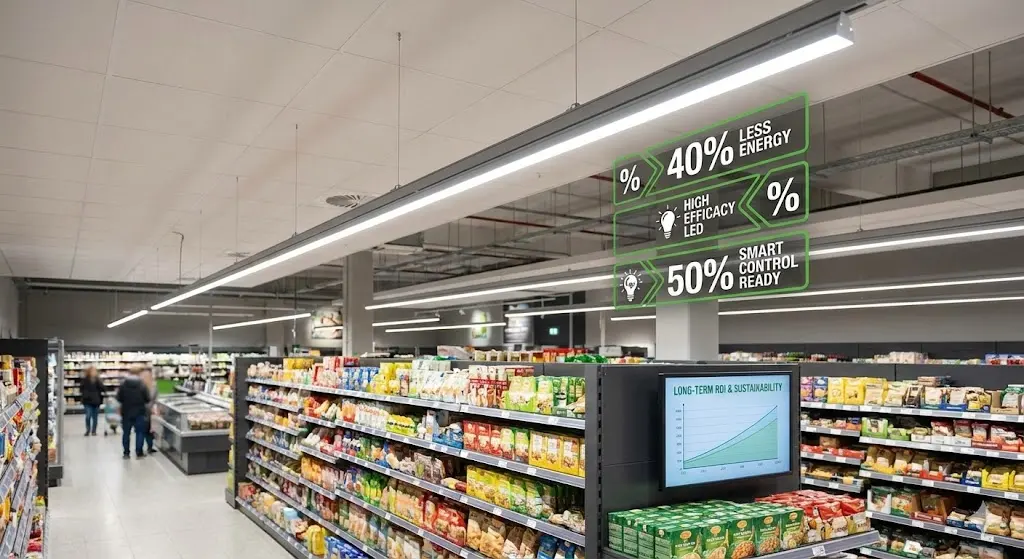
How Track Linear Light Reduces Energy Consumption in Supermarkets
Track linear light systems are designed to provide continuous, uniform illumination across aisles and shelving areas. This structural advantage plays a major role in reducing overall energy usage.
Main energy-saving mechanisms include:
- Linear light distribution minimizes dark zones and over-lit areas
- Fewer fixtures are required compared to point-source lighting
- Optimized optical design directs light precisely to product zones
- Reduced reliance on high wattage spotlights or overlapping fixtures
As a result, supermarkets can achieve the same or higher brightness levels with significantly lower total installed power.
High Luminous Efficacy and Its Impact on Electricity Savings
One of the most important factors in energy saving is luminous efficacy, measured in lumens per watt (lm/W). Modern track linear lights for supermarkets often reach high efficacy levels, allowing more light output with less electrical input.
Benefits of high-efficacy track linear lighting include:
- Lower wattage per meter of lighting
- Reduced overall power density (W/m²)
- Compliance with energy regulations and green building standards
- Faster return on investment through reduced utility bills
In large supermarket projects, even small improvements in efficacy can translate into substantial annual energy savings.
Optimized Aisle Lighting for Reduced Power Demand
Supermarket aisles require long, continuous lines of light to ensure product visibility and customer comfort. Traditional lighting often relies on multiple fixtures with overlapping beams, which increases power consumption unnecessarily.
Track linear light systems improve aisle lighting efficiency by:
- Creating continuous light lines that eliminate gaps
- Reducing the need for excessive fixture density
- Allowing precise alignment with shelving layouts
- Maintaining consistent illumination levels across the entire aisle
This optimized layout allows supermarkets to lower installed wattage without compromising visual quality.
Energy Saving Through Smart Control Compatibility
Although track linear lights can deliver energy savings on their own, their efficiency increases further when combined with lighting control strategies.
Common control approaches include:
- Scheduled dimming during low-traffic hours
- Zoning control for different supermarket areas
- Integration with daylight-responsive systems near entrances
- Gradual dimming during closing and cleaning periods
By pairing track linear lighting with appropriate control systems, supermarkets can further reduce energy consumption without affecting customer experience.
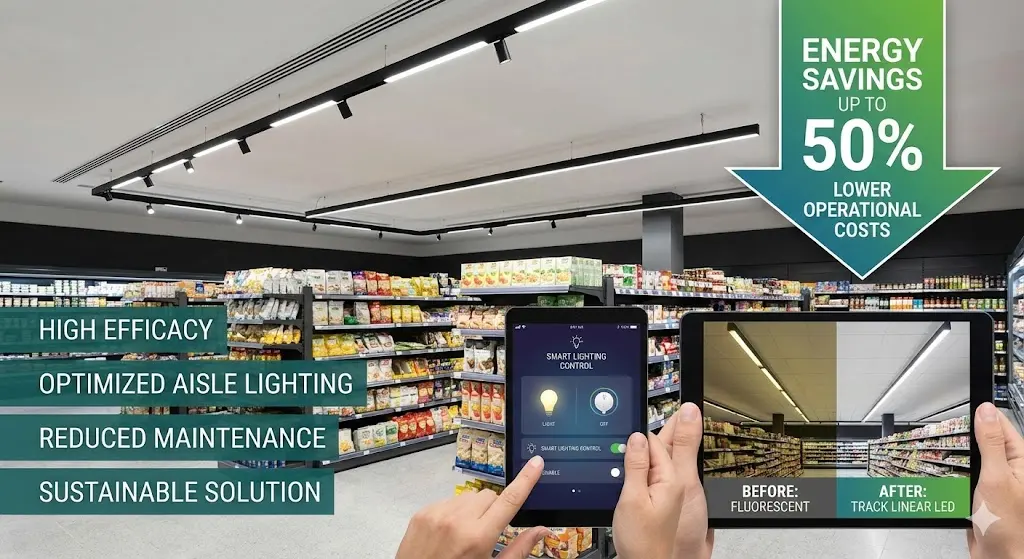
Reduced Maintenance and Indirect Energy Benefits
Energy saving is not limited to electricity usage alone. Maintenance activities also contribute to operational energy costs, including labor, equipment, and downtime.
Track linear lights support indirect energy savings by:
- Using long-life LED light sources
- Reducing the frequency of replacements
- Minimizing maintenance-related disruptions
- Lowering the need for temporary lighting during servicing
Over the lifetime of a supermarket lighting system, these indirect savings significantly improve total energy efficiency and cost performance.
Track Linear Light Retrofit as an Energy Saving Strategy
For existing supermarkets, full lighting replacement is often impractical due to operational constraints. Track linear light retrofit solutions offer a practical path to energy savings without major structural changes.
Advantages of retrofit projects include:
- Reuse of existing track infrastructure where possible
- Faster installation with minimal store downtime
- Immediate reduction in electricity consumption
- Gradual upgrade capability for large store chains
This approach allows supermarket operators to achieve measurable energy savings while controlling renovation costs.
Long-Term Energy Cost Reduction and ROI
When evaluating energy saving of track linear light for supermarkets, long-term performance is more important than initial purchase cost.
Key factors influencing return on investment include:
- Daily operating hours
- Local electricity tariffs
- Reduction in installed wattage
- Maintenance cost savings over time
In many supermarket projects, energy-efficient track linear lighting systems achieve payback within a few years, followed by sustained operational savings throughout their service life.
Supporting Sustainable Supermarket Operations
Energy-efficient lighting is increasingly tied to sustainability goals and corporate responsibility. Supermarkets adopting track linear light systems benefit from reduced carbon emissions and improved environmental performance.
| Sustainability Aspect | Description |
|---|---|
| Lower overall energy demand | Energy-efficient track linear light systems reduce total electricity consumption, helping supermarkets lower daily and annual energy usage across large floor areas. |
| Reduced greenhouse gas emissions | By consuming less electricity, supermarkets indirectly reduce carbon emissions associated with power generation, supporting environmental sustainability goals. |
| Alignment with energy efficiency standards | High-efficiency lighting solutions help supermarkets meet regional and international energy efficiency regulations and sustainability benchmarks. |
| Enhanced brand image | Sustainable lighting upgrades reinforce a supermarket’s image as an environmentally responsible retailer, which is increasingly valued by consumers and business partners. |
Conclusion: Energy Saving of Track Linear Light for Supermarkets
The energy saving of track linear light for supermarkets is not achieved through a single feature, but through a combination of efficient light distribution, high luminous efficacy, flexible system design, and reduced maintenance requirements.
By replacing traditional lighting solutions with modern track linear lighting systems, supermarkets can significantly lower electricity consumption, improve lighting quality, and achieve long-term operational cost savings. For both new projects and retrofit applications, track linear light represents a practical and scalable solution for energy-efficient supermarket lighting.

