



DALI Track Lighting for Lighting Designer: What Really Matters in Professional Projects
By Powerstar
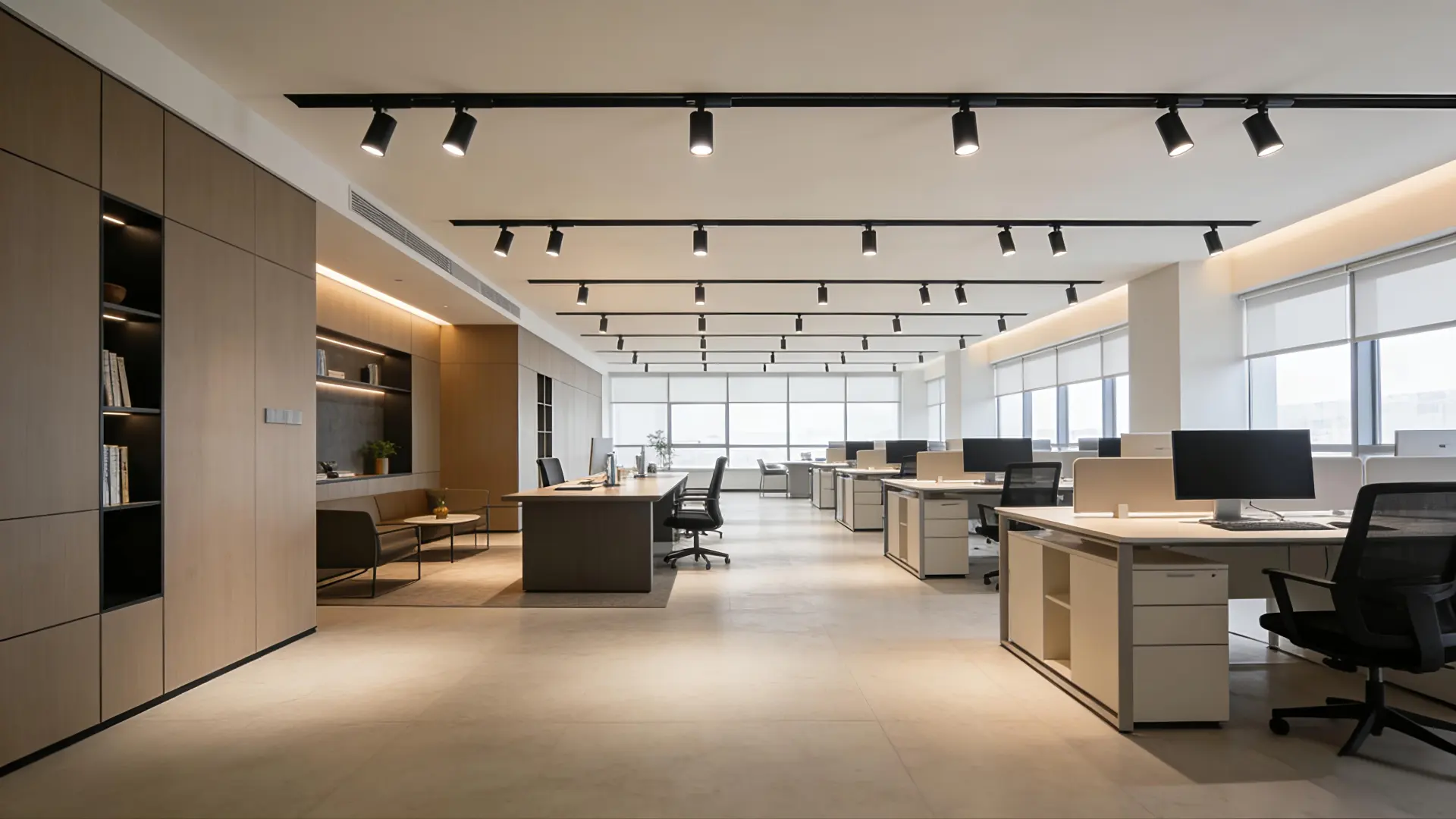
In high-end commercial interiors, offices, and retail environments, track lighting has long been a core tool for lighting designers. As intelligent lighting control systems become increasingly common, DALI-based solutions are no longer a “nice-to-have” option, but a standard requirement in many professional specifications. For a lighting designer, however, choosing DALI Track Lighting for Lighting Designer is not simply about whether a luminaire “supports DALI.”
The real challenge lies in how the system performs, integrates, and behaves throughout the entire project lifecycle—from concept design to on-site commissioning and long-term operation.
This article is written from a lighting designer’s practical perspective. It explores how DALI track lighting is applied in real projects, the issues designers frequently encounter, and the key criteria that truly matter when specifying and implementing a reliable system.
Why Lighting Designers Are Turning to DALI Track Lighting
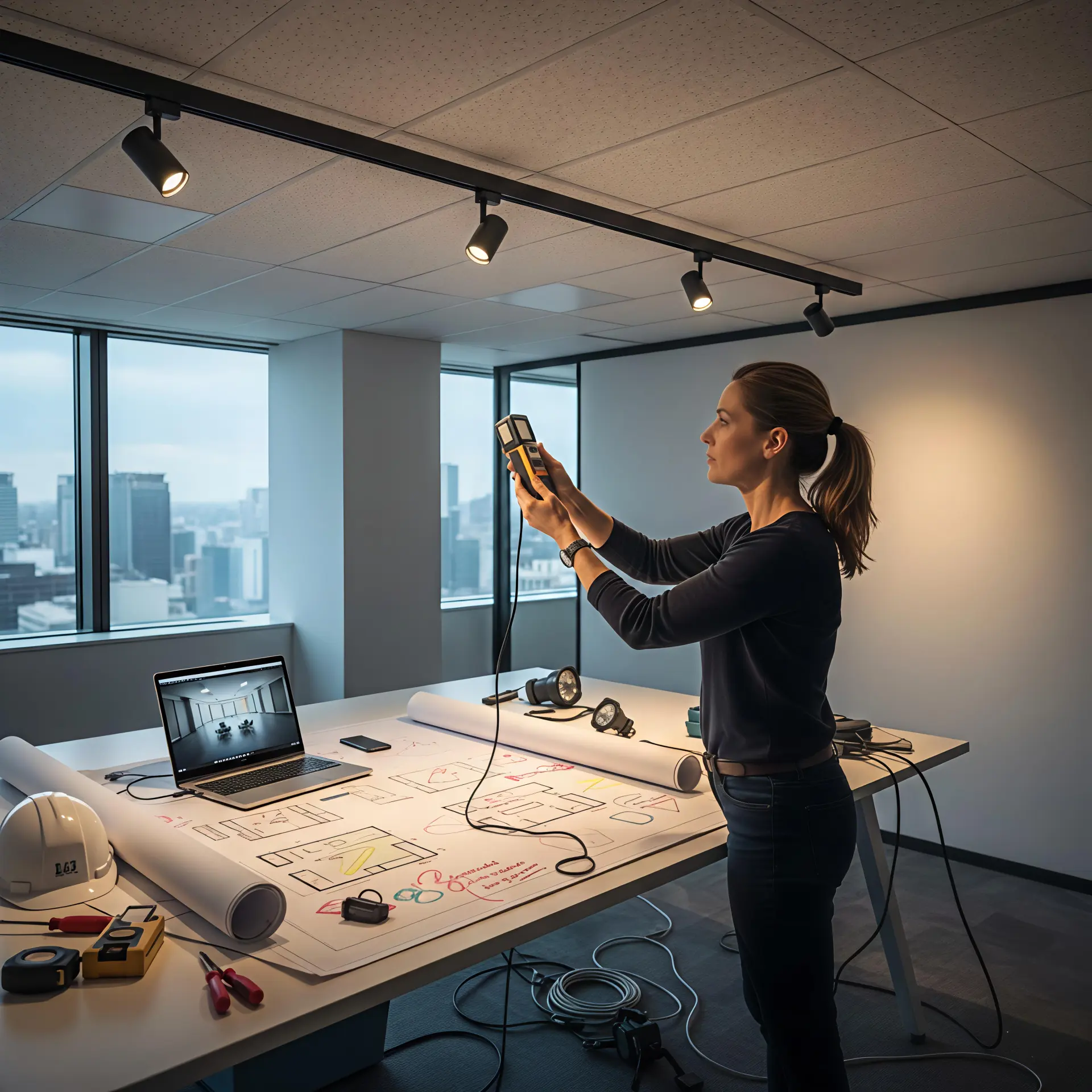
In contemporary lighting design, the focus has shifted far beyond basic illuminance calculations. Designers are now shaping spatial atmosphere, visual comfort, scene transitions, and system-level coordination.
DALI track lighting appeals to designers for several fundamental reasons.
First, DALI is a digital lighting control protocol that offers precision and predictability. Each luminaire can be individually addressed, grouped, and reconfigured, allowing the lighting concept to remain flexible even after installation.
Second, track lighting inherently supports adaptability. Fixtures can be repositioned as layouts evolve, without the need for rewiring. This is particularly valuable in retail stores, galleries, and modern offices where spatial functions change over time.
Most importantly, DALI-based track systems help preserve the original design intent. Instead of being compromised during installation or commissioning, the lighting concept remains adjustable and future-proof.
Common Challenges Designers Face in DALI Track Lighting Projects
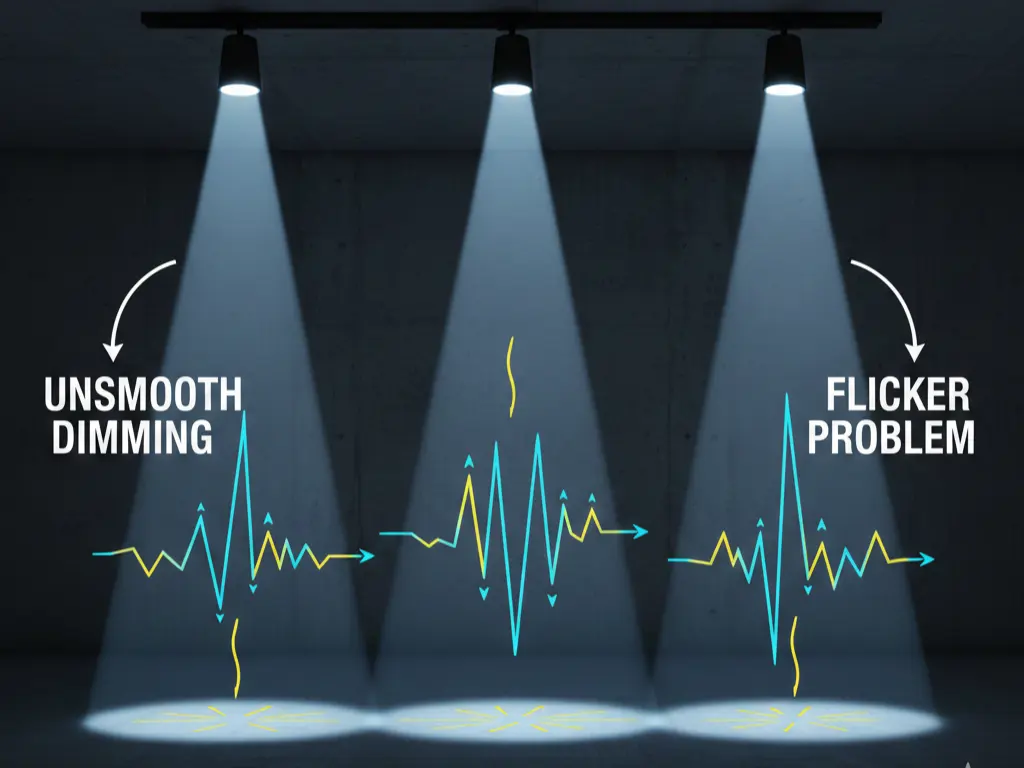
Despite its theoretical advantages, DALI track lighting can expose weaknesses when implemented incorrectly. Many designers encounter similar issues across different projects.
Dimming That Is Not Truly Smooth
Many luminaires claim 1% dimming capability. In practice, however, designers often notice visible stepping or sudden brightness jumps, especially at low output levels.
For spaces that rely on subtle light transitions—such as premium retail or hospitality interiors—this lack of smooth dimming can significantly undermine the intended atmosphere.
Flicker and Instability at Low Light Levels
Some DALI track lights perform well at higher brightness but become unstable when dimmed down.
Visible flicker, camera banding, or rolling lines can appear in photos and videos, creating serious problems for showrooms, exhibitions, and media-focused environments.
This issue is rarely acceptable in professional lighting design.
Driver Size Disrupting Ceiling Aesthetics
To achieve DALI compatibility, some track lights rely on external or oversized driver housings.
While functional, these solutions often compromise ceiling cleanliness and clash with minimalist architectural design.
From a designer’s perspective, such compromises are difficult to justify in high-end projects.
System Stability and On-Site Commissioning Risks
Address loss, inconsistent responses, or unreliable communication can occur during commissioning.
In many cases, the root cause is not the DALI control system itself, but insufficient driver quality or poor hardware integration.
These issues increase on-site risk and complicate long-term maintenance.
Key Criteria Lighting Designers Should Evaluate Before Specification
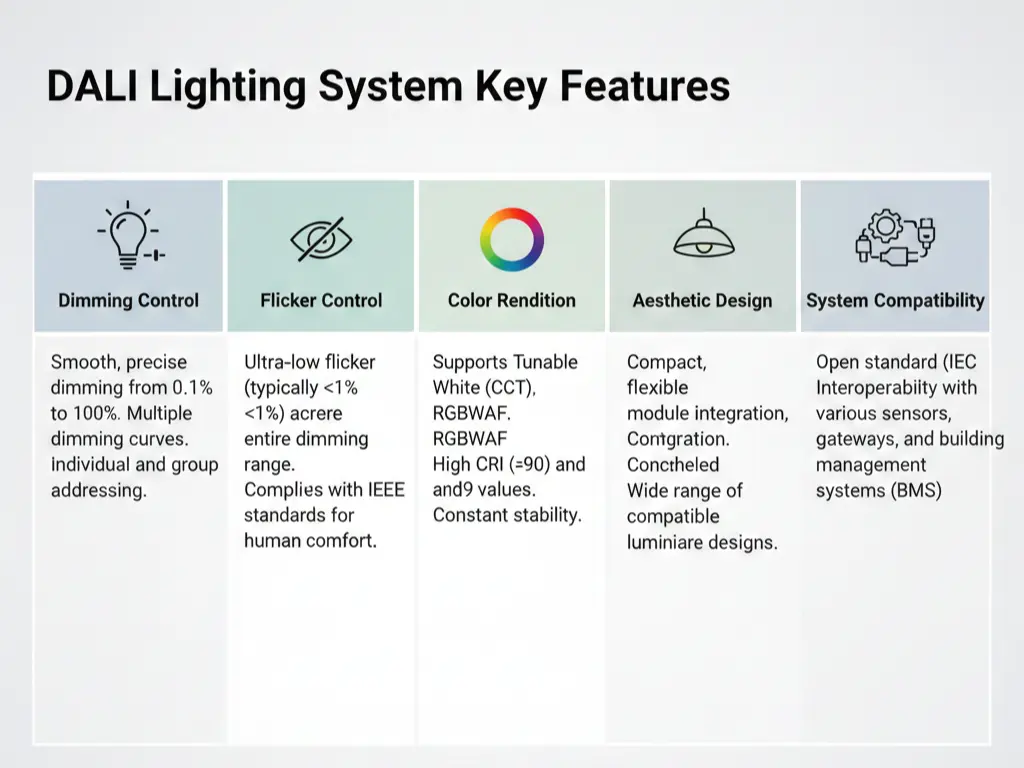
Rather than relying solely on datasheets or marketing claims, designers should evaluate DALI track lighting across several critical dimensions.
| Design Focus | Common Misunderstanding | Professional Evaluation Approach |
|---|---|---|
| Dimming performance | “Supports 1% dimming” | Check for 0.1% or logarithmic dimming curves |
| Flicker control | Labeled “flicker-free” | Stability at very low output levels |
| Color quality | CRI value only | Color consistency during dimming and tuning |
| Visual design | Attractive luminaire head | Fully integrated driver design |
| System compatibility | “DALI supported” | Compliance with DALI-2 standards |
These details often determine whether a lighting design is faithfully delivered or gradually compromised during implementation.
What DALI-2 and DT8 Mean for Lighting Designers
As project complexity increases, more designers explicitly specify DALI-2 compliance.
DALI-2 is not just an updated protocol; it introduces stricter testing and interoperability requirements.
For designers, this means greater confidence that luminaires will behave consistently across different control systems and project environments.
DT8 capability further expands creative possibilities. With brightness and color temperature controlled via a single address, designers can implement Tunable White and human-centric lighting concepts without increasing system complexity.
For an overview of the DALI standard and its evolution, designers may refer to official industry resources such as the DALI Alliance (example outbound link).
Design Freedom Enabled by Integrated DALI Track Lighting
From a design standpoint, fully integrated DALI track lights offer clear advantages over external-driver solutions.
With the driver hidden inside the track adapter, the ceiling remains visually clean and architecturally coherent.
Luminaire proportions become more refined, allowing better alignment with architectural language.
Interchangeable optical accessories further enhance flexibility, enabling designers to adjust beam angles and light distribution without altering fixture appearance.
These factors may not be immediately visible on specification sheets, but they strongly influence the final spatial quality.
The Real Role of Manufacturers in Lighting Design Projects
In a well-executed lighting project, designers define the spatial experience, while manufacturers ensure that the concept is technically achievable.
Experienced manufacturers can support designers through:
- Optical and distribution recommendations during the concept phase
- Technical guidance on DALI drivers and control integration
- Customization for project-specific requirements
- Consistent quality control and long-term reliability
Such collaboration often determines whether a project transitions smoothly from drawings to reality.
For further reference on professional lighting design practices, resources from organizations such as the International Association of Lighting Designers (example outbound link) can also be valuable.
Conclusion: How Should Designers Approach DALI Track Lighting?

For lighting professionals, DALI Track Lighting for Lighting Designer is not merely a technical feature. It represents a broader decision about control precision, visual comfort, and system reliability.
A truly well-designed DALI track lighting system should do more than meet protocol requirements. It must deliver smooth dimming, stable performance, and seamless integration with architectural intent.
When designers focus on these essential criteria early in the design process, DALI track lighting becomes a powerful tool for realizing creative vision—rather than a compromise introduced during project execution.

