



4 Key Advantages of DALI Museum Lighting: Protection, Experience, Efficiency, and Intelligence
By Powerstar
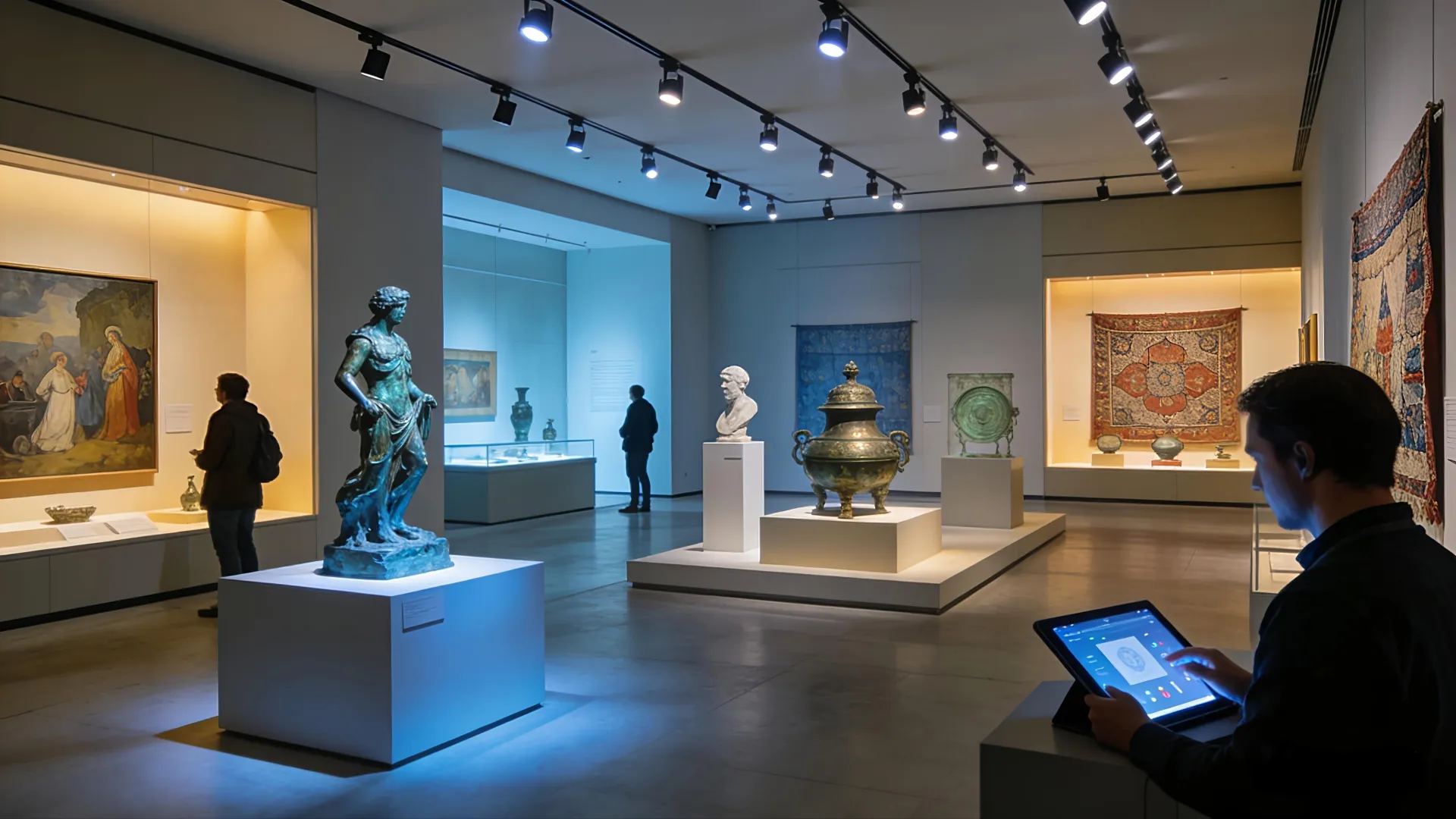
Introduction: Why DALI Museum Lighting Matters Today
DALI Museum Lighting is a highly specialized lighting solution, fundamentally different from conventional commercial lighting systems. In museum environments, lighting is not only responsible for visual presentation, but is also directly linked to the long-term conservation and safety of valuable artifacts.
In modern museum design, lighting has moved far beyond the simple task of “illumination.” It has become a careful balance between artifact conservation and artistic display. With the continuous update of professional standards such as GB/T 23863-2024, digital and intelligent lighting control systems are no longer optional—they are becoming the baseline requirement for museum projects.
In practice, however, many museums still struggle with uncontrolled illuminance, insufficient color rendering, glare issues, and complex post-installation management. These problems are not always caused by the luminaires themselves, but more often by the absence of a sustainable and controllable museum lighting system.
Against this background, DALI Museum Lighting has gradually emerged as a preferred solution for modern museums. By combining intelligent DALI control systems with high-quality track lighting, museums can establish a stable and reliable balance between artifact protection, visual quality, and long-term operational management.
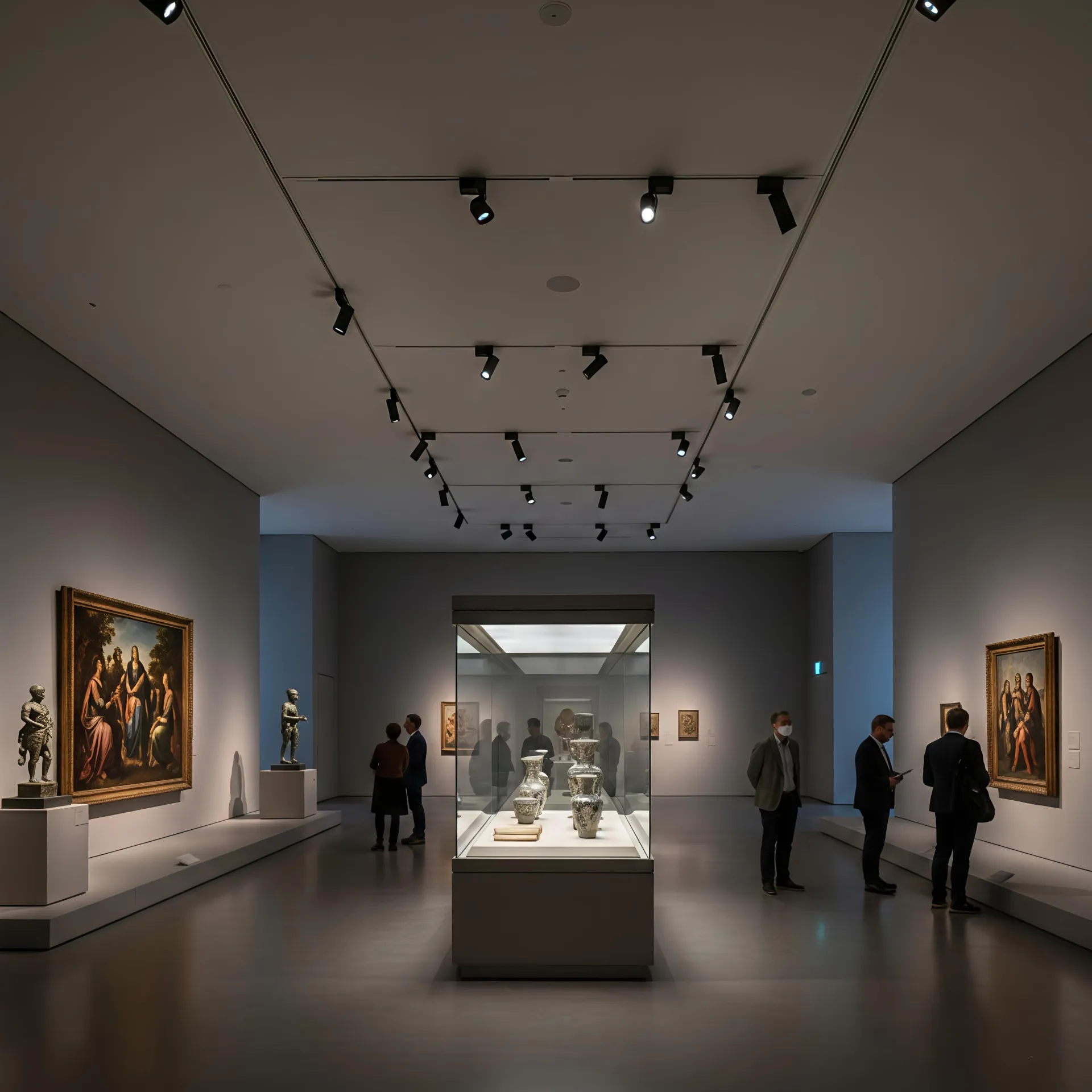
1. Protection: Precise Light Control for Artifact Conservation
Artifact protection is the primary objective of museum lighting design.
Light-induced damage is irreversible, especially for light-sensitive objects such as paper documents, textiles, and paintings. Once fading or material degradation occurs, restoration is impossible.
Common Industry Challenges
- Light output relies on manual adjustment and is easily increased without restriction
- No enforceable illuminance limits to ensure compliance with conservation standards
- Lighting operating time is unmanaged, leading to uncontrolled cumulative exposure
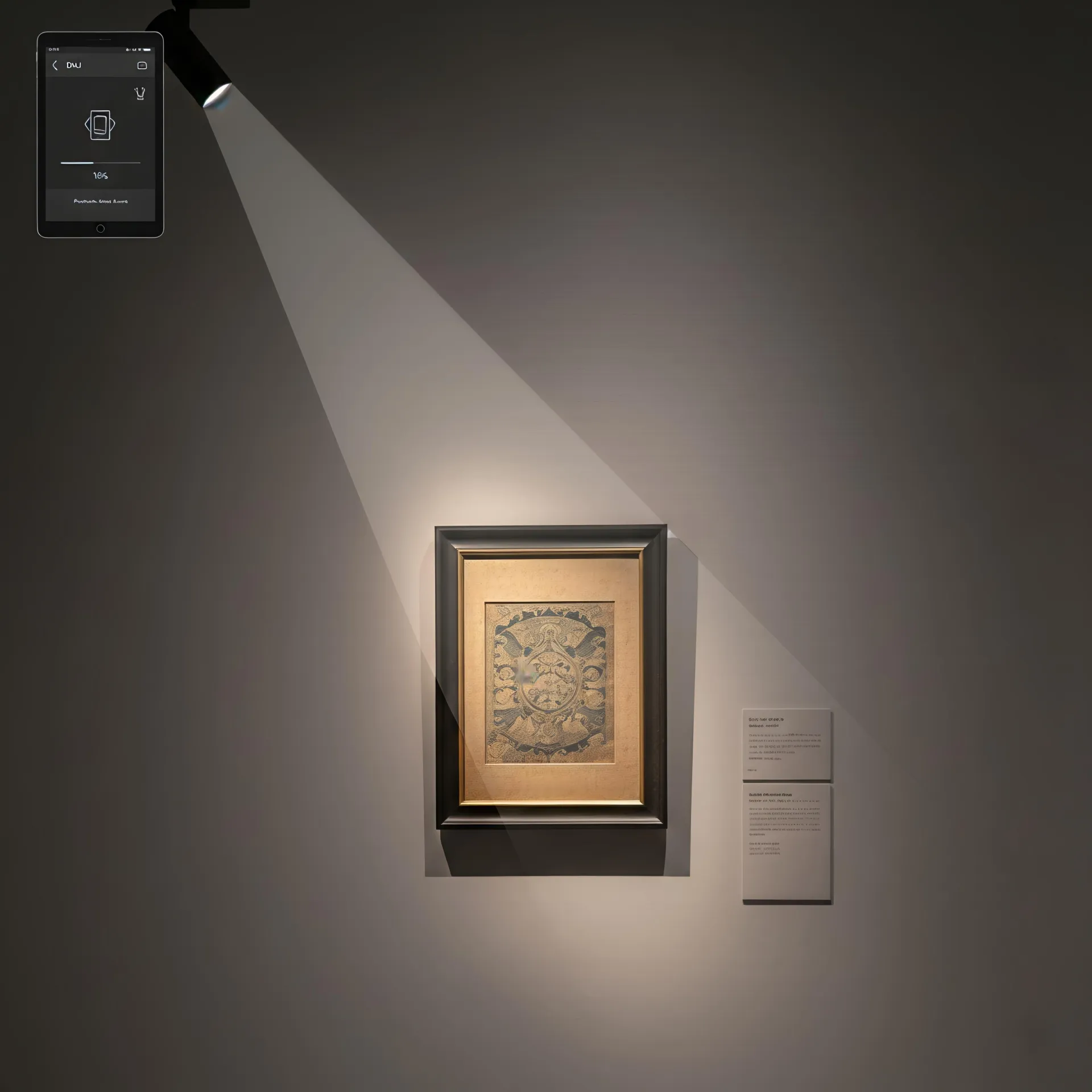
How DALI Museum Lighting Addresses These Issues
A DALI-based museum lighting control system allows each luminaire to be individually and precisely managed, upgrading artifact protection from “human supervision” to “system-level enforcement.”
Key advantages include:
- 0–100% smooth dimming with stable, flicker-free performance even at very low light levels
- Accurate illuminance control: DALI drivers support deep dimming from 0.1% to 100%, enabling strict limits such as 50 lux for paper artifacts, while maintaining 300 lux for less sensitive stone exhibits
- Annual exposure management: When integrated with DALI-compatible motion sensors, lighting follows a “presence-based” strategy—brightening when visitors approach and dimming when spaces are unoccupied. This significantly reduces unnecessary exposure during closed hours and helps keep annual exposure within safe thresholds
- Minimal thermal and UV radiation: Combined with high-quality LED DALI track lighting, UV output can be strictly controlled (<20 μW/lm), reducing physical damage at the source
Through scene-based control for exhibition, maintenance, and cleaning modes, as well as time scheduling to minimize after-hours lighting, DALI Museum Lighting provides long-term, sustainable light protection for cultural artifacts.
2. Experience: Enhancing Visual Quality and Visitor Comfort
Excellent museum lighting should be almost invisible. Visitors should focus on the artifacts—not on the light sources themselves.
Typical Display Problems
- High CRI values, but inaccurate color reproduction
- Low R9 performance, resulting in weak reds and poor texture detail
- Inconsistent color temperature across exhibition areas
- Direct glare caused by poor luminaire positioning
The Role of DALI Track Lighting in Exhibition Spaces
When DALI systems are paired with high-performance track lighting, the visual presentation of museum exhibits can be significantly improved:
- Individual luminaire control: Each DALI track light has its own address. Lighting designers can fine-tune every beam from the visitor’s perspective using tablets, avoiding reflection angles on display cases and eliminating glare spots
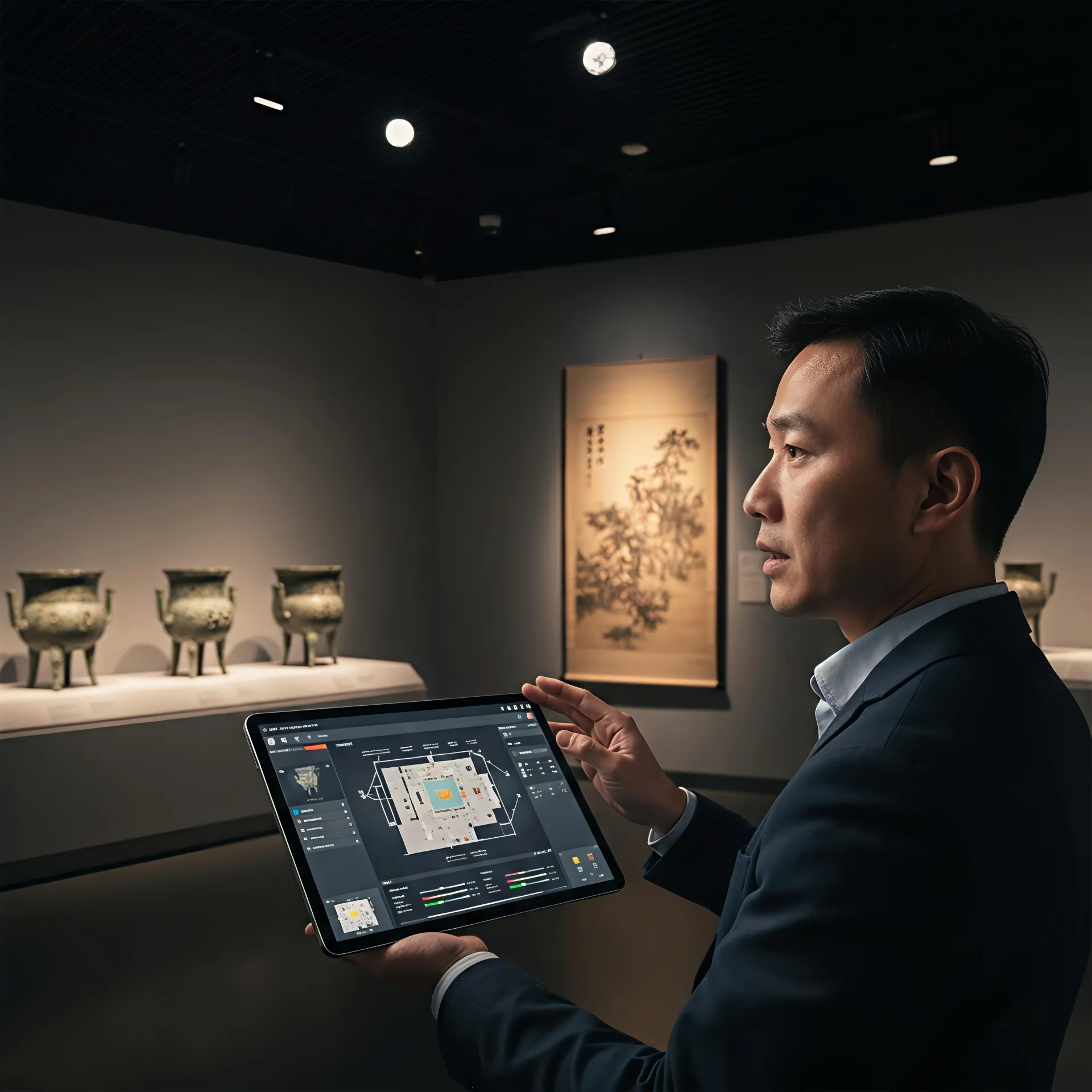
- Consistent color temperature across zones, ensuring a unified visual experience within the same exhibition area
- High color rendering with DALI DT8 control: Using the DT8 protocol, color temperature can be dynamically adjusted based on artifact material. Cooler neutral light (around 4000K) enhances the weight and texture of bronze objects, while warmer tones (around 3000K) highlight the softness of calligraphy and paintings. With Ra >95, the original colors of history are faithfully restored
- Superior visual comfort: High-frequency deep dimming eliminates flicker and rolling-shutter effects during photography, while anti-glare optical design improves comfort for close-up viewing
With proper optical design and intelligent dimming, museums can achieve better display quality at lower illuminance levels, benefiting both visitors and artifacts.
3. Efficiency: Reducing Energy Consumption and Operational Risk
Efficiency in museum lighting goes beyond energy savings. It is equally about long-term operational stability and maintenance control.
Real-World Operational Pain Points
- Exhibition halls remain fully illuminated throughout the day
- Each exhibition change requires manual re-aiming and re-adjustment
- Visible inconsistencies appear after partial luminaire replacements
Efficiency Gains with DALI Museum Lighting
DALI Museum Lighting enables a more rational and flexible operating model:
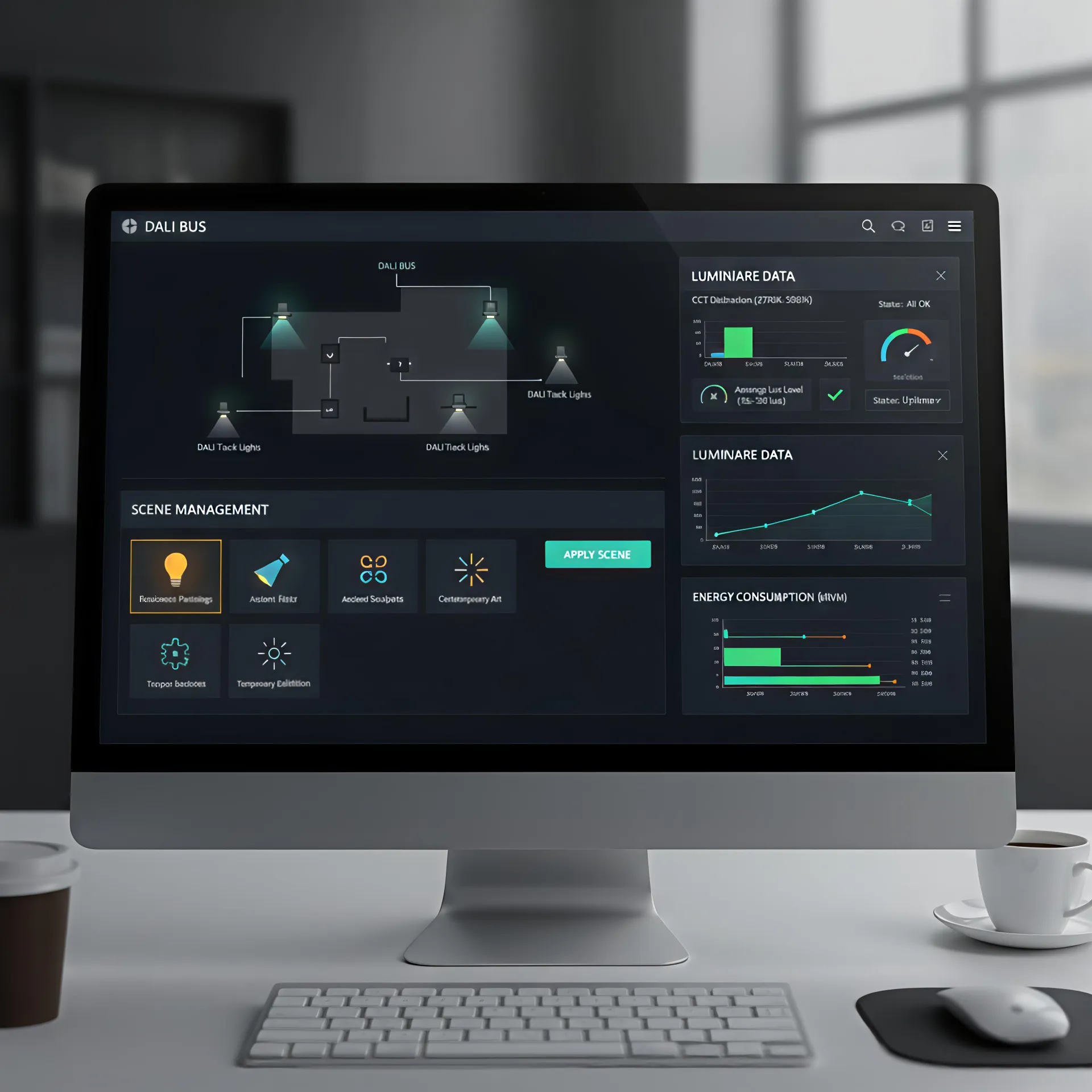
- Digital and flexible exhibition setup: Lighting scenes can be reconfigured through software without changing wiring. Track lights can be regrouped instantly to match new exhibition layouts
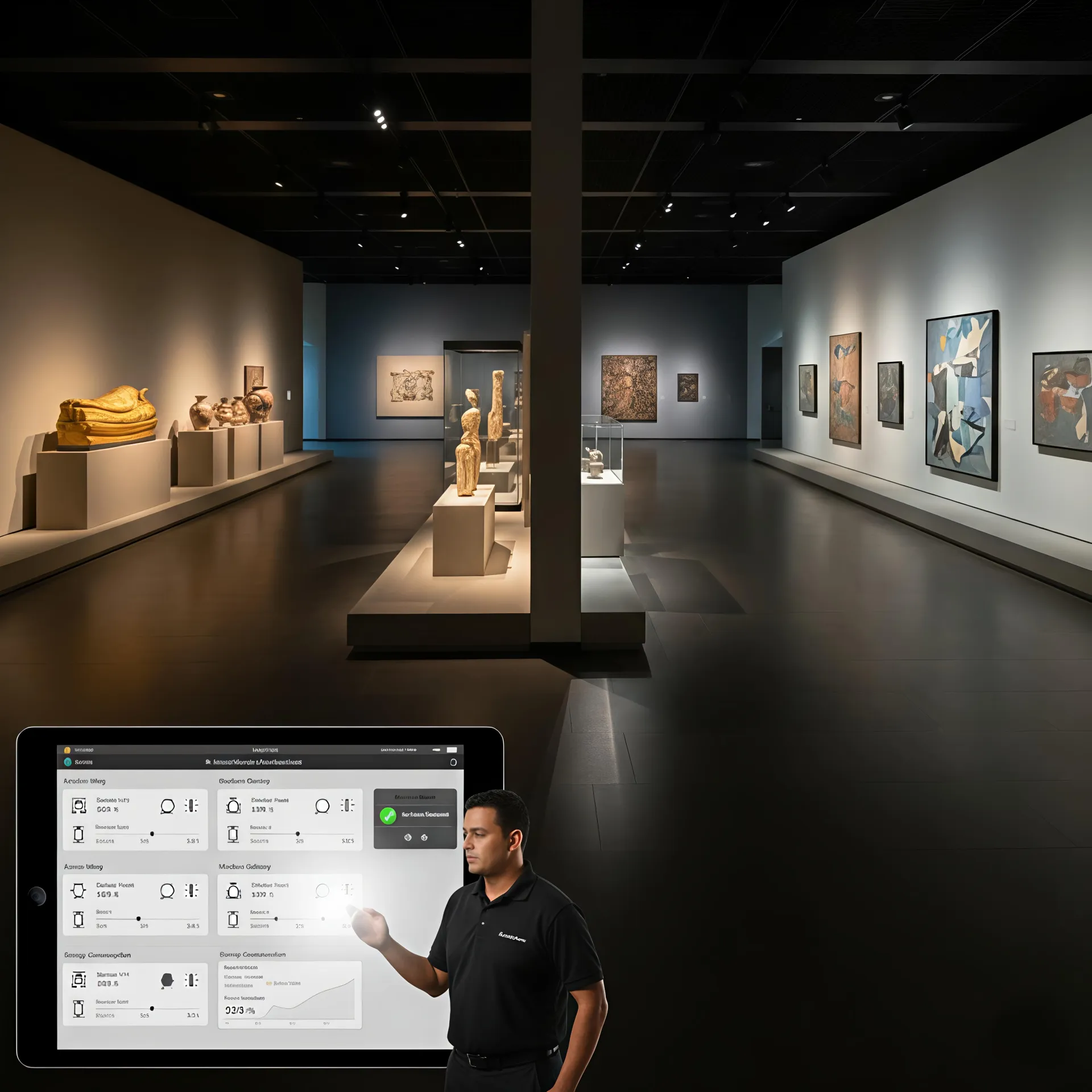
- Zoning and group control: Lighting is activated only where needed, based on exhibition requirements, preventing over-illumination
- Real-time feedback and fault monitoring: As a bidirectional communication system, DALI reports luminaire failures or nearing end-of-life conditions with precise location data, shifting maintenance from reactive repairs to proactive management
- Reduced human intervention: Fewer manual adjustments mean lower risk of misoperation and more stable electrical performance, extending the lifespan of luminaires and drivers
As a result, lighting consistency is maintained even after years of operation, while overall maintenance cost and risk are significantly reduced.
4. Intelligence: Building a Scalable and Sustainable Lighting System
Museums are not static projects; they are evolving exhibition spaces.
Lighting systems must be capable of adapting over time.
Limitations of Traditional Lighting Approaches
- Lighting effects rely heavily on individual experience
- Results are difficult to replicate after staff changes
- New exhibitions require time-consuming re-adjustment
The System-Level Value of DALI Museum Lighting
DALI elevates museum lighting from single-luminaire control to system-based management:
- Each track luminaire has an independent address, eliminating the need for on-site adjustments
- Lighting parameters and scenes can be stored, recalled, and reused
- Standardized lighting results reduce reliance on individual expertise
- Excellent scalability supports future exhibition upgrades and expansion
This level of intelligence transforms lighting into a long-term, manageable infrastructure rather than a one-time installation.
Conclusion: A Future-Oriented Approach to Museum Lighting
DALI Museum Lighting is more than a control protocol—it is a bridge between art and technology. Through the application of DALI track lighting systems, museums can effectively address glare, artifact protection, and operational efficiency, while creating a quiet and immersive environment where visitors can truly connect with history.
The core of modern museum lighting is not simply choosing a “good luminaire,” but establishing a comprehensive system that balances conservation, visual quality, operational efficiency, and long-term controllability. By systematically solving challenges related to illuminance control, visual consistency, and management efficiency, DALI Museum Lighting offers museums a safer, more professional, and forward-looking lighting solution.

