



From Design to Installation: What a DALI Smart Track Lighting Manufacturer Should Really Provide
By Powerstar
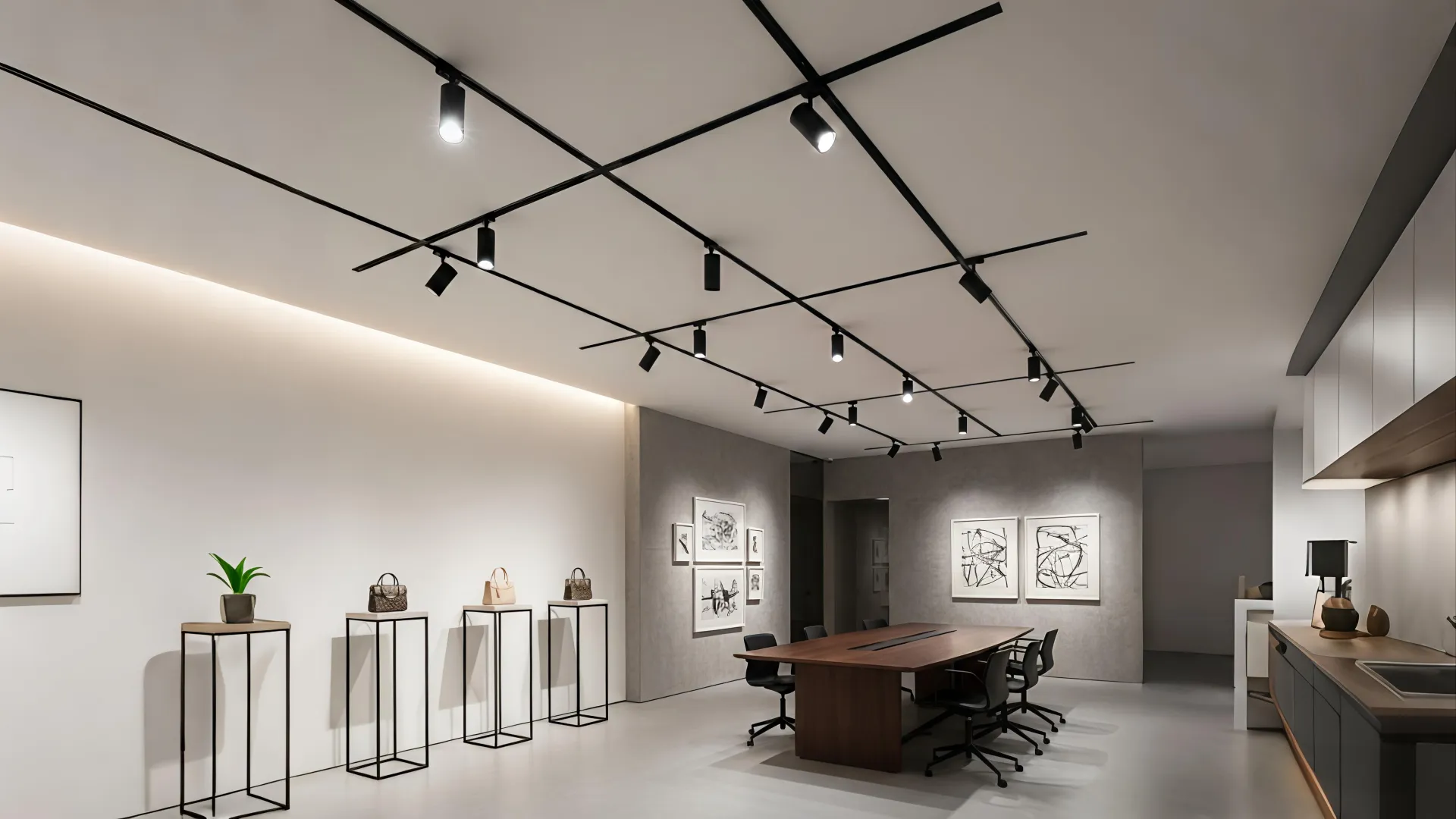
In commercial and architectural lighting projects, track lighting is no longer treated as a standalone luminaire. It has increasingly become an integral part of intelligent lighting control systems, especially as DALI-based solutions are widely adopted in retail spaces, offices, galleries, museums, and mixed-use developments.
As DALI smart control becomes standard practice, more track lighting systems are connected to centralized dimming and scene management platforms. However, real-world project experience often tells a different story from what product brochures suggest.
Many lighting professionals gradually realize that:
- Project issues rarely come from whether DALI is used, but from whether the system is truly understood and properly implemented.
- Even when using DALI track lighting, products from different manufacturers can perform very differently in terms of dimming smoothness, system compatibility, and on-site commissioning.
- Some projects appear well-designed on paper, yet suffer from flickering, inconsistent responses, or long-term maintenance problems after installation.
This raises a fundamental question:
What should a qualified DALI smart track lighting manufacturer really provide throughout the process—from design to installation?
The answer goes far beyond delivering a track light that simply “supports DALI”.
1. Design Phase Support from a DALI Smart Track Lighting Manufacturer: More Than Technical Datasheets
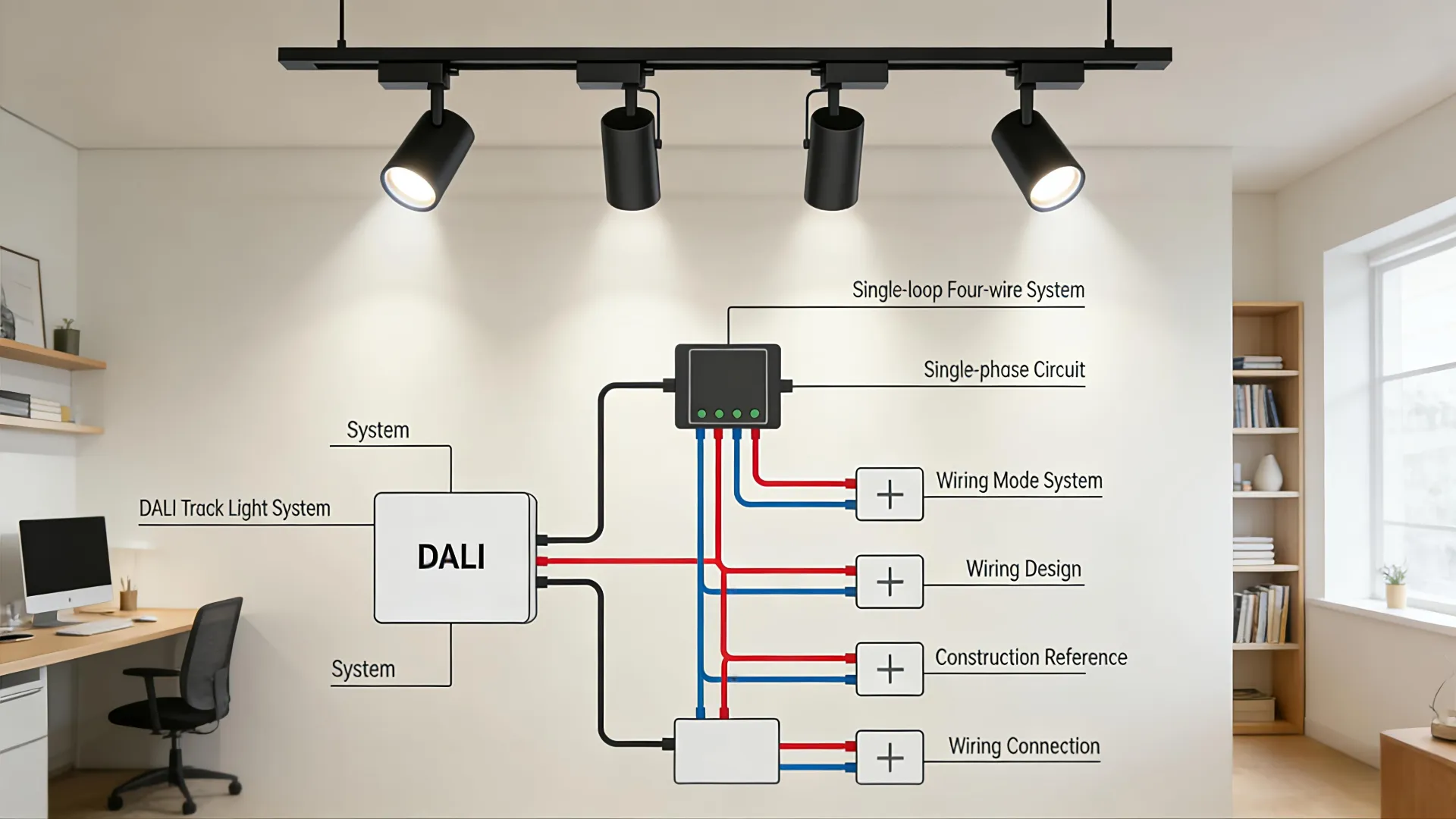
In DALI smart track lighting projects, the design phase often determines whether the system will operate smoothly in the long run. Yet in practice, manufacturers’ involvement at this stage varies significantly.
In many projects, manufacturers provide only basic product specifications, leaving lighting designers and system integrators to make critical decisions on their own:
- How many luminaires should be assigned to one DALI line?
- Is group dimming sufficient, or is individual addressing required?
- Should the dimming curve be linear or logarithmic?
- Does the dimming behavior match the actual usage scenario?
Without clear guidance during the design stage, these decisions can later evolve into systemic risks.
A professional DALI smart track lighting manufacturer should offer meaningful design-stage support, including:
- DALI system topology recommendations, helping planners define reasonable loop structures and address limits based on project scale.
- Application-driven dimming strategies, recognizing that retail environments demand fine dimming and stable low-light performance, while office spaces prioritize uniformity and visual comfort.
- Clear guidance on dimming curves, especially when sensors or automated control systems are involved, helping designers understand the real-world impact of linear versus logarithmic dimming.
This kind of support does not replace the designer’s role. Instead, it reflects practical project experience and helps eliminate potential problems before they reach the site.
2. Product and System Compatibility: A Core Responsibility of a DALI Track Lighting Manufacturer
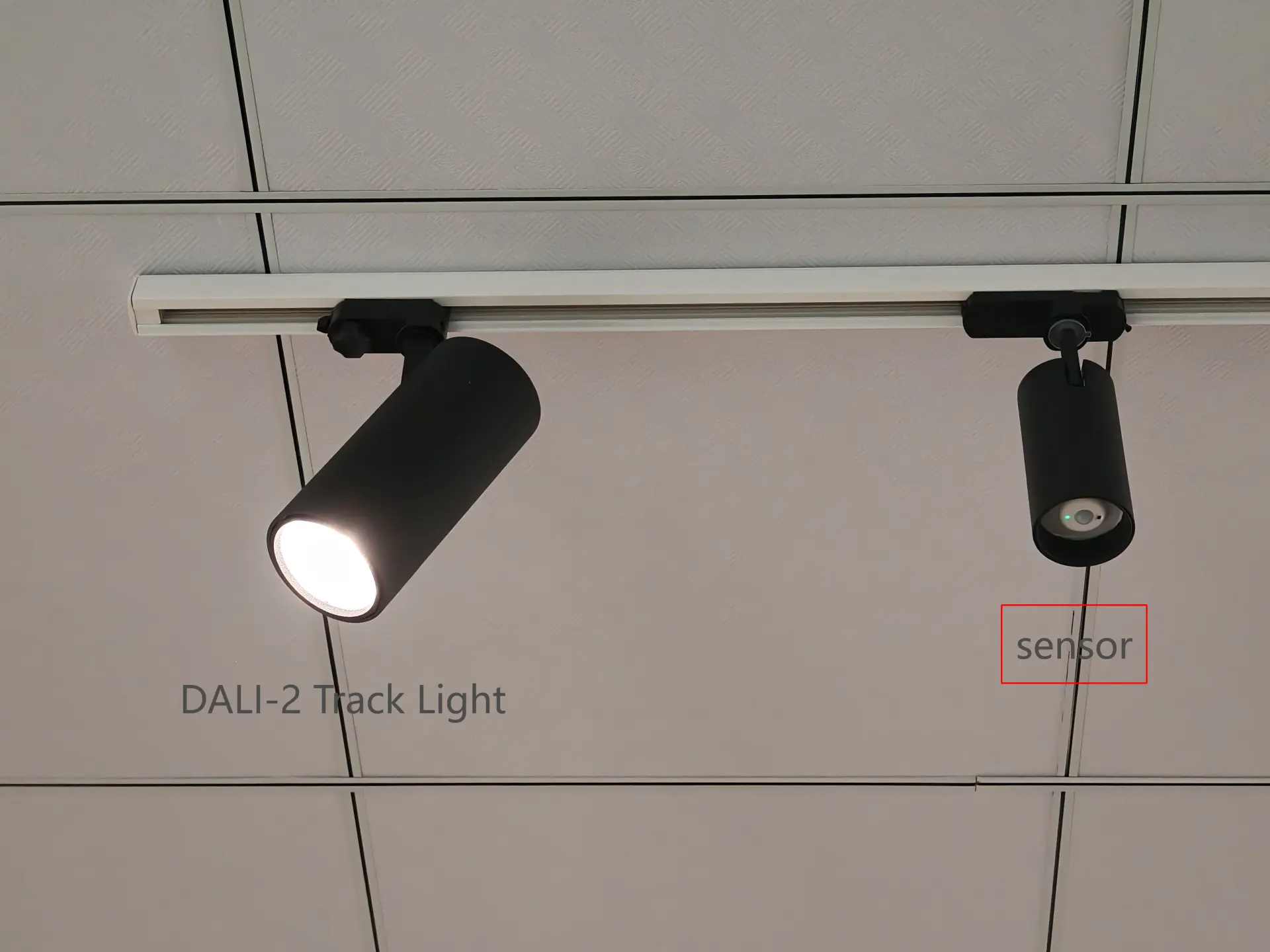
One of the most underestimated aspects of DALI projects is real system compatibility.
In theory, all DALI-compliant devices should work together. In real commercial projects, however, the situation is often far more complex.
Common issues include:
- Different DALI controllers responding inconsistently to the same dimming commands
- Unsynchronized brightness changes when multiple track lights dim simultaneously
- Flickering or stepping at low dimming levels
- Behavioral differences between old and newly added luminaires during system expansion
These problems are rarely caused by a single component. They usually result from the combined interaction of drivers, power supplies, controllers, and control logic.
For this reason, a responsible DALI smart track lighting manufacturer must address compatibility at the product development stage:
- Selecting DALI-2 certified LED drivers that have been validated for long-term stability
- Testing products within real control systems, not only under laboratory conditions
- Clearly communicating which DALI control platforms and systems have been verified
From a project perspective, this kind of upfront validation often delivers far greater value than isolated performance parameters.
3. Installation and Commissioning: Simplifying On-Site Work with DALI Track Lighting Systems
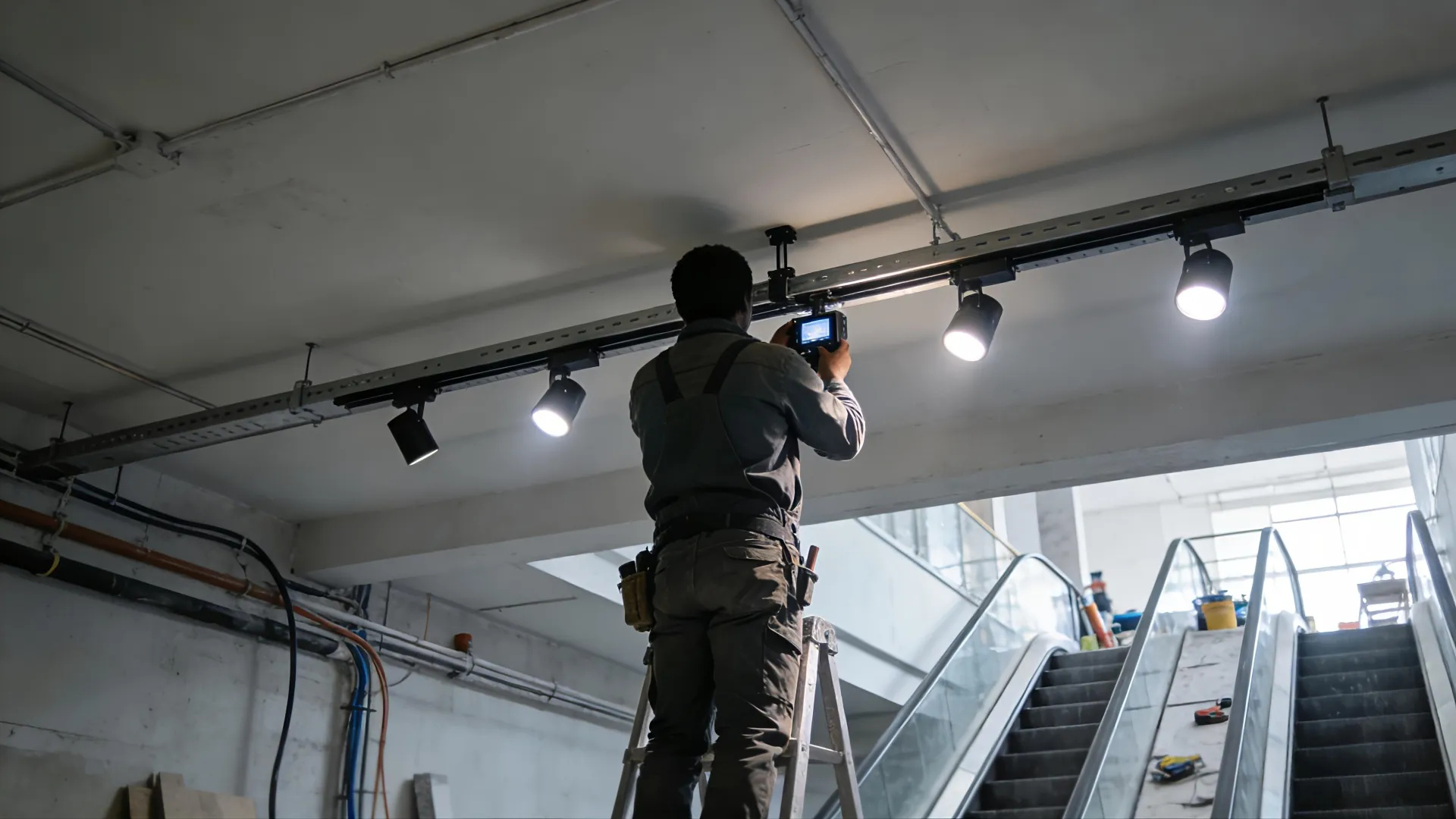
For contractors and system integrators, the success of a DALI project often depends on how smoothly installation and commissioning proceed on site.
When installation logic is not fully considered during product design, complexity is inevitably transferred to the construction phase, leading to:
- Unclear wiring instructions and higher risk of errors
- Complicated parameter settings that extend commissioning time
- Inconsistencies between different production batches, requiring manual adjustments
A professional DALI smart track lighting manufacturer should actively reduce on-site complexity by:
- Providing clear and intuitive wiring and addressing documentation
- Pre-configuring essential parameters at the factory level
- Offering commissioning guidelines or presets for common application scenarios
Although these measures may seem minor, they can significantly reduce commissioning time and overall project costs—especially in large-scale commercial installations.
4. System Stability and Long-Term Operation: The True Test of a DALI Smart Track Lighting Manufacturer
A DALI smart track lighting system is not a one-time delivery. It is a control system expected to operate reliably over many years.
After project handover, common challenges include:
- Compatibility issues when adding new luminaires during future expansions
- Subtle differences in dimming behavior between different production batches
- System inconsistencies caused by driver updates or control logic changes
A mature DALI smart track lighting manufacturer must therefore adopt a long-term perspective:
- Strict control of product consistency across batches
- A clear technical support structure for post-installation issues
- An open and forward-compatible design approach that supports future system growth
These capabilities are typically built through continuous project experience, not short-term product development cycles.
5. What Truly Sets a Professional DALI Smart Track Lighting Manufacturer Apart
In summary, a professional DALI smart track lighting manufacturer offers far more than:
- Track lights that can be connected to a DALI system
- Standard-compliant datasheets
- Or competitive pricing alone
The real differentiation lies in:
- A deep understanding of how lighting design interacts with control systems
- Product development shaped by real-world DALI project experience
- A commitment to supporting stable system operation over the entire project lifecycle
In increasingly complex architectural lighting projects, these factors often matter more than individual product features.
6. Why Leading Architects Choose Us as Their DALI Smart Track Lighting Manufacturer
As a manufacturer focused on the high-end architectural market, we understand the challenges architects face during project execution. Our position in a competitive global market is built on several core values.
1. Strict Protocol and System Compatibility Testing
The complexity of DALI systems lies in integration. When luminaires, sensors, and controllers come from different brands, compatibility issues are common.
Our commitment: Every product we deliver is certified by the DALI Alliance (DiiA) and thoroughly tested to ensure seamless compatibility with leading global control systems such as Lutron, Schneider, Siemens, and KNX-based platforms.
2. Exceptional Optical Performance for Architectural Track Lighting
Architects focus on light itself—not on luminaires.
- High Color Rendering: We offer CRI >90 and even CRI >97 full-spectrum options to accurately reproduce the colors of merchandise and artworks.
- Precision Beam Control: From ultra-narrow 10° beams to wide 60° distributions, our optical designs deliver clean, uniform light without secondary rings or color distortion.
3. Minimalist Industrial Design for Architectural Integration
Track lighting should never disrupt architectural lines. Our minimalist design language, combined with built-in driver technology, results in slimmer luminaires that integrate seamlessly into a wide range of ceiling designs.
4. Customization Capabilities for Complex DALI Lighting Projects
Every architectural project is unique. As an experienced architectural DALI track lighting manufacturer, we provide:
- Finish customization, including RAL colors matched to ceiling materials
- Special specifications, such as ultra-low UV output for museum conservation
- Structural adaptations, including custom track connectors for irregular ceiling layouts
7. Diverse Application Scenarios for DALI Smart Track Lighting
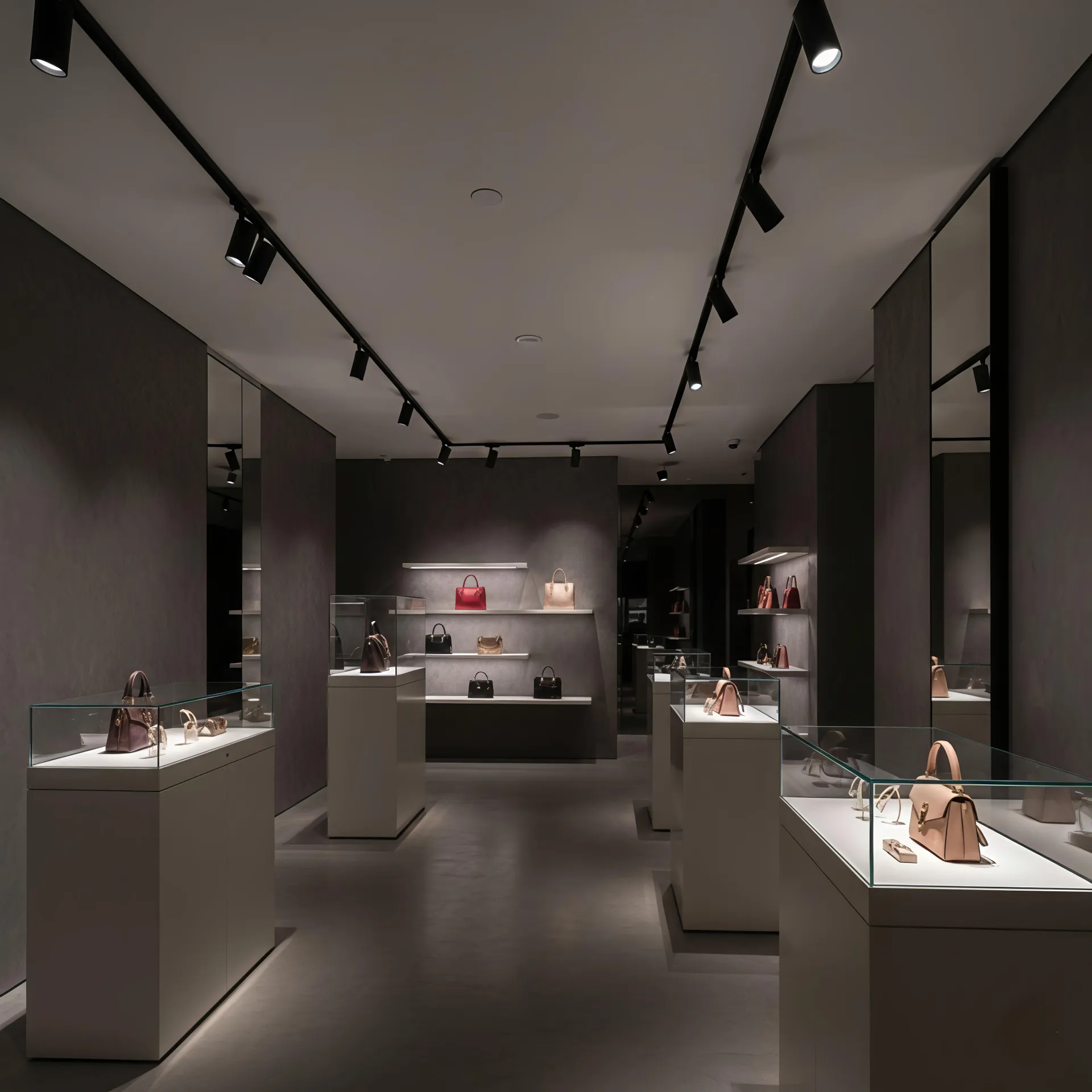
1. High-End Retail and Luxury Stores
In luxury retail, light acts as a silent salesperson. DALI-controlled track lighting allows precise accent lighting for seasonal displays, enhancing product hierarchy and perceived value through controlled contrast.
2. Galleries and Museums
Artworks are highly sensitive to light exposure. Our DALI systems support precise dimming control to prevent light damage, while flexible grouping enables frequent exhibition changes without rewiring.
3. Agile and Flexible Office Environments
As workplaces become more dynamic, static lighting no longer meets user needs. DALI smart track lighting systems adjust illumination based on occupancy and usage, creating comfortable, energy-efficient work environments.
Conclusion: Choosing a DALI Smart Track Lighting Manufacturer Means Choosing a Project Partner
From design to installation, DALI smart track lighting projects involve far more than luminaires alone. They require careful consideration of design logic, system compatibility, on-site delivery, and long-term operation.
Ultimately, selecting a DALI smart track lighting manufacturer is about choosing a partner who understands the full project lifecycle.
For commercial and architectural projects that demand stable performance, scalability, and high visual quality, this partnership often defines the final outcome.
Explore our full range of DALI Smart Track Lighting solutions and find the perfect fit for your project here

