



How to Achieve Over 50% Energy Savings in Lighting with DALI-2 Systems
By Powerstar
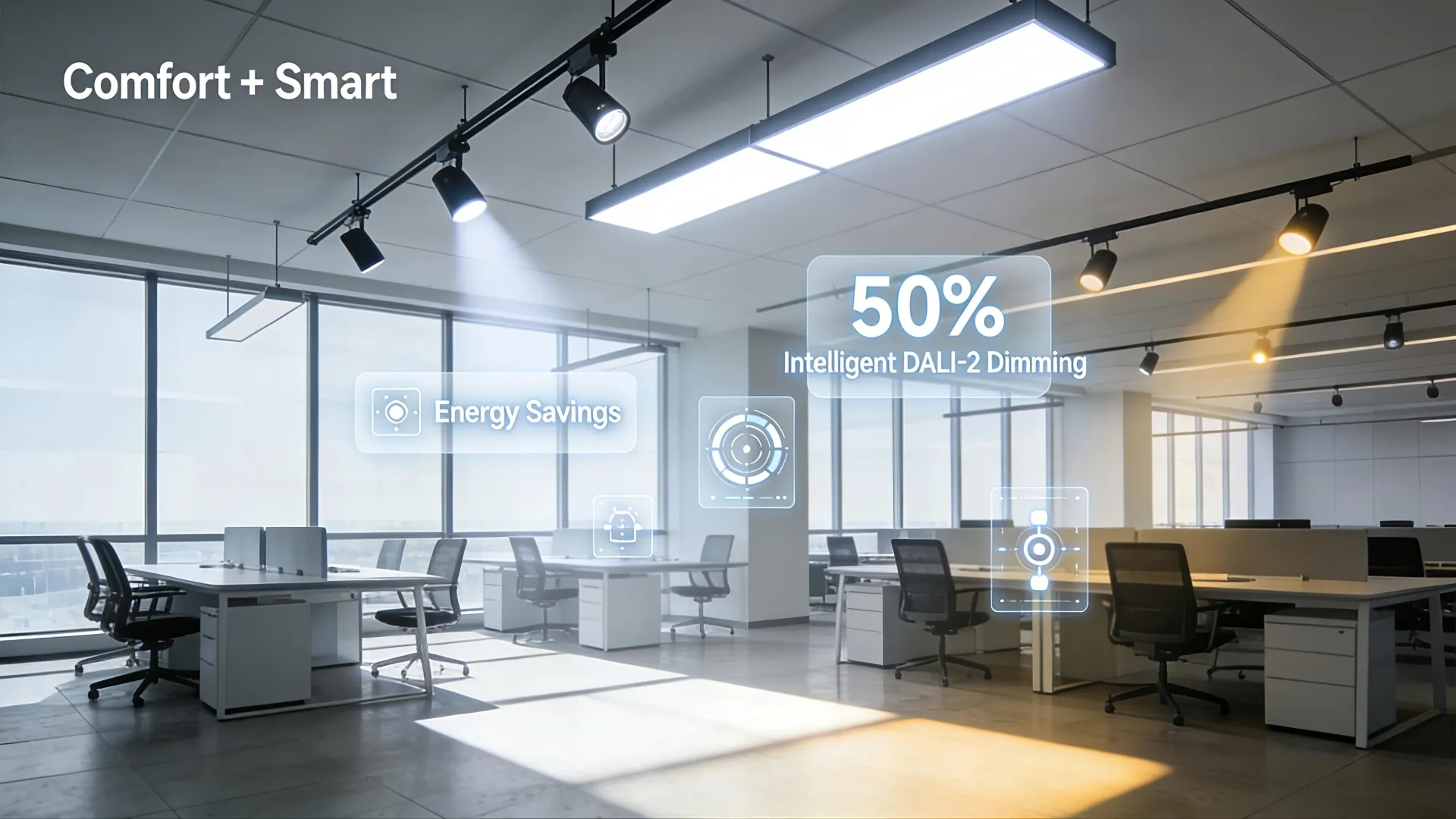
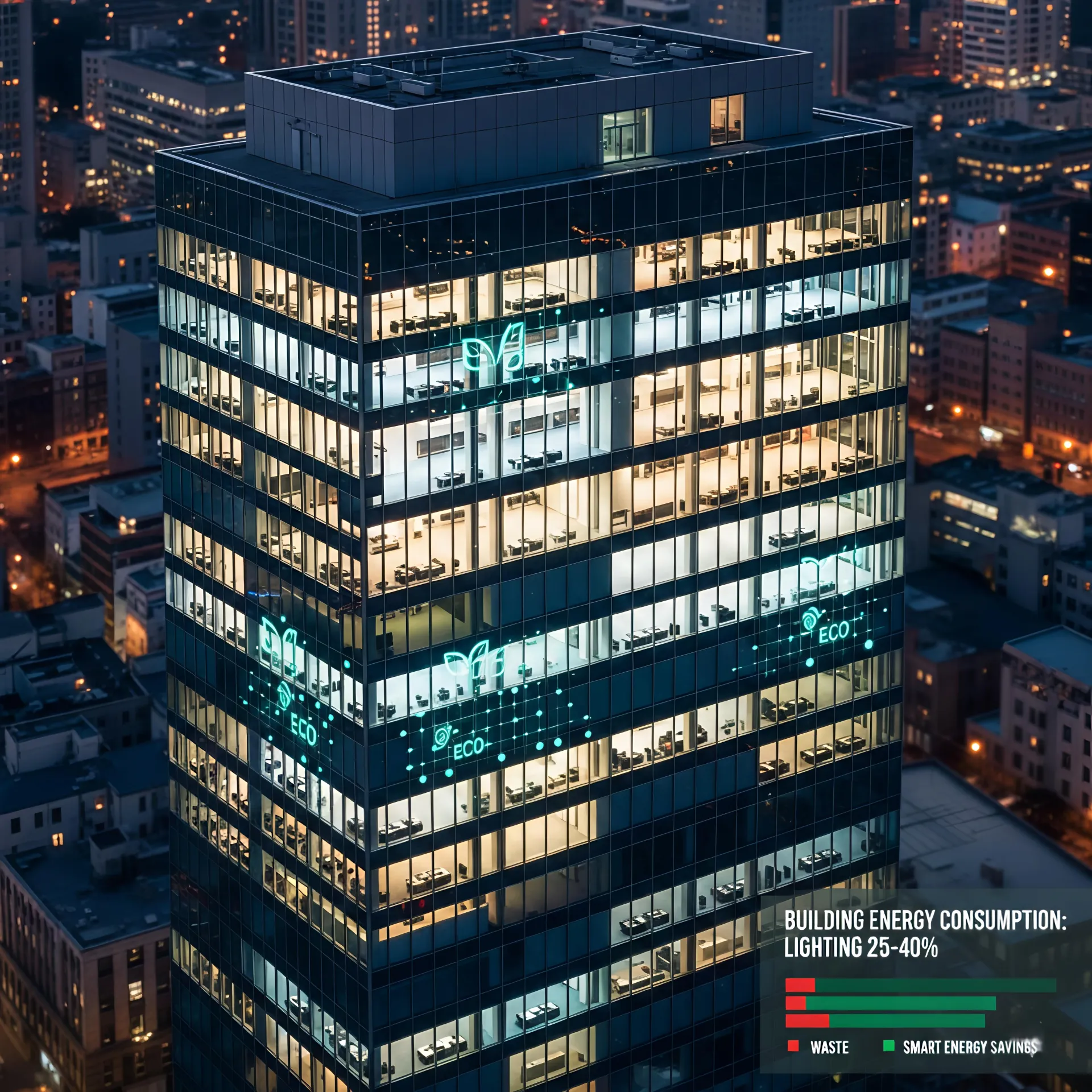
Lighting often accounts for 25% to 40% of total building energy consumption, making Energy Savings in Lighting a critical goal for businesses and institutions seeking both cost reduction and sustainability. Over the past decade, the global adoption of LED retrofits has improved baseline efficiency, but without intelligent control, even high-efficiency bulbs cannot address wasted lighting, leaving significant energy-saving potential untapped.
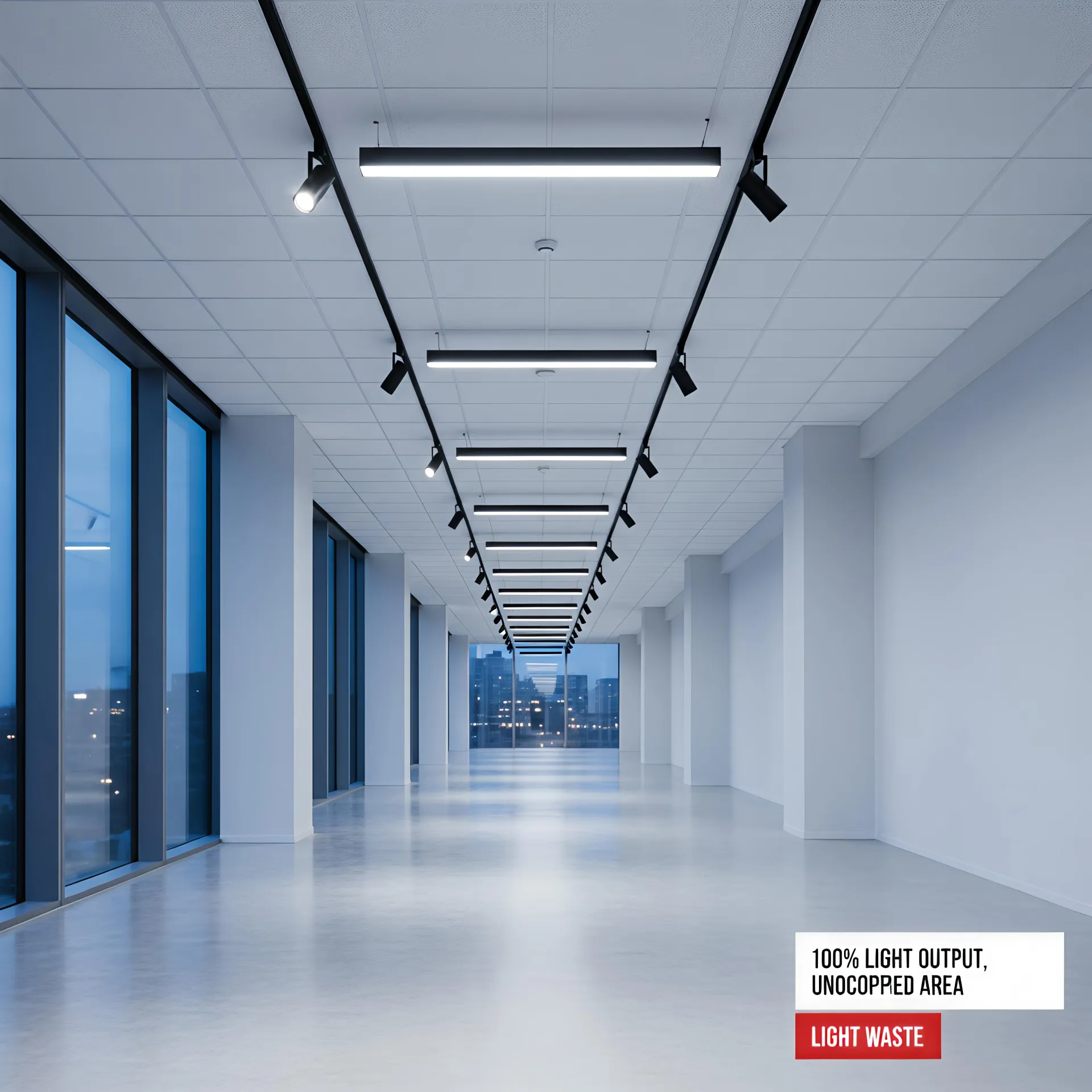
Achieving Energy Savings in Lighting has therefore become a key goal for enterprises and institutions. Traditional lighting systems, lacking intelligent control and optimization capabilities, often result in significant energy waste. In many office buildings, lights remain fully on along sunlit windows in the afternoon, while empty corridors operate at 100% power. This “one-size-fits-all” approach represents one of the biggest energy drains.
The introduction of DALI-2 (Digital Addressable Lighting Interface, second generation) transforms lighting from a simple electrical system into a digitally aware network, with the core principle of Lighting on Demand. With precise control, achieving 50% or more energy savings is not a distant dream.
Why Traditional Lighting Systems Waste Energy
Traditional lighting systems typically rely on manual switches or fixed-power setups, leading to several inefficiencies:
- Limited Zonal Control
Conventional lighting often uses an all-or-nothing approach, consuming electricity even in unoccupied areas. - Fixed Light Output
Lights with fixed brightness cannot adapt to changes in natural light or task requirements, resulting in unnecessary energy use. - Lack of Feedback
Traditional systems cannot monitor usage in real-time, nor optimize the lighting environment, resulting in low efficiency.
These limitations make it difficult for conventional systems to achieve true Energy Savings in Lighting. Studies show that merely implementing intelligent controls and optimization can significantly reduce energy consumption.
Three Core Technologies Behind DALI-2 Energy Savings
DALI-2 achieves superior efficiency compared to traditional 0-10V or physical switch systems through a complete digital communication framework.
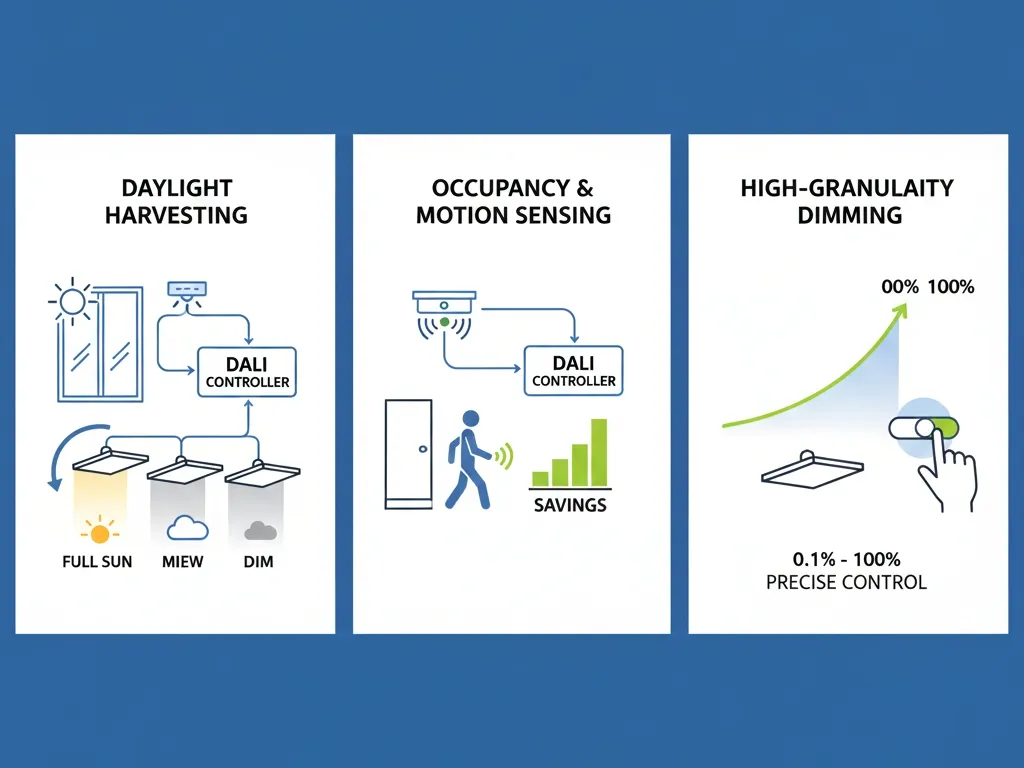
1. Daylight Harvesting: Leveraging Natural Light
One of the most significant energy-saving features of DALI-2 is daylight harvesting. Traditional lighting maintains constant brightness, but modern buildings with large glass facades experience substantial variations in indoor light levels due to sunlight.
By integrating DALI-2 light sensors, the system monitors desk-level illuminance in real-time. When sunlight increases, the system automatically dims lights near windows; when clouds block the sun, brightness smoothly ramps up. This constant lux control maintains a comfortable level for occupants (e.g., 500 lux). In well-lit buildings, this feature alone can save over 30% of lighting energy, contributing directly to Energy Savings in Lighting.
2. Occupancy & Motion Sensing: Eliminating Idle Power
The concept of “lights off when no one is around” seems simple, but achieving it in large offices is challenging. Traditional sensors often misfire or leave blind spots and typically control entire circuits.
DALI-2 sensors offer higher sensitivity and programmable logic. Each fixture and sensor has a unique address, enabling fine-grained control. For example, if a single employee is working late, only the lights above their desk operate at 100%, nearby areas remain at 20% background light, and unused zones are completely off. This precise management significantly reduces wasted energy.
3. High-Granularity Dimming
Unlike analog dimming, DALI-2 uses logarithmic dimming curves, allowing smooth transitions from 0.1% to 100% brightness.
- Non-linear energy savings: LEDs are generally more efficient at lower currents.
- Visual adaptation: Lowering brightness to 80% is often imperceptible to the human eye, yet reduces power consumption by 20%.
Administrators can set energy-saving thresholds in the system, reducing peak power usage without compromising visual comfort.
“Invisible” Savings Through Digital Management
Beyond automated sensing, DALI-2 provides substantial energy-saving potential at the operational and logic level.
1. Dynamic Scheduling
Through a central controller, DALI-2 can follow complex schedules:
- Work mode: 09:00–18:00, full sensor operation
- Lunch mode: 12:00–13:30, public areas dimmed by 50%
- Cleaning mode: After 19:00, lights only in occupied cleaning zones
By aligning lighting with administrative schedules, energy waste from forgotten lights is eliminated.
2. Two-Way Feedback & Predictive Maintenance
Traditional lighting is one-way: when a light fails, it may remain unnoticed, and abnormal energy use goes undetected. DALI-2 enables two-way communication:
- Real-time monitoring: Each driver reports current, voltage, and status
- Energy visualization: Managers can view daily or monthly reports and optimize sensor logic for areas with excessive lighting duration
3. Simplified Wiring & Reduced Hardware Loss
While wiring itself doesn’t generate large energy bills, DALI-2 control lines avoid complex additional circuits. Since grouping is software-defined, future space adjustments do not require rewiring—just software reconfiguration. This flexibility reduces energy loss during a building’s lifecycle.
Real-World Case Studies
Case 1: Office Retrofit
- Before: 120 kW lighting power, fully on 24/7
- After: Lights adjust to natural light and occupancy; unoccupied areas automatically turn off
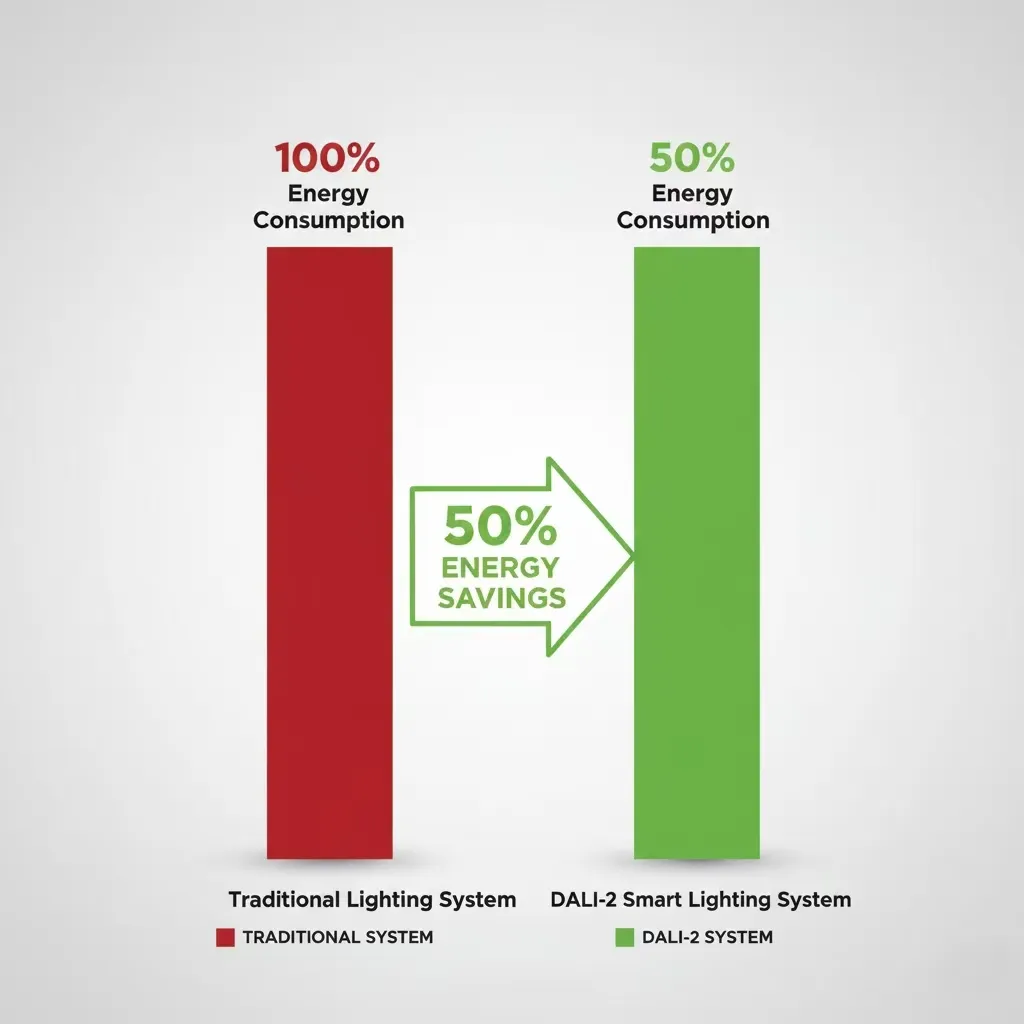
- Result: Annual electricity cost reduced by ~48%, overall energy consumption cut by nearly 50%
Case 2: Retail Mall Smart Lighting
- High-traffic periods: Full brightness for product display
- Low-traffic periods: Partial dimming or off in unoccupied zones
- Result: Lighting energy consumption reduced by 45%, while enhancing customer experience
Case 3: Hospital Wards and Common Areas
- Nighttime corridors dimmed when unoccupied, ward lighting adjusted to patient care needs
- Result: Energy consumption decreased 40–50%, reducing light disturbance for patients
These cases demonstrate that DALI-2 can deliver Energy Savings in Lighting across diverse building types, balancing efficiency and occupant comfort.
Why 50% Savings is Achievable
A typical 1,000 m² office demonstrates the potential:
| Control Aspect | Traditional (Switch/0-10V) | DALI-2 Intelligent | Contribution |
|---|---|---|---|
| Basic logic | All-on, always bright | Individual control | 15% |
| Daylight utilization | No automatic adjustment | Constant lux control | 20% |
| Occupancy sensing | Zone sensors, prone to errors | High-precision sensors | 10% |
| Operational optimization | Blind operation | Data-driven scene optimization | 5% |
| Total Savings | Baseline (0%) | 50% integrated savings | 50% |
How to Successfully Implement a DALI-2 Energy Saving Plan
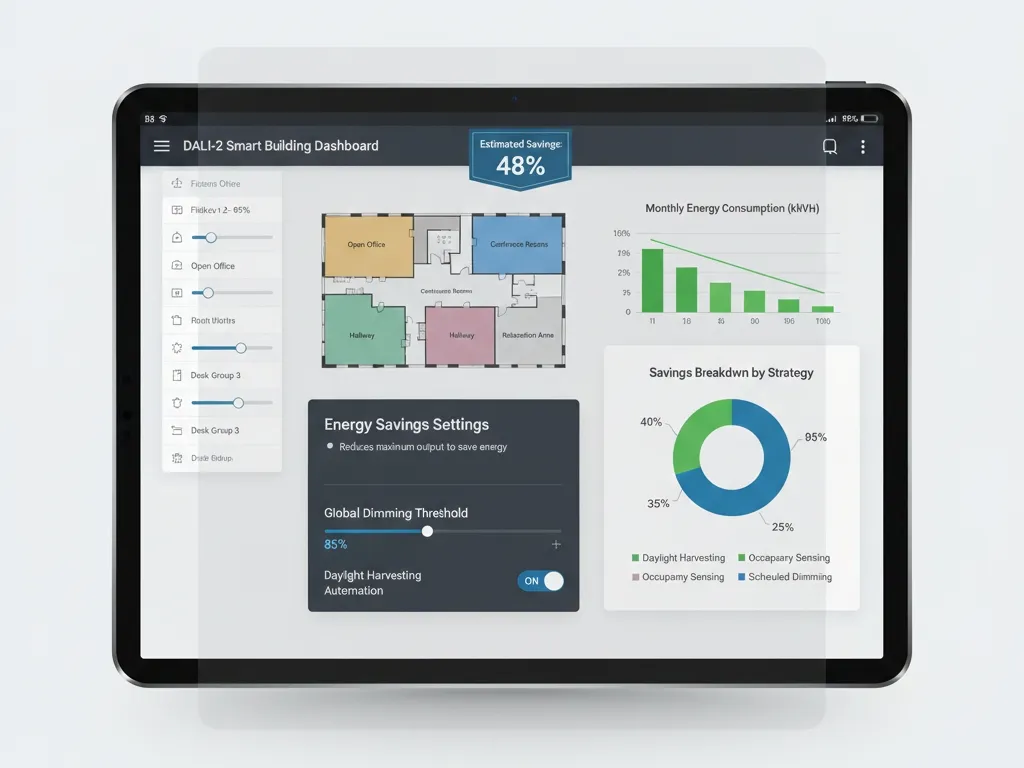
Achieving a true 50% reduction requires a systematic approach:
- Equipment Selection: Use only DALI-2 certified products.
- Sensor Placement: Conduct detailed studies based on desk layout, window orientation, and corridor traffic. Avoid blind spots or obstructions.
- Software Commissioning: Fine-tune dimming curves, sensor delays, and minimum brightness. This step often determines whether savings reach 30% or 50%.
- Integration with Building Management Systems (BMS): Link lighting with HVAC and other systems for comprehensive building energy optimization.
Recommended Products and Solutions
Look for products with:
- High-efficiency, low-power fixtures for maximum lumens per watt
- Adjustable focus and color temperature for different scenarios
- Long lifespan and high reliability to reduce maintenance
- Smart control compatibility, supporting scene management, apps, and third-party systems
Combining these features, businesses can achieve 50% Energy Savings in Lighting, while improving comfort and sustainability.
Conclusion: Beyond Energy Savings
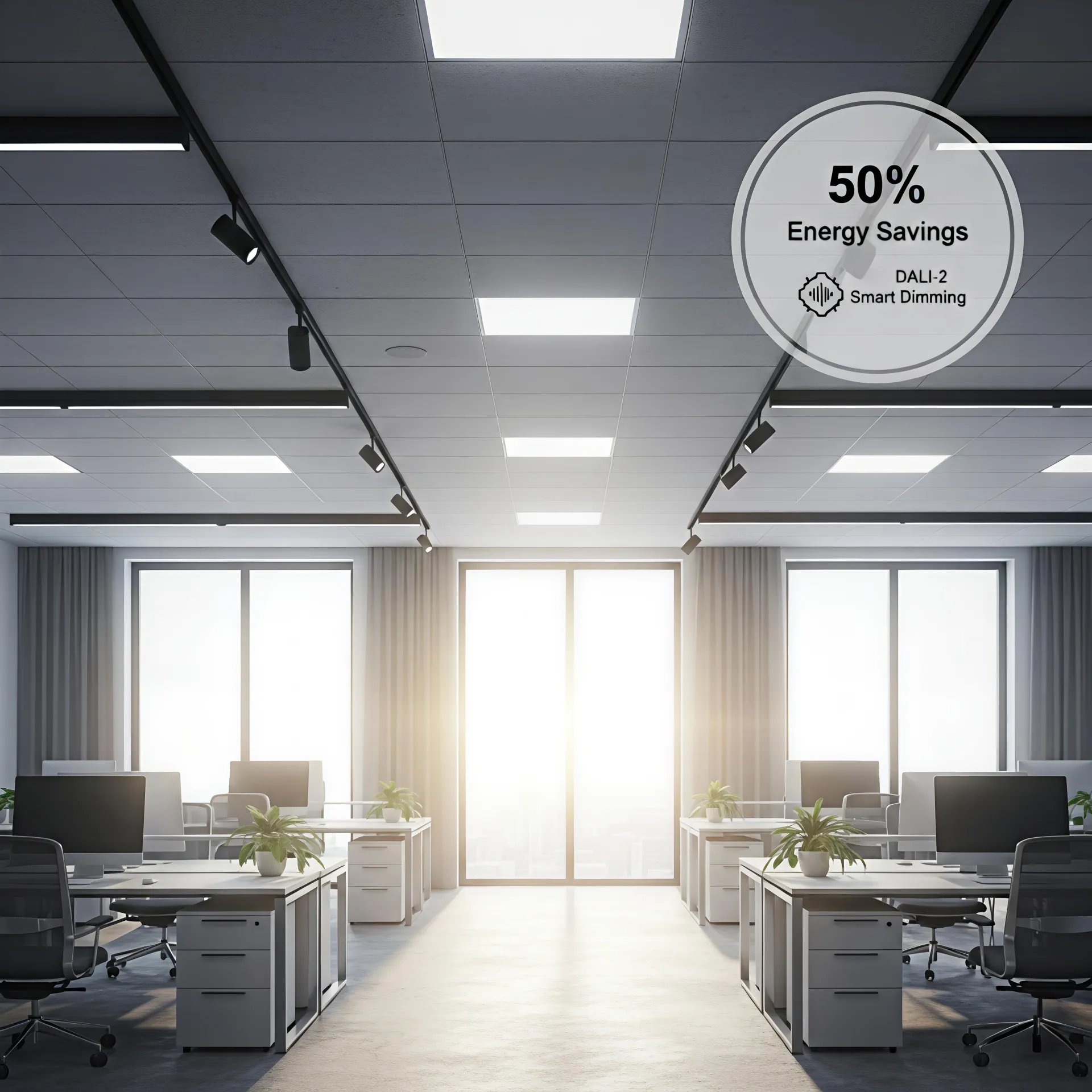
Achieving 50% energy reduction is only the direct environmental and financial benefit of DALI-2. Beyond savings, it creates a more comfortable and adaptive work environment—lights adjust smoothly with natural daylight, protect eyesight, and allow personalized local lighting.
In today’s era of carbon neutrality and ESG reporting, DALI-2 is no longer a costly add-on but a strategic, high-return investment. By digitally controlling every light, we not only save energy but also pave the way for intelligent buildings of the future.
If you are planning energy-efficient office retrofits or need a detailed DALI-2 budget proposal, contact our technical consulting team.

