



IP44 vs. IP65 LED Downlights: Complete Selection Guide and Protection Level Analysis
By Powerstar
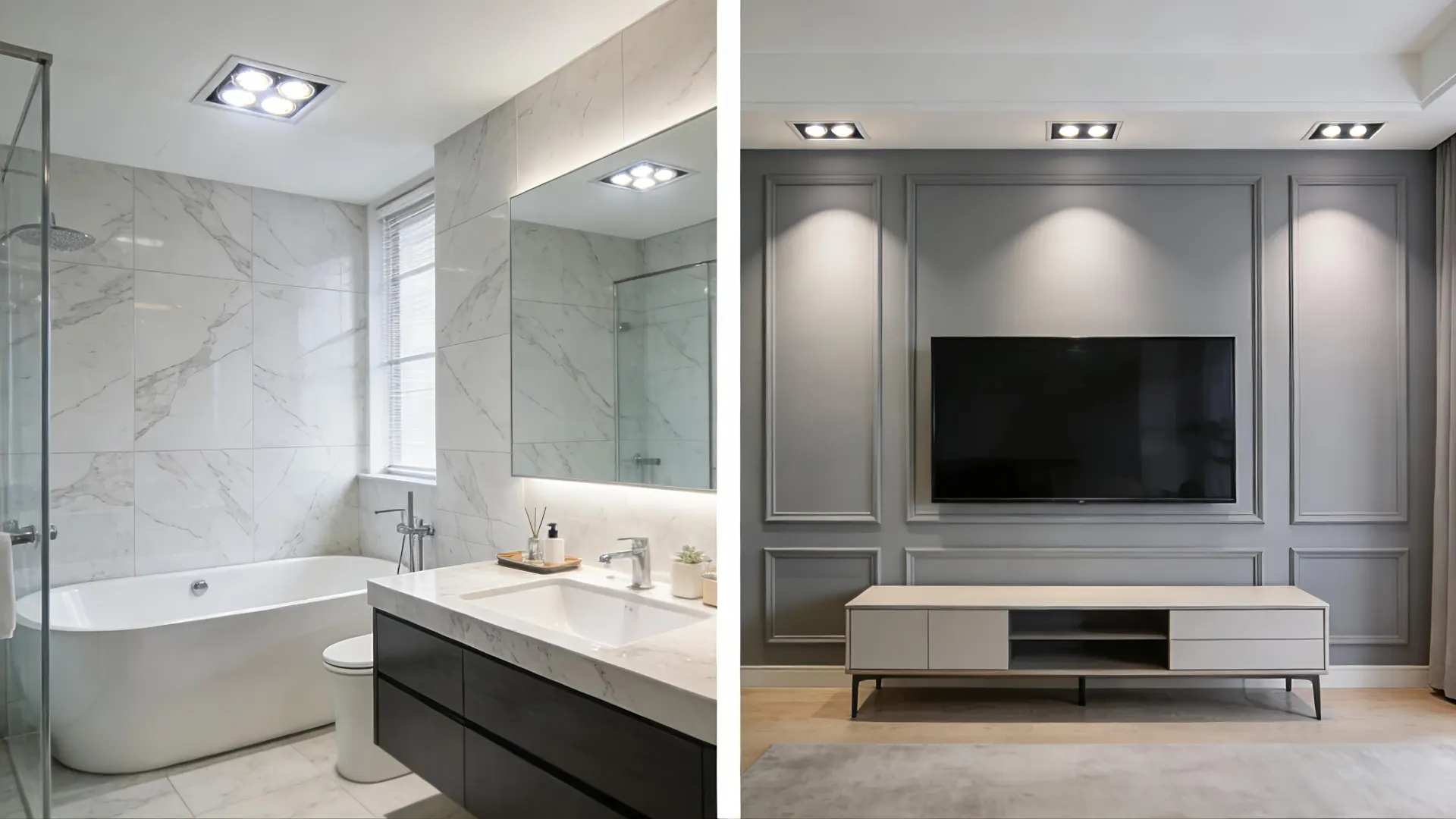
When choosing LED downlights, IP65 LED Downlights often become the top consideration for environments with moisture, dust, or exposure to water. Selecting the right IP rating ensures long-term stable operation, reduces maintenance costs, and prevents potential safety hazards. On the other hand, choosing the wrong protection level can lead to short circuits, premature damage, or higher replacement costs. Homeowners, commercial procurement teams, and interior designers often struggle to decide between IP44 and IP65, as both have their merits depending on the application.
Some buyers tend to overestimate their needs and pay extra for high-protection products, while others focus solely on price, ignoring environmental suitability. The reality is that there is no absolute “better” choice between IP44 and IP65 LED downlights. The key is matching the light to the actual usage scenario. This guide will explain IP protection definitions, technical differences, practical applications, selection principles, and installation considerations to help you choose the most suitable LED downlights.
Understanding IP Ratings: What Do IP44 and IP65 Mean?
IP ratings are defined by the International Electrotechnical Commission (IEC) to measure an electrical device’s resistance to dust and water. Each rating consists of two digits: the first represents solid particle protection, and the second represents water ingress protection. The higher the number, the better the protection.
Solid Particle Protection (First Digit)
- IP4X: Prevents entry of solid objects larger than 1mm, such as dust, small wires, or tools.
- IP6X: Full dust-proofing, completely sealing the interior against dust, suitable for industrial or dusty commercial environments.
Water Protection (Second Digit)
- IPX4: Resistant to water splashes from any direction, suitable for dry or slightly damp areas such as corridors or kitchen ceilings away from sinks.
- IPX5: Resistant to low-pressure water jets from any direction, suitable for wet areas like shower zones, commercial kitchens, or outdoor covered spaces.
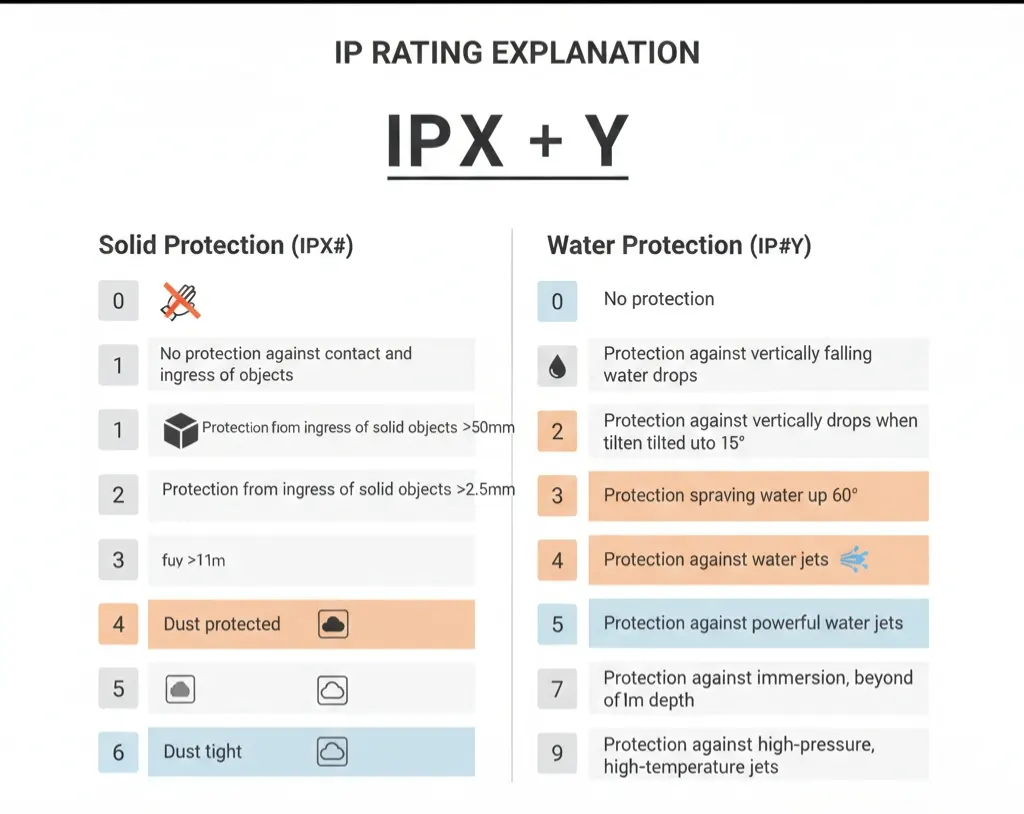
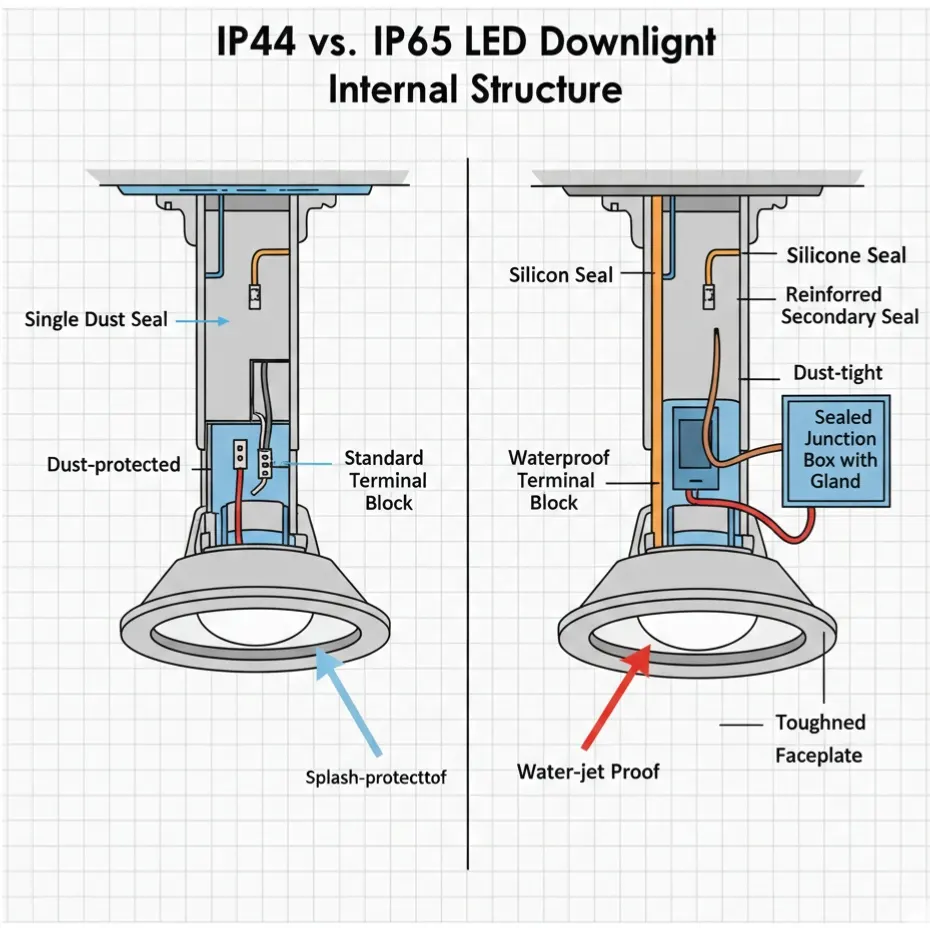
Note: The IP rating alone does not guarantee protection. High-quality IP44/IP65 downlights use silicone gaskets, waterproof connectors, and reinforced covers to ensure stable protection. Low-quality products may mislabel ratings, causing frequent failures.
For more details on IP ratings and industry standards, you can refer to IEC 60529 Standard.
Key Differences Between IP44 and IP65 LED Downlights
Although IP44 and IP65 differ by only one level, the differences in design and performance are significant. The following table summarizes the main distinctions:
| Feature | IP44 LED Downlights | IP65 LED Downlights |
|---|---|---|
| Protection Level | Splash-proof and basic dust protection | Full dust-proof and water jet resistant |
| Sealing Design | Single silicone gasket, standard connectors | Double reinforced sealing, waterproof connectors, dust-proof cover |
| Core Features | Lightweight, cost-effective, easy installation | Durable, corrosion-resistant, suitable for complex environments |
| Typical Specs | UGR<19, 2700K–6500K, AC220–240V | UGR<16, DALI dimming support, AC100–240V, CRI>90 |
| Price | Lower, 10–20% cheaper than IP65 | Higher due to enhanced protection and premium components |
IP65 LED downlights offer higher protection, better durability, and additional features. However, their suitability depends on the application: dry, dust-free environments may only require IP44, whereas wet, dusty, or high-pressure cleaning areas need IP65 for long-term reliability.
For commercial guidelines on IP65 downlights, check LED Professional.
Where IP44 LED Downlights Work Best
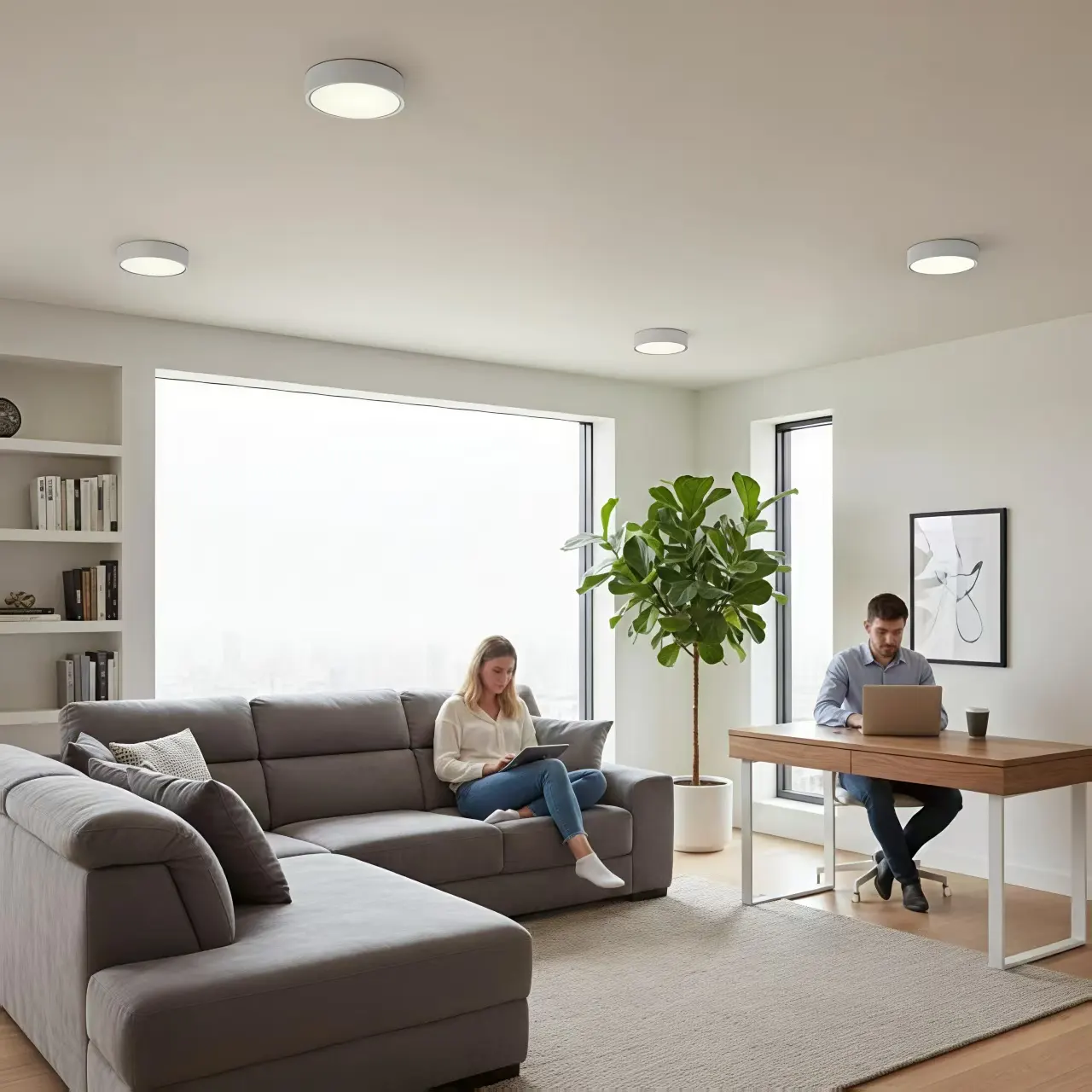
IP44 downlights excel in dry or slightly damp conditions, offering a balance between performance and affordability. Common scenarios include:
- Dry Residential Areas: Living rooms, bedrooms, dining rooms, hallways, and studies. These areas experience minimal moisture and dust. For example, recessed ceiling downlights in a living room mainly provide general illumination and decorative effects. UGR<19 options help prevent glare, improving visual comfort.
- Light Commercial Spaces: Offices, meeting rooms, reception areas, and indoor retail zones with moderate foot traffic. These spaces are generally dry, and IP44 provides sufficient protection. For adjustable lighting, IP44 downlights with 0–10V dimming compatibility allow flexible brightness control.
- Dry Sections of Kitchens or Bathrooms: Areas away from direct water exposure, like bathroom dry zones or kitchen ceilings not directly over sinks. Note: IP44 cannot be installed where water splashes are frequent, such as shower zones or over sinks.
Summary: For environments without significant moisture, splashes, or dust, IP44 downlights offer the best value, ensuring adequate protection while keeping costs low.
When IP65 LED Downlights Are Essential
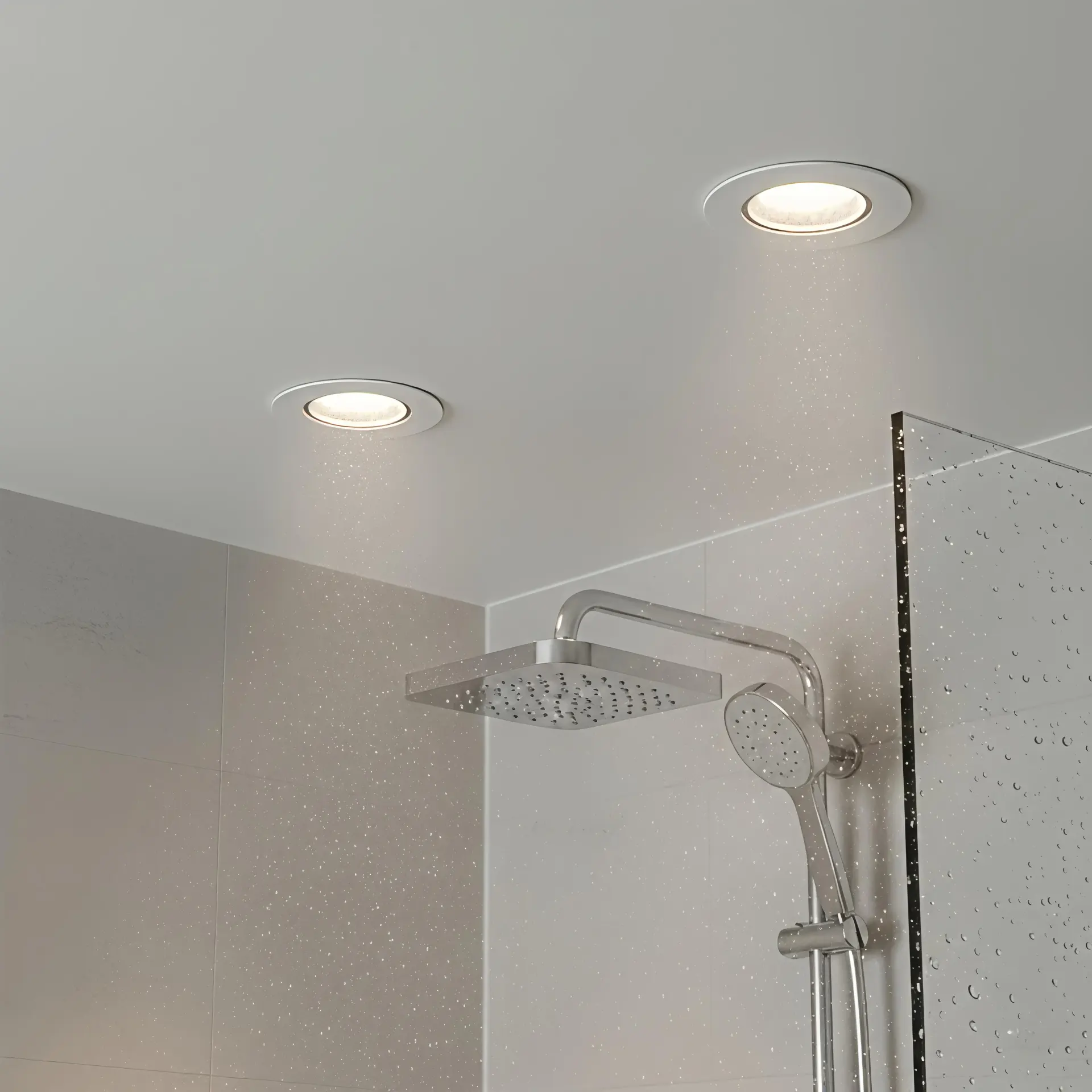
IP65 downlights are designed for high humidity, dust, or water-exposed areas, providing enhanced protection and durability. Ideal applications include:
- Wet Residential Zones: Bathrooms (shower areas, bathtubs), kitchen sinks, balconies, and laundry rooms. IP65 units fully prevent water ingress, protecting the light and electronic components.
- Commercial and Industrial Environments: Hotel bathrooms, restaurant kitchens, food courts, factories, parking garages, and outdoor covered areas. They can withstand moisture, oil smoke, dust, and routine high-pressure cleaning.
- Specialized Facilities: Swimming pools, spa centers, underground garages, and food processing plants. IP65 downlights resist corrosive gases, high humidity, and dust, ensuring reliable operation.
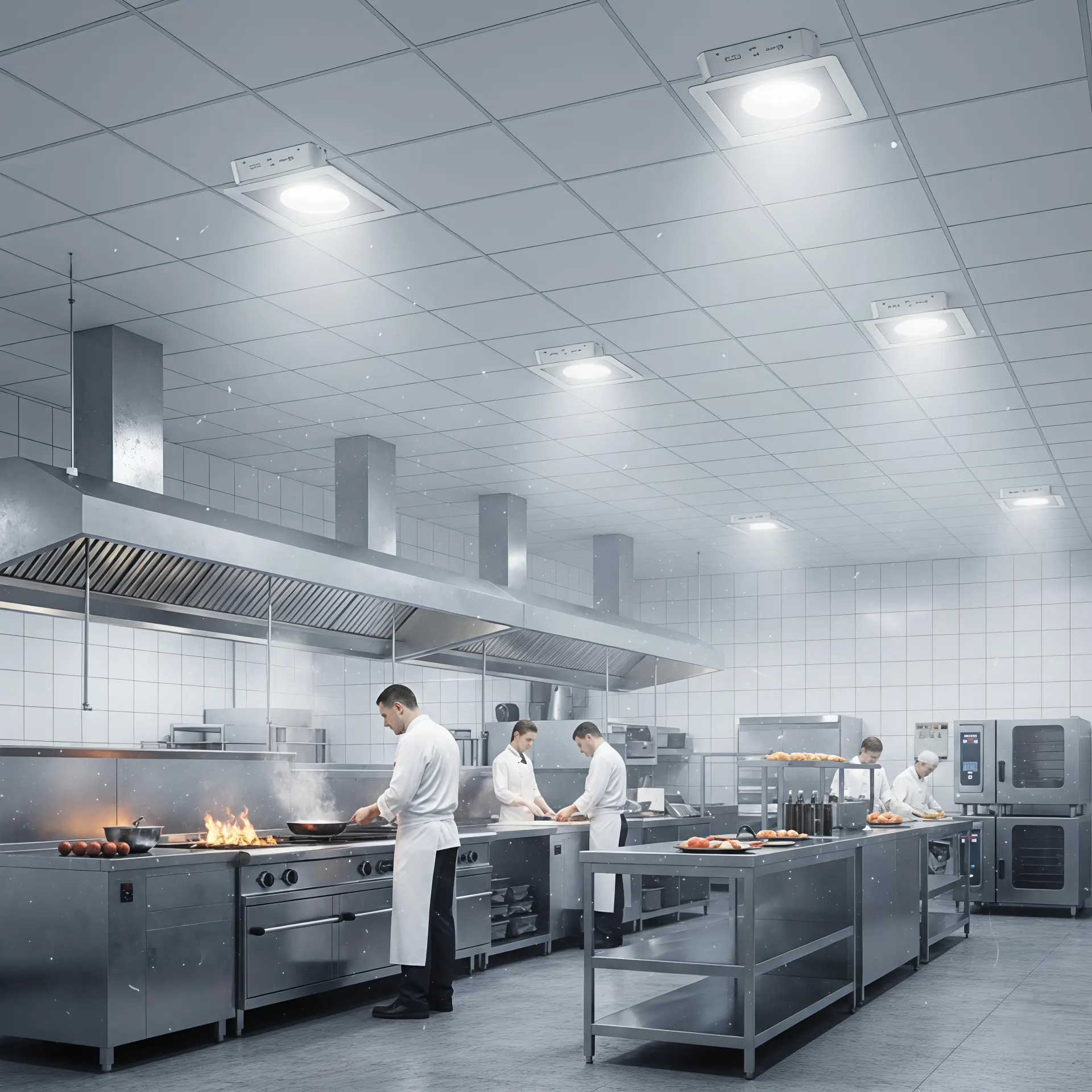
For commercial applications, consider IP65 downlights with DALI 2.0 dimming, wide voltage range, and high CRI (>90) for premium spaces like hotels or shopping malls.
Step-by-Step Guide to Selecting the Right LED Downlights
Many users struggle with IP44 vs. IP65 decisions. Follow these three steps:
Step 1: Assess the Environment
Evaluate three dimensions: humidity, dust, and water exposure.
- Dry, dust-free, no splashes → IP44
- High humidity, dust, or water jets → IP65
Step 2: Match Space Type and Function
- Residential dry areas → IP44, wet areas → IP65
- Commercial: light dry spaces → IP44, wet or industrial areas → IP65
- Example: Mall clothing sections (dry) → IP44, food courts (humid, oily) → IP65
Step 3: Consider Additional Requirements and Budget
- Dimming options: DALI, 0–10V
- Glare control, CRI, and color temperature
- Avoid overpaying for high protection if the environment doesn’t require it, or under-protecting in wet areas, which increases long-term costs.
Installation and Maintenance Tips for IP65 LED Downlights
Even with IP65 protection, improper installation can compromise performance:
- Check Silicone Seals: Ensure they are even with no gaps to prevent water ingress due to pressure differences.
- Waterproof Wiring: Use waterproof junction boxes; a waterproof light body alone is not enough.
- Avoid Overcrowding: Maintain adequate heat dissipation to prevent overheating.
- Routine Cleaning: Regularly remove dust and oil buildup to maintain light output.
Additional Tips and Common Pitfalls
- Verify Genuine IP Ratings: Request testing certificates to avoid counterfeit products.
- Check Sealing and Accessories: Quality IP65 downlights use reinforced gaskets and waterproof connectors.
- Match Lighting Needs: Consider color temperature (3000–4000K for homes, 4000–5000K for commercial), CRI>90 for accurate color rendering.
- Avoid Misconceptions:
- Applying sealant alone does not make IP44 lights equivalent to IP65.
- IP65 downlights can support dimming; choose compatible drivers.
- IP44 still has value for dry spaces to save costs.
Conclusion: Matching LED Downlights to the Environment
- IP44 LED Downlights: Basic protection, suitable for dry residential and light commercial spaces. Cost-effective.
- IP65 LED Downlights: Upgraded protection for wet, dusty, or industrial areas. Durable and safe.
The key principle is scenario adaptation: choose the light according to the environment, usage, and functional requirements. This ensures optimal lighting performance, safety, and long-term cost-effectiveness.
By following this guide, you can confidently select the right LED downlights and avoid unnecessary mistakes, ensuring stable and safe lighting for any space.

