



Revolutionizing Retail Spaces: The Ultimate Guide to Dimmable Track Lighting for Shopping Malls
By Powerstar
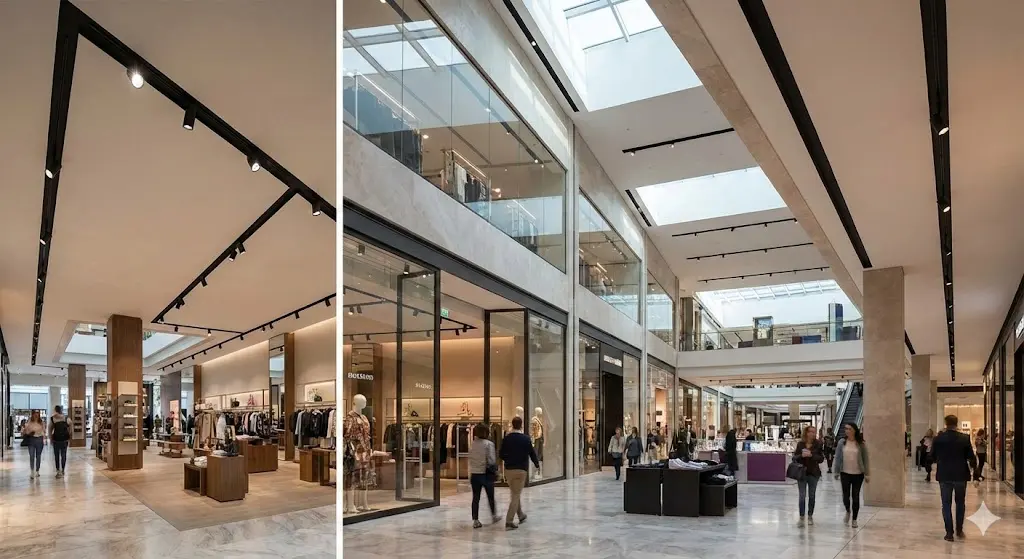
Modern shopping malls demand lighting systems that are flexible, energy-efficient, and capable of enhancing the customer experience. Among the various commercial lighting solutions available today, dimmable track lighting for shopping malls has become a preferred choice for architects, lighting designers, and mall operators.
This article explores why dimmable track lighting is widely used in shopping malls, how it improves both aesthetics and operational efficiency, and what key factors should be considered during design and installation.
Why Dimmable Track Lighting Is Ideal for Shopping Malls
Shopping malls are dynamic environments. Lighting needs vary by time of day, season, foot traffic, and tenant type. Fixed-output lighting systems often fail to meet these changing requirements.
Dimmable track lighting for shopping malls offers unmatched flexibility by allowing light output to be adjusted according to real-world needs.
Key reasons malls adopt dimmable track lighting include:
- Adaptable lighting levels for different zones
- Improved visual comfort for shoppers
- Reduced energy consumption during off-peak hours
- Better control over ambiance and brand presentation
Track-based systems also make it easy to reposition luminaires when store layouts or visual merchandising strategies change.
How Dimmable Track Lighting Enhances the Shopping Experience
Lighting directly affects how customers perceive space, products, and comfort. Poor lighting can shorten dwell time, while well-designed lighting encourages exploration and purchases.
With dimmable track lighting for shopping malls, operators can fine-tune brightness levels to achieve the desired atmosphere.
Benefits to the customer experience include:
- Softer lighting in lounges and rest areas
- Brighter accent lighting in promotional zones
- Reduced glare and eye fatigue
- Consistent visual comfort across large open spaces
By adjusting light intensity, malls can create a balanced environment that feels welcoming rather than overwhelming.
Energy Efficiency and Cost Savings
One of the strongest arguments for using dimmable track lighting for shopping malls is energy efficiency. Large malls operate lighting systems for long hours every day, making energy costs a major operational expense.
Dimming allows lighting levels to be reduced without switching lights off entirely, which is especially useful during:
- Early mornings before peak traffic
- Late evenings after stores close
- Low-traffic weekdays
- Seasonal periods with extended daylight
When paired with LED technology, dimmable track lighting can significantly reduce electricity consumption and extend luminaire lifespan.
Zoning and Lighting Control Flexibility of Dimmable Track Light
Shopping malls consist of multiple zones, each with different lighting requirements. A single lighting level across all areas is neither practical nor efficient.
Dimmable track lighting for shopping malls supports zoning strategies such as:
- High brightness for anchor stores and featured retail areas
- Medium lighting levels for corridors and walkways
- Lower lighting levels for rest zones and waiting areas
With appropriate control systems, each zone can be dimmed independently, improving both visual clarity and energy management.
Compatibility with Lighting Control Systems
Dimmable track lighting systems can integrate with various control protocols depending on project requirements.
Common dimming options include:
- 0–10V dimming for simple brightness control
- DALI systems for advanced zoning and scheduling
- Smart lighting platforms for centralized management
For shopping malls, advanced control systems enable scheduled dimming, daylight harvesting, and integration with sensors, further optimizing performance.
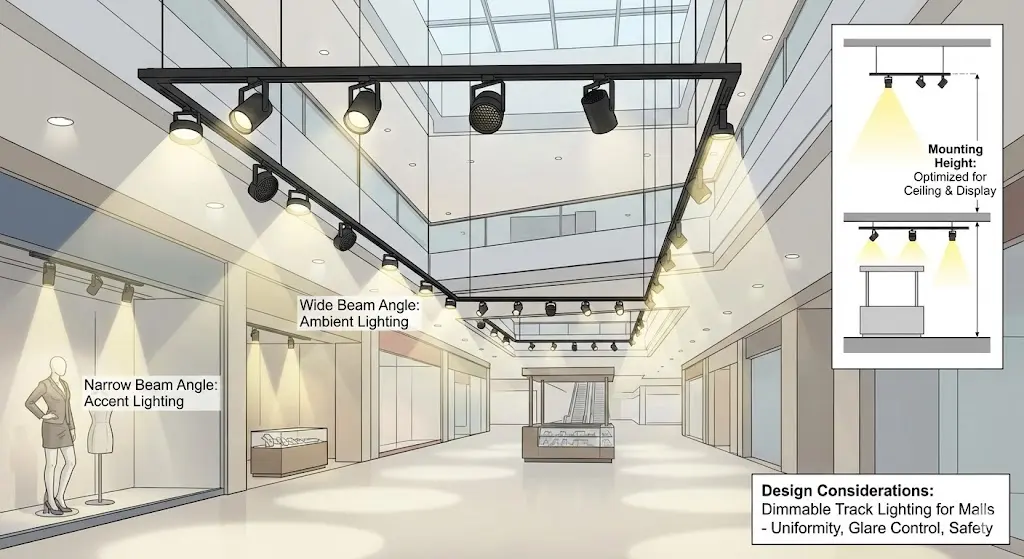
Design Considerations for Dimmable Track Lighting in Malls
Proper planning is essential to maximize the benefits of dimmable track lighting for shopping malls. Poor design can lead to uneven illumination, glare issues, or inefficient energy use.
Key design considerations include:
- Beam angle selection to balance ambient and accent lighting
- Mounting height relative to ceiling and display areas
- Uniformity across large open spaces
- Glare control for visual comfort
Lighting designers should ensure that dimming does not compromise safety or visibility, especially in public circulation areas.
Installation Best Practices
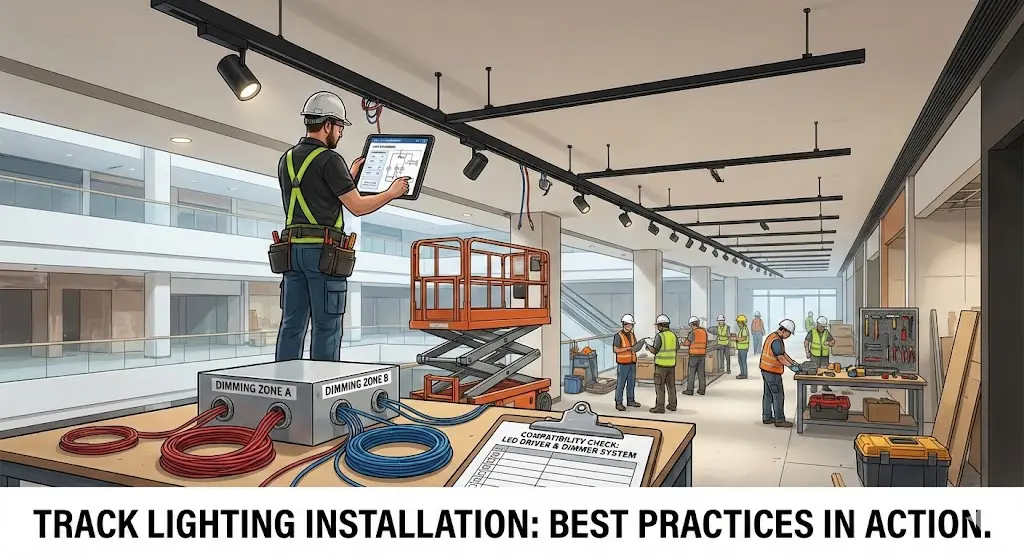
Track lighting systems are relatively easy to install compared to traditional fixed luminaires, but commercial-scale projects still require careful execution.
Best practices include:
- Proper load calculation for track power capacity
- Clear separation of dimming zones during wiring
- Compatibility checks between drivers and dimming systems
- Allowance for future expansion or reconfiguration
Professional installation ensures that dimming functions operate smoothly without flicker or instability.
Maintenance and Long-Term Performance
One advantage of dimmable track lighting for shopping malls is reduced maintenance. LED track luminaires typically offer long lifespans, and dimming further extends driver and LED longevity.
Maintenance benefits include:
- Fewer lamp replacements
- Lower heat generation at reduced output levels
- Easier fixture replacement due to track-based mounting
Routine inspections should still be scheduled to ensure consistent dimming performance and system reliability.
Supporting Retail Branding and Visual Merchandising
Retail tenants rely heavily on lighting to present their products effectively. A rigid lighting system limits creativity and branding consistency.
Dimmable track lighting allows:
- Bright, focused lighting for premium products
- Softer lighting for luxury or lifestyle brands
- Seasonal lighting adjustments without hardware changes
For mall operators, offering flexible lighting infrastructure adds value to tenant spaces and improves overall mall appeal.
Common Mistakes to Avoid
Despite its advantages, improper implementation can reduce the effectiveness of dimmable track lighting for shopping malls.
Common mistakes include:
- Using incompatible dimming drivers
- Over-dimming critical circulation areas
- Ignoring glare control in high-brightness zones
- Poor zoning that limits flexibility
Avoiding these issues requires coordination between lighting designers, engineers, and installers from the early planning stages.
Conclusion: A Smart Lighting Choice for Modern Shopping Malls
As shopping malls evolve to meet changing consumer expectations, lighting systems must deliver flexibility, efficiency, and visual comfort. Dimmable track lighting for shopping malls meets these demands by combining adaptable illumination with energy-saving performance.
When properly designed and installed, dimmable track lighting supports operational efficiency, enhances the customer experience, and provides long-term value for mall owners and tenants alike.
For any modern shopping mall project, dimmable track lighting is not just a lighting solution—it is a strategic investment in performance, comfort, and sustainability.

