



Smart Lighting Australia: Intelligent Track, Downlight and Linear Lighting for Commercial Spaces
By Powerstar
Smart Lighting Australia and the Green Transformation of Commercial Spaces
Over the past five years, commercial spaces across Australia have undergone a significant transformation. Rising electricity costs, combined with increasingly strict energy efficiency requirements under the National Construction Code (NCC), Section J, have made traditional lighting solutions difficult to justify for modern businesses.
In this context, Smart Lighting Australia is no longer just a technology trend. It has become a practical and strategic approach for offices, retail spaces, and public buildings in cities such as Sydney, Melbourne, and Brisbane to improve operational efficiency, reduce energy consumption, and lower carbon emissions.
More importantly, real-world commercial projects have shown that smart lighting success does not start with control systems alone. It starts with commercial-grade luminaires that are designed specifically for performance, reliability, and long-term use.
What Smart Lighting Really Means in Australian Commercial Lighting
In commercial lighting projects, “smart” does not simply mean connected or automated. For building owners, facility managers, and lighting designers, smart lighting in Australia must deliver measurable value, including:
- Flexibility for different commercial applications
- Adaptability to changing operating hours and usage patterns
- Long-term stability with reduced maintenance requirements
- Compliance with Australian energy efficiency standards
This is why, in commercial lighting Australia, the quality of the luminaire itself defines the upper limit of any smart lighting system. Control protocols enhance performance, but the fixture remains the foundation.
Smart Track Lighting Australia: Flexibility for Retail and Display Spaces
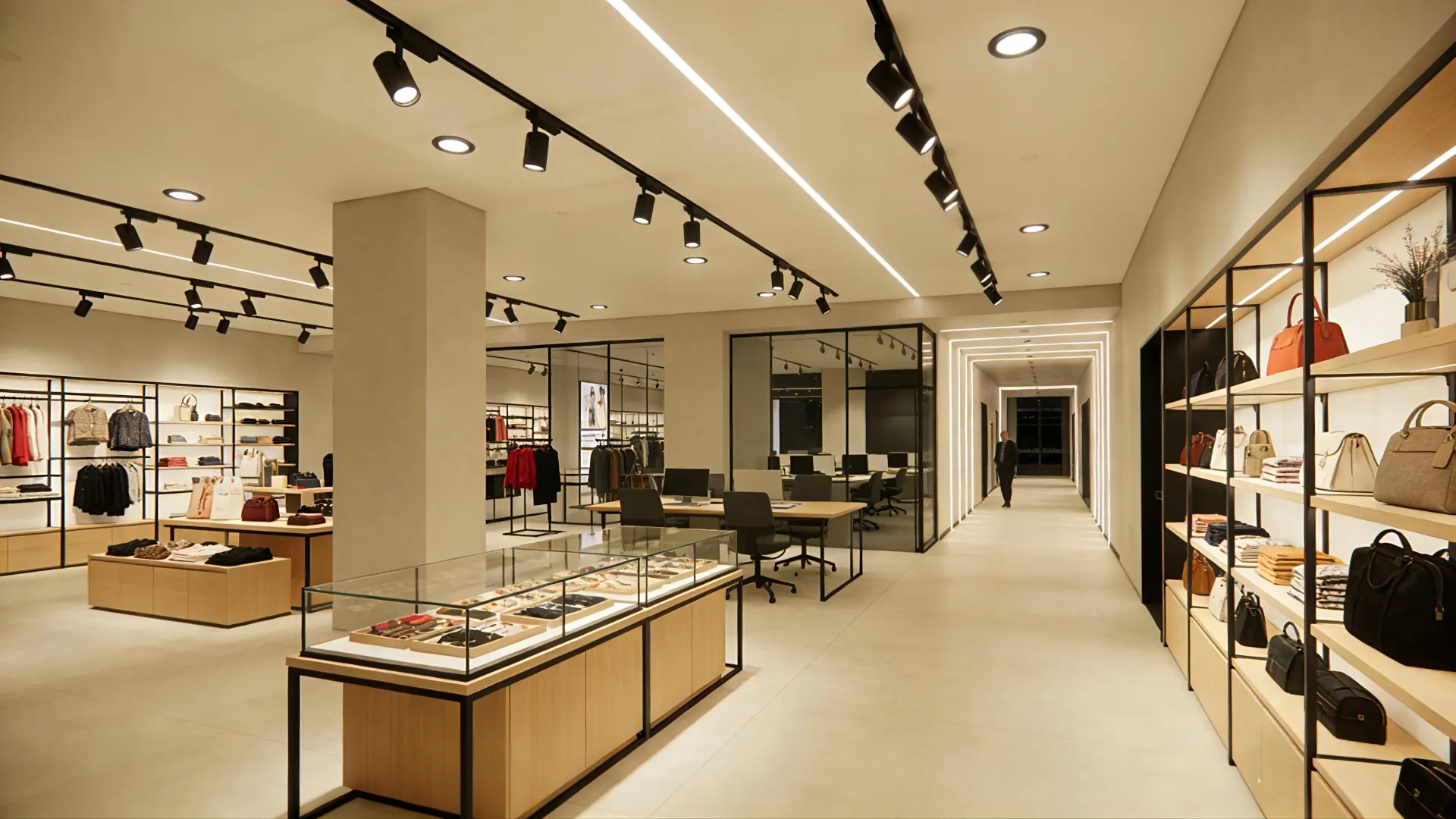
In high-traffic commercial districts such as Pitt Street Mall in Sydney or Chadstone Shopping Centre in Melbourne, retail layouts change frequently. Fixed lighting systems struggle to keep up with these changes, while smart track lighting systems offer unmatched flexibility.

Scene Control and Dynamic Lighting Adjustment
One of the key advantages of smart track lighting is individual luminaire control. Using DALI-2 or Bluetooth Mesh systems such as Casambi, store managers can adjust each track light independently via a smart device.
Typical retail lighting scenarios include:
- Accent Lighting
Increasing light levels instantly on new or featured products. - Atmosphere Switching
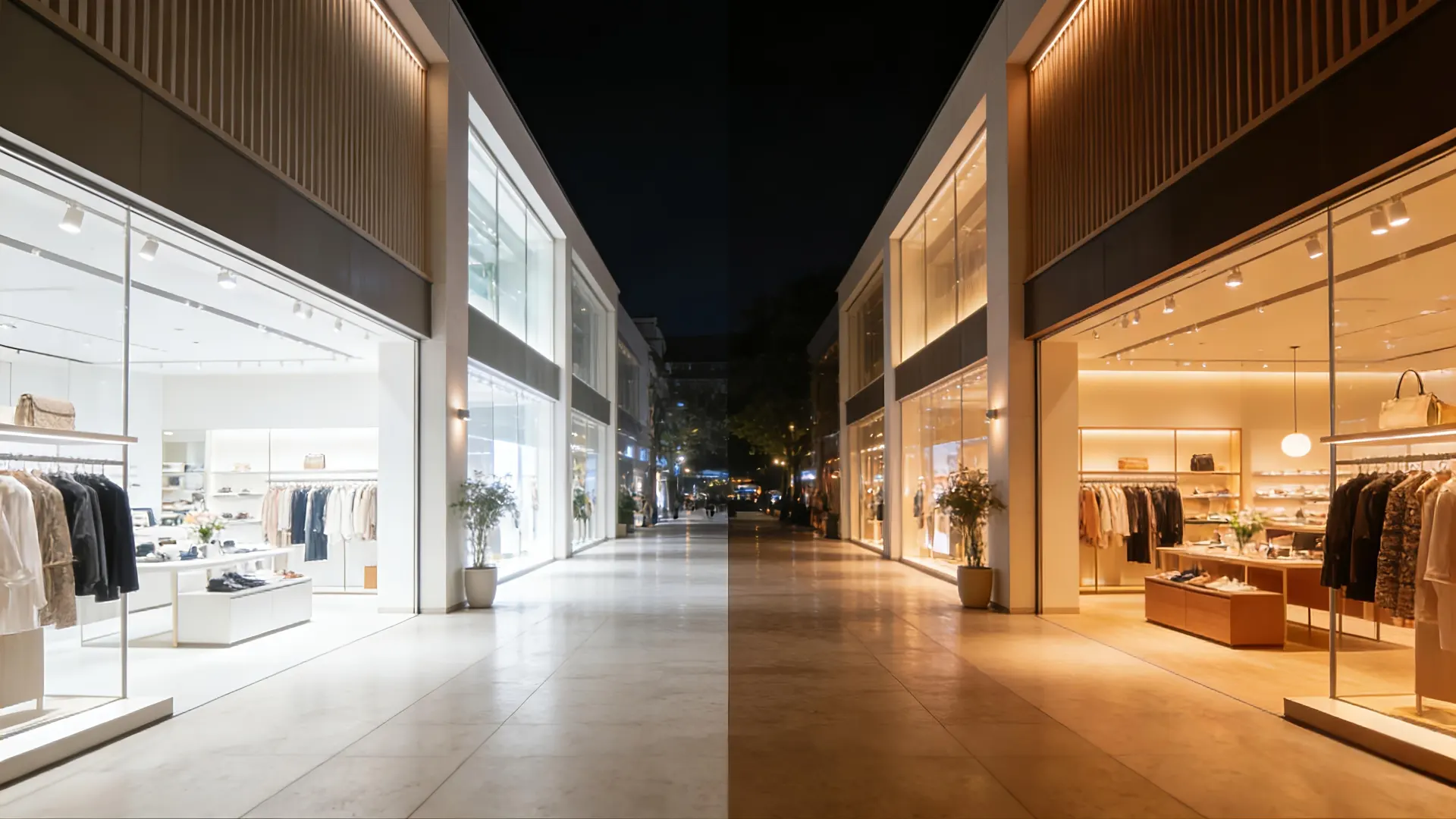
Adjusting correlated colour temperature (CCT) from crisp 5000K daytime lighting to warmer 3000K tones for evening shopping or special promotions.
This level of control allows lighting to actively support merchandising and sales strategies rather than remaining static.
High CRI Track Lighting for Accurate Product Presentation
For fashion retailers, galleries, and premium brand stores, colour accuracy is essential. Smart track lights with CRI 90+ or CRI 95, combined with optimised R9 values, ensure materials, textures, and colours appear natural and consistent under artificial light.
High-quality colour rendering directly improves customer perception and helps products look their best in real commercial environments.
Long-Term Value in Commercial Projects
From a project and operations perspective, smart track lighting delivers long-term advantages:
| Commercial Benefit | Practical Impact |
|---|---|
| Flexible positioning | Reduced need for rewiring or reinstallation |
| Intelligent dimming | Lower energy consumption |
| High-quality components | Reduced lamp replacement and maintenance |
These benefits make smart track lighting Australia a core solution for retail and commercial display applications.
Commercial Smart Downlights: Efficient and Comfortable Base Lighting
Downlights remain the most widely used luminaires in Australian commercial buildings, from offices and medical centres to hotels and public areas.
Low Glare Design in Line with Australian Standards
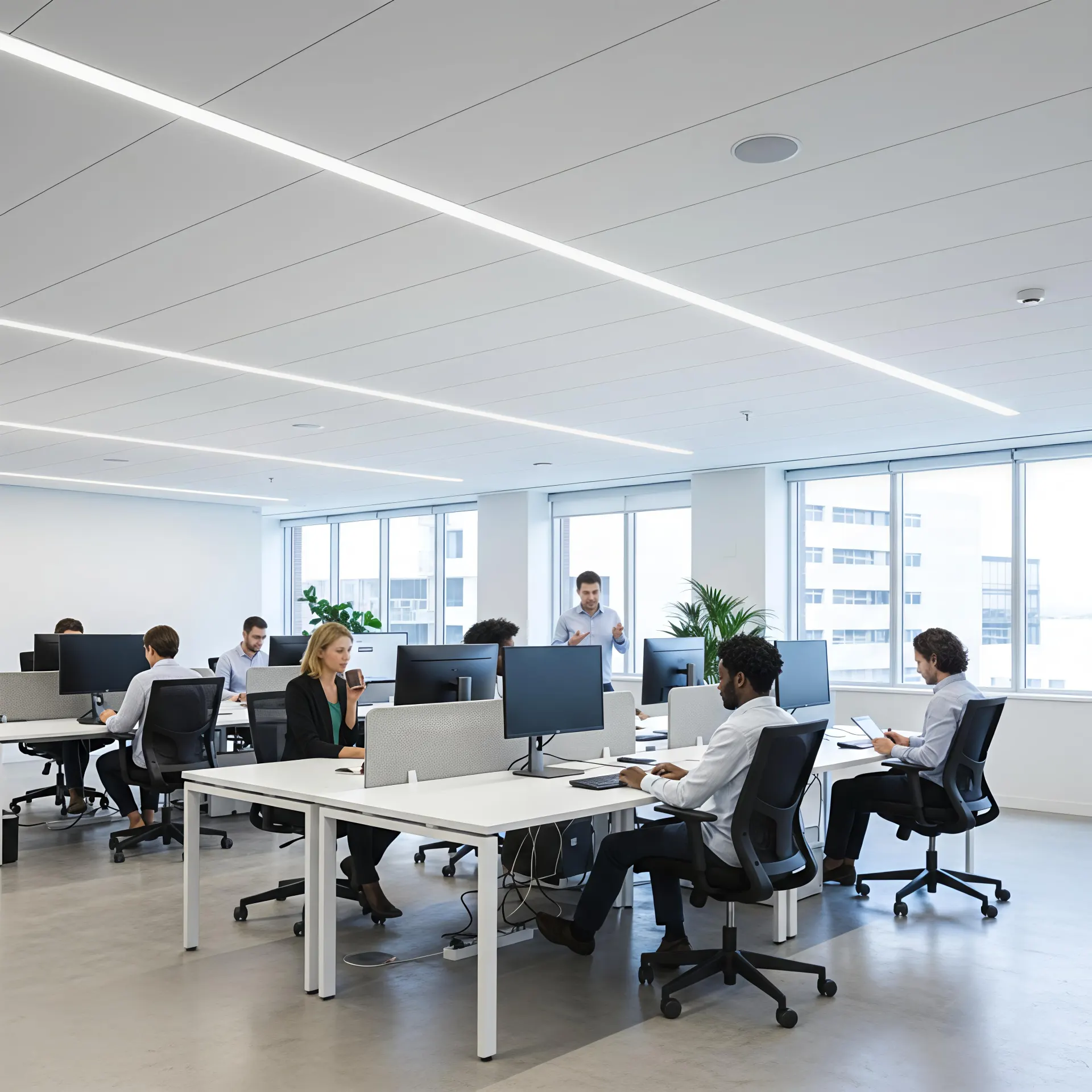
According to AS/NZS 1680, glare control is critical in office and working environments. Commercial smart downlights with deep anti-glare optics can achieve UGR < 19, significantly reducing visual discomfort during long working hours.
This is particularly important in office buildings in cities such as Sydney and Perth, where employees spend extended periods under artificial lighting.
Human-Centric Lighting for Workplace Wellbeing
Smart downlights support human-centric lighting strategies by adjusting brightness and colour temperature throughout the day:
- Higher illuminance and cooler light in the morning to support alertness
- Warmer tones later in the day to reduce fatigue and visual stress
This approach is increasingly recognised within Green Star and other sustainable building frameworks in Australia.
Daylight Harvesting and Energy Reduction
Australia’s abundant natural light presents a major opportunity for energy savings. With daylight sensors integrated into smart downlight systems, luminaires near windows automatically dim when sufficient daylight is available.
In many commercial environments, this strategy alone can deliver energy savings of up to 60%, making it highly attractive for energy-conscious building owners.
Architectural Smart Linear Lighting for Modern Commercial Design
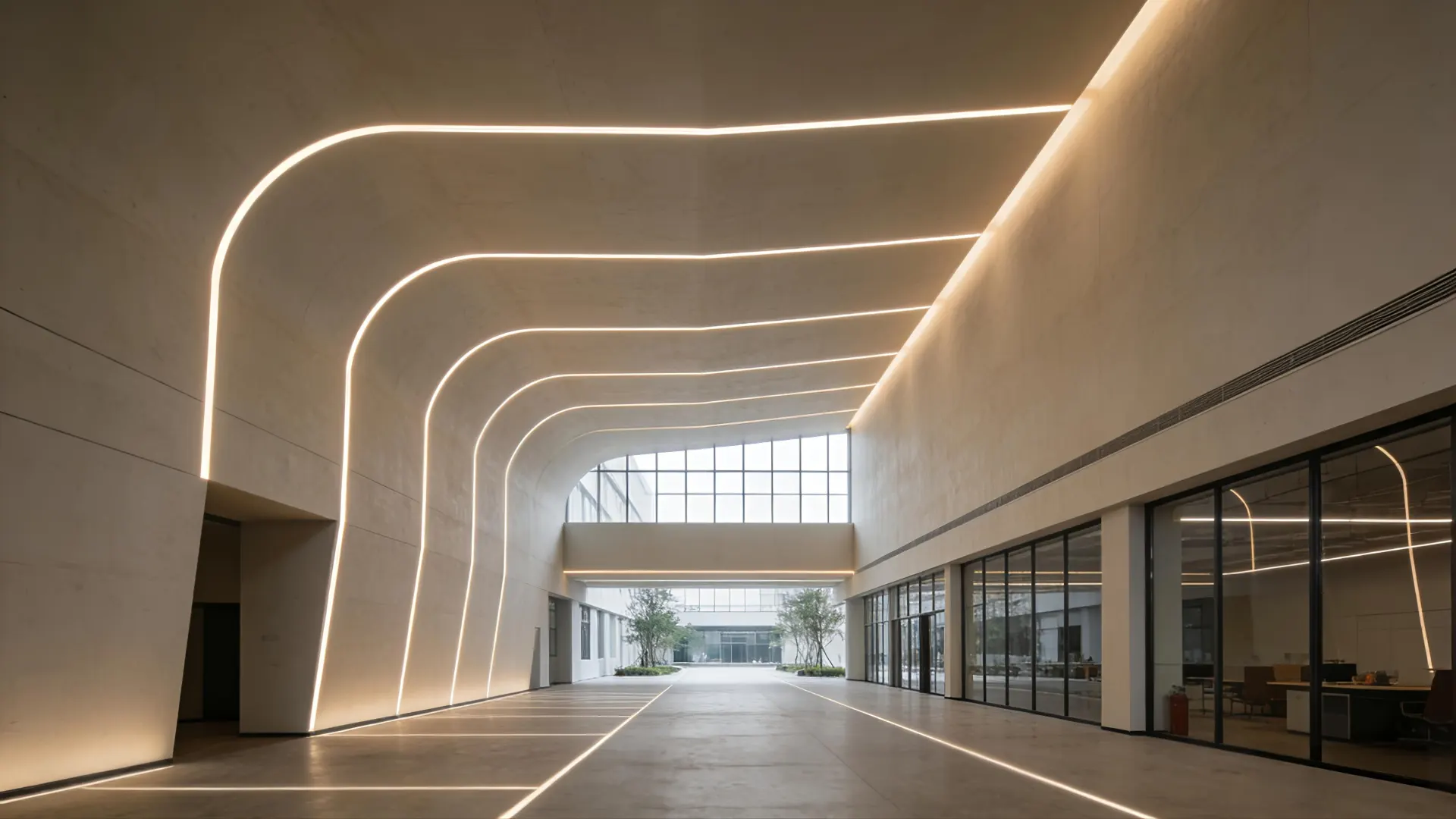
Smart linear lighting has become a preferred choice for Australian architects and interior designers, particularly in modern office and mixed-use developments.
Seamless Lighting for Spatial Continuity
Continuous linear lighting enhances visual flow and reinforces architectural lines. In creative precincts, legal offices, and commercial corridors, linear luminaires help define space while maintaining a clean and professional appearance.
Customisable lengths and corner options allow linear lights to transition smoothly from walls to ceilings, supporting cohesive architectural lighting design.
Intelligent Group Control and Occupancy Sensing
For large corridors, meeting areas, or shared commercial zones, smart linear lighting can be divided into control groups. Combined with occupancy sensors, only the areas in use are illuminated, supporting efficient energy management aligned with Australian commercial property standards.
Smart Lighting Control as a Tool for Commercial Operations
In Smart Lighting Australia, control systems play an important supporting role rather than being the main focus. Smart lighting controls enable:
- Automated dimming based on operating schedules
- Centralised management of multiple zones
- Energy monitoring and optimisation
However, these benefits are only fully realised when paired with reliable, high-performance luminaires designed for commercial use.
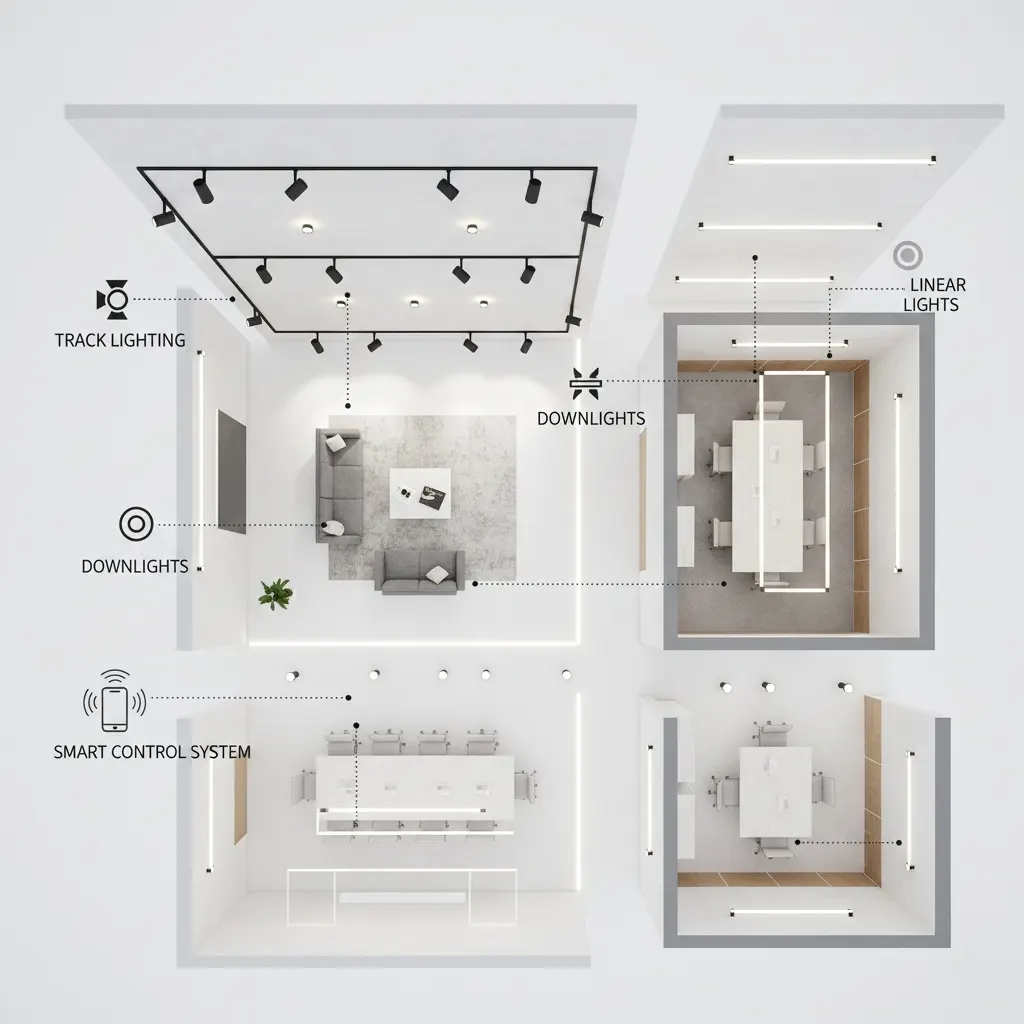
Why Smart Lighting Is Essential for Australian Commercial Projects
Return on Investment (ROI)
While smart lighting systems may require a higher initial investment than standard LED solutions, Australia’s high electricity costs significantly shorten the payback period. In many commercial projects, the additional cost is recovered within 18–24 months through reduced energy use and maintenance savings.
Compliance and Certification for the Australian Market
Commercial lighting products used in Australia must meet strict regulatory requirements:
| Requirement | Purpose |
|---|---|
| SAA / RCM | Electrical safety for 240V / 50Hz systems |
| NCC Section J | Compliance with building energy efficiency standards |
| High power factor & low standby power | Easier energy audit approval |
Flexible Protocol Support
Whether a project requires DALI-2 wired systems for large-scale developments or Casambi Bluetooth Mesh for refurbishment projects, luminaires that support multiple control options simplify installation and future upgrades.
Choosing the Right Commercial Lighting Partner in Australia
Selecting a lighting supplier in Australia involves more than choosing products. Commercial projects require partners who can support the full project lifecycle, including:
- IES files for Dialux lighting simulations
- Fast sample delivery for tenders and mock-ups
- Customised solutions for specific cut-out sizes or linear lengths
Reliable technical support and consistent product quality are essential for successful long-term projects.
Conclusion: Smart Lighting Australia Built on Commercial-Grade Luminaires
Smart Lighting Australia represents a shift toward lighting solutions that balance performance, aesthetics, and sustainability. By combining smart track lighting, downlights, and linear lighting, commercial spaces can achieve better visual comfort, improved energy efficiency, and long-term operational value.
Whether planning a new office in Sydney CBD or upgrading a retail flagship store in Melbourne, choosing smart commercial lighting solutions built around high-quality luminaires offers a lasting competitive advantage.

