



The Art Light Guide: Museum Lighting Design with Zoomable Track Lights
By Powerstar
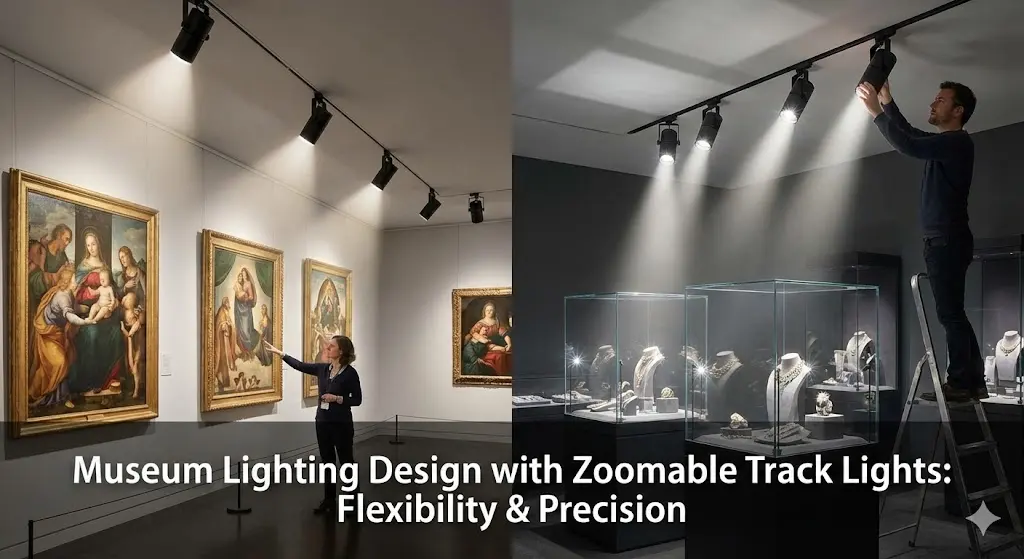
Explore our ultimate guide to museum lighting design with zoomable track lights. Discover energy-efficient, glare-free strategies to showcase artwork perfectly while reducing operational costs. In the curated world of museums and art galleries, light is not merely a utility—it is a storyteller. It guides the eye, sets the emotional tone, and reveals the hidden textures of history. However, curators and lighting designers face a perpetual challenge: the static nature of traditional lighting fixtures versus the dynamic nature of rotating exhibitions.
A collection of Renaissance oil paintings may require soft, broad washes of light, while a subsequent exhibition of intricate jewelry demands intense, pinpoint focus. Historically, adapting to these changes meant swapping out lenses, changing bulbs, or replacing fixtures entirely—a costly and labor-intensive process.
This is where the revolution of museum lighting design with zoomable track lights transforms the landscape. By integrating flexibility, precision, and conservation-grade technology, these fixtures are becoming the gold standard for modern cultural institutions. This guide explores how to leverage this technology to create world-class visual experiences.
Revolutionizing Flexibility: Precision Beam Angle Adjustment for Art Galleries
[Image suggestion: A GIF or side-by-side comparison showing the same track light adjusting from a narrow spot to a wide flood.
The primary advantage of incorporating museum lighting design with zoomable track lights is the elimination of fixed constraints. In a traditional setup, a designer specifies a beam angle—say, a 15° spot—and is effectively married to that choice until the hardware is physically altered.
With zoomable technology, the versatility is built directly into the housing.
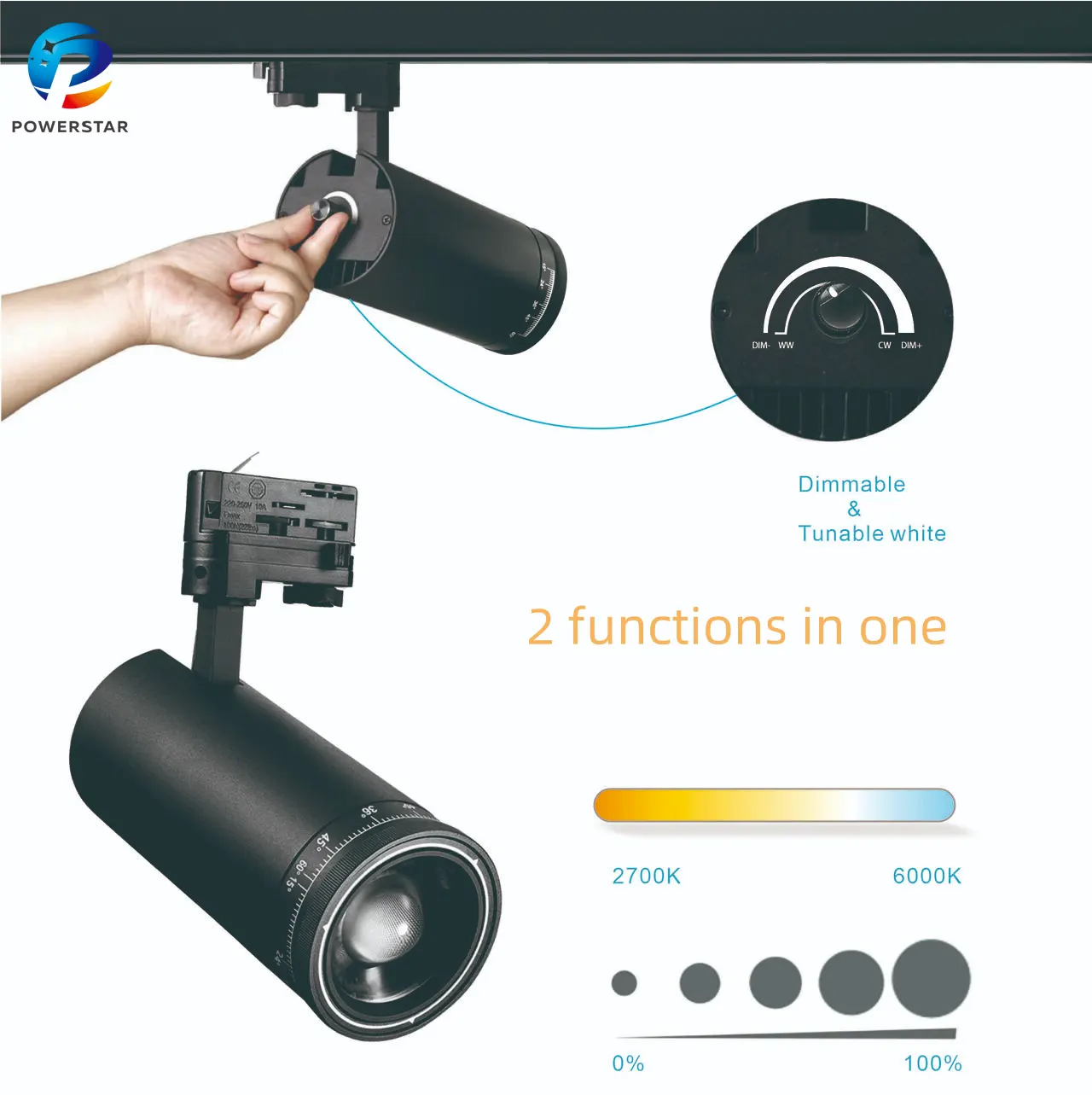
- Seamless Transitioning: High-quality zoomable track lights typically offer a variable range, such as 15° to 60°. By simply rotating the front ring or sliding a lens mechanism, a curator can transform a tight spotlight meant for a singular sculpture into a wide floodlight suitable for a large canvas.
- Rapid Exhibition Turnaround: When a gallery changes its layout, the lighting adjustment time is reduced from days to hours. There is no need for ladders to swap out reflectors or lenses; the adjustment is often tool-free and immediate.
- Inventory Reduction: Facilities managers no longer need to stock boxes of spare lenses (narrow, medium, wide, oval). One fixture type can serve multiple purposes, simplifying inventory management and reducing overhead costs.
Unveiling True Colors: The Importance of High CRI LED Track Lighting
While the shape of the light is crucial, the quality of that light is paramount. When discussing museum lighting design with zoomable track lights, one cannot overlook the spectral quality of the LED chip.
Museums strive for “visual truth”—the ability to show an artwork exactly as the artist intended. This is defined by the Color Rendering Index (CRI) and the TM-30 standard.
Why Ra90 is Not Enough
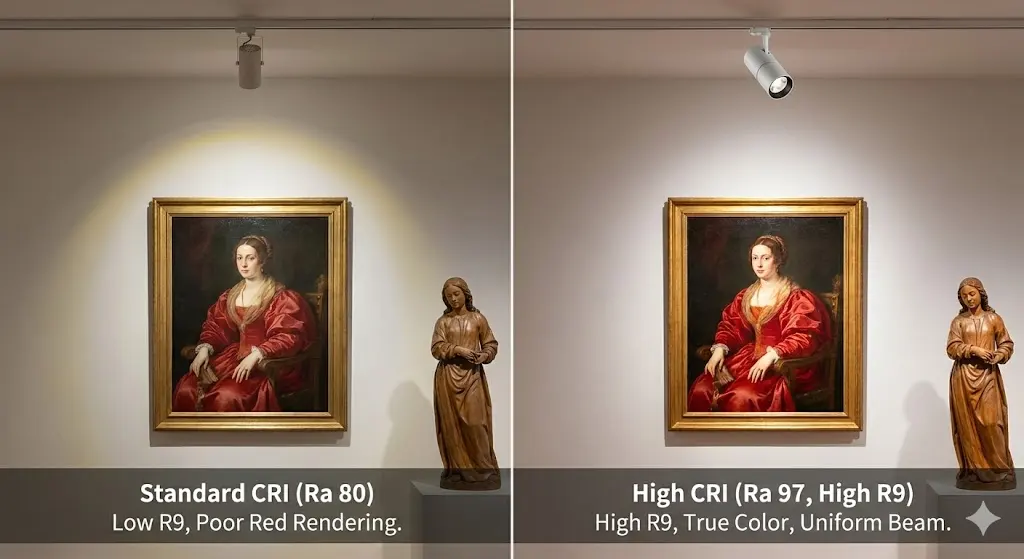
Standard commercial lighting often settles for a CRI (Ra) of 80. However, professional High CRI LED track lighting for museums demands a CRI of 90 or above, with premium fixtures often hitting Ra97.
- The R9 Factor: Standard CRI ratings often average out results, masking deficiencies in reproducing red tones. In museum settings, the R9 value (saturated red) is critical for rendering skin tones in portraits, the warmth of wood, and the vibrancy of textiles. A superior zoomable track light will maintain high R9 values even as the beam angle is adjusted.
- Consistency Across the Beam: A technical challenge in zoomable lenses is color uniformity. Inferior fixtures often suffer from “halo” effects, where the edge of the light beam is yellow or blue. Top-tier optical engineering ensures that the color temperature (CCT) remains consistent from the center of the beam to the very edge, regardless of whether the light is zoomed in or out.
Preservation First: Protecting Light-Sensitive Artifacts with UV-Free LEDs
A lighting designer’s job is a balancing act between exhibition (letting the object be seen) and conservation (ensuring the object survives). Light is energy, and energy can be destructive.
Traditional halogen or metal halide lamps emit significant amounts of ultraviolet (UV) and infrared (IR) radiation. UV light fades pigments and destroys organic materials (paper, silk, leather), while IR radiation causes heat damage and thermal cycling.
Modern museum lighting design with zoomable track lights relies almost exclusively on LED technology, which offers inherent conservation benefits:
- Zero UV Emissions: High-quality LEDs are engineered to emit zero UV radiation, drastically slowing the rate of photochemical damage.
- Cold Beam Technology: Unlike halogens that project heat forward onto the artwork, LEDs dissipate heat backward through a heat sink. This prevents the surface temperature of delicate oil paintings or wax sculptures from rising, preventing cracking or melting.
- Precise Lux Control: Zoomable lights allow for “optical framing.” By matching the beam angle exactly to the size of the artwork, you avoid spilling unnecessary light onto the surrounding wall or background materials, further reducing the total cumulative light exposure (Lux Hours) in the room.
Mastering the Atmosphere: Dimmable Museum Lighting Control Systems
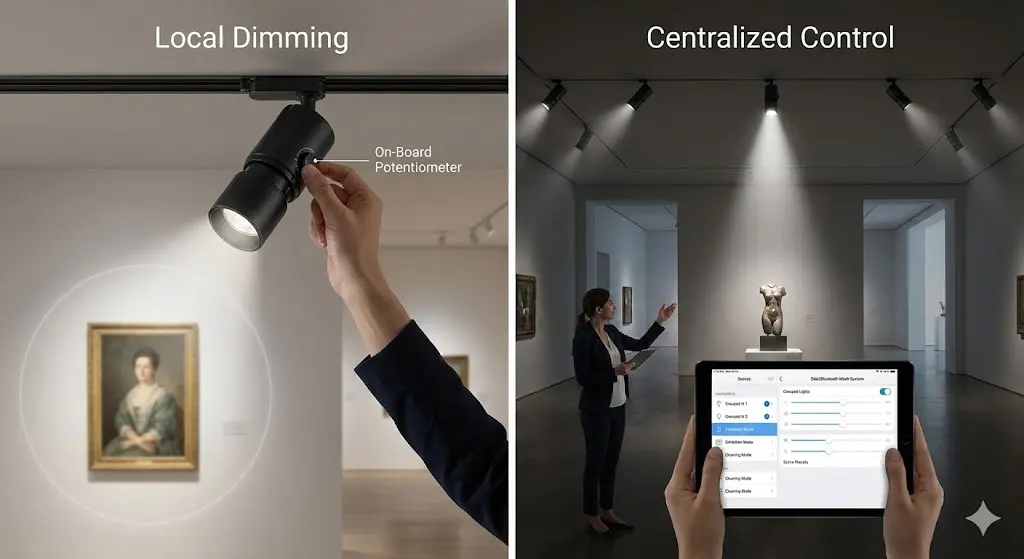
Flexibility in museum lighting design with zoomable track lights extends beyond beam angles—it must also encompass intensity control. The ability to dim a light source without altering its color temperature is vital for setting the mood and creating visual hierarchy.
| Control Strategy | Technical Mechanism | Key Benefits | Best For |
| Local Dimming (On-Board) | A manual potentiometer (dial) located directly on the driver box. | Allows for precise, individual adjustment of fixtures without the need for complex control wiring. | Small galleries, boutique showrooms, or static exhibitions where lights rarely need changing. |
| Centralized / Wireless Systems | DALI (Digital Addressable Lighting Interface) or Bluetooth Mesh (e.g., Casambi). | Enables curators to group lights, create specific “scenes,” and adjust levels remotely via an iPad or tablet. | Large institutions and museums with frequent exhibition rotations requiring rapid setup. |
| Contrast Ratio Standard | A specific luminance ratio guideline (typically 3:1). | Ensures the accent light on the artwork is 3x brighter than the ambient light, creating depth and focus. | Designing visual hierarchy to ensure the most important pieces command immediate attention. |
Visual Comfort: Reducing Glare in Professional Exhibition Spaces
A common pitfall in gallery lighting is glare. If a visitor is blinded by the light source, they cannot appreciate the art. This is where the physical design of the fixture plays a major role.
Museum lighting design with zoomable track lights must prioritize visual comfort, often referred to as “Dark Light” technology.
- Deep-Recessed Sources: The LED chip should be set deep within the housing so that the light source is not visible until one is standing almost directly underneath it.
- Optical Accessories: Professional fixtures are compatible with accessories like honeycomb louvers, barn doors, and snoots. These attachments cut off stray light (spill light) that might shine into a visitor’s eyes or create distracting reflections on glass display cases.
- Beam Edge Softness: Zoomable lenses can sometimes create a hard-edged circle of light (like a theater spotlight). However, for most art applications, a “soft edge” is preferred to blend seamlessly with the wall. High-end zoom optics utilize specific texturing to ensure the transition from light to dark is smooth and pleasing to the eye.
Operational Efficiency: Energy-Efficient Gallery Illumination Solutions
While the aesthetic result is the primary goal, the operational reality of running a museum cannot be ignored. Museums often operate 10 to 12 hours a day, 7 days a week.
Switching to a museum lighting design with zoomable track lights utilizing LED technology provides a massive Return on Investment (ROI):
- Energy Consumption: LEDs use approximately 80% less energy than comparable halogen fixtures.
- HVAC Savings: Because LEDs emit less heat, the museum’s climate control system works less to maintain the stable temperature and humidity required for artifact preservation.
- Longevity: A quality LED track light is rated for 50,000+ hours (L70). In contrast, halogen bulbs may need replacement every 2,000 hours. The labor cost savings of not having maintenance staff constantly on ladders changing bulbs is significant.
Conclusion: Investing in the Future of Curation
The shift toward museum lighting design with zoomable track lights represents more than just a technological upgrade; it is a shift toward a visitor-centric and preservation-minded philosophy.
By combining the versatility of zoom optics with the color fidelity of high CRI LEDs and the control of modern dimming systems, museums can create immersive environments that breathe life into history. Whether you are lighting a grand hall of statues or an intimate corridor of sketches, the ability to adapt your light to your art is the ultimate tool in a curator’s kit.
Invest in lighting that evolves with your collection, protects your heritage, and mesmerizes your audience.

