



Why Choose DALI Dimmable LED Downlights for Commercial Projects?
By Powerstar
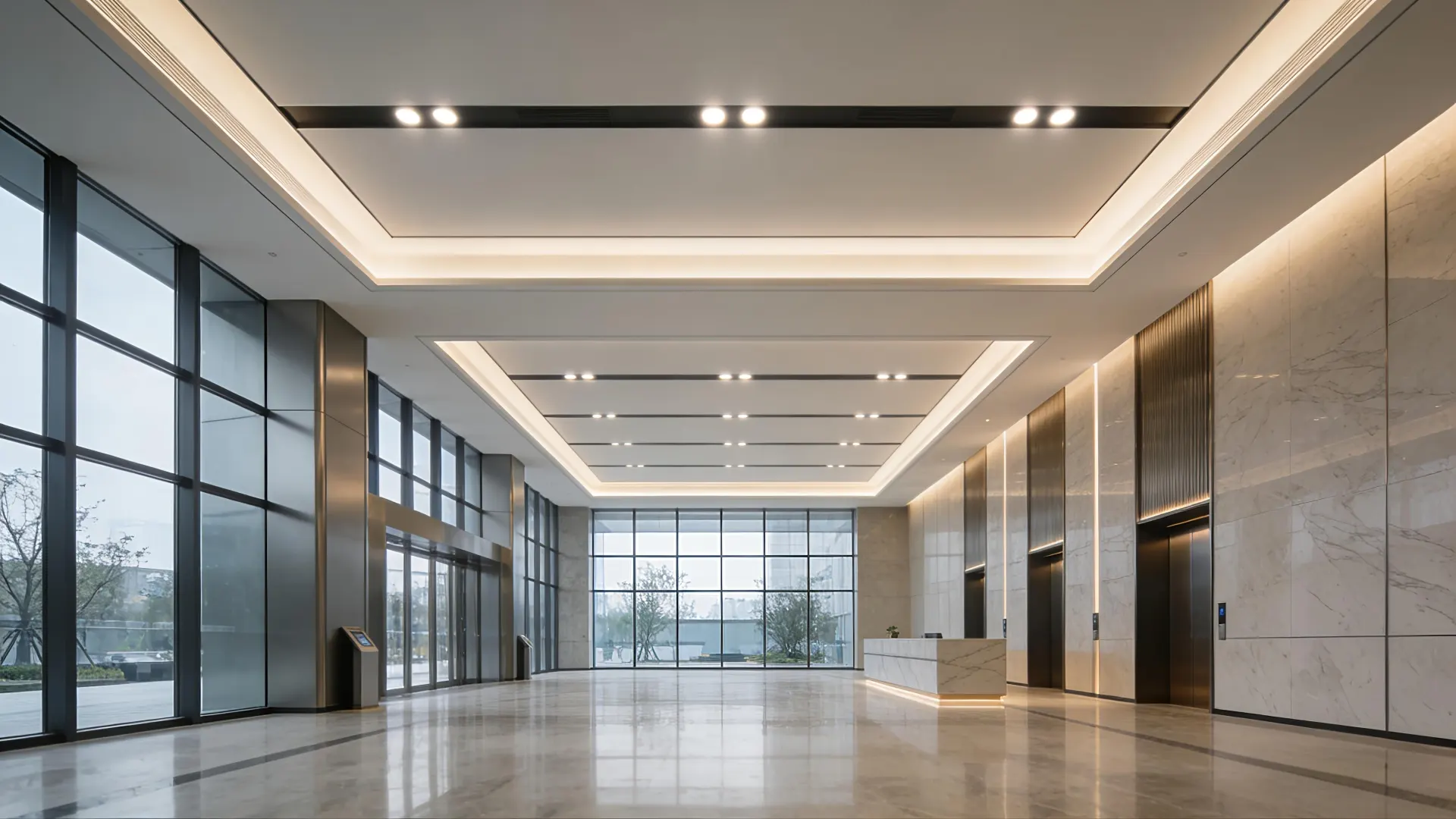
In modern commercial buildings, lighting is no longer just about brightness. It plays a critical role in energy efficiency, visual comfort, and space management. DALI Dimmable LED Downlights have become a preferred solution for commercial projects where flexible control, stable performance, and long-term scalability are required.
Compared with traditional dimming methods, DALI-based systems allow each luminaire to be individually addressed and precisely controlled. This makes them especially suitable for offices, retail spaces, hotels, and other professional environments where lighting scenes and operational efficiency matter.
Understanding DALI Lighting Control in Commercial Applications
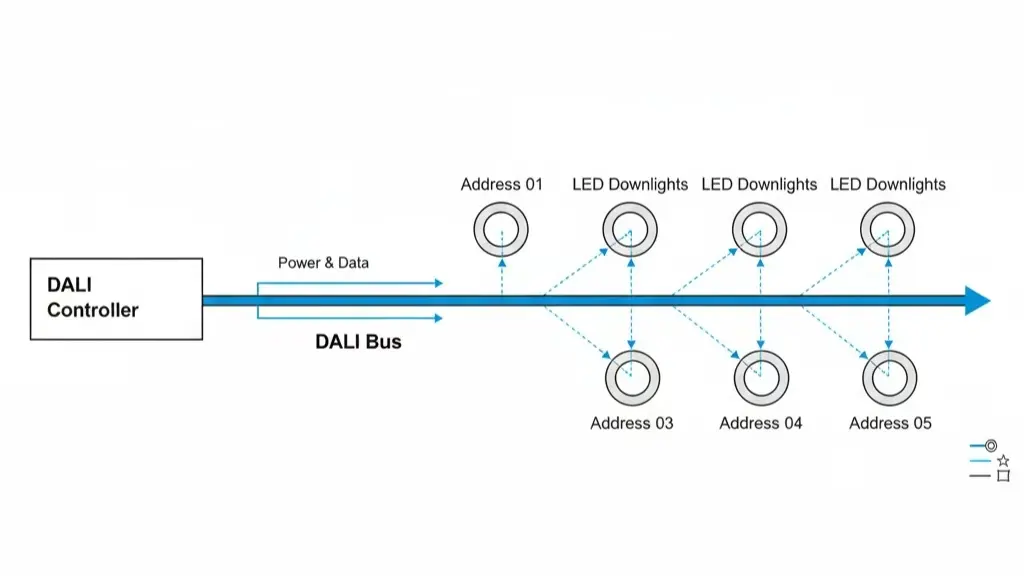
DALI, short for Digital Addressable Lighting Interface, is a digital communication protocol designed specifically for lighting control. Unlike analog dimming systems, DALI enables two-way communication between the control system and each fixture.
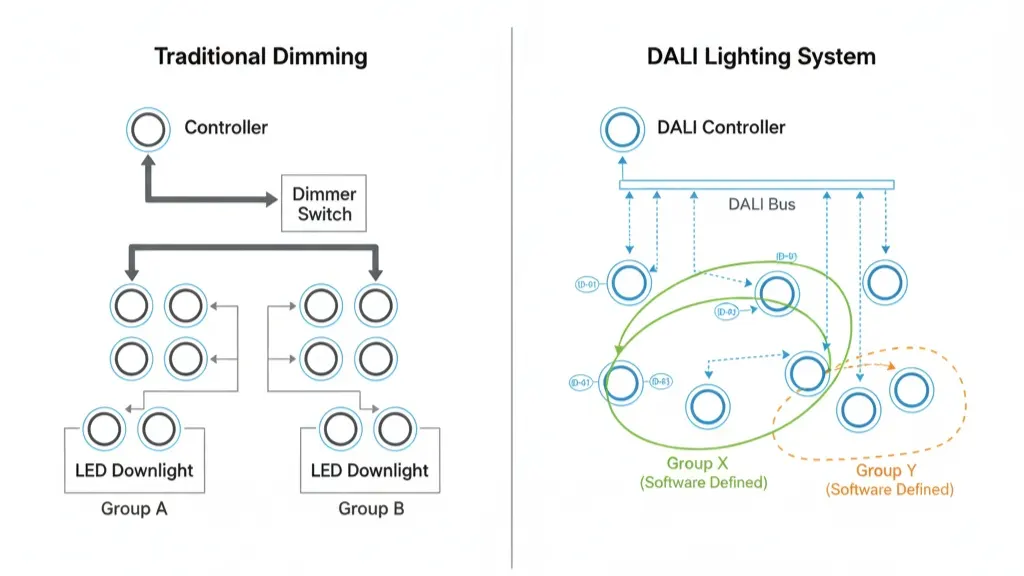
In a commercial lighting setup, DALI allows downlights to be grouped, dimmed, or reconfigured through software rather than physical rewiring. This flexibility significantly reduces commissioning time and simplifies future layout changes, making it ideal for evolving commercial spaces.
For more technical background on the DALI protocol, you can refer to the official DALI Alliance documentation:
👉 https://www.dali-alliance.org
Key Advantages of DALI-Controlled LED Downlights
Precise Individual and Group Control
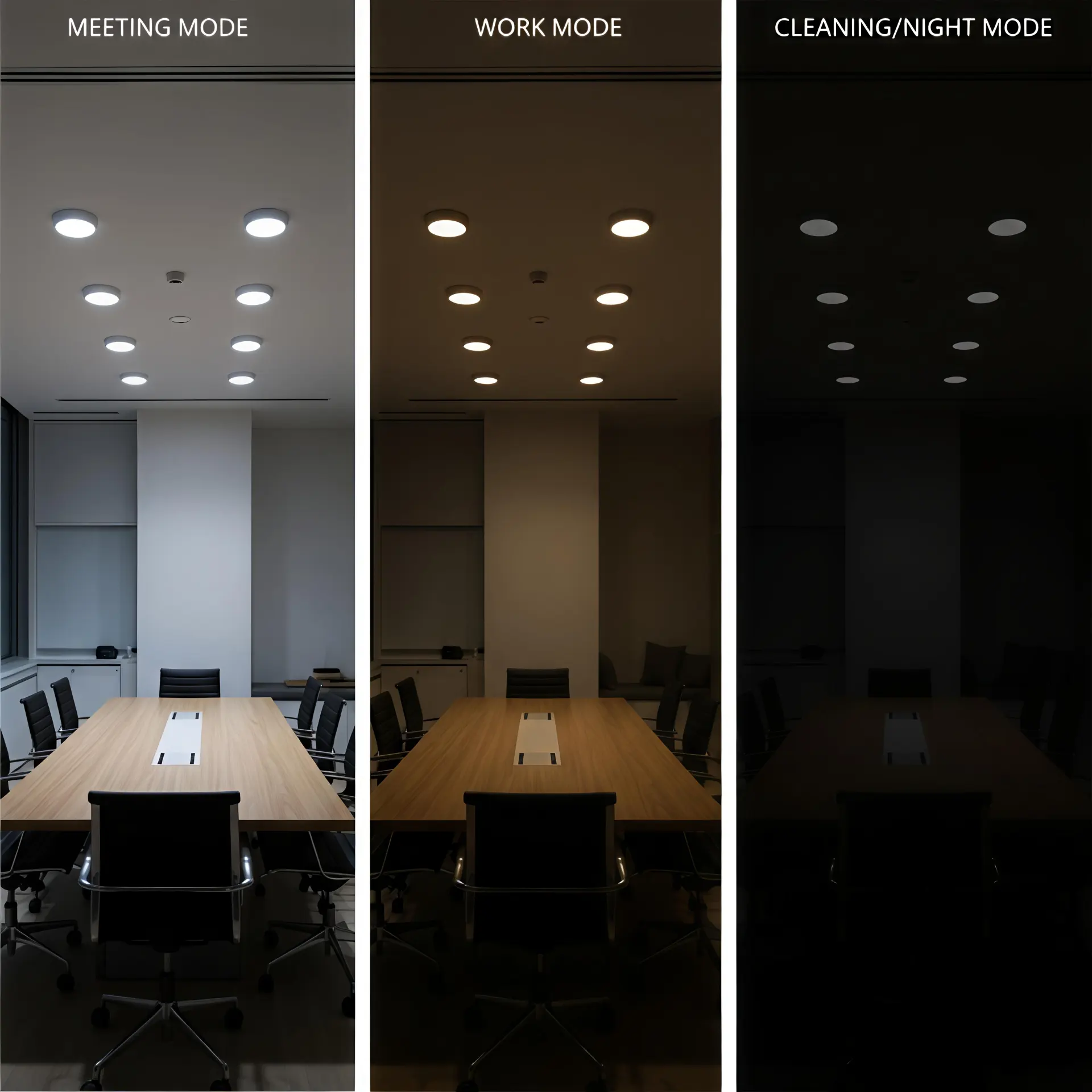
One of the biggest strengths of DALI lighting systems is individual addressability. Each downlight can be controlled independently or assigned to multiple groups. This enables:
- Custom lighting zones
- Multiple scenes for different activities
- Smooth transitions between lighting modes
Such control is essential in open-plan offices, conference rooms, and high-end retail environments.
Scalability and System Flexibility
Commercial projects often expand or change usage over time. DALI systems allow new fixtures to be added without redesigning the entire wiring layout. This makes DALI-based LED downlights particularly suitable for:
- Large-scale developments
- Chain stores
- Multi-phase construction projects
Energy Efficiency and Sustainable Operation
By enabling precise dimming and scheduled control, DALI systems help reduce unnecessary energy consumption. Lighting levels can be adjusted based on occupancy, daylight availability, or operational hours.
Many green building certifications, such as LEED and WELL, recognize intelligent lighting control as part of sustainable building design. More information on building sustainability standards can be found at:
👉 https://www.usgbc.org
Stable, Flicker-Free Dimming Performance
In professional commercial environments, visual comfort is non-negotiable. High-quality DALI drivers ensure smooth dimming without flicker, even at low brightness levels. This is especially important for offices, galleries, and hospitality spaces where lighting quality directly affects user experience.
DALI vs. Traditional Dimming Systems
The following table highlights the practical differences between DALI and common traditional dimming methods used in commercial lighting.
| Feature | DALI Lighting System | 0–10V / TRIAC Dimming |
|---|---|---|
| Control Type | Digital, addressable | Analog |
| Individual Fixture Control | Yes | Limited |
| Reconfiguration | Software-based | Requires rewiring |
| System Scalability | High | Low |
| Maintenance Efficiency | High | Moderate |
This comparison clearly shows why DALI is increasingly adopted in modern commercial projects.
Typical Commercial Applications for DALI LED Downlights
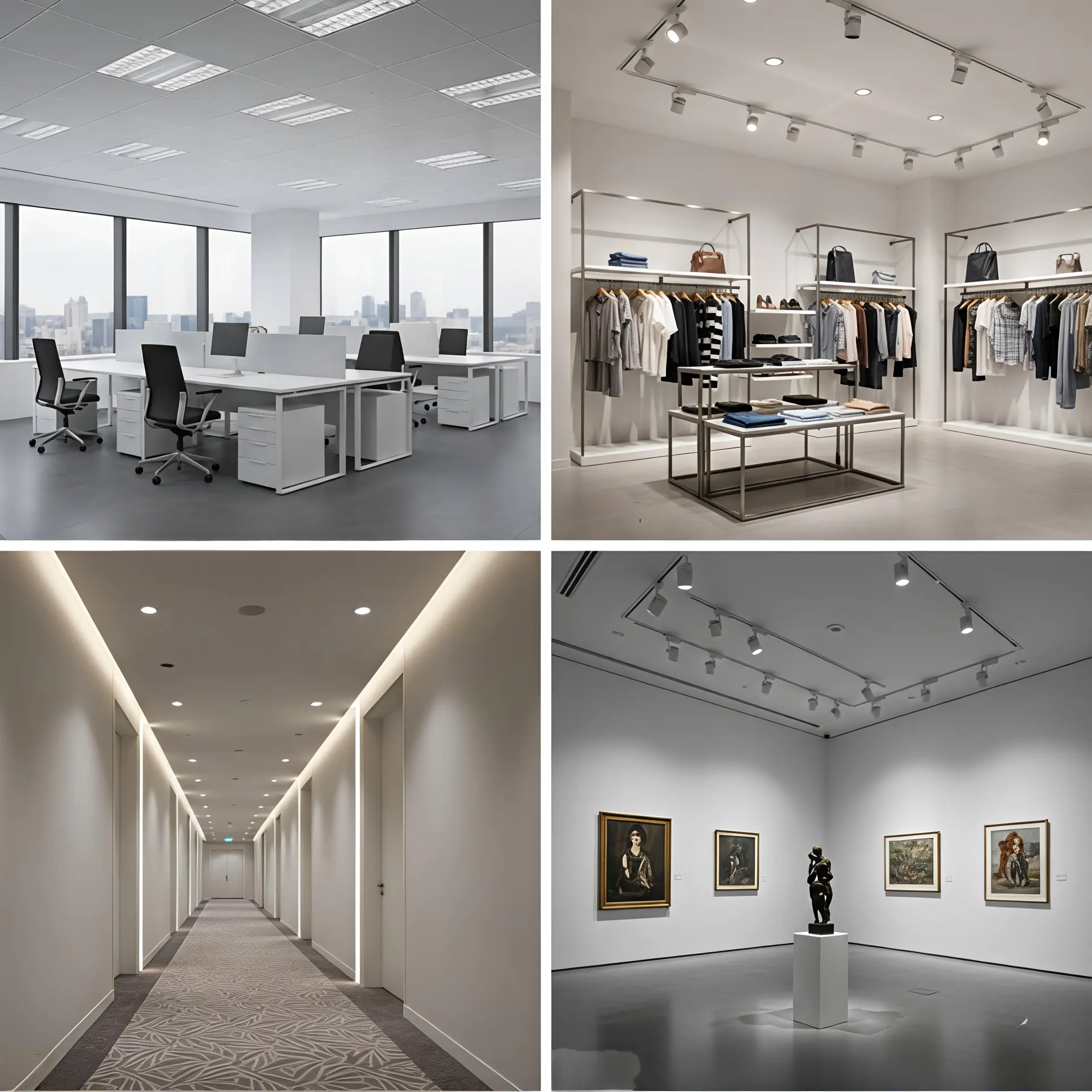
Office Buildings
DALI-controlled downlights allow offices to create task-focused lighting while maintaining overall visual comfort. Different scenes can be programmed for meetings, presentations, or cleaning operations.
Retail and Shopping Centers
In retail environments, lighting plays a key role in product presentation. DALI systems make it easy to adjust brightness and create dynamic lighting scenes to match seasonal displays or promotions.
Hotels and Hospitality Spaces
Hotels benefit from DALI lighting through improved ambiance control, energy savings, and centralized management. Guest comfort and operational efficiency can be optimized simultaneously.
Museums and Galleries
Precise dimming control helps protect exhibits while ensuring optimal visibility. DALI systems allow curators to fine-tune lighting without compromising conservation requirements.
How to Choose the Right DALI LED Downlights for Your Project
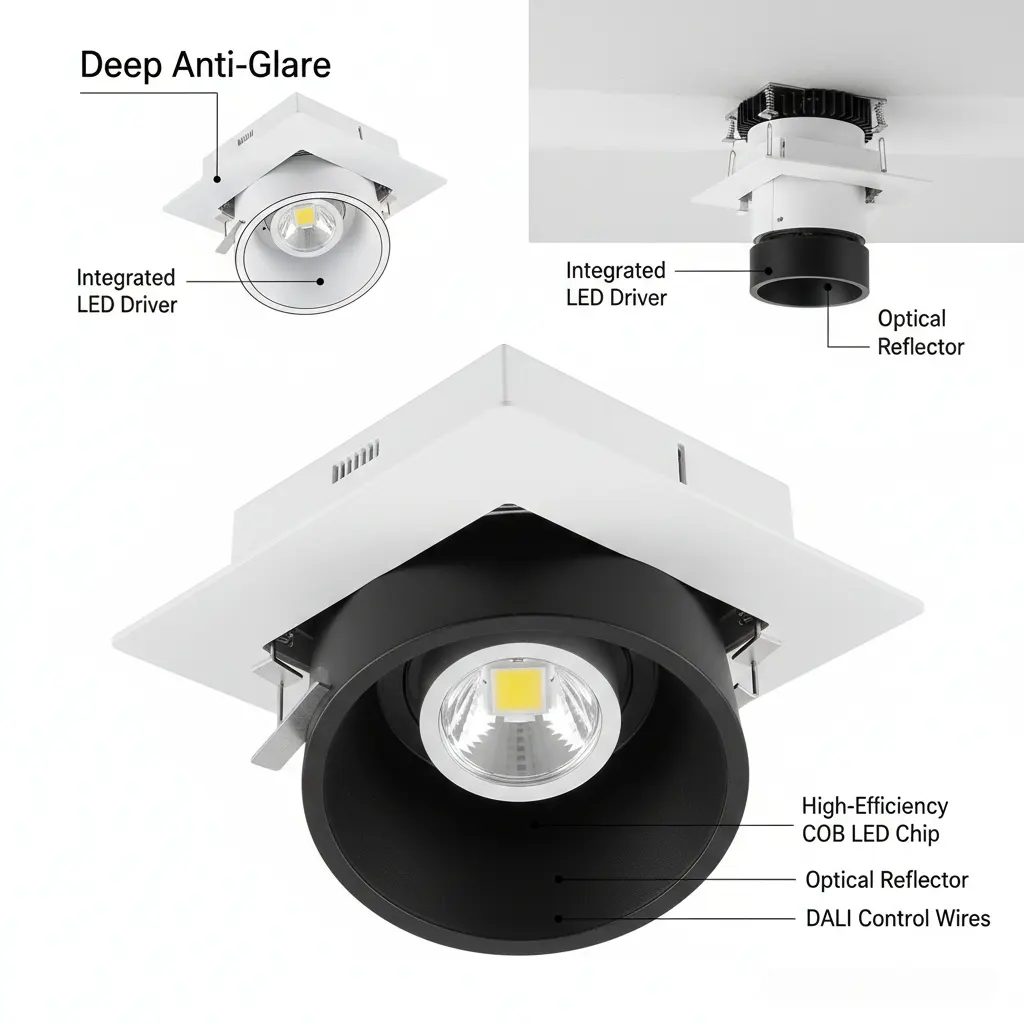
Selecting suitable luminaires is just as important as choosing the control system. Below is a simplified selection guide:
| Selection Factor | What to Check |
|---|---|
| DALI Driver Compatibility | Certified DALI drivers with stable performance |
| Dimming Range | Smooth dimming down to low levels |
| Optical Design | Low glare (UGR control) |
| Product Reliability | Long lifespan and consistent quality |
| Warranty Support | Clear and realistic warranty terms |
Professional-grade LED downlights are designed to integrate seamlessly into DALI lighting systems, ensuring long-term stability.
The Importance of Working with Professional Manufacturers
DALI projects require more than standard luminaires. Manufacturers with experience in commercial lighting understand system compatibility, driver performance, and real-world installation challenges.
Professional suppliers typically conduct comprehensive testing, including dimming curves, system integration, and long-term reliability checks. This expertise helps reduce on-site issues and ensures smooth project delivery.
Conclusion
For modern commercial projects, lighting control is no longer optional—it is a strategic component of building performance. DALI Dimmable LED Downlights offer precise control, scalability, and reliable operation, making them an ideal choice for professional applications.
By combining intelligent control systems with high-quality LED downlights, commercial spaces can achieve better energy efficiency, improved visual comfort, and long-term operational flexibility.

