



Curves, Angles, and Light: DALI Custom Shape Linear Lighting in Contemporary Architecture
By Powerstar
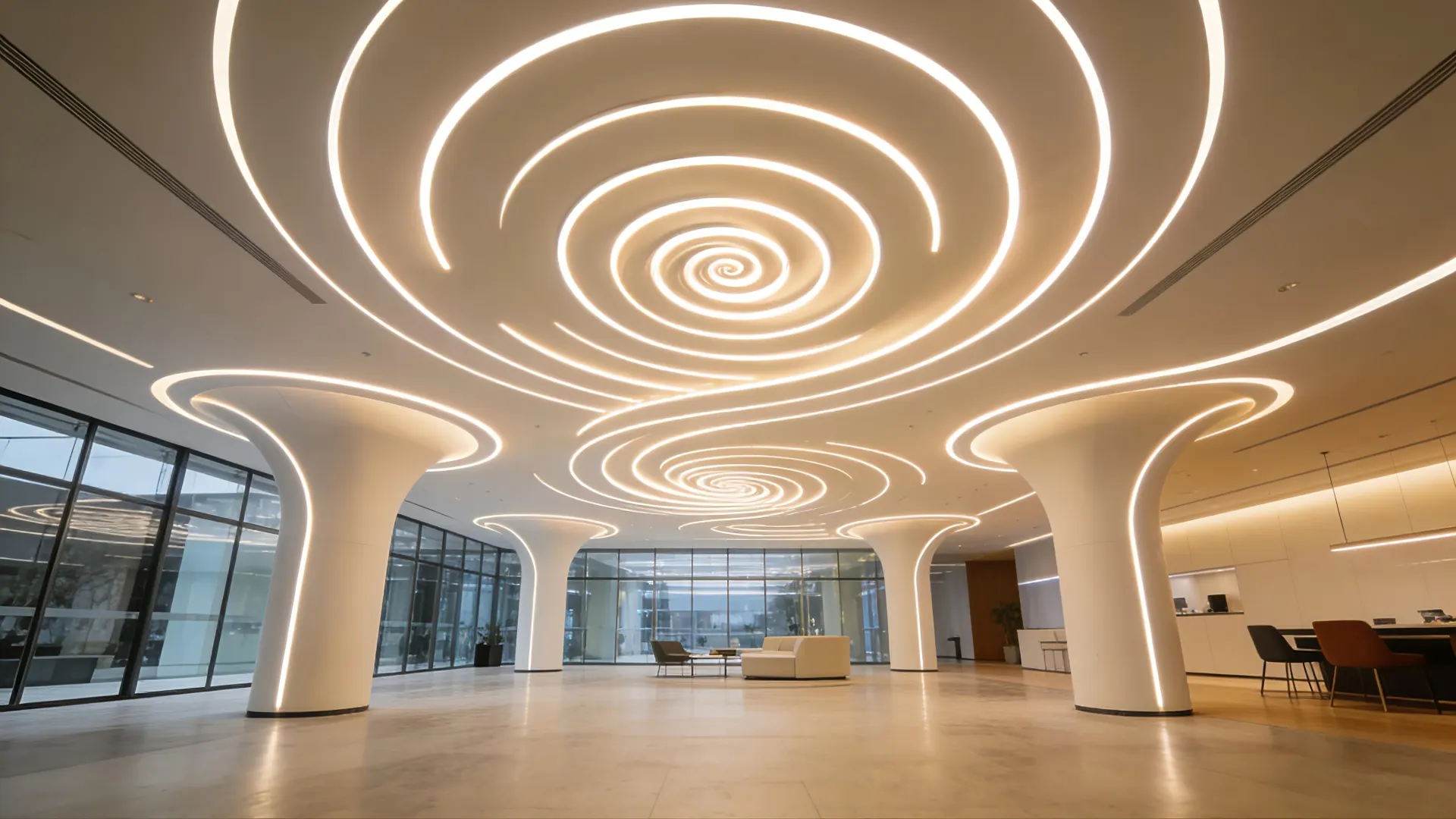
Introduction: DALI Custom Shape Linear Lighting as the New Language of Space
DALI Custom Shape Linear Lighting is redefining how architects and designers approach contemporary spaces. Unlike traditional point or fixed linear luminaires, these fixtures follow complex curves, angles, and geometric forms, transforming light from a mere functional element into a sculptural and expressive tool.
By integrating with DALI (Digital Addressable Lighting Interface) systems, custom-shaped linear lighting allows precise brightness, color temperature, and scene control, turning bold architectural concepts into fully realized, immersive environments. This article explores the features, advantages, and practical applications of DALI Custom Shape Linear Lighting in modern architecture.
1. The Beauty of Custom Shapes: Breaking Physical Boundaries
1.1 Curves and Fluidity: Enhancing Spatial Softness
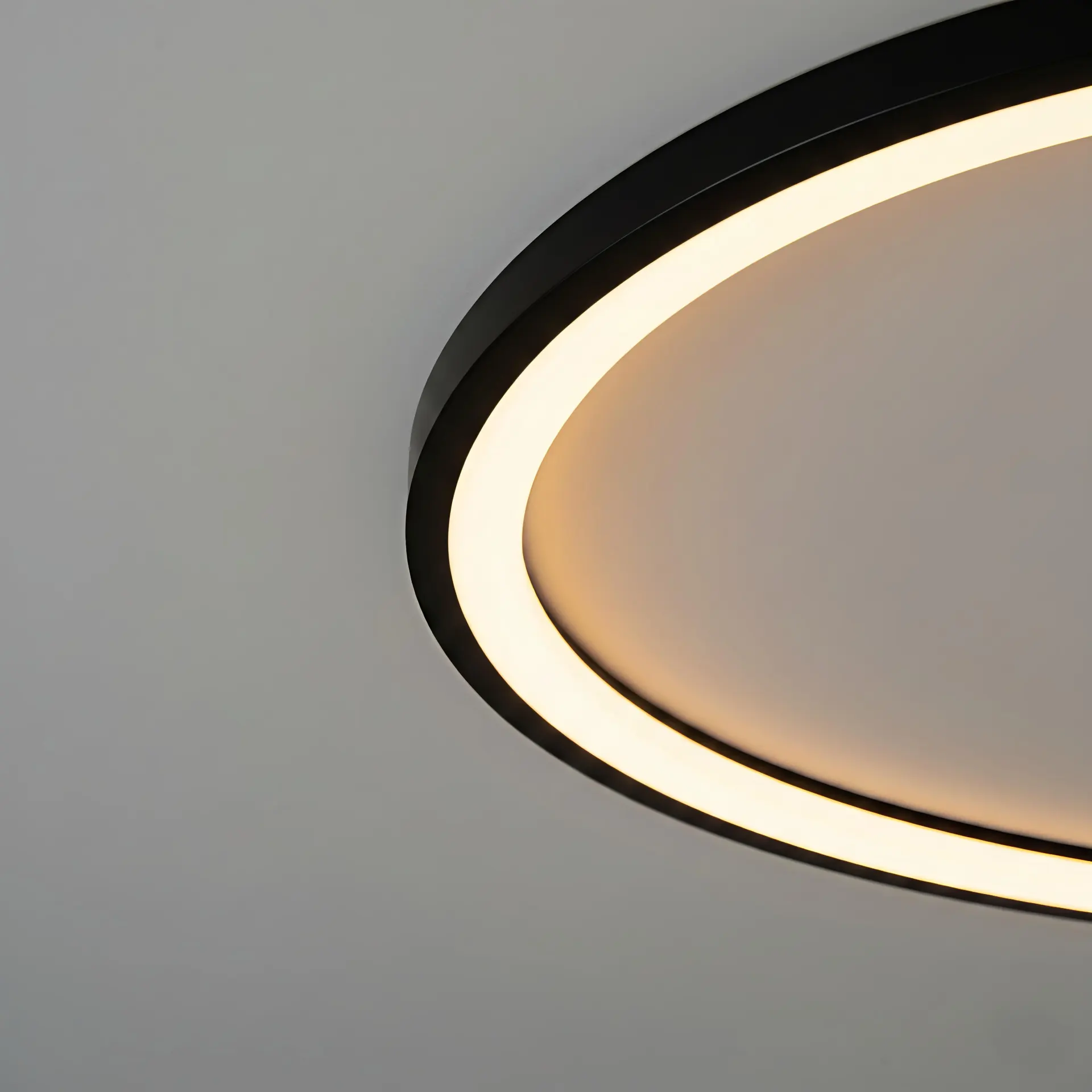
In nature, perfect straight lines are rare. Custom-shaped linear lighting can conform to architectural curves, spiraling staircases, and flowing wall surfaces with high precision, creating a fluid visual effect.
- Visual Flow: Curved light strips move like water through space, softening corners and transitions.
- Seamless Continuity: Using bespoke diffusers and modular joints, light maintains continuous coverage over hundreds of meters, a level of visual seamlessness difficult to achieve with standard fixtures.
1.2 Angles and Sharpness: Geometric Deconstruction
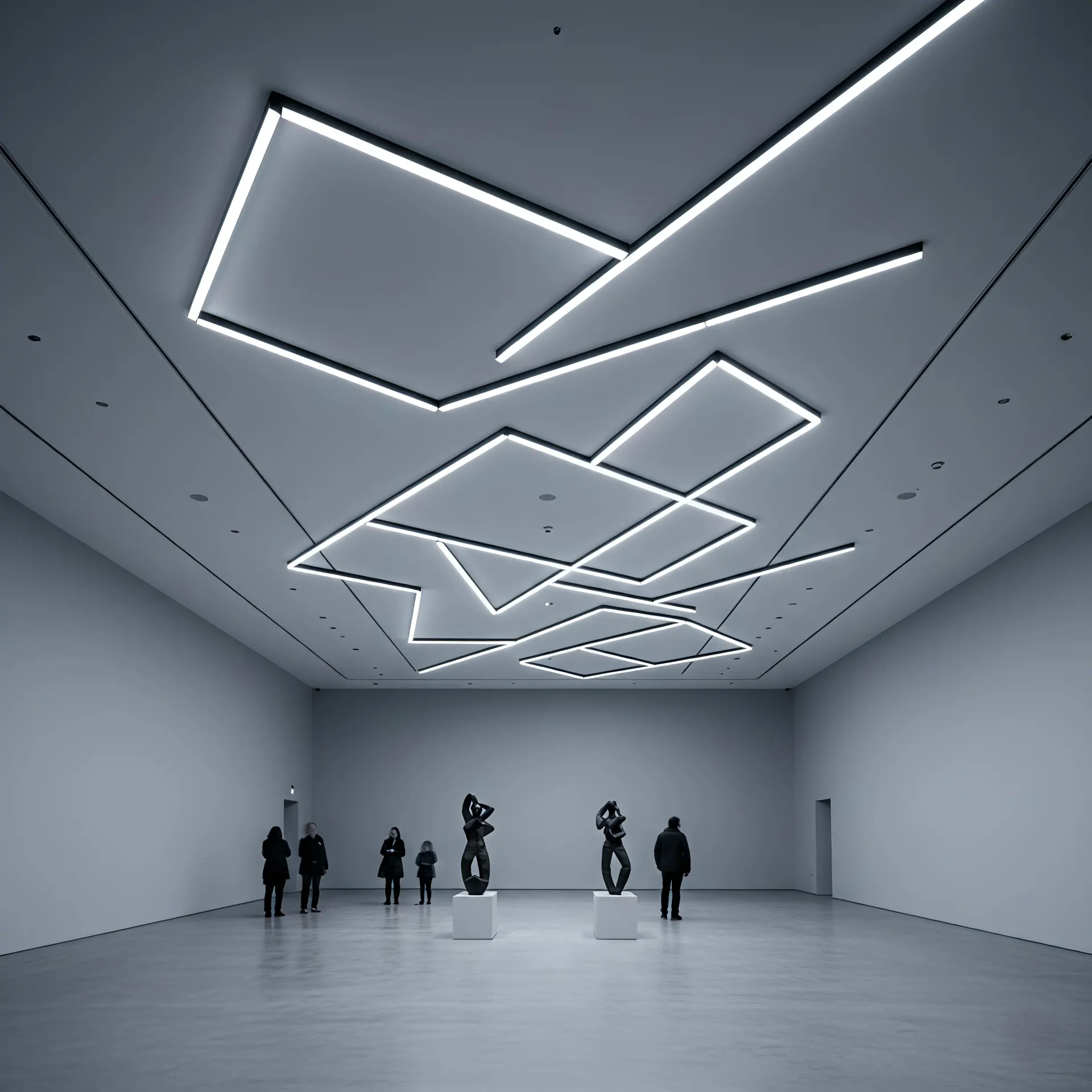
Beyond curves, custom linear lighting can form angles at 30°, 45°, or 135°, generating dramatic geometric patterns on ceilings and walls.
- Spatial Partitioning: Sharp lines divide large halls into functional zones without physical barriers.
- Futuristic Aesthetics: In offices, exhibition halls, or tech headquarters, angular lighting conveys efficiency and avant-garde style.
1.3 Core Components and Craftsmanship
| Component | Function & Features |
|---|---|
| Aluminum Profile | Aerospace-grade aluminum, CNC-bent or laser-cut for structural stability and heat dissipation |
| Flexible PCB Module | LEDs spaced evenly, adaptable to curves and angles, prevents jagged lighting |
| Optical Diffuser | PC or silicone material, integrated into curves, achieving “light without luminaires” effect |
These elements ensure that the fixture maintains both aesthetic elegance and engineering reliability.
2. DALI Control: Giving Custom Shapes a Soul
While custom linear lighting provides form, DALI systems imbue them with life. Without precise control, even the most beautiful curves risk appearing cold and static.
2.1 Pixel-Level Brightness Control
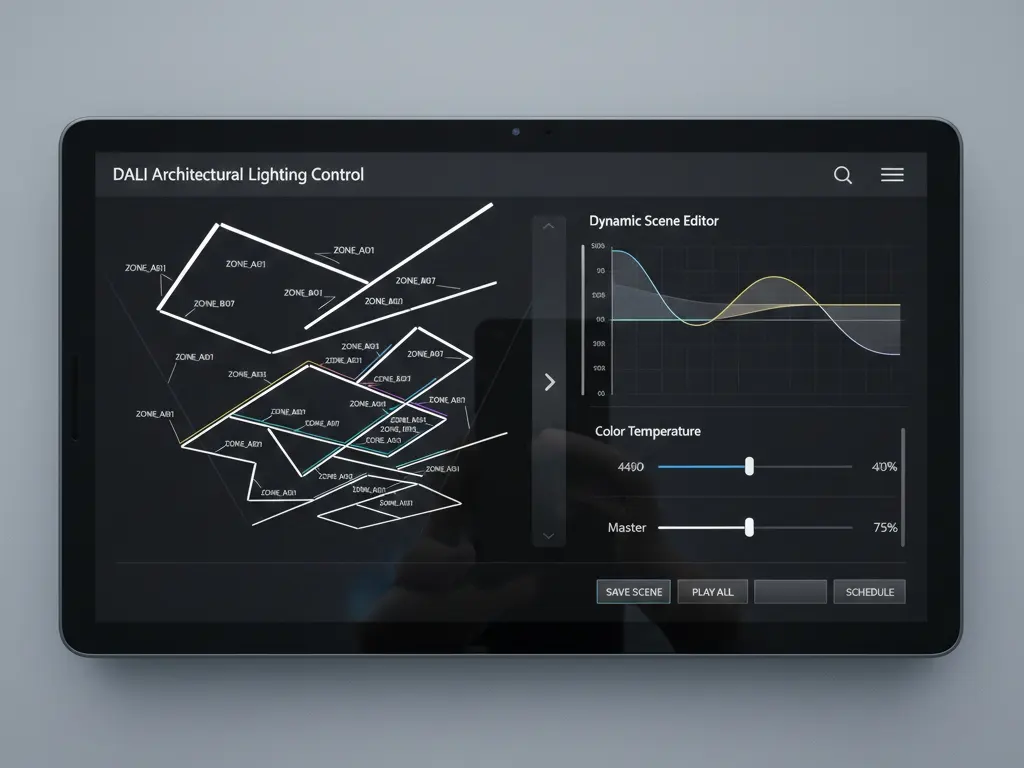
DALI addresses each segment of the linear fixture individually, enabling:
- Voltage Drop Compensation: Ensuring uniform brightness across long spans.
- Dynamic Scene Programming: “Flowing,” “breathing,” or “chasing” light effects can move along curves and angles seamlessly.
2.2 Tunable White and Color Temperature Control
Modern architecture emphasizes human-centric design. DALI DT8-compatible fixtures allow continuous adjustment of color temperature:
- Simulating Natural Light Cycles: Cool 5000K in the morning for productivity; warm 3000K in the evening for comfort.
- Material Interaction: Warm light highlights wood textures, while cool light emphasizes concrete surfaces.
2.3 Two-Way Feedback for Maintenance
DALI systems provide real-time feedback on each segment’s status, significantly reducing troubleshooting time for large-scale installations. Learn more about DALI standards and best practices.
3. Practical Applications: Light as Multi-Dimensional Experience
3.1 Art Galleries: Light as Invisible Curator
In galleries and museums, custom linear lighting can become a suspended sculptural element:
- Soft Diffuse Illumination: Embedded lighting reflected off ceilings or walls provides glare-free general lighting.
- Precision Control via DALI: Adjust illumination for each exhibition section to protect artworks and enhance visitor experience.
3.2 Hotel Lobbies: Creating Visual Drama
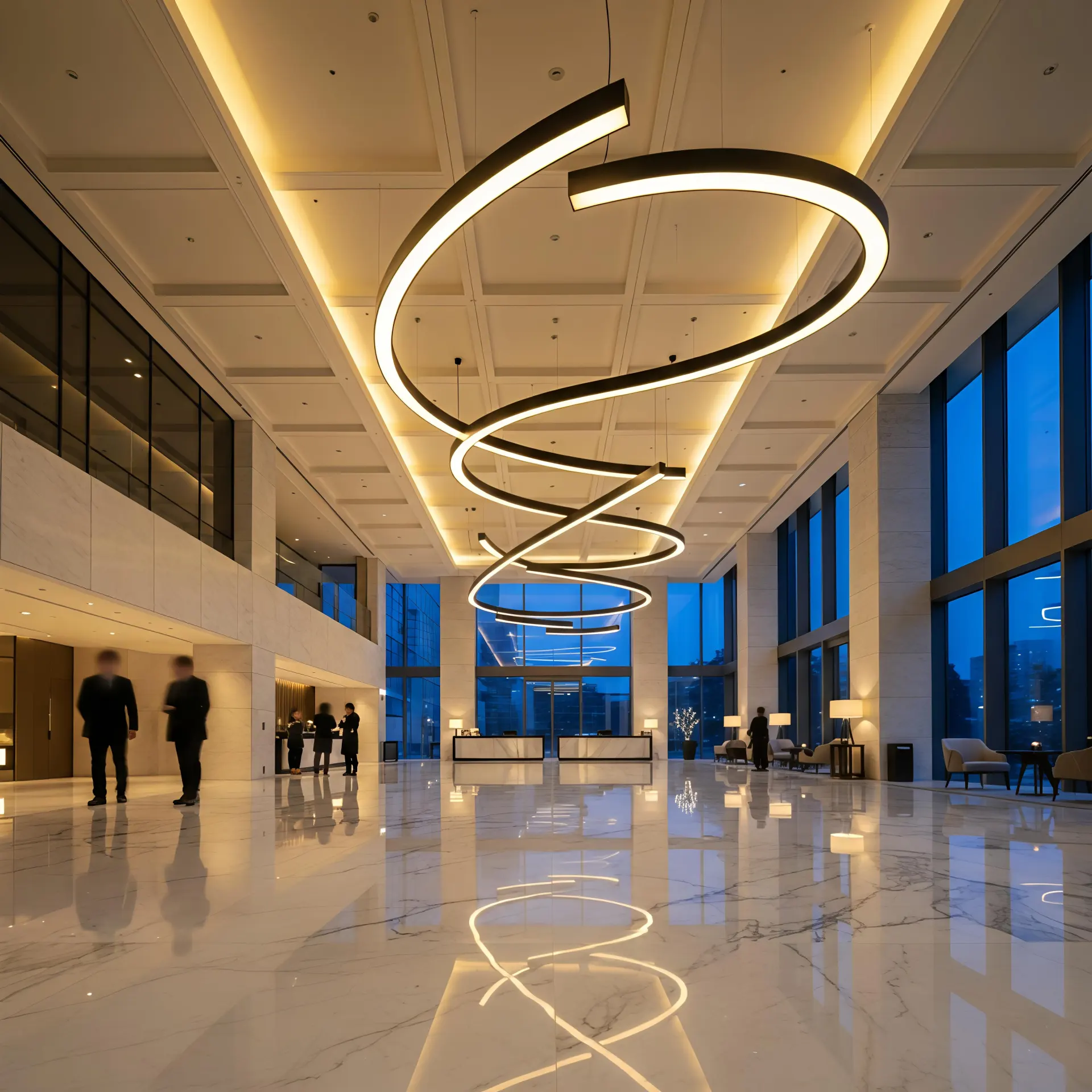
Luxury hotel lobbies often showcase custom-shaped lighting:
- Ceiling Aesthetics: Spiral or ring-shaped lights increase perceived ceiling height.
- Scene Switching: DALI control panels allow smooth transitions between “business,” “romantic dinner,” and “nighttime energy-saving” modes.
3.3 Minimalist Residences: Light Without Presence
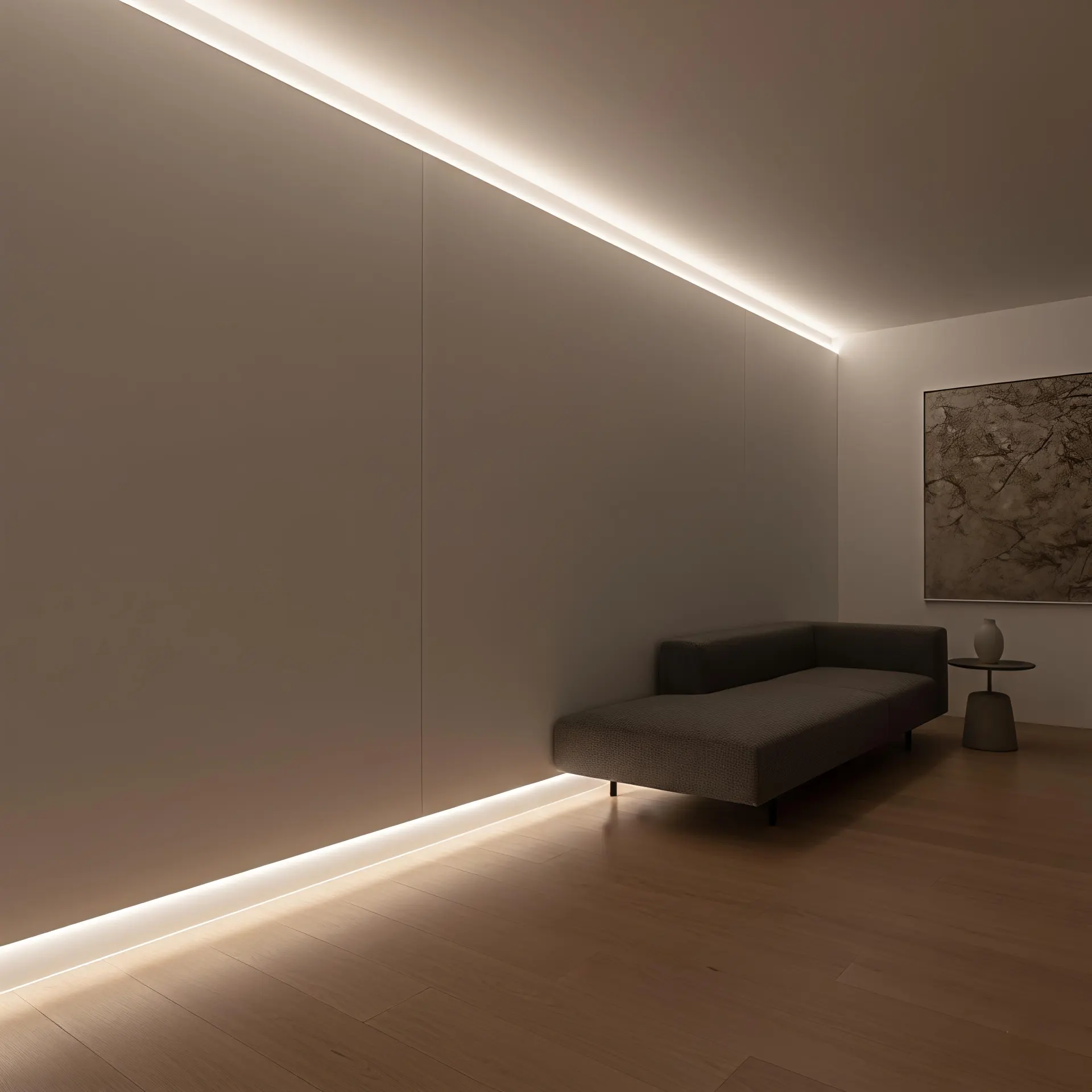
In high-end residences, custom linear lighting achieves the ultimate “invisible luminaire” effect:
- Corner Light Channels: Micro linear lights run along wall transitions, replacing conventional moldings.
- Hidden Fixtures: Ultra-thin aluminum profiles (as slim as 10mm) integrate seamlessly into plasterboard, making light appear as a natural architectural element.
4. From Concept to Reality: Engineering Precision
4.1 Parametric Modeling and Custom Manufacturing
Modern custom linear lighting production relies on precise digital workflows:
- Digital Templates: CAD or Rhino models capture exact curves, guiding aluminum bending and LED module placement.
- Modular Assembly: Fixtures are delivered in pre-coded modules with unique DALI addresses, simplifying installation.
4.2 DALI System Commissioning and Feedback
- Real-Time Monitoring: DALI controllers report electrical and operational status of each segment.
- Signal Integrity: DALI and power wiring can share conduits, reducing complexity in tight curved channels.
4.3 Flicker-Free Control for Photography and Video
High-frequency DALI drivers ensure flicker-free illumination, essential for exhibition documentation, broadcast, or brand photography.
5. Typical Use Cases
| Space Type | Lighting Requirement | Custom Linear Advantage |
|---|---|---|
| Offices | Uniform, low-glare | Comfortable, visually coherent light |
| Retail | Product display, ambiance | Flexible dimming, enhances brand experience |
| Hotel Lobbies | Architectural emphasis | Spiral or ring-shaped lines enhance verticality |
| Educational Buildings | Zoning & flexibility | DALI allows segmented control |
| Public Spaces | Large-scale coverage | Continuous light, easier maintenance |
For more examples of advanced architectural lighting, see Lighting Europe resources.
6. Future Trends: Intelligence, Ecology, and Emotional Resonance
Custom-shaped linear lighting is evolving from mere decoration to an interactive interface:
- Daylight Compensation: Adjusting output according to natural light intensity.
- AI Scene Learning: Learning occupant habits to present optimal light levels and color temperatures.
- Smart Integration: IoT and cloud-based DALI control allow synchronized lighting across multiple buildings.
These innovations make DALI Custom Shape Linear Lighting an essential tool for immersive, intelligent, and human-centric spaces.
7. Conclusion: Sculpting Space with Light
Curves, Angles, and Light represent a methodology, not just words.
Custom-shaped linear lighting empowers architects to challenge traditional forms, while DALI control ensures precision and adaptability. By shaping curves, defining angles, and mastering light distribution, designers are no longer simply installing luminaires—they are sculpting space with light, achieving a perfect balance between functionality, aesthetics, and emotion.

