



DALI Dimmable Custom Linear Lighting: A Flexible Solution for Modern Architectural Spaces
By Vincent
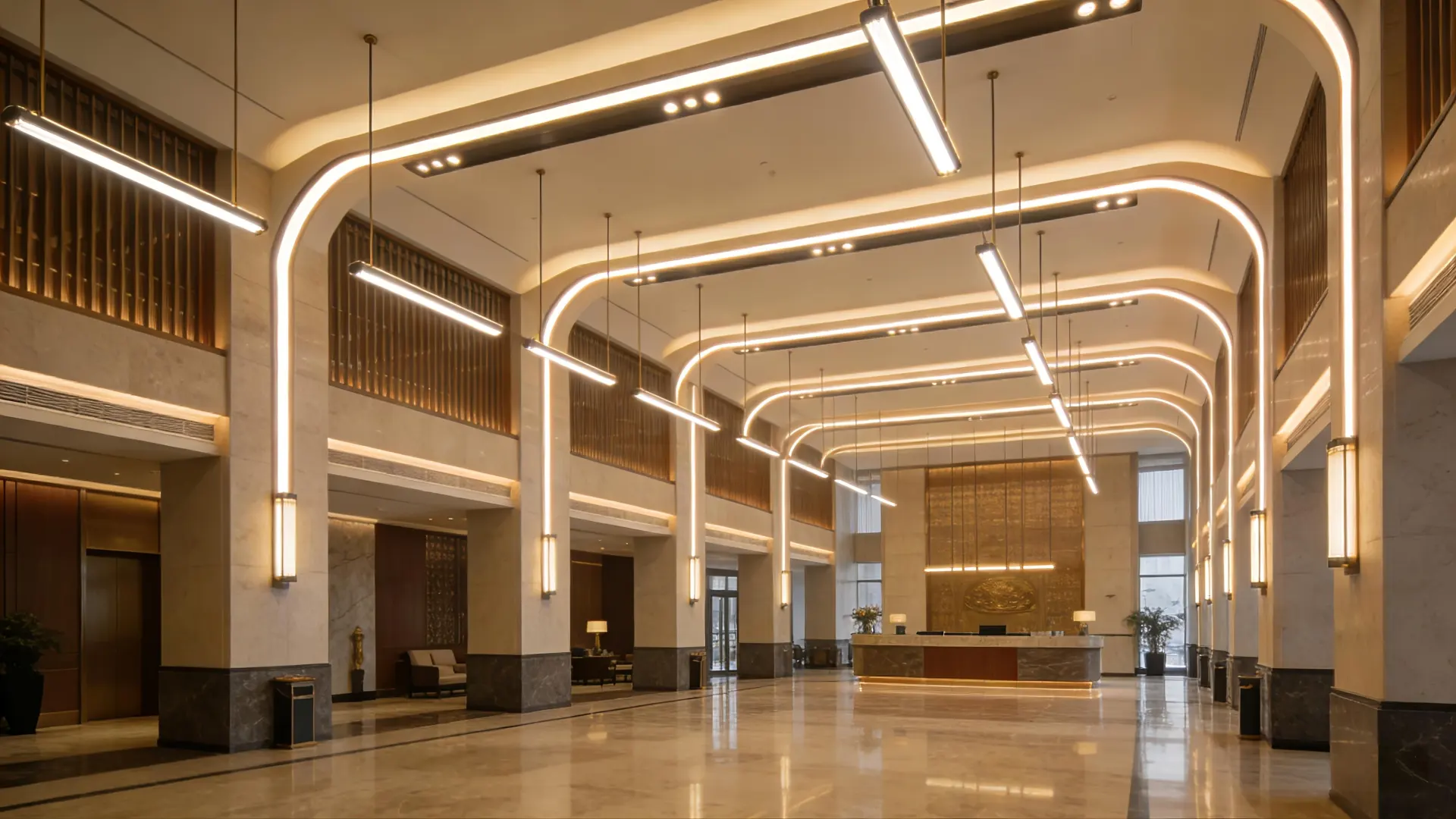
In contemporary architectural and commercial projects, lighting is no longer just about illumination. It plays a critical role in shaping space, guiding movement, and supporting visual comfort. DALI Dimmable Custom Linear Lighting has emerged as a preferred solution for designers and engineers who require precision control, flexible customization, and long-term reliability within professional lighting systems.
By combining the DALI protocol with tailor-made linear luminaires, this lighting approach enables seamless dimming, consistent performance, and complete integration into intelligent building environments. It is particularly well suited for offices, retail spaces, hospitality projects, cultural venues, and high-end residential applications.
Understanding DALI-Based Linear Lighting Systems
DALI (Digital Addressable Lighting Interface) is a globally recognized lighting control standard widely adopted in professional projects. Unlike traditional analog dimming, DALI allows each luminaire to be individually addressed, grouped, and controlled through digital signals.
When applied to linear lighting, DALI provides designers with precise control over brightness levels, scene settings, and system behavior, even in complex layouts or large-scale installations. This makes it ideal for architectural spaces where lighting quality and consistency are essential.
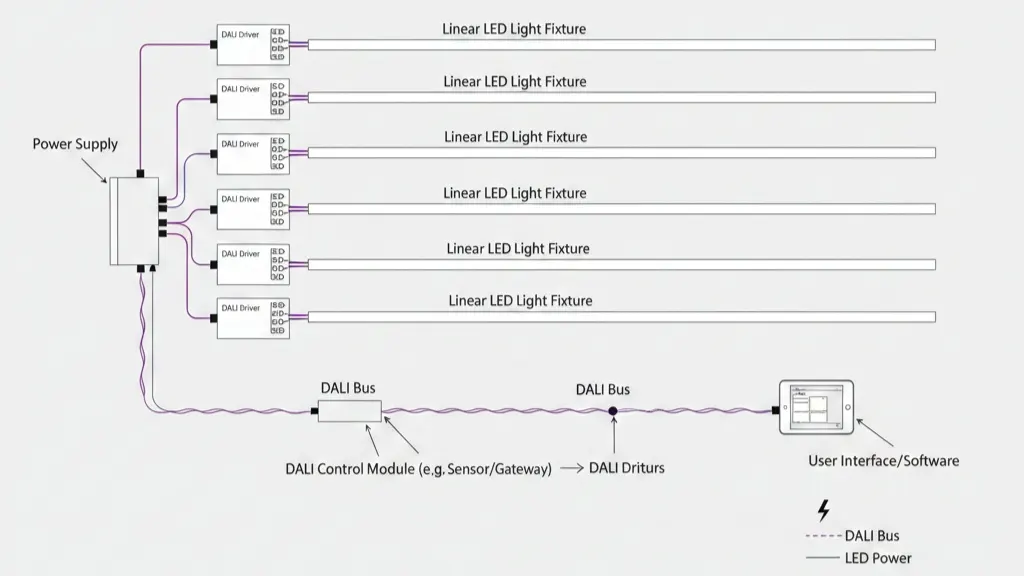
For a detailed technical overview of the DALI protocol, you can refer to the official DALI Alliance resource:
https://www.dali-alliance.org
What Is Custom Linear Lighting?
Custom linear lighting refers to LED linear fixtures designed and manufactured according to specific project requirements. Instead of using fixed standard lengths or profiles, these luminaires can be customized in terms of size, shape, mounting method, optical performance, and control system.
In practice, this means linear lights can be adapted to follow architectural lines, integrate into ceilings or walls, or form continuous lighting patterns across large areas.
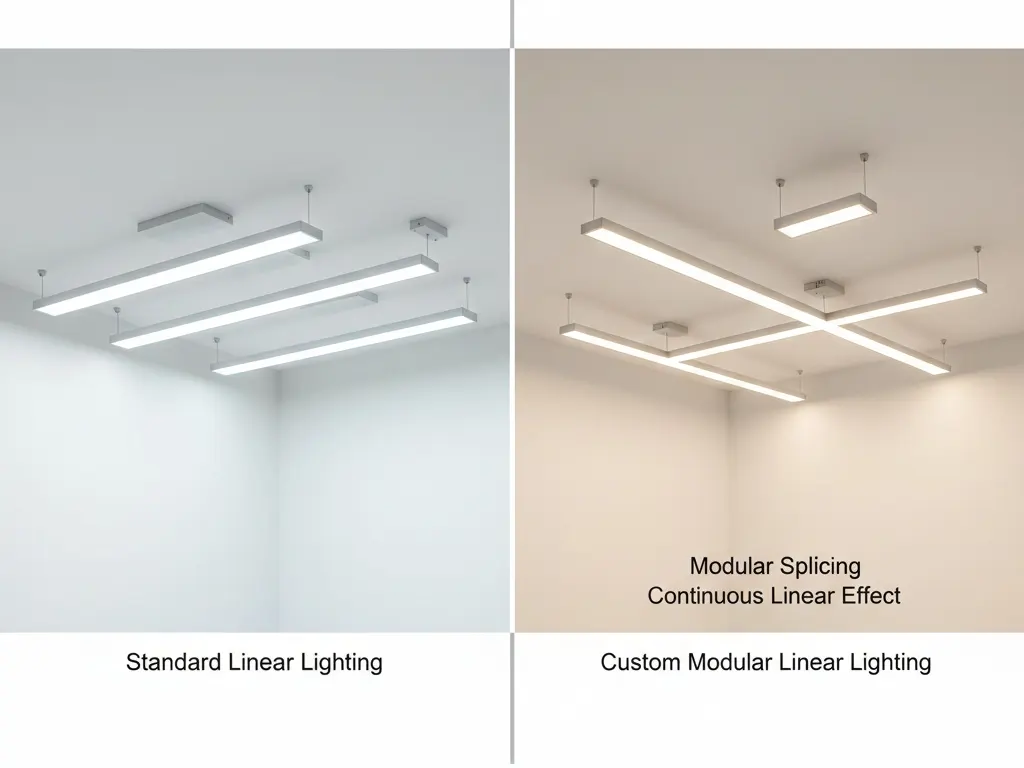
Typical customization options include:
- Length and modular connection design
- Housing shape and finish color
- Beam angle and glare control structure
- Mounting type (recessed, surface-mounted, suspended)
- Control protocol compatibility
Introduction to Irregular-Shaped Linear Lighting
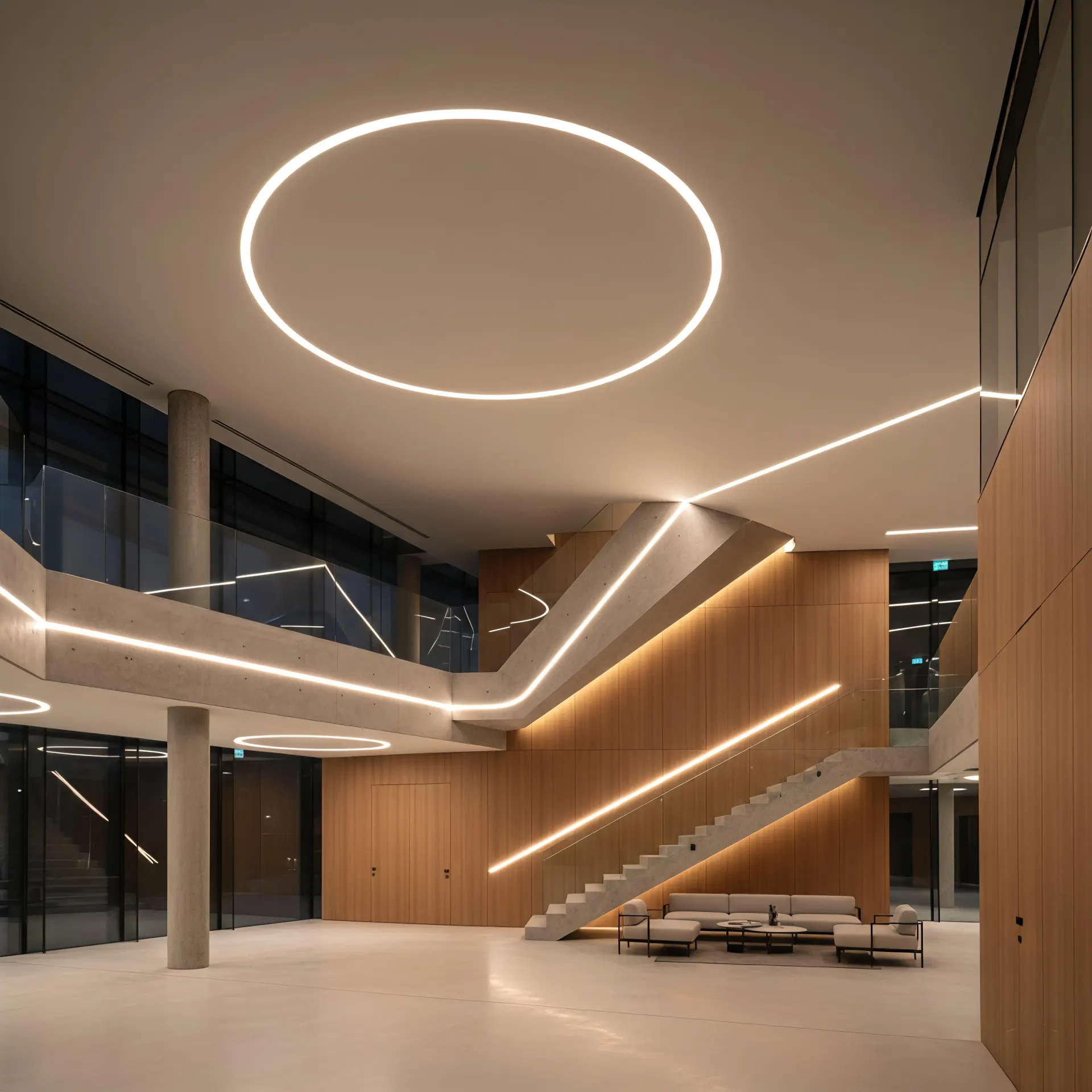
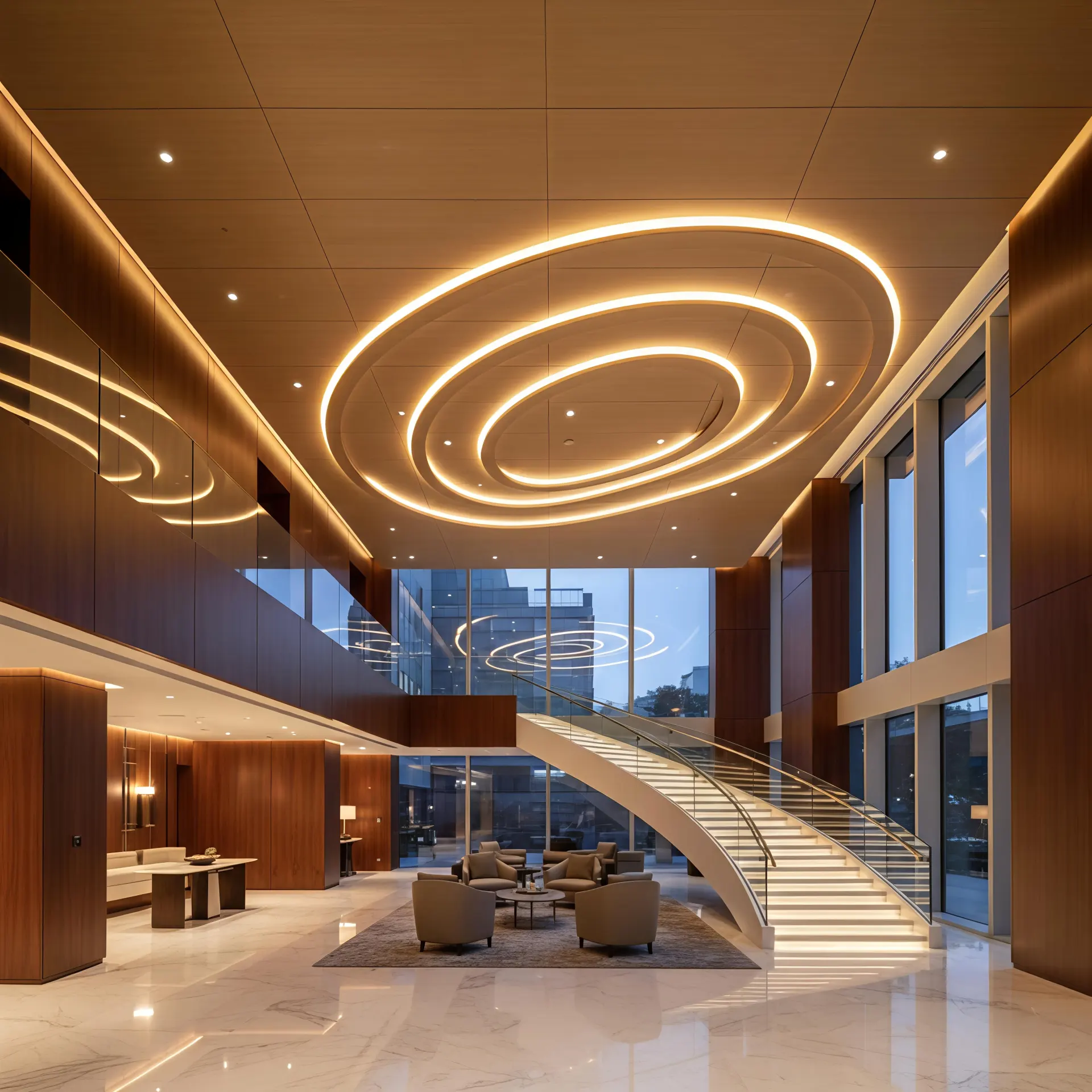
Irregular-shaped linear lighting, often referred to as “异形线条灯” in the Chinese market, is a specialized form of custom linear lighting. These fixtures go beyond straight-line designs and can be produced in curved, angled, circular, or free-form geometries.
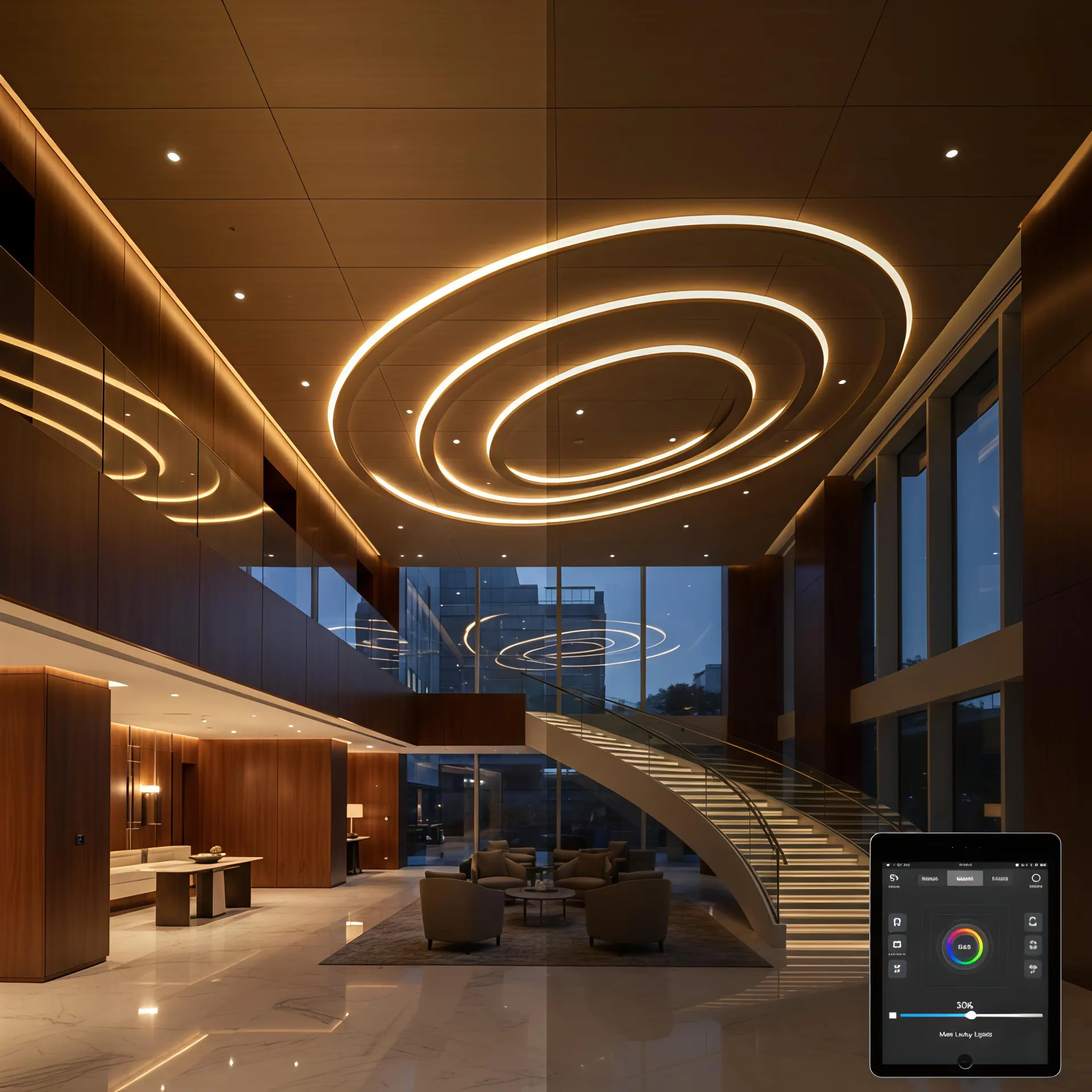
Such solutions are frequently used in high-end architectural projects where lighting must align with complex ceiling structures, artistic concepts, or brand-driven interior designs. When combined with a DALI lighting system, irregular linear lights can still maintain smooth dimming performance and consistent brightness across all segments.
This approach allows designers to achieve both visual creativity and technical precision, without compromising system stability.
Key Advantages of DALI Dimmable Custom Linear Lighting
Precise and Consistent Dimming Performance
DALI-based dimming ensures smooth brightness transitions from low to high levels, without flicker or color instability. This is especially important in office environments, galleries, and retail spaces where visual comfort directly impacts user experience.
High Level of Design Flexibility
Custom linear fixtures can be manufactured to match architectural dimensions exactly. Whether the project requires long continuous lines or complex geometric layouts, customization ensures the lighting integrates naturally into the space.
Simplified System Integration
DALI systems allow luminaires to be addressed and commissioned through software, reducing on-site wiring complexity. Lighting scenes, schedules, and group controls can be adjusted without changing physical connections.
Long-Term Maintenance Efficiency
Fault detection and system feedback are built into DALI control architectures. This helps facility managers quickly identify issues and reduce maintenance time over the lifecycle of the project.
Typical Applications in Architectural Projects
| Application Area | Lighting Requirement | Linear Lighting Benefit |
|---|---|---|
| Office Spaces | Uniform brightness, low glare | Continuous linear light improves visual comfort |
| Retail Stores | Accent and ambient balance | Flexible dimming enhances product display |
| Hotels & Lobbies | Atmosphere and design coherence | Custom shapes support architectural concepts |
| Educational Buildings | Stable illumination | DALI control supports zoning and scheduling |
| Public Areas | Reliability and scalability | Easy expansion and system integration |
Design Considerations for DALI Linear Lighting Projects
When planning a project using custom linear luminaires with DALI control, several technical factors should be evaluated early in the design phase.
| Design Factor | Key Consideration |
|---|---|
| Dimming Range | Ensure driver supports smooth low-level dimming |
| Color Consistency | Maintain uniform CCT across connected modules |
| Glare Control | Use deep-recessed or optical diffusers where needed |
| Power Distribution | Plan for voltage drop in long linear runs |
| Control Topology | Define groups and scenes based on space function |
Proper coordination between lighting designers, control engineers, and manufacturers helps avoid common integration issues later in the project.
DALI Compatibility and Future-Proof Lighting Design
One of the major strengths of DALI systems is their compatibility with broader building management platforms. DALI lighting can be integrated with sensors, daylight harvesting systems, and centralized controls through gateways and interfaces.
This ensures that linear lighting installations remain adaptable as building requirements evolve. Designers can modify lighting behavior without replacing fixtures, which supports long-term sustainability goals.
For additional reference on intelligent lighting and building integration, this resource provides useful insights:
https://www.archlighting.com
Why Designers Choose Custom Linear Solutions with DALI Control
From a professional perspective, custom linear lighting controlled via DALI offers a balance between creative freedom and engineering reliability. It supports architectural expression while meeting strict performance standards required in commercial projects.
Rather than forcing a space to adapt to standard luminaires, this approach allows lighting to be designed as part of the architecture itself.
Conclusion
DALI Dimmable Custom Linear Lighting represents a mature and reliable solution for modern architectural environments. By combining digital dimming control with fully customized linear fixtures, designers and engineers can achieve consistent lighting quality, flexible layouts, and efficient system management.
As architectural spaces continue to demand higher levels of visual comfort, control accuracy, and design integration, this lighting approach will remain a key choice for professional projects worldwide.

