
DALI LED Lighting Control System Reliability: The Foundation of Sustainable, Long-Term Infrastructure
By Powerstar
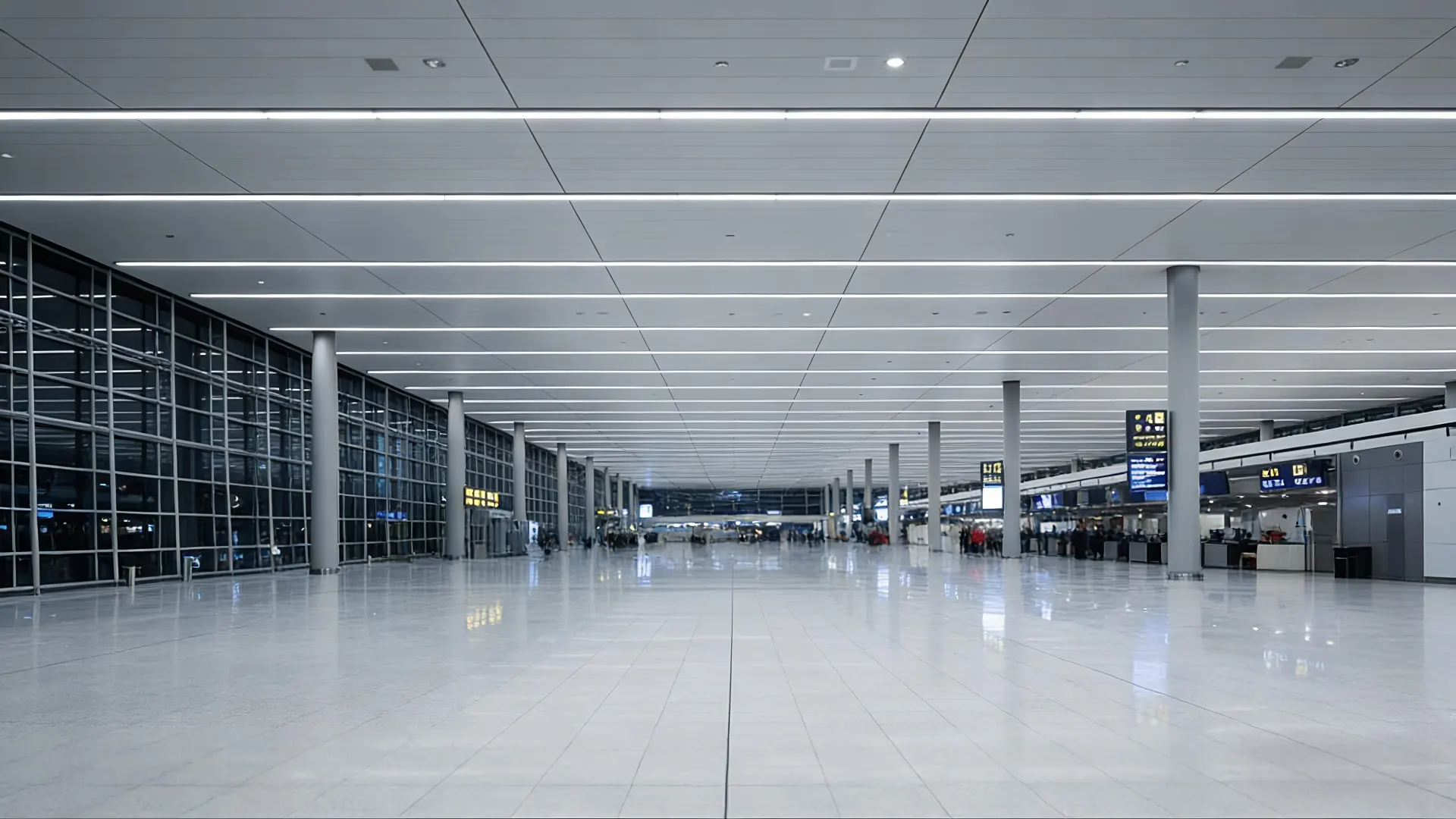
In today’s large-scale infrastructure developments—whether skyscrapers, international airports, or smart industrial parks—DALI LED Lighting Control System Reliability has become a critical factor in lighting design decisions. Developers are increasingly faced with a fundamental question: should they prioritize the lowest initial investment, or choose a lighting control system that delivers predictable performance and long-term operational value?
As the construction industry continues its shift toward intelligent buildings, lighting control systems are no longer simple on–off tools. They have become a core part of a building’s operational “nervous system.” Yet for many owners, unstable smart lighting systems have turned into a long-term burden rather than an advantage. Frequent communication dropouts, unexplained flickering, and costly post-installation maintenance have caused “smart” systems to lose their appeal.
This article explores why DALI LED Lighting Control System Reliability is not only a technically sound choice, but also a strategic foundation for protecting asset value and achieving truly low-risk, long-term operation.
Rethinking ROI: DALI LED Lighting Control System Reliability Beyond the “Low-Cost Trap”
In building projects with lifespans of 10, 15, or even 20 years, the initial installation cost of a lighting system typically accounts for only 15–20% of total lifecycle expenditure.
The majority of costs accumulate over time, including:
- Energy consumption
- Routine maintenance and labor
- Downtime caused by system failures
- Hidden expenses from retrofits, upgrades, or forced system replacement
Many lighting solutions that appear cost-effective perform adequately in the first one or two years after handover. However, as electronic components age and environmental interference increases, system instability often rises sharply.
For building owners, this is not just a matter of spare parts. It leads to operational disruptions, increased complaints, and growing management complexity.
The logic behind DALI is fundamentally different.
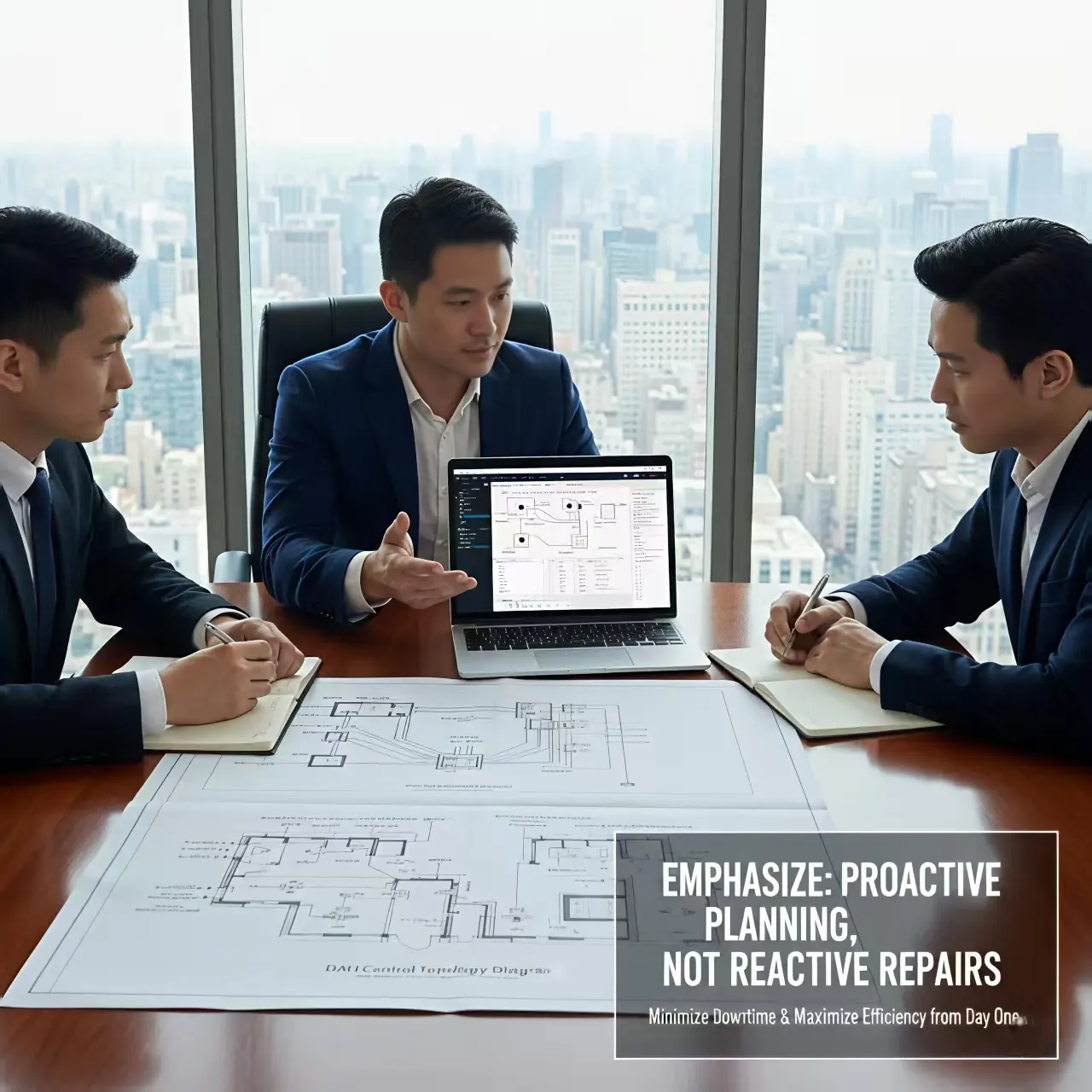
By investing in system reliability upfront, DALI delivers predictable, low-risk performance over the long term.
From this perspective, choosing DALI is not about adopting a more complex system—it is about securing a form of long-term insurance for infrastructure-scale lighting projects.
Why Many Lighting Control Systems Fail Over Time
In real-world applications, lighting control systems rarely fail immediately. Instead, risks gradually surface as years pass. The most common causes include the following.
Communication Instability and Limited Noise Immunity
Analog dimming or simplified control systems are highly sensitive to cable degradation, environmental interference, and load variations. While they may function initially, signal deviations tend to increase over time, eventually affecting overall system stability.
Closed Protocols and Vendor Lock-In
Some systems rely heavily on proprietary protocols from a single manufacturer. When components are discontinued or supply chains change, maintenance and replacement become increasingly difficult—often forcing large-scale system modifications.
Insufficient Scalability for Future Changes
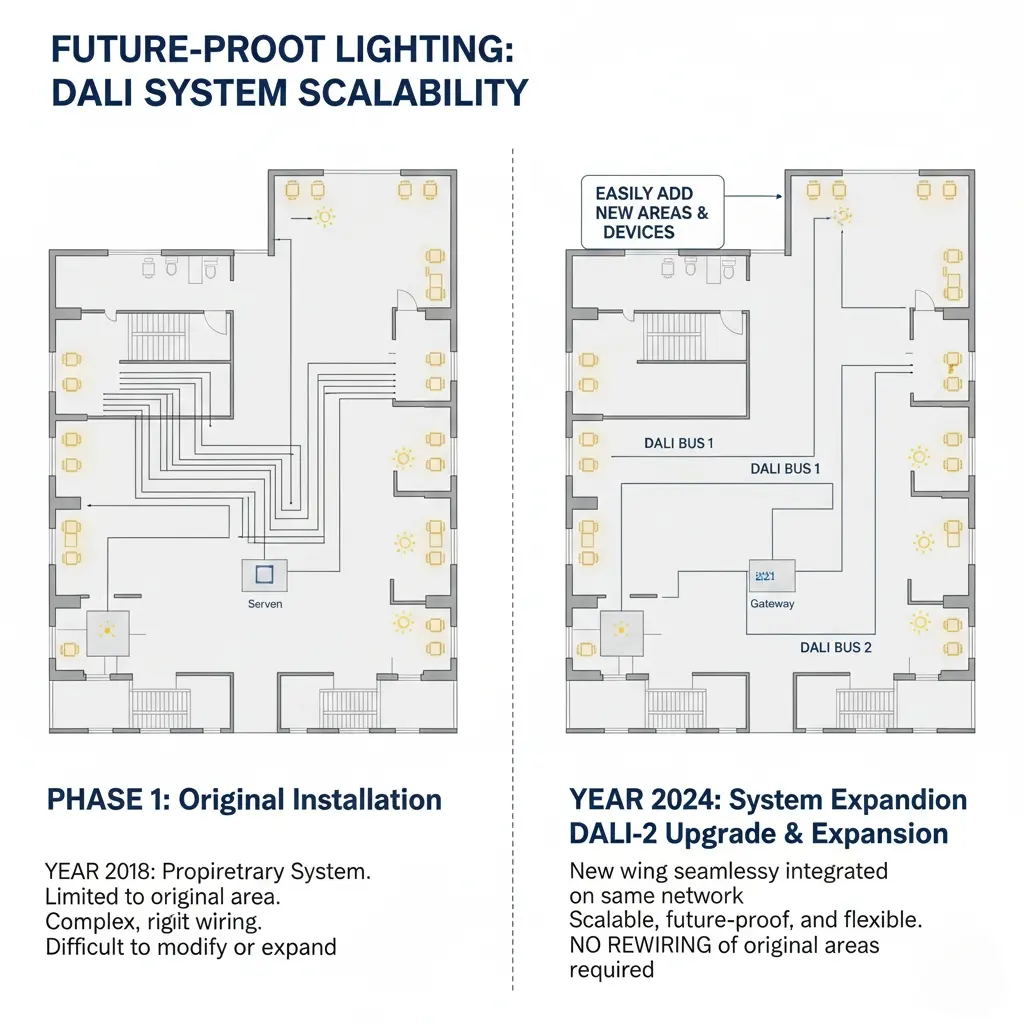
Few projects can fully predict future space usage. Changes in layout or lighting requirements place new demands on the control system. Without scalability, even minor adjustments may require rewiring or large-scale hardware replacement.
Excessive Maintenance Complexity
Complex system structures and unclear logic mean that even small adjustments require specialist intervention. Over time, this significantly increases operational workload and cost.
These are not isolated issues, but recurring risks in long-term lighting projects.
DALI LED Lighting Control System Reliability Through Distributed Intelligence
Traditional lighting control systems often rely on centralized controllers. If this “central brain” fails, entire floors—or even entire buildings—can be left in the dark. Such single points of failure are unacceptable in long-term infrastructure projects.
What Is Distributed Intelligence?
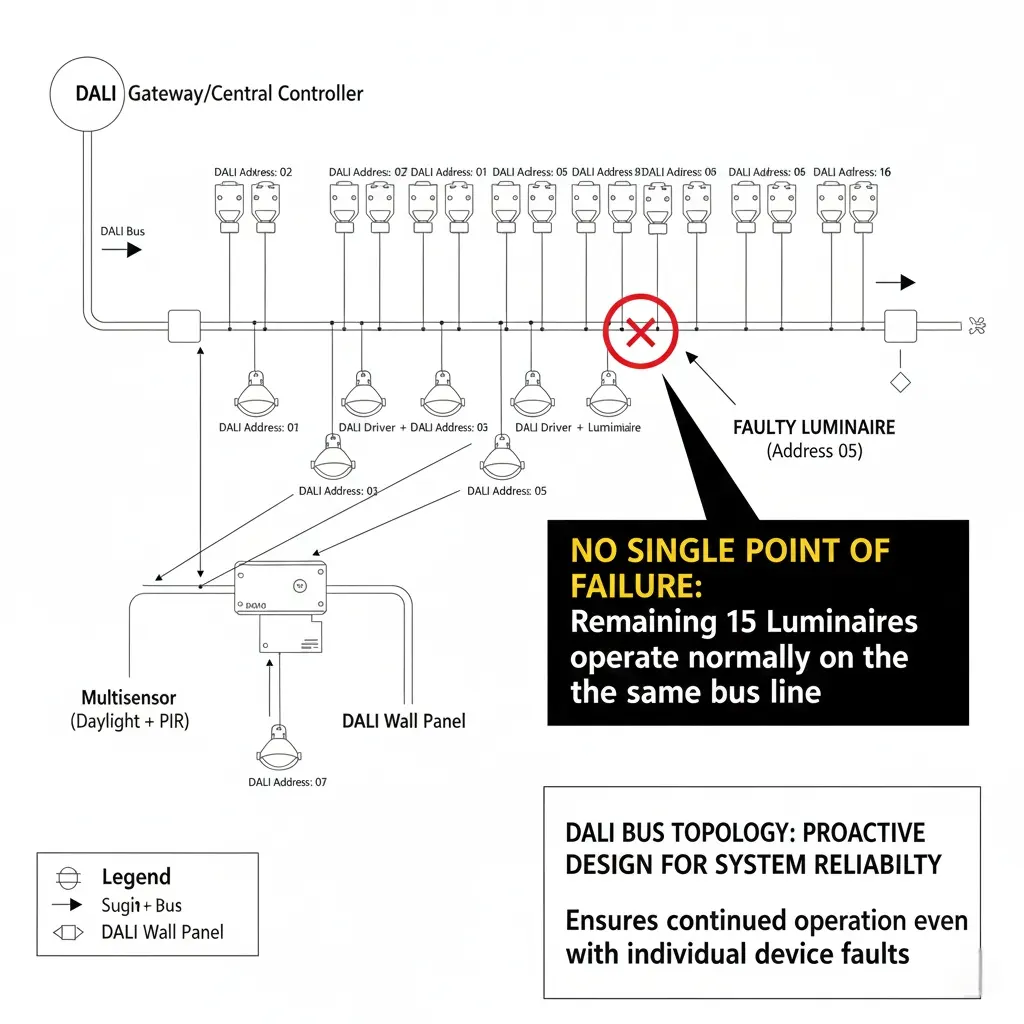
DALI adopts a distributed intelligence architecture.
Within a DALI network, each ballast, driver, sensor, and control panel has its own microprocessor and memory.
Why Distributed Architecture Improves Reliability
- Independent operation
Even if a controller or communication node fails, individual drivers can continue operating based on predefined default settings, maintaining essential lighting levels. - Risk isolation
Physical damage in one area—such as cable breaks during renovations—does not affect other zones. This design significantly enhances system availability.
For hospitals, laboratories, transport hubs, and other environments where lighting reliability is critical, this architecture provides an invaluable level of operational confidence.
Digital Feedback: From Reactive Maintenance to Predictive Operation
In traditional lighting systems, facility managers typically discover failures through inspections or user complaints. In projects with tens of thousands of luminaires, this approach is both inefficient and unreliable.
Real-Time Status Feedback
Through bidirectional digital communication, DALI enables every luminaire to report its status, including:
- Whether it is functioning correctly
- Whether the light source is approaching end of life
- Whether the driver is overheating or operating abnormally
Reducing OPEX Through Predictive Maintenance
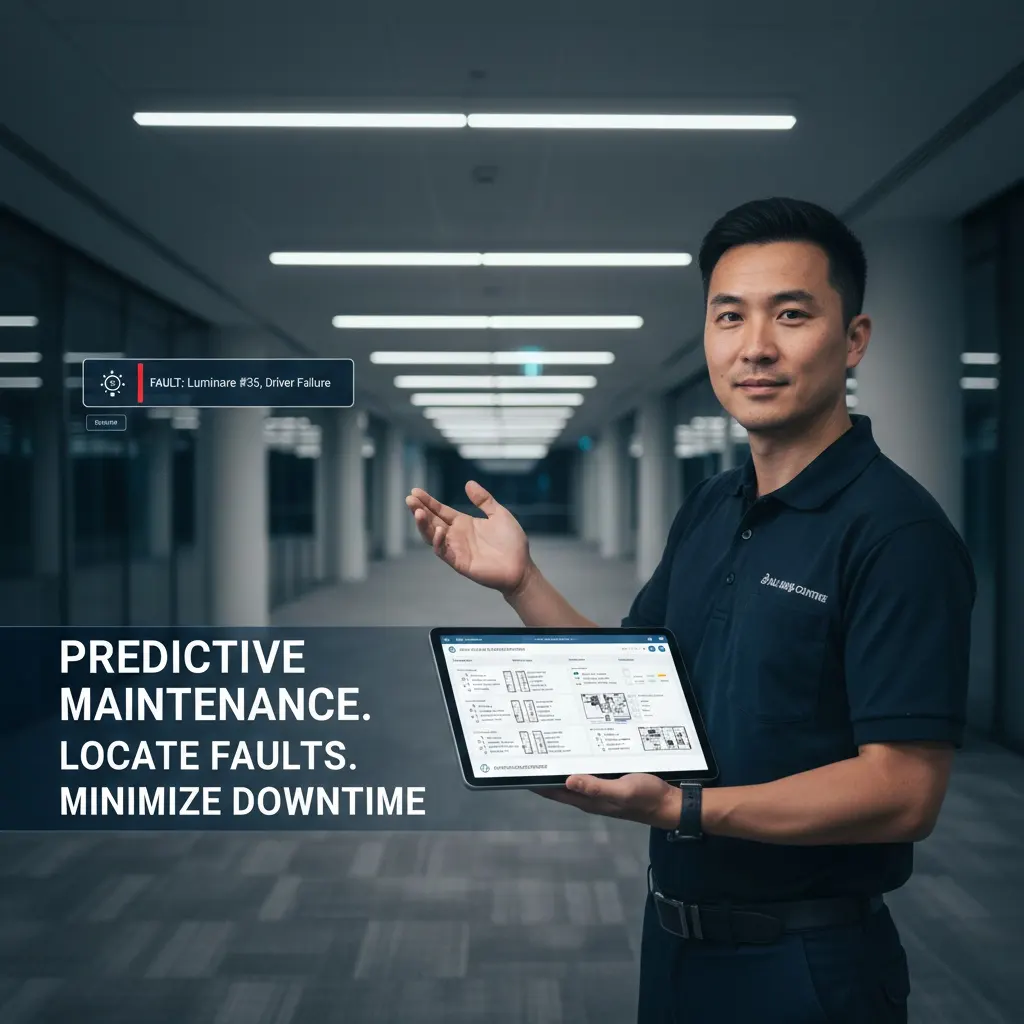
With centralized management software, maintenance teams receive precise fault lists and location data. This enables:
- Direct, targeted repairs without extensive searching
- Planned batch replacements before large-scale failures occur
This predictive maintenance approach can reduce long-term maintenance costs by more than 50%, transforming lighting operation from reactive troubleshooting to precise, data-driven management.
The Power of International Standards: Long-Term Compatibility and Asset Protection
One of the greatest risks in long-term projects is technological isolation. If a proprietary system becomes unsupported, the entire installation may require complete replacement.
IEC 62386: A Global Standard
DALI is based on the internationally recognized IEC 62386 standard. This allows devices from hundreds of manufacturers—drivers, sensors, gateways—to operate seamlessly on the same bus.
Interoperability as Investment Protection
For long-term infrastructure projects, standardization provides unmatched flexibility:
- Future replacement: Even if the original supplier is no longer available, compliant DALI devices can be sourced from other manufacturers.
- Easy expansion: Changes in space layout can be handled through software reconfiguration rather than rewiring.
Standardization is the essence of future-proofing, ensuring that technology investments remain viable well beyond the initial installation phase.
Strong Noise Immunity for Complex Building Environments
In factories, data centers, and large commercial buildings, electromagnetic environments are often challenging. Conventional smart systems can suffer from interference caused by high-voltage equipment and frequency converters.
DALI was designed with industrial-grade applications in mind:
- Digital signal transmission offers far greater noise immunity than analog systems such as 0–10V.
- Robust wiring requires no shielding and can be installed alongside power cables, reducing installation errors and complexity.
This physical robustness is a key factor enabling stable system performance over more than a decade of operation.
From Installation to Operation: Reducing Long-Term Maintenance Effort
For owners and facility managers, an ideal lighting control system is one that requires minimal intervention after commissioning.
In practice, DALI systems enable:
- One-time commissioning with long-term stable operation
- Flexible grouping and scene control through software
- Space reconfiguration without rewiring
- Maintenance focused on logical adjustments rather than hardware replacement
This low-intervention operation allows lighting systems to function as an integral part of the building, rather than as assets requiring constant attention.
Conclusion: Choosing DALI Means Choosing Long-Term Certainty
So what is truly the most cost-effective solution?
Through distributed intelligence, digital feedback, international standardization, and industrial-grade robustness, DALI LED Lighting Control System Reliability delivers a level of stability unmatched by conventional solutions.
For developers and building owners, this reliability translates into:
- Fewer complaints and higher occupant satisfaction
- Lower long-term budget leakage
- Extended asset lifespan and delayed major refurbishment cycles
Over the long life of infrastructure projects, a DALI system acts like a quiet, dependable steward—ensuring that every space is illuminated precisely, consistently, and efficiently.
This is the true meaning of a “set-it-once, rely-on-it-for-years” lighting strategy.