



DALI Lighting Control Flexibility: How Smart Grouping and Scene Control Empower Lighting Design
By Vincent
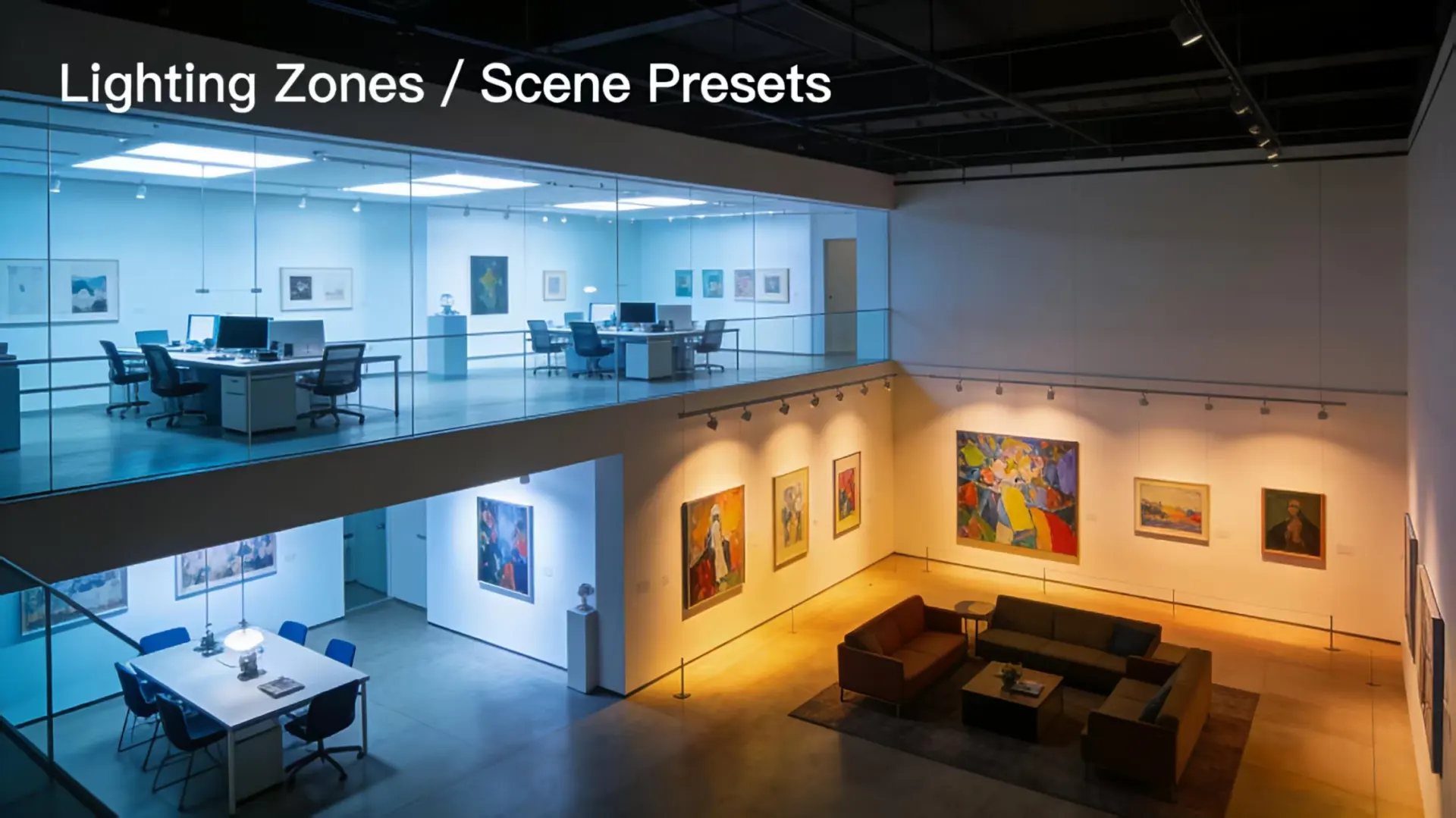
DALI Lighting Control Flexibility has become a key requirement in modern architectural and commercial lighting design. As spaces continue to evolve, office layouts are frequently reconfigured, retail environments constantly refresh their displays, and hotels and public buildings demand more adaptable and refined lighting atmospheres.
Yet for a long time, lighting control systems have been constrained by a very practical limitation: rigid physical wiring. Once construction is complete, luminaire grouping and control logic are effectively locked inside ceilings and conduits. Any later adjustment often means disruptive construction work, higher costs, and operational downtime.
It is precisely in this context that DALI (Digital Addressable Lighting Interface) has become highly relevant. By shifting lighting control from hardwired connections to software-based logic, DALI Lighting Control Flexibility offers a future-oriented foundation for modern lighting design—one that is built to adapt rather than resist change.
From Physical Wiring to Digital Addressing: The Foundation of DALI Lighting Control Flexibility
To understand how DALI unlocks design freedom, it is essential to first recognize how it fundamentally differs from traditional dimming systems.
Conventional solutions such as 0–10V or phase-cut dimming rely on circuit-based control. Luminaires connected to the same circuit must switch and dim together, with all control logic determined by electrical wiring.
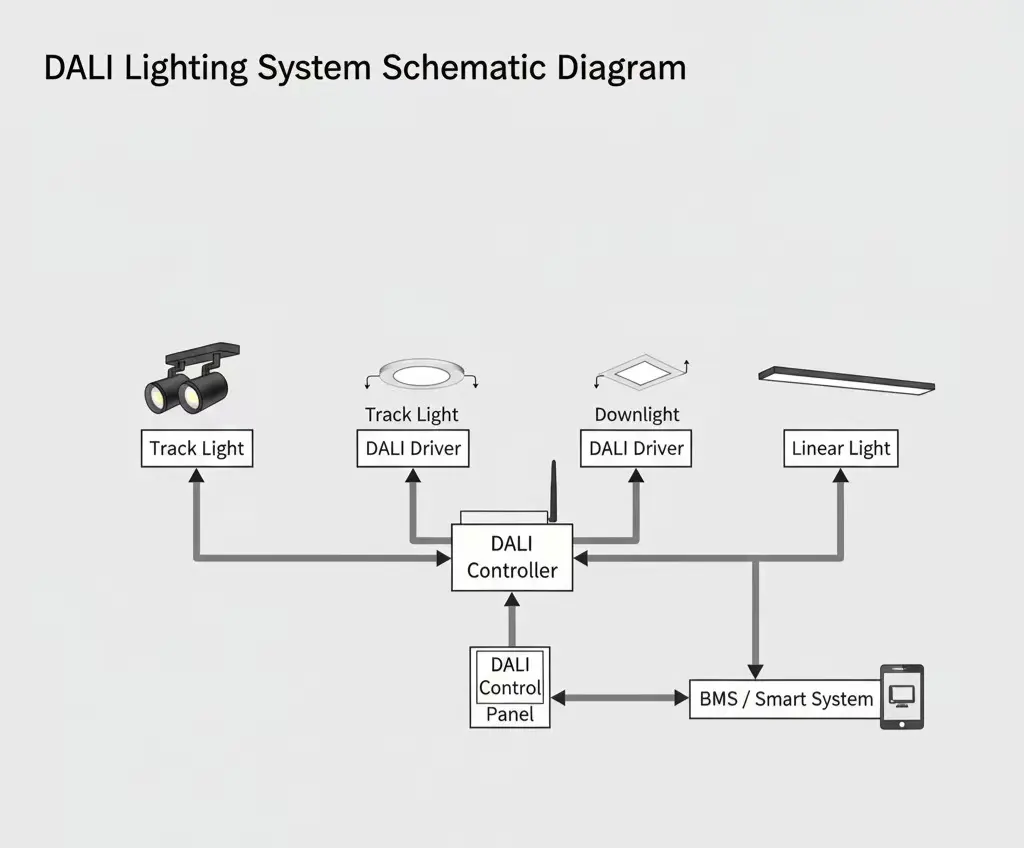
In a DALI system, however, each driver is assigned a unique digital address.
This changes the logic entirely:
- Physical connection no longer defines control behavior
Even when up to 64 luminaires share the same DALI bus, each fixture can still be individually controlled. - Control logic is defined in software, not wiring
Grouping, scene settings, and control relationships are configured digitally rather than through electrical modifications.
This concept of virtual wiring forms the technical backbone of DALI Lighting Control Flexibility and explains why DALI systems remain adaptable long after installation.
Smart Grouping: Flexible Lighting Control Beyond Spatial Boundaries
Software-Defined Zoning for Evolving Spaces
In modern offices, mixed-use commercial buildings, and exhibition venues, space usage is rarely static.
- Large open-plan offices may be divided into smaller meeting rooms
- Exhibition layouts often change with new themes or displays
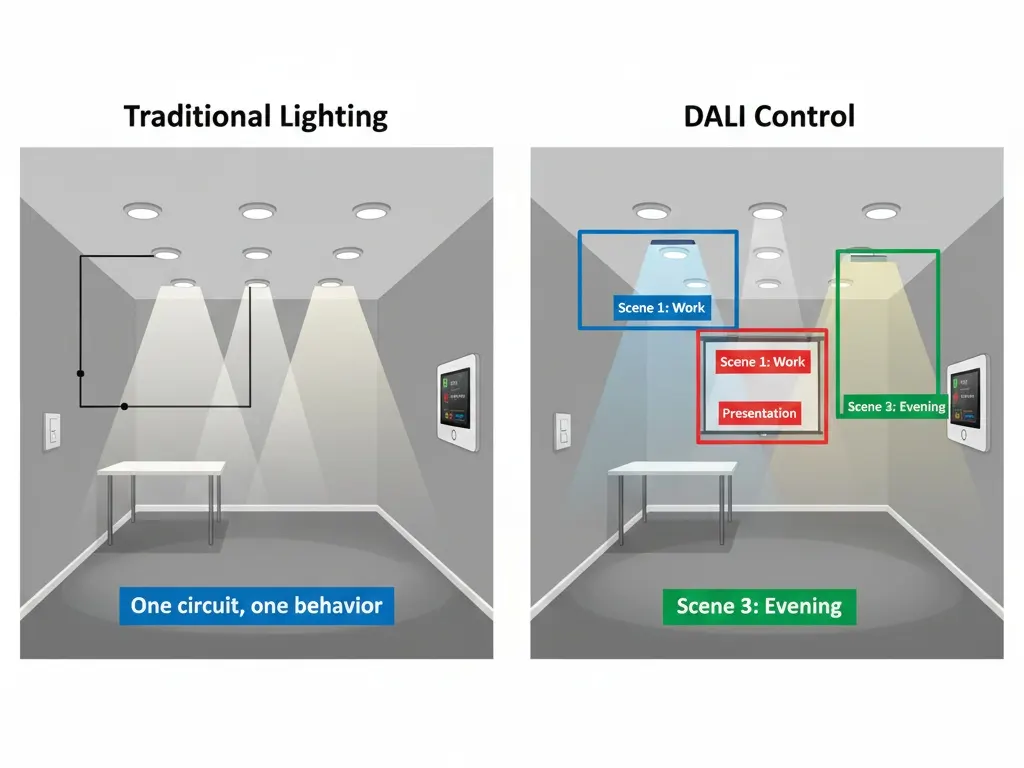
With traditional lighting control, such changes typically require rewiring, relocating control panels, or modifying ceiling infrastructure.
With a DALI-based lighting control solution, the hardware remains untouched. Lighting zones are simply redefined in the control software.
This no-rewiring capability dramatically reduces the time, cost, and disruption associated with spatial reconfiguration.
Granular Grouping for Precision Lighting Design
DALI supports single-luminaire-level grouping, allowing designers to work with an exceptionally fine level of control.
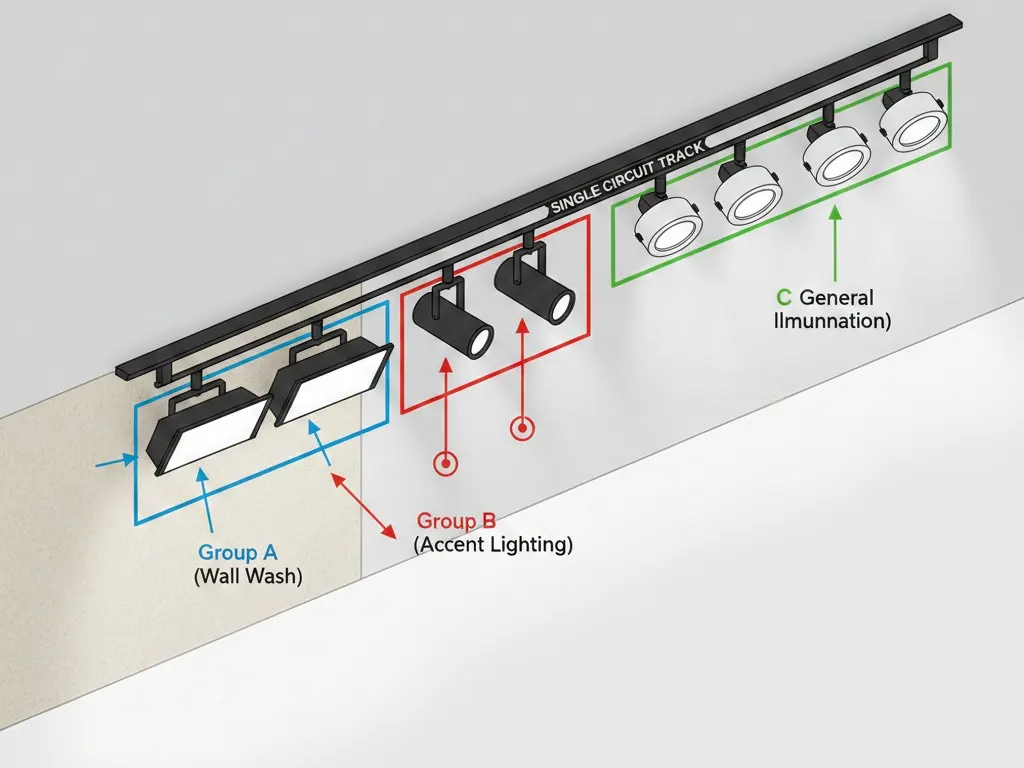
In museums, high-end retail spaces, or galleries, designers can assign dedicated lighting groups to:
- Individual exhibits
- Specific display areas
- Visual focal points
When the layout changes, the lighting logic can shift accordingly—purely through software adjustments. This granular grouping capability gives spaces a strong adaptive lighting character, enabling them to evolve without technical barriers.
Multiple Group Membership Across Control Layers
Another key advantage of flexible DALI lighting systems is that a single luminaire can belong to multiple logical groups simultaneously.
For example, one fixture may be part of:
- A general ambient lighting group
- A night-time security or sensor-activated group
This overlapping logic allows lighting designs to address complex operational scenarios rather than simple on/off control, making DALI particularly suitable for advanced commercial projects.
Scene Control: From Static Lighting States to Spatial Experience
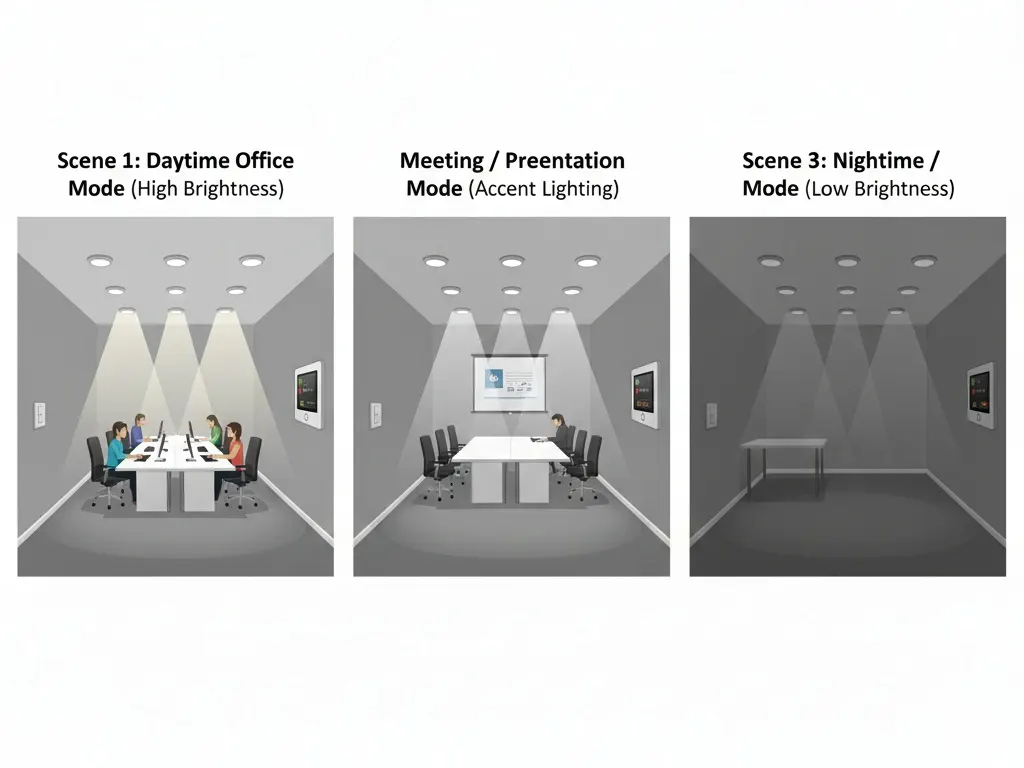
If grouping defines lighting behavior across space, scene control manages lighting across time and usage scenarios.
Smooth Transitions That Enhance Spatial Quality
DALI supports up to 16 standard scene presets and offers highly precise fade time control.
When switching from a “work mode” to a “presentation mode,” light levels can transition smoothly over a predefined duration instead of changing abruptly. This controlled fading reduces visual fatigue and subtly enhances the perceived quality of the space.
Multi-Parameter Scene Control for Human-Centric Lighting
In DALI systems that support DT8, scene control extends beyond brightness to include coordinated color temperature adjustment.
Typical examples include:
- Circadian lighting scenes that follow natural daylight rhythms
- Activity-based scenes for meetings, exhibitions, social events, or energy-saving operation
Through scene recall, complex lighting concepts can be executed consistently and reliably, transforming lighting from a static installation into a responsive environmental element.
Grouping and Scenes Combined: The Core Value of DALI Lighting Control Flexibility
The real strength of DALI Lighting Control Flexibility emerges when smart grouping and scene control work together.
- Grouping determines which luminaires participate
- Scenes define how those luminaires behave
As a result, lighting design no longer revolves around electrical constraints. Instead, it responds to:
- Spatial functions
- User behavior
- Emotional and experiential requirements
At its core, DALI Lighting Control Flexibility integrates change into the system architecture itself, rather than treating future adjustments as a problem to be solved later.
The Business Value Behind Lighting Design Freedom (ROI)
Lower Lifecycle Costs
Over a building lifespan of 10 to 20 years, changes in layout and function are inevitable.
Because DALI systems rely heavily on digital configuration, many upgrades take place at the software level, significantly reducing the cost of secondary renovations.
Improved Energy Efficiency and Sustainability
By combining precise grouping with sensors, DALI enables:
- Demand-based lighting control
- Constant illuminance regulation
- Daylight harvesting
In large commercial buildings, this level of control can deliver energy savings of 30% or more, supporting sustainability goals and certifications such as LEED and WELL.
Unlocking Creative Freedom for Lighting Designers

When designers are no longer constrained by switch locations or wiring paths, they can focus on what truly matters: light, shadow, hierarchy, and atmosphere.
In this sense, DALI is less a control protocol and more a design-enabling system—one that allows lighting to be shaped with the same creative freedom as other architectural elements.
Conclusion: Designing for Change Is the Future of Quality Lighting
DALI intelligent lighting control is not simply a technological upgrade; it represents a future-ready approach to lighting design. Through precise grouping and flexible scene control, it equips buildings with the ability to adapt, while balancing design intent, operational efficiency, and long-term value.
In highly competitive commercial and architectural environments, spaces that can evolve, adapt at low cost, and consistently deliver high-quality lighting experiences are the ones that remain relevant.
Choosing DALI is not just choosing a control protocol—it is choosing control over the design future.

