



How to Select a Linear Luminaire for Commercial Lighting Projects
By Vincent
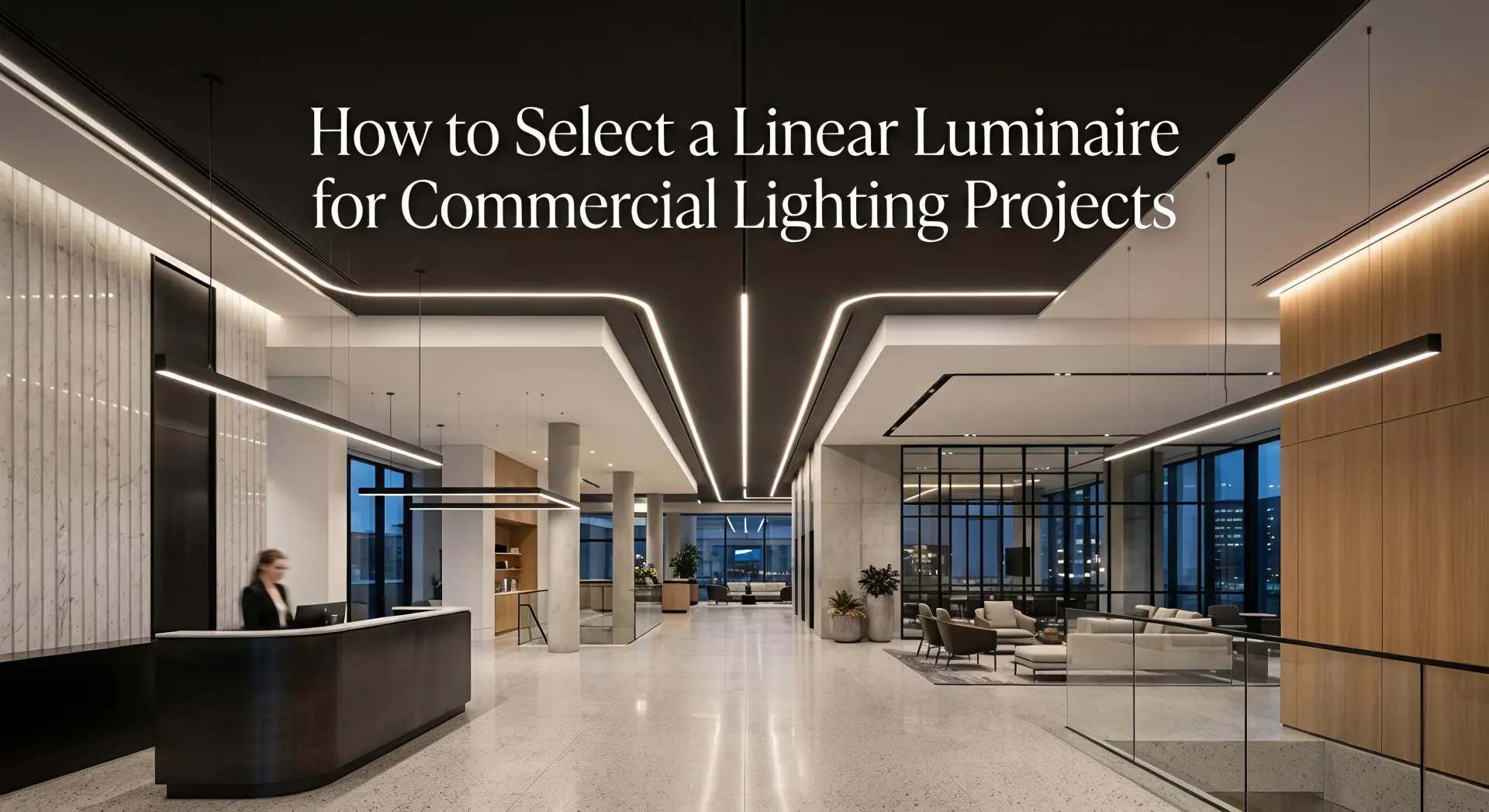
A high-quality Linear Luminaire has become far more than a lighting fixture in modern commercial architecture. In today’s office buildings, luxury hotels, automotive showrooms, retail environments, and art galleries, linear lighting systems are often used as part of the architectural language itself. They define circulation paths, highlight structural geometry, and shape the overall visual atmosphere of a space.
But specifying the wrong fixture at the beginning of a project can quickly lead to expensive problems later on. Dark gaps between fixtures, uncomfortable glare, unstable dimming performance, flicker issues during video conferencing, and time-consuming installation work are all common issues in poorly planned commercial lighting projects.
For lighting designers, electrical engineers, architects, and contractors, selecting a specification-grade linear lighting system means balancing optical performance, architectural integration, smart control compatibility, and installation efficiency.
This guide covers the key factors professionals should evaluate when choosing a commercial linear luminaire system.
1. Linear Lighting Performance and Visual Comfort
Modern commercial spaces no longer prioritize brightness alone. Today, visual comfort and lighting quality are just as important as illumination levels.
1.1 Glare Control in Linear Luminaires
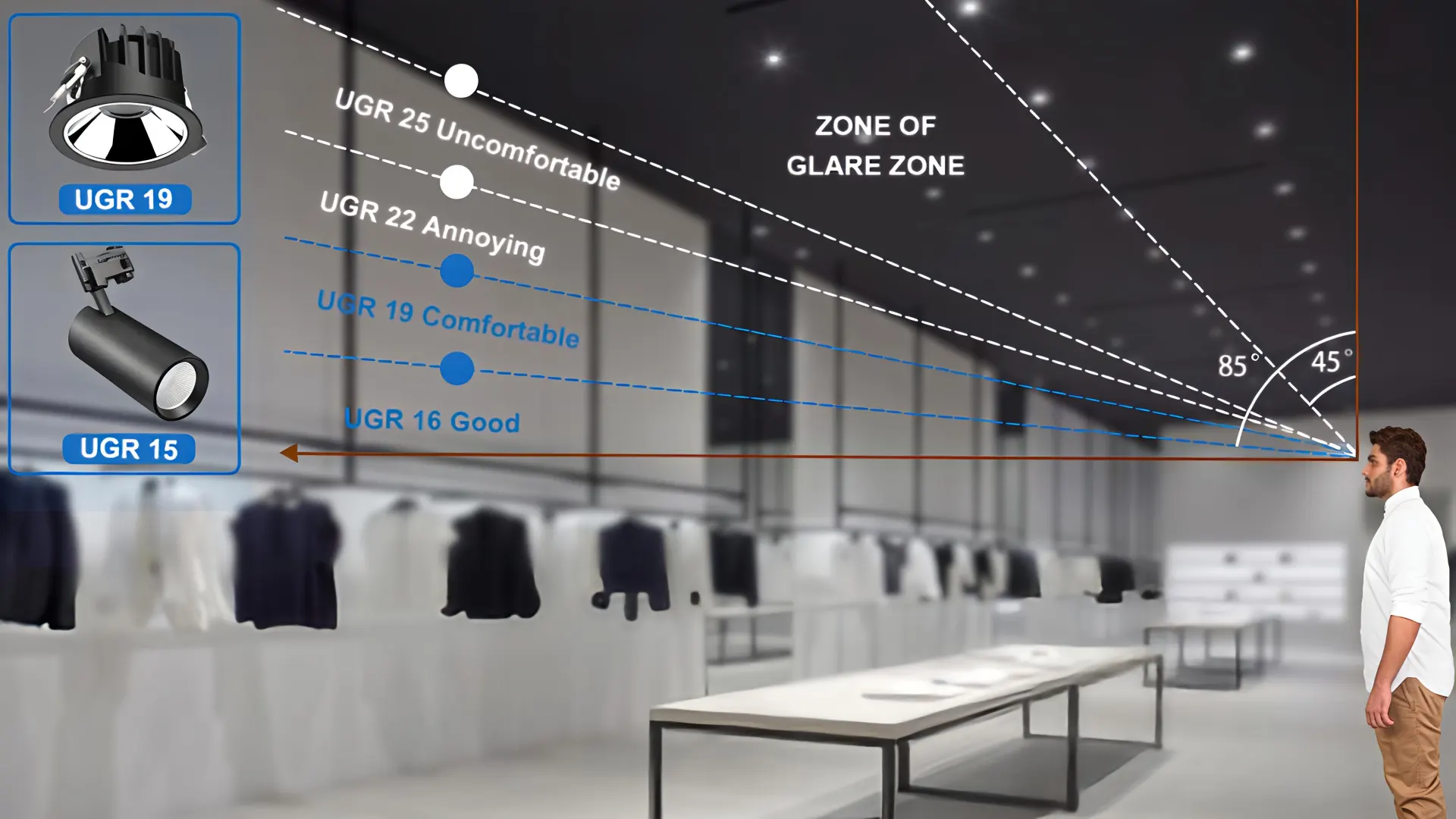
Glare is one of the most important considerations in office linear lighting and educational environments. Poorly shielded LED fixtures can create direct visual discomfort, especially in open-plan offices where employees spend long hours under artificial lighting.
For this reason, many commercial projects specify recessed linear luminaires with UGR<19 ratings. Executive offices, galleries, and premium hospitality spaces may even require UGR<13 performance for maximum visual comfort.
High-performance architectural lighting fixtures often use:
- Micro-prismatic diffusers
- Deep anti-glare optics
- Cell louver systems
- Precision beam control
The recommendations from the International Commission on Illumination (CIE) also emphasize the importance of glare reduction in workplace environments.
1.2 Commercial Linear Luminaire Efficacy and Energy Compliance
As LEED and WELL-certified buildings become more common, energy efficiency has become a major specification requirement.
Instead of focusing only on LED chip performance, lighting designers should evaluate total luminaire efficacy. A high-performance commercial linear lighting system typically delivers between 140 lm/W and 160 lm/W while maintaining consistent light quality.
This is particularly important in large office developments, airports, hospitals, and public buildings where lighting operation costs directly affect long-term building expenses.
| Commercial Lighting Requirement | Recommended Performance |
|---|---|
| Office lighting efficiency | 140–160 lm/W |
| UGR rating | <19 |
| Color rendering | CRI>90 |
| Flicker performance | Flicker-free |
| Dimming compatibility | DALI-2 / 0-10V |
1.3 Color Rendering in Architectural Lighting Fixtures
In luxury retail stores, automotive showrooms, and gallery lighting applications, color accuracy has a direct impact on how products and materials are perceived.
Standard commercial fixtures with CRI 70–80 often make premium finishes appear flat or lifeless. Specification-grade linear luminaires should typically provide:
- CRI>90
- R9>50
High color rendering helps preserve the texture and appearance of wood, fabric, stone, automotive paint, and branded merchandise.
The U.S. Department of Energy lighting resources provide additional guidance on commercial LED lighting performance and efficiency standards.
2. Architectural Linear Lighting and Structural Design
The visual quality of linear lighting depends heavily on continuity and installation precision.
In many commercial projects, the fixture itself becomes part of the architecture.
2.1 Seamless Continuous Run Linear Lighting
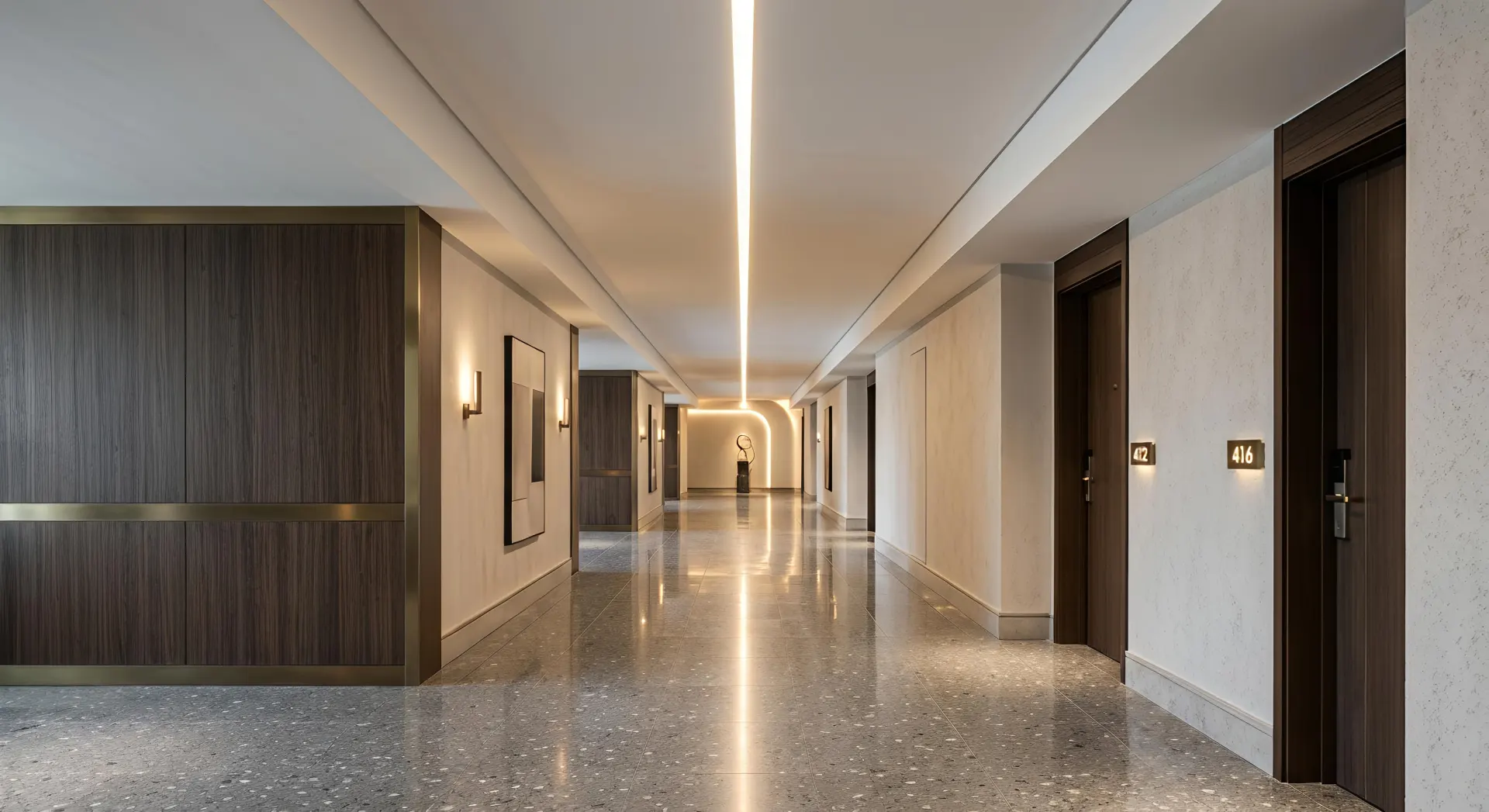
One of the biggest challenges in linear lighting design is achieving a flawless continuous lighting line.
Low-quality fixtures often create:
- Visible dark spots
- Uneven alignment
- Light leakage
- Diffuser deformation
- Inconsistent color temperature
These problems become especially noticeable in long corridors, open offices, and large public areas.
Specification-grade seamless linear luminaires typically use:
- Seamless interlocking systems
- Continuous diffusers
- Precision mechanical alignment
- Stable thermal structures
This allows designers to create uninterrupted lines of light across long distances.
| Connection Type | Common Result |
| Standard segmented connection | Visible dark gaps |
| Low-cost diffuser connection | Uneven brightness |
| Seamless interlocking system | Continuous uniform lighting |
| Precision alignment system | Clean architectural lines |
2.2 Recessed, Suspended, and Surface-Mounted Linear Fixtures
Different ceiling conditions require different installation methods.
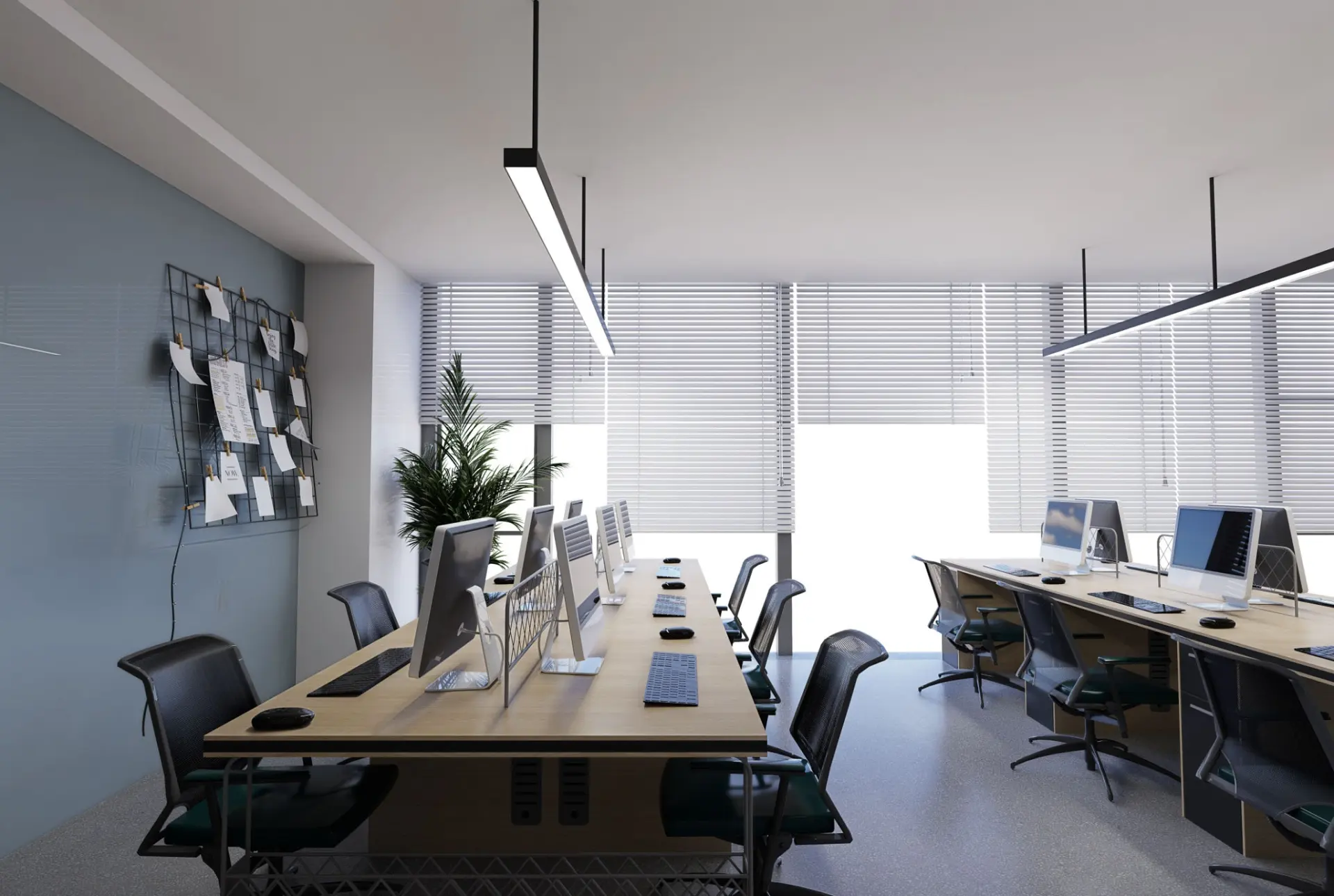
Suspended Direct/Indirect Linear Lighting
Suspended linear fixtures are commonly used in open office ceilings. Direct/indirect distribution provides task lighting while softly illuminating the ceiling plane.
Recessed and Trimless Linear Luminaire Systems
Trimless recessed linear luminaires are popular in minimalist architecture because they integrate cleanly into gypsum ceilings and create an almost invisible lighting appearance.
Surface-Mounted and Track Linear Lighting
Surface-mounted and track-mounted linear fixtures work well in exposed concrete ceilings, retail stores, and renovation projects where recessed installation may not be practical.
3. Smart Linear Lighting Controls and System Compatibility
Commercial buildings increasingly rely on intelligent lighting controls and centralized building management systems.
A modern architectural lighting fixture should integrate seamlessly with digital control infrastructure.
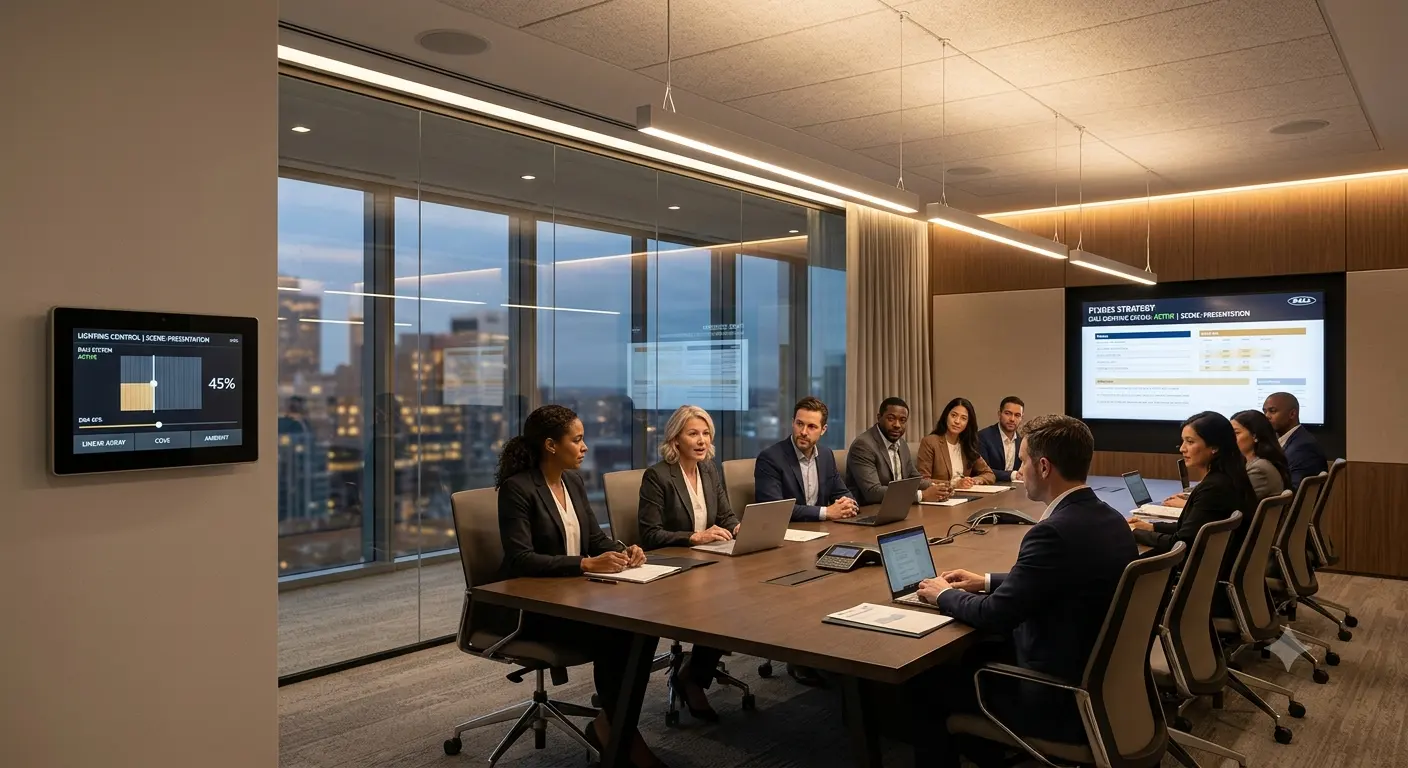
3.1 DALI Linear Lighting and Dimming Compatibility
Today’s commercial projects commonly require compatibility with:
- DALI-2
- 0-10V dimming
- DMX512
- Casambi wireless control
High-quality drivers allow smooth dimming performance down to 1% or even 0.1% brightness without flicker or instability.
This is especially important in hospitality spaces, boardrooms, conference facilities, and premium retail environments.
3.2 Flicker-Free Human Centric Lighting
Human Centric Lighting (HCL) has become increasingly important in office environments.
Using Tunable White technology, lighting systems can automatically adjust color temperature throughout the day to better support occupant comfort and circadian rhythm alignment.
Equally important is flicker-free performance. Poor-quality drivers often create invisible flicker that contributes to eye fatigue, headaches, and camera interference during video meetings.
4. Commercial Lighting Installation Efficiency and Compliance
Fixture cost alone does not determine the true cost of a commercial lighting project.
In North America, Europe, and Australia, labor costs can easily exceed the fixture cost itself.
4.1 Tool-Free Installation for Linear Lighting Projects
Modern contractors increasingly prefer linear lighting systems with:
- Tool-less installation
- Quick-connect wiring
- Fast alignment structures
- Preconfigured modular systems
These features can reduce installation time by more than 50%, helping contractors lower labor costs and shorten project schedules.
4.2 Certification Requirements for Commercial Linear Fixtures
Commercial projects often require strict regional compliance approvals.
Europe
Most projects require:
- CE
- RoHS
- ENEC
Australia
Common requirements include:
- SAA
- RCM
- IC-4 certification
Without proper certification, products may fail inspection or delay project approval.
5. Final Thoughts on Selecting a Linear Luminaire
Choosing the right Linear Luminaire for a commercial project involves much more than fixture appearance or initial pricing.
Lighting professionals should evaluate every system based on:
- Visual comfort
- Optical performance
- Seamless integration
- Smart control compatibility
- Installation efficiency
- Long-term operational reliability
A well-designed architectural linear lighting system does more than illuminate a room. It enhances the architectural experience, supports occupant comfort, and contributes to the long-term value of the building itself.
6. FAQ
What is the difference between a linear luminaire and a standard LED fixture?
A Linear Luminaire is designed not only for illumination, but also for architectural integration and visual continuity. Unlike standard LED fixtures, commercial linear lighting systems typically offer better glare control, seamless connection options, advanced optics, and compatibility with smart lighting controls such as DALI or Tunable White systems.
They are commonly used in offices, retail environments, hospitality spaces, airports, and public buildings where lighting aesthetics and visual comfort are critical.
What UGR rating is recommended for office linear lighting?
For most office environments, a UGR rating below 19 is considered the industry standard for comfortable workplace lighting.
In premium commercial spaces such as executive offices, conference rooms, galleries, or high-end educational facilities, many designers prefer UGR<16 or even UGR<13 to further reduce visual fatigue and glare discomfort.
Which installation type is best for commercial linear lighting?
The ideal installation method depends on the ceiling condition and architectural intent.
- Recessed linear luminaires are popular in minimalist office interiors.
- Suspended linear lighting works well in open ceilings and collaborative workspaces.
- Surface-mounted linear fixtures are commonly used in renovation projects or exposed concrete ceilings.
- Track linear lighting is often selected for retail and showroom applications requiring layout flexibility.
Why do some continuous linear lighting systems show dark spots?
Dark spots usually result from poor connection design, inconsistent diffuser alignment, or unstable thermal expansion within the fixture structure.
High-quality seamless linear luminaires use precision interlocking systems and continuous diffusers to maintain uniform light output across long runs.
This is especially important in architectural corridors, large office spaces, and hospitality projects where visual continuity is part of the overall design concept.

