



High Efficiency LED Linear Lighting for Modern Commercial Spaces
By JC
1. Introduction to High Efficiency LED Linear Lighting
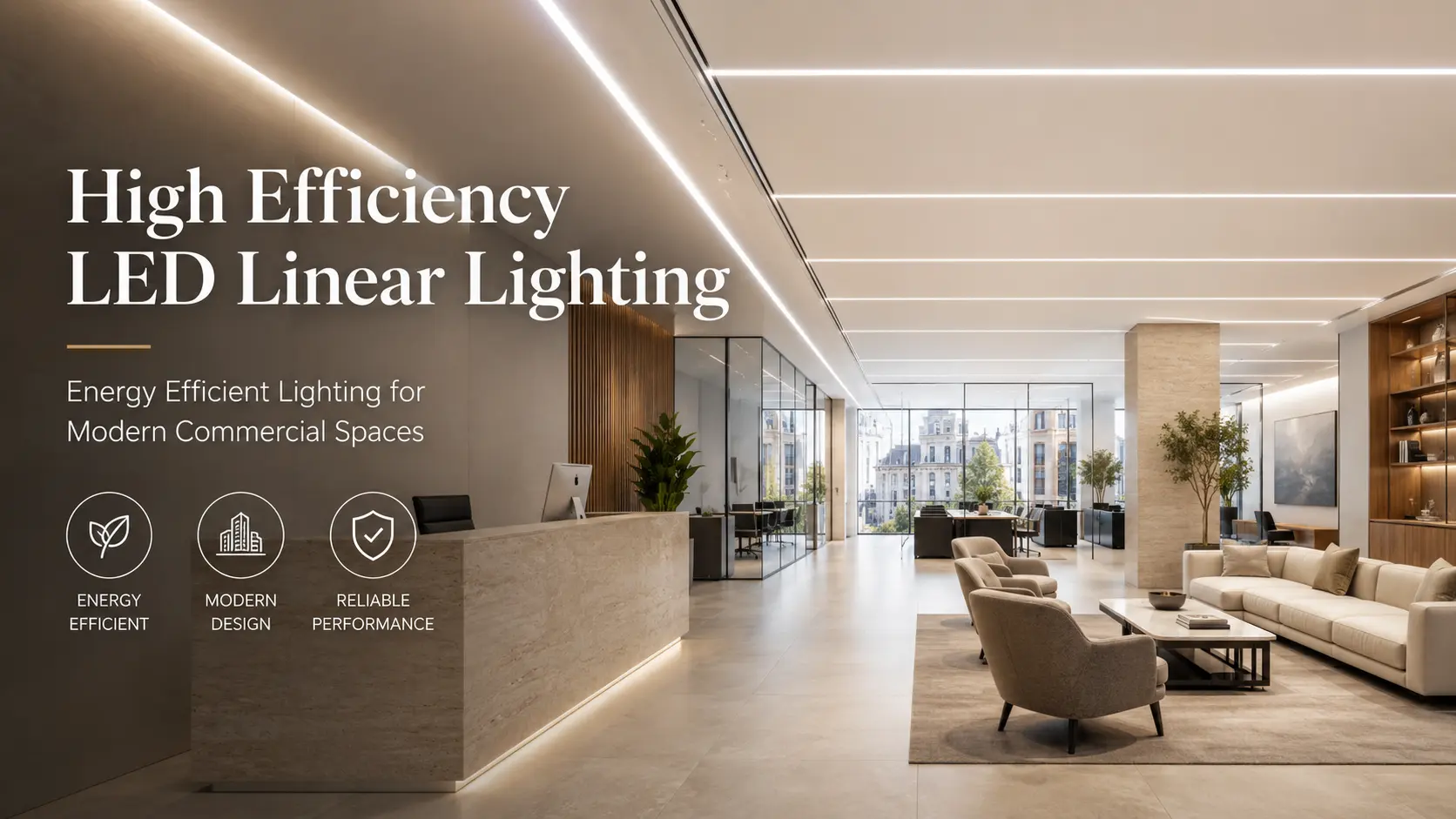
In modern commercial architecture, lighting is no longer just a functional element. It has become a key part of spatial design, visual comfort, and energy strategy. Among various lighting solutions, high efficiency LED linear lighting has emerged as one of the most widely used systems in offices, retail stores, and architectural interiors.
Businesses today are not only looking for brightness, but also for energy savings, visual comfort, and long-term reliability. This is where efficient linear lighting systems play a critical role, offering consistent illumination with significantly reduced power consumption.
2. Energy Efficient LED Linear Lighting Systems for Commercial Use
2.1 Why Efficiency Matters in Commercial Lighting
Commercial spaces such as offices, supermarkets, and showrooms operate for long hours every day. Lighting accounts for a large portion of operational energy costs. Therefore, choosing a solution that delivers high brightness with low energy input is essential.
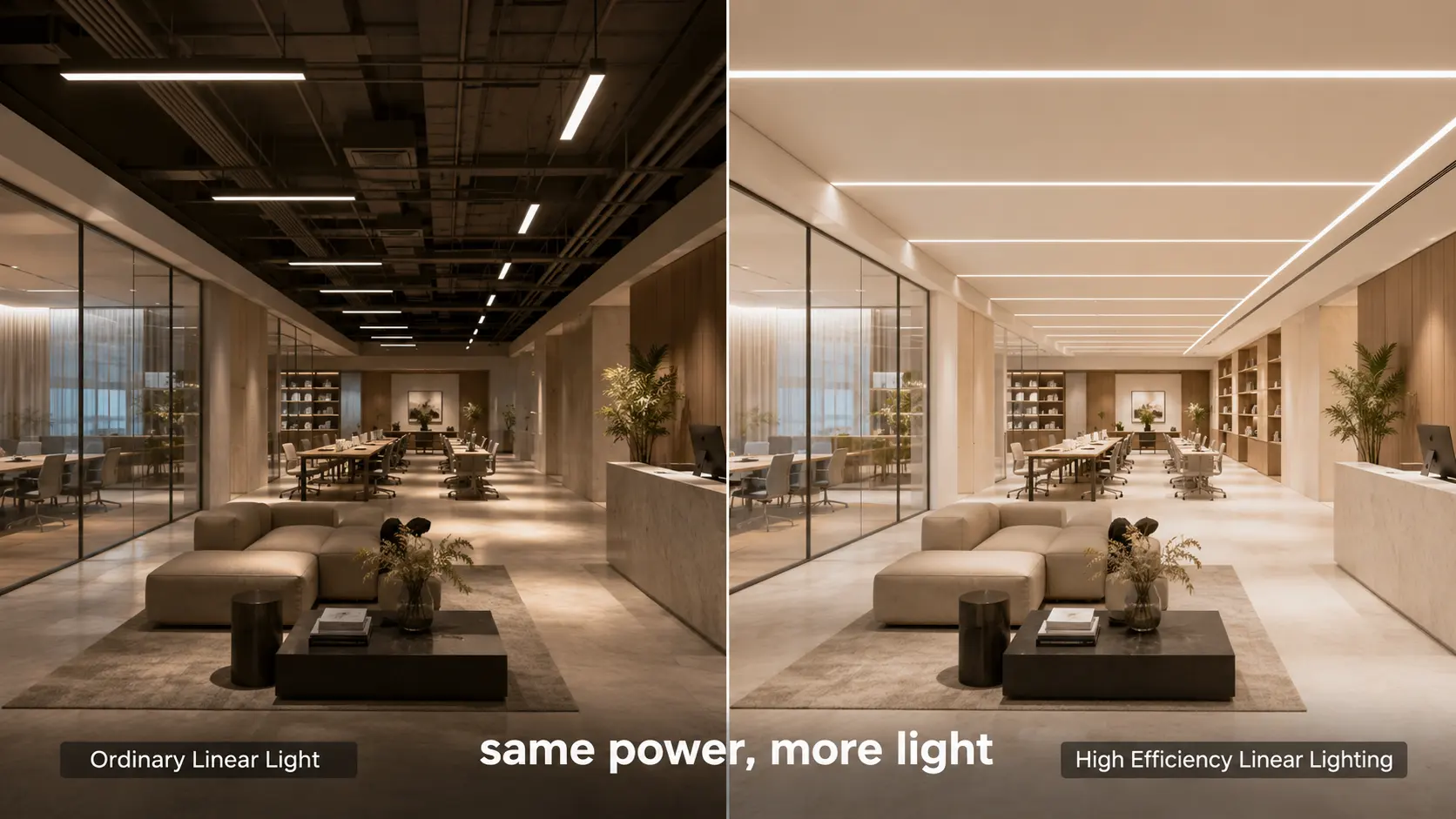
A modern high efficiency LED linear lighting system can achieve high luminous output while maintaining low wattage consumption, significantly reducing electricity costs over time.
2.2 Application in Offices and Workspaces
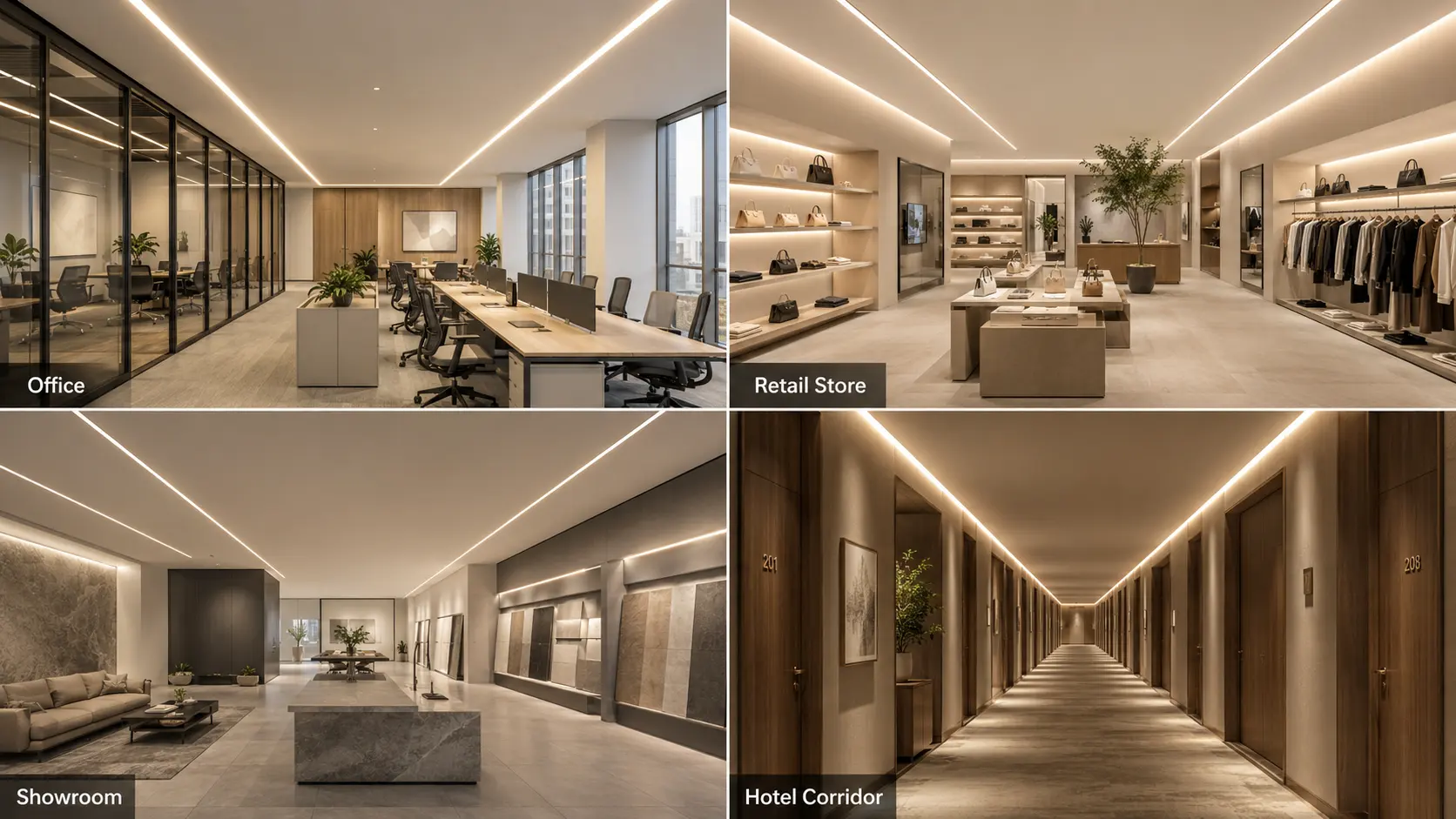
In office environments, lighting directly affects productivity and visual comfort. Poor lighting can lead to eye fatigue, reduced concentration, and lower efficiency.
Efficient linear lighting systems provide:
- Uniform light distribution across workstations
- Reduced shadow areas
- Balanced brightness for long working hours
This makes them ideal for modern open-plan office layouts.
3. High Lumen Output Linear Lighting for Architectural Design
3.1 Integration into Modern Architecture
Architectural lighting design increasingly relies on clean, minimalistic elements. Linear lighting systems are widely used because they integrate seamlessly into ceilings, walls, and suspended structures.
In architectural applications, high efficiency LED linear lighting is preferred because it supports long continuous runs without visible breaks, creating a clean and structured visual rhythm.
3.2 Visual Comfort and Spatial Definition
Beyond brightness, lighting also defines how a space feels. Linear systems help shape spatial perception by:
- Highlighting architectural lines
- Enhancing depth and layering
- Creating visual flow across large interiors
This makes them a preferred solution for architects and lighting designers.
4. Energy Saving Linear Lighting Solutions for Retail Spaces
4.1 Retail Environment Requirements
Retail lighting is not just about visibility. It is about attracting attention, guiding customer flow, and enhancing product presentation.
A well-designed high efficiency LED linear lighting system helps retailers achieve:
- Balanced product illumination
- Reduced energy consumption during long operating hours
- Flexible layout adaptation for different store designs
4.2 Enhancing Product Presentation
In retail spaces, lighting directly influences buying behavior. Properly designed linear lighting improves:
- Product color accuracy
- Shelf visibility
- Customer focus on key display areas
This creates a more engaging shopping experience while maintaining energy efficiency.
5. High Performance LED Linear Lighting Systems in Hospitality
5.1 Lighting for Hotels and Restaurants
Hotels and restaurants require lighting that balances functionality with atmosphere. Lighting must adapt to different scenes such as reception, dining, and lounge areas.
In these environments, high efficiency LED linear lighting is often used to provide a flexible lighting foundation that can be adjusted according to mood and function.
5.2 Creating Atmosphere with Linear Systems
Linear lighting supports hospitality design by:
- Creating warm and inviting environments
- Supporting layered lighting scenes
- Enhancing architectural materials like wood, stone, and fabric
This helps hospitality spaces deliver a premium guest experience.
6. Modular High Efficiency LED Linear Lighting Systems
6.1 Flexibility in Modern Lighting Design
One of the key advantages of modern linear lighting is modularity. Lighting systems can be configured in different lengths, shapes, and installation methods to fit various architectural needs.
A modular high efficiency LED linear lighting system allows designers to:
- Build continuous lighting lines
- Customize layouts for different spaces
- Adjust configurations during installation
6.2 Suspension, Recessed, and Surface Options
Linear lighting systems are highly versatile and can be installed in multiple ways:
- Suspended installations for open ceilings
- Recessed designs for minimal visual impact
- Surface-mounted systems for easy retrofitting
This flexibility makes them suitable for both new projects and renovations.
7. Smart Control and Dimming in LED Linear Lighting Systems
7.1 DALI and DMX Control Integration
Modern lighting systems are no longer static. Smart control systems such as DALI and DMX allow dynamic adjustment of brightness and scenes.
When integrated with high efficiency LED linear lighting, these systems enable:
- Precise dimming control
- Scene-based lighting adjustment
- Centralized lighting management
7.2 Smart Lighting for Commercial Efficiency
Smart lighting control improves both user experience and energy management. Businesses can adjust lighting based on:
- Time of day
- Occupancy levels
- Specific functional needs
This further enhances the efficiency of the lighting system.
8. Why Linear Lighting Is Highly Efficient
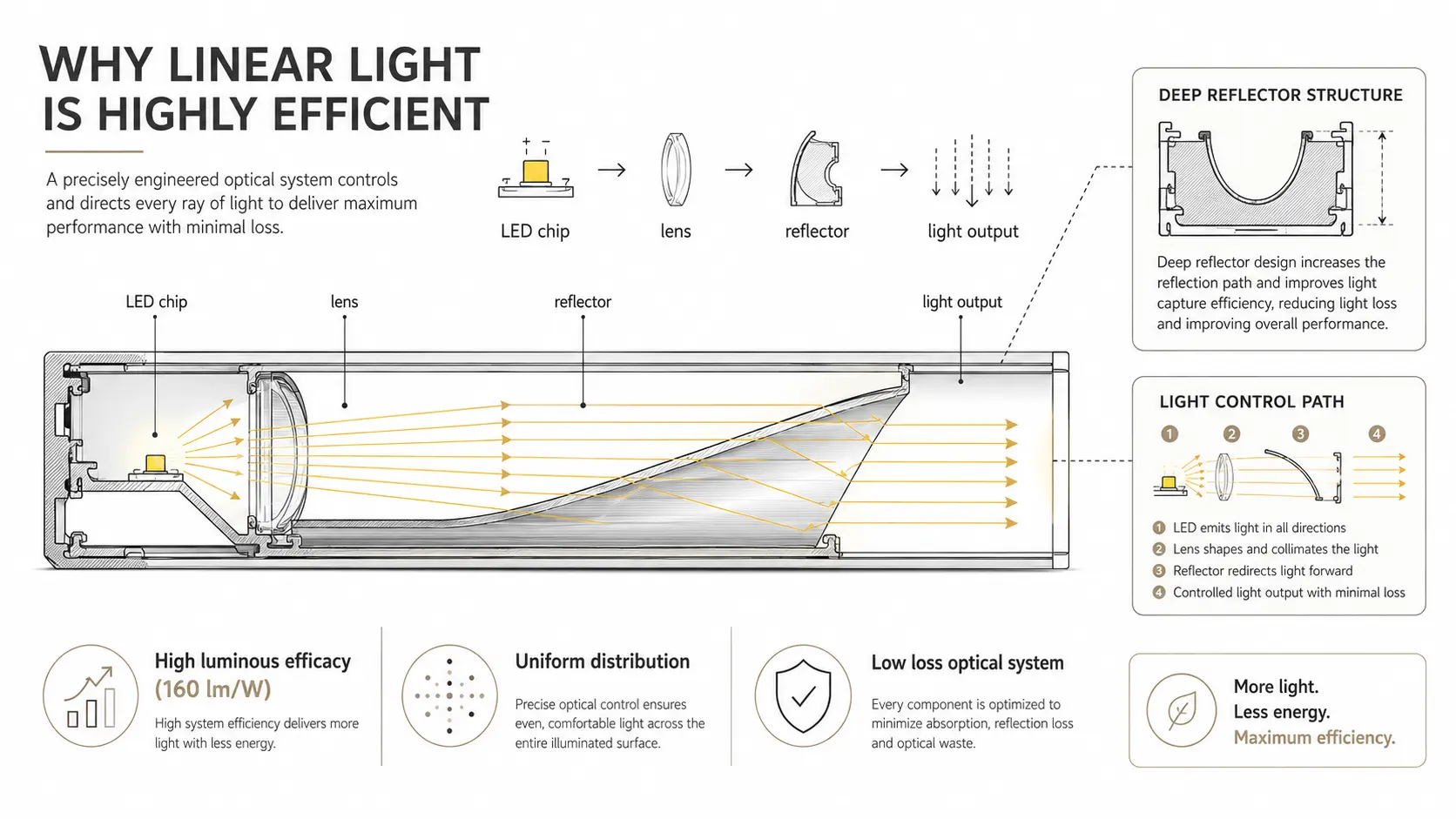
The high efficiency of linear lighting is achieved through a precisely engineered optical system that minimizes light loss at every stage of transmission. As shown in the optical structure diagram, the process begins at the LED chip, where light is generated and then guided through a lens system that helps shape and control the initial beam distribution. Instead of allowing uncontrolled diffusion, the light is carefully collimated and directed into a deep reflector structure.
Inside the reflector, the optical path is extended and optimized to maximize light utilization. This deep reflector design significantly improves light capture efficiency by redirecting stray rays forward, reducing unnecessary scattering and internal loss. As a result, more light is effectively delivered toward the target area rather than being wasted inside the fixture.
Finally, the controlled beam exits the system as a uniform light output with minimal optical loss. This ensures a stable and consistent illumination pattern across the entire lighting surface. The combination of high luminous efficacy (160 lm/W), uniform distribution, and a low-loss optical system is what enables modern linear lighting to achieve both energy efficiency and superior visual performance in commercial applications.
9. Sustainability and Long-Term Benefits of LED Linear Lighting
9.1 Energy Reduction and Environmental Impact
Sustainability is a key factor in modern construction and interior design. Efficient lighting systems help reduce:
- Carbon emissions
- Energy consumption
- Maintenance frequency
A well-designed lighting system supports long-term environmental goals while maintaining performance.
9.2 Long Lifespan and Low Maintenance
LED linear systems typically offer long operational lifespans, reducing the need for frequent replacements. This results in:
- Lower maintenance costs
- Reduced downtime
- Higher overall system reliability
10. Conclusion: The Future of High Efficiency LED Linear Lighting
As commercial spaces continue to evolve, lighting will play an increasingly important role in shaping user experience, energy efficiency, and architectural identity.
Modern linear lighting systems combine:
- High performance illumination
- Energy efficiency
- Smart control integration
- Architectural flexibility
This makes them a core solution for offices, retail environments, hospitality spaces, and modern architectural projects.
With continuous innovation, it will remain one of the most important technologies in commercial lighting design for years to come.

