



Smart Lighting for Shopping Mall Public Areas: How to Light Smarter, Not Harder
By Powerstar
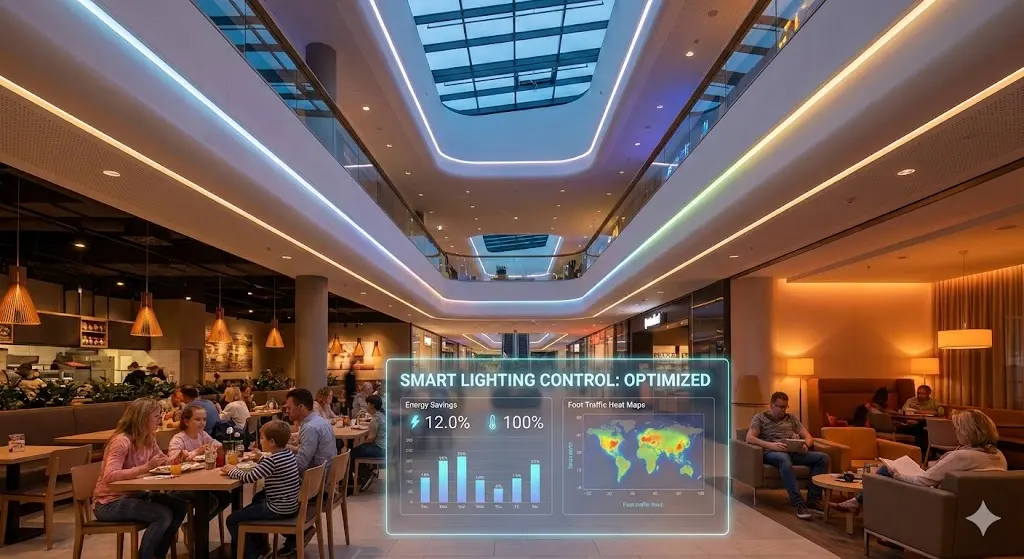
Shopping malls are no longer just places to shop—they are destinations for leisure, dining, and social interaction. As foot traffic patterns evolve and energy costs continue to rise, mall operators are increasingly turning to smart lighting for shopping mall public areas to improve efficiency, enhance customer experience, and reduce operational expenses.
From corridors and atriums to entrances and shared lounges, public areas represent the largest and most energy-intensive lighting zones in a shopping mall. Smart lighting technologies are transforming how these spaces are illuminated, managed, and optimized.
Smart Lighting for Shopping Mall Public Areas and Centralized Control Systems
Public areas in shopping malls often span large, open spaces that require consistent yet flexible lighting. A centralized smart lighting control system allows facility managers to monitor and manage all public-area lighting from a single platform.
With centralized control, lighting schedules, brightness levels, and operational modes can be adjusted remotely. This eliminates manual switching, reduces human error, and ensures lighting performance remains aligned with daily mall operations. Centralized systems are particularly valuable for malls with multiple floors or interconnected zones, where traditional control methods become inefficient.
Energy-Saving Smart Lighting Solutions for Shopping Mall Corridors and Atriums
Corridors and atriums operate for long hours and account for a significant portion of total electricity consumption. Implementing energy-saving smart lighting for shopping mall public areas can drastically lower power usage without compromising visual comfort.
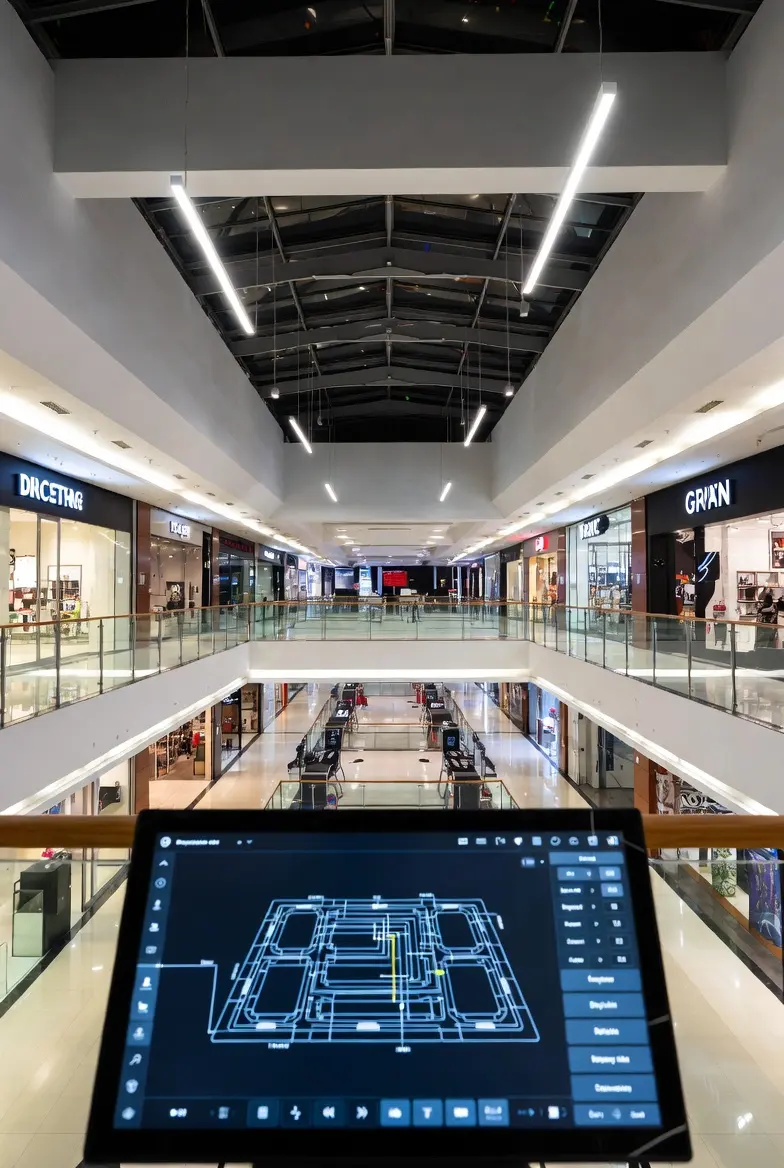
Smart Lighting with Motion and Occupancy Sensors in Mall Public Spaces
Smart lighting systems automatically dim or brighten luminaires based on real-time conditions such as available daylight or traffic flow. During off-peak hours, light output can be reduced while still maintaining safety and visibility. Over time, these strategies deliver measurable reductions in energy bills and carbon emissions.
Motion and occupancy sensors are core components of intelligent lighting strategies in shopping mall public areas. These sensors detect movement and presence, ensuring lights operate only when needed.
In transitional spaces such as walkways, rest areas, and secondary corridors, occupancy-based control prevents unnecessary energy consumption. When no activity is detected, lights dim or switch off automatically, then instantly return to optimal brightness when shoppers re-enter the area. This responsive behavior balances safety, efficiency, and lamp lifespan.
Smart Lighting for Shopping Mall Entrances and High-Traffic Zones
Mall entrances serve as the first visual impression for visitors. Smart lighting in these high-traffic public areas must adapt seamlessly to changing conditions throughout the day.
By integrating smart lighting with daylight sensors, entrance lighting automatically adjusts to outdoor brightness. This creates a smooth visual transition from exterior to interior spaces, improving comfort and reducing glare. During peak shopping hours, lighting scenes can be enhanced to create a vibrant, welcoming atmosphere, while quieter periods use reduced light levels to save energy.
Intelligent Lighting Control for Enhancing Shopping Mall User Experience
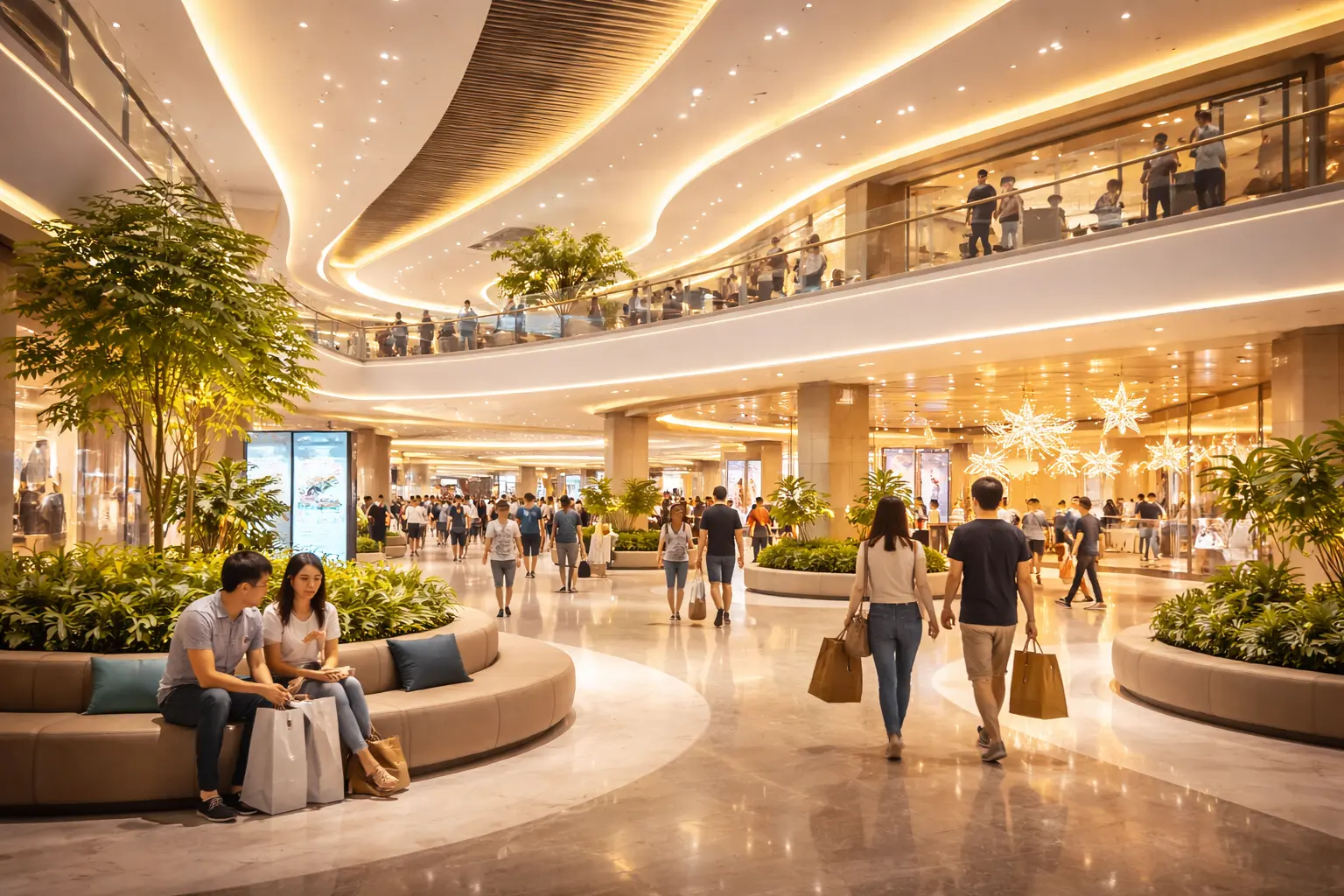
Lighting has a direct impact on how people perceive and navigate public spaces. Intelligent lighting control enables mall operators to tailor lighting environments that improve overall user experience.
Dynamic lighting scenes can be programmed for weekends, holidays, or special events, subtly influencing mood and movement. Well-lit public areas encourage longer dwell times, support wayfinding, and create a sense of safety and openness. Smart lighting for shopping mall public areas thus becomes a strategic tool for customer engagement, not just a technical upgrade.
Smart Lighting Integration with Building Management Systems in Shopping Malls
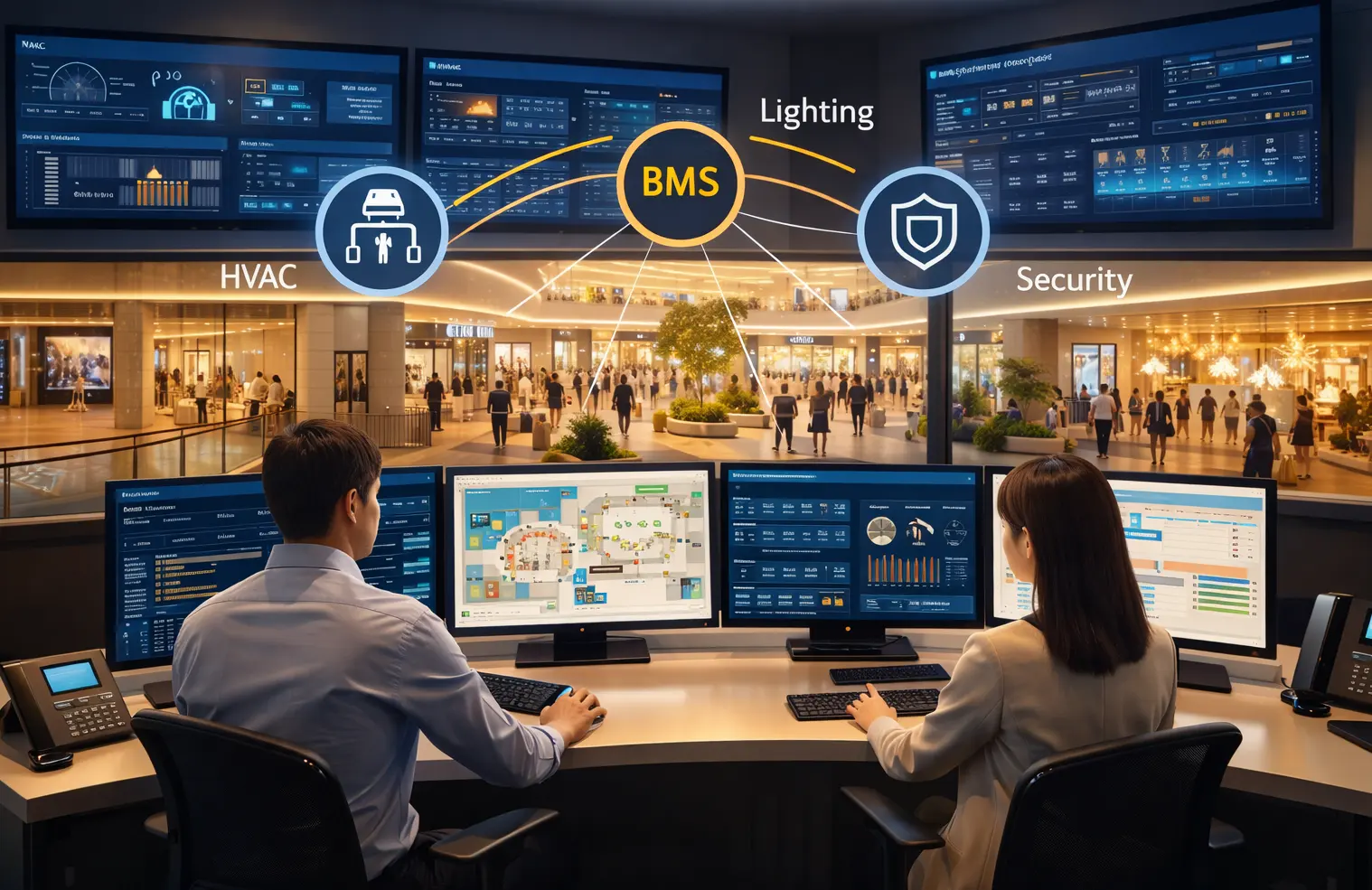
Modern shopping malls rely on multiple interconnected systems to operate efficiently. Integrating smart lighting with a Building Management System (BMS) allows lighting to respond intelligently to broader building conditions.
For example, lighting levels in public areas can be coordinated with HVAC operation or security schedules. When certain zones are closed or experience reduced activity, lighting automatically adjusts accordingly. This integration improves operational transparency and enables data-driven decision-making for facility management teams.
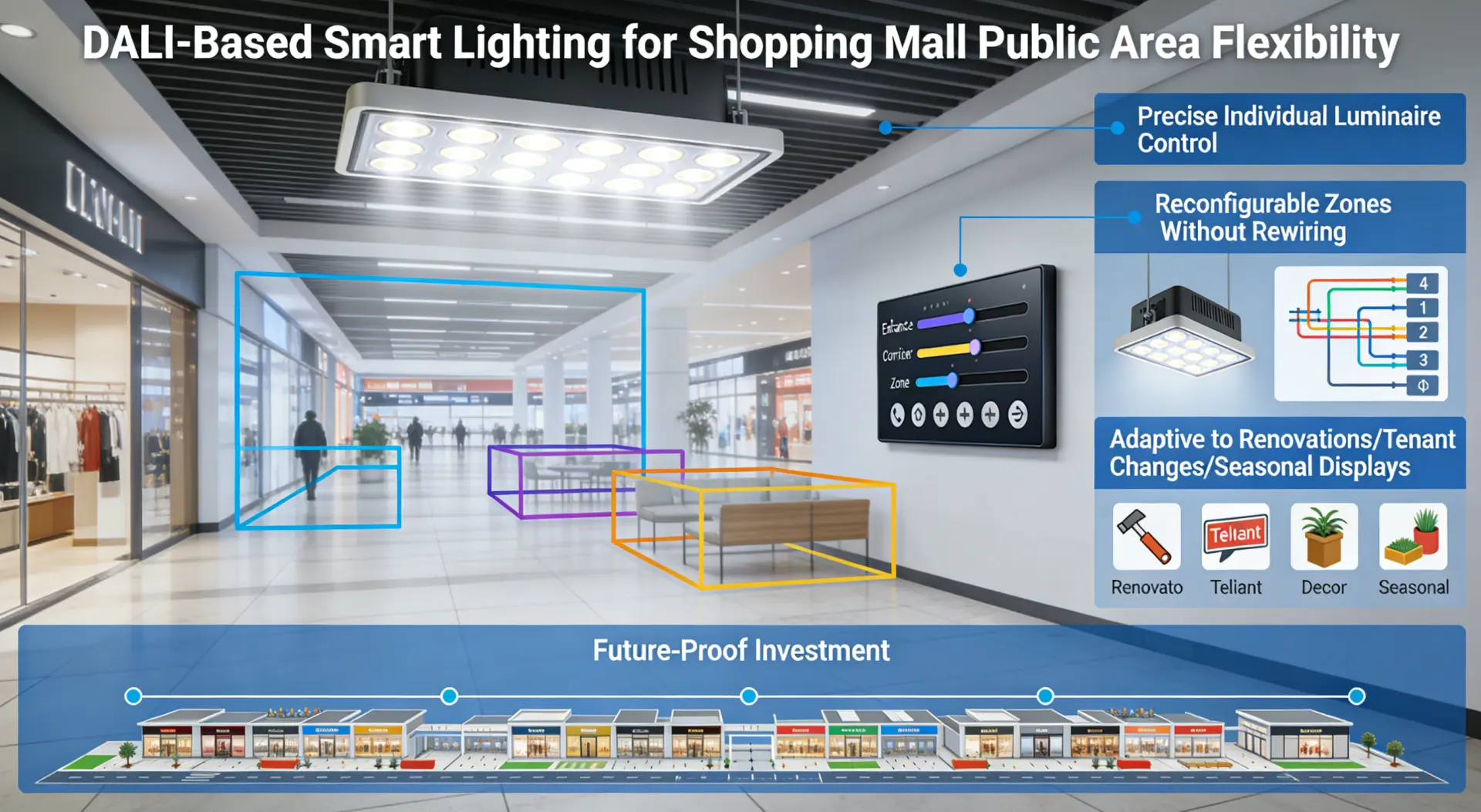
DALI-Based Smart Lighting for Shopping Mall Public Area Flexibility
DALI-based smart lighting systems are widely adopted in commercial environments due to their flexibility and scalability. In shopping mall public areas, DALI enables precise control of individual luminaires or grouped zones.
Mall operators can reconfigure lighting layouts without rewiring, making it easier to adapt public spaces for renovations, tenant changes, or seasonal displays. This future-proof approach ensures that smart lighting investments remain valuable as mall layouts and usage patterns evolve.
Smart Lighting Maintenance and Operational Cost Reduction in Malls
Beyond energy savings, smart lighting significantly reduces maintenance costs in shopping mall public areas. Intelligent systems provide real-time feedback on luminaire status, operating hours, and potential faults.
Predictive maintenance alerts allow facility teams to address issues before failures occur, minimizing downtime and disruption. Extended lamp life and fewer emergency repairs translate into lower long-term operating expenses, making smart lighting a financially sound investment for mall owners.
Why Smart Lighting for Shopping Mall Public Areas Is a Long-Term Strategy
As consumer expectations rise and sustainability becomes a priority, shopping malls must operate more intelligently. Smart lighting for shopping mall public areas supports long-term goals by combining efficiency, flexibility, and enhanced user experience.
Rather than being a standalone upgrade, smart lighting forms the foundation of a connected, data-driven commercial environment. Malls that adopt intelligent lighting solutions position themselves for lower costs, improved performance, and greater adaptability in an increasingly competitive retail landscape.
Smart Lighting Control Systems for Shopping Mall Public Spaces
At the core of any intelligent lighting strategy is a robust control system. Smart lighting control systems allow facility managers to monitor and adjust lighting behavior across all public zones from a centralized platform.
Key capabilities typically include:
- Group and zone-based control for corridors, atriums, and lobbies
- Scene settings for different times of day or seasonal conditions
- Real-time monitoring and fault detection
- Integration with building management systems (BMS)
Unlike traditional on/off or simple dimming setups, intelligent control systems enable malls to operate lighting as a dynamic infrastructure rather than a fixed utility.
Energy-Saving Smart Lighting Solutions for Shopping Mall Common Areas
Energy efficiency remains one of the strongest drivers for adopting smart lighting. Public areas are often illuminated for 12–18 hours per day, making them ideal candidates for energy optimization.
Smart lighting systems reduce energy consumption through:
- Scheduled dimming during low-traffic hours
- Occupancy-based lighting activation in secondary corridors
- Daylight harvesting near skylights and glass façades
- Automatic shut-off or low-level standby modes
For large shopping malls, even a modest percentage reduction in lighting energy usage can translate into substantial annual savings. Over time, energy-efficient smart lighting for shopping mall public areas significantly lowers electricity bills while supporting sustainability targets.
Intelligent Lighting Design for Shopping Mall Corridors and Atriums
Corridors and atriums serve as the backbone of a mall’s circulation system. Lighting in these areas must provide visual clarity, guide movement, and create a sense of openness without causing glare or fatigue.
Intelligent lighting design enhances these spaces by:
- Adjusting brightness based on natural light availability
- Maintaining consistent illumination levels across long corridors
- Highlighting architectural elements such as ceilings or columns
- Supporting wayfinding through subtle lighting cues
Smart lighting allows designers and operators to maintain architectural intent while ensuring practical performance across varying conditions.
Smart Lighting with Motion and Daylight Sensors in Mall Public Areas
Sensors are a critical component of intelligent lighting systems. In shopping mall public areas, occupancy and daylight sensors work together to optimize light output automatically.
Typical sensor-driven functions include:
- Reducing lighting levels in low-traffic corridors during off-peak hours
- Increasing brightness when foot traffic rises
- Adjusting artificial lighting in response to daylight penetration
- Preventing unnecessary energy usage without compromising safety
These automated responses ensure that lighting always matches real-world usage, improving efficiency without requiring constant manual intervention.
Enhancing Customer Experience with Smart Lighting in Shopping Mall Public Areas
Beyond efficiency, lighting has a direct psychological impact on visitors. Well-designed smart lighting contributes to comfort, mood, and overall perception of the mall environment.
Benefits for customer experience include:
- Smooth transitions between bright and relaxed zones
- Reduced glare and visual fatigue in long walkways
- Warm, inviting lighting at entrances and gathering areas
- Consistent ambiance that supports brand positioning
By leveraging adaptive lighting strategies, malls can create environments that encourage longer dwell times and more positive visitor impressions.
Centralized Smart Lighting Management for Large Shopping Mall Facilities
Large shopping malls often span multiple floors, wings, and functional zones. Managing lighting manually across such a scale is inefficient and prone to inconsistency.
Centralized smart lighting management enables:
- Unified control of all public areas from one interface
- Quick adjustments for events, holidays, or special promotions
- Easier maintenance through system diagnostics and alerts
- Reduced labor and operational complexity
This level of control is particularly valuable for facility managers responsible for maintaining consistent lighting standards across extensive properties.
Future-Proofing Shopping Mall Public Areas with Smart Lighting Infrastructure
Shopping malls must adapt to changing retail trends, tenant requirements, and sustainability regulations. Smart lighting systems provide the flexibility needed to evolve without large-scale rewiring or system replacement.
Future-ready benefits include:
- Software-based updates instead of hardware changes
- Easy reconfiguration of zones and scenes
- Compatibility with emerging IoT and data platforms
- Support for evolving energy and carbon standards
By investing in smart lighting for shopping mall public areas, mall owners build an infrastructure that supports long-term adaptability and resilience.
DALI-Based Smart Lighting for Shopping Mall Public Area Flexibility
DALI-based smart lighting systems are widely adopted in commercial environments due to their flexibility and scalability. In shopping mall public areas, DALI enables precise control of individual luminaires or grouped zones.
Mall operators can reconfigure lighting layouts without rewiring, making it easier to adapt public spaces for renovations, tenant changes, or seasonal displays. This future-proof approach ensures that smart lighting investments remain valuable as mall layouts and usage patterns evolve.
Conclusion: Smart Lighting as a Strategic Asset for Shopping Mall Public Areas
Smart lighting is no longer a luxury feature—it is a strategic asset for modern shopping malls. Public areas demand lighting solutions that are efficient, adaptable, and capable of enhancing both operations and visitor experience.
Through intelligent control, sensor integration, and centralized management, smart lighting for shopping mall public areas delivers measurable energy savings, operational simplicity, and improved environmental quality. For mall developers and operators seeking to remain competitive in an evolving commercial landscape, smart lighting represents a practical and future-oriented investment.

