



Why Healthy Commercial Lighting Is Becoming Essential in Commercial Space Design
By Vincent
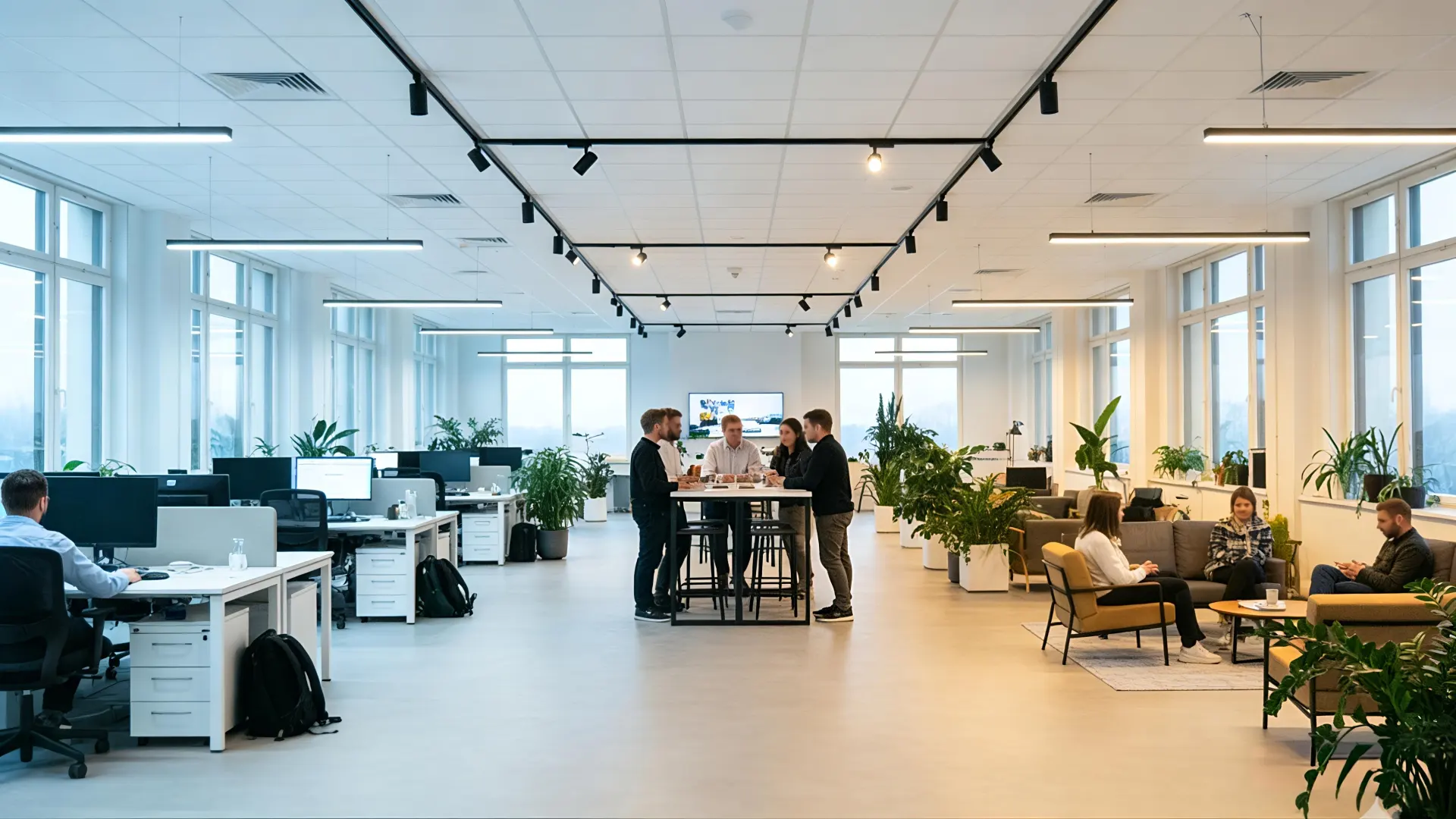
For decades, commercial lighting was designed primarily to provide sufficient brightness for task performance. While this approach once met functional needs, it no longer reflects how people use and experience modern spaces. As human-centered architecture gains momentum worldwide, Healthy Commercial Lighting has become a critical element in commercial space design, shaping how people work, interact, and feel in indoor environments.
Rather than focusing solely on illuminance levels, today’s lighting strategies emphasize visual comfort, biological alignment, and long-term well-being. From offices and retail spaces to hospitality and public buildings, lighting is now recognized as a foundational infrastructure that directly influences productivity, user experience, and overall asset value.
Understanding Healthy Commercial Lighting in Commercial Environments
Healthy lighting in commercial spaces goes far beyond basic illumination or traditional efficiency-driven design. It represents a holistic approach that considers how light affects human perception, physical comfort, and daily performance.
Instead of asking how bright a space should be, healthy commercial lighting design asks how light is distributed, how stable it remains, and how well it supports different activities throughout the day. Glare control, color temperature flexibility, flicker-free operation, and optical precision are no longer optional features—they are essential design criteria.
At its core, this approach places people, not fixtures, at the center of lighting decisions.
Why Conventional Commercial Lighting Is No Longer Sufficient
Visual Fatigue and Glare in Commercial Spaces
Many traditional lighting installations rely on high output and direct light distribution. While visually striking at first glance, excessive brightness and poor glare control often lead to eye strain, headaches, and reduced concentration over time.
In office environments, these issues directly impact work efficiency. In retail settings, uncomfortable lighting can shorten customer dwell time and weaken brand perception. Human-centric commercial lighting strategies address these challenges by prioritizing visual comfort over raw brightness.
Fixed Color Temperature and Over-Illumination
Conventional commercial lighting systems typically operate at a fixed color temperature throughout the day. This static approach ignores changing visual and biological needs.
Modern commercial environments increasingly require adaptable lighting solutions that respond to time of day, spatial function, and occupant behavior. Wellness-focused commercial lighting allows spaces to remain supportive rather than overstimulating.
The Biological Foundation of Health-Oriented Lighting Design
Human physiology evolved in close connection with natural daylight cycles. However, modern professionals spend nearly 90 percent of their time indoors, often under artificial lighting that lacks biological relevance.
Health-oriented lighting design aims to reconnect indoor environments with natural rhythms, supporting both visual and non-visual responses to light.
Circadian Rhythm and Melatonin Regulation
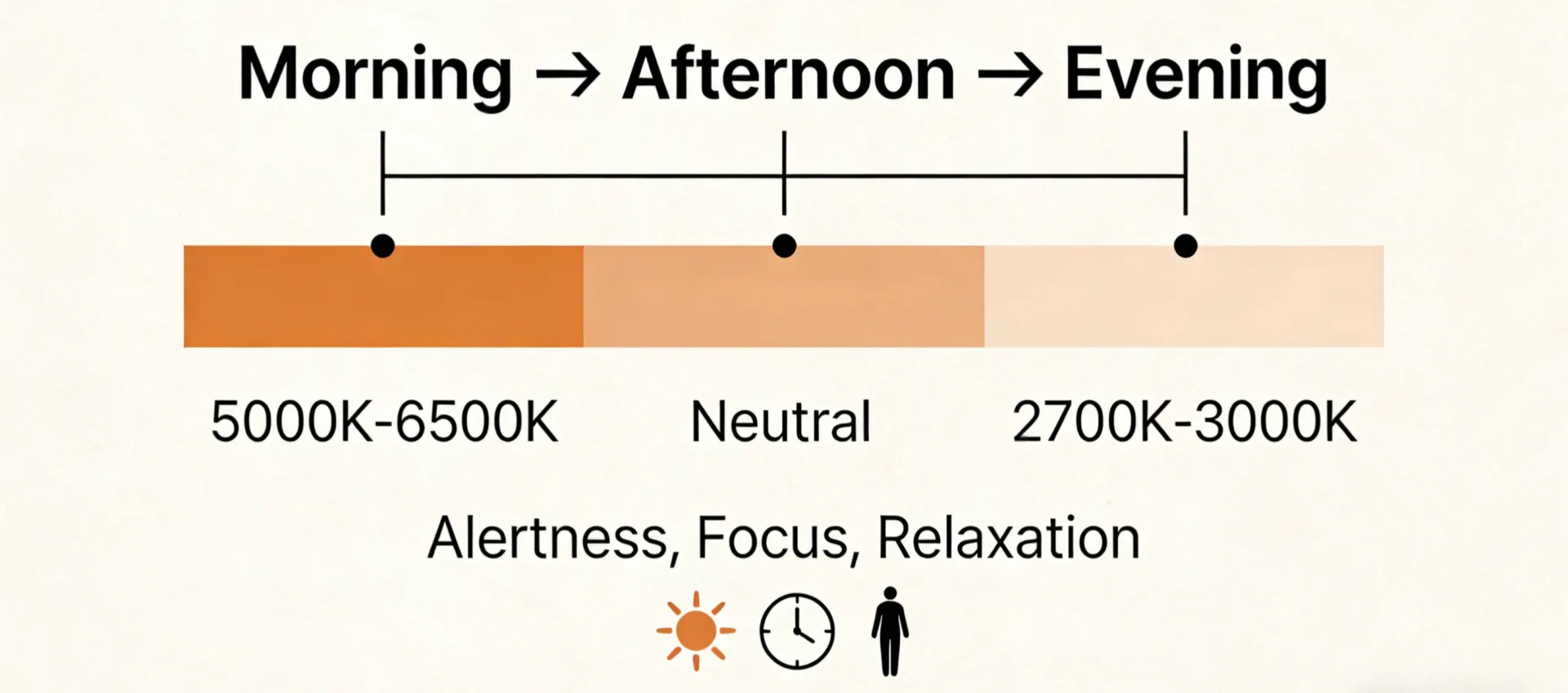
Specialized retinal cells known as ipRGCs respond to specific wavelengths of light and communicate directly with the brain’s biological clock. Properly designed lighting systems support this process by adjusting light characteristics throughout the day.
| Time of Day | Lighting Characteristics | Intended Effect |
|---|---|---|
| Morning to Midday | Higher CCT (5000K–6500K), high color fidelity | Improves alertness and focus |
| Afternoon | Neutral white light | Maintains concentration without overstimulation |
| Evening | Warm white light (2700K–3000K) | Supports relaxation and recovery |
By aligning artificial light with human circadian rhythms, healthy office lighting helps maintain productivity without compromising long-term well-being.
Flicker, Glare, and Non-Visual Stress
Invisible flicker remains a common issue in conventional LED installations. Although not consciously perceived, it places continuous strain on the visual and neurological systems.
People-centric lighting solutions prioritize extremely low flicker levels and strict UGR control, creating calm and visually stable environments comparable to shaded natural light conditions.
Healthy Lighting as a Business Asset Rather Than a Cost
From a decision-maker’s perspective, lighting upgrades are often viewed as operational expenses. In modern commercial projects, however, healthy lighting functions as a long-term investment with measurable returns.
Productivity and Workplace Performance
Research consistently shows that environments designed with human-centric lighting principles support higher focus levels and task accuracy. Even modest improvements in productivity can translate into substantial financial benefits over time.
Employee Well-Being and Talent Retention
Workspace quality increasingly influences employer branding. Younger generations entering the workforce place high value on wellness-oriented environments.
Healthy lighting for commercial spaces contributes to reduced fatigue, lower absenteeism, and stronger employee engagement—factors that directly affect retention rates.
Property Value and Certification Standards
Commercial real estate value is increasingly tied to sustainability and wellness certifications such as WELL and LEED. Lighting quality plays a central role in meeting these standards.
- Learn more about WELL Building Standard
- Overview of LEED lighting performance requirements
Projects that incorporate health-focused lighting strategies are more likely to achieve higher certification levels, rental premiums, and long-term asset resilience.
Technical Foundations of Modern Healthy Commercial Lighting Systems
Creating a healthy lighting environment involves more than replacing luminaires. It requires coordinated technologies working together.
Full-Spectrum LED Technology
Unlike conventional LEDs with uneven spectral output, full-spectrum solutions provide balanced light closer to natural daylight. This improves color accuracy while supporting biological responses to light.
Intelligent and Adaptive Control
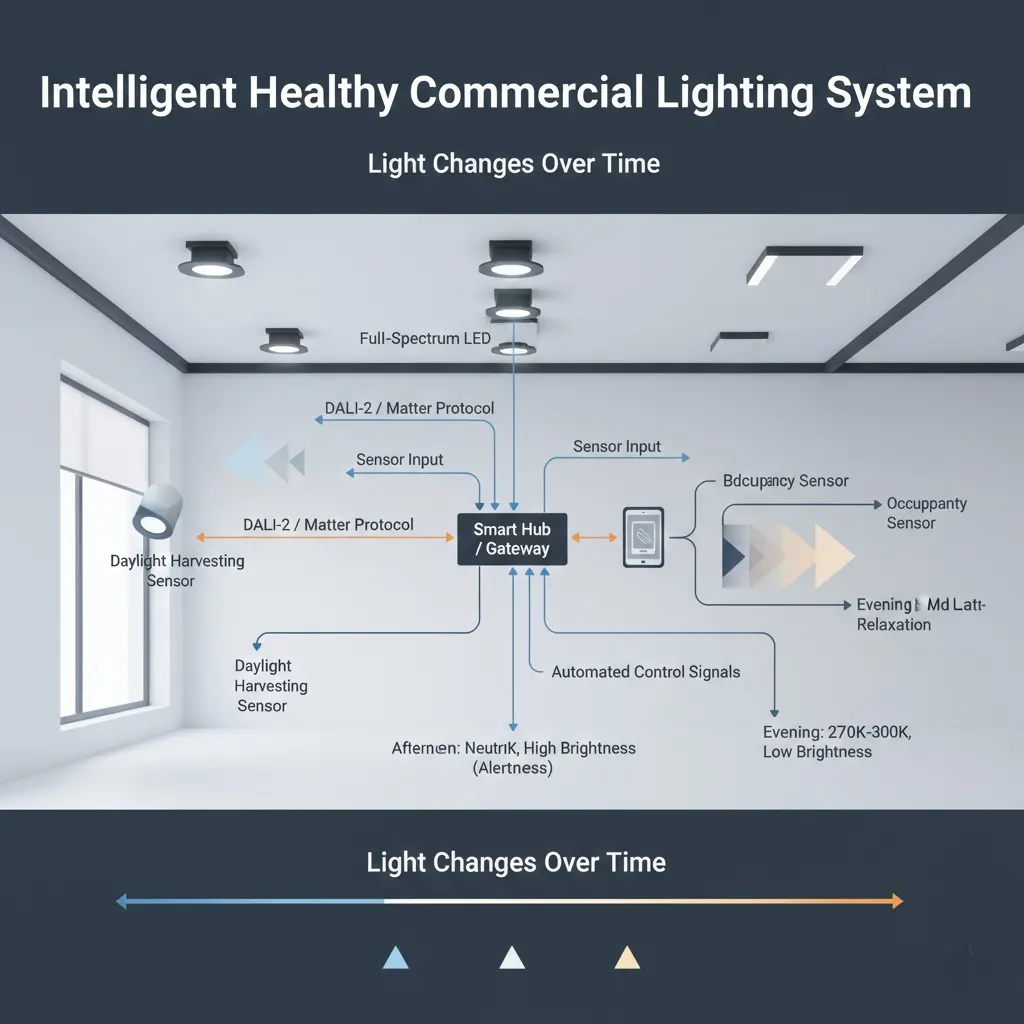
Smart control protocols such as DALI-2 allow lighting systems to adjust output and color temperature automatically based on time, occupancy, and available daylight. This ensures lighting remains dynamic rather than static.
Optical Design and Glare Management
Advanced optical structures, including micro-prismatic diffusers and indirect lighting strategies, help distribute light evenly across surfaces instead of concentrating it on the floor plane.
Applications of Healthy Lighting Across Commercial Spaces
Office and Workplace Environments
Healthy office lighting emphasizes sustained comfort. Low glare, stable output, and adaptable white light support long working hours without visual exhaustion.
Retail and Brand Spaces
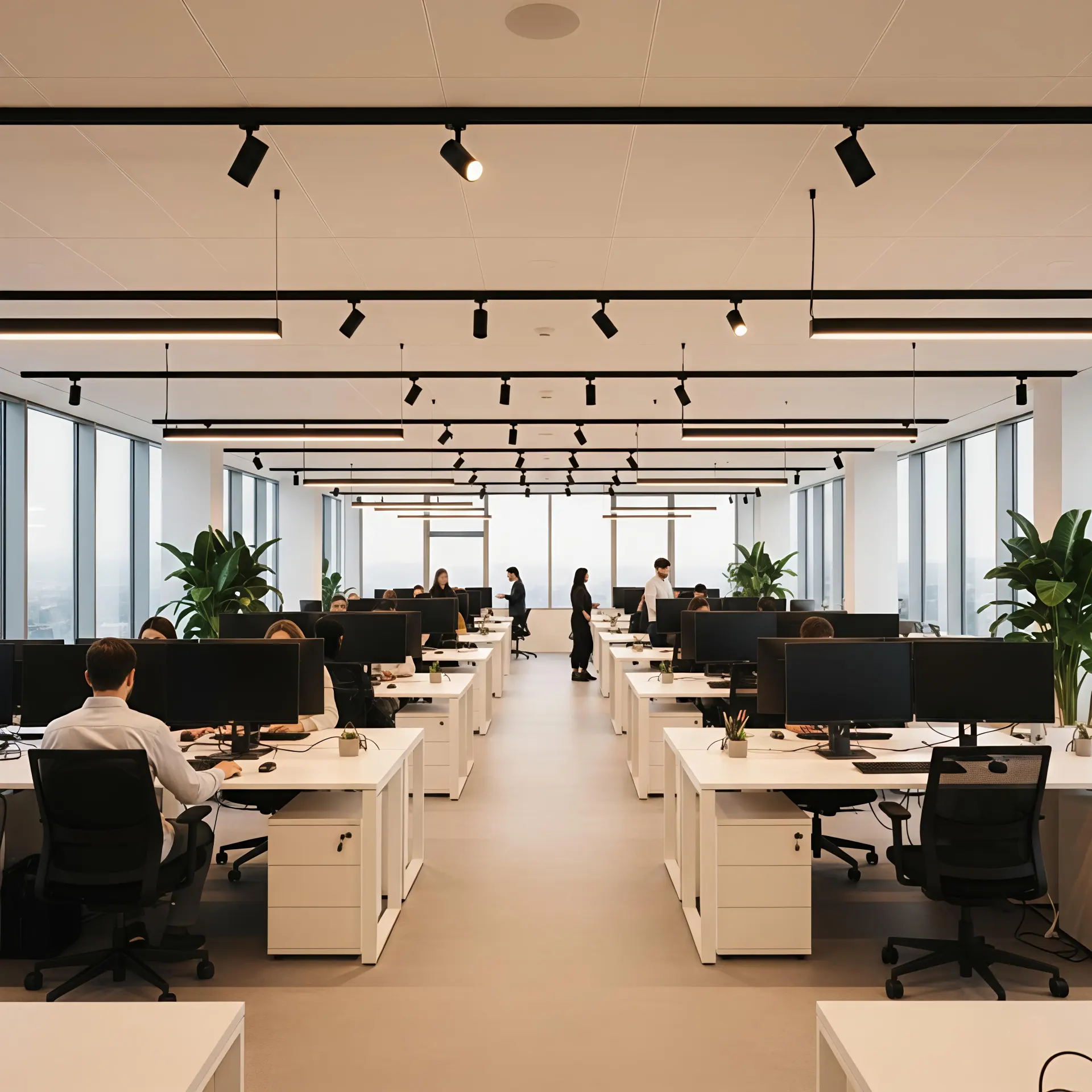
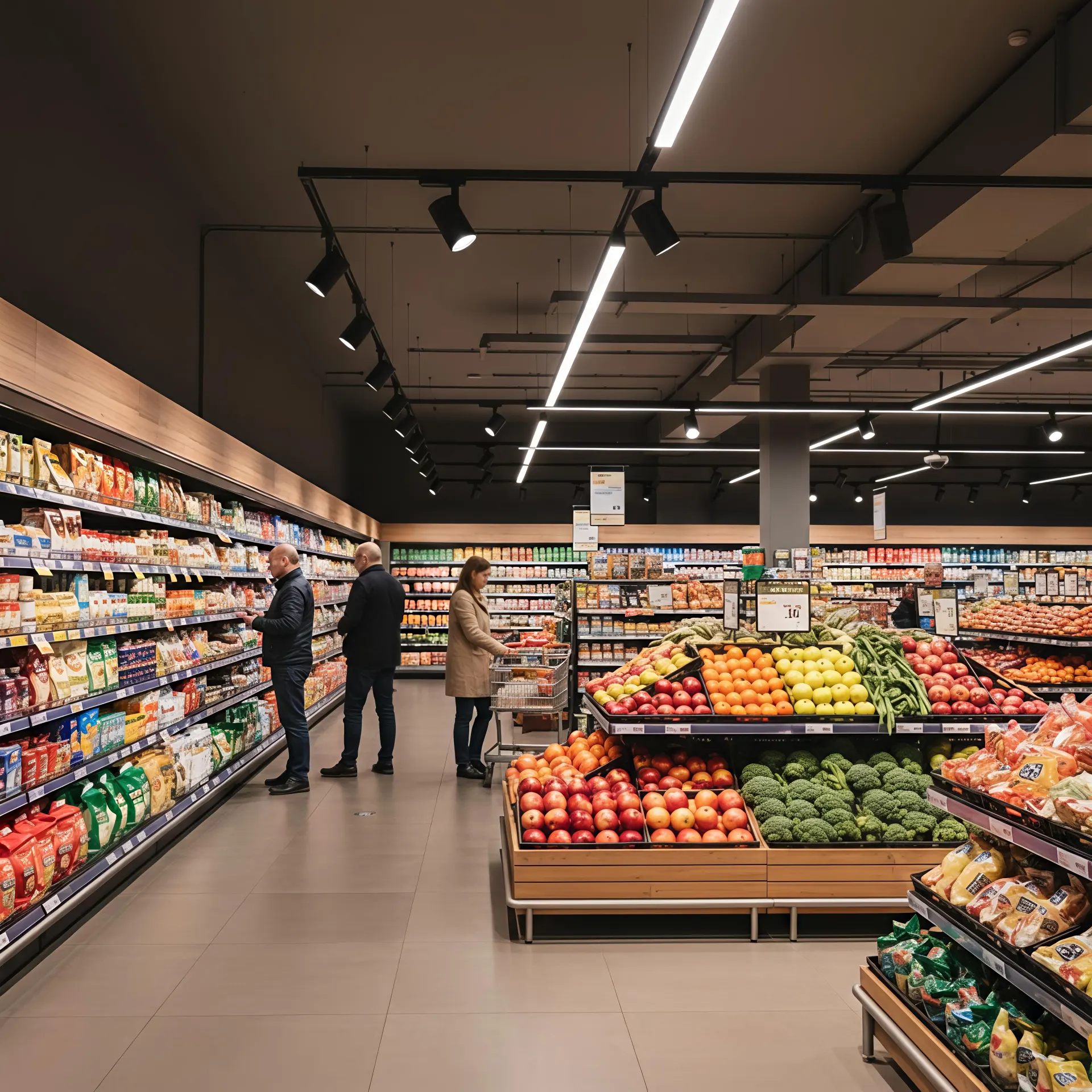
In retail environments, health-oriented commercial lighting balances accurate color rendering with visual comfort, allowing products to appear natural while encouraging longer customer engagement.
Hospitality and Public Areas
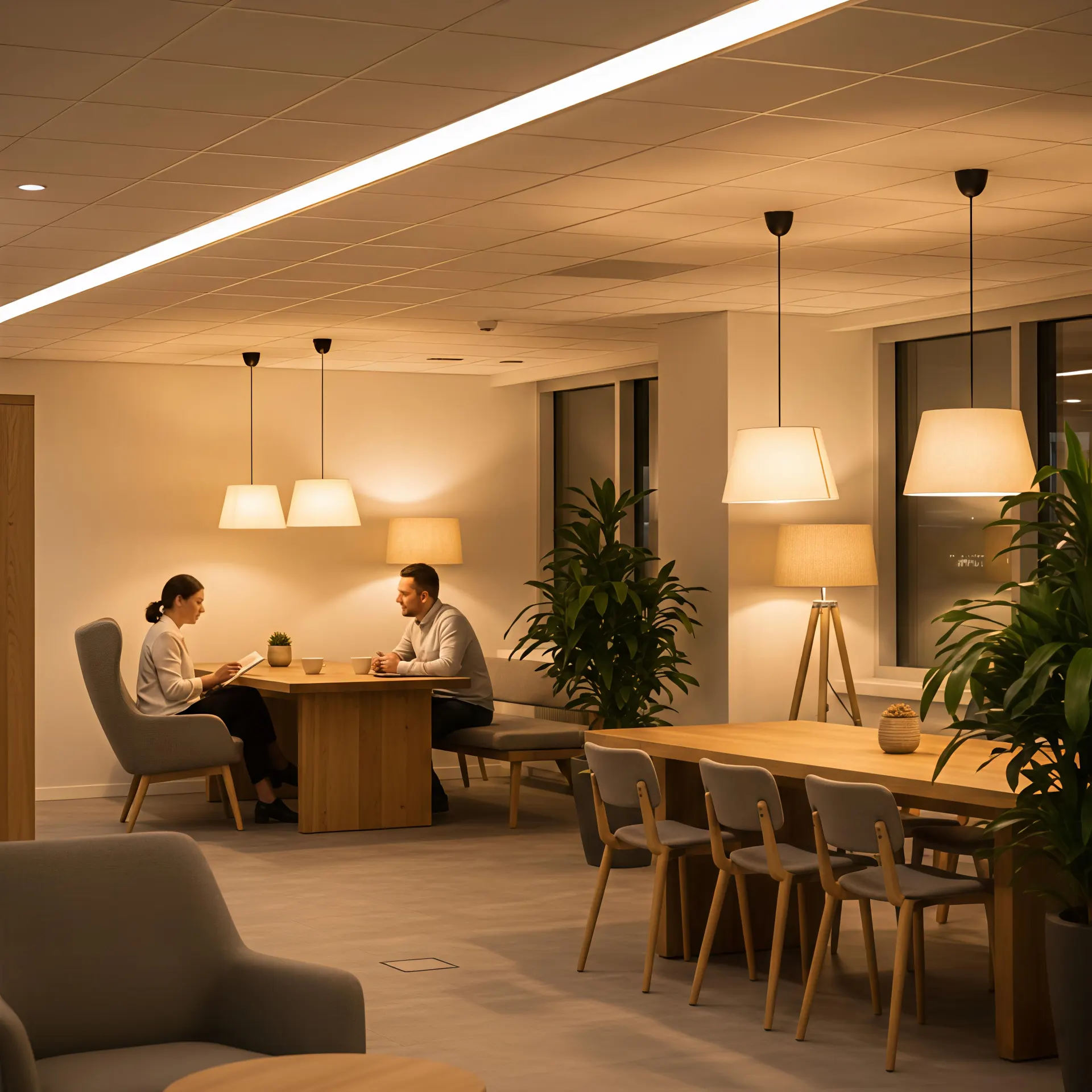
Hotels, lounges, and shared spaces benefit from layered lighting strategies that enhance relaxation, spatial depth, and emotional warmth.
Selecting the Right Fixtures for Healthy Commercial Lighting Projects
The success of a healthy lighting strategy depends largely on fixture performance and optical quality.
| Fixture Feature | Design Importance |
|---|---|
| Low UGR optics | Reduces visual fatigue |
| Flicker-free drivers | Supports long-term comfort |
| Tunable white capability | Enables circadian alignment |
| Precise beam control | Matches specific spatial functions |
Track lights, linear luminaires, and downlights each play distinct roles when integrated into a coherent lighting design.
The Future of Healthy Commercial Lighting Beyond 2026
As sensor technology and artificial intelligence advance, lighting is moving toward more personalized environments. Future systems may adapt light output in response to individual fatigue levels or behavioral patterns.
At the same time, Li-Fi technology is expanding the role of lighting infrastructure, enabling data transmission alongside illumination.
Light is evolving into a multifunctional platform that combines wellness, perception, and connectivity.
Conclusion: Healthy Commercial Lighting as the New Standard
Healthy Commercial Lighting is no longer optional. It reflects a company’s commitment to people, performance, and long-term value.
When light supports human well-being rather than merely illuminating space, commercial environments become more efficient, resilient, and meaningful. For designers, developers, and building owners, shifting lighting investment from basic equipment toward health-oriented solutions is not a trend—it is a strategic decision for the future of commercial space design.

