



Why Is Led Lighting So Harsh? How Anti Glare Lighting Improves Visual Comfort
By Vincent
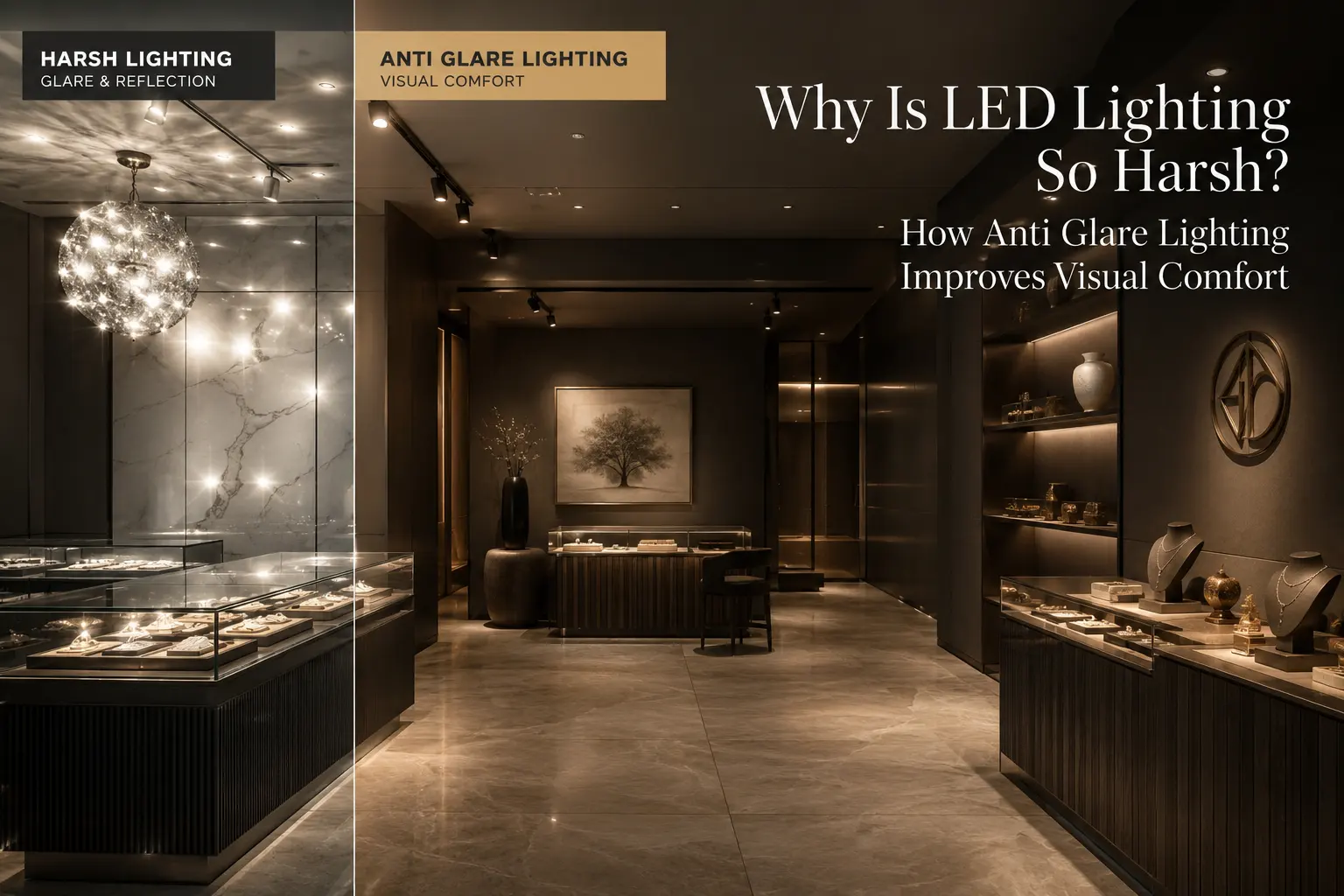
As LED technology continues to dominate modern architecture, anti glare lighting has become one of the most important topics in commercial and residential lighting design. From luxury retail stores and office buildings to restaurants and art galleries, LED fixtures are everywhere because of their high efficiency, long lifespan, and compact size.
But despite all these advantages, many modern spaces still feel visually uncomfortable.
You walk into a newly renovated showroom or premium retail store expecting a sophisticated atmosphere, yet the first thing you notice is harsh brightness, eye strain, and glare.
So why does modern LED lighting sometimes feel more uncomfortable than older lighting technologies?
The answer often comes down to one issue: glare.
Without proper optical control, even high-quality LED fixtures can create excessive brightness and visual discomfort. This is exactly why low glare lighting solutions are becoming essential in today’s architectural lighting projects.
Why Anti Glare Lighting Matters in the LED Era
Traditional fluorescent and incandescent lighting produced softer illumination because their light sources were larger and more diffused.
LEDs work differently.
Most commercial LED fixtures use highly concentrated point-source technology, especially COB (Chip-on-Board) LEDs. A massive amount of light output is concentrated into a very small surface area.
This creates one major challenge:
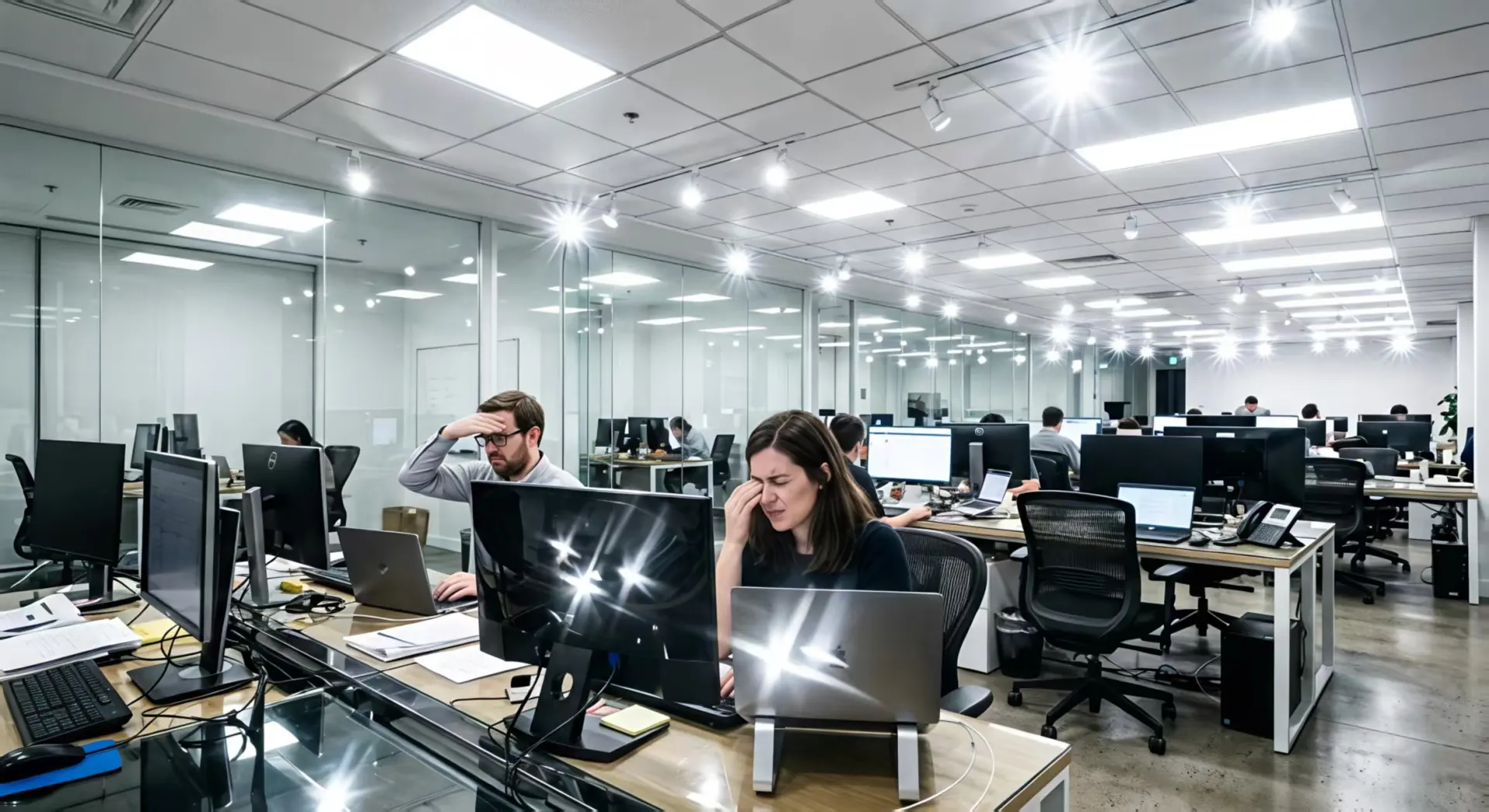
High brightness in a tiny area can easily overwhelm the human eye.
The result is often:
- Harsh visual contrast
- Direct glare
- Eye fatigue
- Uncomfortable retail or office environments
This is why many people search for terms like:
- why are LED lights so glaring
- how to reduce glare from LED lights
- best anti glare lighting for offices
- low glare commercial lighting
- anti glare recessed lighting
These long-tail keywords reflect a growing concern about visual comfort in modern spaces.
What Causes Glare in Anti Glare Lighting Design?
Understanding glare starts with understanding how poorly designed fixtures handle light.
Exposed LED Light Sources
One of the biggest causes of glare is exposed LED chips.
Many low-cost fixtures allow the light source to remain directly visible. When the eye looks straight into a high-intensity LED, discomfort happens almost instantly.
This problem is common in:
- Cheap downlights
- Shallow recessed spotlights
- Low-end track lighting
The space may look bright, but it rarely feels comfortable.
Poor Optical Control
Good lighting is not only about brightness.
It is about controlling where the light goes.
Many inexpensive fixtures use low-quality lenses or reflectors that scatter light in uncontrolled directions. Instead of focusing illumination precisely, they create excessive stray light that enters the eye directly.
This is one reason why professional architectural lighting manufacturers invest heavily in optical engineering.
According to the International Commission on Illumination (CIE), glare control is a critical part of visual comfort standards in modern lighting design.
Reflected Glare in Commercial Spaces
Modern interiors often include reflective materials such as:
- Marble floors
- Glass displays
- Metal finishes
- Computer screens
When strong LED beams hit these surfaces, reflected glare becomes a major issue.
This is especially problematic in:
- Luxury retail stores
- Car showrooms
- Modern offices
- Museums and galleries
Even if the fixture itself looks stylish, uncontrolled reflections can ruin the overall visual experience.
How Anti Glare Lighting Reduces Visual Discomfort
Professional anti glare LED lighting is not designed to reduce brightness.
Instead, it controls light more intelligently.
The goal is simple:
Maintain strong illumination while minimizing direct visual discomfort.
Deep Recessed Lighting Design
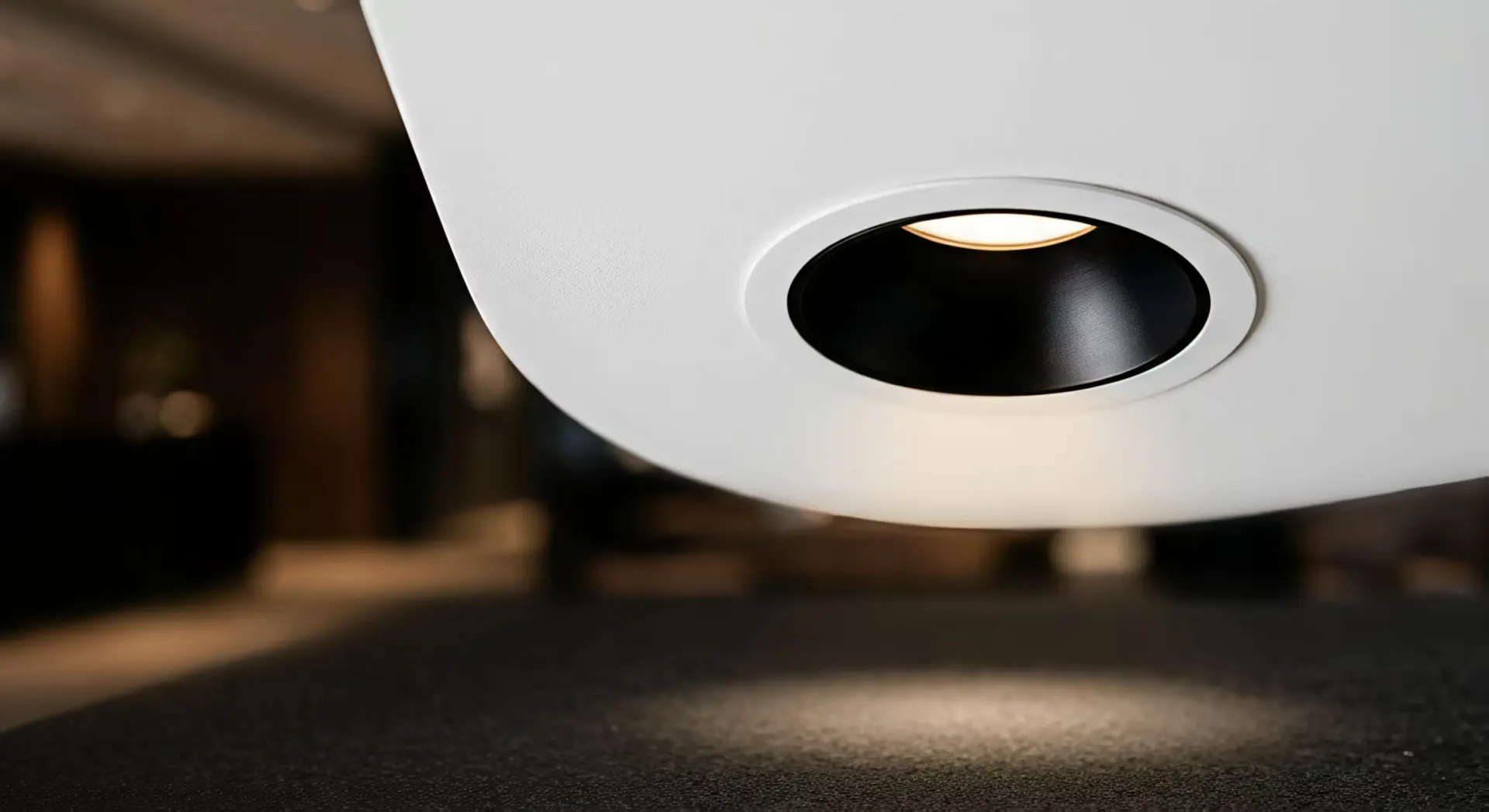
One of the most effective solutions is deep recessed construction.
By placing the LED source deeper inside the fixture, the light source becomes less visible from normal viewing angles.
This creates a larger cut-off angle and helps achieve the premium “see the light, not the fixture” effect often found in luxury commercial projects.
Deep recessed anti glare downlights are now widely used in:
- Retail stores
- Hospitality spaces
- Art galleries
- Premium residential interiors
Dark Reflectors and Black Baffles
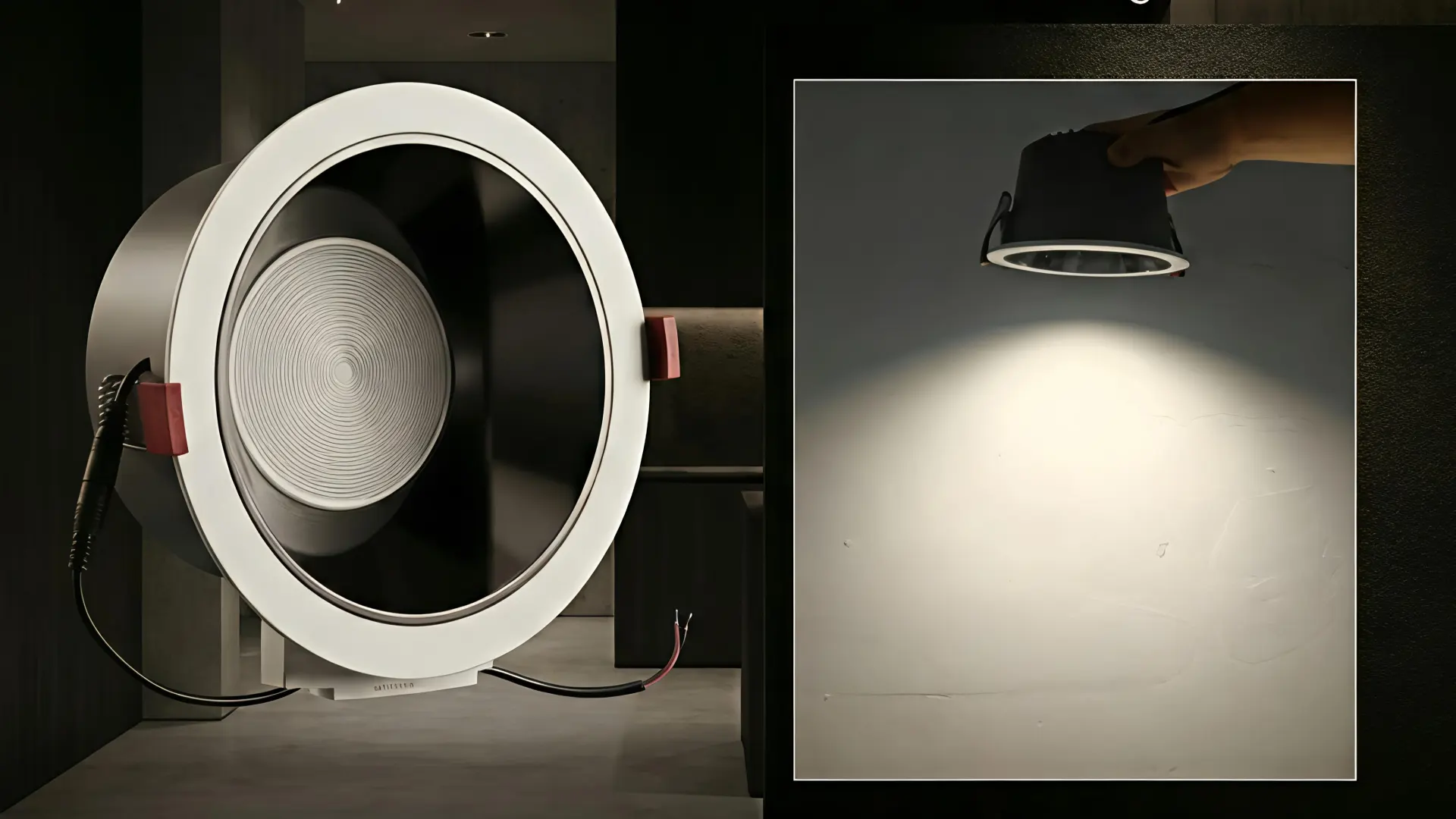
Another key technique involves dark light reflectors.
Traditional reflective cups often create unwanted side reflections. Black reflectors and dark baffles absorb excess stray light instead of scattering it outward.
This produces cleaner beams and a softer visual appearance.
The result is lighting that feels controlled rather than aggressive.
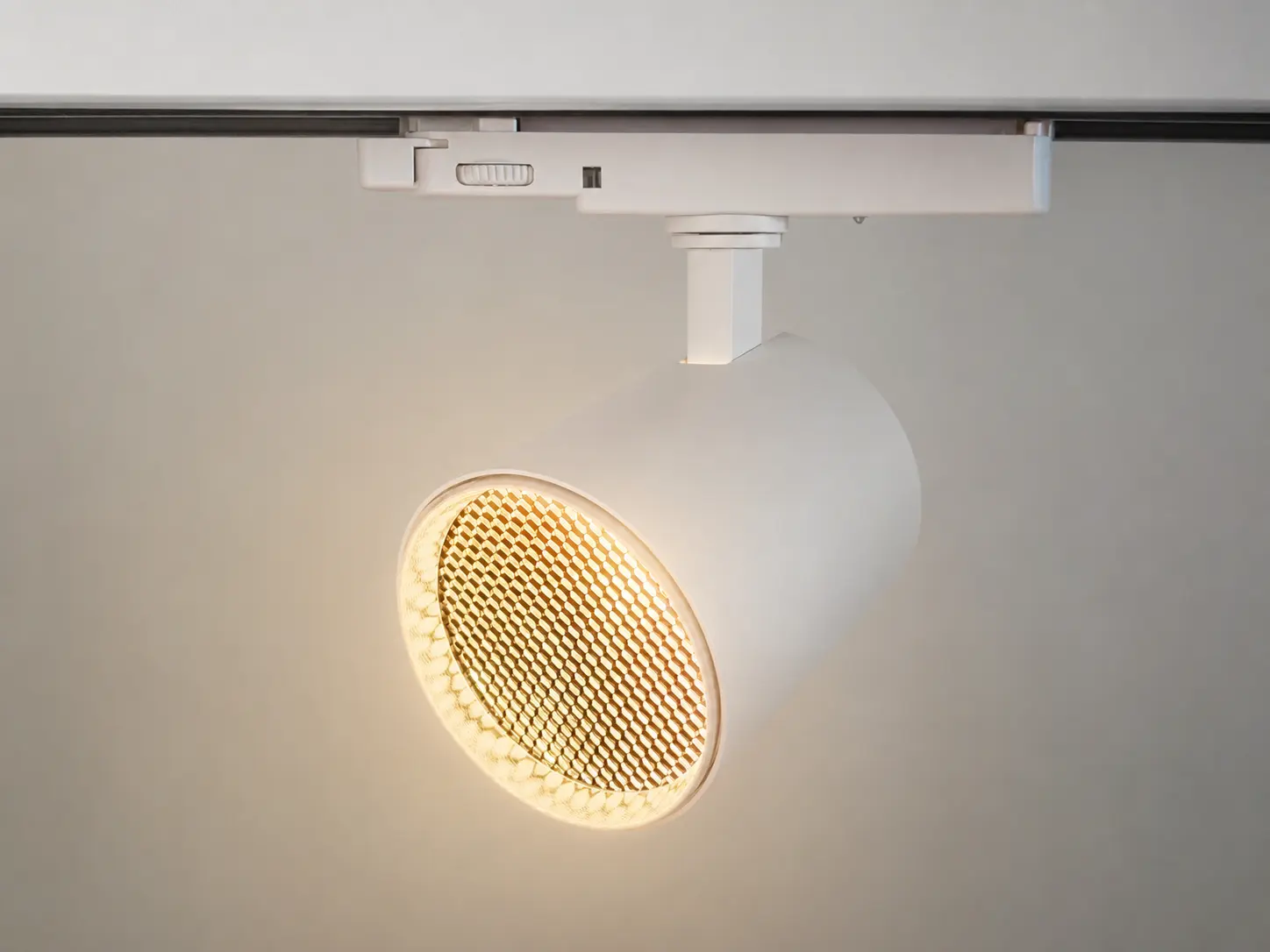
Honeycomb Louvers for Better Glare Control
Many adjustable fixtures now include honeycomb louvers.
These accessories physically block angled stray light while maintaining beam precision.
Honeycomb anti glare accessories are particularly useful for:
- LED track lighting
- Adjustable spotlights
- Gallery lighting
- Accent lighting applications
Anti Glare Lighting and UGR Standards
In professional lighting design, glare is measured using UGR (Unified Glare Rating).
Lower UGR values indicate better visual comfort.
The table below shows how UGR levels typically affect human perception.
| UGR Level | Visual Experience | Typical Applications |
|---|---|---|
| UGR > 22 | Noticeable glare and discomfort | Industrial spaces |
| UGR < 19 | Comfortable for daily use | Offices and commercial interiors |
| UGR < 16 | Premium low glare experience | High-end retail and hospitality |
| UGR < 13 | Extremely comfortable lighting | Museums and luxury galleries |
Many modern architectural projects now require UGR<19 as a minimum standard.
You can also explore lighting recommendations from the Illuminating Engineering Society (IES) for professional glare management guidelines.
Why High-End Projects Prefer Low Glare Lighting
Luxury commercial spaces are no longer designed around brightness alone.
Today, visual comfort plays a major role in customer experience.
Anti Glare Lighting for Retail Stores
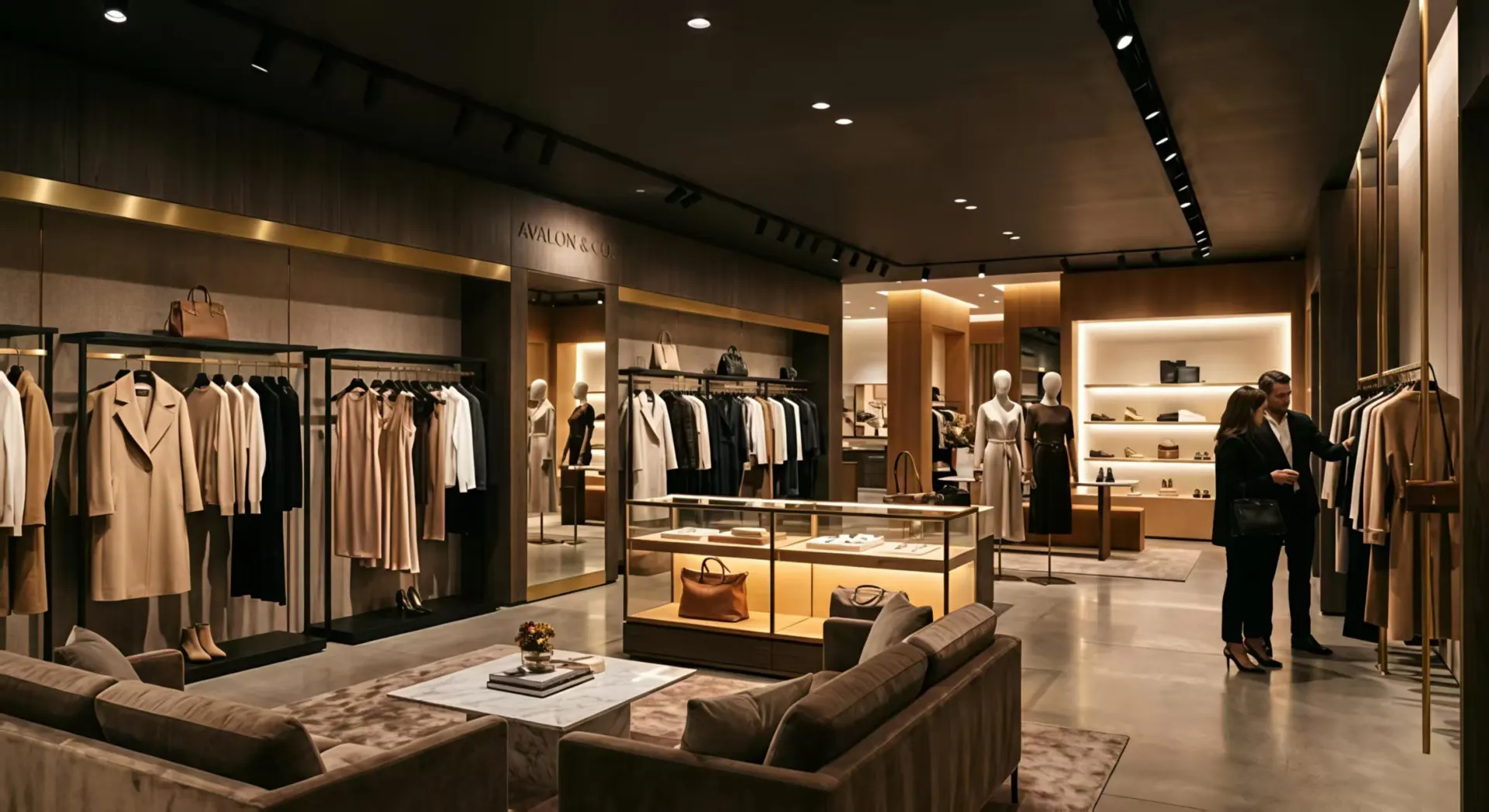
In retail environments, harsh lighting can shorten customer dwell time and reduce the perceived quality of products.
Low glare lighting helps:
- Improve product presentation
- Create a premium atmosphere
- Reduce visual fatigue
- Encourage longer browsing time
This is why anti glare track lighting has become increasingly popular in fashion boutiques and luxury stores.
Anti Glare Lighting for Restaurants and Hospitality
Restaurants rely heavily on atmosphere.
Overly harsh lighting can make even expensive interiors feel cold and uncomfortable.
Warm low glare lighting creates:
- Softer shadows
- Better mood
- More relaxed dining experiences
- Enhanced material textures
Many hospitality projects combine deep recessed fixtures with warm color temperatures between 2700K and 3000K for optimal comfort.
Anti Glare Lighting for Offices
Office lighting directly affects productivity and wellbeing.
Poor glare control often causes:
- Eye strain
- Screen reflections
- Mental fatigue
- Reduced concentration
Human-centric lighting design now focuses heavily on visual comfort, especially in hybrid workplaces and modern corporate interiors.
Balancing High Efficiency and Low Glare
One of the biggest challenges in lighting manufacturing is maintaining efficiency while reducing glare.
Cheap fixtures often reduce glare simply by blocking light output with diffusers or frosted covers. While this lowers discomfort, it also dramatically reduces lumen efficiency.
High-end manufacturers take a different approach.
Using:
- Precision optical lenses
- Advanced reflector geometry
- Premium COB LEDs
- Multi-layer optical coatings
They can achieve both:
- High luminous efficacy
- Excellent glare control
The table below highlights the difference.
| Fixture Type | Glare Control | Efficiency | Visual Comfort |
|---|---|---|---|
| Basic LED Fixture | Poor | Moderate | Harsh |
| Frosted Diffuser Fixture | Better | Low | Softer but inefficient |
| Professional Anti Glare Fixture | Excellent | High | Comfortable and premium |
This balance is what separates professional architectural lighting from basic commodity lighting.
Final Thoughts on Anti Glare Lighting
LED technology itself is not the problem.
The real issue is how the light is controlled.
Well-designed anti glare solutions allow spaces to feel bright, elegant, and visually comfortable at the same time.
As commercial lighting continues to evolve, the industry is shifting away from a simple “brighter is better” mindset.
Today, the best lighting designs focus on something far more important:
How people actually feel inside the space.
Because truly great lighting should never fight for attention.
It should quietly improve the entire experience.
FAQ About Anti Glare Lighting
Q: What is anti glare lighting?
A: Anti glare lighting refers to lighting systems designed to reduce visual discomfort caused by excessive brightness or exposed light sources. It improves visual comfort without significantly reducing illumination levels.
Q: Why do LED lights cause glare?
A: LEDs are highly concentrated point light sources. Without proper optical control, they can create intense brightness that directly irritates the human eye.
Q: What is a good UGR rating for commercial lighting?
A: For most offices and commercial interiors, UGR<19 is considered comfortable. Luxury retail and gallery environments often aim for UGR<16 or even lower.
Q: Does anti glare lighting reduce brightness?
A: Not necessarily. High-quality anti glare fixtures are designed to maintain strong illumination while controlling stray light and reducing direct glare.
Q: Where is anti glare lighting most important?
A: It is especially important in:
- Retail stores
- Offices
- Restaurants
- Hotels
- Museums
- Art galleries
- High-end residential spaces
These environments require both visual comfort and premium atmosphere.

