



Hotel Lighting Solutions: Anti-Glare and Atmospheric Premium Design
By Vincent
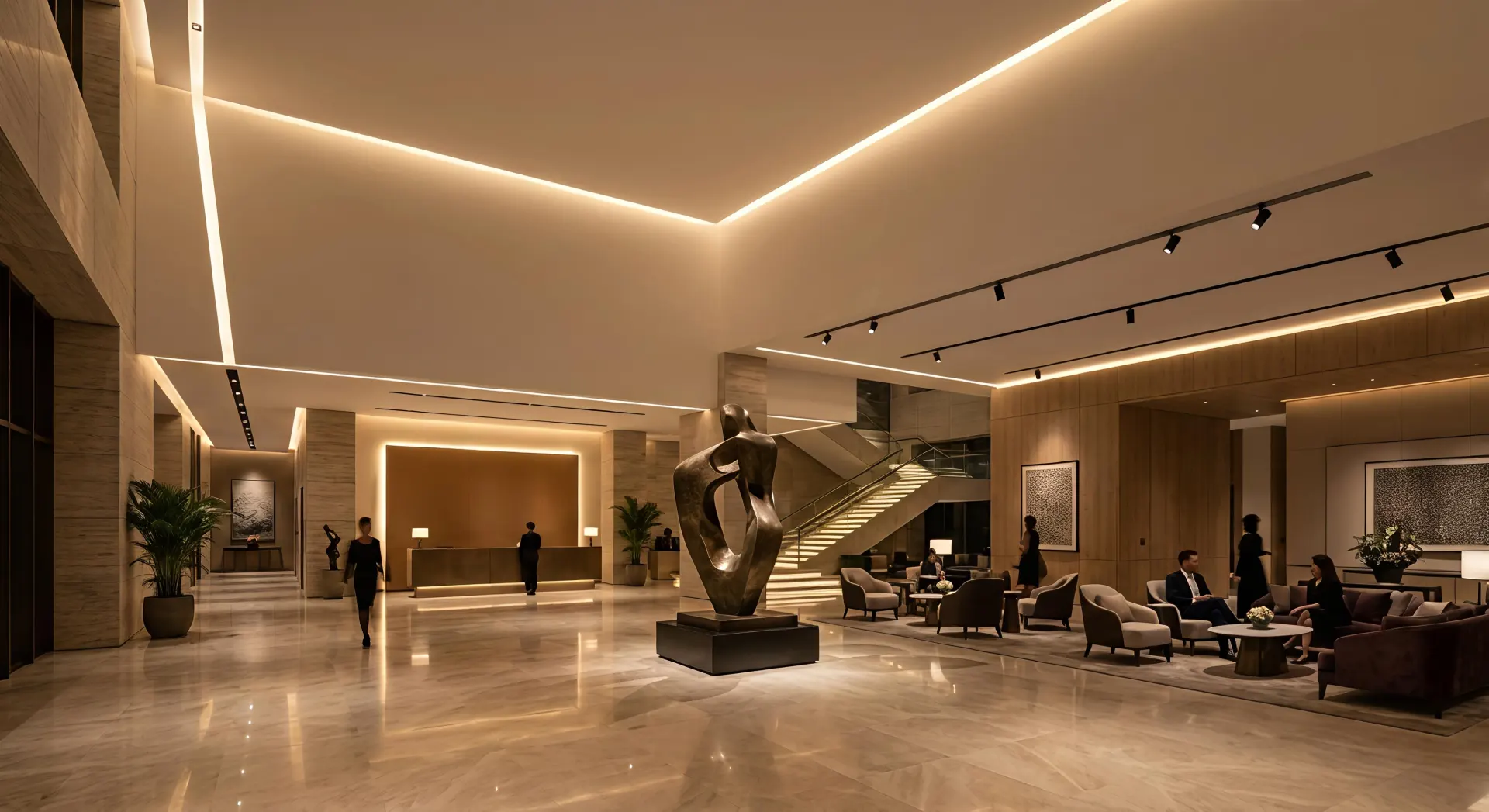
Creating an Invisible-Light Luxury Experience with Layered Lighting
- 1. Core Design Philosophy Behind Modern Hotel Lighting Solutions
- 1.1 Layered Lighting Creates a Premium Atmosphere
- 1.2 Anti-Glare Lighting Enhances Guest Comfort
- 1.3 Lighting as a Tool for Spatial Storytelling
- 2. Key Lighting Types Used in Hotel Lighting Solutions
- 2.1 Recessed Linear Lights – Creating Indirect Ambient Lighting
- 2.2 Anti-Glare Downlights – Comfortable General Lighting
- 2.3 Track Spotlights – Highlighting Design and Art
- 2.4 Baseboard Linear Lights – Safe and Subtle Night Guidance
- 3. Hotel Lighting Solutions for Lobby Design
- 3.1 Creating a Grand First Impression
- 3.2 Balancing Brightness and Atmosphere
- 4. Hotel Lighting Solutions for Guest Rooms
- 4.1 Comfortable Lighting for Relaxation
- 4.2 Combining Function and Atmosphere
- 5. Hotel Corridor Lighting Design
- 5.1 Soft Lighting for Quiet Spaces
- 5.2 Step and Baseboard Lighting for Night Navigation
- 6. Conclusion: Designing Memorable Hotel Experiences Through Lighting
In today’s highly competitive hospitality industry, lighting has moved far beyond the simple function of illuminating a space. It now plays a crucial role in shaping a hotel’s atmosphere, influencing guest comfort, and even impacting online reviews and brand perception. Well-designed Hotel Lighting Solutions focus on more than brightness—they prioritize anti-glare comfort, a calm visual environment, and refined spatial ambience.
Modern hospitality lighting follows a design philosophy often described as “seeing the light but not the fixture.” Instead of relying on a traditional “main light + auxiliary light” layout, designers create layered lighting systems that combine indirect lighting, accent lighting, and subtle guidance lighting. The goal is to build a lighting environment that feels natural, comfortable, and emotionally engaging.
As global tourism shifts toward high-quality experiences, guests increasingly expect lighting that is comfortable, atmospheric, and visually refined rather than simply bright. Unfortunately, many hotels still struggle with common lighting issues:
- Direct glare causing visual fatigue
- Flat lighting that reduces spatial depth
- Poor night lighting that disrupts sleep cycles
- Lack of precise accent lighting for artwork or design features
This guide explores how modern Hotel Lighting Solutions can solve these issues through professional lighting design strategies, fixture selection, and technical standards.
For reference on hospitality lighting design trends, see
https://www.archdaily.com/tag/hotel-lighting
Core Design Philosophy Behind Modern Hotel Lighting Solutions
Premium hotel lighting is not about installing more fixtures—it is about designing a visual environment centered on guest comfort and emotional experience. Successful Hotel Lighting Solutions follow four fundamental principles.
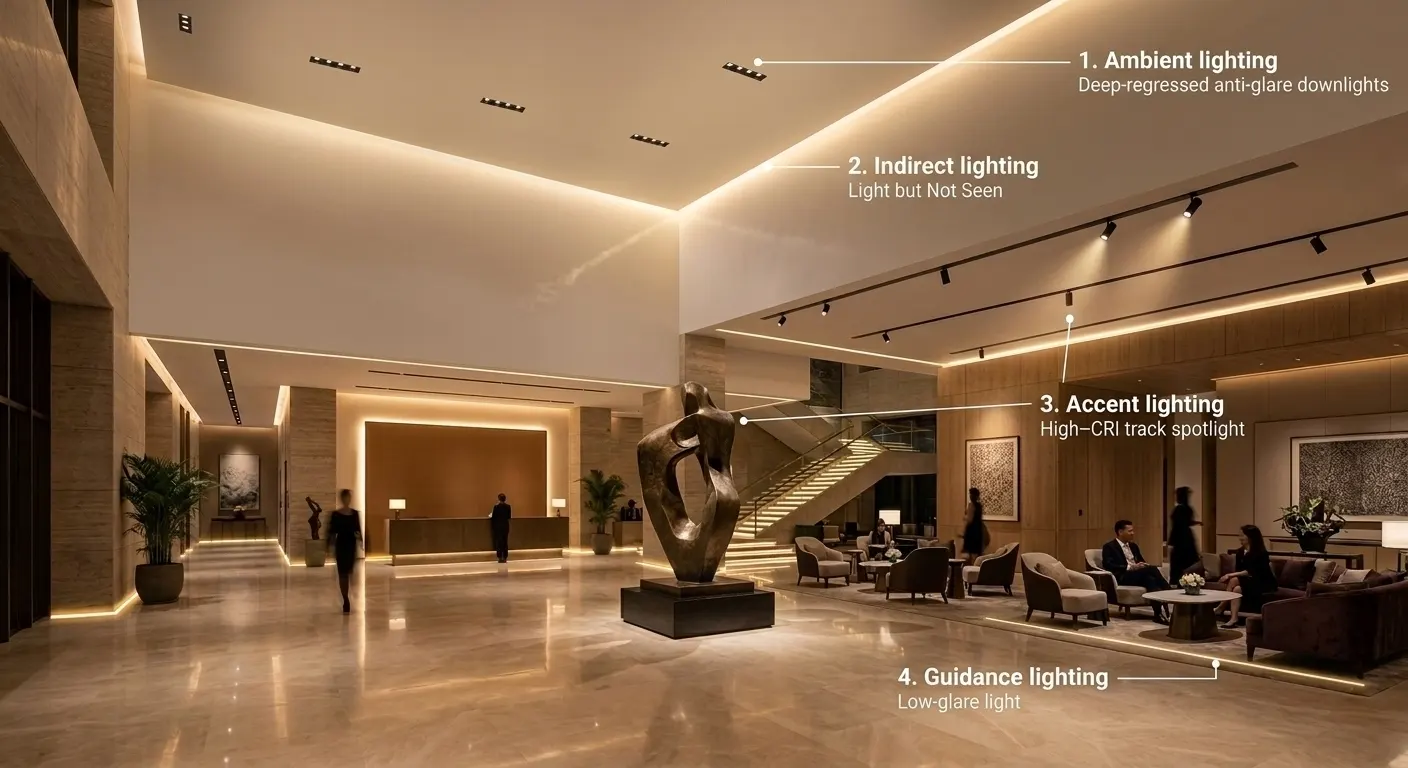
1. Anti-Glare Lighting: The Essential Foundation
Glare is one of the biggest factors that can negatively affect a hotel environment. When light sources shine directly into the eyes or reflect harshly off glossy surfaces, guests experience eye strain and discomfort.
In professional hospitality lighting design, glare control is a fundamental requirement rather than an optional feature. For most public areas, the Unified Glare Rating (UGR) should remain below 19. In quiet zones such as guest rooms or bedside areas, UGR values should ideally remain below 13.
Proper glare control is achieved through:
- Deep recessed light sources
- Anti-glare optical structures
- Precise beam control
These elements ensure a calm visual environment that aligns with the hotel’s core purpose: relaxation.
2. Layered Lighting in Hotel Lighting Solutions
A well-balanced lighting environment is built through multiple lighting layers rather than a single overhead source.
| Lighting Layer | Function | Typical Fixtures |
|---|---|---|
| Ambient Lighting | Provides overall brightness | Anti-glare downlights |
| Indirect Lighting | Creates atmosphere and depth | Recessed linear lights |
| Accent Lighting | Highlights artwork or architecture | Track spotlights |
| Guidance Lighting | Ensures safe night navigation | Step lights / baseboard lights |
This layered approach allows guests to transition smoothly from the dramatic atmosphere of a hotel lobby to the calm privacy of their room.
3. Quiet Visual Environments
Hotels are designed for rest, which means lighting must support both physical and psychological comfort.
One key strategy is to conceal the light source within architectural elements such as ceiling coves, wall recesses, or deep-recessed fixtures. Guests perceive the soft glow of light without seeing the harsh brightness of exposed lamps.
Night lighting is also carefully designed to remain visible but unobtrusive, preventing sleep disruption while maintaining safety.
4. Lighting as a Brand Identity Tool
Different hotel areas require different lighting strategies.
- Lobbies express brand identity
- Guest rooms prioritize relaxation
- Corridors guide circulation
- Restaurants create social atmosphere
When properly designed, lighting becomes a powerful branding tool. Consistent color temperature and lighting style help guests recognize the hotel’s visual identity.
Many designers reference hospitality lighting standards from organizations such as the
https://www.ies.org (Illuminating Engineering Society)
Hotel Lighting Solutions for Lobby Design
The hotel lobby is the first impression guests experience. Lighting should communicate elegance while maintaining visual comfort.
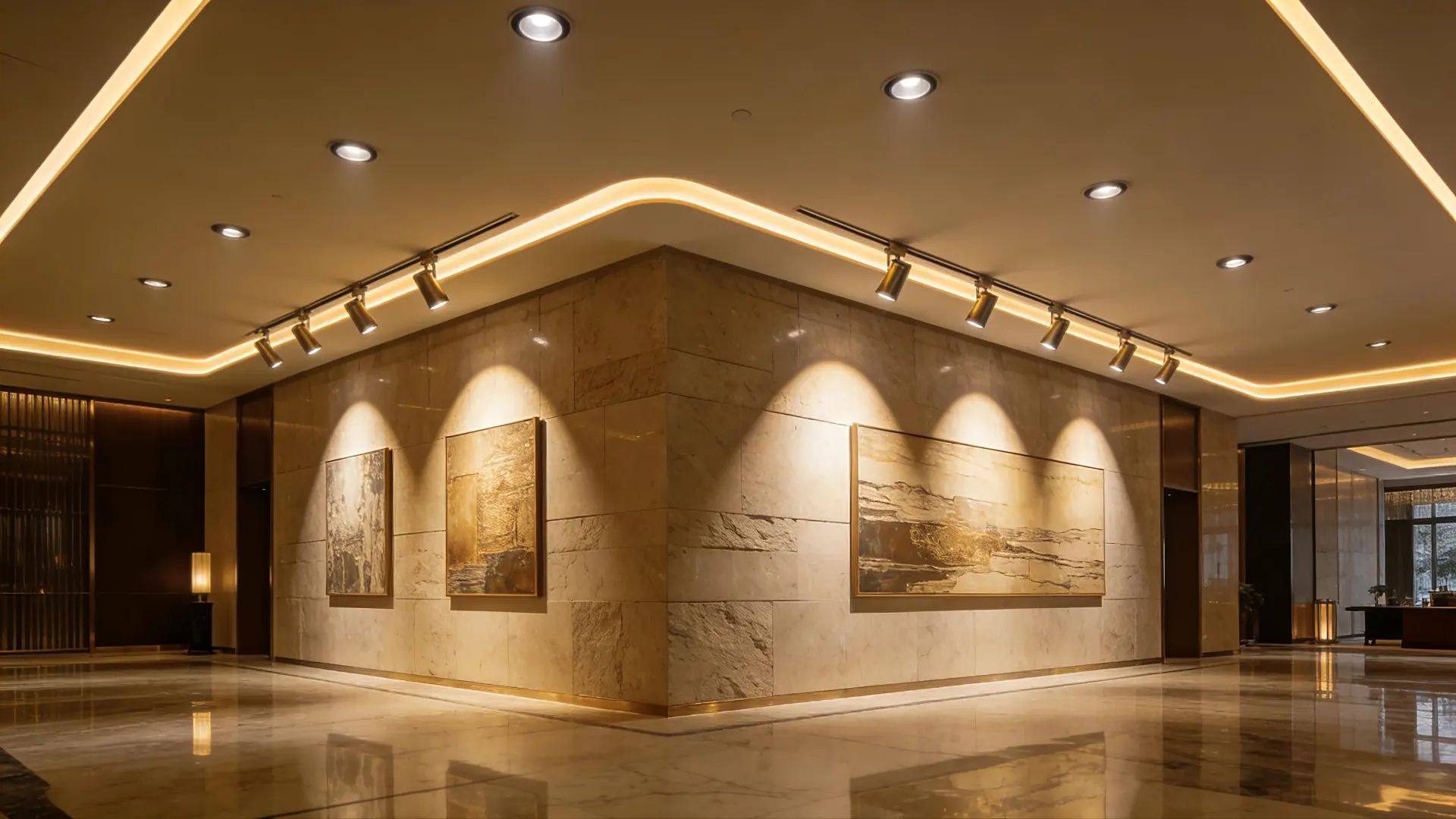
Ambient Lighting with Anti-Glare Downlights
Anti-glare recessed downlights provide the primary ambient lighting layer in hotel lobbies. These fixtures are typically arranged in evenly spaced ceiling grids to produce smooth illumination without harsh shadows.
Key specifications include:
- UGR < 19
- CRI ≥ 90
- Deep anti-glare reflectors
This approach eliminates the uncomfortable brightness associated with traditional decorative chandeliers.
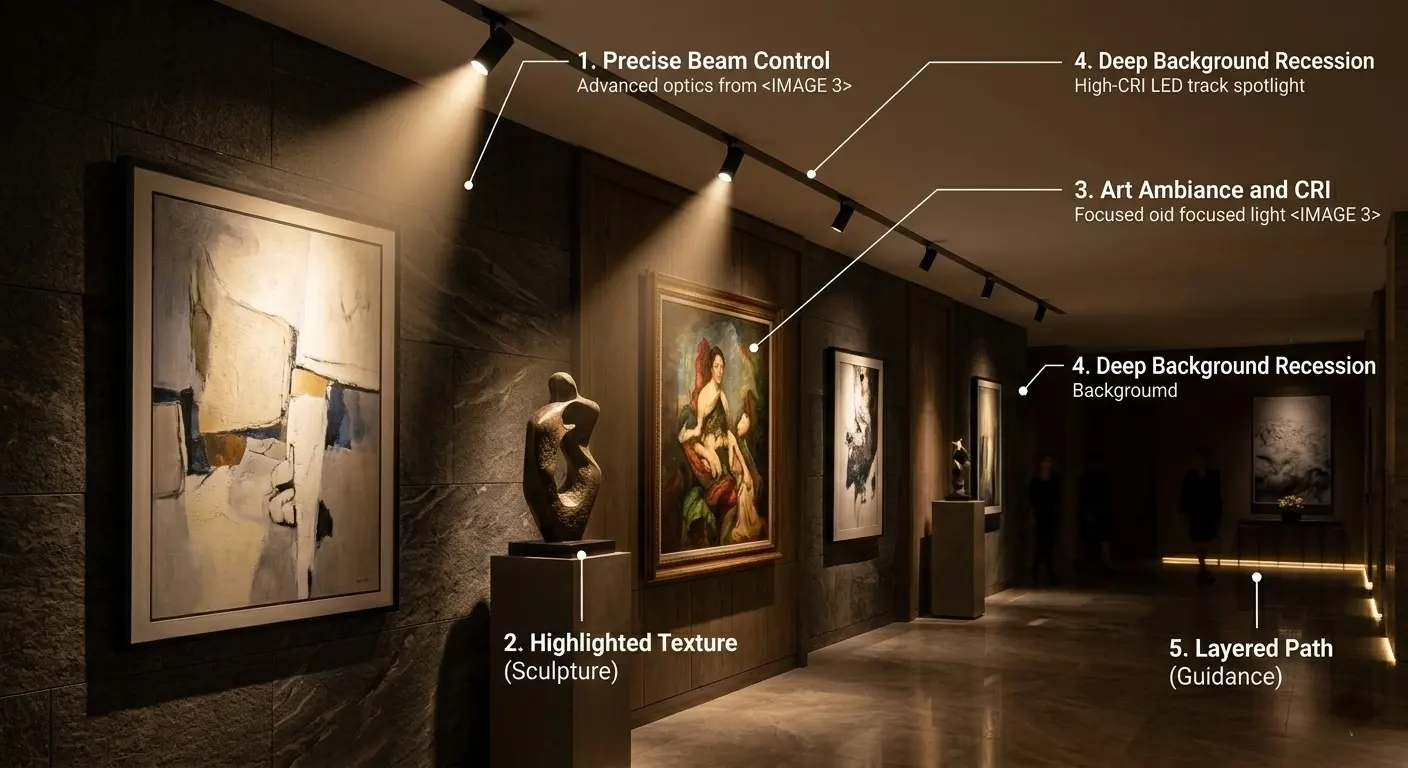
Accent Lighting with Track Spotlights
Track spotlights highlight architectural features and decorative elements.
Typical applications include:
- Artwork displays
- Reception desk backgrounds
- Sculptures
- Brand logos
High-quality spotlights often feature:
- CRI ≥ 95
- Adjustable beam angles (15°, 24°, 36°)
- Precise optical control
These fixtures add visual drama while maintaining the refined atmosphere expected in luxury hospitality spaces.
Indirect Lighting with Recessed Linear Lights
Recessed linear lighting plays a major role in creating sophisticated ambience. Installed within ceiling coves or wall recesses, these fixtures produce soft reflected light that enhances spatial depth.
Indirect lighting is particularly effective for:
- Large lobby ceilings
- Architectural contours
- Feature walls
Because the light source remains hidden, the result aligns perfectly with the “light without visible fixtures” concept.
Hotel Lighting Solutions for Guest Rooms
Guest rooms are the most important part of the hotel experience. Lighting must support relaxation, reading, working, and nighttime movement.
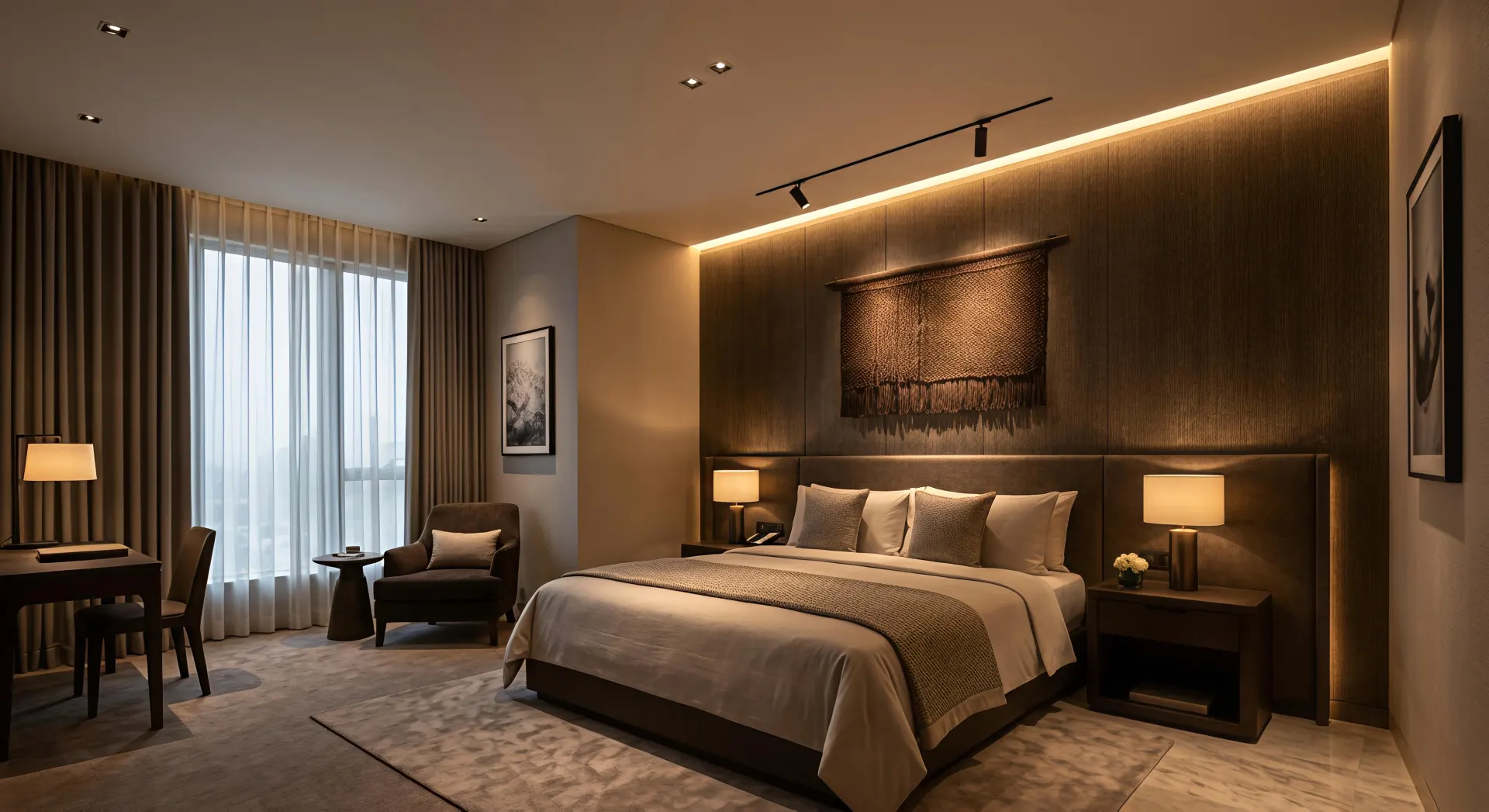
Ambient Lighting for Comfort
Anti-glare downlights provide comfortable ambient illumination in entrance areas, seating zones, and work desks. They are carefully positioned to avoid shining directly above beds.
Typical specifications include:
- UGR < 13
- Shielding angle ≥ 30°
- Soft, uniform light distribution
This design prevents glare while maintaining sufficient brightness for daily activities.
Indirect Lighting for Atmosphere
Indirect lighting is often integrated behind headboards or within ceiling coves. This creates a soft glow that replaces harsh overhead lighting.
Benefits include:
- Improved visual comfort while lying in bed
- A relaxing atmosphere for guests
- Enhanced wall texture and material details
This lighting technique is widely used in modern luxury hotel room lighting design.
Accent Lighting for Interior Details
Track spotlights or adjustable recessed spotlights highlight decorative artwork or interior elements.
These fixtures use narrow beam angles to illuminate objects precisely without spilling light into resting areas.
Night Guidance Lighting
Low-level step lights or baseboard lighting provide safe nighttime navigation.
| Installation Location | Function |
|---|---|
| Bedside floor area | Safe nighttime movement |
| Bathroom entrance | Guidance lighting |
| Entry corridor | Pathway visibility |
These fixtures typically use 2700K warm light and very low brightness levels to prevent sleep disturbance.
Hotel Corridor Lighting Design
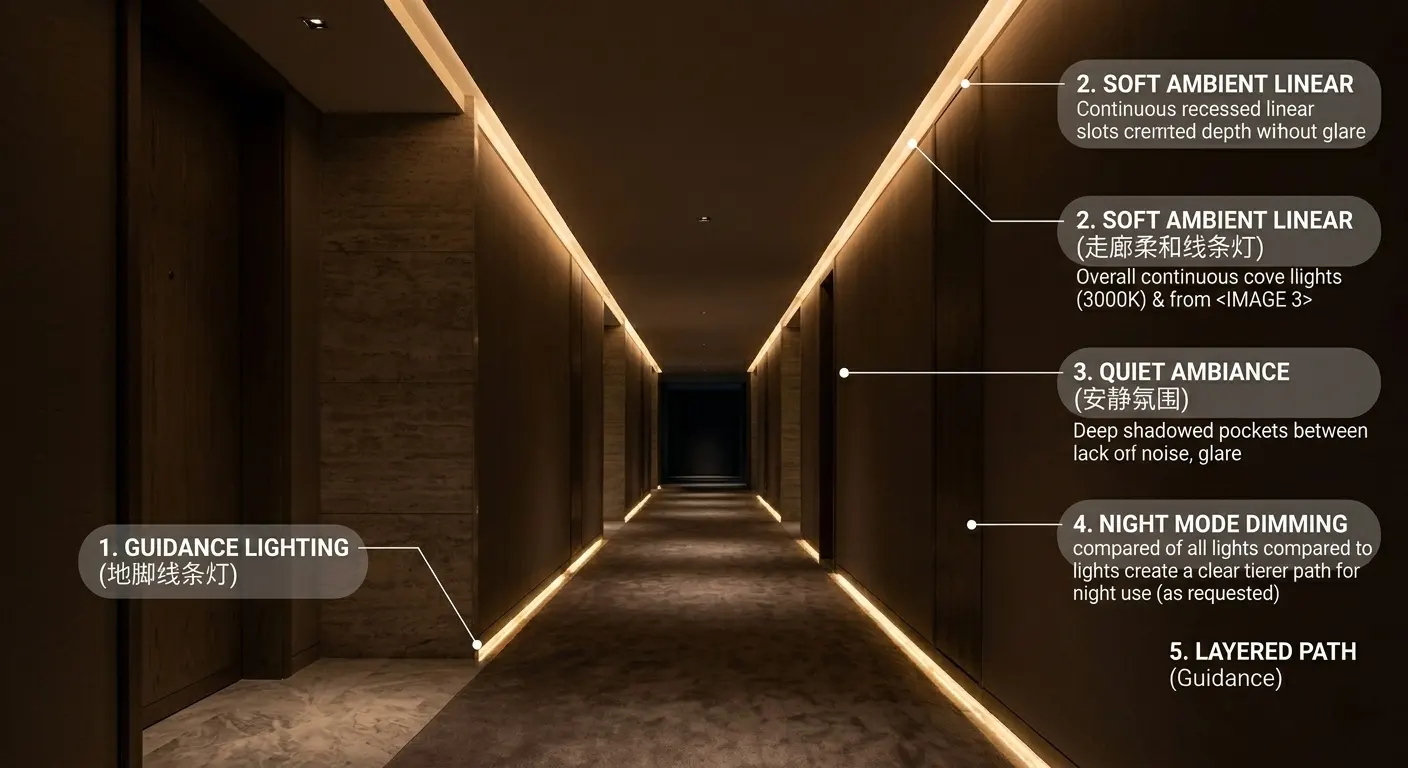
Corridors require lighting that ensures safety while maintaining a calm atmosphere.
Uniform Downlight Layout
Low-brightness anti-glare downlights are arranged in linear patterns along the corridor ceiling.
This approach prevents alternating bright and dark zones often referred to as the “zebra effect.”
Continuous Linear Lighting
Linear lights installed in ceiling coves or wall slots create continuous light lines that guide movement naturally.
This design visually widens narrow corridors while adding architectural sophistication.
Night Lighting with Step Lights
Step lights installed along baseboards provide gentle illumination during nighttime hours.
Because the light remains close to the floor, guests can move safely without activating bright ceiling lighting.
Key Fixtures Used in Hotel Lighting Solutions
The effectiveness of Hotel Lighting Solutions depends heavily on selecting the right fixtures.
| Fixture Type | Main Function | Common Locations |
|---|---|---|
| Recessed Linear Lights | Indirect ambience lighting | Ceilings, walls, corridors |
| Anti-Glare Downlights | Ambient lighting | Guest rooms, lobbies |
| Track Spotlights | Accent lighting | Artwork, displays |
| Step Lights | Guidance lighting | Corridors, stairs |
These four fixture types form the foundation of modern hospitality lighting systems.
Technical Parameters that Define High-Quality Hotel Lighting
Several technical factors determine whether a lighting system meets luxury hotel standards.
Color Rendering Index (CRI)
Hotels typically require CRI ≥ 90, while restaurants and artwork lighting should reach CRI ≥ 95 for accurate color representation.
Color Temperature Consistency
Warm white light between 2700K and 3000K is commonly used for guest rooms, while public areas may use 3000K–3500K for a brighter yet still warm atmosphere.
Maintaining consistent color temperature across fixtures is essential to avoid visible differences.
Flicker-Free Drivers and Smart Dimming
Modern hospitality lighting systems often integrate smart control systems such as DALI-2 or DT8.
These allow brightness adjustment between 1% and 100% without flicker, enabling different lighting scenes throughout the day.
Conclusion
In modern hospitality design, lighting has become a powerful tool for shaping guest experiences. Effective Hotel Lighting Solutions combine anti-glare downlights, recessed linear lighting, track spotlights, and subtle guidance lighting to create layered lighting environments.
By carefully balancing comfort, ambience, and functionality, hotels can achieve the ideal “invisible light” effect—where guests feel surrounded by warm, comfortable illumination without noticing the fixtures themselves.
For hotels seeking to deliver premium guest experiences, investing in a well-designed lighting system is no longer optional. It is a key factor in guest satisfaction, brand perception, and long-term competitive advantage.

