



How Bright Should Makeup Studio Lighting Be?
By Vincent
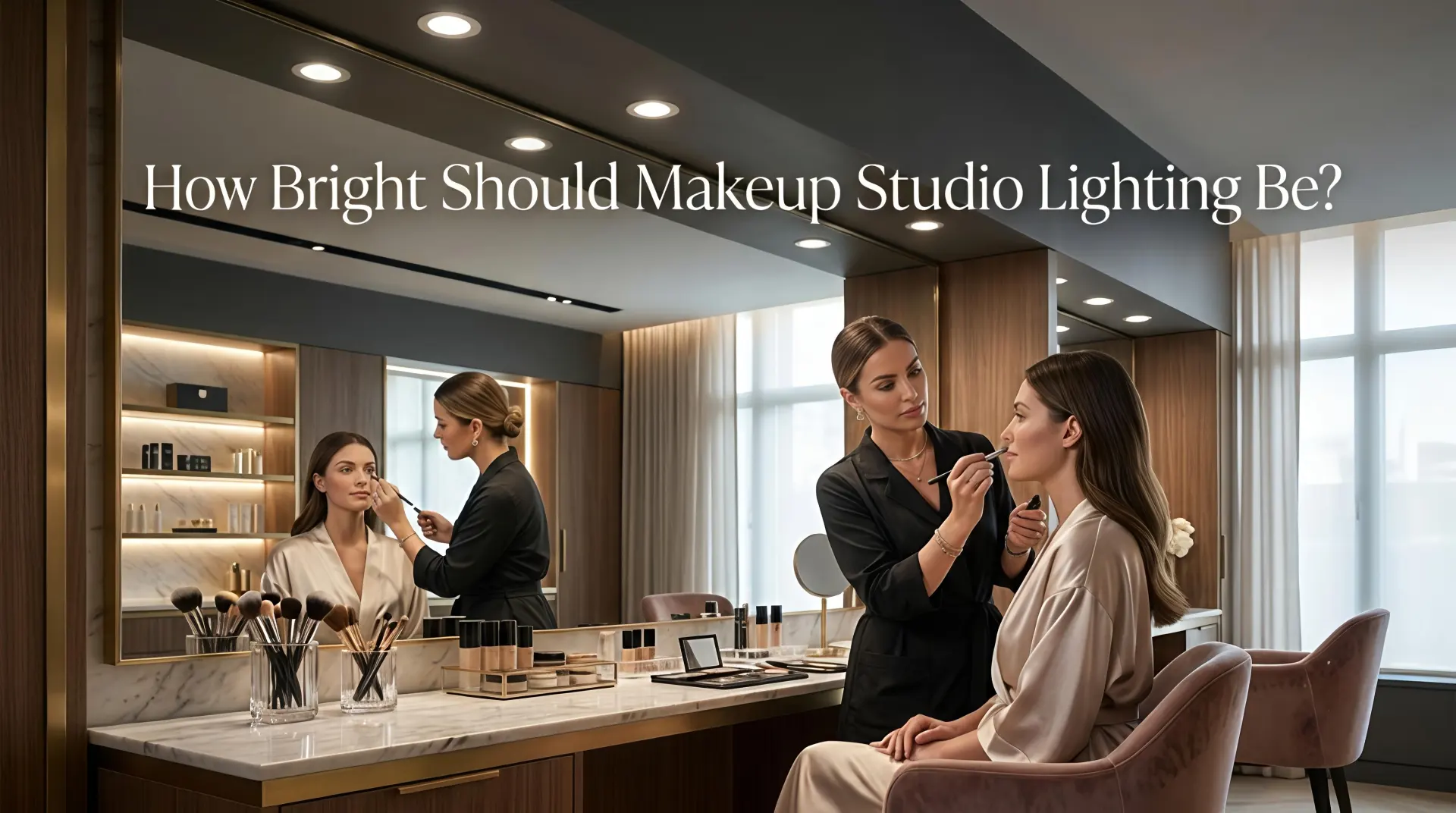
For professional makeup artists, lighting is more than just illumination—it is an essential tool that directly affects the quality of every makeup application. Well-designed makeup studio lighting helps artists evaluate skin tones accurately, blend products seamlessly, and ensure that the finished look appears consistent in different environments. Yet many beauty studios face the same challenge: makeup that looks flawless under the mirror can appear completely different outdoors, with foundation looking ashy, blush appearing too strong, or lipstick shades losing their intended tone. In most cases, the problem is not the makeup itself but the lighting design behind it.
Creating the right lighting environment is not about installing brighter fixtures. It requires a balanced combination of illuminance, color rendering, color temperature, glare control, and fixture placement. This guide explains how bright a professional makeup studio should be and how to create a lighting setup that supports both artists and clients.
Why Professional Beauty Studio Lighting Matters
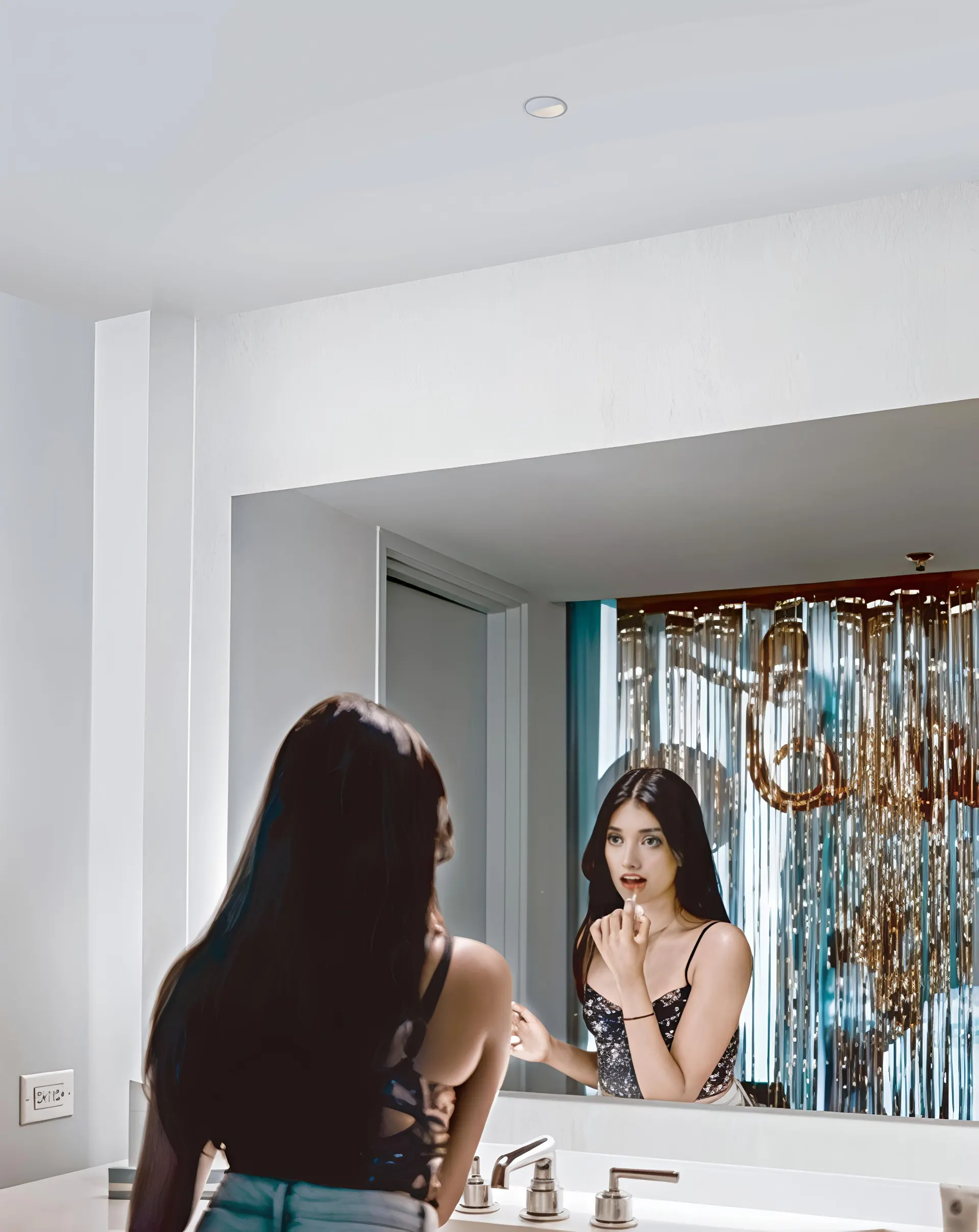
Accurate lighting is critical in any beauty workspace because makeup application relies heavily on color perception and visual detail.
When illumination levels are too low, artists may struggle to evaluate:
- Foundation undertones
- Skin texture and pores
- Eyeshadow blending
- Lipstick color accuracy
- Overall makeup balance
Poor lighting can lead to mistakes that become obvious once the client steps into natural daylight.
High-quality beauty salon lighting also improves the client experience. A bright, comfortable, and shadow-free environment creates a more professional atmosphere and increases confidence in the final result.
Understanding Makeup Studio Lighting Brightness: Lux vs. Lumens
One of the most common mistakes when planning a beauty space is focusing solely on lumens.
Lumens measure the total amount of light emitted by a fixture, while lux measures the amount of light that actually reaches a surface—in this case, the client’s face.
For makeup applications, lux is the more important metric.
Recommended Illuminance Levels for Cosmetic Workspaces
| Area | Recommended Illuminance |
|---|---|
| General Ambient Lighting | 300–500 lux |
| Standard Makeup Stations | 800–1,000 lux |
| Professional Makeup Stations | 1,000–1,500 lux |
| Video & Photography Makeup Areas | 1,500–2,000 lux |
For most professional studios, maintaining 1,000–1,500 lux at face level provides the ideal balance between visibility and comfort.
At this level, makeup artists can clearly evaluate skin texture, product blending, and subtle color transitions.
Can Makeup Artist Lighting Be Too Bright?
Many studio owners assume that more light automatically means better results.
In reality, excessive brightness often creates new problems.
Common Issues Caused by Over-Lighting
- Harsh reflections in mirrors
- Facial overexposure
- Increased eye fatigue
- Reduced visual comfort
- Difficulty assessing skin texture accurately
The goal is not maximum brightness but uniform illumination across the face.
Balanced lighting helps artists see details without creating uncomfortable glare or distortion.
The Three Essential Standards for Professional Makeup Room Lighting
Brightness alone is not enough. The most successful beauty lighting designs combine three key elements.
High-Cri Lighting for Accurate Color Matching
Color rendering is arguably more important than brightness.
Many standard commercial fixtures offer a CRI of around 80, which can distort skin tones and makeup colors.
For professional applications, the recommended specifications are:
| Lighting Quality | Recommended Value |
| Minimum CRI | 90 |
| Preferred CRI | 95+ |
| Premium Studio Standard | 97+ |
| Recommended R9 Value | >90 |
A high R9 value is particularly important because it improves the rendering of reds, which directly affects lipstick colors, blush tones, and natural skin appearance.
For more information about color rendering standards, the lighting education resources from the Illuminating Engineering Society (IES) provide useful guidance.
Choosing the Best Color Temperature for Makeup Lighting
Color temperature affects how clients perceive their makeup.
In professional environments, the following ranges are commonly used:
- 2700K – Warm, hospitality-style lighting
- 3000K – Comfortable and inviting
- 4000K – Most recommended for daily makeup application
- 5000K – Close to natural daylight
For most beauty studios, 4000K provides the best balance between accuracy and comfort.
Some premium projects use tunable white systems that allow artists to switch between different lighting scenarios, including indoor, office, evening, and outdoor daylight conditions.
Glare Control for Long Makeup Sessions
Clients and artists often spend extended periods facing mirrors and light sources.
Without proper glare control, discomfort quickly becomes a problem.
Professional lighting designers typically recommend fixtures with a Unified Glare Rating (UGR) below 13 for beauty environments.
Deep-recessed optics and anti-glare reflectors help create a more comfortable experience while maintaining high illumination levels.
How to Eliminate Facial Shadows in Makeup Studio Lighting Design
Even when brightness levels are correct, poor fixture placement can create shadows around the eyes, nose, and chin.
These shadows often cause makeup artists to overcorrect with contouring or concealer.
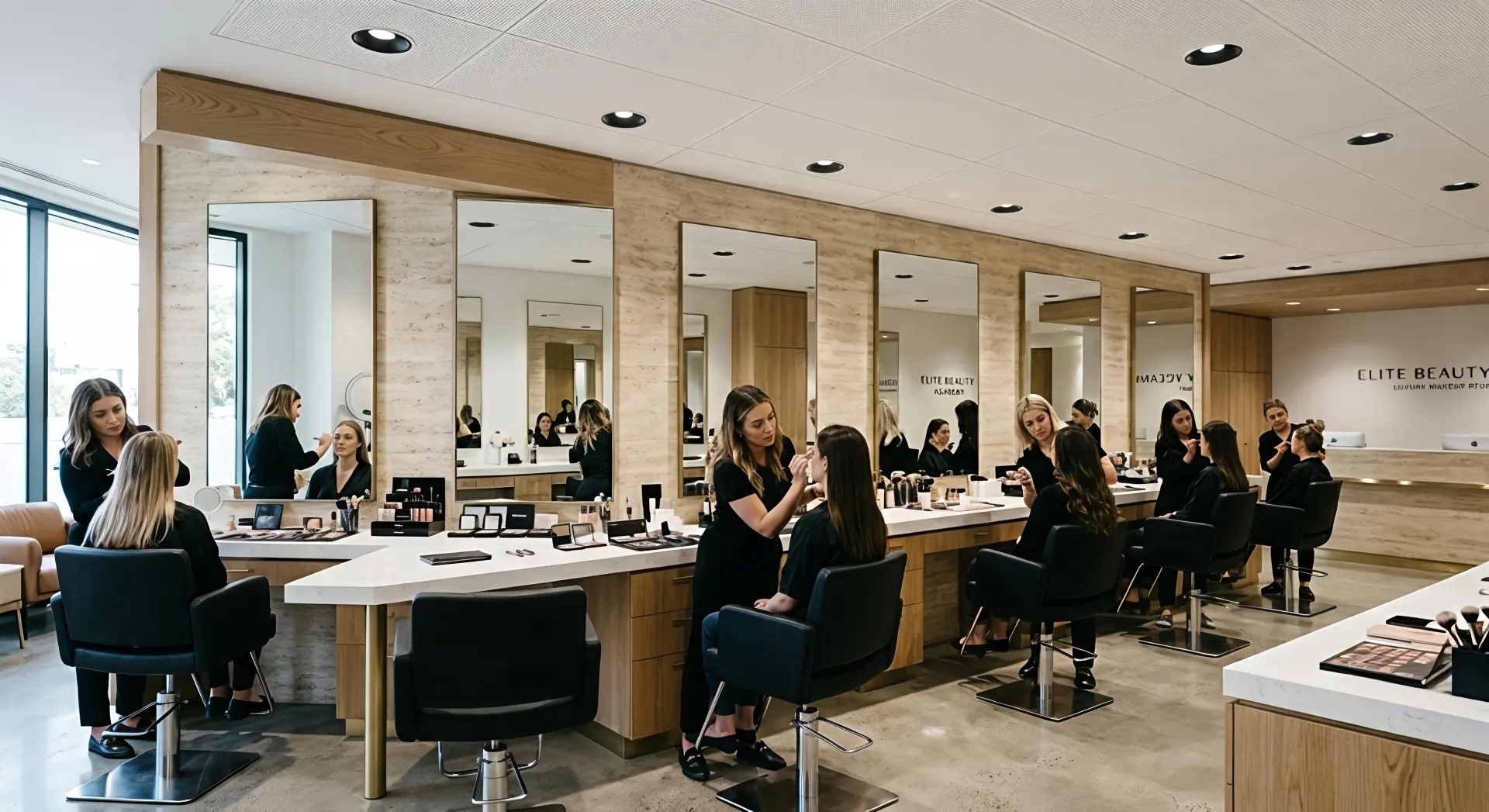
Mirror Lighting Solutions for Shadow-Free Makeup Application
Dedicated mirror lighting is one of the most effective ways to illuminate the face evenly.
Modern mirror lighting downlights positioned above and slightly in front of the client help reduce shadows while maintaining natural facial contours.
This approach has become increasingly popular in luxury beauty salons and makeup academies.
Adjustable Downlights for Precision Facial Illumination
Gimbal downlights provide additional flexibility because the beam angle can be adjusted toward the client’s face.
This allows designers to achieve the target illuminance level without relying on harsh overhead lighting.
Layered Ambient Lighting for Beauty Studios
The best results usually come from a layered lighting strategy that combines:
- Mirror lighting
- Adjustable downlights
- Anti-glare recessed lighting
- Track lighting
- Linear wall washing
Layered lighting creates a visually balanced environment while improving both functionality and aesthetics.
Why Flicker-Free Makeup Studio Lighting Is Becoming Essential
Today’s beauty studios often double as content creation spaces.
Artists regularly produce content for:
- TikTok
- Instagram Reels
- YouTube
- Live-streaming platforms
Lighting with visible flicker can cause rolling bands or image instability on camera.
To avoid these issues, professional studios should specify:
- Flicker-free drivers
- High-frequency constant-current power supplies
- Smooth dimming capabilities
- Video-friendly lighting systems
The U.S. Department of Energy Lighting Research Center Resources offer additional information on flicker and lighting quality.
Recommended Lighting Specifications for a Professional Makeup Studio
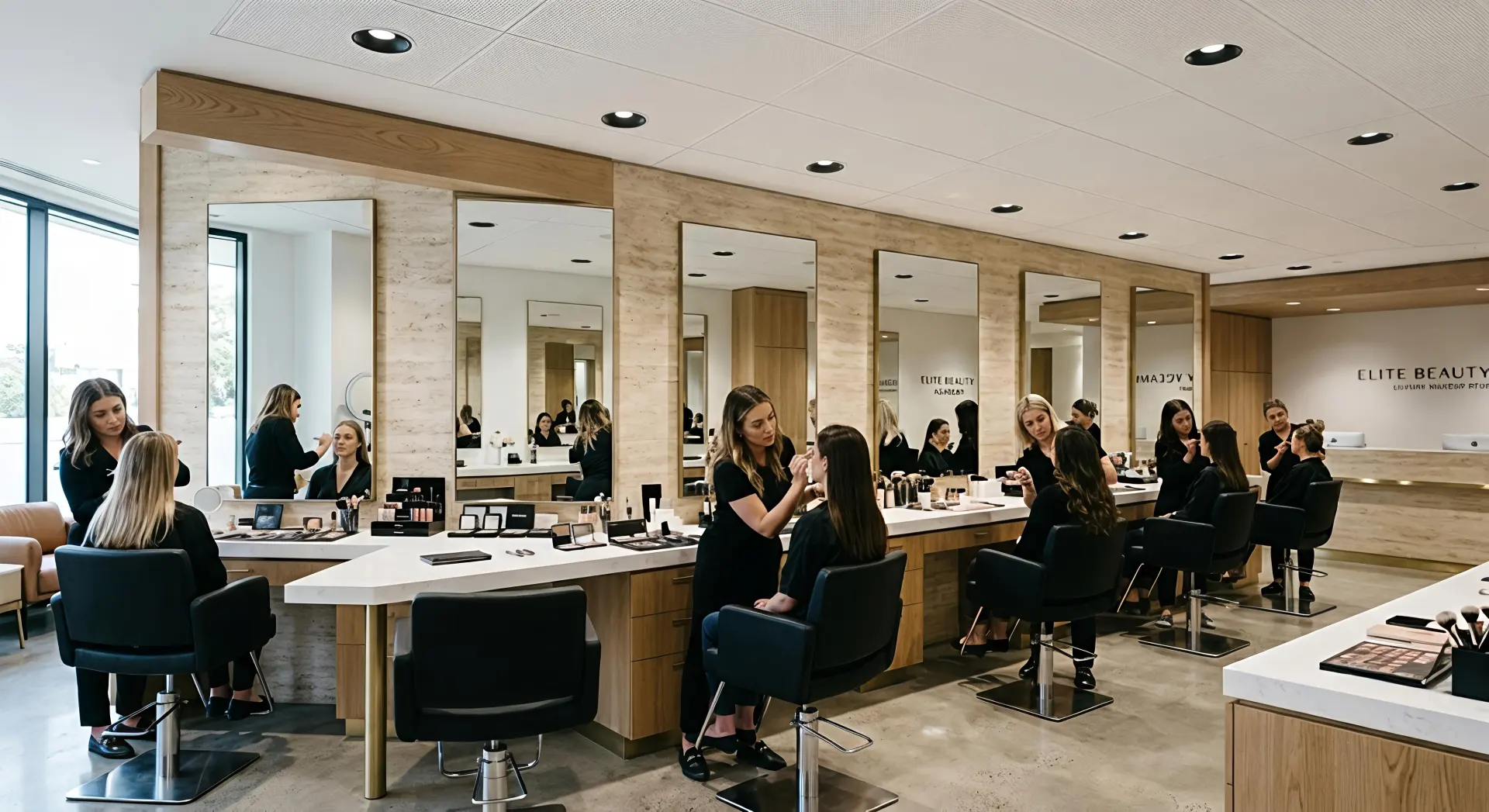
If you are designing a new beauty studio or upgrading an existing one, the following specifications provide a strong starting point.
| Specification | Recommended Value |
| Facial Illuminance | 1,000–1,500 lux |
| Ambient Illuminance | 300–500 lux |
| CRI | 95+ |
| R9 | >90 |
| Color Temperature | 4000K |
| Glare Rating | UGR < 13 |
| Dimming | DALI, 0-10V, or Tunable White |
| Video Compatibility | Flicker-Free |
Recommended fixture combinations include:
- Mirror Lighting Downlights
- Gimbal LED Downlights
- Anti-Glare Downlights
- LED Track Lights
- Linear Wall Washers
FAQs About Makeup Studio Lighting
What is the best brightness for a makeup studio?
For professional makeup applications, the facial lighting area should typically reach between 1,000 and 1,500 lux. This level allows artists to evaluate skin texture, product blending, and color accuracy effectively.
What color temperature is best for makeup lighting?
Most professional beauty studios use 4000K because it provides a natural and balanced appearance that closely resembles everyday lighting conditions.
Is CRI important for makeup application?
Yes. High-CRI lighting improves color accuracy and helps ensure that foundation, lipstick, blush, and eyeshadow appear as intended. A CRI of 95 or higher is recommended for professional environments.
How can I reduce shadows around the face?
The most effective solution is combining dedicated mirror lighting with adjustable downlights positioned to illuminate the face from the front rather than directly overhead.
Do beauty studios need flicker-free lighting?
Absolutely. Flicker-free lighting is essential for studios that create social media content, record videos, conduct live streams, or take professional photographs.
Conclusion
The ideal lighting setup for a professional makeup studio is not defined by brightness alone. Successful projects combine appropriate illuminance levels, high color rendering, controlled glare, and carefully positioned fixtures to create a comfortable and accurate working environment.
For most professional beauty spaces, maintaining 1,000–1,500 lux at face level, using CRI 95+ light sources, selecting a neutral 4000K color temperature, and implementing shadow-free mirror lighting will deliver the best results. When these elements are combined effectively, lighting becomes a powerful tool that enhances makeup quality, improves client satisfaction, and elevates the overall value of the studio.

