



Museum Track Lighting for Art Galleries: Why Flexibility and Precision Matter
By JC
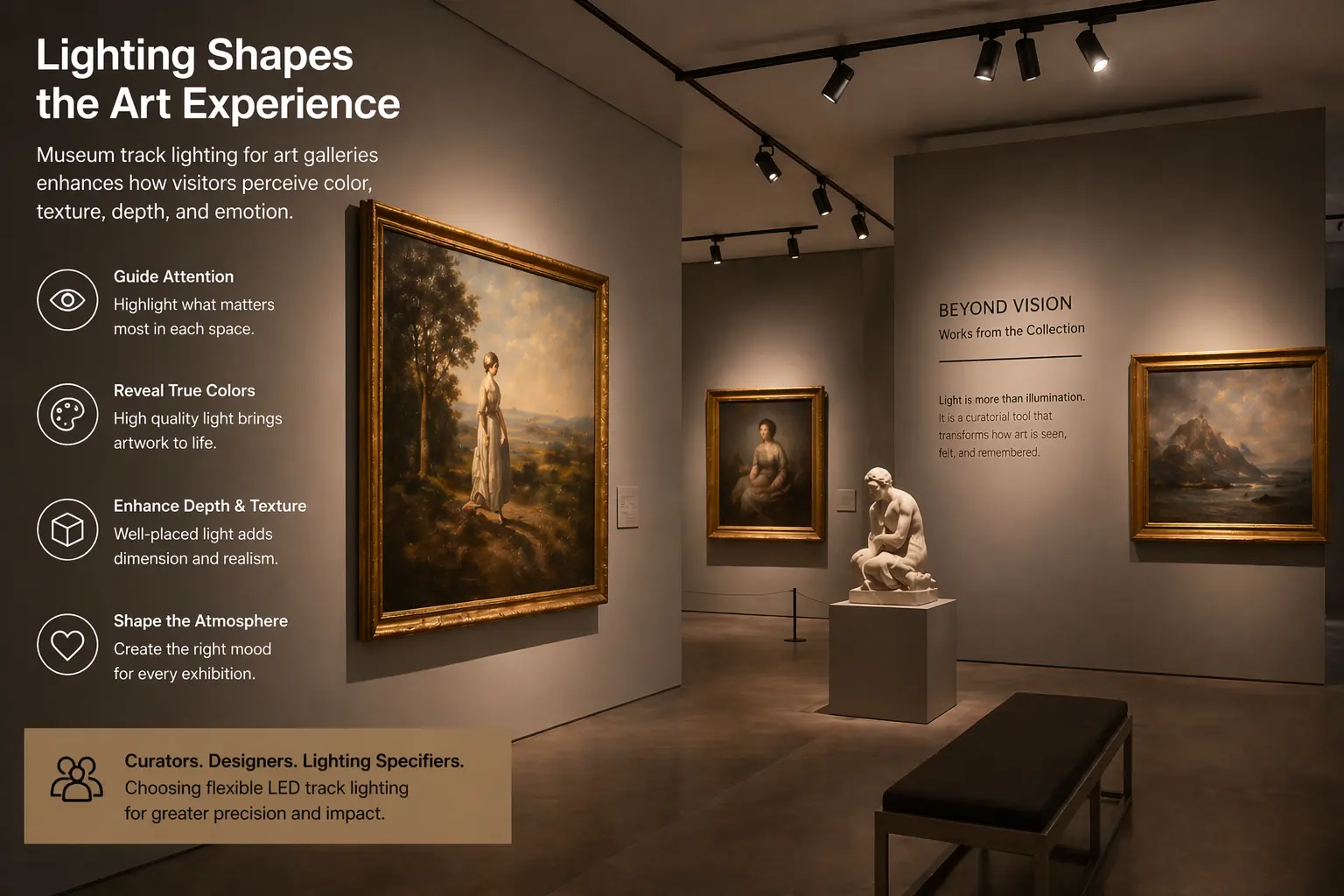
Museum track lighting for art galleries is no longer just about making artwork visible. In today’s exhibition environments, lighting plays a direct role in how visitors perceive color, texture, depth, and emotion. The right lighting system can guide attention, shape the atmosphere of a room, and help curators present each piece with greater precision. That is why more designers, curators, and lighting specifiers are turning to flexible LED track solutions instead of fixed traditional fixtures.
In art-focused spaces, every display requirement can change from one exhibition to the next. A gallery may show oil paintings this month, sculpture the next, and mixed media installations after that. Because of this, lighting needs to adapt quickly without requiring a complete redesign. A well-designed track system offers that flexibility while supporting visual comfort, accurate color rendering, and a cleaner architectural look.
When choosing museum lighting, performance is not only about brightness. It is also about beam control, glare management, color quality, and the ability to respond to changing layouts. These factors make modern track lighting one of the most practical and professional solutions for museums and galleries looking to improve both presentation and operational efficiency.
Why Museum Track Lighting for Art Galleries Requires More Than General Illumination
Unlike retail or office spaces, museums and galleries are built around visual experience. Lighting in these environments must do more than simply fill the room with light. It must highlight the artwork itself while keeping the surrounding space balanced and comfortable. If the lighting is too flat, the art can feel lifeless. If it is too harsh, visitors may be distracted by glare or reflections instead of engaging with the piece.
Museum track lighting for art galleries works so well because it gives designers directional control. Rather than relying on a ceiling full of fixed downlights, curators can aim each luminaire exactly where it is needed. This is especially important when exhibitions include artworks of different sizes, mounting heights, and materials. A framed painting, a textured sculpture, and a glass display object all interact with light differently.
Track systems also support a cleaner and more adaptable ceiling layout. Instead of replacing fixtures every time a new exhibition is installed, the same track can support repositioned or upgraded luminaires. This saves time during exhibition changes and allows galleries to maintain a more refined interior appearance.
The Value of an Adjustable Beam Angle Track Light for Gallery Applications
One of the most useful features in modern museum lighting is the adjustable beam angle track light for gallery environments. Beam flexibility allows a single luminaire to serve multiple display needs, which is especially valuable in spaces where curatorial layouts change regularly.
A narrow beam can be used to create emphasis on a small artwork, drawing the eye directly to the piece and increasing visual drama. A wider beam, on the other hand, is better for illuminating larger paintings, wall text, or grouped displays more evenly. Without beam adjustment, galleries often need to stock multiple fixture types to achieve different effects. That increases inventory complexity and reduces design flexibility.
An adjustable beam angle track light for gallery use helps simplify this problem. Instead of changing the fixture, the lighting designer can fine-tune the beam to match the size and placement of the artwork. This makes installation more efficient and supports a more precise visual result. It also helps reduce stray light on surrounding walls or adjacent works, which is critical in curated exhibition settings where visual focus matters.
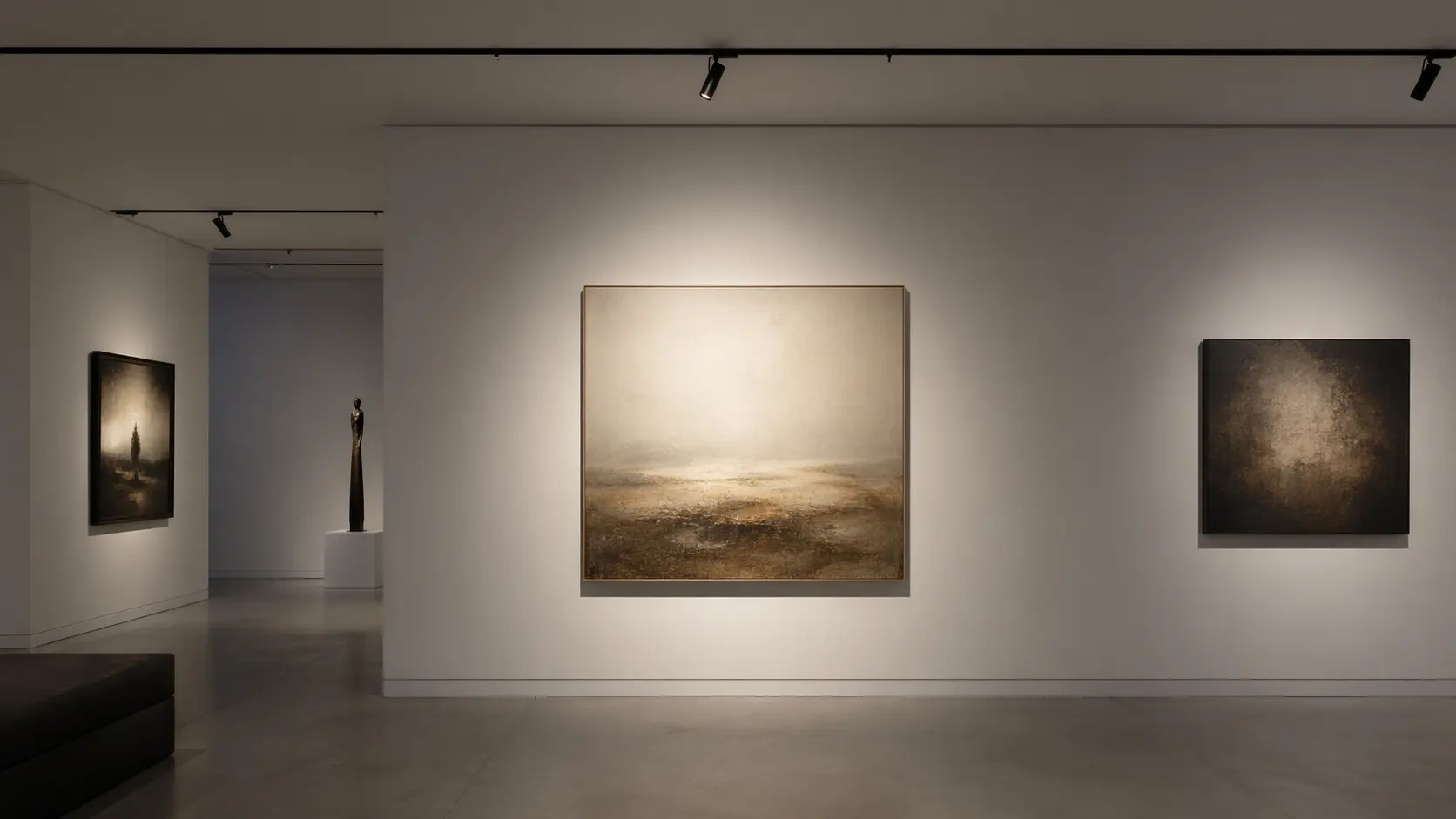
For museums and art galleries, this flexibility is not just convenient. It directly improves how each object is presented. The more precisely light can be shaped, the more intentional the exhibition feels.
A Professional Zoomable Track Spotlight for Museums and Art Galleries
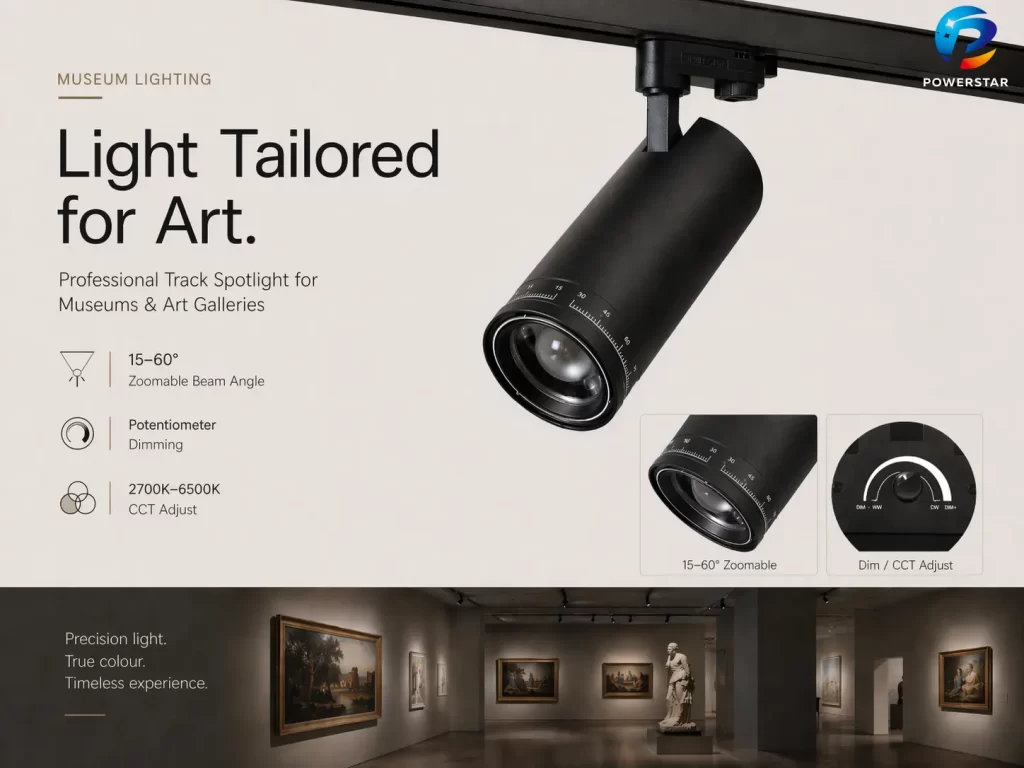
Designed for modern museum track lighting for art galleries, this professional track spotlight combines flexibility, precision, and visual comfort in one fixture. It is created for spaces where artworks need to be illuminated with greater control, whether for permanent collections, temporary exhibitions, or curated gallery displays.
One of its key advantages is the 15–60° zoomable beam angle, which allows lighting designers and curators to adjust the beam according to the size, position, and importance of each artwork. A narrower beam can create focused emphasis on a single piece, while a wider beam can provide more even coverage for larger paintings or display surfaces. This flexibility helps reduce the need for multiple fixture types and makes exhibition lighting easier to adapt.
The fixture also features potentiometer dimming, giving users a simple way to fine-tune brightness directly on the luminaire. In museum and gallery environments, this is especially useful when different artworks require different light levels to achieve the right balance between visual impact and viewing comfort.
Another practical feature is its 2700K–6500K CCT adjustment, which makes it possible to adapt the lighting tone to different exhibition concepts and artwork materials. Warmer light can help create a softer and more intimate atmosphere, while cooler light can support a cleaner and more contemporary presentation. This added versatility makes the fixture suitable for a wider range of artistic applications.
Supporting Gallery Lighting for Temporary Exhibitions
Another major advantage of track systems is how well they support gallery lighting for temporary exhibitions. Temporary exhibitions often involve tight timelines, changing themes, and frequent reconfiguration of walls and objects. In these situations, lighting needs to be both fast to adjust and reliable in performance.
A fixed lighting plan may work well for a permanent collection, but temporary displays require something far more adaptable. Curators may change object positions, rotate featured works, or redesign visitor flow between exhibitions. When that happens, a flexible track system allows luminaires to be moved, re-aimed, or regrouped with minimal disruption.
This is why gallery lighting for temporary exhibitions often depends on track-mounted solutions. They offer freedom without sacrificing professionalism. A curator can create focused accents for one show and a softer, more evenly distributed lighting scheme for the next, all using the same infrastructure. This reduces the cost and complexity of exhibition turnover while keeping presentation standards high.
Temporary exhibitions also benefit from the visual clarity that track lighting brings. Whether the show is contemporary art, photography, cultural artifacts, or design objects, lighting can be tailored to fit the concept of the exhibition. That flexibility supports not only display quality, but also storytelling.
Why a High CRI Museum Track Light Is Essential for Artwork Presentation
In art spaces, color accuracy is one of the most important lighting criteria. This is where a high CRI museum track light becomes essential. CRI, or Color Rendering Index, refers to how accurately a light source reveals colors compared to a natural reference. In museums and galleries, poor color rendering can distort the appearance of paintings, textiles, and other visually sensitive works.
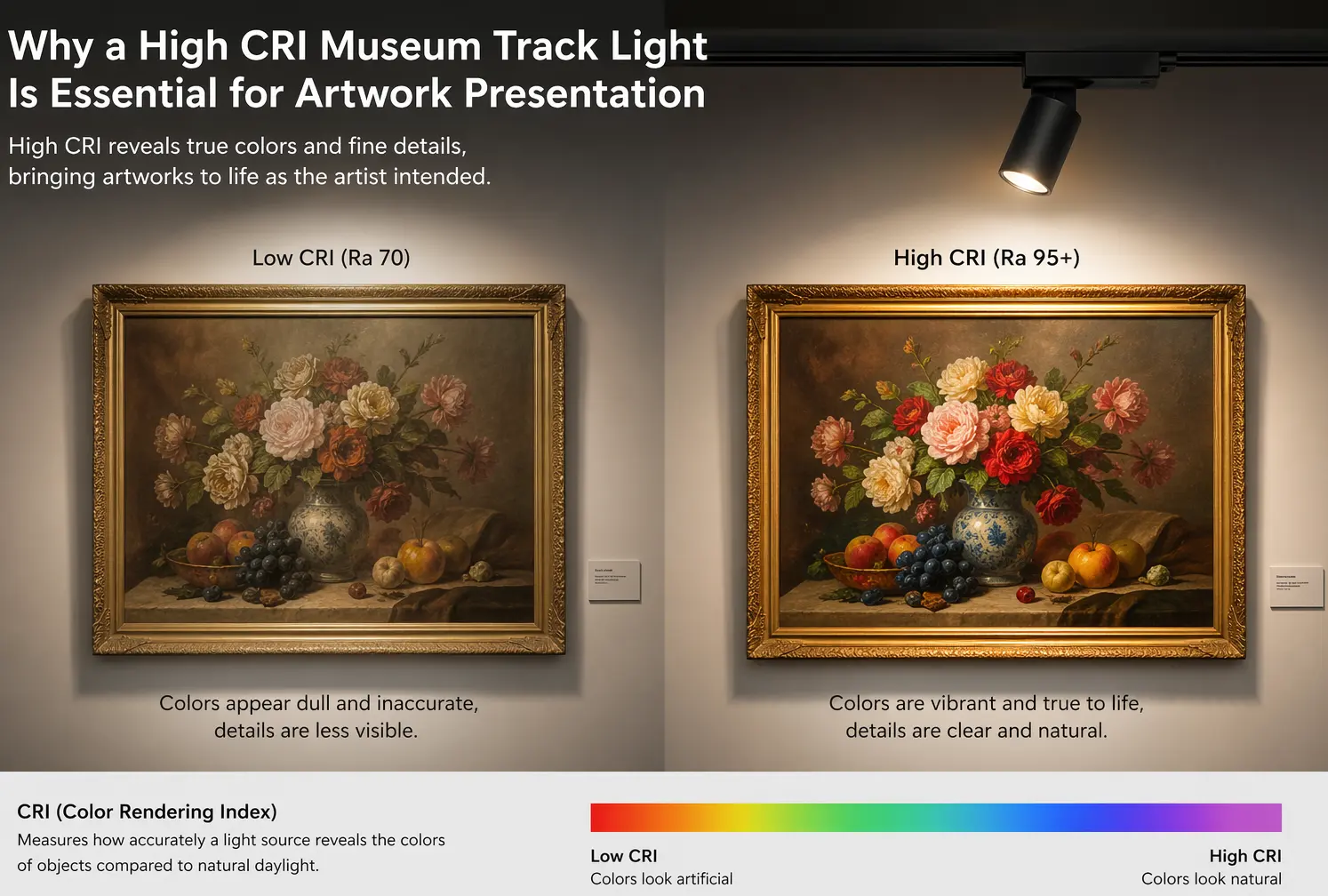
A high CRI museum track light helps preserve the intended visual impact of the artwork. Rich reds, subtle skin tones, deep blues, and fine tonal transitions all appear more natural and more faithful to the artist’s original work. This matters not only for visitor experience, but also for curatorial integrity.
Art galleries often display pieces where texture and pigment detail are central to the work. Under low-quality lighting, those details can appear dull or flattened. High CRI lighting restores depth and clarity, making surfaces, brushwork, and material differences more visible. This is particularly important for oil paintings, mixed media works, and museum-grade reproductions where color nuance matters.
For professional gallery projects, high CRI should never be treated as an optional upgrade. It is part of the foundation of quality lighting design. When combined with proper beam control and low glare, it ensures that the viewer sees the artwork more accurately and more comfortably.
Balancing Visual Comfort, Flexibility, and Architectural Cleanliness
Good museum lighting should never overpower the artwork. The best systems create a quiet visual framework that supports the collection without becoming the focus itself. Track lighting does this well because it combines precision with a minimal architectural footprint.
Visual comfort is especially important in galleries where visitors may spend long periods observing details. Excessive brightness, poor aiming, or uncontrolled reflections can quickly cause fatigue. Professional track luminaires are designed to direct light with intention, reducing spill light and helping maintain a calm exhibition atmosphere.
At the same time, galleries need practical flexibility behind the scenes. Lighting teams must be able to respond to new installations, adjust focal points, and refine the balance between ambient and accent lighting. A track system makes that process far easier than fixed ceiling layouts. It gives the space a long-term lighting platform rather than a single static solution.
From an architectural perspective, track lighting also supports clean interiors. The ceiling remains organized, the luminaires appear purposeful, and the room can evolve without losing visual consistency. This is one reason track systems continue to be favored in many contemporary art institutions.
Choosing the Right Museum Track Lighting Strategy
Selecting museum track lighting for art galleries should begin with the needs of the artwork, not just the fixture specification. Designers should consider the scale of the pieces, the frequency of exhibition changes, the desired atmosphere, and the level of beam precision required. From there, features such as adjustable beam angles, smooth dimming, high CRI performance, and flexible positioning become much easier to evaluate.
In many cases, the strongest solution is not the most complex one. It is the one that offers reliable control, consistent color quality, and enough adaptability to support both current and future exhibitions. That is exactly where modern LED track systems stand out.
For museums and galleries seeking a balance of presentation quality and operational flexibility, track lighting remains one of the smartest choices available. It supports curatorial freedom, enhances visitor experience, and gives each artwork the focused attention it deserves. In spaces where visual detail matters, lighting should never be an afterthought. It should be part of the exhibition itself.

