



RIP Grid Ceilings: The Curved Linear Lighting for Mall Corridors Help Out
By Powerstar
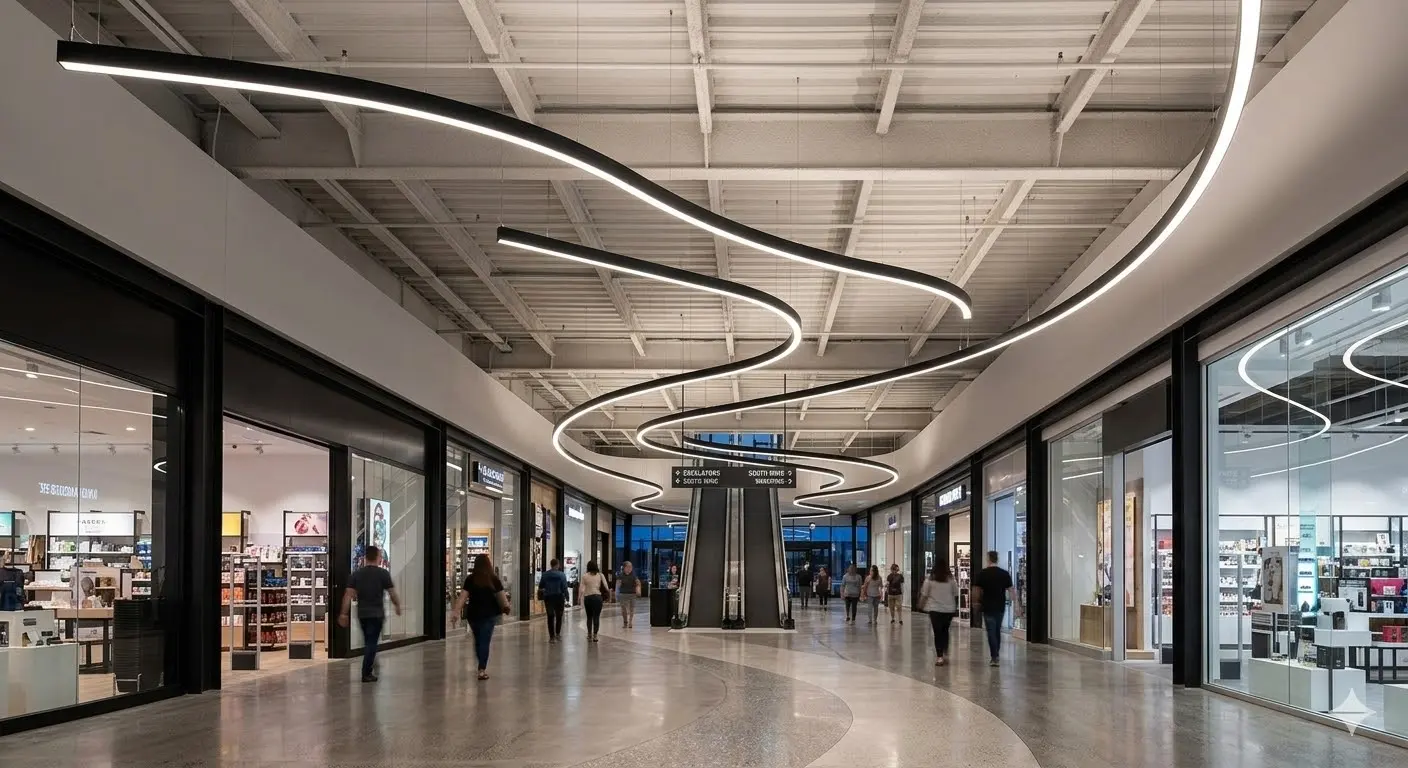
The retail landscape has undergone a massive transformation. Shopping malls are no longer just places to buy goods; they are immersive lifestyle destinations, entertainment hubs, and architectural marvels. To compete in this experiential era, every design element must work in harmony to captivate the visitor. Among the most powerful tools in a retail architect’s arsenal is lighting. Specifically, the strategic use of curved linear lighting for mall corridors has emerged as a defining trend in modern commercial design.
Moving away from the rigid, utilitarian straight lines of the past, curved lighting introduces fluidity, elegance, and psychological comfort into large commercial spaces. This comprehensive guide explores why shopping centers are adopting these custom organic shapes, the strategic benefits they provide, and the technical specifications required to execute them flawlessly.
Why the Shift to Organic Shapes in Retail Architecture?
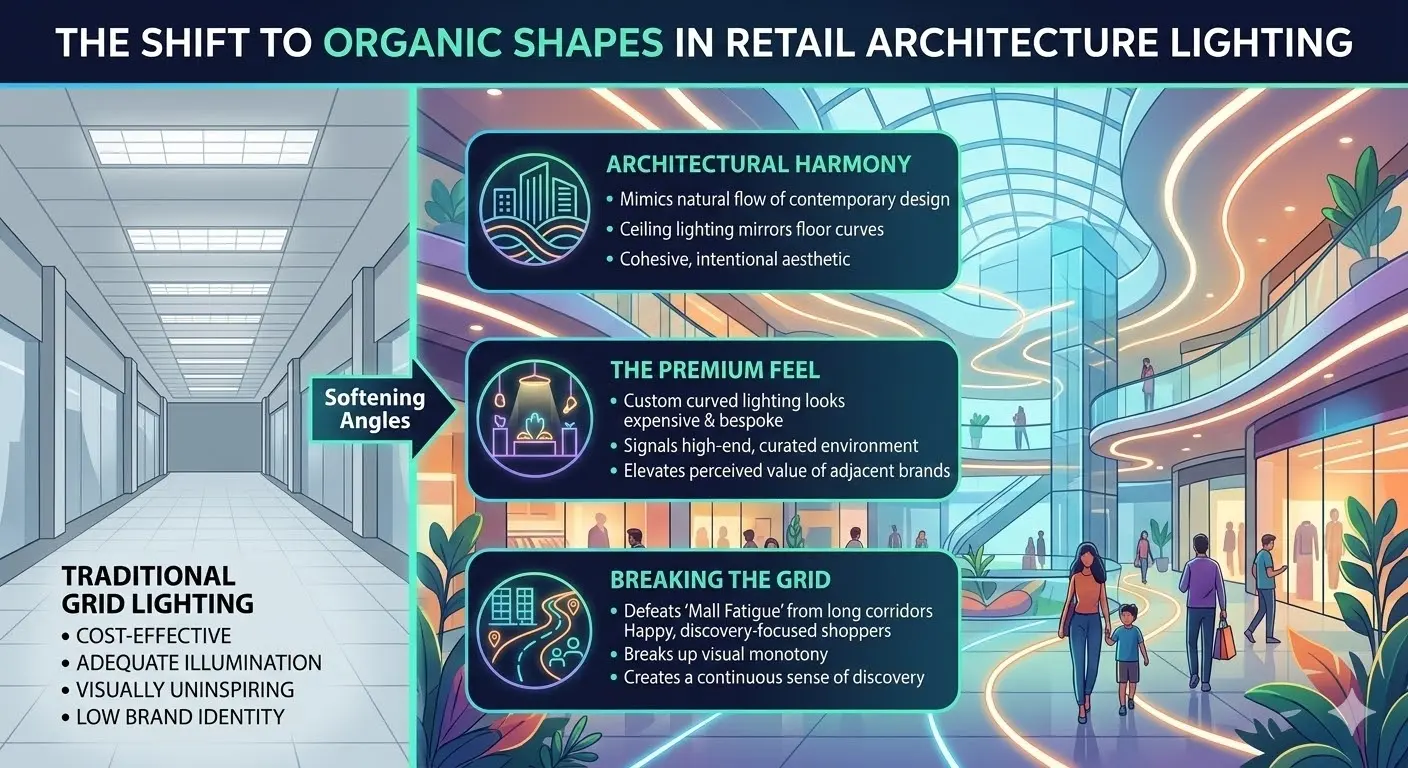
For decades, mall lighting was dominated by cost-effective but visually uninspiring straight fluorescent troffers or rigid linear LED runs. While these provided adequate illumination, they did little to elevate the brand identity of the shopping center itself.
Today, modern architecture heavily favors organic, sweeping curves. From the curvature of the mezzanine balconies to the layout of the floor tiles, rigid angles are being softened. Lighting must follow suit.
| Design Factor | Core Concept | Impact on Retail Environment |
| Architectural Harmony | Mimics the natural flow of contemporary building designs by mirroring the curves of walkways and floor layouts. | Creates a cohesive, highly intentional aesthetic that seamlessly blends with the building’s architecture. |
| The Premium Feel | Utilizes custom, bespoke curved shapes that appear visually expensive and carefully curated. | Signals a high-end environment to shoppers, directly elevating the perceived value of the surrounding retail brands. |
| Breaking the Grid | Disrupts the visual monotony of long, straight corridors that traditionally cause “mall fatigue.” | Re-energizes the space, alleviating shopper exhaustion and creating a continuous sense of discovery. |
Strategic Benefits of Curved Linear Lighting for Mall Corridors
Implementing curved lighting in high-traffic retail transition areas goes far beyond mere decoration. It serves highly functional, revenue-driving purposes.
1. Intuitive Wayfinding and Foot Traffic Flow
One of the primary challenges in mall management is guiding shoppers through the space efficiently while ensuring they pass by key tenant storefronts. Curved linear lighting for mall corridors acts as a subconscious visual guide.
- Leading the Eye: Human eyes are naturally drawn to light and flowing lines. A continuous, winding light fixture overhead naturally encourages shoppers to walk further down a corridor.
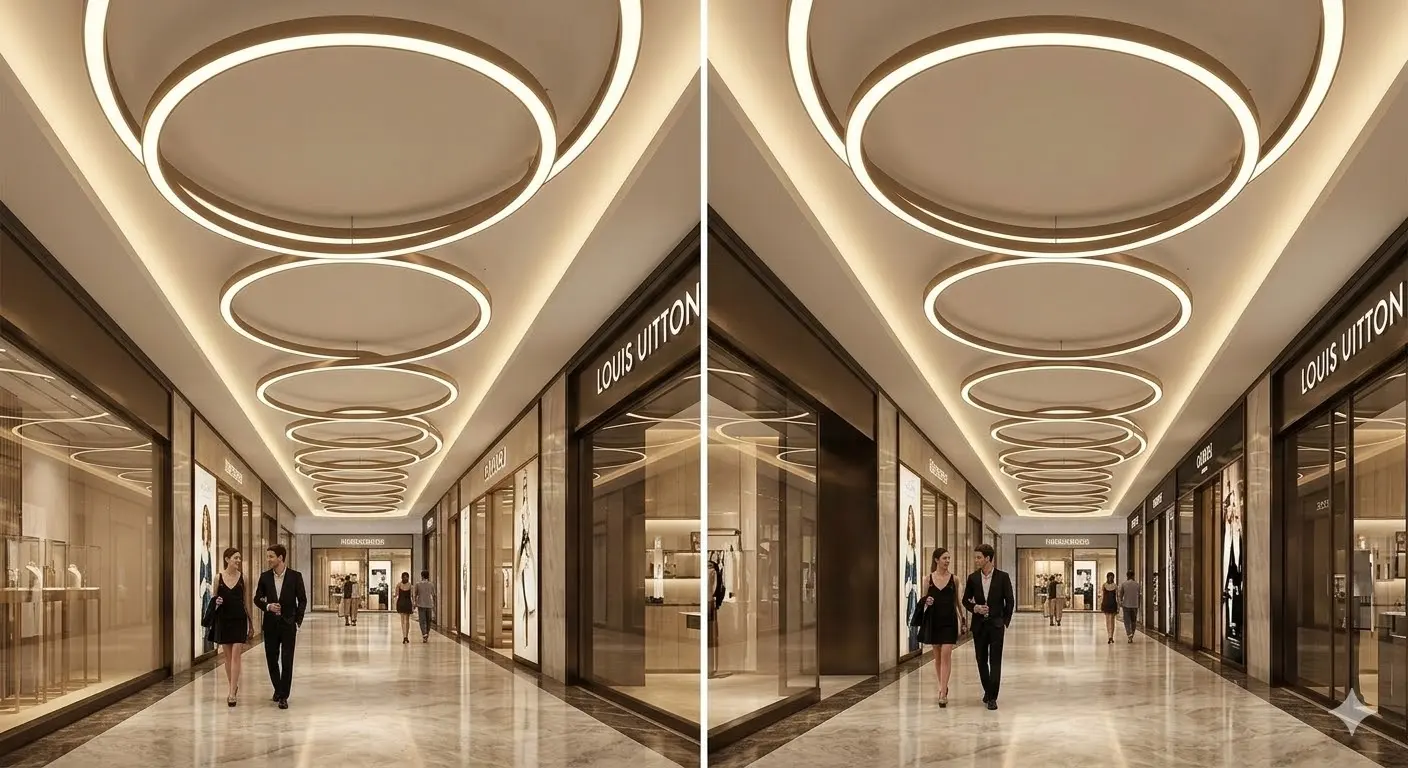
- Highlighting Intersections: Circular or sweeping curved fixtures can be strategically placed at corridor intersections or near escalator banks to draw attention to vertical transition points.
- Zone Delineation: Different curvatures or interlocking rings can subtly signal a transition from a high-energy fashion wing to a more relaxed dining or entertainment zone.
2. Enhancing Shopper Dwell Time
Retail psychology shows that comfortable, visually pleasing environments increase “dwell time” (the amount of time a customer spends in a mall). Increased dwell time directly correlates with higher spending. Soft, curved lighting reduces the harshness of the commercial environment, making the mall feel more like a welcoming hospitality space than a transactional warehouse.
3. Strengthening the Mall’s Master Brand
While individual retail tenants have their own strong branding, the mall itself must establish a overarching brand identity. Custom lighting installations act as functional art. A signature, serpentine lighting installation running the length of a main corridor can become a recognizable architectural feature, heavily photographed and shared on social media, reinforcing the mall’s brand presence.
Key Technical Specifications and Design Considerations
Specifying curved linear lighting for mall corridors requires a deep understanding of commercial lighting technology. These are not off-the-shelf products; they are highly engineered systems. To ensure the installation is both beautiful and reliable, designers must focus on several critical factors.
1. Seamless Extrusion and Continuous Lenses
The aesthetic appeal of a curved linear light is instantly ruined by visible dark spots, light leaks, or clunky metal joints.
- Precision Aluminum Profiling: High-quality fixtures use precision-rolled or extruded aluminum housings that maintain a perfectly consistent width and depth throughout the curve.
- Roll-Out Silicone Lenses: Instead of piecing together rigid plastic covers, premium curved lights utilize continuous, roll-out silicone or high-grade polycarbonate diffusers. This ensures a 100% seamless line of light, even on runs that span hundreds of feet down a corridor.
2. Advanced Control Systems and DALI Integration
A modern mall corridor cannot operate on a simple “on/off” switch. The lighting must adapt to the time of day, the amount of natural daylight entering through skylights, and specific event requirements.
- DALI Protocol: Integrating curved linear fixtures with DALI (Digital Addressable Lighting Interface) systems is essential. DALI allows for smooth, flicker-free dimming and individual fixture control.
- Daylight Harvesting: By using DALI sensors, the curved lighting near large skylights or glass entrances can automatically dim when natural sunlight is abundant, saving immense amounts of energy.
- Zoning: Facility managers can group different sections of the curved corridor lighting into zones, allowing for customized brightness levels for evening cleaning crews versus peak Saturday shopping hours.
3. Color Temperature (CCT) and Color Rendering (CRI)
The light in the corridor directly interacts with the light spilling out from the tenant storefronts.
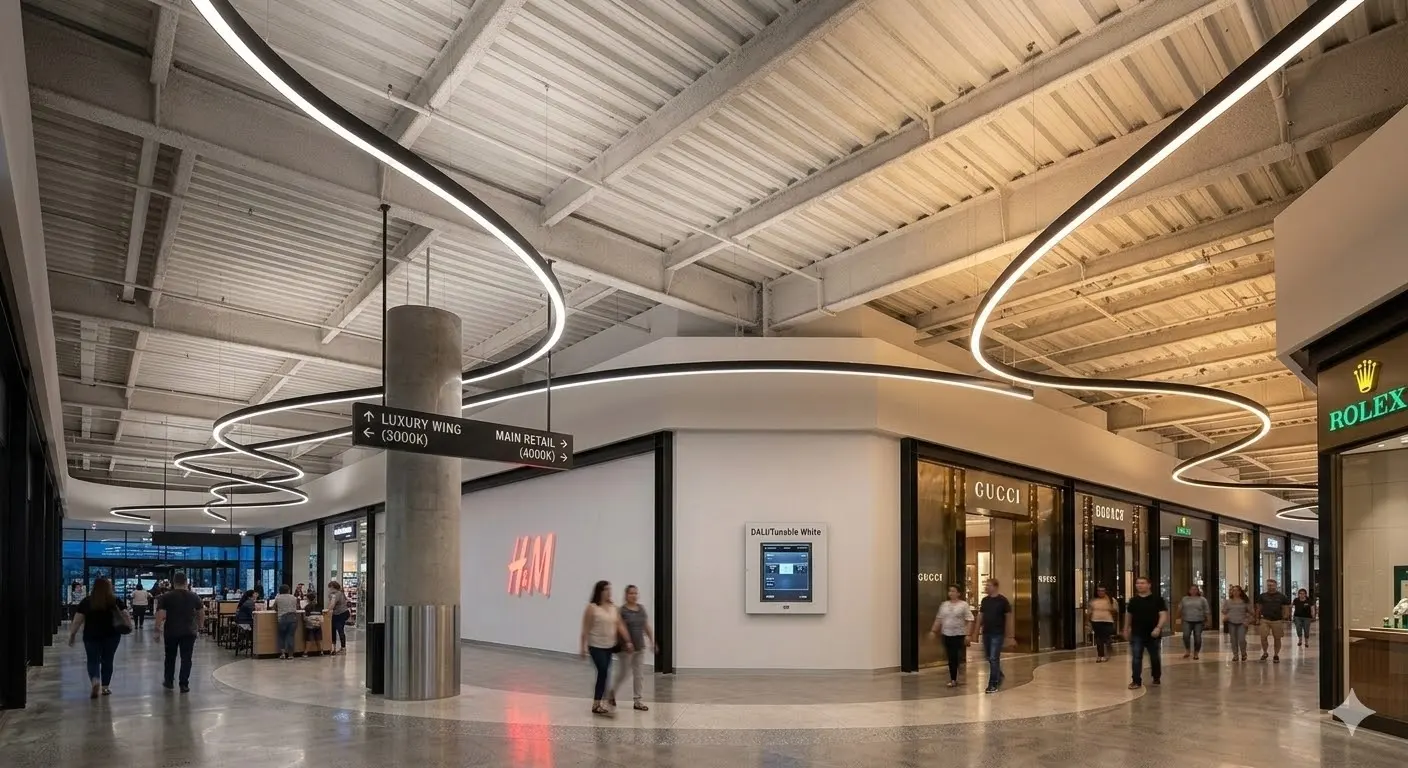
- Optimal CCT: For general mall corridors, a CCT of 3500K to 4000K (neutral to cool white) is often preferred to keep the environment feeling crisp, clean, and energizing. However, high-end luxury wings may opt for a warmer 3000K to create an intimate, boutique atmosphere.
- High CRI: A Color Rendering Index (CRI) of 90+ is highly recommended. Even though the corridor isn’t displaying merchandise directly, high CRI ensures that shoppers’ skin tones look natural and healthy, which significantly improves their mood and willingness to try on clothing in nearby stores.
Installation Methods for Mall Environments
The structural reality of a shopping mall ceiling dictates how these fixtures can be installed. Curved linear lighting for mall corridors generally falls into three installation categories, each offering a distinct visual effect.
Suspended (Pendant) Installation
Hanging the curved fixtures using aircraft cables is incredibly popular in malls with high, exposed, or varied-height ceilings.
- Visual Impact: Suspended lights act as a lowered “visual ceiling,” making massive, cavernous mall corridors feel more human-scaled and intimate.
- Up/Down Lighting: Suspended curved profiles often offer bidirectional lighting, casting functional light down onto the walkway while washing the architectural ceiling above with soft, indirect illumination.
Recessed Installation
For malls with low clearance or clean, minimalist architectural designs, recessed curved lighting is the go-to solution.
- Flush Finish: The fixture is embedded directly into the drywall or drop ceiling, leaving only the seamless illuminated curve visible.
- Modern Aesthetic: This creates an ultra-sleek, futuristic look, often used in newly built tech-forward retail centers. It requires precise drywall coordination during the construction phase.
Surface Mounted
When ceiling voids do not allow for recessing, and suspension is not desired, surface mounting directly to the solid ceiling is required. While less dramatic than suspended installations, it provides a clean, defining line of light that is easy to access for maintenance.
Maintenance and Sustainability in High-Traffic Areas
Shopping malls operate 12 to 14 hours a day, 7 days a week. Lighting failures in a main corridor are highly visible and negatively impact the shopper experience.
- Long-Life LED Engines: Premium curved linear lights utilize top-tier LED boards with L80/B10 ratings extending beyond 50,000 hours, drastically reducing the frequency of maintenance lift rentals.
- Driver Accessibility: Because the fixtures themselves may be difficult to reach over busy escalators or mall kiosks, remote driver placement is a crucial design strategy. Placing the LED drivers in accessible ceiling hatches or electrical closets ensures that maintenance teams can service the system without disrupting foot traffic.
- Energy Efficiency: Despite their high light output, modern extruded aluminum linear lights offer excellent thermal management, which prolongs the life of the LEDs and maintains exceptional lumens-per-watt efficacy, keeping the mall’s operational overhead low.
The Future of Retail Corridor Lighting
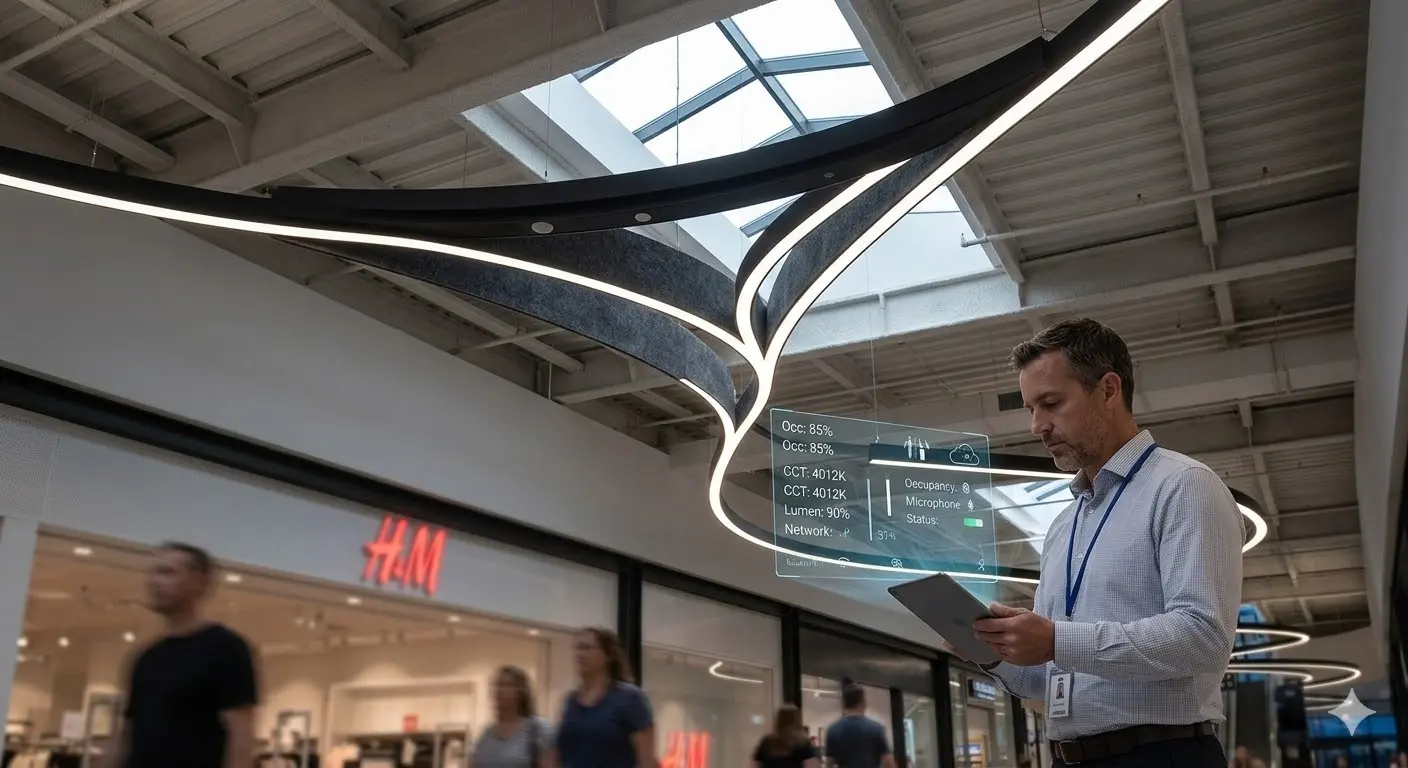
As we look toward the future of retail design, the integration of form and function will only deepen. Curved linear lighting for mall corridors will evolve from static architectural features into dynamic, interactive systems.
We anticipate a rise in tunable white technology seamlessly integrated into these curved fixtures, allowing the entire mood of a mall corridor to shift from a bright, energizing morning atmosphere to a warm, relaxing evening ambiance. Furthermore, as acoustic management becomes a priority in loud, echoing shopping centers, the integration of sound-absorbing materials directly onto the outer profiles of these sweeping light fixtures will become a standard specification.
By investing in high-quality, continuous curved lighting, property developers and retail architects are not just illuminating a walkway; they are actively shaping the customer journey, reinforcing their brand identity, and ensuring their commercial spaces remain relevant and engaging for years to come.

