



Smart Gym Lighting Design: Enhancing User Experience With Tunable & Sensor-Based Lighting
By Vincent
Why Smart Gym Lighting Design Matters in Modern Fitness Spaces
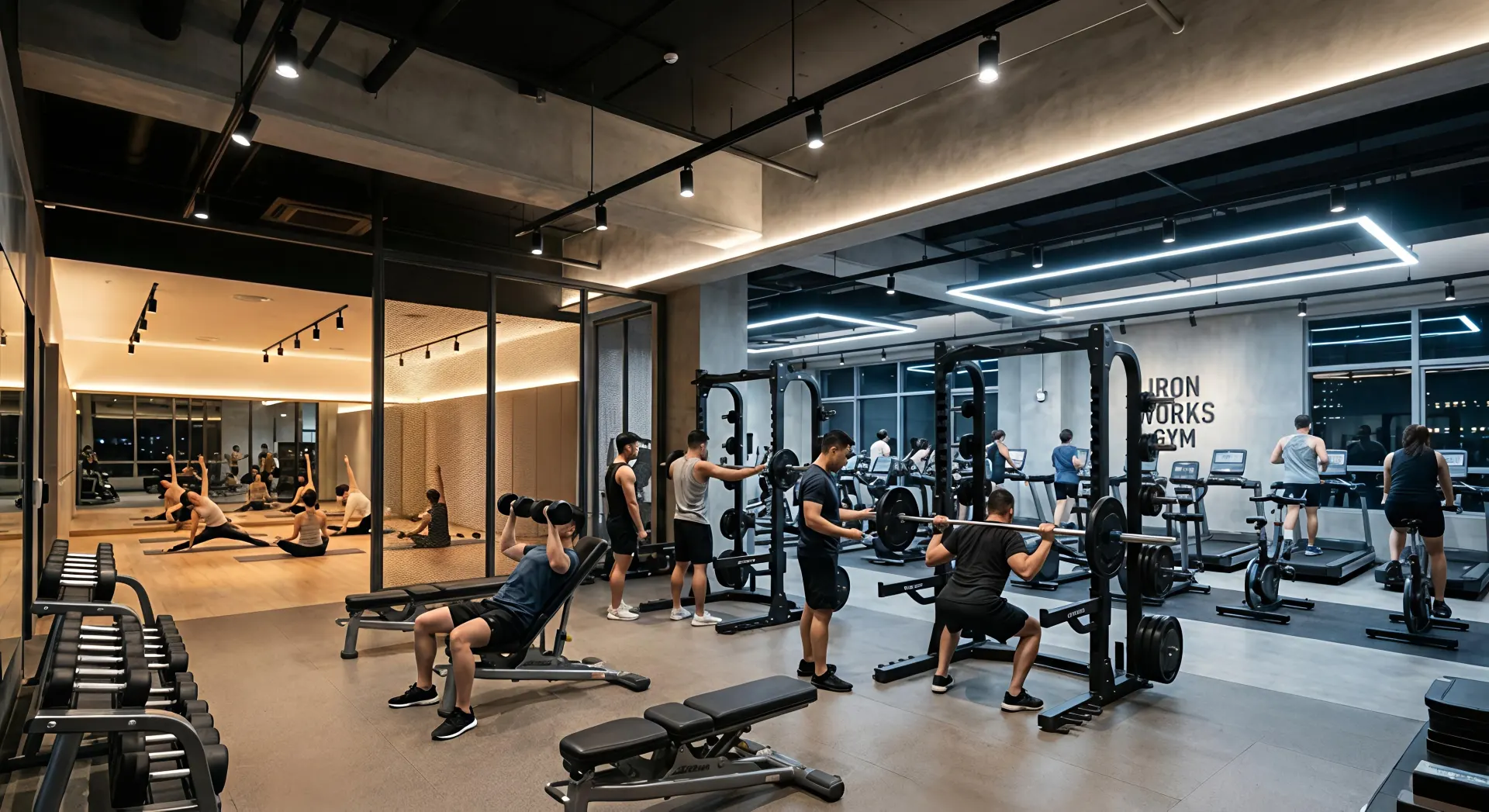
In today’s competitive fitness industry, lighting is no longer just a functional requirement—it is a critical part of the overall user experience. A well-executed Smart Gym Lighting Design strategy can significantly improve how users feel, perform, and interact within a space.
Traditional gym lighting often suffers from several limitations:
- Uniform brightness with no zoning logic
- Fixed color temperature regardless of activity
- Glare issues that affect visual comfort
- High energy consumption due to lack of automation
These shortcomings can negatively impact user satisfaction and retention. In contrast, modern Smart Gym Lighting Design integrates advanced lighting technologies with spatial awareness, creating environments that are both functional and emotionally engaging.
How Lighting Impacts Fitness and Wellness Spaces
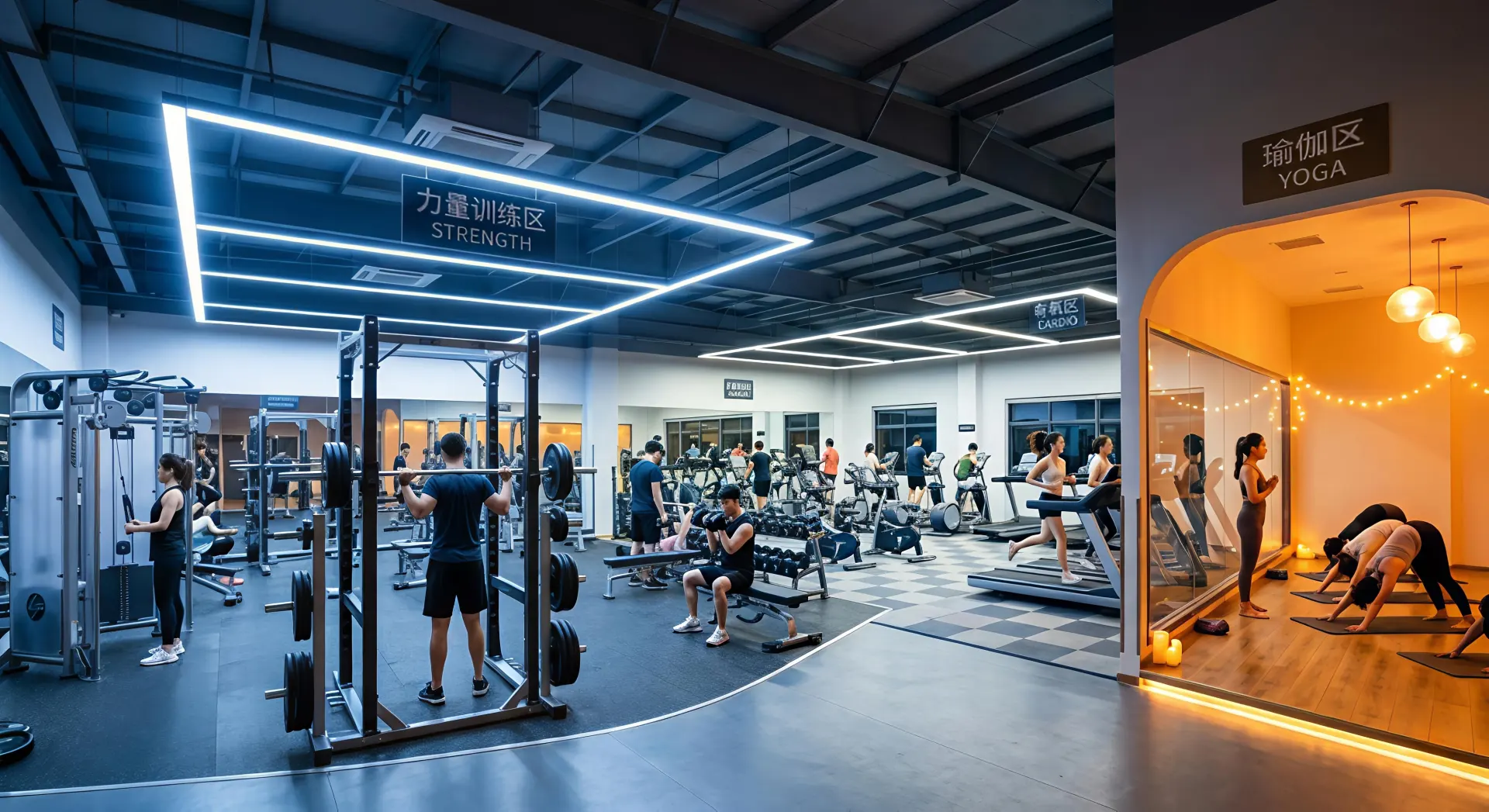
A well-designed lighting plan must follow zone-based logic, adapting to different activities.
Lighting Requirements by Functional Zone
| Zone | Lighting Needs | Recommended Settings |
|---|---|---|
| Cardio / Strength | High brightness, focus, safety | 4000K–6000K, high CRI, uniform lighting |
| Functional Training | Flexibility, adaptability | Dimmable, adjustable beam angles |
| Yoga / Relaxation | Calm atmosphere | 2700K–3500K, soft, low brightness |
High-Intensity Training Areas
These zones require:
- Bright, uniform lighting
- Cooler color temperatures
- Minimal shadows
This setup improves visibility and enhances energy levels.
Flexible Training Spaces
Here, lighting must adapt to different workouts:
- Adjustable brightness for class variations
- Focused beam angles for training zones
Track lighting systems are especially effective due to their flexibility.
Yoga and Recovery Areas
Lighting should support relaxation:
- Warm tones (2700K–3500K)
- Low intensity
- Glare-free distribution
Lighting in these spaces acts as a mood-setting tool rather than just illumination.
Creating Dynamic Atmospheres with Tunable Lighting
One of the most powerful elements in modern lighting systems is tunable white technology. This allows users or operators to adjust color temperature and brightness dynamically.
With tunable lighting, gyms can:
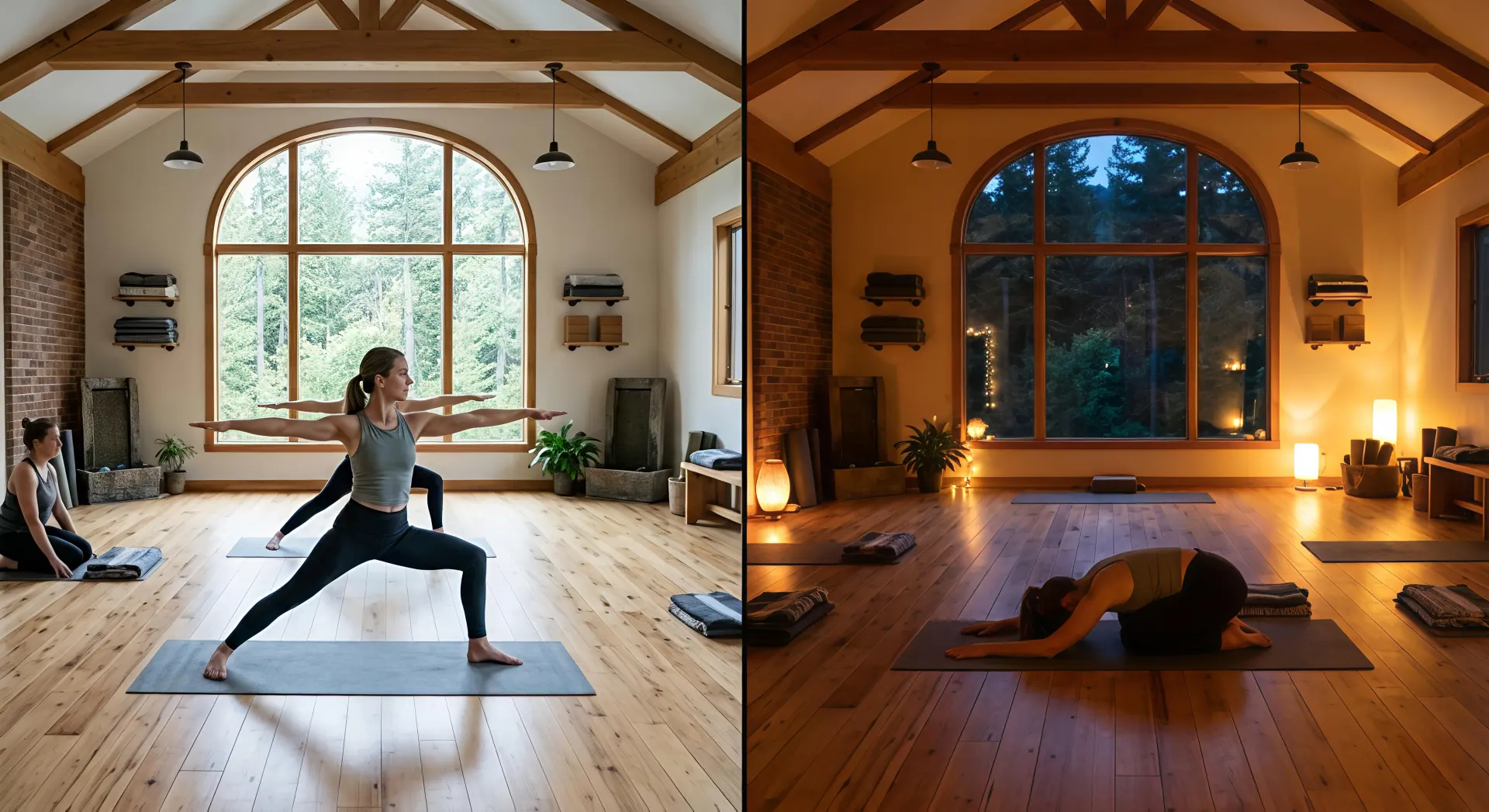
- Shift from energizing cool light in the morning to warmer tones in the evening
- Adapt lighting based on different classes (HIIT vs. yoga)
- Enhance the emotional connection between users and the space
For example:
- Morning sessions → Cool white light to boost energy
- Evening yoga → Warm dimmed lighting for relaxation
These dynamic adjustments are a core component of Smart Gym Lighting Design, enabling spaces to evolve throughout the day.
From a product perspective, tunable track lights and linear fixtures with DALI or DMX control systems are commonly used to achieve this level of flexibility.
Motion Sensors and Smart Control for Energy Efficiency
Energy efficiency is another major advantage of intelligent lighting systems. By integrating motion sensors and occupancy detection, gyms can significantly reduce unnecessary energy consumption.
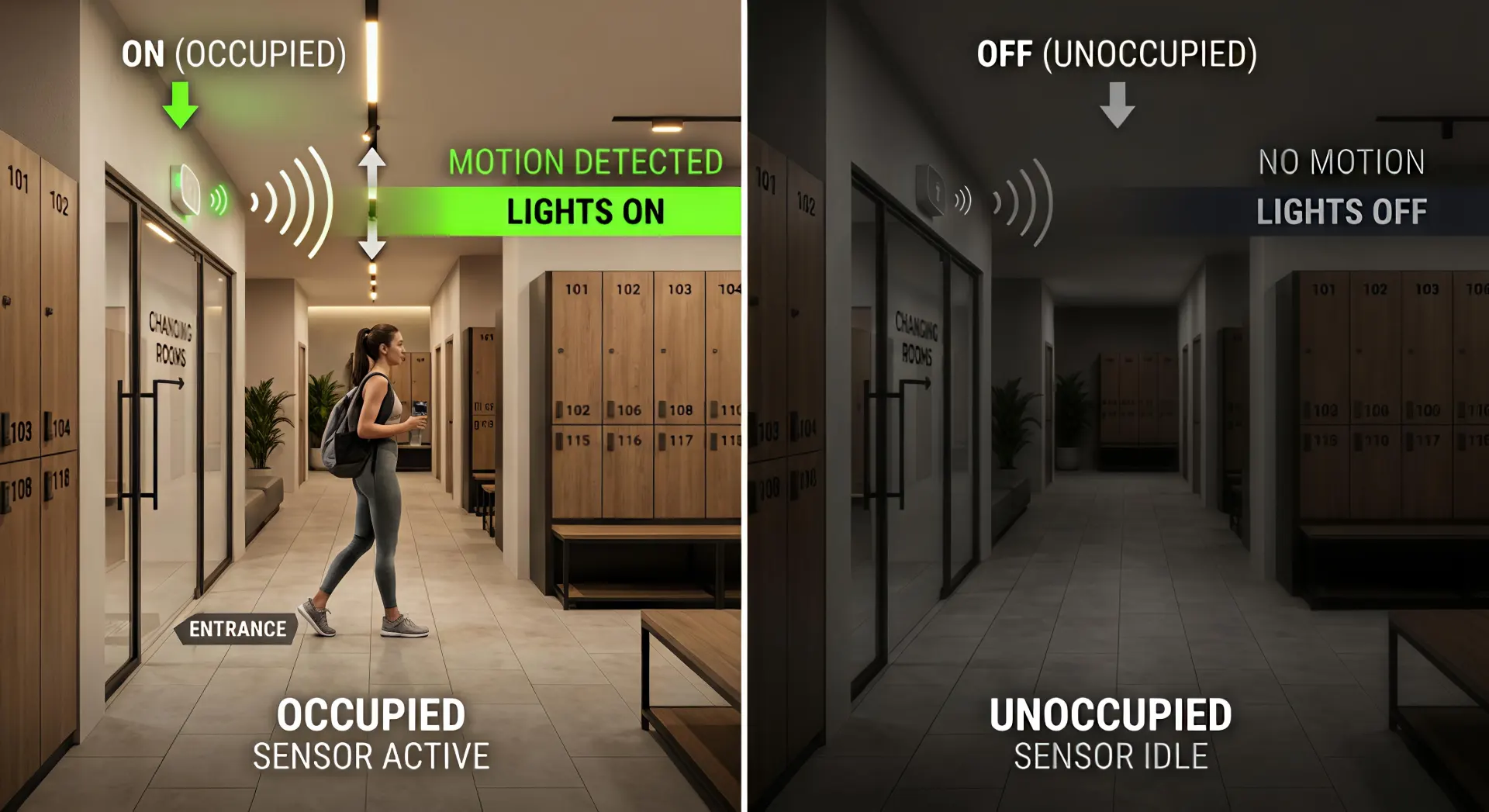
Typical applications include:
- Locker rooms
- Corridors
- Private training rooms
Lights automatically turn on when motion is detected and switch off when spaces are unoccupied. This not only saves energy but also enhances operational convenience.
According to the U.S. Department of Energy, lighting can account for a substantial portion of energy use in commercial buildings. Implementing sensor-based systems is therefore a key step toward sustainability.
Incorporating sensor technology into Smart Gym Lighting Design ensures both efficiency and intelligence.
Smart Lighting Control Systems for Fitness Facilities
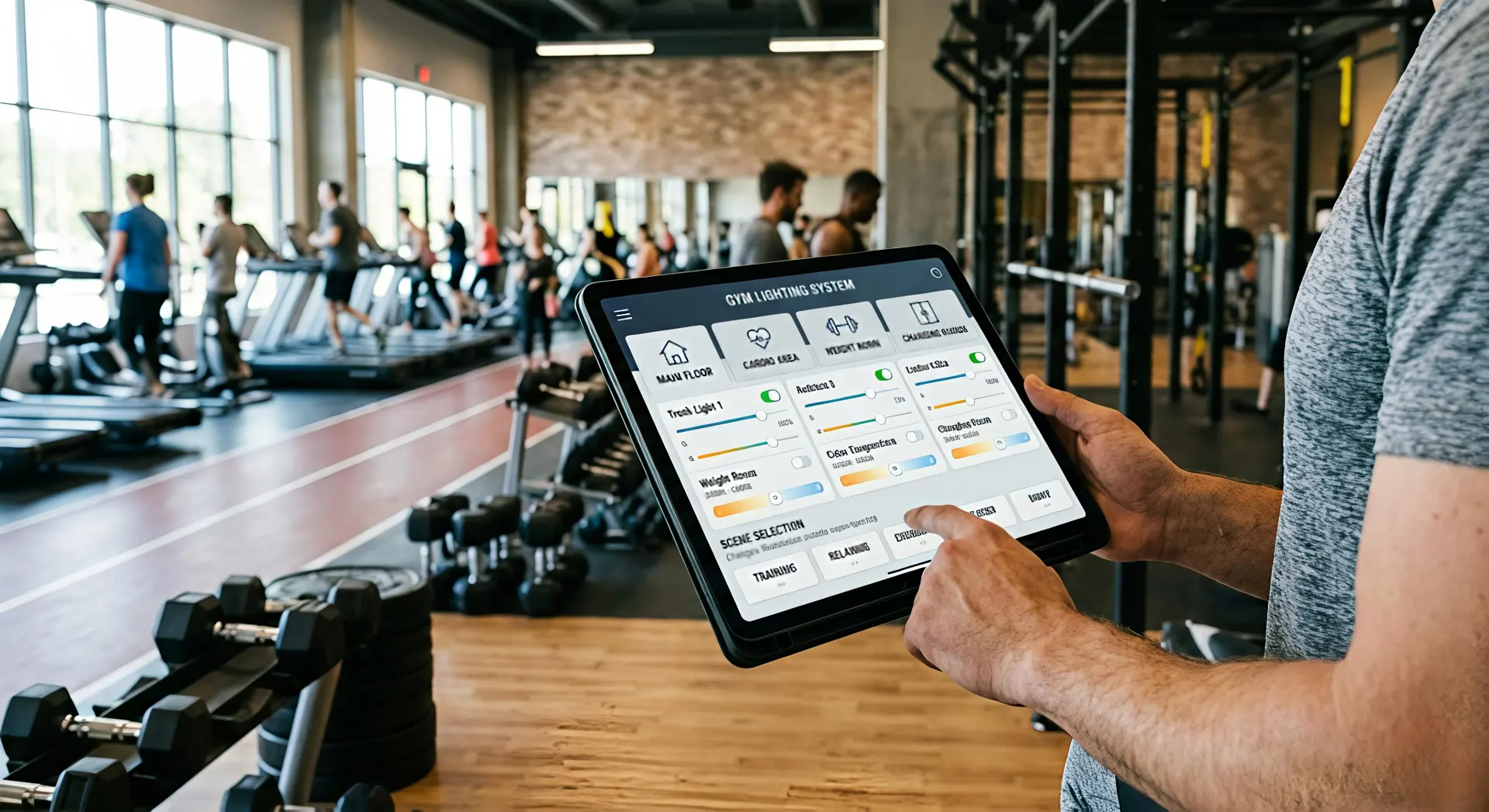
Behind every intelligent lighting setup is a control system that determines how fixtures behave. Different protocols offer varying levels of flexibility and cost.
DMX Control Systems
Ideal for high-end gyms and boutique fitness studios, DMX allows dynamic lighting scenes and real-time adjustments.
DALI Systems
A stable and widely used solution for commercial environments, offering precise control and scalability.
0–10V Dimming
A cost-effective option suitable for projects with basic dimming requirements.
Each system plays a role in a comprehensive Smart Gym Lighting Design, and the right choice depends on project scale, budget, and desired functionality.
Recommended Lighting Fixtures for Gym and Yoga Spaces
Selecting the right fixtures is essential for implementing an effective lighting design.
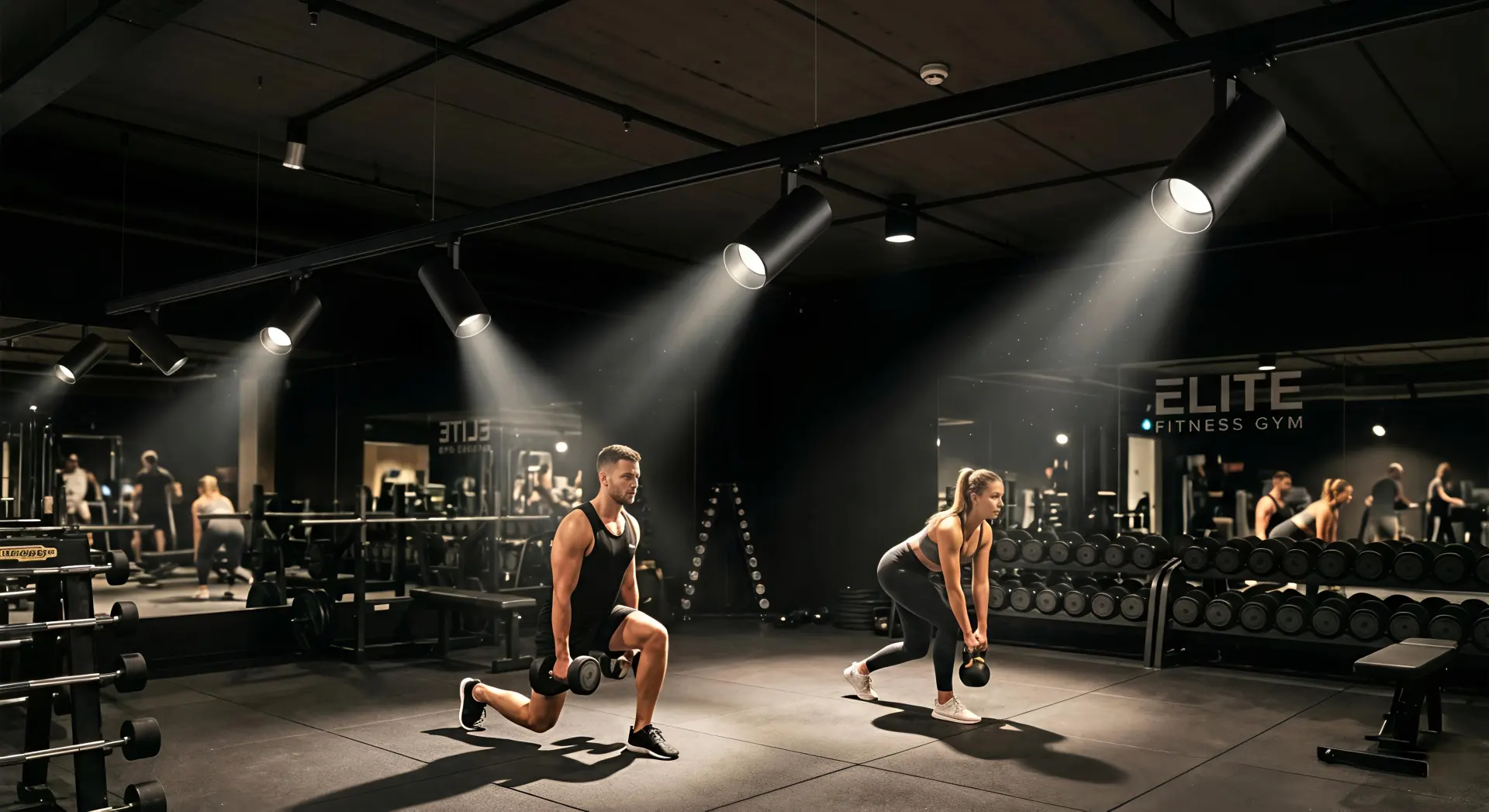
Track Lighting Systems
Track lights are one of the most versatile solutions for gym environments. Key advantages include:
- Adjustable beam angles for different zones
- Flexible positioning and easy installation
- Compatibility with smart control systems
Advanced track lights with anti-glare design and tunable features are particularly suitable for modern fitness spaces.
Linear Lighting
Ideal for general illumination, linear lights provide clean and uniform lighting across large areas.
Downlights
Best used in reception areas, corridors, and auxiliary spaces, offering a minimalist and integrated appearance.
A well-planned fixture combination enhances both functionality and aesthetics in Smart Gym Lighting Design.
Human-Centric Lighting and Industry Standards
Modern lighting design increasingly focuses on human-centric principles—aligning artificial lighting with human biological rhythms.
Organizations such as the International WELL Building Institute emphasize the importance of lighting in improving health and well-being. Similarly, the Illuminating Engineering Society provides guidelines for lighting quality and performance.
In addition, flicker control is a critical factor. Standards from the IEEE help ensure lighting systems are safe and comfortable for prolonged use.
By aligning with these standards, Smart Gym Lighting Design can deliver not only visual comfort but also measurable health benefits.
How to Choose the Right Smart Gym Lighting System
When planning a lighting system for a gym or yoga studio, several factors should be considered:
- Space size and layout
- Type of activities
- Control requirements (basic vs. advanced)
- Budget constraints
For example:
- Small gyms → 0–10V dimming + basic track lighting
- Mid-sized facilities → DALI systems with zoned control
- High-end studios → DMX + fully dynamic lighting scenes
A tailored Smart Gym Lighting Design approach ensures optimal performance and return on investment.
Conclusion: The Future of Fitness Lighting
In conclusion, Smart Gym Lighting Design is becoming a key competitive advantage for modern fitness facilities. By integrating tunable lighting, sensor-based control, and advanced fixture solutions, gyms can create adaptive environments that enhance user satisfaction while reducing operational costs.
As the fitness industry continues to evolve, lighting will play an increasingly important role in defining space quality and brand identity.
Call to Action
If you are planning a gym or upgrading an existing facility, now is the time to invest in a smarter lighting solution.
- Get a customized lighting design for your fitness project
- Request detailed product specifications
- Contact us for a tailored Smart Gym Lighting Design solution

