



The Bad Lighting Retail Impact: How Poor Lighting Reduces Sales and Customer Engagement
By Powerstar
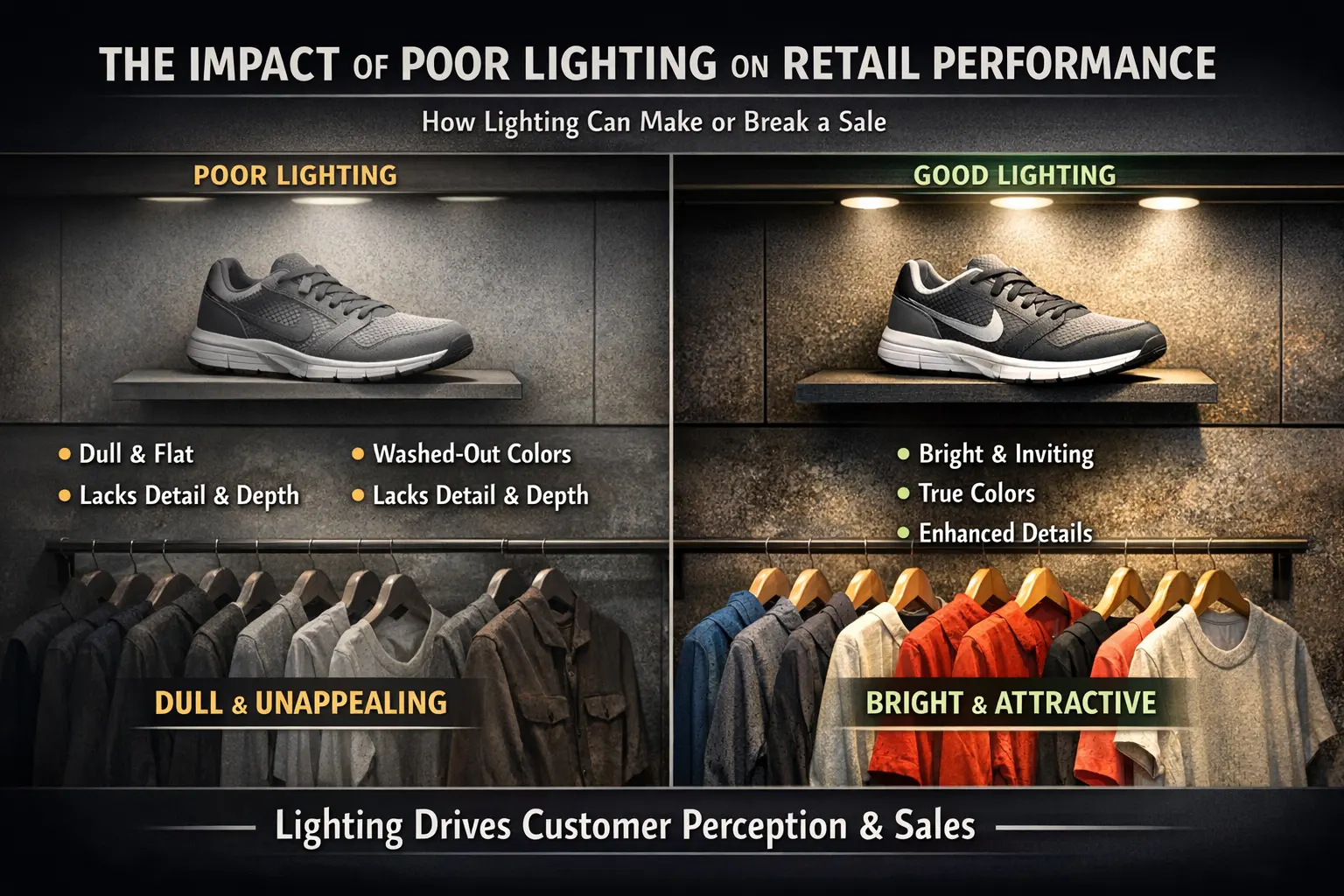
The bad lighting retail impact is real and measurable. Poor lighting can reduce product appeal, distort colors, create discomfort, and ultimately discourage customers from making purchases. Even well-designed stores and high-quality merchandise can underperform if lighting fails to support the environment.
Retail success is no longer driven by product quality alone. In today’s experience-focused market, how products are presented plays a critical role in influencing customer behavior. Among all visual elements in a store, lighting is one of the most powerful—but often underestimated—factors.
Understanding how poor lighting affects retail performance is the first step toward creating spaces that attract, engage, and convert customers more effectively.
How Lighting Influences Customer Behavior
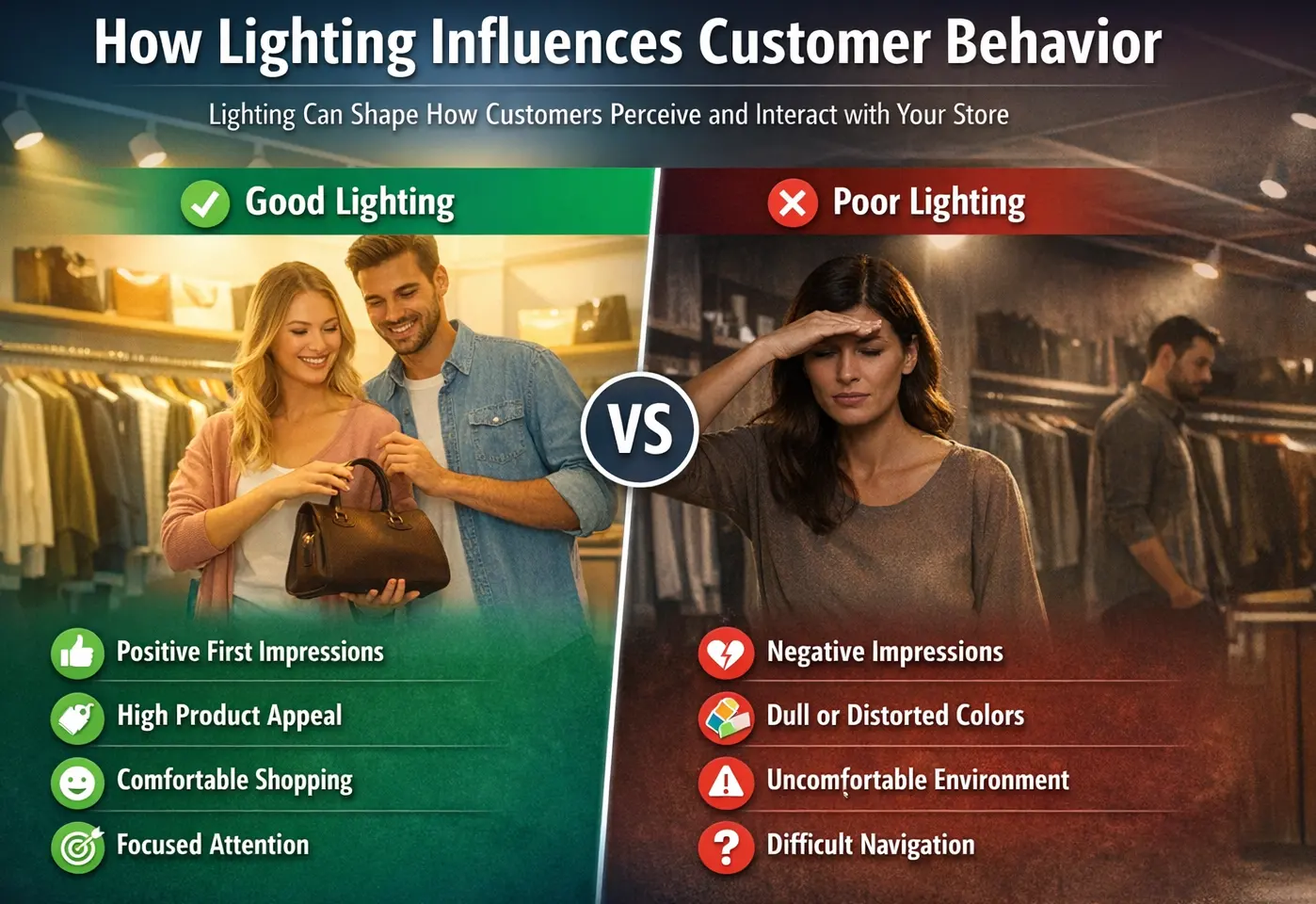
Lighting is not just a functional necessity—it directly shapes how customers perceive a space and how they behave within it.
When customers enter a store, lighting immediately affects:
- First impressions of the brand
- Perceived product quality
- Comfort and willingness to stay
- Navigation and attention focus
Bright, well-balanced lighting can make a store feel inviting and organized. In contrast, poorly designed lighting can create confusion, discomfort, or even distrust.
Studies in retail psychology consistently show that customers are more likely to spend time—and money—in environments that feel visually comfortable and engaging. This is where the bad lighting retail impact becomes critical: it silently influences decisions without customers even realizing it.
The Most Common Lighting Problems in Retail
Many retail spaces suffer from recurring lighting issues that directly affect sales performance. Understanding these problems helps identify where improvements are needed.
Uneven Illumination
Patchy lighting creates areas that are too bright and others that are too dark. This disrupts visual flow and makes it harder for customers to explore the store comfortably.
Glare and Visual Discomfort
High glare levels can cause eye strain and fatigue. Customers may leave sooner simply because the environment feels uncomfortable.
Poor Color Rendering
If lighting distorts colors, products will not appear as intended. This is especially problematic in fashion, cosmetics, and food retail, where accurate color perception is essential.
Lack of Lighting Layers
Stores that rely only on general lighting often look flat and uninteresting. Without contrast or focal points, products fail to stand out.
Outdated Lighting Systems
Old lighting technologies can result in inconsistent brightness, flickering, and inefficient energy use—all of which negatively affect the customer experience.
Each of these issues contributes to the overall bad lighting retail impact, reducing both engagement and sales potential.
Why Poor Lighting Makes Products Less Attractive
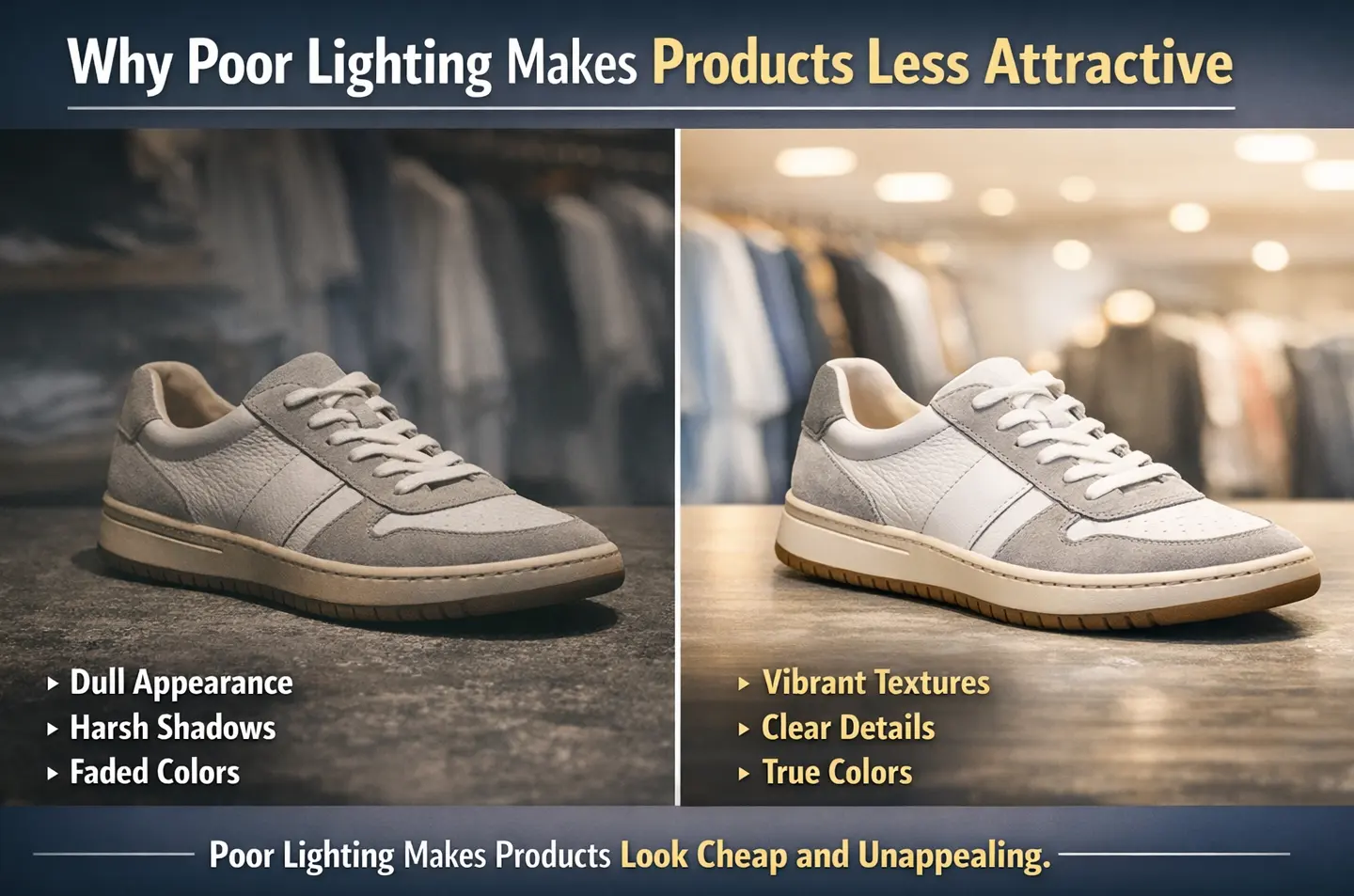
Retail is fundamentally visual. Customers often make purchase decisions based on how products look under store lighting.
Poor lighting can:
- Wash out product textures and details
- Create unwanted shadows
- Reduce contrast and depth
- Make materials appear cheaper than they are
For example, a premium sneaker displayed under flat, low-quality lighting may lose its visual appeal. Similarly, clothing under poor lighting may appear dull or inaccurately colored, leading to hesitation or rejection.
When products do not look their best, customers are less likely to perceive them as valuable. This directly affects conversion rates and average transaction value.
The Impact of Lighting on Store Atmosphere
Lighting plays a central role in shaping the overall atmosphere of a retail space. It communicates brand identity and sets the emotional tone of the environment.
Poor lighting can make a store feel:
- Dull and uninviting
- Disorganized or outdated
- Harsh and uncomfortable
- Inconsistent across different areas
In contrast, well-designed lighting creates a cohesive and intentional environment. It helps reinforce brand positioning—whether that is premium, modern, relaxed, or energetic.
The bad lighting retail impact extends beyond individual products. It affects how customers perceive the entire store, influencing whether they choose to stay, explore, or leave.
How Poor Lighting Reduces Dwell Time
Dwell time—the amount of time customers spend in a store—is closely linked to sales performance. The longer customers stay, the more likely they are to make purchases.
Poor lighting reduces dwell time in several ways:
- Visual discomfort leads to quicker exits
- Confusing layouts caused by uneven lighting reduce exploration
- Lack of focal points limits engagement
If customers feel uneasy or uninterested, they will not spend time browsing. This shortens the shopping journey and reduces opportunities for additional purchases.
In this way, the bad lighting retail impact directly affects not just individual sales, but overall store performance.
The Hidden Cost of Poor Lighting in Retail
Many retailers focus on rent, staffing, and inventory costs, but overlook the financial impact of lighting. Poor lighting can quietly reduce revenue over time.
Hidden costs include:
- Lower conversion rates
- Reduced average purchase value
- Decreased customer retention
- Weak brand perception
These effects are often gradual and difficult to measure directly, which is why they are frequently ignored. However, over time, they can significantly impact profitability.
Investing in better lighting is not just an aesthetic upgrade—it is a strategic business decision.
How Better Lighting Improves Sales Performance
Improving lighting design can have a direct and positive impact on retail sales.
Key benefits include:
Enhanced Product Visibility
Proper lighting highlights product details, textures, and colors, making items more appealing.
Stronger Visual Hierarchy
Accent lighting guides customer attention to key products and promotional areas.
Improved Customer Comfort
Low-glare, well-balanced lighting creates a more pleasant shopping environment.
Increased Dwell Time
An inviting atmosphere encourages customers to stay longer and explore more.
Better Brand Perception
Consistent and high-quality lighting reinforces a professional and modern brand image.
By addressing the bad lighting retail impact, retailers can unlock these benefits and improve overall performance.
Practical Ways to Fix Poor Retail Lighting
Improving retail lighting does not always require a complete system overhaul. In many cases, targeted adjustments can deliver significant results.
Use Layered Lighting Design
Combine ambient, accent, and task lighting to create depth and visual interest.
Improve Uniformity
Ensure consistent brightness across the space to support comfortable navigation.
Reduce Glare
Choose fixtures with appropriate optics and low UGR ratings to minimize discomfort.
Upgrade to LED Solutions
Modern LED systems offer better efficiency, consistency, and control.
Add Flexibility
Track lighting and adjustable fixtures allow easy adaptation to changing layouts and displays.
These strategies help transform lighting from a problem into a performance driver.
Conclusion
Lighting is one of the most influential yet overlooked factors in retail success. The bad lighting retail impact goes far beyond aesthetics—it affects customer perception, behavior, and ultimately sales performance.
Poor lighting can make products less attractive, reduce dwell time, and weaken brand identity. Over time, these effects translate into lost revenue and missed opportunities.
On the other hand, well-designed lighting enhances visibility, creates atmosphere, and guides customer attention. It turns a retail space into an engaging and effective selling environment.
For retailers looking to stay competitive, improving lighting is not optional—it is essential.

