



How to Install Linear Track Lighting Kits in Commercial Spaces: A Complete Professional Guide
By Vincent
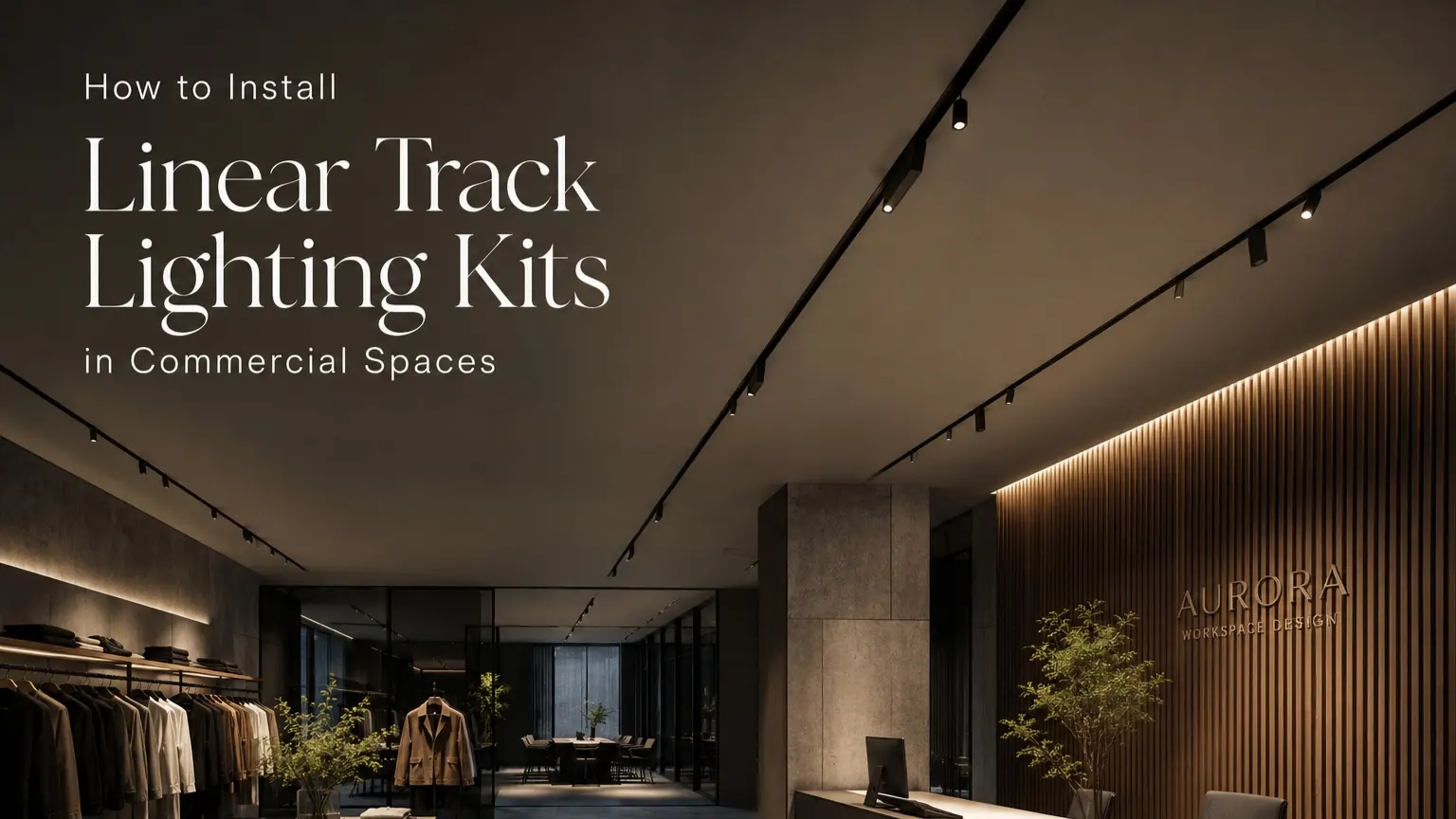
In today’s commercial interiors, lighting is no longer just about brightness. From premium offices and boutique retail stores to automotive showrooms and art galleries, designers are looking for lighting systems that combine flexibility, visual comfort, and architectural aesthetics. This is exactly why linear track lighting kits have become increasingly popular in modern commercial projects.
Traditional suspended linear fixtures create clean visual lines but lack flexibility once installed. Conventional track spotlights offer adjustable positioning, yet they often produce uneven lighting and uncomfortable glare. Modern linear track systems bridge that gap by combining the flexibility of track lighting with the seamless illumination of linear fixtures.
With modular components, easy installation, and smart control compatibility, these systems are now widely used in retail, hospitality, office, and gallery environments where lighting performance directly impacts customer experience and spatial atmosphere.
This guide explains how to properly install and configure modern linear track lighting systems in commercial spaces, including electrical compatibility, layout planning, installation methods, smart dimming integration, and common troubleshooting issues.
Understanding Linear Track Lighting Systems and Modular Components
Before installation begins, it is important to understand what is included in a typical modular track lighting system.
Most commercial-grade linear lighting track systems include:
| Component | Function |
|---|---|
| Track Rail | Provides structural support and power distribution |
| Linear Fixture | Main LED lighting module |
| Driver | Converts and regulates power |
| Connector | Joins multiple track sections |
| Suspension Kit | Used for pendant installations |
| End Caps | Finishes the track system |
| Mounting Accessories | Supports surface, recessed, or suspended installation |
Depending on the project requirements, the system may also include:
- Adjustable track spotlights
- Anti-glare accessories
- DALI dimming drivers
- Smart wireless controls
- Emergency backup modules
Commercial lighting designers often combine linear lighting with accent spotlights to create layered illumination throughout the space.
For technical compatibility standards, many contractors reference resources from the National Electrical Manufacturers Association (NEMA) when selecting commercial track systems.
Preparing Commercial Track Lighting Systems Before Installation
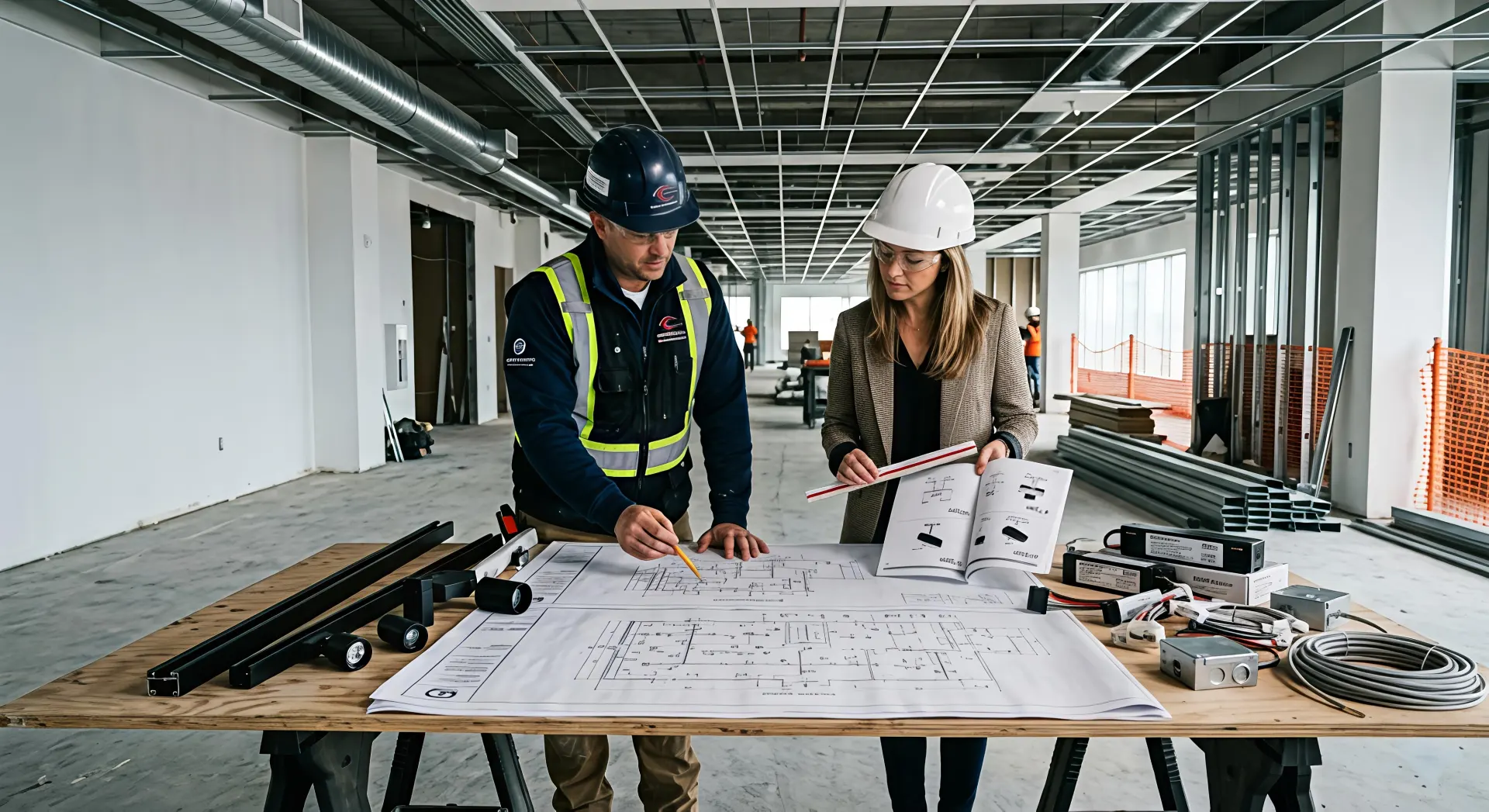
Proper preparation is critical for long-term system stability and lighting performance.
Before any fixtures are mounted, installers should verify:
- Track compatibility
- Electrical load capacity
- Ceiling structure
- Driver placement
- Smart control requirements
Failing to check these factors can lead to flickering, overheating, dimming failures, or expensive rework later.
Identifying H-Type, J-Type, and L-Type Track Systems
One of the most common installation mistakes involves incompatible track adapters.
Commercial track lighting systems are generally available in:
- H-Type (Halo)
- J-Type (Juno)
- L-Type (Lightolier)
Although they may look similar, each system uses different:
- Copper conductor spacing
- Locking structures
- Electrical configurations
Installing the wrong adapter can damage both the fixture and the track.
In larger commercial projects, 3-circuit track systems are often used to independently control different lighting zones such as:
- Retail displays
- Walkways
- Feature walls
- Reception areas
Electrical Load Planning for LED Linear Track Fixtures
Although LED systems are energy efficient, LED drivers are considered non-linear electrical loads.
This means they generate high inrush current during startup.
To maintain electrical safety and system stability:
- Total operating load should remain below 80% of circuit capacity
- Driver ventilation should be properly planned
- Surge protection is recommended for large projects
In markets such as Australia and Europe, contractors also need to verify compliance certifications such as:
- SAA
- RCM
- CE
- RoHS
For additional commercial lighting safety guidance, installers can also review recommendations from the International Association of Lighting Designers (IALD).
Planning Linear Lighting Layouts for Retail and Office Spaces
Lighting placement directly affects both visual comfort and commercial presentation.
In modern retail environments, proper track positioning improves:
- Product visibility
- Customer attention
- Spatial balance
- Overall ambiance
Recommended Distance Between Track Lights and Walls
For wall washing or vertical illumination applications, track systems are typically installed:
60–90 cm from the wall
This distance helps create smooth and even wall lighting.
If the fixtures are installed too close to the wall:
- Hot spots may appear
- Glare becomes more noticeable
If installed too far away:
- Vertical illumination becomes uneven
- The wall loses visual depth
Designing Retail Shelf Lighting with Architectural Track Systems
In supermarkets and retail stores, linear track fixtures should generally run parallel to shelving systems rather than crossing them perpendicularly.
This approach creates:
- More consistent illumination
- Better product visibility
- Cleaner visual rhythm throughout the space
Continuous lighting often feels more premium than isolated bright spots.
Choosing Anti-Glare Linear Lighting for Commercial Interiors
Modern commercial spaces increasingly prioritize visual comfort.
This is especially important in:
- Offices
- Galleries
- Luxury retail
- Hospitality environments
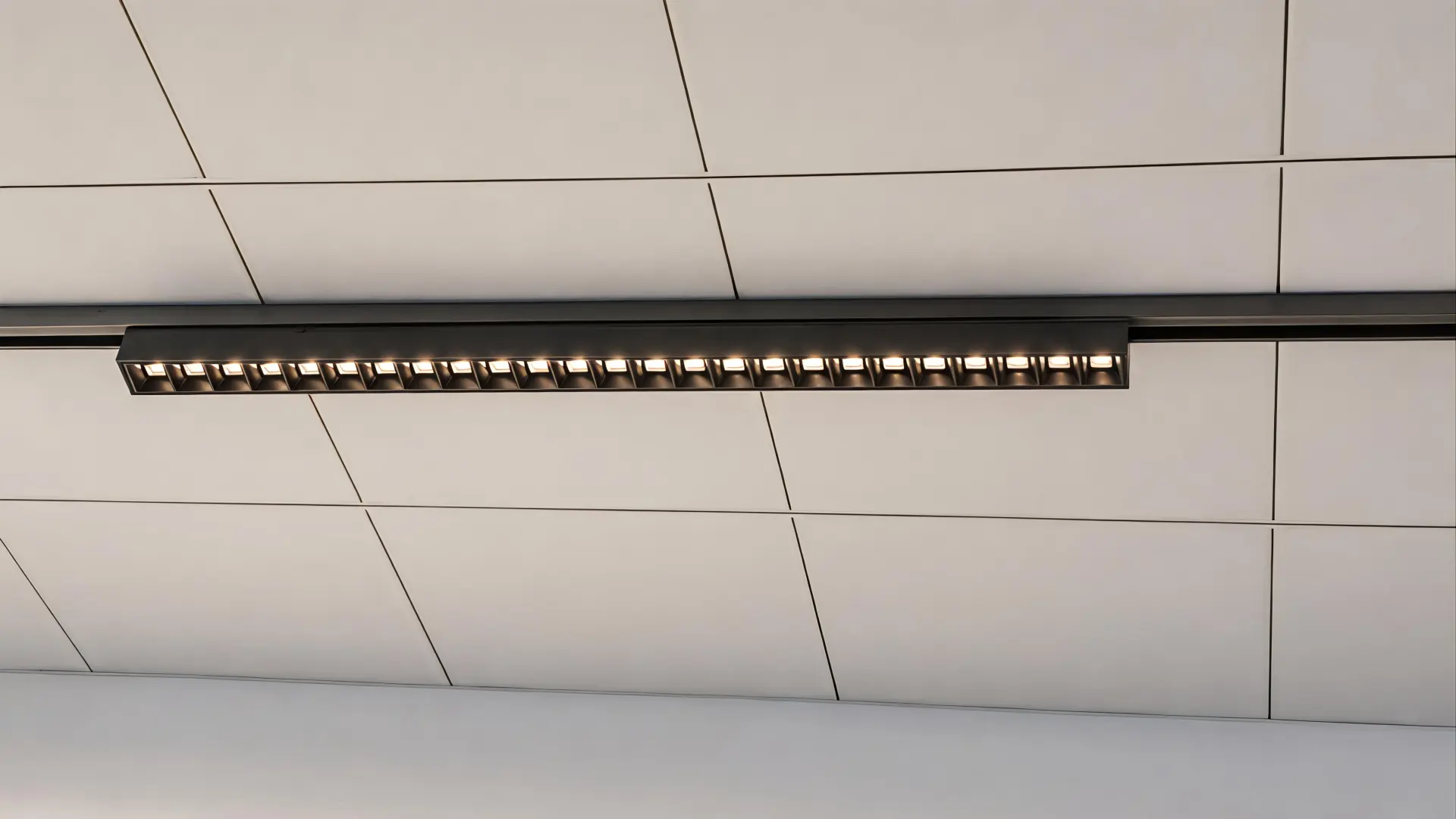
Low-glare architectural lighting improves the customer experience and reduces eye fatigue for employees.
Recommended Lighting Quality Standards for Commercial Projects
| Lighting Parameter | Recommended Standard | Commercial Benefit |
| UGR (Unified Glare Rating) | UGR < 13 | Reduces visual discomfort |
| CRI (Color Rendering Index) | CRI 97+ | Improves color accuracy |
| R9 Value | R9 > 90 | Enhances reds and skin tones |
| CCT | 3000K–4000K | Creates balanced atmosphere |
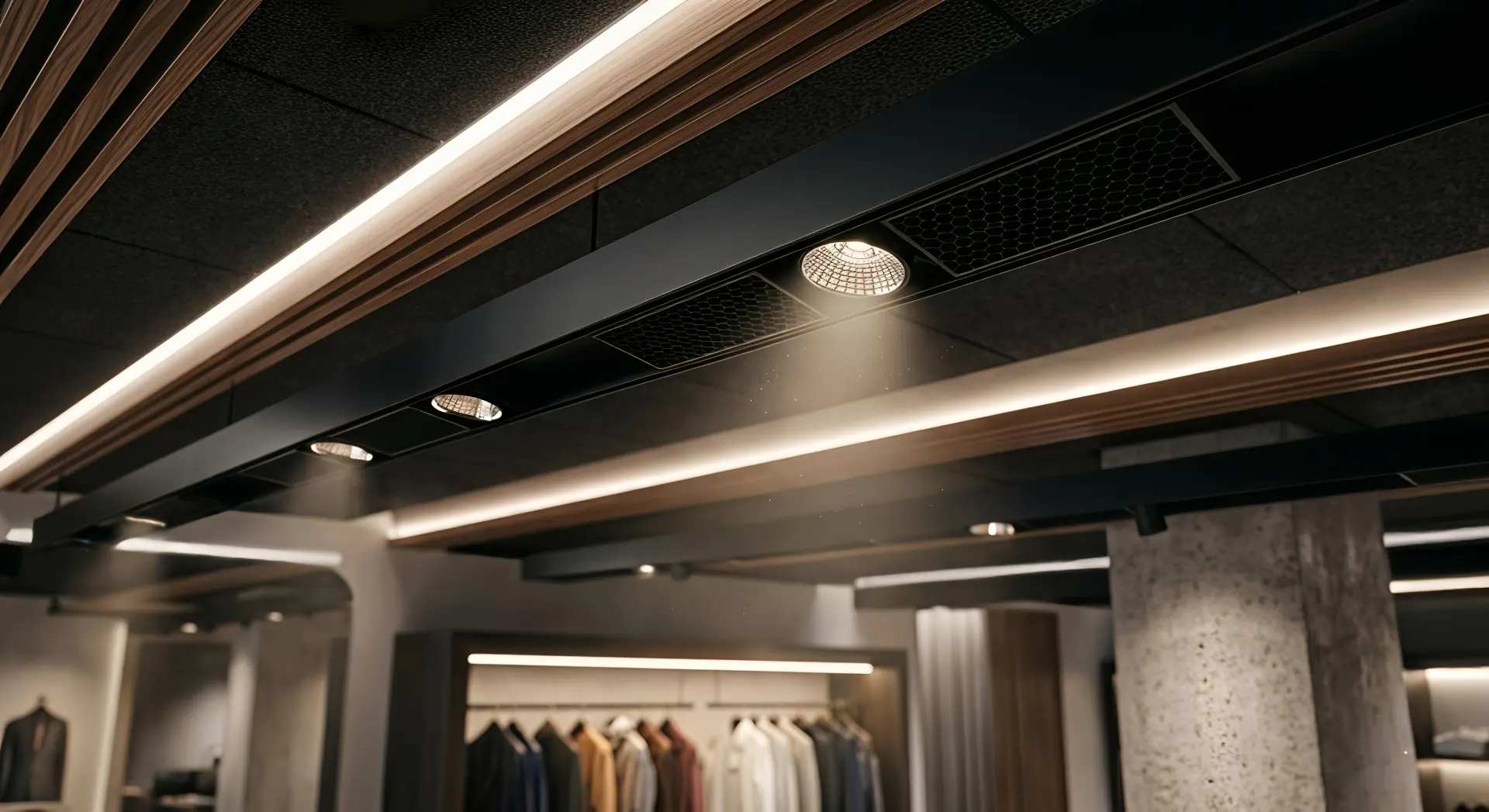
Many modern anti-glare linear lighting fixtures now feature:
- Deep recessed optics
- Honeycomb louvers
- Micro-reflectors
- Low UGR optical systems
These features are especially valuable in high-end commercial environments.
Long-tail keywords naturally related to this topic include:
- anti glare linear track lighting
- dimmable linear track lighting system
- commercial track lighting installation
- suspended linear lighting for offices
- LED linear track light kits
Installing Modular Linear Track Lighting Systems Step by Step
One of the major advantages of modular lighting systems is faster on-site installation.
Compared with traditional lighting, factory-preassembled components significantly reduce labor time.
Step 1 – Shut Off Power and Verify Layout Plans
Before installation:
- Disconnect the main power supply
- Use a voltage tester to confirm zero voltage
- Mark all track positions according to the lighting plan
Installers should also confirm:
- Driver locations
- Ceiling access
- Suspension heights
- Emergency circuit requirements
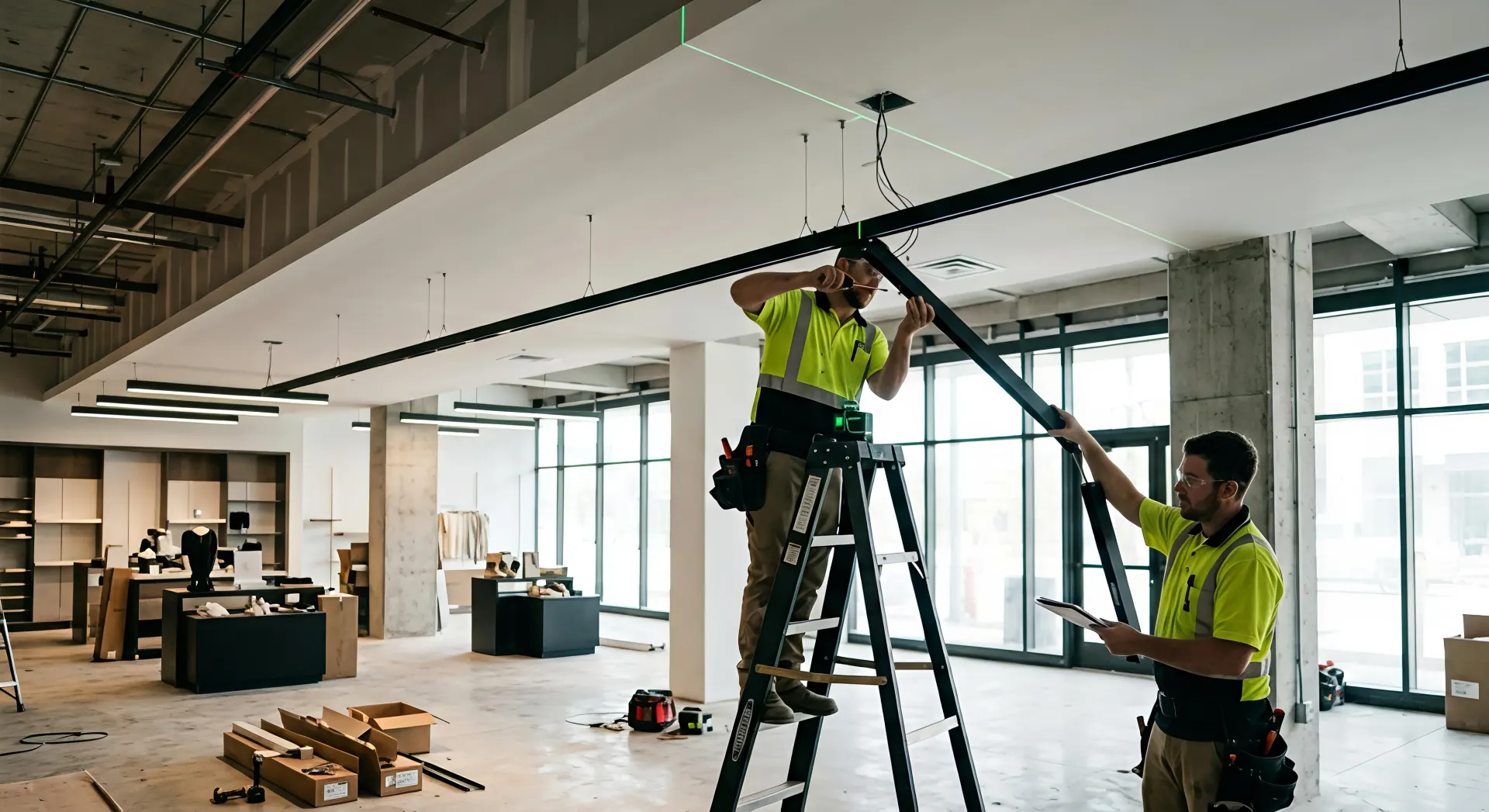
Step 2 – Install Surface Mounted or Suspended Track Rails
Depending on the ceiling condition, track systems can be:
- Surface mounted
- Suspended
- Recessed
Use a laser level to ensure perfect alignment.
Track support spacing is generally recommended at less than 1 meter intervals to prevent sagging over time.
Step 3 – Connect Power Feed and Wiring
Power wiring must follow local electrical codes.
Installers should correctly connect:
- Live wire (L)
- Neutral wire (N)
- Ground wire (E)
Improper wiring can cause:
- Flickering
- Driver damage
- Electrical faults
- Dimming instability
Step 4 – Insert Linear Fixtures into the Track System
The fixture adapter should lock securely into the track.
Most systems include mechanical locking mechanisms for safety.
For multi-circuit systems, installers can assign fixtures to different circuits depending on the lighting zones.
Step 5 – Test Dimming, Beam Direction, and Thermal Performance
Once powered on, the system should be fully tested for:
- Flickering
- Uneven brightness
- Dimming synchronization
- Driver overheating
- Beam consistency
Proper thermal airflow around drivers is extremely important for long-term reliability.
Integrating Smart Dimming Controls with Linear Track Lighting
Modern commercial projects increasingly rely on smart lighting control systems such as:
- DALI-2
- DT8
- DMX512
- Zigbee
- Bluetooth Mesh
These systems improve:
- Energy efficiency
- Lighting flexibility
- User experience
Solving DALI Dimming Synchronization Problems
One common issue in large projects occurs when DALI-1 and DALI-2 drivers are mixed together.
At low dimming levels (1–10%), fixtures may:
- Jump suddenly in brightness
- Flicker inconsistently
- Respond out of sync
This typically happens because different drivers use different dimming curve algorithms.
The solution is to standardize the dimming curve within the control software using either:
- Logarithmic Curve
- Linear Curve
Manufacturers can also fine-tune minimum dimming response values for smoother performance.
Common Problems with Commercial Linear Lighting Installations
Even high-quality lighting systems can underperform if installed incorrectly.
Flickering LED Linear Fixtures
Possible causes include:
- Signal interference
- Loose copper contacts
- Incompatible dimming drivers
- Shared conduit with high-voltage wiring
Excessive Fixture Heat and Premature Lumen Loss
Poor airflow around drivers or enclosed ceiling cavities may trap heat.
Even high-efficiency systems require adequate ventilation space.
Glare Issues in Retail and Office Projects
Excessive glare is one of the most common complaints in commercial interiors.
Modern anti-glare solutions include:
- Deep anti-glare reflectors
- Honeycomb baffles
- Recessed optics
- Low UGR lens systems
These features help create more visually comfortable environments.
The Future of Architectural Linear Track Lighting
Commercial lighting trends continue moving toward:
- Minimalist ceilings
- Human-centric lighting
- Wellness-focused interiors
- Smart automation
- Flexible modular systems
Because of their adaptability and clean architectural appearance, linear track lighting systems are becoming a preferred solution for designers and contractors worldwide.
Compared with traditional fixed lighting, modular track lighting offers:
- Easier maintenance
- Greater flexibility
- Better scalability
- Improved lighting comfort
- More refined visual aesthetics
With proper installation, thoughtful layout planning, and professional dimming integration, these systems can significantly enhance both commercial performance and user experience.
FAQ
Can linear track lighting be installed without a false ceiling?
Yes. Surface-mounted track systems are widely used in commercial interiors without suspended ceilings, especially in retail and industrial-style office spaces.
What is the ideal ceiling height for suspended linear lighting?
Most suspended linear systems work best in spaces with ceiling heights above 3 meters, allowing proper light distribution and visual balance.
Are modular linear track systems dimmable?
Yes. Most modern systems support dimming protocols such as DALI, TRIAC, 0-10V, and wireless smart controls.
How long do LED linear track fixtures typically last?
Commercial-grade LED linear fixtures generally last between 50,000 and 100,000 hours depending on driver quality and thermal management.
What causes glare in track lighting systems?
Common causes include shallow reflector design, incorrect beam angles, excessive brightness, and improper fixture placement near eye level.
Which commercial spaces benefit most from linear track lighting?
These systems are especially effective in:
- Retail stores
- Offices
- Galleries
- Showrooms
- Hotels
- Cafés
- Automotive display spaces

