



3 Phase Track Linear Light with Dip Switch: Flexible Wattage Control for Commercial Lighting Projects
By JC
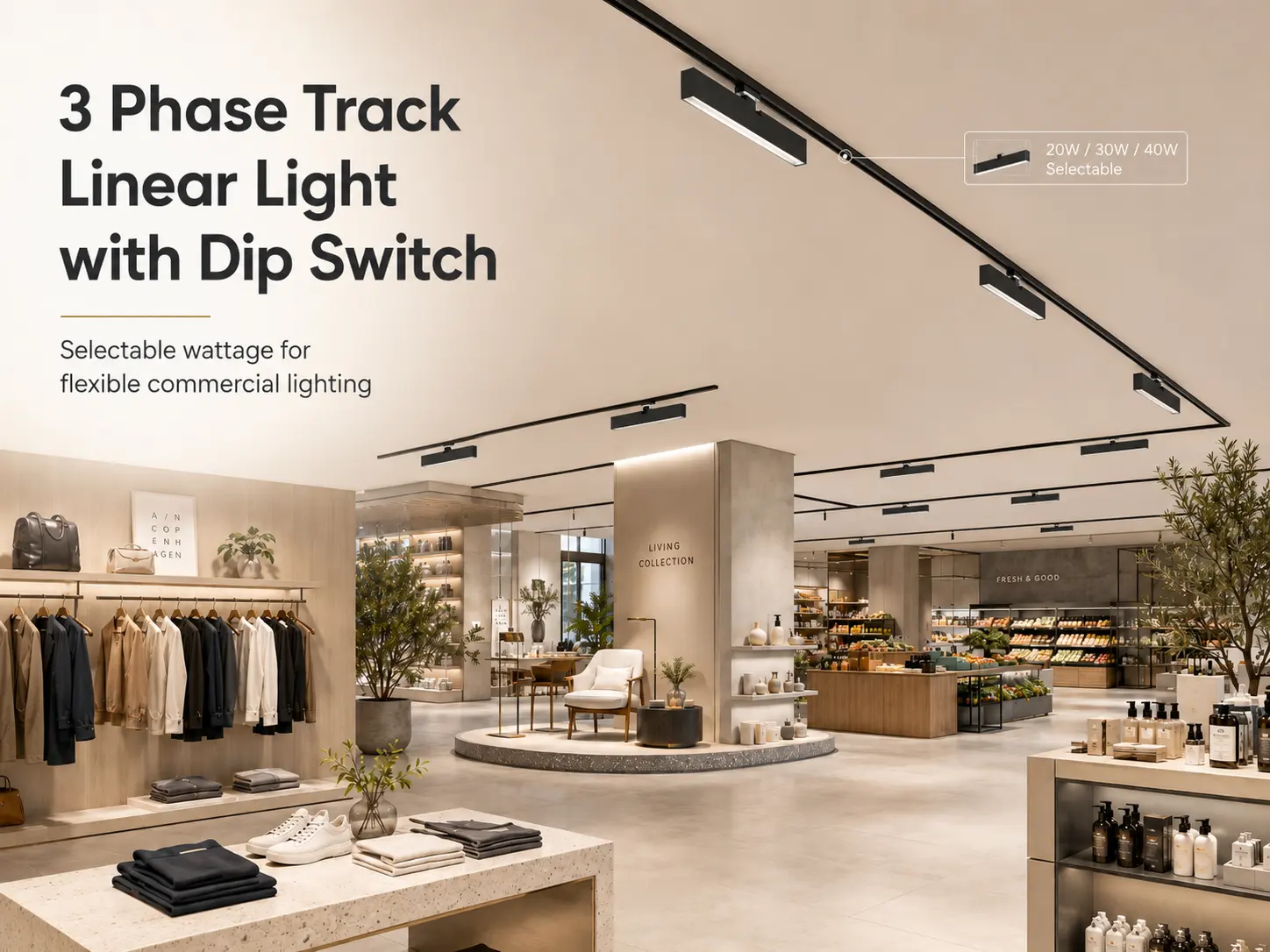
Retail stores, supermarkets, showrooms, offices, and chain shops often have different lighting requirements, even when they use the same track system. Ceiling height, shelf layout, product display, aisle width, and brightness expectations can all change from one project to another. For commercial lighting projects, flexibility is becoming more important than ever. This is why a 3 phase track linear light with dip switch can be a practical solution for modern commercial lighting.
Instead of preparing several fixed-wattage models for different projects, one fixture can offer selectable power options through a simple dip switch design. For distributors, contractors, and lighting designers, this helps simplify stock planning, reduce model complexity, and improve on-site installation flexibility.
A 3 phase track linear light is already a flexible solution because it can be moved, repositioned, and installed on standard 3 phase track systems. When dip switch wattage selection is added, the fixture becomes even more adaptable for real project conditions.
Why Choose a 3 Phase Track Linear Light with Dip Switch?
3 phase track lighting is widely used in commercial projects because it offers strong flexibility for layout changes. Unlike fixed ceiling lights, track lights can be adjusted, moved, added, or replaced according to the space design. This is especially useful for retail environments where product displays often change.
A 3 phase track linear light provides a clean and continuous lighting effect. Compared with traditional spotlights, linear track lights can offer wider and more uniform illumination. This makes them suitable for supermarket aisles, fashion stores, furniture showrooms, offices, and commercial corridors.
For retail stores, linear track lighting helps create a modern ceiling design while keeping the installation flexible. For supermarkets, it can provide continuous illumination along shelves and aisles. For showrooms, it can support a clean and professional visual environment without making the ceiling look crowded.
When combined with a dip switch, the lighting output can be adjusted more easily to match different areas of the project.
What Makes Dip Switch Wattage Selection Useful?
A dip switch allows installers or project teams to select different wattage levels on the fixture. For example, one linear track light may support 20W, 30W, and 40W options, or another version may support 35W, 45W, and 60W. Instead of ordering separate models for every power requirement, the same fixture can cover multiple lighting needs.
This is useful because commercial projects rarely have only one lighting condition. A retail store may need stronger output near the entrance, medium output in the general display area, and lower output in a smaller corridor or fitting room zone. With a fixed-wattage light, each area may require a different model. With a 3 phase track linear light with dip switch, the same product can be adjusted for different areas.
For contractors, this reduces the pressure of selecting the perfect wattage before installation. For distributors, it reduces the number of SKUs they need to keep in stock. For end users, it offers more flexibility if the store layout changes in the future.
Reducing SKU Complexity for Lighting Distributors
One of the biggest advantages of dip switch track linear lights is simplified stock management. Lighting distributors often need to prepare different wattage versions for different customer requests. This can create more SKUs, more warehouse pressure, and higher inventory risk.
For example, if a distributor needs to keep 20W, 30W, and 40W models in different color temperatures and different body colors, the number of stock items can increase quickly. This makes purchasing and stock planning more complicated.
A 3 phase track linear light with dip switch can help reduce this complexity. One fixture can replace several fixed-wattage options. This means fewer models to manage, easier quotation preparation, and faster response when customers ask for different project requirements.
For lighting wholesalers and distributors, this can be a strong selling point. It is not only about the fixture itself. It is also about making the supply chain easier and more efficient.
Better On-Site Adjustment for Real Project Conditions
Lighting plans are important, but real project conditions can change during installation. The actual ceiling height may be different from the drawing. The shelf position may change. The customer may feel the area is too bright or not bright enough after seeing the final effect.
With fixed-wattage lighting, solving this problem often requires replacing the fixture or changing the order. This can delay the project and increase cost.
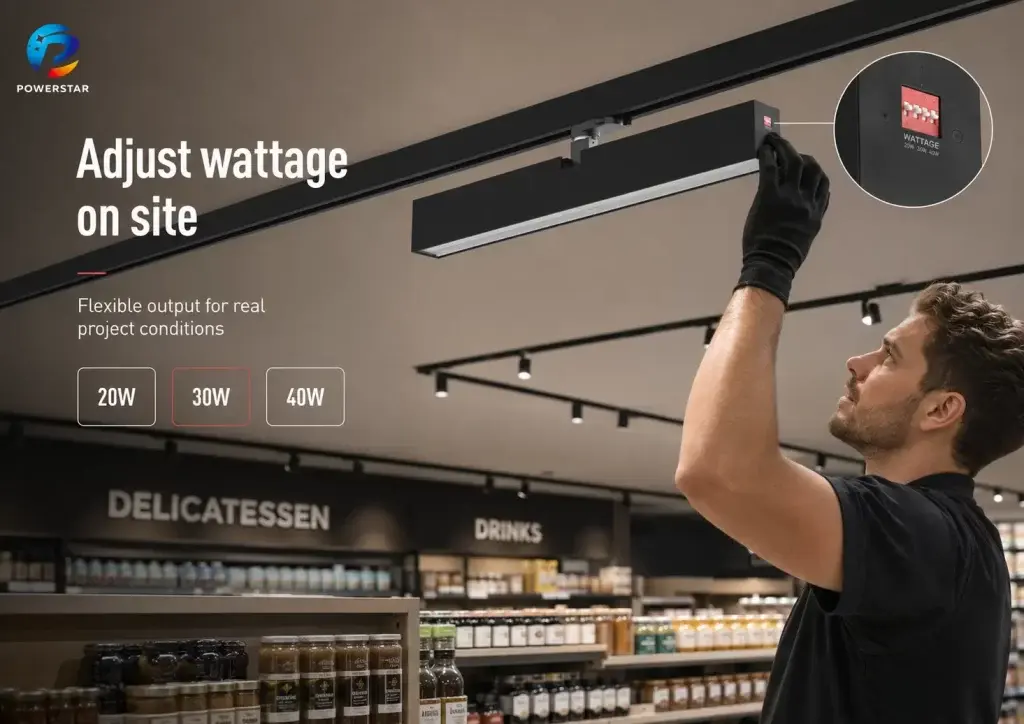
With a dip switch design, the installer can adjust the wattage directly on site. If the area needs stronger brightness, the wattage can be increased. If the area feels too bright or causes unnecessary energy use, the wattage can be reduced.
This makes the installation process more flexible. It also gives contractors and lighting designers more room to fine-tune the lighting effect after seeing the real space. For commercial projects, this practical flexibility can be more valuable than simply choosing the highest wattage.
3 Phase Track Linear Light for Retail Stores and Supermarkets
Retail stores need lighting that supports product presentation. The brightness must be strong enough to make products visible, but the space should not feel harsh or uncomfortable. Different areas inside the same store may need different lighting levels.
A 3 phase track linear light with dip switch works well in this situation. In general display areas, a medium wattage setting may be enough. For promotional shelves, entrance zones, or key product areas, a higher wattage setting can help create stronger visual focus. In smaller areas, a lower wattage setting can reduce glare and save energy.
Supermarkets can also benefit from this design. Long aisles, shelf displays, fresh food zones, and checkout areas may all require different lighting outputs. Using a wattage selectable track linear light helps the project team adapt the same fixture to different zones without changing the product series.
For chain stores, this is even more useful. A standardized lighting product can be used across multiple locations, while the wattage can be adjusted according to each store’s actual layout and ceiling condition.
Supporting Standardized Lighting for Chain Store Projects
Chain retail projects often need consistent visual design across different locations. However, each store may have different ceiling heights, floor areas, product layouts, and lighting requirements. This creates a challenge: the brand wants consistency, but each location needs some flexibility.
A 3 phase track linear light with dip switch can help solve this problem. The same fixture design can be used across different stores, keeping the ceiling appearance and product style consistent. At the same time, the wattage can be adjusted for each location.
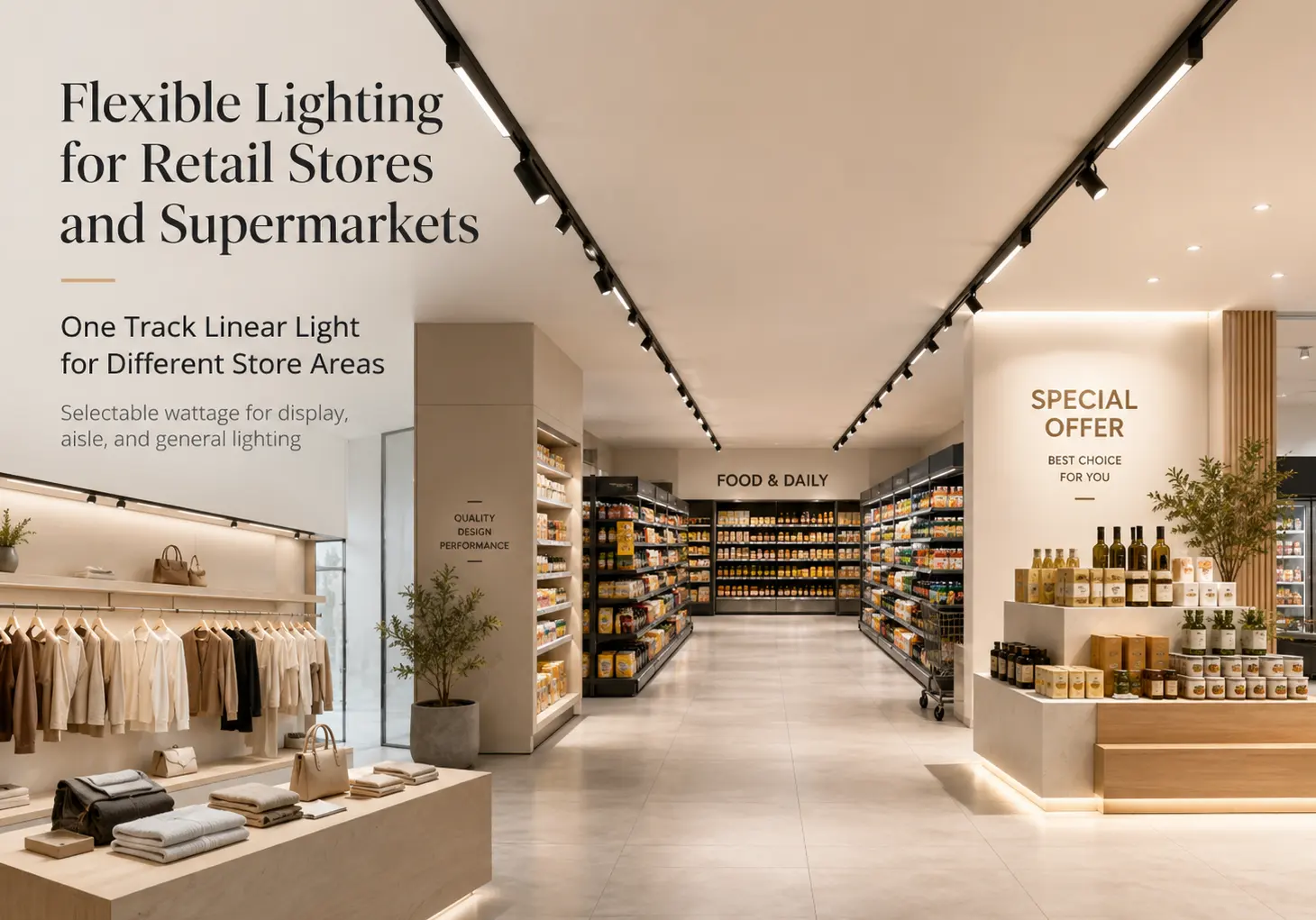
This is useful for fashion stores, supermarkets, convenience stores, furniture showrooms, and branded retail chains. It helps project teams create a more standardized lighting system without losing the ability to adapt to different spaces.
For brand owners and lighting specifiers, this can make future store rollouts easier. For suppliers, it also makes product recommendation simpler because one model can cover more application scenarios.
Energy Saving Through Adjustable Output
Energy saving is another reason to consider wattage selectable lighting. In many commercial spaces, lighting runs for long hours every day. If the wattage is higher than necessary, the electricity cost can increase over time.
With dip switch wattage selection, the project team can choose the most suitable output for each area. Not every zone needs the highest power. Some areas only need comfortable general illumination, while others require stronger light for display or visual focus.
By selecting the right wattage, the lighting system can reduce unnecessary energy use while maintaining a good visual effect. This is especially useful for supermarkets, retail stores, and commercial buildings where lighting is used for many hours each day.
A high-efficiency 3 phase track linear light can further improve energy performance. When high lumen output is combined with selectable wattage, the fixture can offer both flexibility and efficiency for commercial applications.
Easier Product Selection for Contractors and Project Buyers
For contractors and project buyers, product selection can become complicated when there are too many fixed-wattage models. They need to confirm power, length, color temperature, beam angle, track compatibility, and installation conditions before placing an order.
A 3 phase track linear light with dip switch helps simplify this process. Since the wattage is selectable, the buyer does not need to separate every area into different fixed-power models at the early stage. This can reduce communication time and make quotation preparation faster.
It also helps reduce mistakes. When too many similar models are used in one project, the risk of wrong delivery or wrong installation increases. A selectable wattage design helps keep the product list cleaner and easier to manage.
For lighting suppliers, this means the product can be presented as a more flexible project solution rather than just a single fixture.
Where Can This Lighting Solution Be Used?
A 3 phase track linear light with dip switch can be used in many commercial applications, including:
Retail stores where product displays change frequently
Supermarkets and long aisle lighting projects
Showrooms that need clean and uniform lighting
Shopping malls and commercial corridors
Offices and open commercial spaces
Chain stores that require standardized lighting solutions
Renovation projects using existing 3 phase track systems
Its biggest advantage is adaptability. The same lighting product can support different brightness requirements, making it suitable for both new projects and renovation projects.
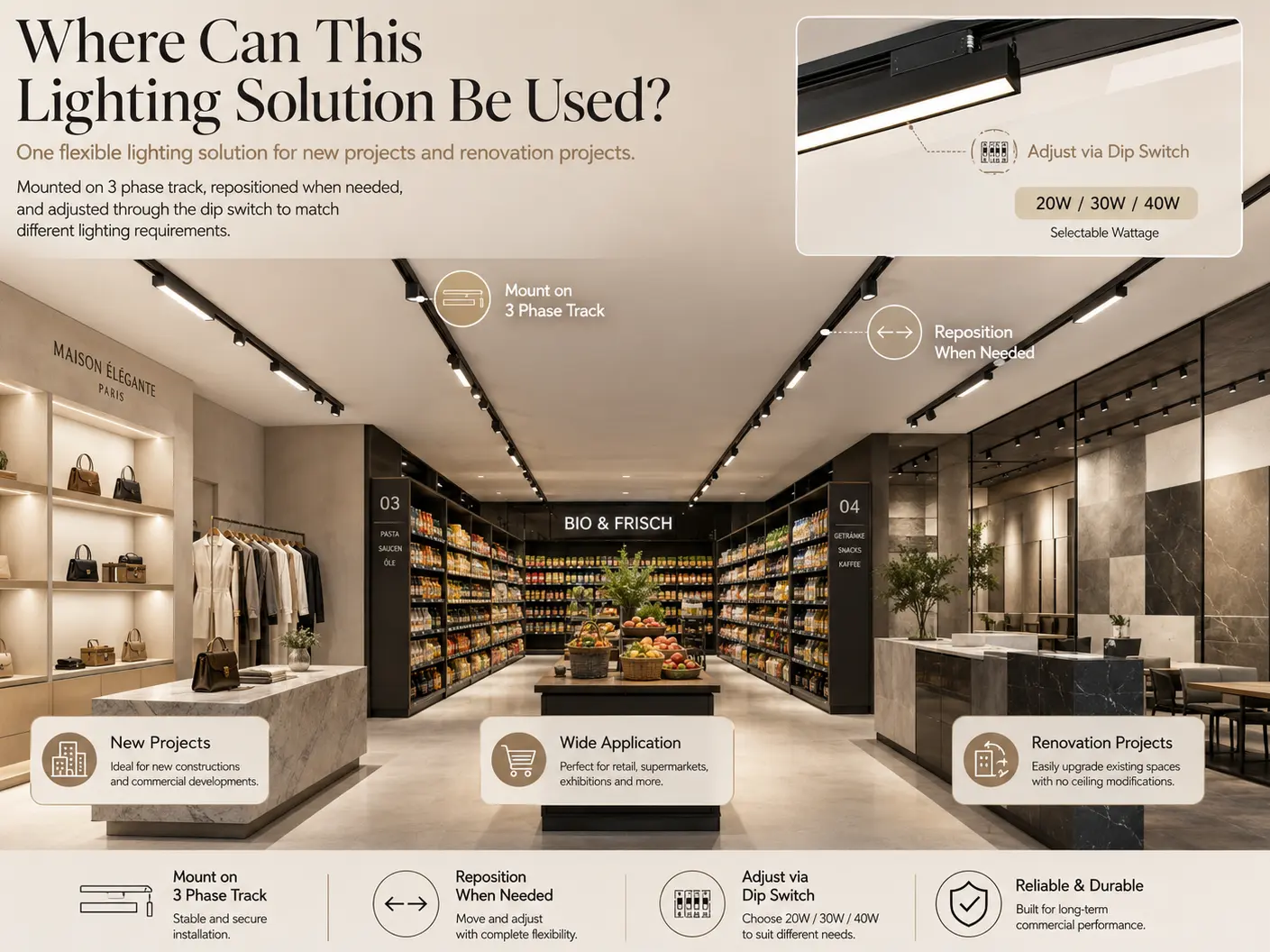
For spaces that already use 3 phase track systems, installation can also be more convenient. The fixture can be mounted on the track, repositioned when needed, and adjusted through the dip switch to match the final lighting requirement.
Conclusion: More Flexibility with Fewer Models
A 3 phase track linear light with dip switch is more than a simple track lighting product. It is a flexible lighting solution for modern commercial projects. By combining 3 phase track installation with selectable wattage control, it helps distributors reduce SKU complexity, supports contractors during on-site adjustment, and gives retail projects more freedom in lighting design.
For commercial spaces, lighting requirements can change from one area to another. A dip switch design allows the same fixture to adapt to different brightness needs without requiring multiple fixed-wattage models. This makes stock planning easier, installation more flexible, and project management more efficient.
For lighting distributors, wholesalers, contractors, and chain store project teams, this type of fixture offers a practical balance between standardization and flexibility. It helps simplify product selection while still meeting real project conditions.
If your project requires a clean, flexible, and efficient lighting solution, a 3 phase track linear light with dip switch can be a strong choice for retail stores, supermarkets, showrooms, and commercial lighting applications.

