



Human Centric Lighting Design: Creating Glare-Free and Comfortable Lighting with Advanced Optics
By Vincent
Introduction: From Illumination to Experience in Human Centric Lighting Design
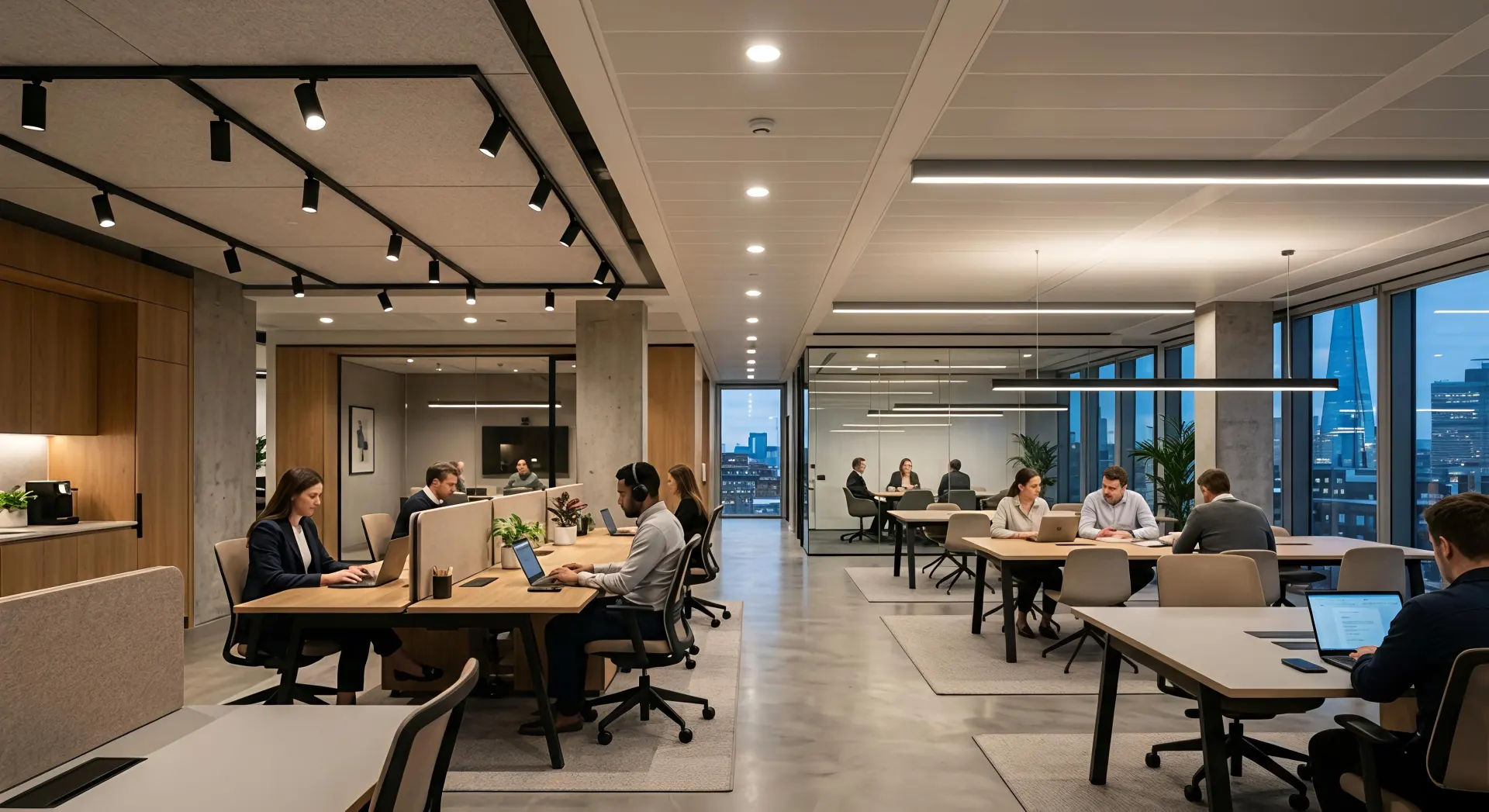
Lighting today is no longer only about making spaces visible—it is about shaping how people feel within those spaces. With the growing adoption of healthy building standards, the industry is shifting from fixture-oriented solutions to people-oriented approaches. This is where Human Centric Lighting Design comes into focus.
Traditional commercial lighting has long been evaluated by illuminance levels, color rendering, and efficiency. However, modern environments—offices, retail stores, healthcare spaces—require more than technical compliance. They demand lighting that reduces eye strain, supports concentration, and enhances long-term comfort.
True human-centric lighting is not simply about dimming or color tuning. It relies on a combination of advanced optical design, well-engineered luminaires, and intelligent control systems. In this framework, luminaires such as track lights, downlights, and linear systems act as the structural foundation, while control systems provide adaptability. Only when these elements work together can a truly comfortable and responsive lighting environment be achieved.
Understanding Human Centric Lighting Systems: Optics, Luminaires, and Controls
Core Components of a Human-Centric Lighting System
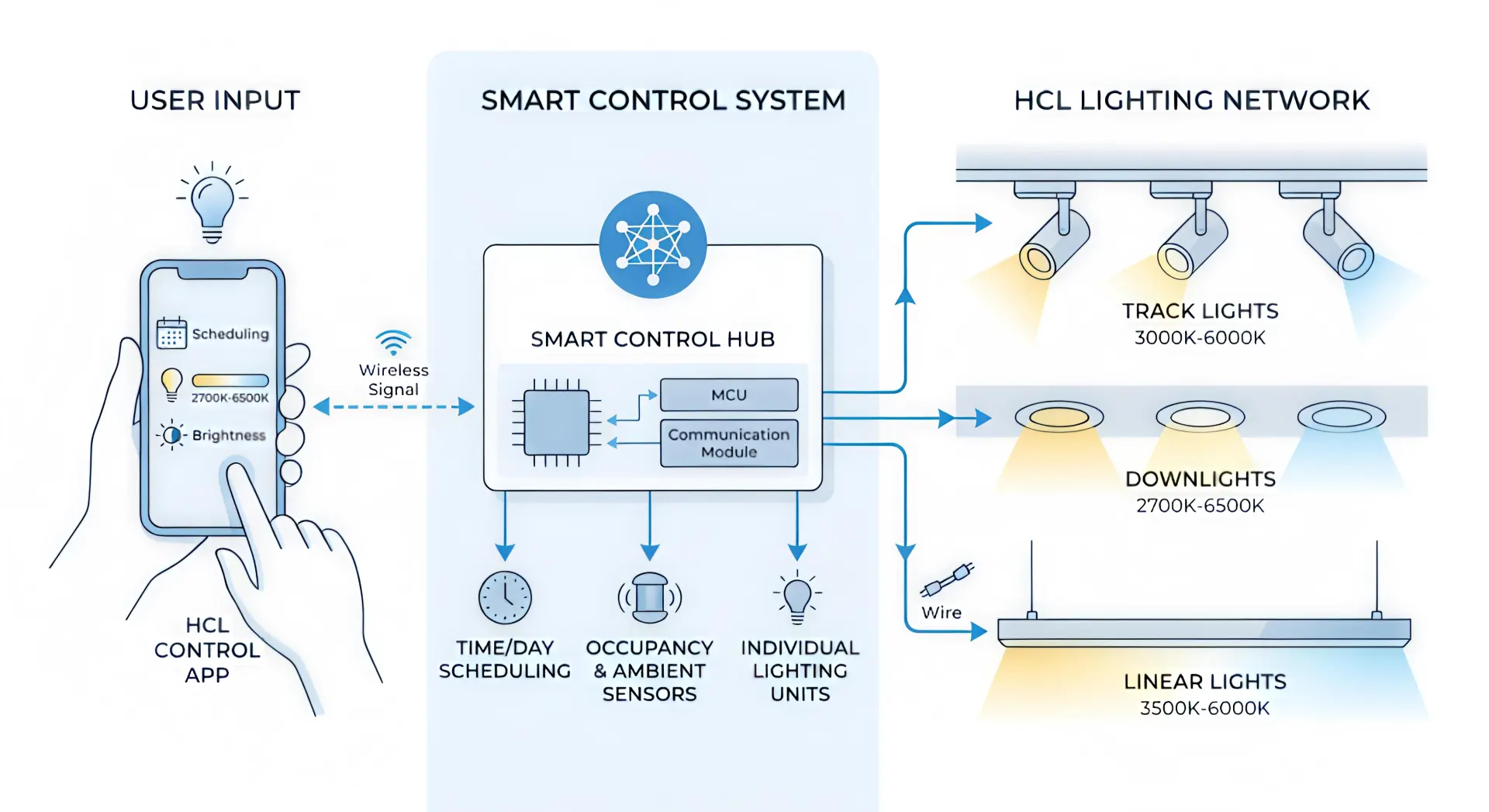
A complete human-centric lighting system is designed to simulate natural light rhythms and adapt to human circadian needs. Its implementation typically relies on three key elements:
| Component | Function | Typical Fixtures |
|---|---|---|
| Optical Design | Controls light distribution and glare | All fixture types |
| Core Luminaires | Deliver functional and visual lighting | Track lights, downlights, linear lights |
| Intelligent Controls | Enable dynamic adjustment | DALI systems, sensors |
Downlights provide uniform ambient lighting, track lights handle accent illumination, and linear lights define spatial continuity. When integrated under a unified control system, these fixtures create a layered lighting environment suitable for offices, retail spaces, and healthcare applications.
Common Challenges in Real Applications
In practice, uncomfortable lighting conditions often come from two major issues:
- Glare and direct light exposure: Improper beam angles or exposed light sources can cause visual discomfort and distraction.
- Unstable output and flicker: Low-quality drivers may introduce visible or invisible flicker, leading to fatigue over time.
For reference, industry guidelines such as International WELL Building Institute emphasize glare control and flicker-free lighting as key factors for occupant well-being.
Addressing these issues requires both optical precision and reliable control systems.
Why Optics and Controls Must Work Together
Even the best luminaires cannot deliver adaptive lighting without intelligent control. Likewise, advanced control systems cannot compensate for poor optical design.
Control systems enable dynamic adjustment based on time, occupancy, and daylight. Optical design ensures that the light itself is comfortable and well-distributed. Together, they transform lighting from a static utility into a responsive system.
Advanced Optical Design for Glare-Free and Comfortable Lighting
Beam Angle Design for Different Applications
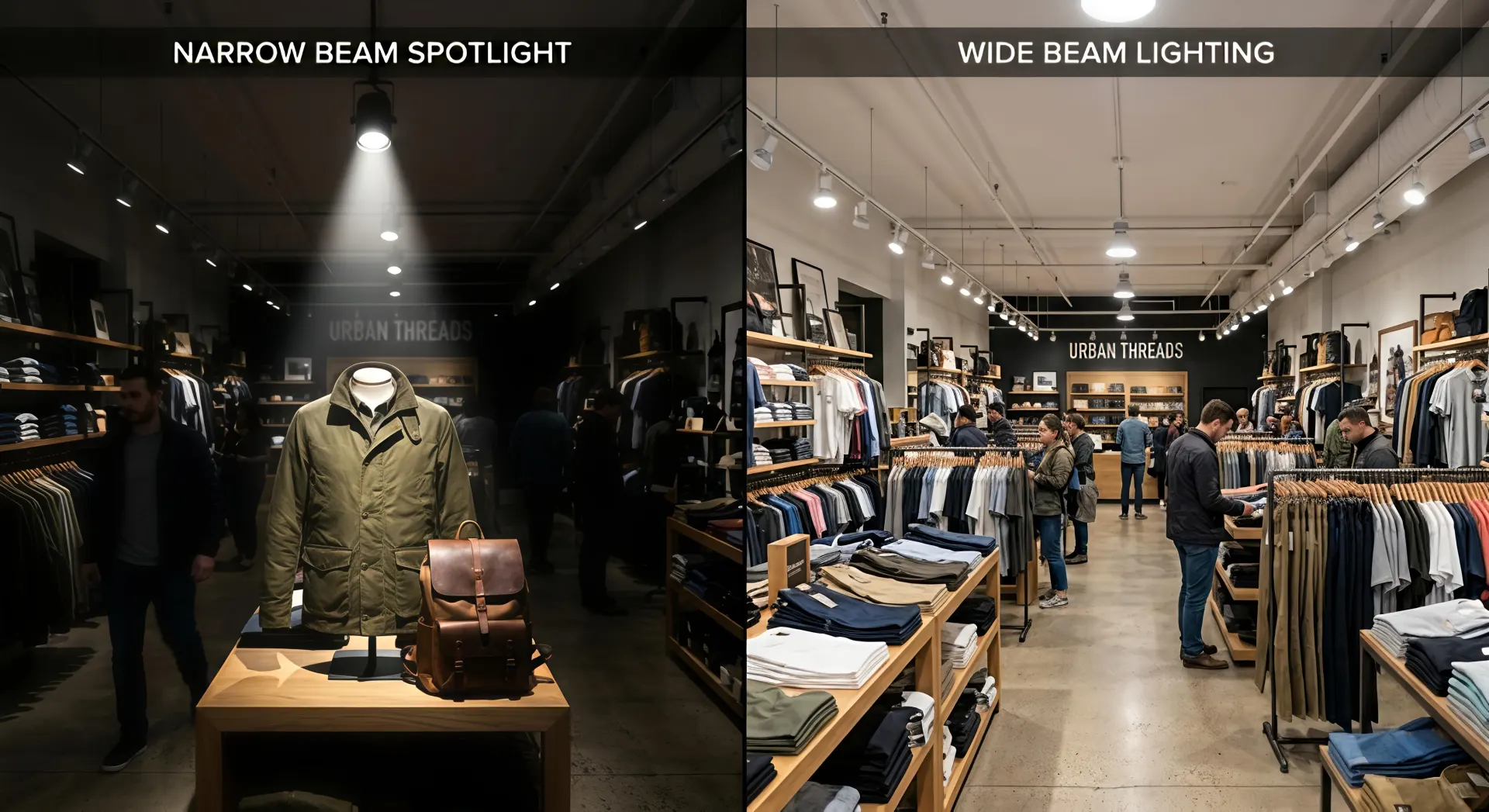
Beam angle selection plays a key role in defining visual comfort.
- Narrow beams are ideal for accent lighting in retail and museums
- Wide beams provide uniform illumination in offices and supermarkets
By combining track lights, downlights, and linear lighting systems, designers can achieve balanced light distribution while avoiding unnecessary brightness contrast.
Glare Control Techniques in Modern Luminaires
Glare is one of the most critical factors affecting visual comfort. Effective glare control relies on multiple optical strategies:
| Technique | Application | Benefit |
|---|---|---|
| Deep recessed design | Downlights | Reduces direct light exposure |
| Honeycomb louvers | Track lights | Cuts stray light and glare |
| Micro-prismatic diffusers | Linear lights | Softens light distribution |
To better understand glare metrics, you can refer to the Unified Glare Rating (UGR) explained by International Commission on Illumination.
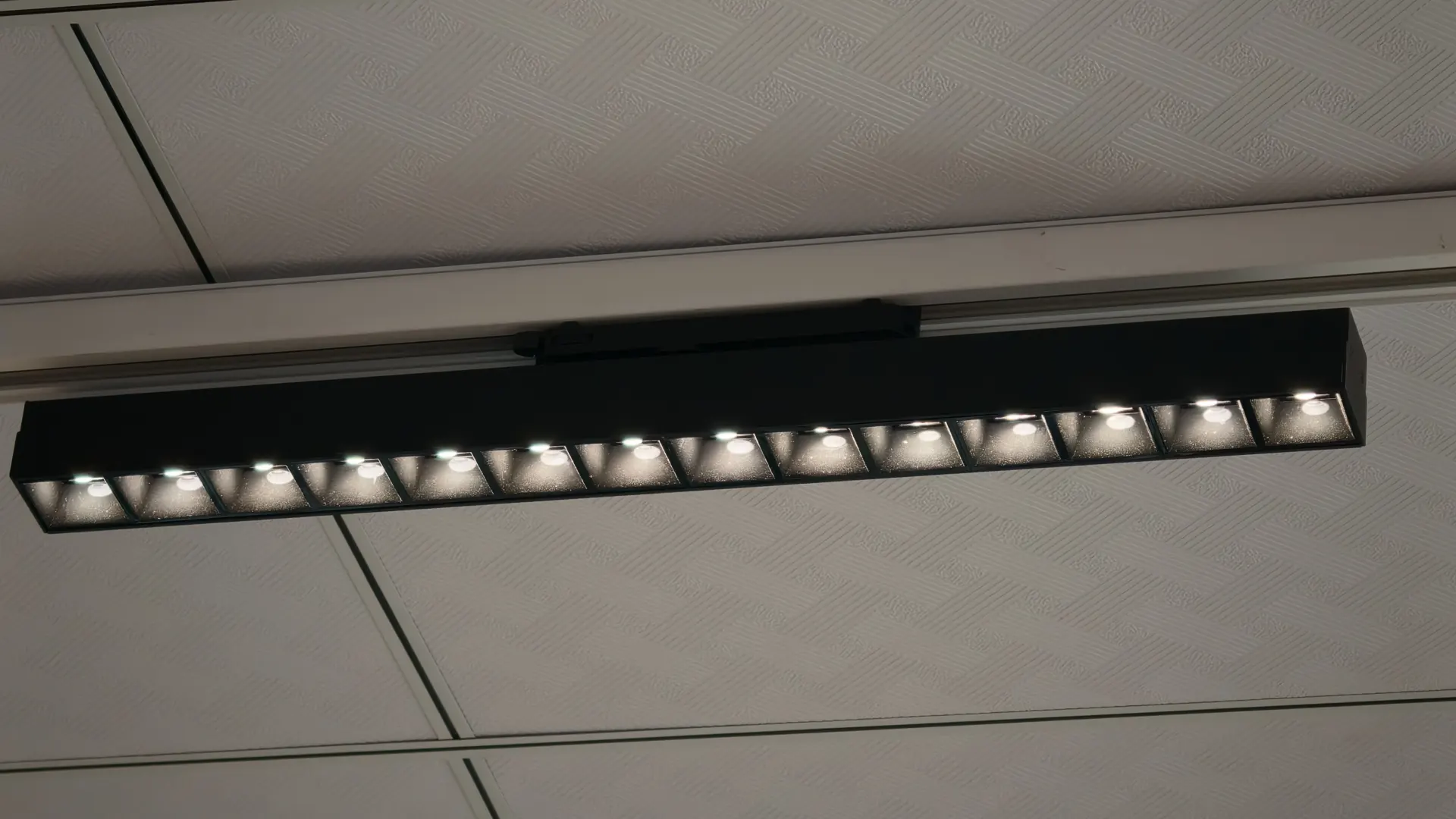
In well-designed systems, UGR values are typically controlled below 16 to ensure a comfortable visual experience.
Driver Performance and Flicker-Free Output
Stable light output is essential for long-term comfort. High-quality luminaires use constant current drivers to maintain consistent brightness.
Key performance factors include:
- Flicker-free operation compliant with IEEE 1789
- Stable current output to prevent brightness fluctuation
- Consistent color and intensity across fixtures
These features are especially important in environments where people spend extended periods under artificial lighting.
Smart Control Technologies for Adaptive Lighting
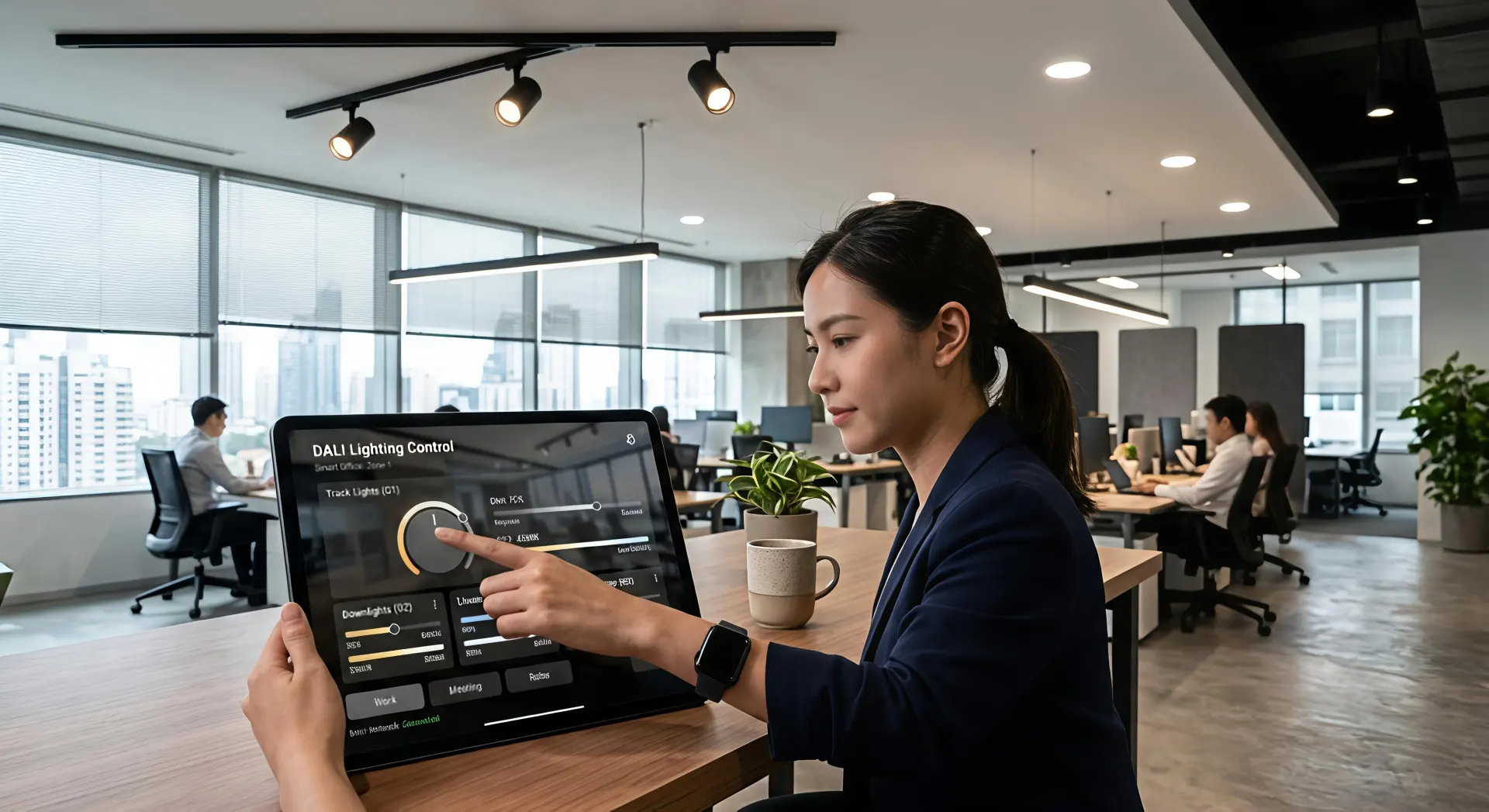
DALI-Based Lighting Control Systems
DALI (Digital Addressable Lighting Interface) is widely used in commercial lighting systems. The latest DALI-2 standard enables:
- Individual fixture control
- Smooth dimming from 0.1% to 100%
- Tunable white lighting (2700K–6500K)
- High system compatibility
Track lights, downlights, and linear lights can all be integrated into DALI systems, allowing precise control and coordinated operation.
Occupancy Sensors and Daylight Integration
Sensors play a key role in adapting lighting to real usage conditions.
| Sensor Type | Application | Function |
|---|---|---|
| PIR Sensor | Offices, corridors | Detects movement |
| Ultrasonic Sensor | Meeting rooms | Detects subtle presence |
| Hybrid Sensor | Open spaces | Combines multiple detection methods |
When combined with daylight sensors, lighting systems can automatically adjust output based on natural light levels, reducing energy consumption by 30%–50%.
Scene-Based Lighting Automation
Scene-based control allows lighting to adapt to different activities.
For example:
- Office mode: balanced brightness for productivity
- Meeting mode: reduced glare for presentations
- Retail mode: enhanced contrast for product display
These preset configurations ensure that each luminaire performs its intended role without manual intervention.
Synergy Between Technology and Fixtures
The effectiveness of a human-centric system depends on how well its components work together:
- DALI provides precise control
- Sensors enable responsiveness
- Optical design ensures comfort
Together, they turn lighting into a dynamic and user-centered solution rather than a fixed installation.
Application Examples in Commercial Projects
Office Buildings
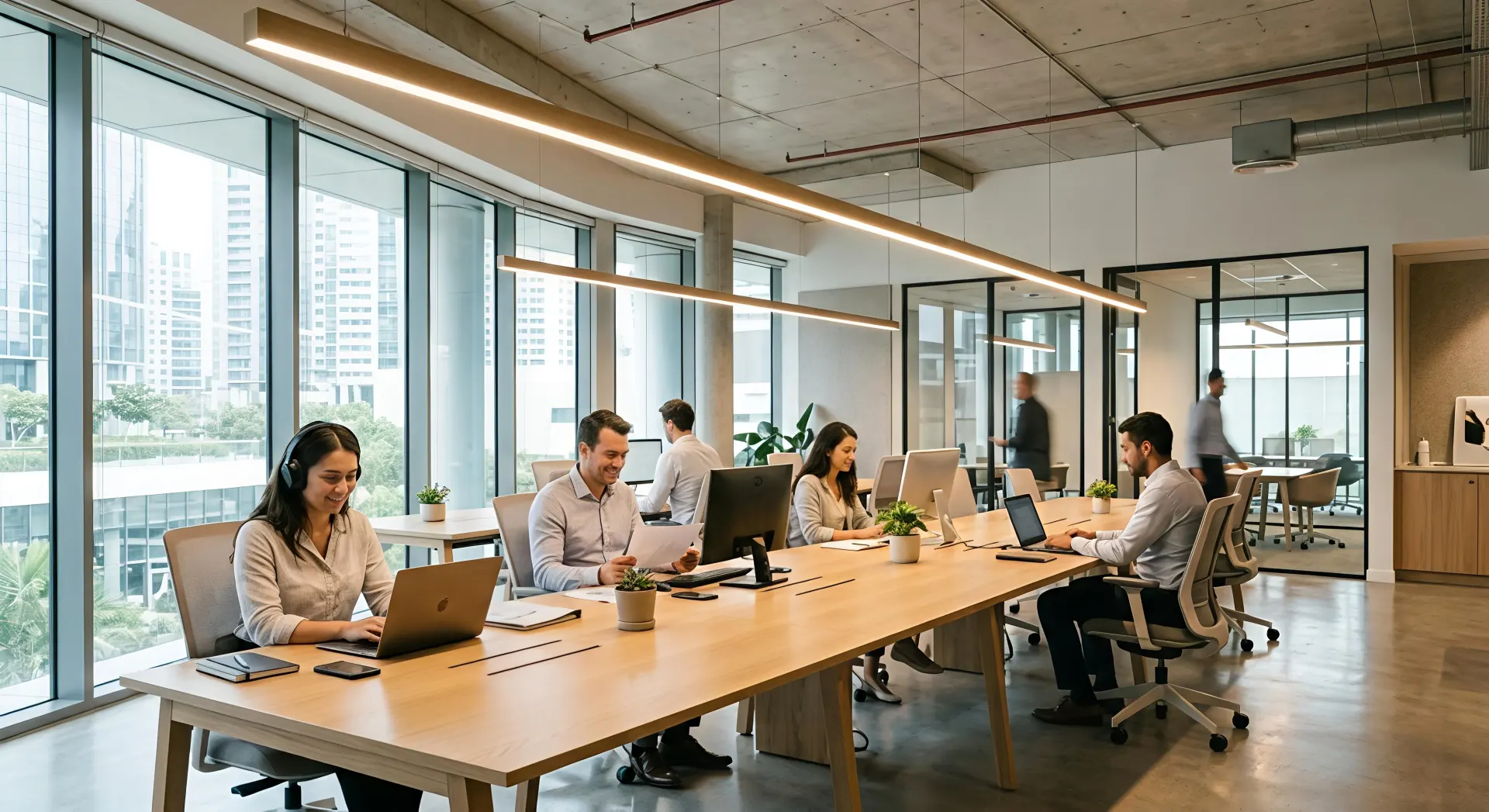
A multi-floor office project using DALI-2, PIR sensors, and daylight sensors combined with downlights, track lights, and linear lighting achieved:
- 40% energy savings
- Reduced eye fatigue
- Improved productivity
Retail Stores
In high-end retail environments, track lighting with narrow beams highlights products, while anti-glare design ensures customer comfort.
The result:
- Increased dwell time
- 15% sales growth
- 35% reduction in lighting energy consumption
Museums and Exhibition Spaces
Museums require precise lighting control to protect exhibits while maintaining visual clarity.
Track lights with narrow beam optics and glare control allow accurate illumination without damaging sensitive materials, while maintaining a comfortable viewing experience.
Conclusion: Lighting Designed Around People
The future of commercial lighting lies in designing for people rather than spaces. By combining advanced optics, stable driver performance, and intelligent control systems, modern lighting solutions can deliver both comfort and efficiency.
Through the integration of track lights, downlights, and linear lighting systems, Human Centric Lighting Design becomes a practical and scalable solution for offices, retail environments, and public spaces.
Ultimately, the goal is simple: to create lighting environments that support human comfort, enhance visual experience, and adapt seamlessly to real-world needs.

