



Mastering the Mood: The Ultimate Guide to Retail Downlights for Men’s Fashion
By Powerstar
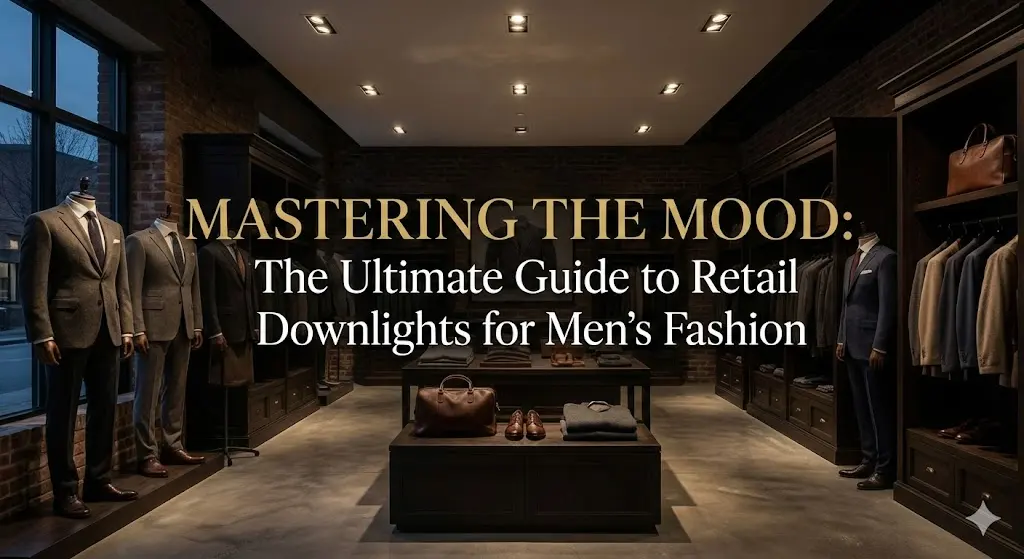
Menswear is defined by subtle details—the weave of a fine wool suit or the grain of leather brogues—and generic lighting simply cannot do them justice, making specialized retail downlights for men’s fashion an essential investment for showcasing craftsmanship. In the high-stakes world of brick-and-mortar retail, the difference between a browser and a buyer often comes down to a feeling. While interior design, layout, and music play a role, the most powerful subconscious influencer is lighting. For menswear specifically, the requirements are unique. Unlike the bright, uniform illumination often found in fast fashion or cosmetics, high-end menswear thrives on atmosphere, texture, and depth.
This is where retail downlights for men’s fashion come into play. They are the unsung heroes of store design, offering the ability to sculpt space, highlight craftsmanship, and guide the customer’s eye without cluttering the ceiling. This guide explores why choosing the right downlights is critical for your brand and how to implement them effectively.
1. The Psychology of Lighting in Menswear Retail
The shopping behavior of men often differs from that of women, and successful retailers use lighting to tap into this psychology. Men generally appreciate clarity, structure, and an efficient path to purchase, yet they are seduced by quality and detail.
- Creating “The Cave” Effect: There is a prevailing trend in luxury menswear to create spaces that feel grounded and exclusive—reminiscent of a tailor’s backroom or a private club. Recessed downlights allow you to lower the overall ambient light level while creating intense pools of light on the merchandise. This high-contrast environment feels masculine and premium.
- Focus on Structure: Menswear is defined by silhouette—the cut of a shoulder, the drape of a trouser. Flat, diffuse lighting flattens these details. Directional downlights create shadows that define shape, making a suit look three-dimensional and structured on the mannequin.
- Navigational Clarity: By using brighter intensity downlights on key displays and walkways, you subconsciously direct the customer through the store, highlighting the “hero” products you want them to notice first.
2. Key Technical Specs: What to Look For
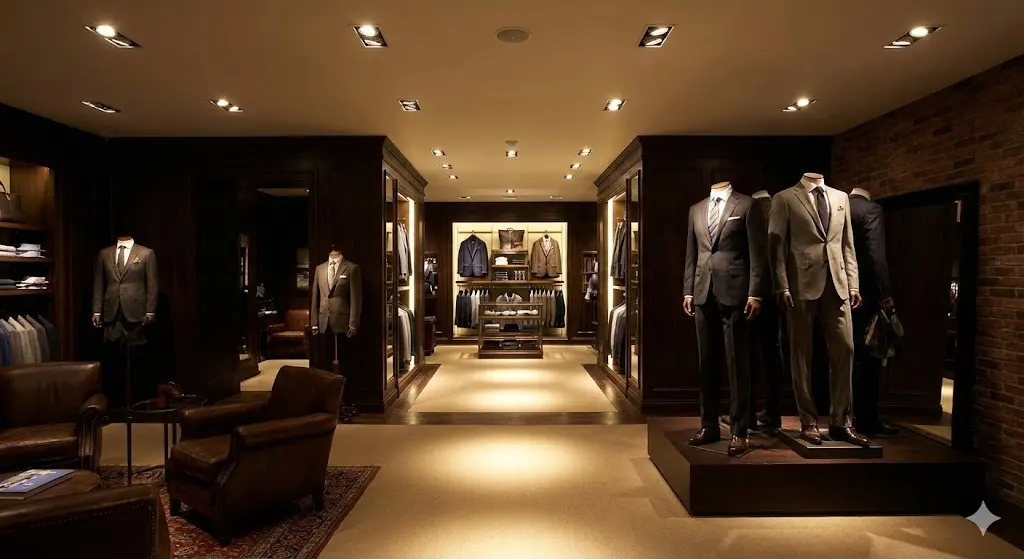
When sourcing retail downlights for men’s fashion, the technical specifications on the box matter immensely. A standard office downlight will make expensive suits look dull and cheap. You need fixtures engineered for color and texture.
High Color Rendering Index (CRI)
The most important metric is CRI. It measures how accurately a light source reveals colors compared to natural sunlight.
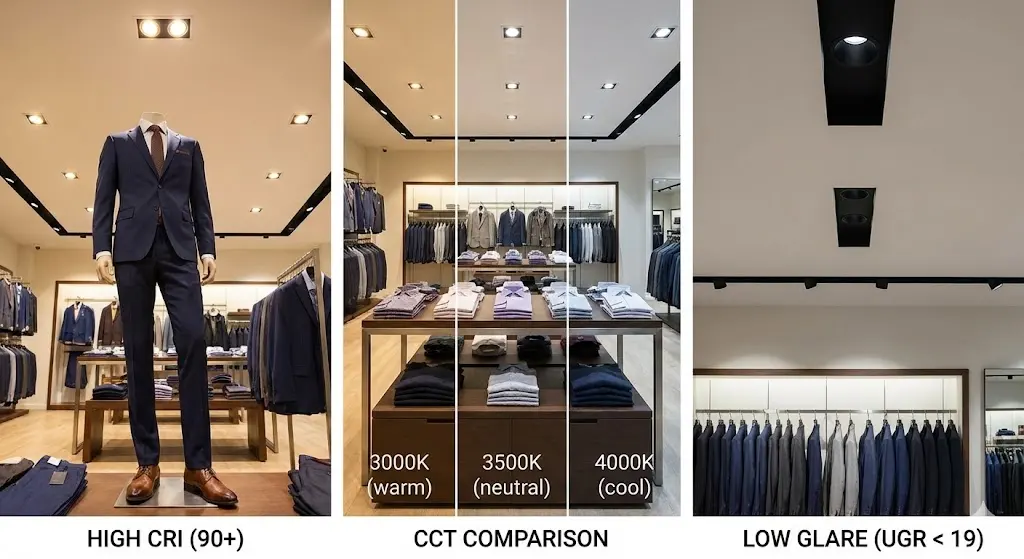
- The Requirement: Aim for a CRI of 90 or higher (90+).
- The Reason: Menswear relies heavily on subtle hues—navy vs. midnight blue, charcoal vs. black, oxblood vs. brown. Low CRI lights (CRI 80) blend these colors together, making merchandise look muddy.
- The R9 Value: Ensure the downlight has a high “R9” value (saturated red). This is crucial for making wood floors look rich, leather goods look vibrant, and skin tones look healthy in the fitting room.
This determines the “warmth” or “coolness” of the light.
- 3000K (Warm White): The industry standard for classic menswear, heritage brands, and suit shops. It compliments wood cabinetry, leather, and gold accents, creating a cozy, inviting atmosphere.
- 3500K (Neutral White): A good middle ground for modern casual wear. It is crisp and clean but not clinical.
- 4000K (Cool White): Generally reserved for streetwear, sneakers, or technical sportswear. It feels energetic but can appear too sterile for tailored clothing.
Glare Control (UGR)
Since you are using high-intensity light to create contrast, you must manage glare.
- Dark Light Technology: Look for “dark light” or “low glare” downlights (UGR < 19). These fixtures have the light source recessed deep into the housing, often with a black baffle.
- The Effect: When a customer looks up, the ceiling appears quiet and dark, even though the merchandise is brightly lit. This focuses all attention on the clothes, not the light bulbs.
3. Strategic Placement: Zoning with Downlights
Installing downlights in a uniform grid pattern is the quickest way to kill the mood in a menswear store. Instead, your lighting plan should be layered and purposeful.
The Window Display: The Hook
Your window is your billboard. It needs to compete with natural daylight and streetlights.
- Intensity: Use high-lumen output downlights here.
- Technique: Use adjustable (gimbal) downlights to cross-light mannequins. Aim one light at the chest and another at the legs from different angles to create a dynamic, sculpted look that stops passersby.
Perimeter Walls: The Merchandise Engine
Most inventory in a menswear store is displayed on wall racks. If the walls are dark, the store feels small and uninviting.
- Wall Washing: Use specialized wall-washer downlights or aim adjustable downlights high up on the wall.
- Scalloping: Place downlights 2-3 feet from the wall to create “scallops” of light that highlight the texture of the garments hanging on the rails. This draws the eye to the perimeter and encourages customers to explore the full depth of the store.
Feature Tables and Mannequins
Islands and nesting tables are where you display folded shirts, ties, and accessories.
- Narrow Beams: Use narrow beam angles (15° to 24°) to punch through the ambient light. This creates a “stage” effect, making the silk ties or leather wallets sparkle and pop against the table surface.
4. The Fitting Room: Where the Sale is Won
The fitting room is often the most neglected area, yet it has the highest conversion rate. Bad lighting here leads to returned items.
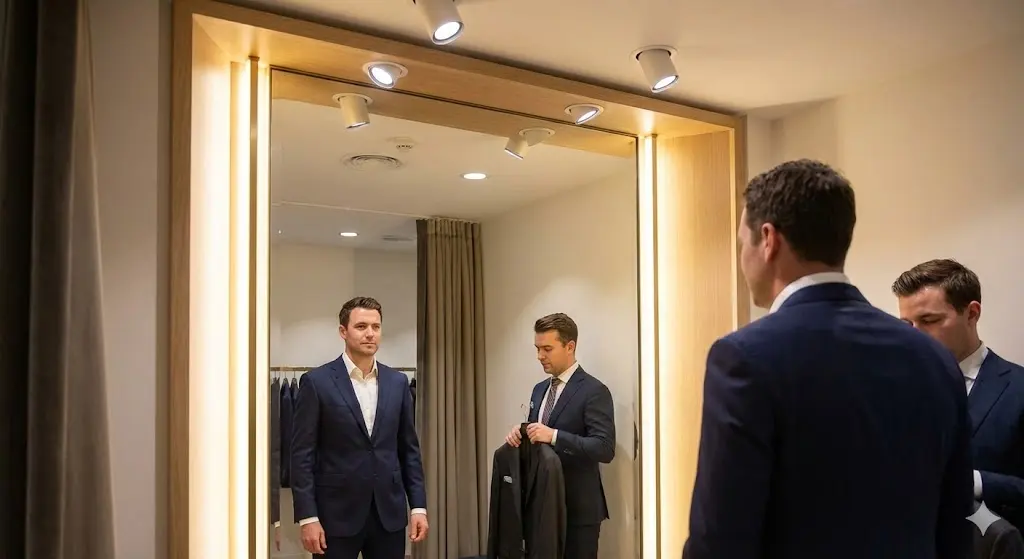
- Avoid the “Downlight Disaster”: Never place a single strong downlight directly over the center of the fitting room. This casts harsh shadows into the customer’s eye sockets (“raccoon eyes”) and emphasizes every wrinkle and imperfection on their face and body.
- The Correct Approach: Use retail downlights for men’s fashion that are adjustable. Push them toward the mirror to bounce light off the glass and onto the customer’s face.
- Fill Light: Combine recessed downlights with vertical LED strips on the sides of the mirror. This combination provides shadow-free illumination that makes the customer look healthy, fit, and confident in the new suit.
5. Protecting the Merchandise: The LED Advantage
Beyond aesthetics, modern LED downlights offer operational benefits that directly impact your bottom line and inventory quality.
Fabric Preservation
Menswear involves expensive natural fibers like wool, cashmere, silk, and high-grade leather.
- No UV/IR Radiation: Old halogen or metal halide bulbs emitted significant UV and infrared radiation. Over time, this causes “photochemical damage”—fading the shoulders of jackets that sit on display and making fibers brittle.
- Solution: High-quality LED downlights emit zero UV and negligible heat, ensuring your stock remains in pristine condition even after months on the floor.
Thermal Management
Traditional lighting generates massive amounts of heat, forcing your air conditioning to work harder.
- Comfort: A cooler store is more comfortable for customers trying on heavy winter coats or three-piece suits.
- Cost: Switching to LED reduces the cooling load, significantly lowering energy bills.
6. Types of Fixtures to Consider
When discussing options with your lighting designer, consider these specific variations of retail downlights for men’s fashion:
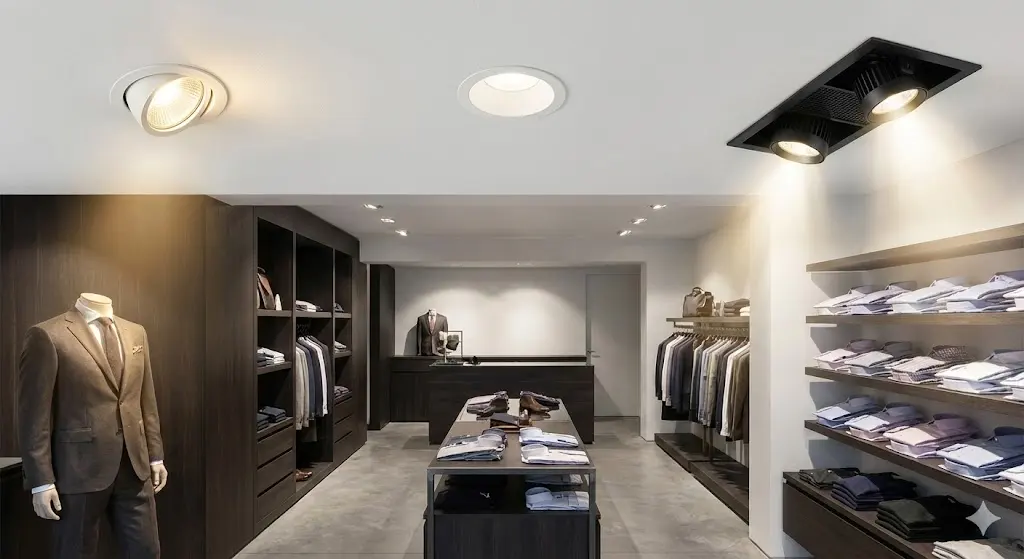
- Adjustable (Gimbal) Downlights: These are essential. They allow you to tilt and rotate the light beam (usually 30° tilt / 355° rotation). Retail layouts change; your lighting needs to adapt without requiring an electrician to move fixtures.
- Trimless (Mud-in) Downlights: These are plastered into the ceiling for a seamless finish. They are perfect for minimalist, modern luxury boutiques where you want the ceiling to look immaculately clean.
- Double or Triple Grilles: These rectangular fixtures house two or three light heads in one box. They offer a more industrial, masculine aesthetic and deliver powerful punch lighting for large displays.
Conclusion: Investing in Your Brand Image
In the digital age, a physical store must offer an experience that a website cannot. It must offer texture, true color, and an emotional connection to the product. Lighting is the medium through which this connection happens.
By investing in high-quality retail downlights for men’s fashion, you are not just buying light bulbs; you are investing in:
- Higher Conversion Rates: Customers buy what looks good on them.
- Brand Perception: A well-lit store feels more expensive and trustworthy.
- Inventory Protection: Keeping your stock safe from fading.
Don’t let poor lighting undermine the quality of your tailoring. Upgrade to high-CRI, adjustable, and strategically placed recessed downlights to showcase your menswear in the light it deserves.

