



The Gentleman’s Glow: Mastering Recessed Downlights for Menswear Stores
By Powerstar
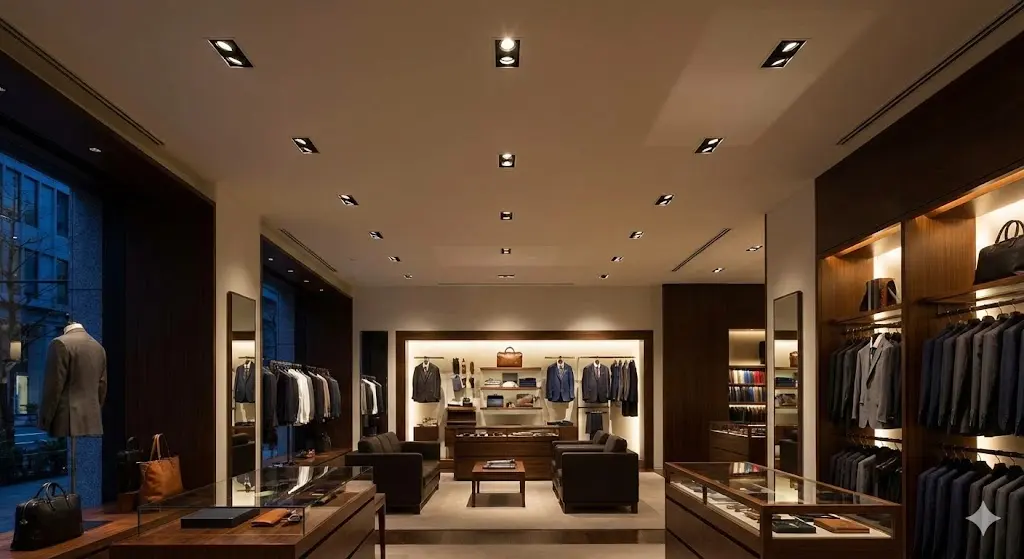
To truly showcase the rich textures of wool suits and the grain of leather accessories, lighting designers increasingly recommend high-CRI recessed downlights for menswear stores as the gold standard. In the competitive landscape of brick-and-mortar retail, the visual experience is the primary differentiator between browsing online and walking into a store. For menswear retailers, the stakes are particularly high. The customer isn’t just buying a garment; he is buying an identity, a silhouette, and a level of craftsmanship.
While interior design, shelving materials, and floor layout are critical, the invisible hand that ties them all together is lighting. Specifically, recessed downlights for menswear stores have become the industry standard for creating environments that are both sophisticated and commercially effective. Unlike bulky fixtures that clutter the visual field, recessed lighting offers a clean, architectural solution that puts the focus entirely on the merchandise.
This guide explores how to leverage recessed downlights to elevate your brand, highlighting technical specifications, strategic placement, and the psychology of light in masculine spaces.
1. The Psychology of Lighting in Masculine Retail
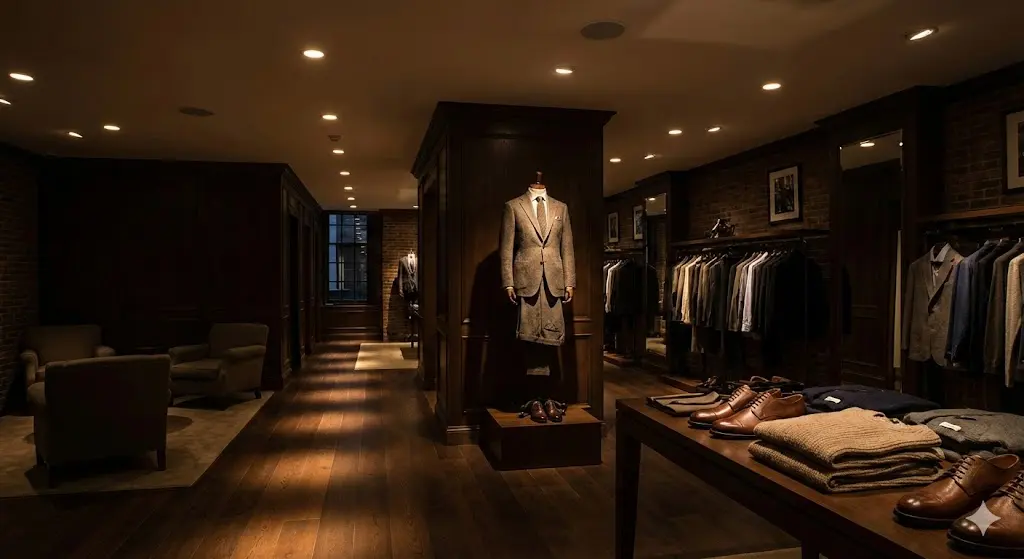
Lighting does more than illuminate a space; it sets a mood. In the world of menswear, the desired atmosphere often differs significantly from fast fashion or womenswear boutiques. While women’s retail often utilizes soft, diffuse, and bright all-over lighting, menswear tends to thrive on contrast, shadow, and drama.
Creating a Visual Hierarchy
Men generally shop with a mission-based mindset or an appreciation for technical details. Recessed downlights allow you to create a “visual hierarchy” within the store.
- The Path: Ambient light guides the customer through the store layout.
- The Hero: Accent lighting highlights specific mannequins or new arrivals.
- The Texture: High-contrast lighting reveals the weave of a wool suit or the grain of leather shoes.
The “Cave” Instinct
There is a concept in retail psychology suggesting that men feel more comfortable in spaces that feel grounded and slightly enclosed, rather than overly exposed. By using recessed downlights to create pools of light rather than a uniform wash of brightness, you evoke a sense of exclusivity and privacy—similar to the ambiance of a high-end lounge or a tailor’s workshop.
2. Critical Technical Specifications for Menswear
Not all downlights are created equal. Installing a generic office downlight in a high-end haberdashery is a recipe for disaster. To showcase premium clothing, you must understand the three pillars of retail lighting tech: CRI, CCT, and Beam Angle.
Color Rendering Index (CRI)
This is the most critical metric for fashion retail. CRI measures a light source’s ability to reveal the true colors of an object compared to natural sunlight.
- The Problem: Low CRI lights (under 80) make navy suits look black, olive tones look grey, and brown leather look muddy.
- The Solution: For menswear, you must specify recessed downlights with a CRI of 90+ (ideally 95+).
- The R9 Value: specifically look for a high “R9” value (red spectrum). This ensures that warm tones in wood flooring, leather goods, and skin tones in the fitting room look vibrant and healthy.
The “temperature” of the light (measured in Kelvin) dictates the vibe of the store.
- 3000K (Warm White): This is the sweet spot for classic menswear, heritage brands, and suit shops. It complements wood, brass, and leather, creating a cozy, luxurious inviting atmosphere.
- 3500K (Neutral White): A balanced middle ground. It is crisp enough to show true whites (like dress shirts) without feeling sterile.
- 4000K (Cool White): generally reserved for streetwear, sneaker stores, or ultra-modern technical apparel brands. It feels energetic but can be too clinical for classic tailoring.
Beam Angles
Recessed downlights act as spotlights. The “beam angle” determines how wide the spread of light is.
- Spot (15°–24°): Use these to highlight a specific mannequin, a tie display, or a wall-mounted shoe shelf.
- Flood (36°–60°): Use these for general ambient lighting to ensure customers can navigate the aisle safely.
3. Strategic Placement: Zoning Your Store with Light
The layout of your recessed downlights should mirror the customer journey. A grid pattern—common in grocery stores—is often the wrong choice for a boutique. Instead, use a “layered” lighting approach.
The Window Display
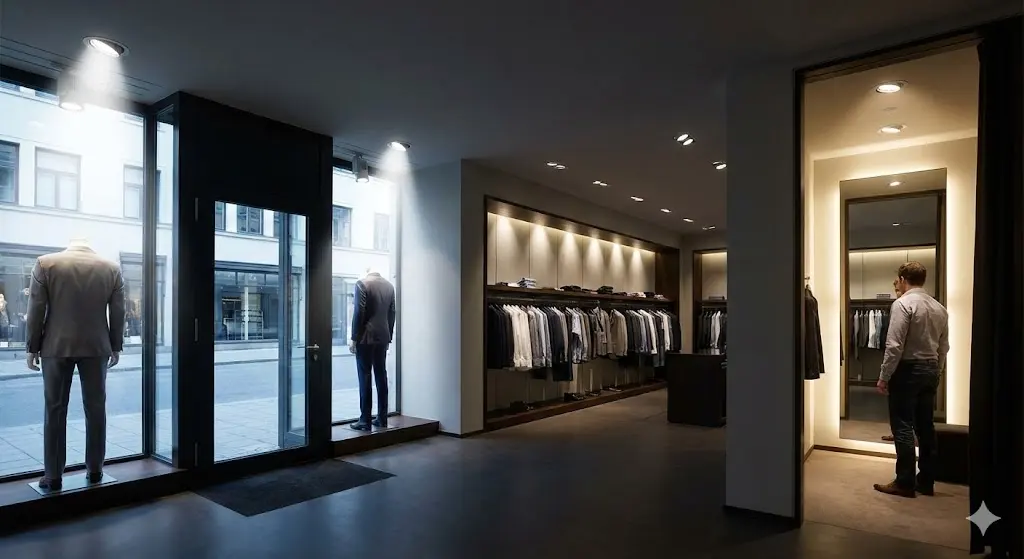
This is your billboard. The lighting here needs to be powerful enough to combat daylight reflections on the glass.
- Strategy: Use high-lumen, adjustable recessed downlights.
- Technique: Aim the lights at the chest and shoulders of the mannequins to emphasize the tailoring. Cross-lighting (aiming two lights at one object from different angles) adds 3D depth to the display.
The Merchandise Walls (Perimeter Lighting)
If the walls are dark, the store feels small. “Wall washing” or “scalloping” is a technique where recessed downlights are placed closer to the wall to illuminate vertical surfaces.
- Benefit: This draws the eye to the merchandise hanging on the perimeter, which is where the majority of inventory usually lives.
- Spacing: Typically, place the downlight about 2 to 3 feet away from the wall, depending on ceiling height.
The Fitting Room: Where the Sale is Closed
The fitting room is the most neglected area in retail design, yet it has the highest conversion rate.
- Avoid: Direct downlights located immediately above the customer’s head. This creates “raccoon eyes” (shadows in eye sockets) and emphasizes wrinkles.
- Adopt: Use recessed adjustable downlights pushed toward the mirror, bouncing light off the glass and onto the customer’s face. Alternatively, use linear recessed lighting along the sides of the mirror for soft, flattering illumination that makes the customer feel confident.
4. Fixture Aesthetics: Trim, Finish, and Glare Control
In a menswear store, the hardware itself communicates quality. Cheap plastic trims degrade the perceived value of the merchandise.
Trim Types
- Trimless (Mud-in): The fixture is plastered into the ceiling for a seamless, invisible look. This is ideal for minimalist, modern high-end stores.
- Flanged: A visible ring around the light. In heritage stores, a metallic bezel (bronze or black) can add to the décor.
Glare Control
“Glare” occurs when the bright light source is directly visible to the eye, causing discomfort.
- Deep Regression: Choose downlights where the LED chip is tucked deep inside the housing. This effectively hides the light source so customers see the effect of the light, not the light bulb itself.
- Black Baffles: Using a black interior baffle inside the downlight absorbs stray light and reduces glare, making the ceiling look “quiet” and dark, keeping the focus strictly on the clothes.
5. Adjustable vs. Fixed Downlights
Flexibility is key in retail. Merchandise layouts change with the seasons; your lighting needs to adapt.
Fixed Downlights
These point straight down.
- Use Cases: General circulation areas, walkways, and over the cash wrap. They provide a base layer of light.
Adjustable (Gimbal) Downlights
These fixtures can be tilted and rotated.
- Use Cases: Almost everywhere else. Being able to tilt a light 30 degrees means you can highlight a display table one month, and then re-aim the light when you move that table three feet to the left the next month.
- Tip: For menswear stores, aim for a mix of 70% adjustable and 30% fixed downlights to ensure maximum versatility.
6. LED Efficiency and Merchandise Protection
Beyond aesthetics, modern LED recessed downlights offer significant operational advantages over older halogen or metal halide technologies.
Heat Reduction and Fabric Care
High-end menswear involves natural fibers: wool, silk, cotton, and cashmere.
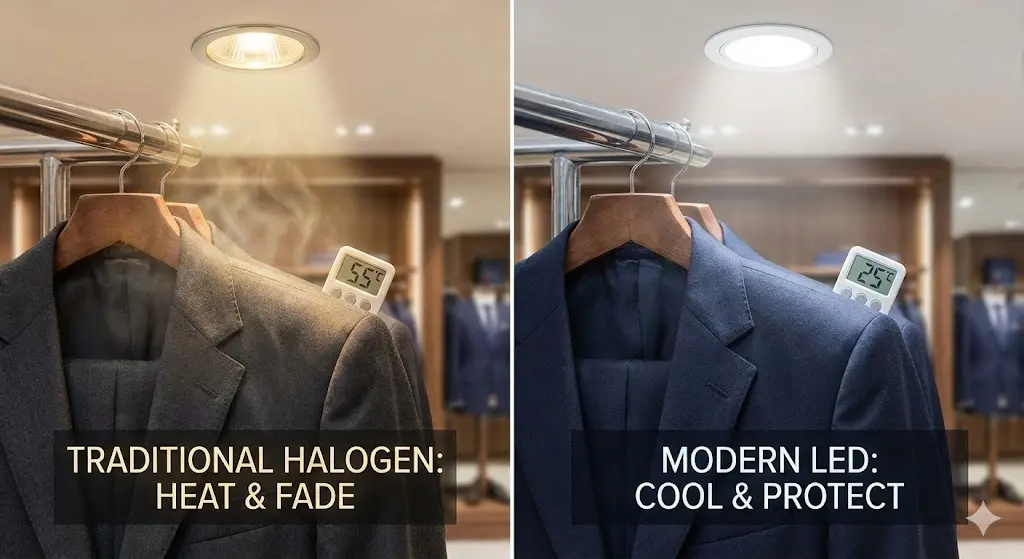
- The Danger: Traditional bulbs emit high levels of heat and UV/IR radiation. Over time, this “bakes” the fabric, making fibers brittle and fading dyes—especially on the shoulders of suits that sit on display for weeks.
- The LED Advantage: Quality LEDs emit zero UV and negligible heat. This preserves the integrity of your inventory, reducing shrinkage (loss of stock due to damage).
Energy ROI
Retail lighting typically runs for 12 to 14 hours a day.
- Switching to LED recessed downlights can reduce energy consumption by up to 70% compared to legacy lighting.
- With a lifespan of 50,000+ hours, maintenance costs drop significantly, meaning no more climbing ladders during business hours to change burnt-out bulbs.
Conclusion: Lighting as a Sales Tool
Investing in high-quality recessed downlights for menswear stores is not merely a construction cost; it is a marketing investment. The right lighting defines the brand narrative, guides the customer experience, and ultimately presents the product in a way that creates desire.
By prioritizing high CRI to show true colors, selecting the right color temperature for your brand’s “vibe,” and utilizing adjustable fixtures to create dramatic contrast, you transform a simple retail space into a destination. In the world of menswear, where detail is everything, ensure your lighting is as tailored as the suits you sell.

