



Restaurant Lighting Solutions: A Complete Guide to Creating Comfortable and Eye-Catching Dining Spaces
By Vincent
Introduction
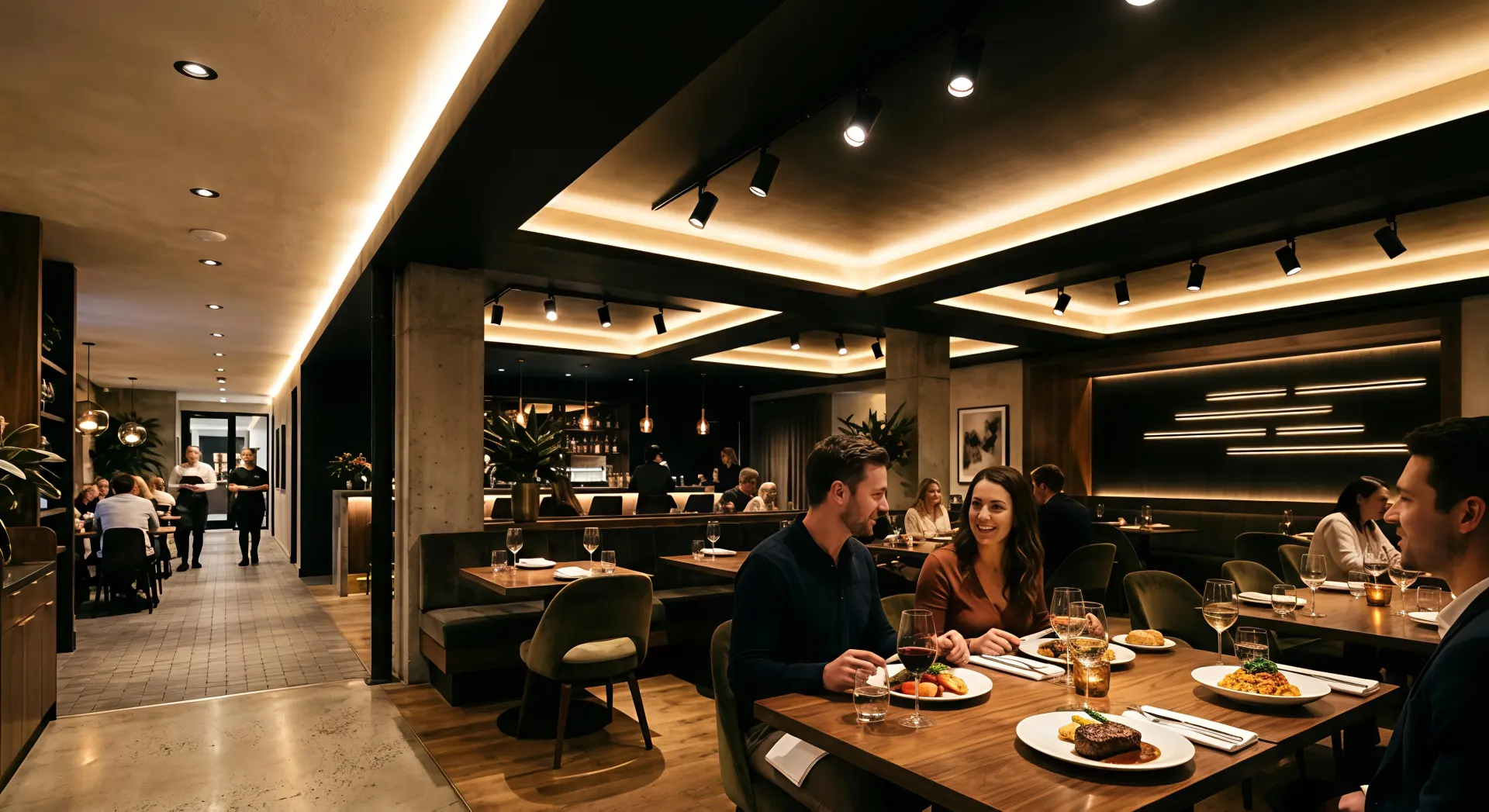
Restaurant Lighting Solutions play a crucial role in shaping the atmosphere and visual experience of modern dining spaces. In today’s highly competitive food service market, guests no longer judge a restaurant only by the taste of its dishes. Interior atmosphere, visual comfort, and spatial design all influence how long customers stay, how they feel about the brand, and whether they choose to return.
Lighting has evolved far beyond simple illumination. It now acts as a powerful design tool that enhances food presentation, guides customer movement, and helps restaurants create a distinctive brand identity.
A well-planned lighting strategy can create a comfortable environment without glare, highlight the natural colors and textures of ingredients, and reinforce the visual identity of the restaurant. From fine-dining restaurants and coffee shops to bubble tea stores and hot pot venues, most professional restaurant lighting designs rely on a combination of track lights, linear lighting, recessed downlights, and commercial linear fixtures.
By combining general lighting, accent lighting, and ambient lighting, restaurant owners can achieve the perfect balance between functionality and atmosphere. In this guide, we will explore practical lighting strategies, fixture selection tips, and layout recommendations to help create effective Restaurant Lighting Solutions for modern dining spaces.
For additional insights on professional hospitality lighting design, you can also explore resources from the International Association of Lighting Designers.
The Core Principles Behind Effective Restaurant Lighting Solutions
Before selecting fixtures or planning the layout, it is essential to understand the core objectives of professional restaurant lighting design. Successful Restaurant Lighting Solutions are built around three key principles:
- visual comfort
- appealing food presentation
- layered spatial atmosphere
These principles guide every lighting decision within a dining environment.
Visual Comfort: Anti-Glare Lighting is Essential
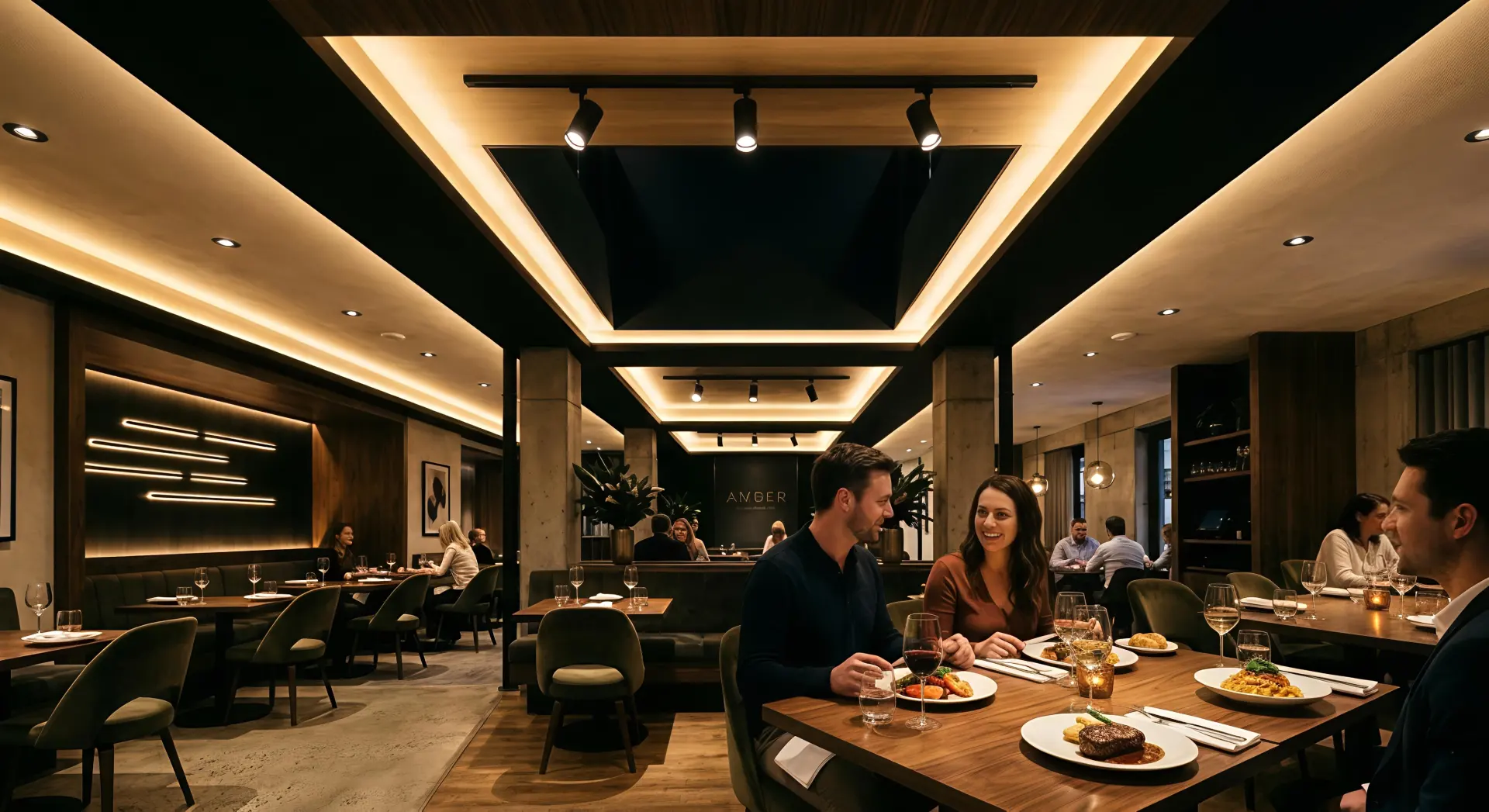
Glare is one of the biggest problems in restaurant lighting. Exposed light sources or poorly positioned fixtures can easily cause eye strain, making guests feel uncomfortable during their meal.
Professional lighting designers often aim for the concept of “light without visible fixtures.” To achieve this, it is recommended to select fixtures with:
- UGR < 13 for glare control
- shielding angles above 30°
- deep anti-glare reflectors
Accent lighting should always illuminate the intended target—such as the dining table—without shining directly into customers’ eyes. Ambient lighting should rely on indirect light sources to maintain a relaxed atmosphere.
You can learn more about glare control standards through the lighting guidelines provided by the International Commission on Illumination.
Food Presentation: High CRI Lighting Enhances Appetite
Lighting quality directly affects how food appears to guests. In fact, visual perception accounts for a large portion of the dining experience.
Fixtures used above dining tables should typically have:
- CRI ≥ 90Ra
- premium restaurants often use CRI ≥ 97Ra
- positive R9 value for accurate red tones
These specifications ensure that meats, vegetables, sauces, and beverages appear vibrant and appetizing.
Warm white lighting between 2700K and 3500K is usually the most suitable color temperature range for restaurant environments.
Layered Lighting: The Foundation of Modern Dining Spaces
Professional restaurant lighting design follows a layered lighting strategy that combines different types of illumination.
| Lighting Layer | Purpose | Typical Fixtures |
|---|---|---|
| General Lighting | Provides basic visibility and safety | Downlights |
| Accent Lighting | Highlights tables, food, and displays | Track lights / spotlights |
| Ambient Lighting | Creates atmosphere and visual depth | Linear lighting |
By combining these layers, designers can create a balanced environment that feels comfortable while still emphasizing focal points.
Accent Lighting for Dining Tables and Food Displays
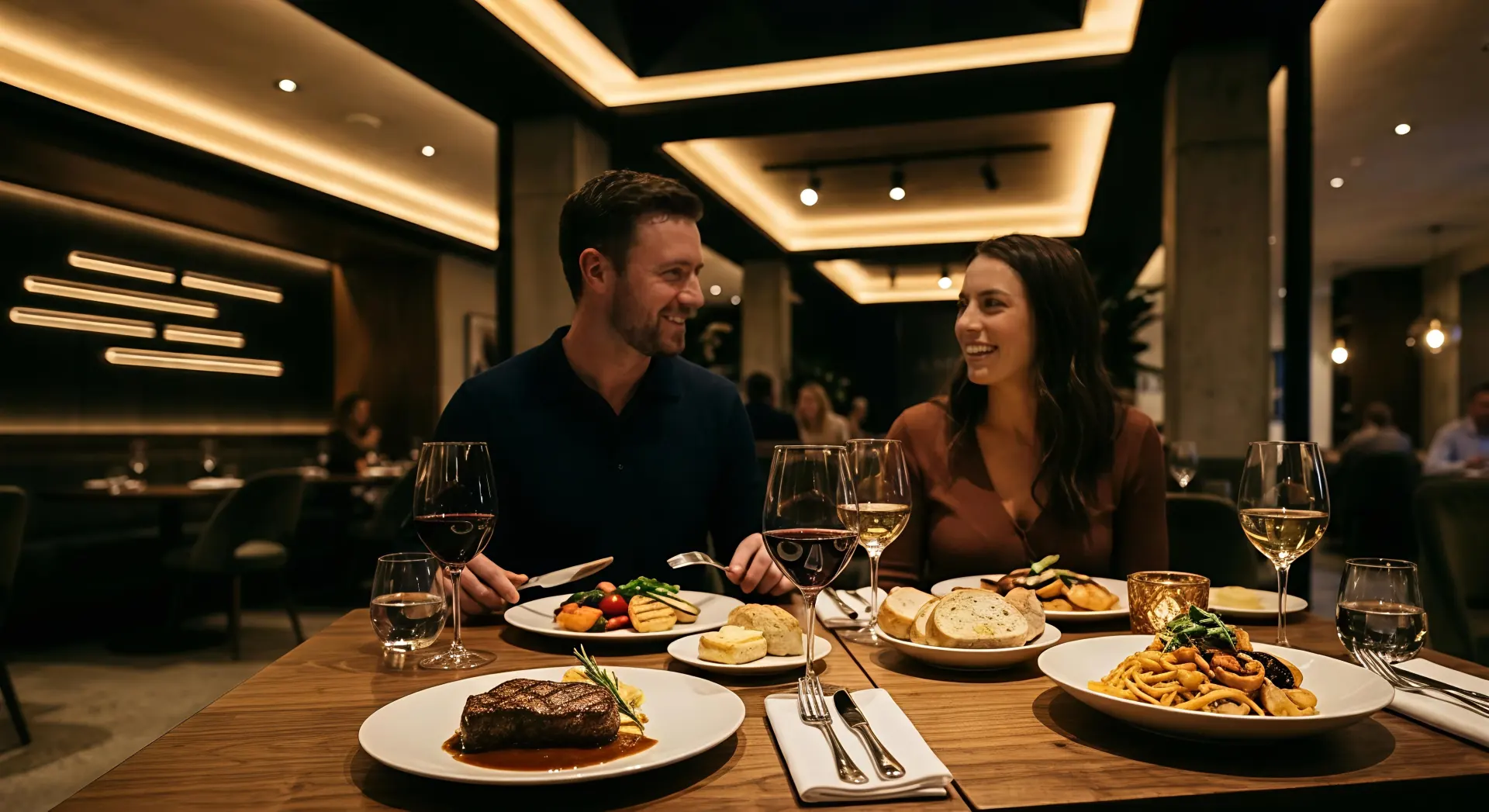
Dining tables are the visual center of any restaurant. The goal of accent lighting here is to make the food look appealing while keeping the dining experience comfortable.
Recommended fixtures
- LED track lighting
- surface-mounted spotlights
Typical Installation Locations
- directly above dining tables
- decorative walls
- bar counters
- wine cabinets
Track lights are particularly useful because their adjustable beam angles allow precise control over where the light falls.
Practical Layout Tips
| Table Type | Recommended Lights | Beam Angle |
|---|---|---|
| 4-person table | 2 spotlights | 24°–36° |
| Round table (6-8 seats) | 3-4 spotlights | 15°–24° |
| Large communal table | adjustable track lighting | zoomable beam |
Fixtures should usually be installed 2.2–2.8 meters above the table with a projection angle between 30° and 45°.
These adjustments ensure the light highlights the dishes without creating glare for guests.
Ambient Restaurant Lighting Using Linear Fixtures
While accent lighting highlights food, ambient lighting creates the emotional tone of the restaurant.
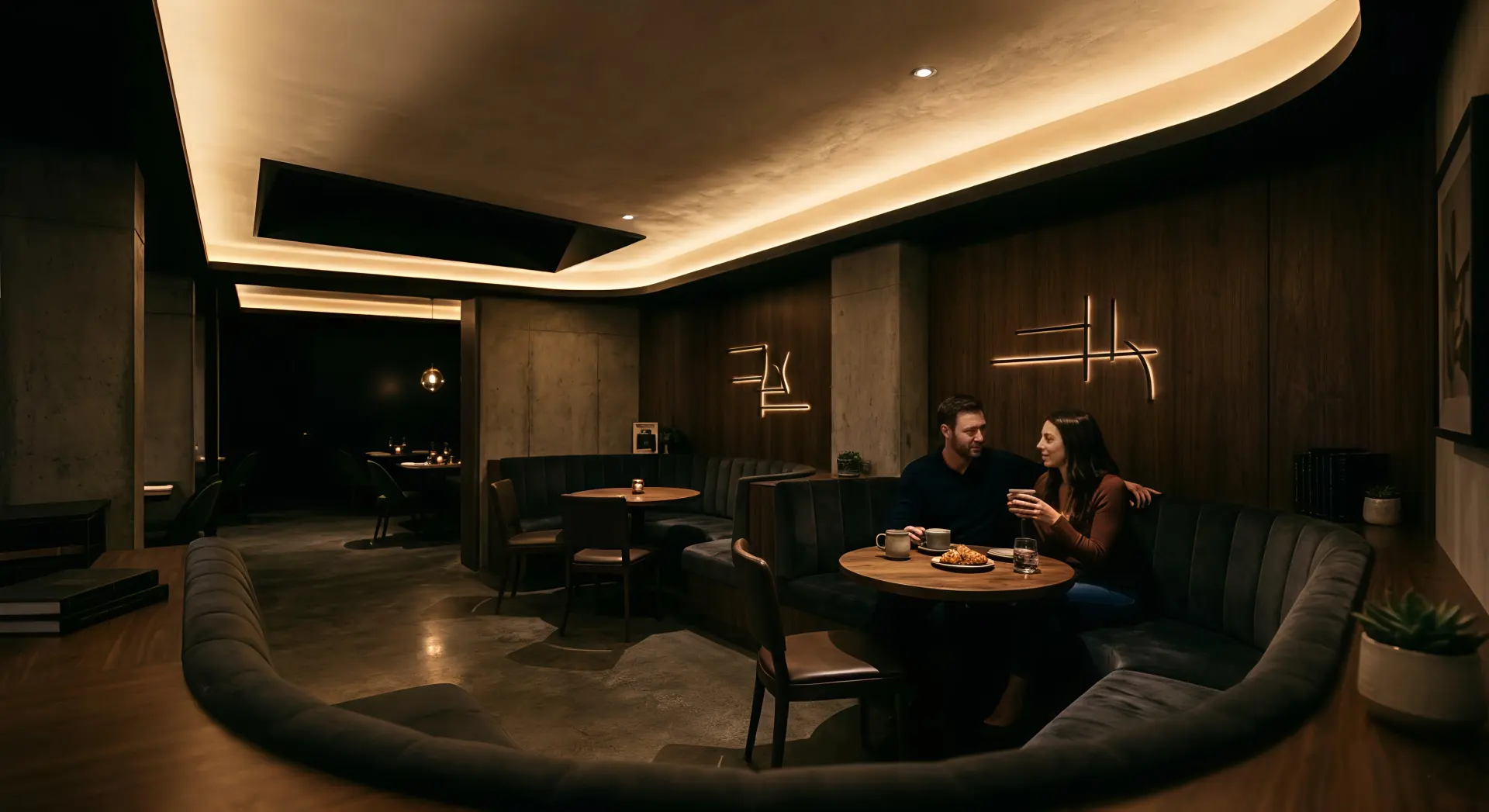
Linear lighting systems are widely used for this purpose because they provide soft, uniform illumination.
Typical Applications
- ceiling coves
- booth seating areas
- wall features
Indirect lighting from ceiling coves can reflect softly off surfaces, producing a warm and relaxing environment.
This approach is particularly popular in coffee shop lighting design and modern cafe interiors where guests may spend longer periods working or socializing.
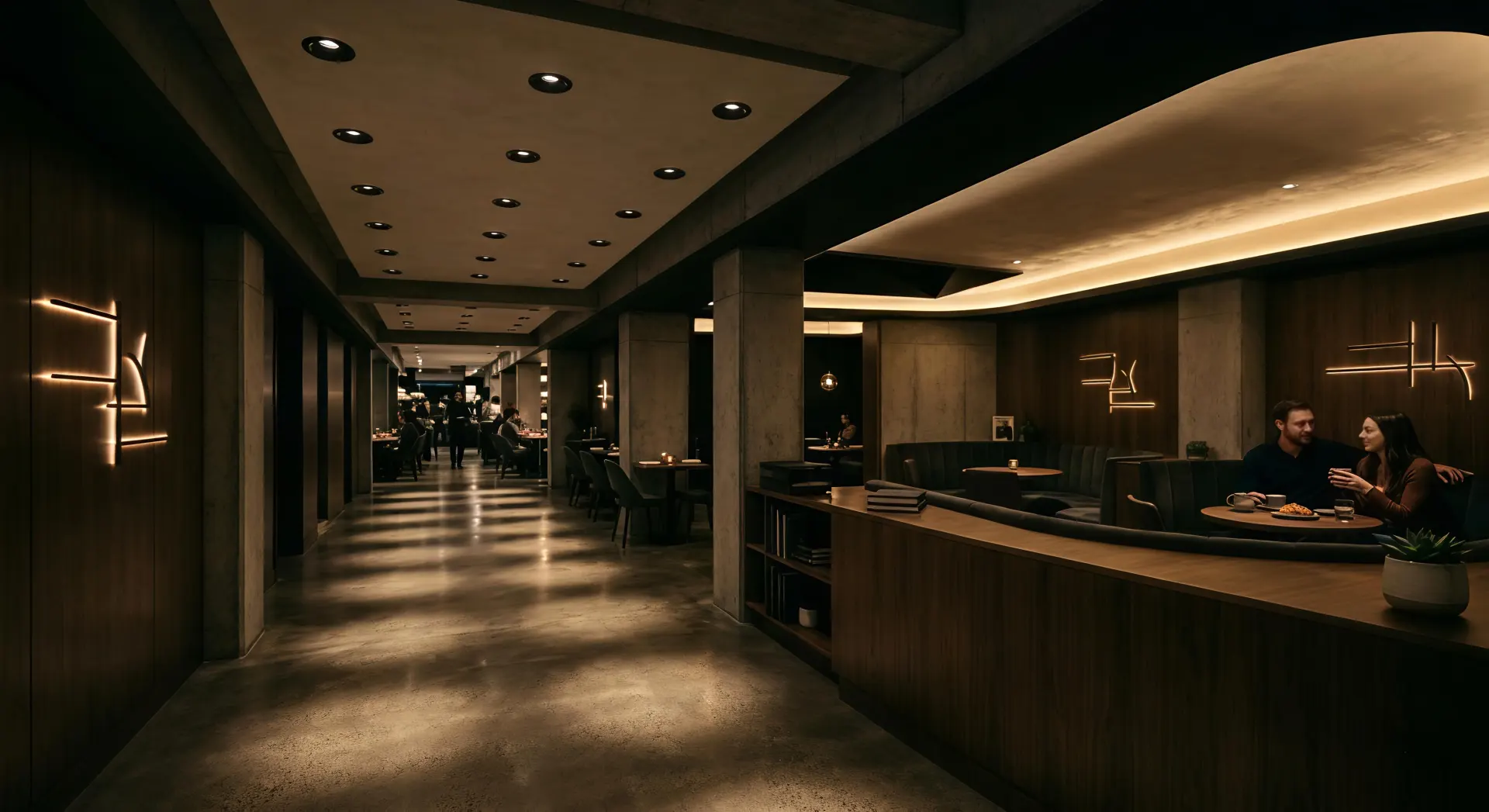
General Lighting with Recessed Downlights
General lighting ensures that the entire space maintains adequate brightness and safe circulation.
Recessed downlights are typically used in:
- walkways
- open seating areas
- cashier zones
Recommended Specifications
| Parameter | Recommendation |
|---|---|
| CRI | ≥80 |
| Beam angle | 60°–90° |
| Color temperature | 3000K–3500K |
| Feature | anti-glare structure |
Adjustable downlights are often preferred because they allow flexibility when coordinating with air vents or ceiling structures.
Entrance and Branding Lighting with Commercial Linear Fixtures
The entrance of a restaurant plays a key role in attracting customers, especially during evening hours.
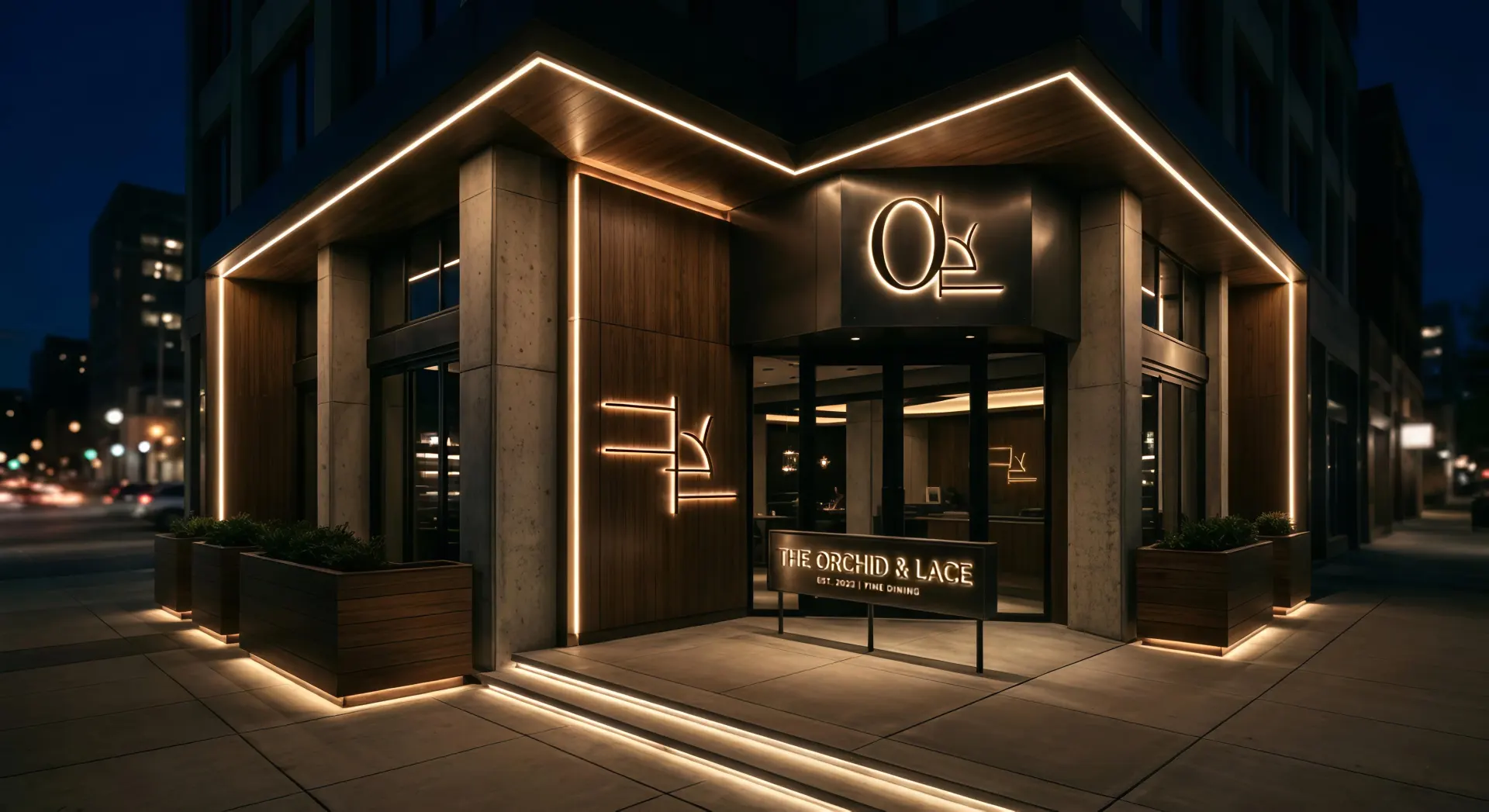
Commercial linear fixtures can be used to highlight:
- restaurant signage
- architectural facades
- decorative feature walls
- floor-level guidance lighting
Key Advantages
- strong visual impact at night
- improved brand visibility
- natural guidance of customer flow
Outdoor fixtures should have IP65 or higher waterproof ratings to withstand rain and dust.
Many modern restaurant exterior lighting designs also use linear lighting to outline the building structure or logo, making the store more recognizable within busy commercial streets.
Lighting Strategies for Different Types of Restaurants
Different dining concepts require slightly different lighting approaches.
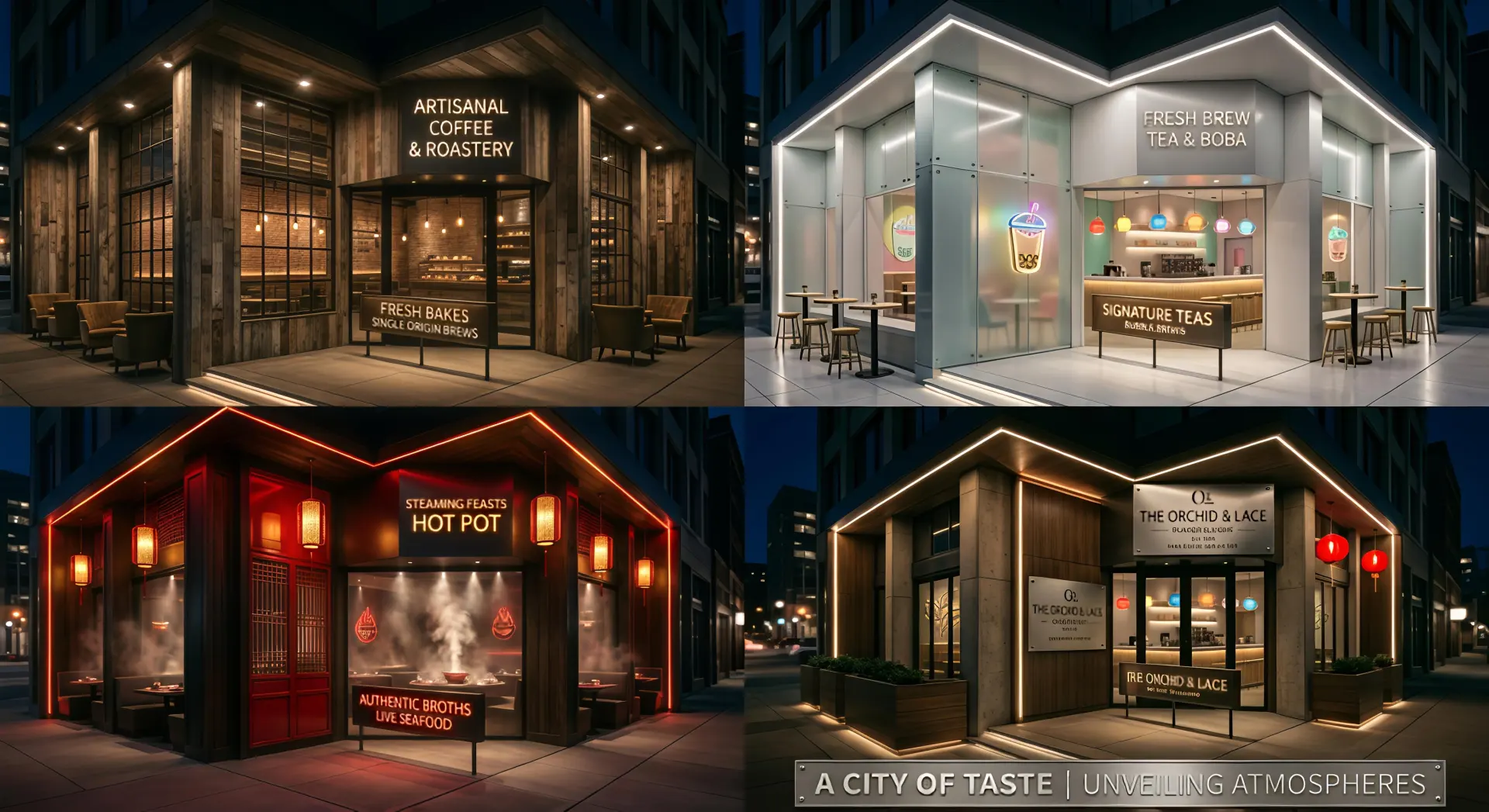
Fine Dining Restaurants
Focus on elegance and privacy.
Key strategy:
- stronger accent lighting on tables
- dimmer ambient lighting
- high CRI spotlights (CRI ≥97)
Coffee Shops and Casual Cafes
These spaces should feel relaxed and comfortable.
Recommended approach:
- softer contrast between lighting layers
- indirect lighting above booth seating
- color temperature around 3000K–3500K
Bubble Tea and Dessert Shops
Young customers often visit these stores for social media photos.
Design focus:
- brighter interior lighting
- strong product display lighting
- decorative linear lighting for photo spots
Hot Pot Restaurants
Hot pot environments require special attention due to steam and oil.
Important considerations:
- fixtures with IP44 or higher protection
- anti-glare lighting to avoid steam reflections
- high CRI lighting for accurate food colors
Technical Parameters for Restaurant Lighting Fixtures
Below is a quick reference table for common fixtures used in Restaurant Lighting Solutions.
| Fixture Type | Main Application | Key Specifications |
|---|---|---|
| Track / Spotlights | tables, bar counters, displays | CRI ≥90, beam 15°–36°, anti-glare |
| Linear Lighting | ceiling coves, booths | CRI ≥80, soft diffusion |
| Downlights | corridors, seating areas | CRI ≥80, beam 60°–90° |
| Commercial Linear | facade, signage | IP65 waterproof |
Advanced features may include:
- flicker-free drivers
- RG0 blue-light safety
- adjustable beam optics
Common Restaurant Lighting Design Mistakes
Even well-designed spaces can suffer if lighting decisions are made incorrectly.
Typical mistakes include:
- exposed light sources causing glare
- low-CRI lighting that makes food look dull
- relying on a single type of fixture
- choosing overly cool color temperatures
- ignoring specific requirements of different restaurant types
- using low-quality drivers with flicker
- lack of lighting guidance along walkways
- fixtures that do not meet local electrical standards
Avoiding these issues is essential for creating successful Restaurant Lighting Solutions.
Frequently Asked Questions
What color temperature is best for restaurants?
Most restaurants use 2700K–3500K warm white lighting.
Fine dining venues prefer warmer tones around 2700K–3000K, while cafes may use slightly cooler light.
How can glare be reduced in restaurant lighting?
Choose fixtures with deep anti-glare structures, shielding angles above 30°, and UGR ratings below 13. Indirect lighting can also help reduce glare.
What special lighting requirements do hot pot restaurants have?
Lighting fixtures should have higher protection ratings and must avoid direct reflection from steam above the pot.
Conclusion
As the restaurant industry continues to evolve, lighting design has become an essential part of creating memorable dining experiences. Effective Restaurant Lighting Solutions are never just about installing fixtures—they represent a balance between technology, design, and customer psychology.
By combining track lights, linear lighting, downlights, and architectural lighting, restaurant owners can create spaces that feel comfortable, visually appealing, and commercially effective.
The right lighting strategy enhances food presentation, strengthens brand identity, and improves the overall customer experience—turning lighting into a powerful yet invisible tool for restaurant success.

