



Supermarket Lighting Solutions: How to Create Bright and Energy-Efficient Retail Spaces
By Powerstar
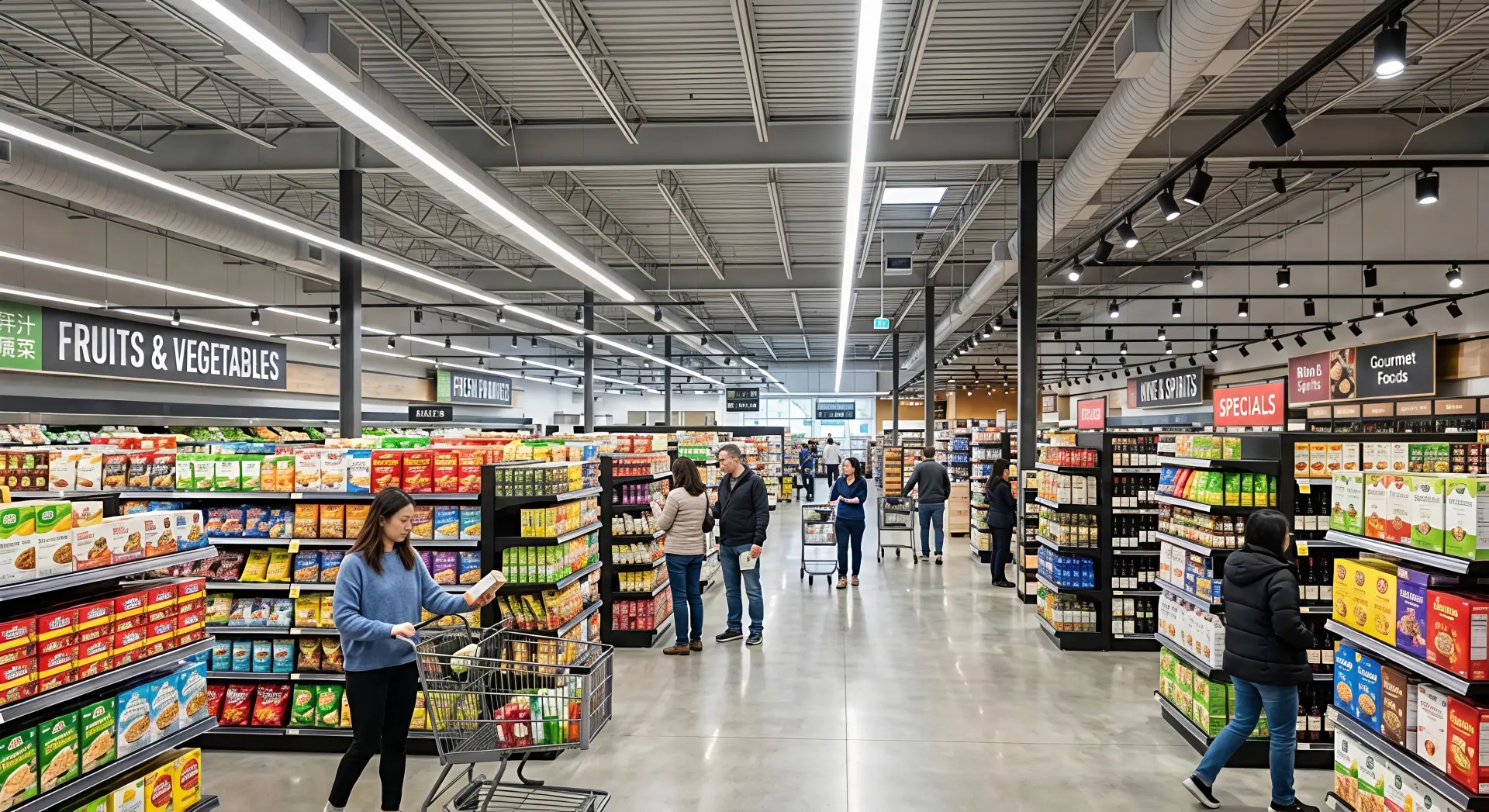
- Introduction: Why Supermarket Lighting Solutions Matter
- Key Lighting Principles for Supermarkets
- Bright and Comfortable Illumination
- Uniform Lighting Distribution
- Energy Efficiency and Easy Maintenance
- Aisle and Ceiling Lighting with Commercial Linear Lights
- Shelf Lighting with Track Linear Lights
- Comfortable Checkout Lighting with Track Panel Lights
- Accent Lighting for High-Margin Products with Track Spotlights
- Exterior Lighting for Supermarkets with LED Floodlights
- Smart Supermarket Lighting with DALI Control System
- How the Right Supermarket Lighting Improves Sales and Customer Experience
- Conclusion: Building Efficient and Attractive Supermarket Lighting Solutions
In today’s retail environment, lighting has evolved far beyond simply illuminating a space. It has become a strategic tool that combines visual psychology, operational efficiency, and brand identity. Effective Supermarket Lighting Solutions play a crucial role in improving product visibility, enhancing the customer shopping experience, increasing staff productivity, and reducing long-term operational costs.
With the rapid development of LED technology and intelligent control systems, modern supermarket lighting design has shifted from single fixtures to integrated, zone-based lighting strategies. A well-planned lighting system typically combines track linear lights, track panel lights, commercial linear lights, track spotlights, and LED floodlights, all managed through smart control technologies such as DALI.
Many supermarkets still struggle with common lighting problems: dark shelf areas, uncomfortable glare at checkout counters, high electricity consumption, and frequent maintenance. A well-designed lighting strategy addresses these challenges while supporting sales performance. By adopting modern Supermarket Lighting Solutions, retailers can achieve a balanced approach that improves visual merchandising while significantly lowering operating costs.
This guide explores how professional lighting design, appropriate fixture selection, and intelligent control systems can create a comfortable, efficient, and high-conversion retail environment.
The Business Value of Modern Supermarket Lighting
Supermarkets are complex retail environments. They feature large floor areas, dense shelving layouts, and long operating hours. As a result, lighting must serve multiple purposes beyond simple visibility.
First, effective lighting significantly improves product presentation. Bright and evenly distributed illumination helps customers clearly see packaging, colors, and product details. Research in retail lighting design shows that well-lit environments encourage customers to stay longer and can increase sales of high-margin products by up to 30%.
Second, quality lighting enhances the overall shopping experience and strengthens brand perception. Glare-free lighting improves comfort for both customers and employees, while well-lit entrances and aisles improve safety and navigation.
Finally, energy-efficient lighting reduces operating expenses. In many grocery stores, lighting accounts for 30–40% of total energy consumption. By implementing LED technology and smart lighting control systems, supermarkets can drastically reduce electricity usage while maintaining optimal illumination.
For further insight into lighting efficiency in commercial buildings, see the research from the U.S. Department of Energy:
https://www.energy.gov/eere/ssl/solid-state-lighting
Ultimately, well-designed Supermarket Lighting Solutions combine product visibility, energy efficiency, visual comfort, and easy maintenance into one integrated strategy.
Core Technical Pillars of Supermarket Lighting Solutions
Before implementing any lighting project, four fundamental performance factors must be considered. These pillars determine whether a supermarket lighting system performs effectively in real retail conditions.
| Technical Factor | Purpose in Supermarket Lighting | Typical Target |
|---|---|---|
| Brightness (Illuminance) | Ensures product details are clearly visible | 300–700 lux depending on area |
| Lighting Uniformity | Eliminates shadows and dark zones | Even light distribution |
| Energy Efficiency | Reduces operational energy costs | High-efficiency LED systems |
| Easy Maintenance | Minimizes disruption to store operations | Long lifespan fixtures |
Key Lighting Design Principles for Retail Stores
Successful Supermarket Lighting Solutions also follow several practical design principles that ensure the lighting system works effectively in daily operations.
Bright and Shadow-Free Environment
Supermarkets require consistent brightness throughout the store. Customers should be able to see every product clearly, even on lower shelves.
High Energy Efficiency
High-efficiency LED lighting reduces electricity consumption while maintaining sufficient brightness for retail environments.
Easy Maintenance
Supermarkets often have high ceilings, making maintenance difficult. Long-life lighting fixtures and modular installation systems help minimize maintenance costs.
Low Glare and Visual Comfort
Lighting with low glare ratings (UGR < 19) improves customer comfort and prevents eye strain for employees working long hours.
Zone-Based Lighting Design
Different retail zones require different lighting strategies, including ambient lighting, shelf lighting, and accent lighting.
Exterior Lighting for Supermarkets: LED Floodlights
Exterior lighting is the first visual contact customers have with a store. At night, well-designed facade lighting improves visibility and helps attract visitors.
LED floodlights are typically installed on building facades, entrances, and signboards. Their wide beam angles provide powerful illumination for storefront branding and parking areas.
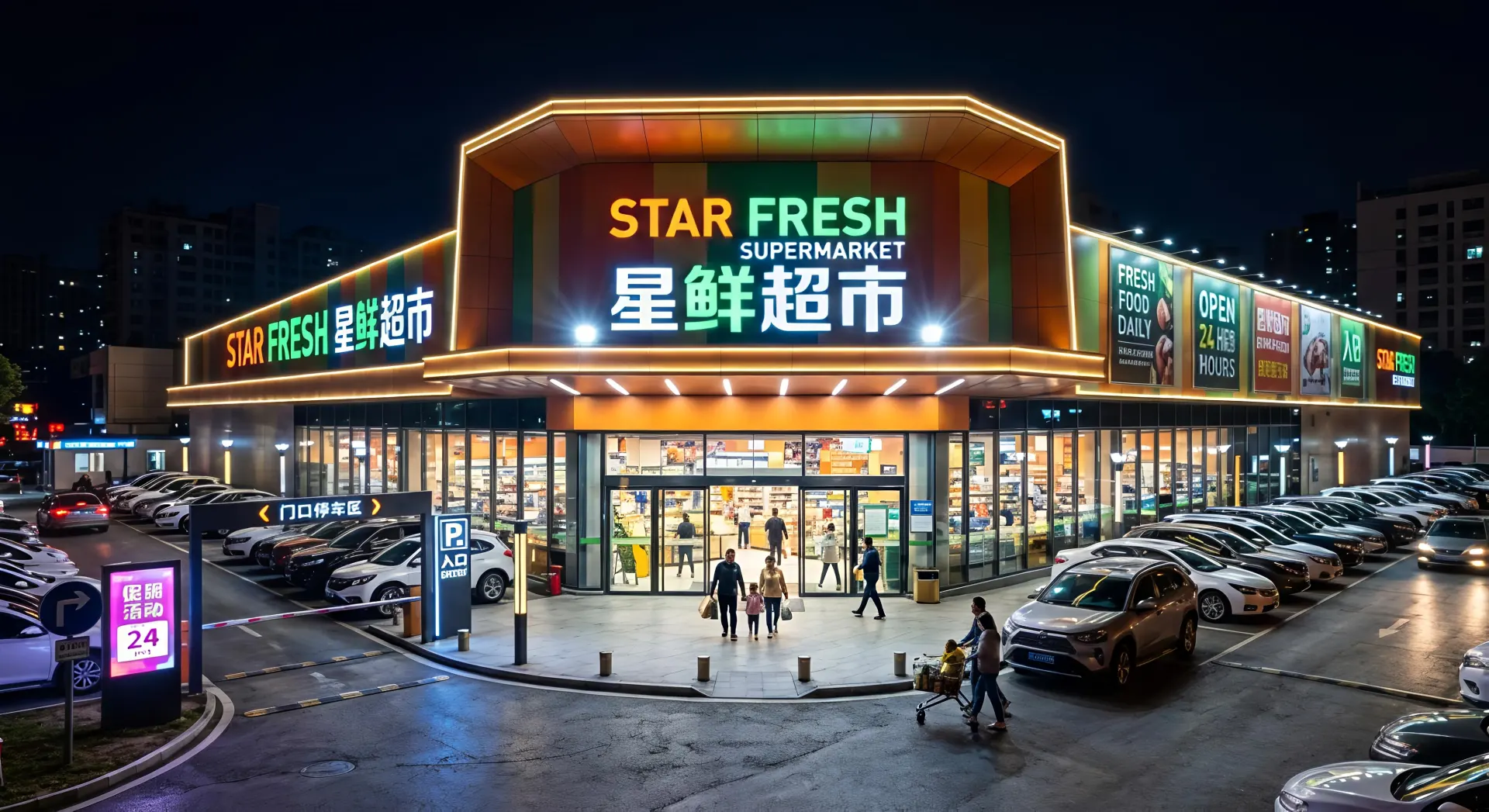
Key advantages include:
- High brightness for long-distance visibility
- IP65 weather resistance for outdoor conditions
- Long service life with minimal maintenance
These lighting systems ensure that supermarkets remain visually prominent even at night.
Aisle and Ceiling Lighting with Commercial Linear Lights
Aisles and general store areas require uniform ambient lighting to guide customer movement throughout the store.
Commercial linear lights are widely used for supermarket ceilings because they provide continuous lighting across large spaces. Their minimalist design also complements modern retail interiors.
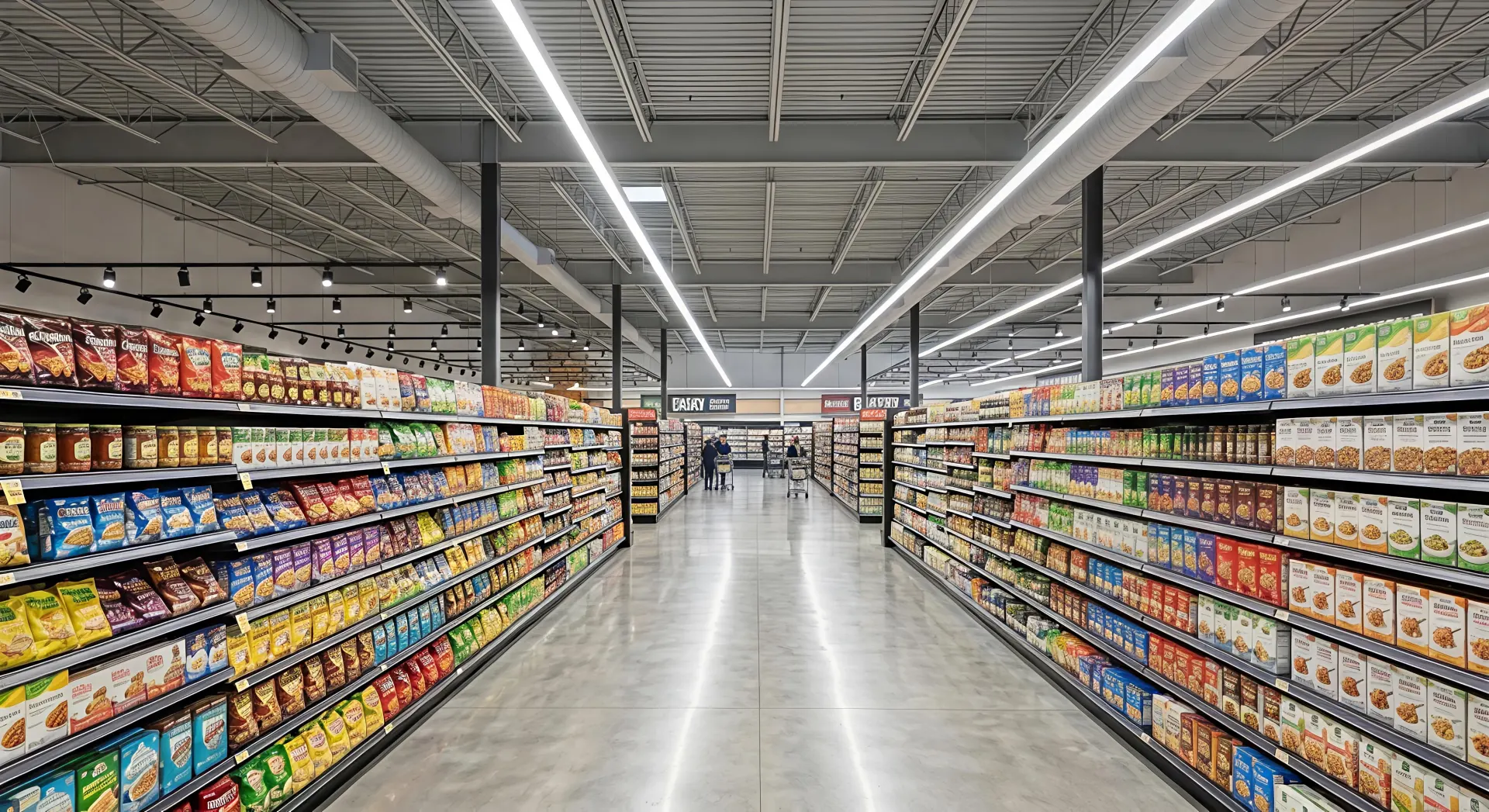
Typical benefits include:
- Uniform illumination across wide areas
- Clean architectural appearance
- High energy efficiency for long operating hours
Linear lighting systems are particularly suitable for large supermarkets and warehouse-style retail stores.
Shelf Lighting with Track Linear Lights
Shelf lighting is one of the most critical aspects of Supermarket Lighting Solutions. Poor vertical lighting often causes the lower shelves to appear dark, making products difficult to see.
Track linear lights installed above shelving units solve this problem by delivering even vertical illumination across the entire display.
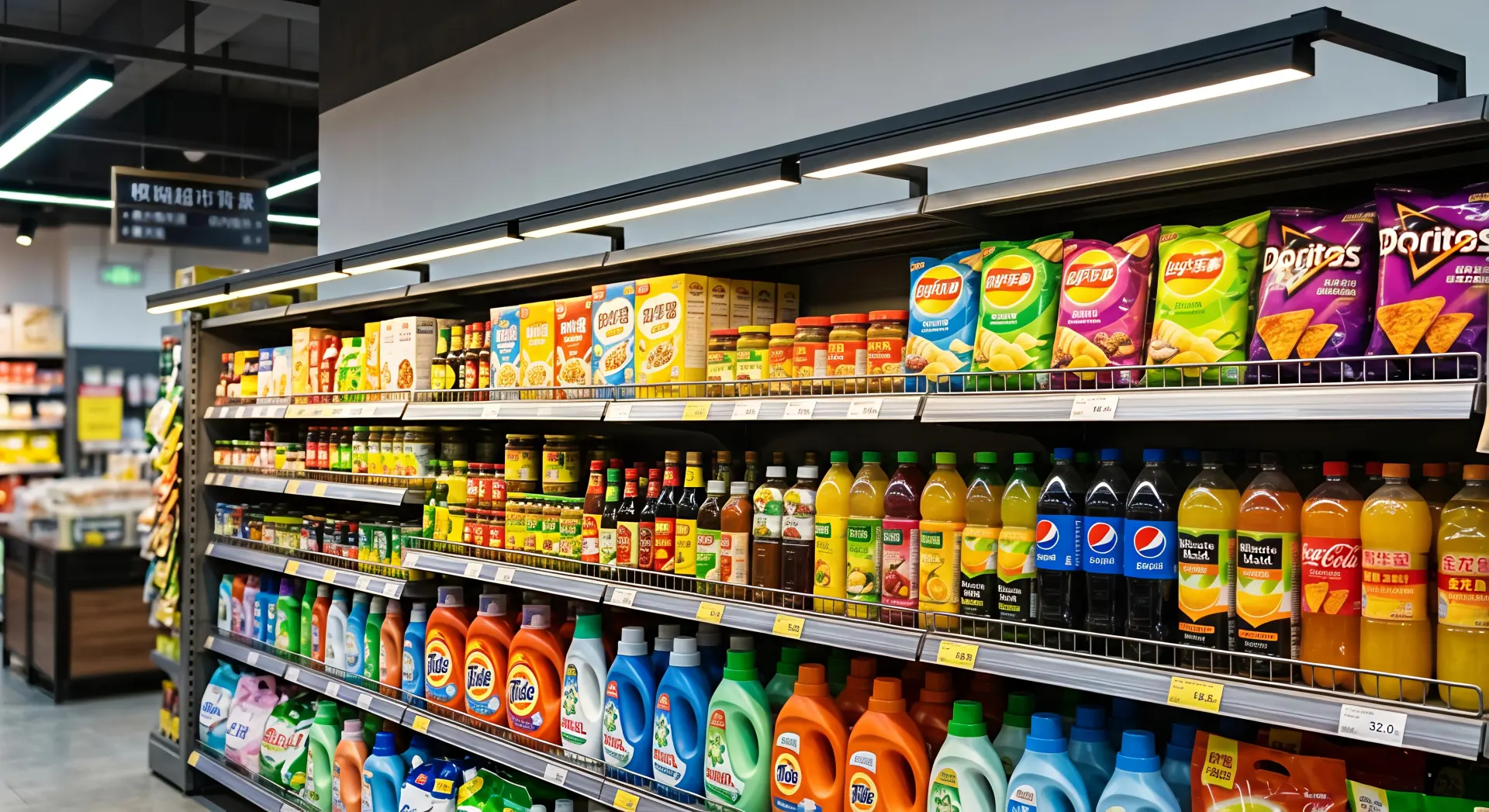
Advantages include:
- Consistent lighting from top to bottom shelves
- Improved product visibility
- Flexible positioning through track installation
These fixtures are commonly used for packaged food, beverages, and daily consumer goods.
Comfortable Checkout Lighting with Track Panel Lights
Checkout counters and service areas require soft, glare-free lighting to ensure customer comfort.
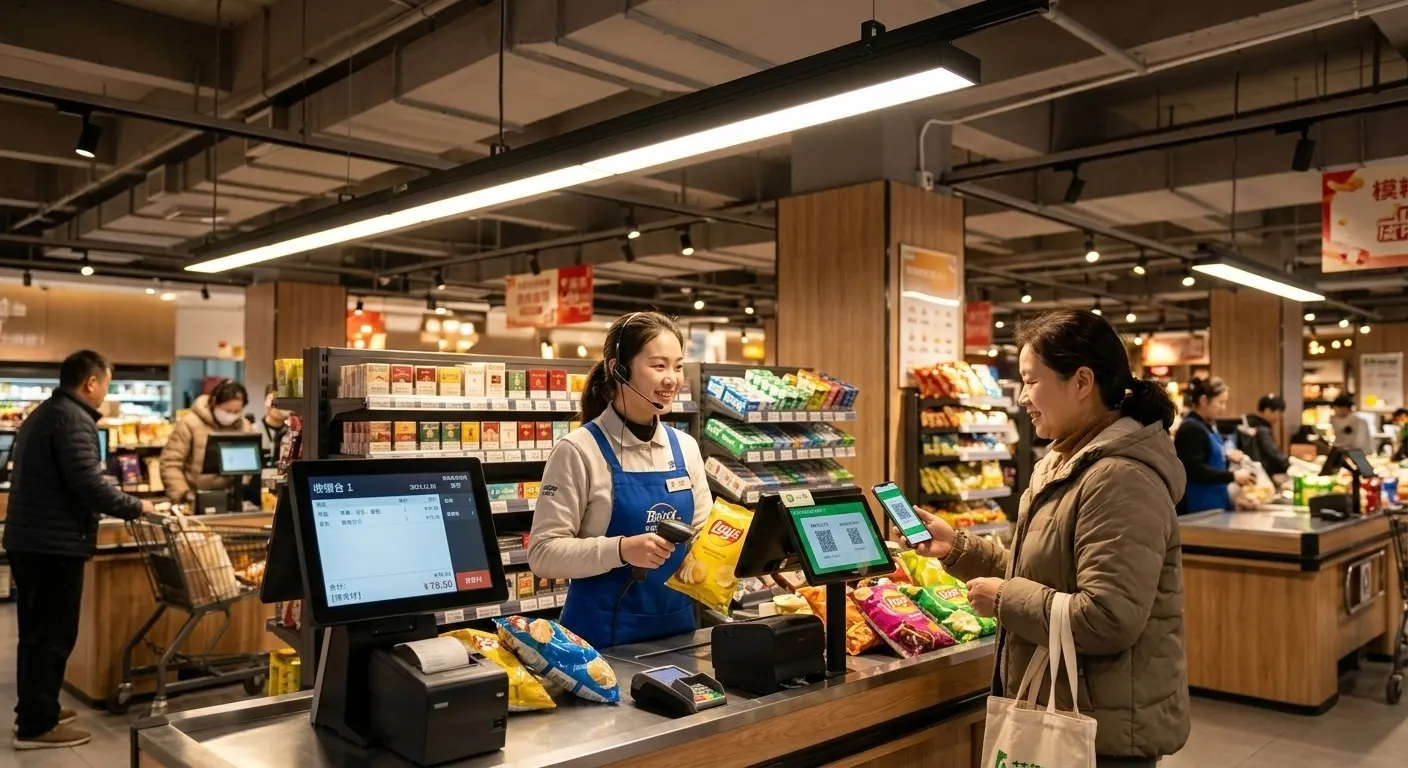
Track panel lights provide wide, uniform illumination without harsh glare, making them ideal for:
- checkout counters
- service desks
- promotional display areas
Their flexible track installation also allows easy repositioning when store layouts change.
Accent Lighting for High-Margin Products
Some product categories require stronger visual emphasis to attract customer attention.
Track spotlights are commonly used in areas such as:
- wine and liquor displays
- premium gift sections
- promotional endcaps
These fixtures produce focused beams that highlight specific products and create visual contrast within the store.
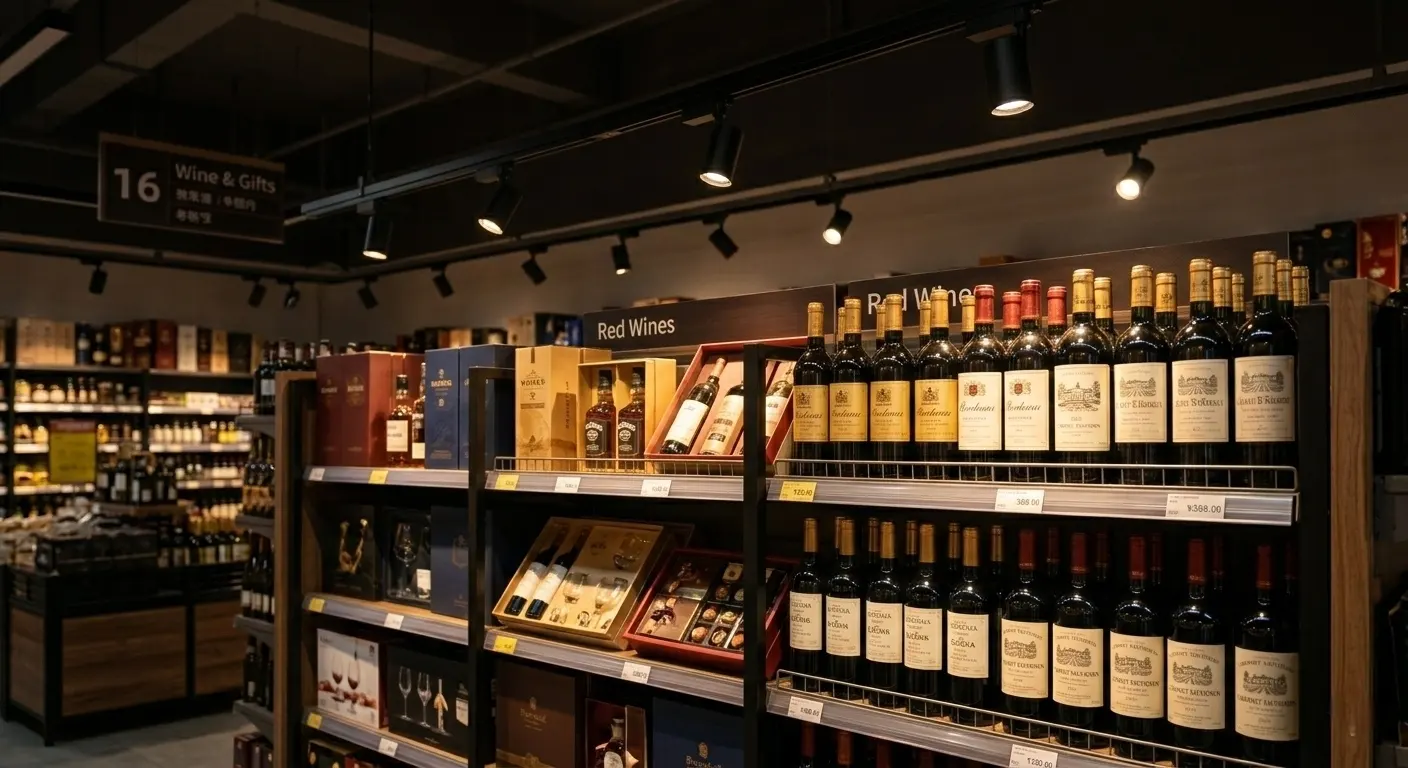
High-quality spotlights often use high color rendering LEDs (CRI ≥ 90) to ensure accurate color representation.
For more information about color rendering standards in lighting, see guidance from the International Commission on Illumination:
https://cie.co.at
Recommended Lighting Levels for Supermarkets
Proper illuminance levels are essential for maintaining visual comfort and product visibility. The following table summarizes common lighting standards used in supermarket environments.
| Area | Recommended Illuminance |
|---|---|
| Main aisles | 200–300 lux |
| Shelf areas | 300–500 lux |
| Checkout counters | 500–700 lux |
| Promotional areas | 500–700 lux |
| High-value product displays | 700–1000 lux |
These lighting levels ensure that each functional zone receives the appropriate amount of light while maintaining energy efficiency.
Smart Control with DALI Lighting Systems
A key element of modern Supermarket Lighting Solutions is intelligent lighting control. One of the most widely used technologies in commercial lighting is the DALI (Digital Addressable Lighting Interface) system.
DALI enables centralized control of lighting fixtures throughout the store.
Key capabilities include:
Intelligent Energy Management
Lighting brightness can automatically adjust according to natural daylight or store traffic levels, reducing unnecessary energy consumption.
Lighting Scene Control
Retailers can program different lighting modes, such as:
- daytime operation
- promotional events
- cleaning mode
- night security mode
Predictive Maintenance
DALI systems monitor fixture performance in real time and report faults immediately, reducing maintenance time and improving operational efficiency.
By combining advanced controls with LED technology, Supermarket Lighting Solutions can reduce total lighting energy consumption by up to 70%.
Best Practices for Supermarket Lighting Design
To achieve the best results in retail lighting projects, designers should follow several best practices.
- Use high color rendering lighting (CRI ≥ 90) for food and premium product displays.
- Avoid glare by selecting fixtures with low UGR ratings.
- Match lighting levels to each functional area.
- Choose long-life LED fixtures to reduce maintenance frequency.
- Integrate smart lighting control systems for improved efficiency.
These guidelines ensure that supermarket lighting remains comfortable, efficient, and cost-effective.
Conclusion
Modern Supermarket Lighting Solutions are no longer just about illuminating a retail space. They are an integrated system that combines lighting design, product presentation, and intelligent control technology.
By combining track linear lights, commercial linear lights, track panel lights, track spotlights, and LED floodlights, supermarkets can create layered lighting environments that improve product visibility and customer comfort.
When integrated with smart control technologies such as DALI, these systems also reduce energy consumption and simplify maintenance. The result is a retail space that not only looks brighter and more attractive but also operates more efficiently.
As retail competition continues to intensify, investing in professional Supermarket Lighting Solutions can significantly improve both the customer experience and the overall profitability of a supermarket.

