



Ruining the Vibe? Why Your Track Lighting for Fine Dining Needs an Upgrade
By Powerstar
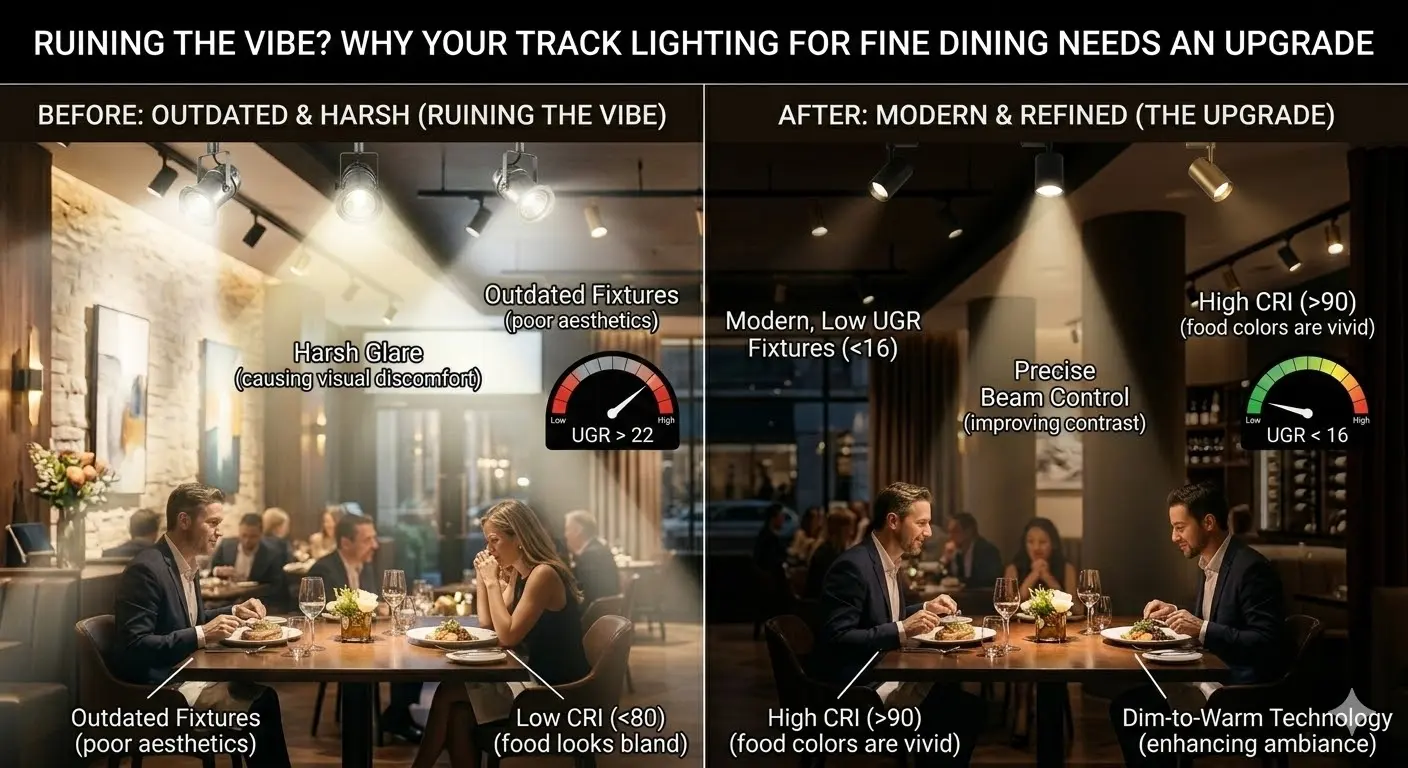
When planning your restaurant’s interior layout, choosing the right track lighting for fine dining ensures every table receives the perfect amount of glare-free illumination. The other half is the atmosphere. A meticulously designed interior can be completely undermined by poor illumination, while brilliant lighting can transform a simple meal into an unforgettable sensory journey. When it comes to striking the perfect balance between drama, visual comfort, and flexibility, track lighting for fine dining has emerged as the premier choice for top-tier restaurateurs.
Designing the lighting for a luxury restaurant requires a delicate touch. Highlight the chef’s culinary masterpieces, flatter the guests’ complexions, and create an intimate bubble around each table without causing harsh glare. This comprehensive guide explores why these versatile lighting systems are essential. Let’s see how to choose the right fixtures, and the technical specifications required to create a world-class dining environment.
Why Premium Restaurant Track Lights Are Essential for Atmosphere
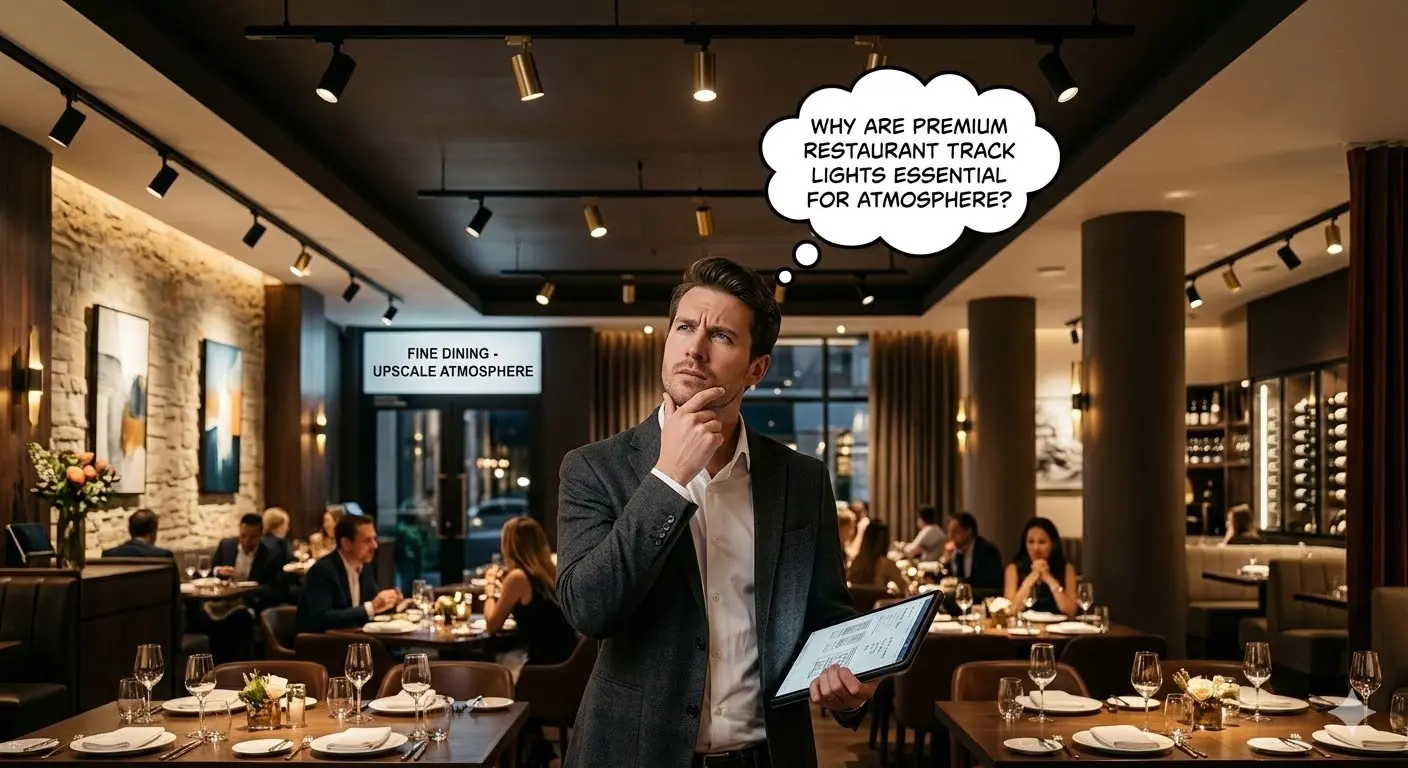
The primary goal of any upscale eatery is to craft a mood that resonates with the brand’s identity—whether that is dark, moody, and romantic, or bright, airy, and modern. Premium restaurant track lights offer unparalleled advantages in achieving these aesthetic goals compared to traditional recessed downlights or static chandeliers.
In a dynamic restaurant environment, tables move, seasonal menus change, and art displays are rotated. The lighting system must be able to adapt to these changes seamlessly. A well-designed track system provides the infrastructure to pivot your lighting strategy without requiring an expensive electrical overhaul.
Here are the core reasons why investing in these adaptable systems is crucial for your venue:
- Unmatched Flexibility: Fixtures can be added, removed, or repositioned along the rail in seconds. If a large party requires pushing three tables together, the light heads can be easily slid down the track and re-aimed to perfectly center over the new seating arrangement.
- Targeted Illumination: Unlike ambient lighting that floods a room indiscriminately, directional track heads allow you to pinpoint exact areas. You can create high-contrast focal points on the dining tables while leaving the surrounding aisles in a sophisticated, dim shadow.
- Aesthetic Integration: Modern fixtures are no longer bulky or industrial. Today’s luxury lighting options feature sleek, minimalist profiles that blend seamlessly into dark ceilings or stand out as architectural statements in their own right.
- Layering Capabilities: A single track can host different types of fixtures—from narrow beam spotlights for the tables to wall washers for the artwork—allowing you to build complex lighting layers from one power source.
Key Features of High-End Hospitality Track Fixtures
When sourcing track lighting for fine dining, it is critical to look beyond the exterior design of the luminaire. The internal components, optical lenses, and LED chips dictate the quality of light that reaches the customer. In a luxury setting, technical flaws like flickering, poor color rendering, or blinding glare are unacceptable.
To ensure your establishment delivers a flawless visual experience, you must prioritize specific technical specifications. The lighting should operate quietly in the background, enhancing the environment without ever drawing negative attention to itself.
When evaluating high-end hospitality track fixtures, always demand the following technical features:
- High Color Rendering Index (CRI > 90/95): The CRI measures how accurately a light source reveals the true colors of objects. In gastronomy, a high CRI (especially a high R9 value for reds) is mandatory. It ensures that a medium-rare steak looks succulent and red, rather than dull and brown, and that fresh greens look vibrant.
- Low Unified Glare Rating (UGR < 16): Nothing ruins a romantic dinner faster than a blinding light shining directly into a guest’s eyes. Low UGR fixtures utilize deep-recessed LED chips, honeycomb louvers, or snoots to physically block stray light. It can ensure the light source is nearly invisible from a seated angle.
- Optimal Color Temperature (CCT): Upscale restaurants typically utilize warm light to create intimacy. Look for fixtures offering 2700K (very warm, candlelight-like) to 3000K (warm white) to flatter skin tones and create a cozy, relaxing environment.
- Flicker-Free Drivers: High-quality drivers are essential. Invisible flicker can cause headaches and eye strain over a two-hour tasting menu. It will visibly ruin any photos or videos guests try to take of their food for social media.
Layering Illumination in Upscale Dining Spaces
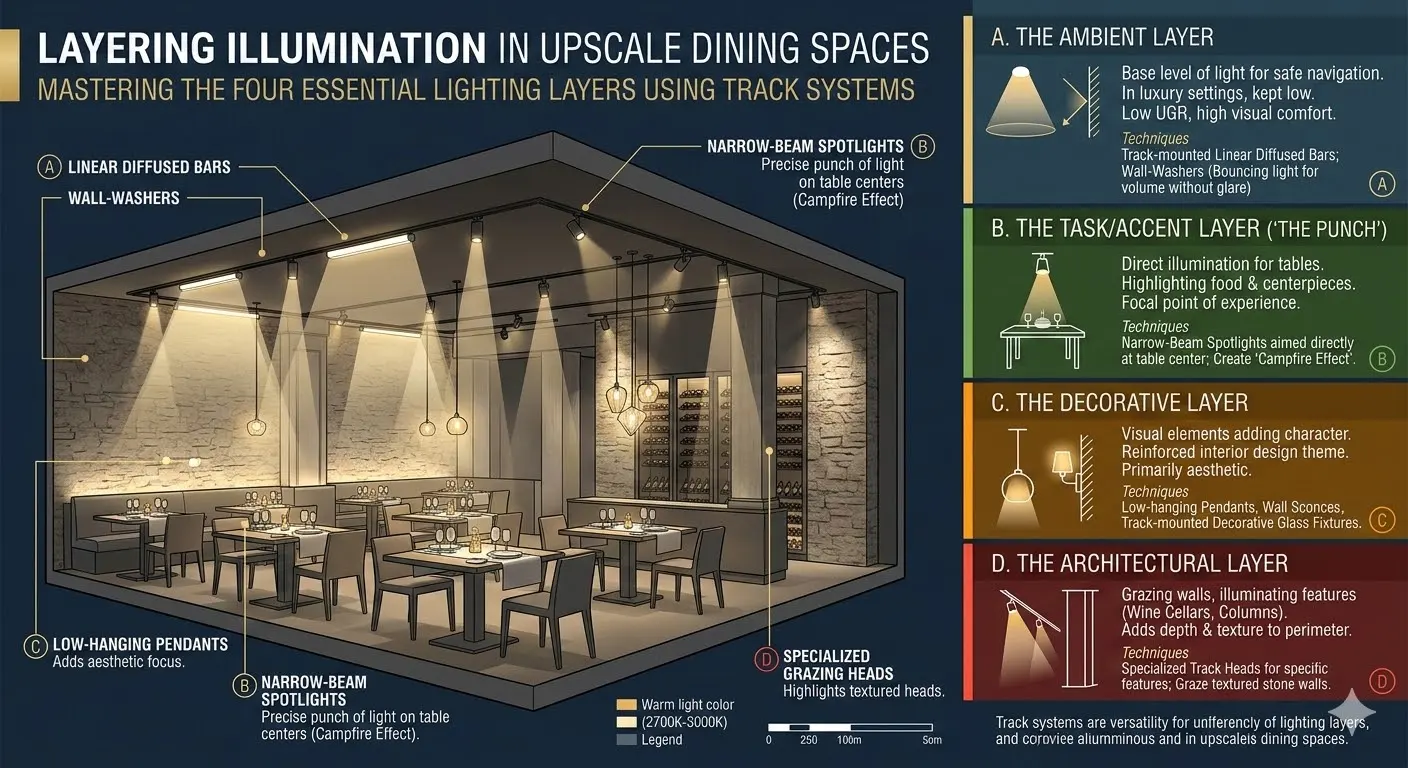
A successful lighting design never relies on a single light source. The secret to a truly immersive atmosphere is “layering”. By combining different types of light at various intensities, a rich, three-dimensional environment guides the eye and sets the emotional tone. Upscale dining spaces illumination relies heavily on mastering these layers.
Track systems are uniquely suited for this because they allow designers to implement multiple layers from a unified architectural element. Instead of cluttering the ceiling with different types of cut-outs, a single recessed or surface-mounted rail can handle almost the entire lighting load.
To properly layer your restaurant’s lighting, you should implement the following techniques:
- The Ambient Layer: This is the base level of light that allows guests and staff to navigate the space safely. In a luxury setting, this should be kept relatively low. You can achieve this using track-mounted linear diffused bars or by utilizing wall-washers to bounce light off the surrounding walls, making the room feel larger without being overly bright.
- The Task/Accent Layer (The “Punch”): This is where track lighting for fine dining truly shines. Use narrow-beam spotlights aimed directly at the center of the dining tables. This creates a “campfire effect,” drawing guests inward, highlighting the food. It can also make the table the focal point of their experience.
- The Decorative Layer: This includes the visual elements that add character, such as low-hanging pendants, wall sconces, or even track-mounted decorative glass fixtures. While they provide some light, their primary purpose is to look beautiful and reinforce the interior design theme.
- The Architectural Layer: Use specialized track heads to graze textured stone walls, illuminate wine cellars. Highlight specific architectural columns, adding depth and texture to the room’s perimeter are also available.
Choosing the Right Directional Lighting for Gourmet Eateries
Selecting the correct beam angle and control systems is just as important as choosing the fixture itself. Directional lighting for gourmet eateries must be precise. If a beam is too wide, the light spills over the edge of the table, illuminating the guests’ laps. More than that it will destroy the intimate contrast. If it is too narrow, only the center centerpiece is lit, leaving the plates in the dark.
Furthermore, a restaurant’s atmosphere must transition throughout the day. The bright, welcoming light needed for a Sunday brunch will feel harsh and clinical during a late-night cocktail service.
To select the perfect directional fixtures for your project, consider these critical factors:
- Precision Beam Angles: Use a narrow spot (10° to 15°) for small two-top tables or specific centerpieces. Use a medium flood (24° to 36°) for larger round tables or four-tops. Ensure the light covers the tabletop perfectly without spilling into the aisles.
- Advanced Dimming Compatibility: Your system must dim smoothly down to at least 1% without flickering or dropping out. Look for fixtures compatible with DALI, 0-10V, or Triac dimming systems, allowing you to tie the lights into a central smart-control panel.
- Warm-Dim Technology: For the ultimate luxury experience, consider fixtures with “Dim-to-Warm” technology. As you dim the lights, the color temperature automatically shifts from 3000K down to a fiery 2200K, perfectly mimicking the cozy, golden glow of dimmed incandescent bulbs or candlelight.
- Optical Accessories: Ensure the fixtures you choose can accommodate accessories. Honeycomb meshes, spread lenses, and barn doors are invaluable tools for lighting designers to fine-tune the beam shape and cut off glare on-site.
Installation and Maintenance of Luxury Culinary Spotlights
Even the most expensive lighting system will fail to impress if it is installed incorrectly or poorly maintained. The final aiming and focusing of luxury culinary spotlights is an art form that often requires tweaking after the furniture is placed and the tables are set.
Furthermore, high-end restaurants operate on tight margins and busy schedules; they cannot afford downtime or the disruption of maintenance crews constantly bringing in ladders during service hours.
To ensure your system remains pristine and operational, follow these best practices for installation and maintenance:
- Conduct On-Site Aiming: Never finalize the lighting focus during the day. Have your lighting designer or installer aim the track heads at night, with the actual table settings (plates, glasses, silverware) in place, to accurately judge glare and reflections.
- Lockable Articulations: Choose track heads with mechanical locks on the pan and tilt joints. Once the perfect angle is set, these locks ensure the light won’t be accidentally bumped out of position during routine cleaning or dusting.
- Prioritize Thermal Management: High-lumen output generates heat. Ensure the fixtures have robust aluminum heat sinks. Excellent thermal management prevents the LED chips from degrading, ensuring consistent color and brightness over a 50,000-hour lifespan.
- Standardized Modules: Opt for a system that uses modular light engines or easily replaceable lenses. If a fixture does fail, staff can easily swap out a component rather than replacing the entire luminaire.

