



The Michelin Secret: Why Top Chefs Swear By High-End Restaurant Track Lights
By Powerstar
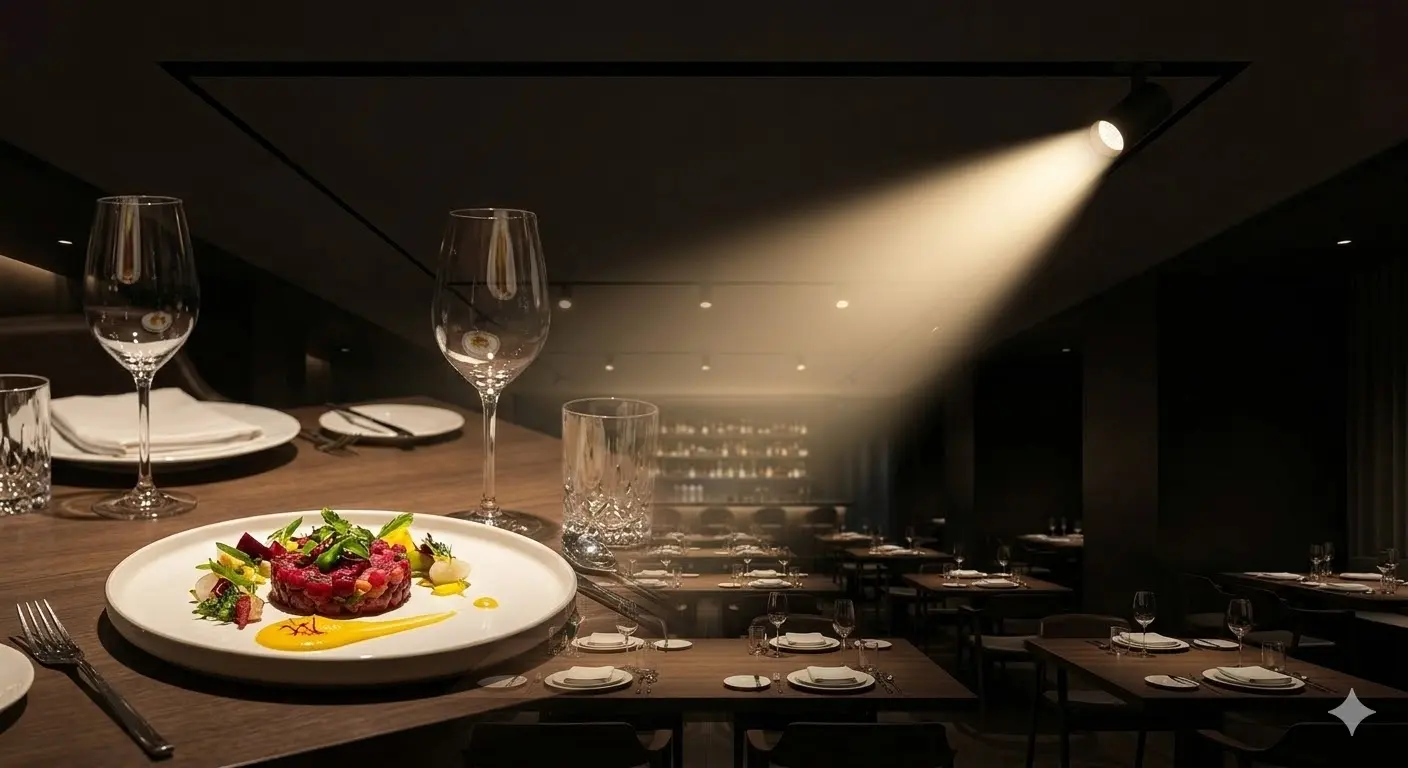
For top-tier hospitality designers and commercial architects, specifying high-end restaurant track lights is the most critical step in sculpting a dining room’s emotional landscape. A meticulously designed dining room can be entirely compromised by inadequate or harsh illumination. Conversely, strategic and refined lighting elevates the mood, flatters the guests, and transforms a simple meal into an unforgettable sensory experience. This is precisely why high-end restaurant track lights have become the gold standard for hospitality designers and commercial architects worldwide.
These sophisticated lighting systems offer the perfect amalgamation of architectural aesthetics, immense flexibility, and precision engineering. Unlike static chandeliers or rigid recessed downlights, a track system empowers restaurant owners to adapt to ever-changing layouts and seasonal menus effortlessly. In this comprehensive guide, we will explore the technical nuances, design strategies, and aesthetic benefits of upgrading to premium directional illumination in upscale dining spaces.
Why Premium Hospitality Directional Lighting is the Ultimate Design Choice
When conceptualizing a luxury dining interior, the lighting infrastructure must be robust yet visually unobtrusive. Opting for high-end restaurant track lights provides distinct architectural and operational advantages over traditional lighting formats:
- Unparalleled Layout Flexibility: Upscale restaurants frequently reconfigure their floor plans for VIP parties or seasonal events. Track systems allow staff to physically slide, add, or remove light heads along the rail within seconds, ensuring illumination remains perfectly centered over moved tables.
- Minimalist Architectural Integration: Modern rail systems feature sleek, ultra-slim profiles. Whether surface-mounted, suspended, or entirely recessed into a drop ceiling, these systems blend seamlessly into the architecture, ensuring the ceiling remains uncluttered.
- A Unified Power Infrastructure: A single track rail acts as the host for multiple fixture types—from focused spotlights to ambient linear bars. This runs off a single electrical feed, vastly simplifying the installation process and preserving the ceiling’s acoustic or wooden integrity.
- Cost-Effective Future-Proofing: While the initial investment might be higher, it offers immense long-term savings. If the restaurant undergoes a minor remodel, there is no need to hire an electrician to pull new wires; you simply adjust or swap the existing compatible light heads.
Core Technical Specifications for Upscale Culinary Track Fixtures
The physical housing is only half the battle; internal optical engineering dictates the actual quality of light. For high-end restaurant track lights, standard commercial specifications are inadequate; the technology must actively protect guests’ visual comfort:
- Exceptional Color Rendering Index (CRI > 95 & High R9): In gastronomy, visual appeal triggers the appetite. A high CRI ensures food colors are rendered accurately. An elevated R9 value (red tones) ensures steaks look juicy, wines show true depth, and guests’ skin tones appear healthy and glowing.
- Ultra-Low Unified Glare Rating (UGR < 16): Harsh light shining directly into a diner’s eyes ruins the luxurious ambiance. Premium fixtures achieve a low UGR through deep-recessed LED chips and advanced optical lenses, creating a “quiet ceiling” where the light source is virtually invisible from a seated angle.
- Dim-to-Warm Technology: The atmosphere must evolve throughout the day. Dim-to-Warm LED technology automatically shifts the color temperature from a crisp 3000K down to an intimate 2200K as lights are dimmed, perfectly mimicking the cozy glow of candlelight.
- Flicker-Free, High-Performance Drivers: Invisible LED flicker causes subconscious eye strain and headaches over a long tasting menu. High-end drivers ensure perfectly smooth, zero-flicker output, allowing guests to take perfect, free-marketing social media photos of their meals.
Strategies for Layering Light with Luxury Dining Rail Systems
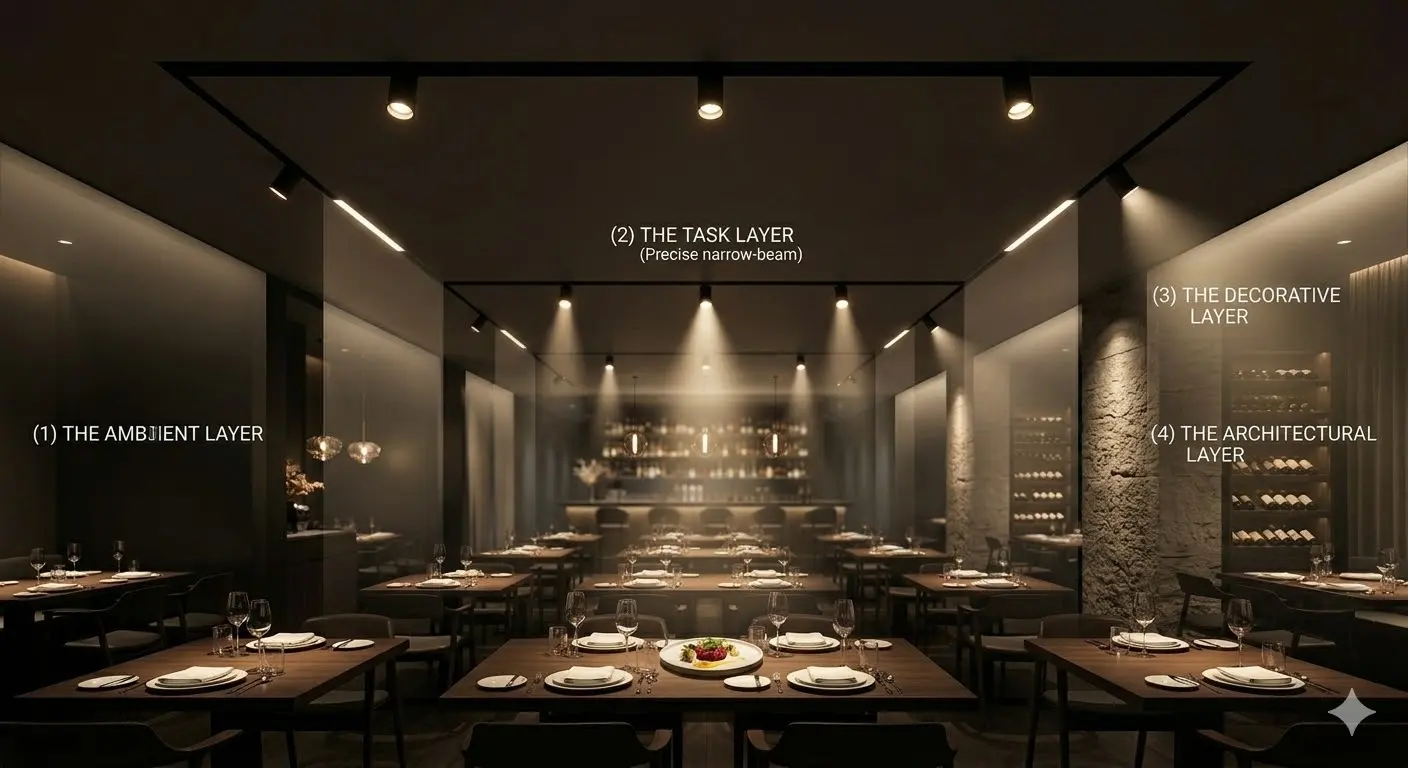
A masterfully lit restaurant never relies on a flat, uniform wash of light. By utilizing high-end restaurant track lights, designers can execute multiple lighting techniques simultaneously from a single architectural system:
- The Task Layer (The “Campfire Effect”): By using narrow-beam spotlights aimed directly at the table’s center, you create a bright, high-contrast focal point. This draws diners inward, creating an intimate “bubble” while leaving surrounding aisles in sophisticated shadow.
- The Ambient Layer (Vertical Illumination): Instead of flooding the floor, use track-mounted wall washers to illuminate vertical surfaces. Bouncing light off brick walls or velvet curtains softly raises the ambient light level without creating glare, making the room feel larger.
- The Decorative Layer (Highlighting Focal Points): Upscale restaurants often feature expensive art or intricate wine cellars. Specialized track heads with adjustable framing projectors or asymmetric lenses precisely illuminate these specific design elements, drawing the eye to the interior decor.
- The Texture Layer (Architectural Grazing): For textured surfaces like exposed stone or acoustic wood slats, position the track rail close to the wall and use tight-beam fixtures to “graze” the surface. This casts micro-shadows that add a dramatic, tactile quality to the environment.
Selecting the Perfect Beam Angles for Fine Dining Spotlights
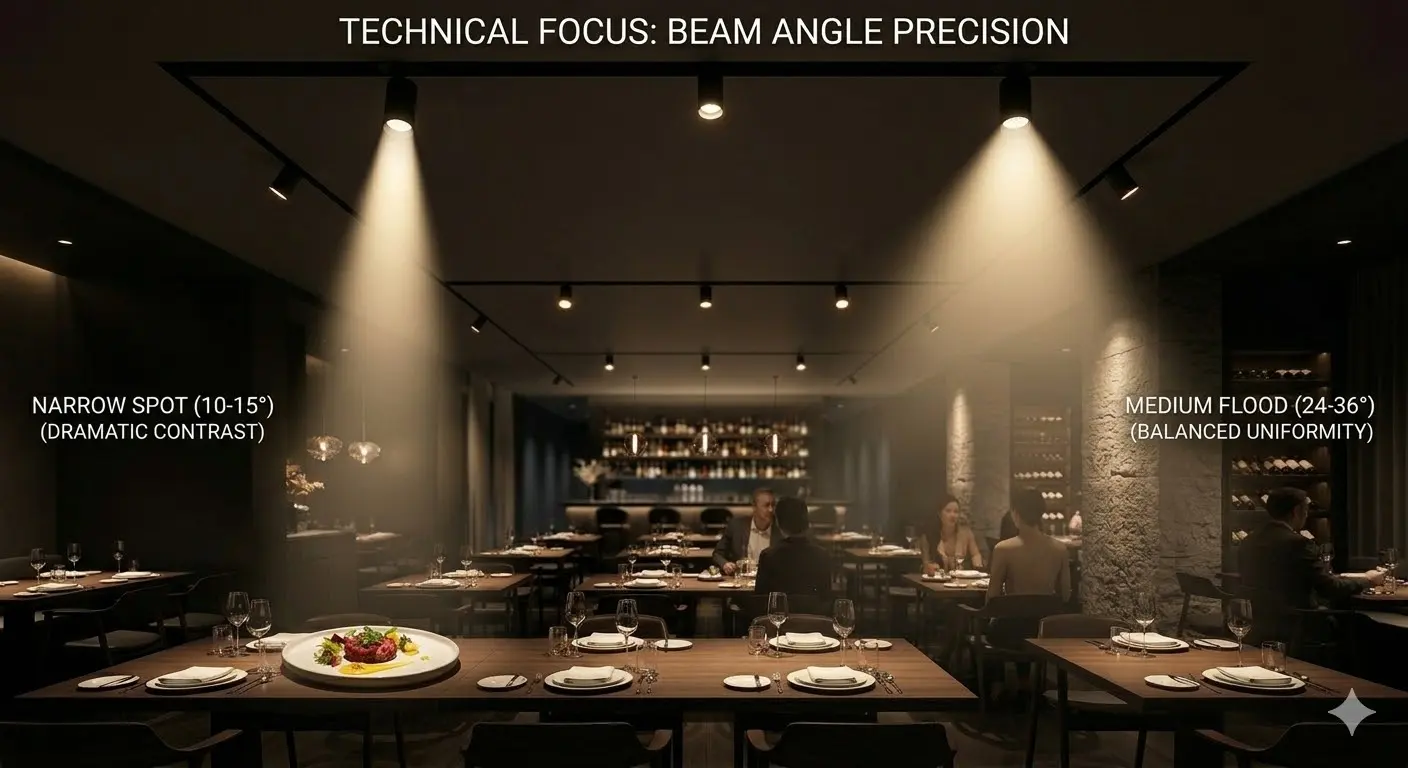
The precision of the light beam separates average commercial fixtures from true high-end restaurant track lights. The goal is surgical precision—putting light exactly where it is needed and nowhere else:
- Narrow Spot (10° to 15°): This extremely tight beam angle is ideal for small two-top tables or highlighting specific centerpieces, providing the highest level of dramatic contrast. It requires precise aiming and is best used in fixed seating arrangements like luxury booths.
- Medium Flood (24° to 36°): This is the industry standard and the most versatile beam angle for dining. It provides a pool of light wide enough to cover a four-top table, illuminating plates and glasses without spilling into the guests’ laps.
- Oval and Asymmetric Beams: For long communal tables or high-end bar countertops, standard round beams create uneven scalloping. Premium systems offer elongated oval lenses that stretch the light linearly, providing a smooth, continuous wash without wasting light.
- Optical Control Accessories: The mark of a luxury fixture is its ability to accept snap-on accessories. Honeycomb louvers cut off glare, snoots narrow the beam, and frosted spread lenses soften the edges, allowing for crucial on-site fine-tuning.
Installation and Maintenance of Top-Tier Gastronomy Track Illumination
Even the most expensive system fails if improperly installed or difficult to maintain. To ensure the longevity and sustained performance of your top-tier gastronomy track illumination, strictly adhere to these best practices:
- Mandatory Night-Time Aiming: Never finalize the focusing of high-end restaurant track lights during the day. Aiming must be done at night with actual table linens and highly reflective wine glasses fully set to accurately detect accidental glare and ensure perfect centering.
- Mechanical Pan-and-Tilt Locks: Restaurant ceilings require regular dusting, and fixtures are easily bumped. Premium fixtures feature tiny Allen-key locks on their articulation joints. Once the designer sets the perfect angle, these locks ensure the beam remains perfectly targeted for years.
- Advanced Thermal Management: High-lumen output generates significant heat. Ensure fixtures are manufactured with heavy-duty cold-forged aluminum heat sinks. Superior thermal management prevents LED chips from experiencing color shift and guarantees a 50,000-hour lifespan.
- Tool-Less Modular Maintenance: In a fast-paced hospitality environment, staff needs to resolve issues immediately. Look for track systems with magnetic attachments or tool-less modular light engines, allowing managers to swap modules in seconds without calling an electrician.

