



Smart Lighting Management for Retail Stores: A Smarter Way to Improve Efficiency and Store Consistency
By Powerstar
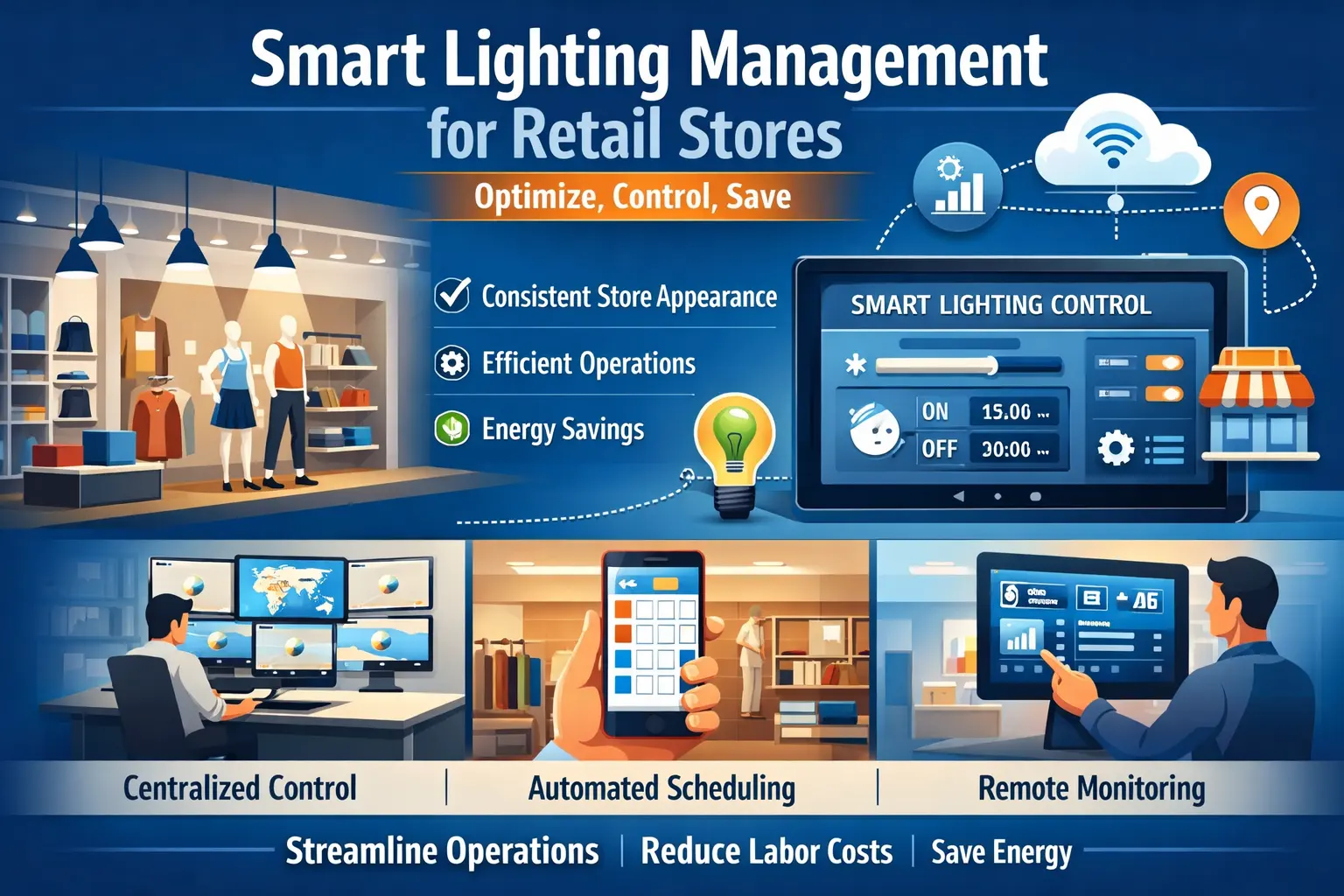
Retail lighting is no longer just about making a space bright enough for customers to shop. In modern retail environments, lighting has become part of operations, brand presentation, customer experience, and energy strategy. For businesses with one store, good lighting already matters. For businesses with multiple stores, it becomes even more important to manage lighting in a consistent, efficient, and scalable way. This is why more brands are paying attention to smart lighting management for retail stores. Instead of relying on manual switching, fixed schedules, and repeated on-site adjustments, retailers are moving toward connected lighting systems that can be controlled more intelligently. These systems help standardize store appearance, improve daily management, reduce labor demands, and support better energy use.
For chain retailers, franchise operations, and growing retail brands, smart lighting management is not simply a technology upgrade. It is a practical tool for making store operations easier and more efficient.
Why Lighting Management Has Become a Bigger Issue in Retail
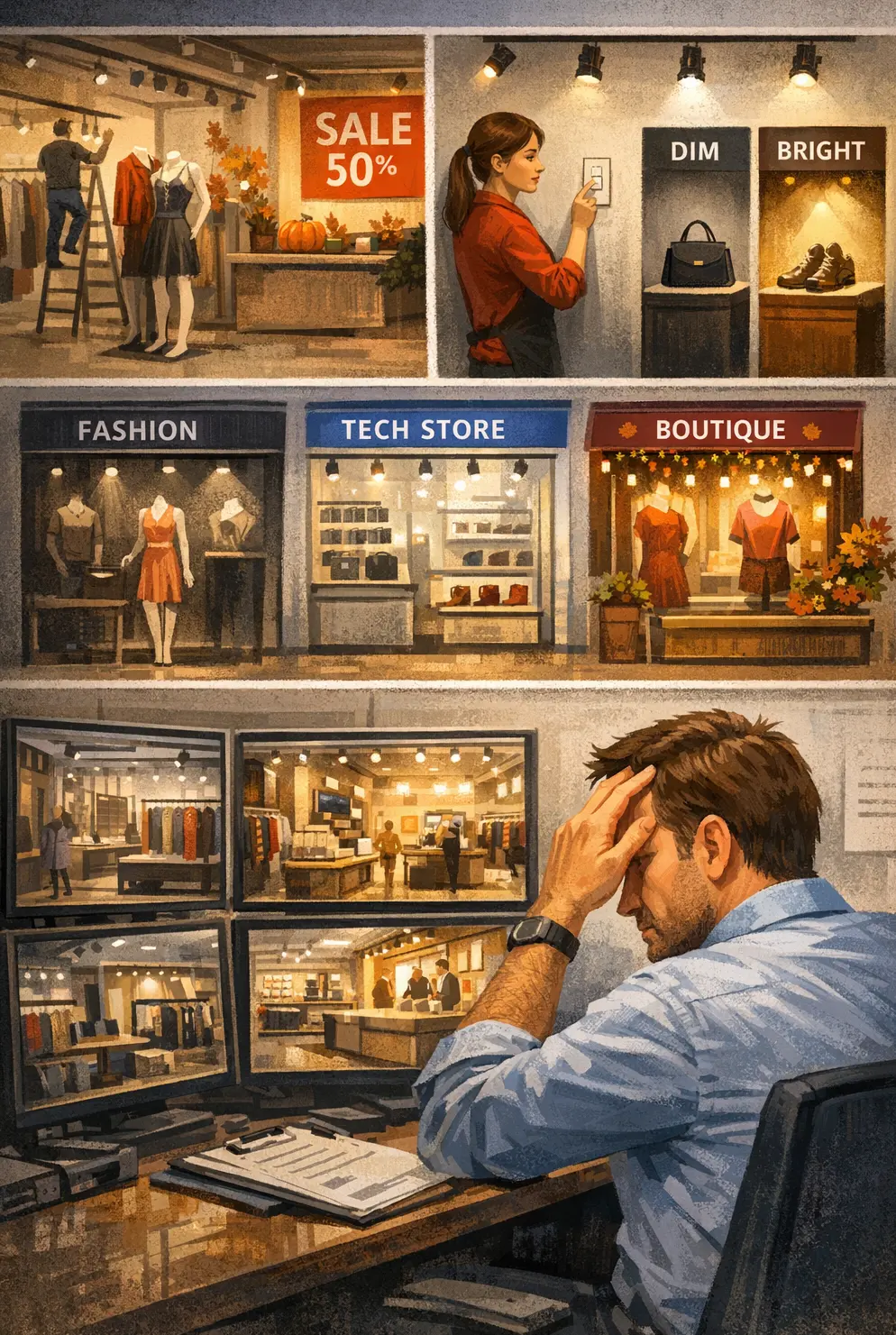
Retail spaces are dynamic. Displays change. Promotional zones move. Seasonal campaigns require new focal points. Store opening hours may vary by location. Staff members may not always follow the same lighting routine. Over time, these variables create inconsistencies that affect both operations and presentation.
In a traditional setup, store lighting is often controlled manually. Teams turn fixtures on and off based on habit. Brightness levels may differ from store to store. Some branches may forget to activate promotional lighting. Others may leave non-essential lighting running longer than necessary. Even when the lighting hardware itself is good, the management process can still be inefficient.
This becomes a much bigger challenge for businesses operating across multiple locations. When each store handles lighting differently, the brand experience becomes less consistent. At the same time, managers spend more time solving problems that should ideally be automated or centrally controlled.
This is where smart lighting management offers a clear operational advantage.
What Smart Lighting Management for Retail Stores Means
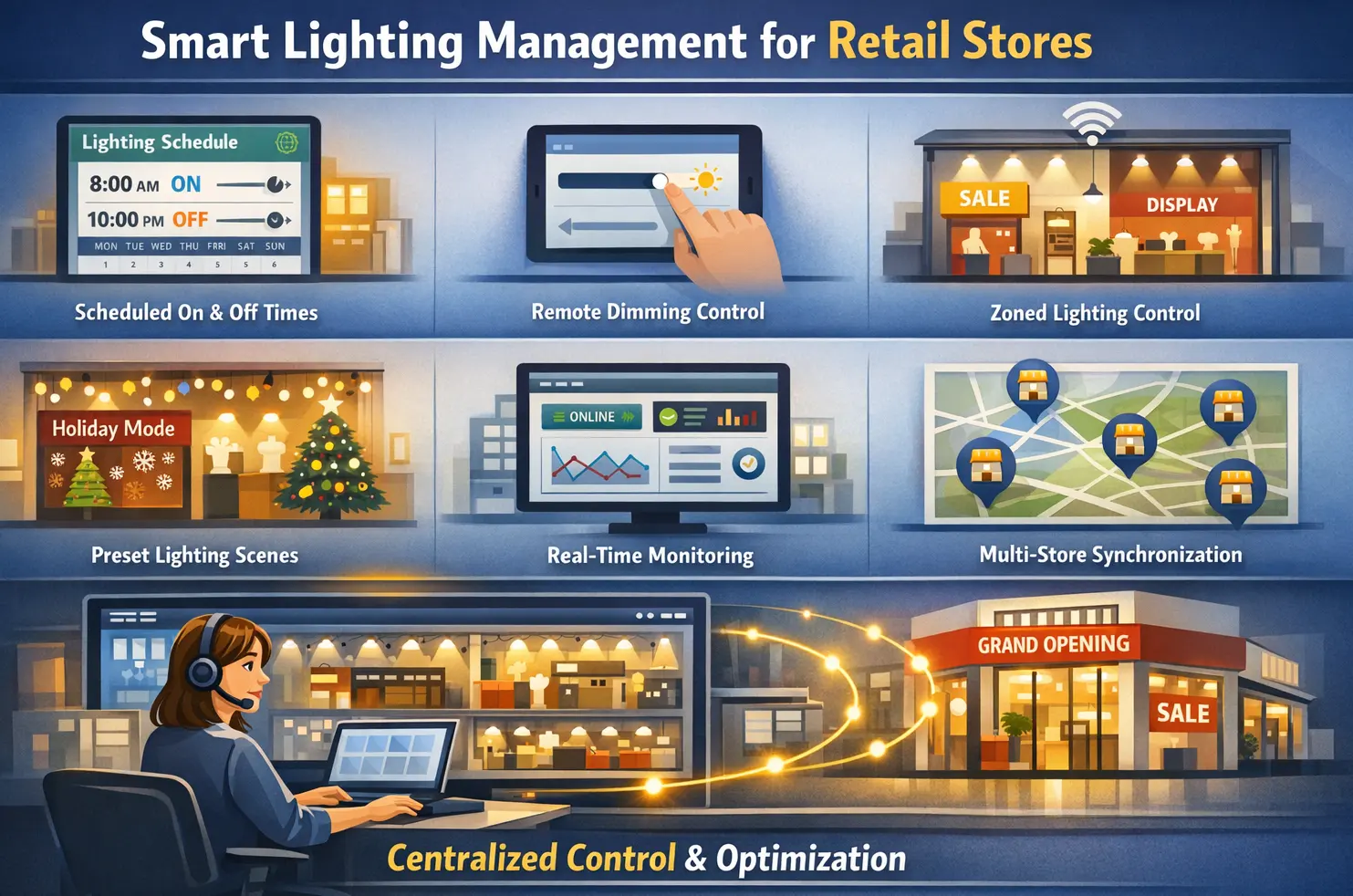
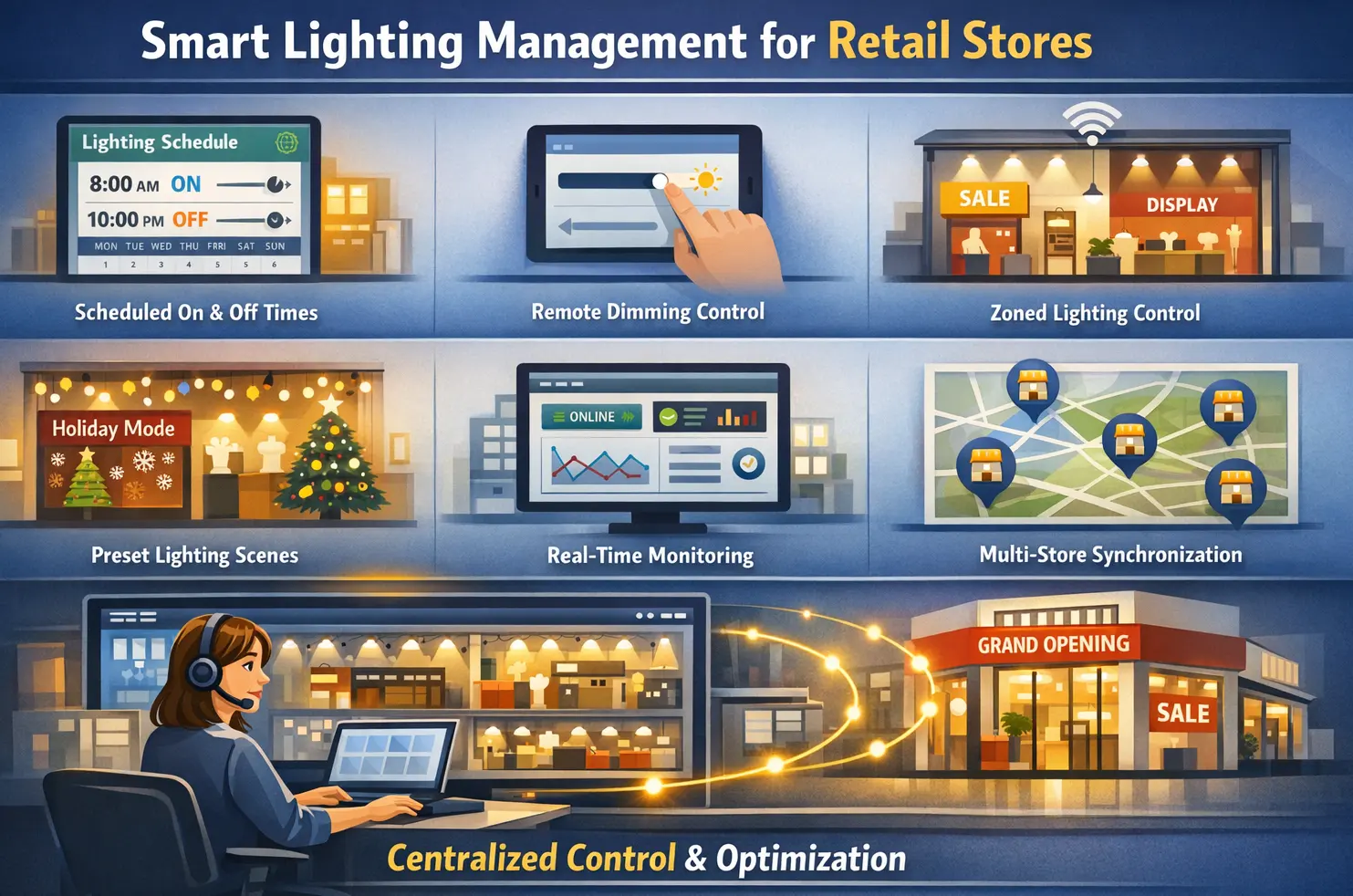
Smart lighting management for retail stores refers to a connected lighting approach that allows store lighting to be monitored, adjusted, scheduled, and optimized through centralized controls. Instead of treating each fixture as an isolated light source, the system manages lighting as part of a larger store strategy.
This can include:
- Scheduled on and off timing
- Remote dimming adjustments
- Zoned lighting control
- Preset lighting scenes
- Real-time status monitoring
- Store-wide or multi-store synchronization
In practical terms, this means retailers can manage how lighting performs across one store or many stores without depending entirely on local manual action every day.
For example, a chain retailer can apply the same opening schedule across all branches, use a consistent brightness strategy for feature displays, create holiday lighting modes for promotional periods, and check remotely whether systems are operating correctly. This helps transform lighting from a manual task into a manageable operational system.
Improving Management Efficiency Across Multiple Stores
One of the biggest reasons retailers invest in smart lighting management is improved efficiency. As store networks grow, manual lighting control becomes harder to maintain. What works for one location may become inefficient across ten, twenty, or fifty stores.
With smart management, retailers can standardize core lighting settings across locations. This makes it easier to keep stores aligned with company guidelines. Instead of depending on each branch to interpret lighting requirements differently, a centralized system creates a clearer operational structure.
This is especially valuable for:
- Chain fashion stores
- Footwear retailers
- Cosmetics brands
- Supermarkets
- Showrooms
- Franchise-based retail businesses
When multiple locations need to reflect the same brand image, consistent lighting matters. A unified control strategy helps ensure that every store delivers a similar visual standard while reducing unnecessary workload for local teams.
From an operations perspective, this also means fewer repetitive manual tasks. Store staff do not need to spend as much time adjusting brightness, switching circuits one by one, or correcting lighting settings after layout changes. Managers can focus more on merchandising and customer service instead of routine lighting control.
Supporting Consistent Brand Presentation
Brand consistency is a major concern in retail, especially for chains and franchise businesses. Customers expect a recognizable visual experience when they enter different branches of the same brand. Lighting plays a central role in that experience.
If one store feels bright, modern, and well-focused while another feels flat or poorly balanced, the inconsistency weakens the overall brand image. Even when products and interior design are similar, lighting differences can make stores feel like completely different environments.
Smart lighting management helps solve this by allowing brands to create repeatable standards. Retailers can define how bright entrance areas should be, how display walls should be illuminated, and how promotional zones should stand out. These settings can then be applied more consistently across locations.
This does not mean every store must look identical in every detail. Some flexibility may still be needed based on layout, ceiling height, or local merchandising needs. However, a smart system makes it much easier to maintain a shared visual identity while still allowing selective adjustments where necessary.
For brands that care about presentation, this is a major advantage.
Reducing Manual Adjustment and Labor Costs
In many stores, lighting still depends heavily on staff involvement. Someone opens the store and turns lights on. Someone notices an area is too bright or too dim and adjusts it manually. Someone changes promotional displays and then tries to correct the lighting afterward. Over time, these repeated actions create labor costs that are easy to overlook but significant in practice.
Smart lighting management reduces this burden by automating routine tasks and simplifying control. Instead of repeating the same adjustments day after day, teams can rely on pre-programmed schedules and preset scenes.
Examples include:
- Automatic opening and closing schedules
- Preset brightness levels for standard business hours
- Promotional lighting scenes for special campaigns
- Lower lighting levels during non-peak periods
- Simplified adjustments through central control interfaces
This reduces the need for constant intervention. It also lowers the risk of human error, such as lights being left on unnecessarily or important zones not being properly illuminated.
For retailers managing multiple stores, the labor-saving value becomes even more meaningful. Even small reductions in manual work per store can add up to major operational savings across an entire network.
Enabling Remote Monitoring and Faster Response
Another important advantage of smart lighting management for retail stores is visibility. In traditional systems, managers often do not know there is a lighting issue until someone on-site reports it. This reactive approach can delay solutions and affect store presentation in the meantime.
Smart systems make it easier to monitor operational status remotely. Managers or facility teams can check whether lighting schedules are active, whether zones are functioning as expected, and whether certain stores may need attention.
This kind of visibility supports faster decision-making. If a branch is not following the intended lighting schedule, the issue can be identified more quickly. If a seasonal mode needs to be applied across several locations, the update can be handled more efficiently. If a store requires temporary lighting changes during a promotion, those adjustments can be coordinated more easily.
The result is not only better control, but also a more responsive management process.
Helping Retailers Balance Efficiency and Experience
Retail lighting should support both operational goals and customer experience. These two priorities are not separate. A well-managed lighting system can help reduce waste while also improving how customers perceive the store.
For example, stores do not always need maximum brightness in every zone throughout the entire day. Some areas may require stronger emphasis during busy periods, while others can operate at lower levels when traffic is lighter. Smart management makes this kind of adjustment more practical.
This helps retailers achieve several goals at once:
- Better control of energy use
- More consistent lighting quality
- Improved visual focus on key products
- Reduced unnecessary operation
- A more polished store environment
Rather than treating efficiency as something that compromises presentation, smart lighting management allows the two to work together.
Why Smart Track Lighting Works Well in Retail Management
When smart controls are combined with track lighting, the benefits become even stronger. Track systems already provide physical flexibility because fixtures can often be repositioned and re-aimed more easily than fixed ceiling lighting. When paired with intelligent control features, they become a highly adaptable solution for retail environments.
This is especially useful in stores where layouts change regularly. A retailer may update feature tables, move mannequins, introduce new launch zones, or redesign display walls. Smart track lighting allows the physical beam direction and the control strategy to evolve together.
For example, a store can reposition fixtures for a new campaign while keeping those fixtures integrated into the same scheduling and scene-control system. This creates both visual flexibility and management efficiency.
That combination is one of the reasons smart track lighting is increasingly attractive for modern retail projects.
A Scalable Solution for Growing Retail Brands
As retail brands expand, operational systems need to scale with them. Lighting should not become more difficult to manage simply because the number of stores increases. A scalable lighting strategy helps businesses grow without creating unnecessary complexity.
Smart lighting management supports this by offering a more structured and repeatable system. New stores can follow established lighting schedules and control logic from the beginning. Existing stores can be updated to align with broader company standards. Seasonal or promotional changes can be implemented more consistently across the network.
For growing brands, this creates long-term value. It improves daily operations, supports a stronger brand image, and makes lighting easier to manage as the business becomes more complex.
Conclusion
Smart lighting management for retail stores is not only about advanced technology. It is about solving practical retail problems in a more effective way. It helps businesses create consistent store environments, simplify lighting control, reduce manual adjustments, support energy efficiency, and improve multi-store management.
For retailers with multiple locations, these advantages are especially important. Unified schedules, centralized brightness strategies, remote status monitoring, and easier scene management all contribute to a more efficient operation. At the same time, customers benefit from a more polished and consistent shopping experience.
As retail becomes more experience-driven and operational efficiency becomes more important, smart lighting management is becoming an essential part of modern store strategy rather than an optional upgrade.

