



How Track Light and Downlight for Clothing Stores Stop Losing Sales
By Powerstar
Track light and downlight for clothing store design is one of the most effective lighting strategies to create a balanced, layered, and visually compelling retail environment. In the highly competitive world of retail, visual merchandising is everything. You can source the most beautiful fabrics, design the perfect storefront, and curate an incredible collection, but if your garments aren’t properly illuminated, they will fall flat.
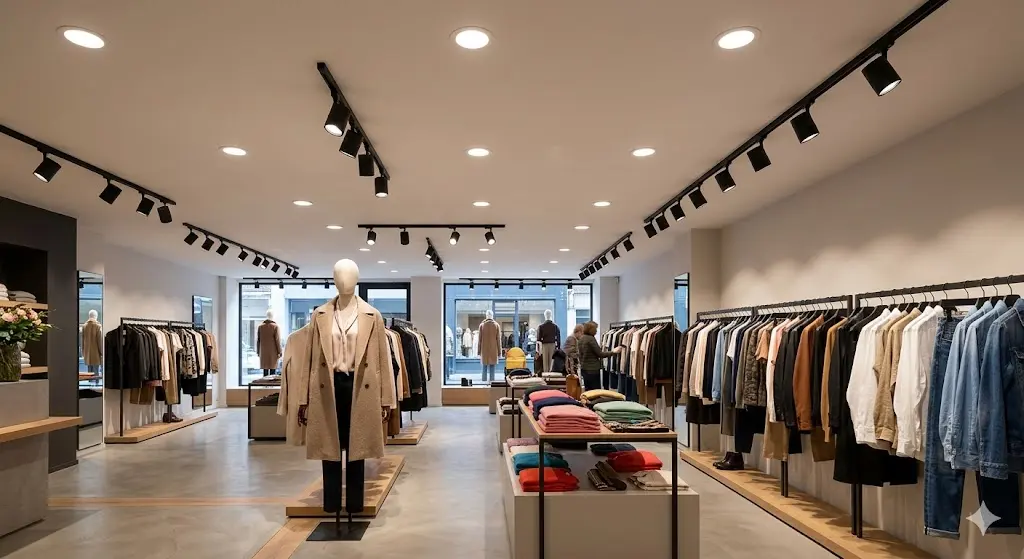
The truth is, lighting is your silent, most persuasive salesperson. It directs traffic, dictates the mood, and ultimately influences buying decisions. If you want to create a premium, high-converting shopping experience, mastering the track light and downlight for clothing store layout is non-negotiable. This combination provides the absolute perfect balance of atmospheric ambiance and targeted focus.
In this comprehensive guide, we will dive deep into the mechanics of retail lighting. You will learn exactly how to combine track systems and recessed downlights to transform your retail space, highlight your merchandise, and keep your customers coming back.
The Psychology of Retail Lighting
Before we touch a single fixture, we need to understand how light affects consumer behavior. Lighting does much more than just help people see; it triggers emotional responses. A brightly lit, high-contrast store feels energetic and fast-paced, often associated with fast fashion. Conversely, a store with warmer, softer ambient lighting paired with high-contrast accent spotlights feels exclusive, luxurious, and intimate.
When a shopper walks into your store, their eyes are naturally drawn to the brightest points in the room. As a designer, I use this biological quirk to map out the customer journey. By strategically placing a track light and downlight for clothing store setup, we can literally guide a customer from the window display, past the new arrivals, and straight toward the fitting rooms and cash wrap.
Why the Track Light and Downlight Combo is Unbeatable
To create a dynamic retail environment, you cannot rely on just one type of light fixture. Flat, uniform lighting makes a space feel like a warehouse or a waiting room, washing out the textures and colors of your clothing. We need layers.
The Role of the Downlight (Ambient Lighting)
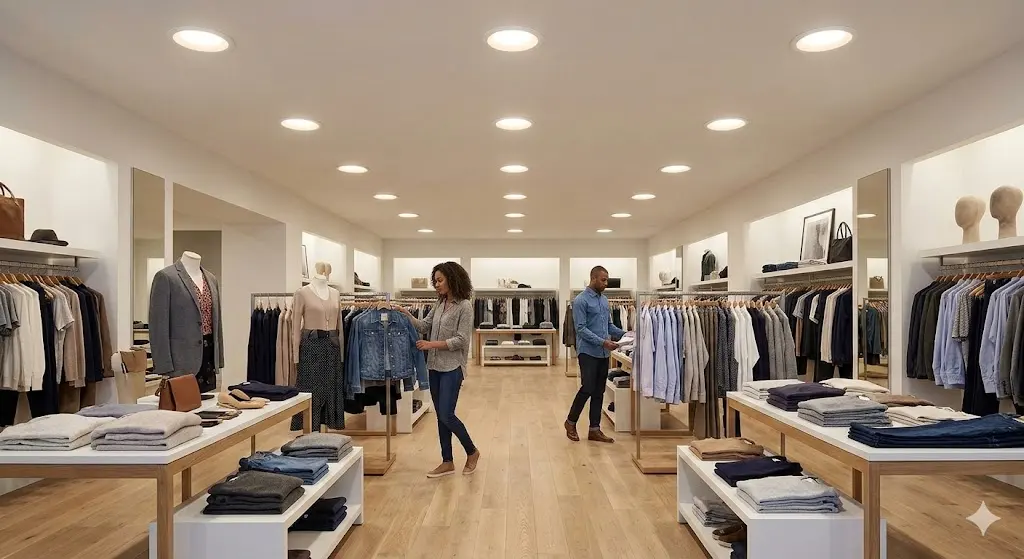
Recessed LED downlights act as the foundational layer of your store’s lighting design. Their primary job is to provide general illumination so customers can comfortably navigate the space. Downlights ensure that there are no dark, uninviting corners in your store. They provide a soft, even base layer of light that sets the overall mood and brightness of the room without drawing attention to the fixtures themselves.
The Role of the Track Light (Accent Lighting)
If downlights are the stage crew, track lights are the spotlight actors. Track lighting is the most versatile tool in a retail designer’s arsenal. Mounted on a surface or suspended track, these adjustable projector heads can be slid, pivoted, and aimed exactly where you need them. They are designed to create “punch”—high-intensity focal points that make mannequins pop, highlight the texture of a leather jacket, or draw attention to a central display table.
When you integrate a track light and downlight for clothing store layout, you achieve the holy grail of retail design: contrast. The downlights provide the canvas, and the track lights paint the picture.
A Designer’s Blueprint: Crafting Your Lighting Layout
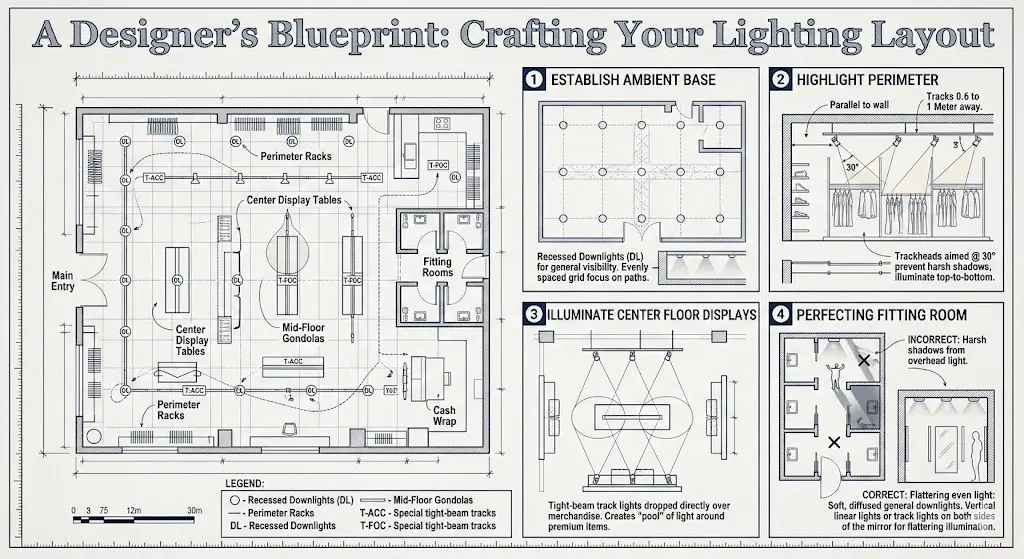
How do you actually arrange these fixtures on your ceiling? Lighting a clothing store is a strategic process of layering. Here is a step-by-step layout strategy.
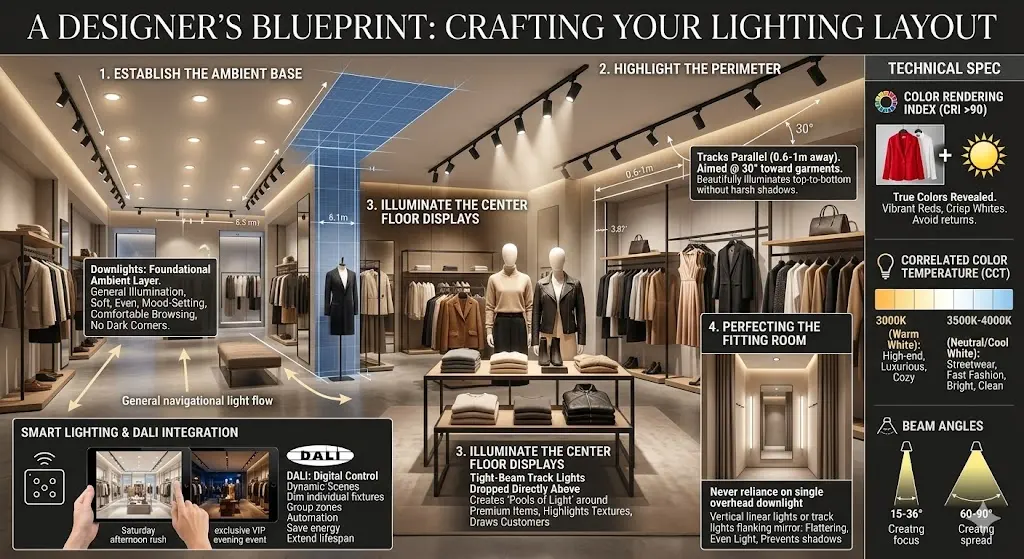
1. Establish the Ambient Base
Start by mapping out your recessed downlights. The goal here is general visibility. You want to space your downlights evenly across the ceiling, typically keeping them focused on the walking paths and general circulation areas. You do not want these lights to overpower the room; they should provide just enough light for customers to comfortably browse.
2. Highlight the Perimeter
Most clothing stores utilize their wall space for racks and shelving. This is where track lighting steps in. Install tracks parallel to your perimeter walls, ideally positioned about 0.6 to 1 meter away from the wall (depending on your ceiling height). Aim the track heads at a 30-degree angle toward the garments. This angle prevents harsh shadows while beautifully illuminating the clothing from top to bottom.
3. Illuminate the Center Floor Displays
For central display tables or mid-floor gondolas, use tight-beam track lights dropped directly above the merchandise. This creates a “pool” of light around your premium items, naturally drawing shoppers toward the center of the room.
4. Perfecting the Fitting Room
The fitting room is where the final purchasing decision is made, yet it is often the most poorly lit area in a store. Never rely on a single downlight directly over the customer’s head—this casts horrific, unflattering shadows under their eyes and chin. Instead, use soft, diffused downlights for general space lighting, and install vertical linear lights or softly diffused track lights on either side of the mirror to wash the customer in flattering, even light.
Technical Specs You Cannot Ignore
As a professional designer, I never just look at the shape of a fixture. The technical specifications of your LEDs will make or break your store. When selecting your track light and downlight for clothing store fixtures, pay strict attention to the following metrics:
Color Rendering Index (CRI)
CRI measures how accurately a light source reveals the true colors of an object compared to natural sunlight. In a clothing store, color accuracy is paramount. If a customer buys a navy blue sweater that looked black in the store, they are going to return it. Always specify fixtures with a CRI of 90 or higher (CRI >90) to ensure your reds are vibrant and your whites are crisp.
CCT determines the “warmth” or “coolness” of the light, measured in Kelvin (K).
- 3000K (Warm White): Perfect for high-end boutiques, creating a cozy, luxurious, and inviting atmosphere.
- 3500K to 4000K (Neutral/Cool White): Ideal for modern streetwear, fast fashion, or stores selling crisp white garments and technical fabrics. It feels bright, clean, and energetic.
Beam Angles
Downlights should generally have a wider beam angle (60° to 90°) to spread light evenly across the floor. Track lights should have narrow beam angles (15° to 36°) to create tight, concentrated beams of light that “punch” through the ambient light to highlight specific garments.
Elevating the Experience: Smart Lighting and DALI Integration
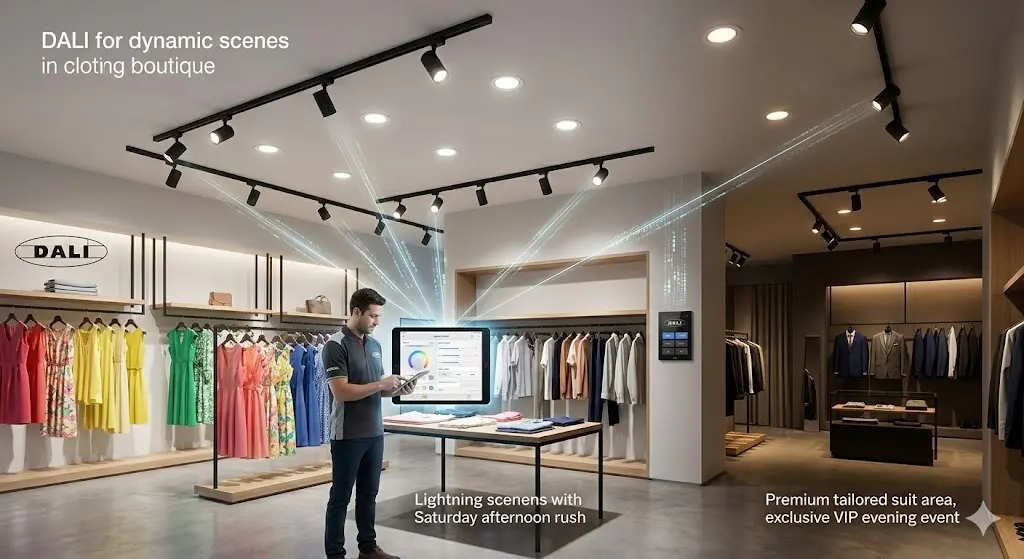
Retail spaces are dynamic. Your layouts change with the seasons, and your lighting needs to adapt alongside them. This is where smart lighting control systems like DALI (Digital Addressable Lighting Interface) become invaluable.
By integrating DALI drivers into your track light and downlight for clothing store system, you gain the ability to dim individual fixtures, group lights into specific zones, and create automated lighting scenes. For example, you can set a bright, high-energy lighting scene for a Saturday afternoon rush, and a softer, dimmer scene for an exclusive VIP evening event. DALI gives you total architectural control, extending the lifespan of your fixtures while heavily reducing energy consumption.
Common Mistakes to Avoid in Retail Lighting
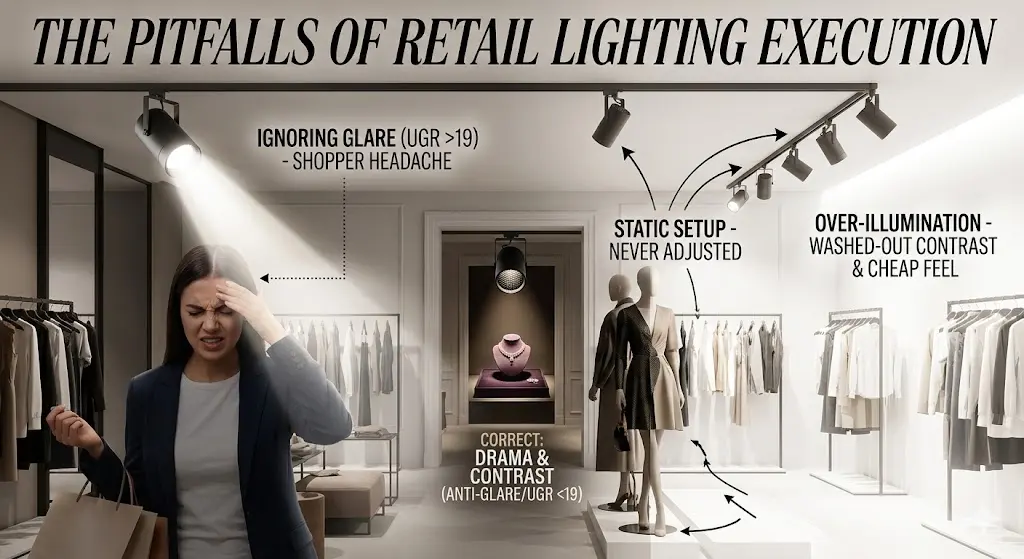
Even with the right fixtures, execution is everything. Avoid these common pitfalls to keep your store looking professional:
- Ignoring Glare (UGR): Unified Glare Rating (UGR) is critical. If your track lights are pointed directly into the eyes of your shoppers, they will leave the store with a headache. Always angle track heads carefully and use anti-glare accessories like honeycomb louvers or barn doors. Aim for a UGR of <19.
- Static Setups: A major mistake is installing track lights and never adjusting them when the store layout changes. Every time you change a mannequin or a display table, re-aim your track lights to follow the merchandise.
- Using Too Much Light: More light does not equal better design. Over-illuminating a store washes out contrast and makes the space feel cheap. Embrace shadows. The interplay between dark and light is what creates drama and visual interest.
Conclusion
Designing a captivating retail environment requires striking the perfect balance between aesthetics and functionality. By implementing a thoughtful track light and downlight for clothing store strategy, you ensure that your merchandise is always the star of the show.
Start by building a comfortable ambient base with high-quality recessed downlights, and then bring your space to life by painting with high-CRI, adjustable track lights. Remember, your lighting is a direct reflection of your brand’s quality. Invest in it wisely, and watch your customer engagement—and your sales—soar.

