



Why Downlight CRI90 Matters More Than You Think
By Vincent
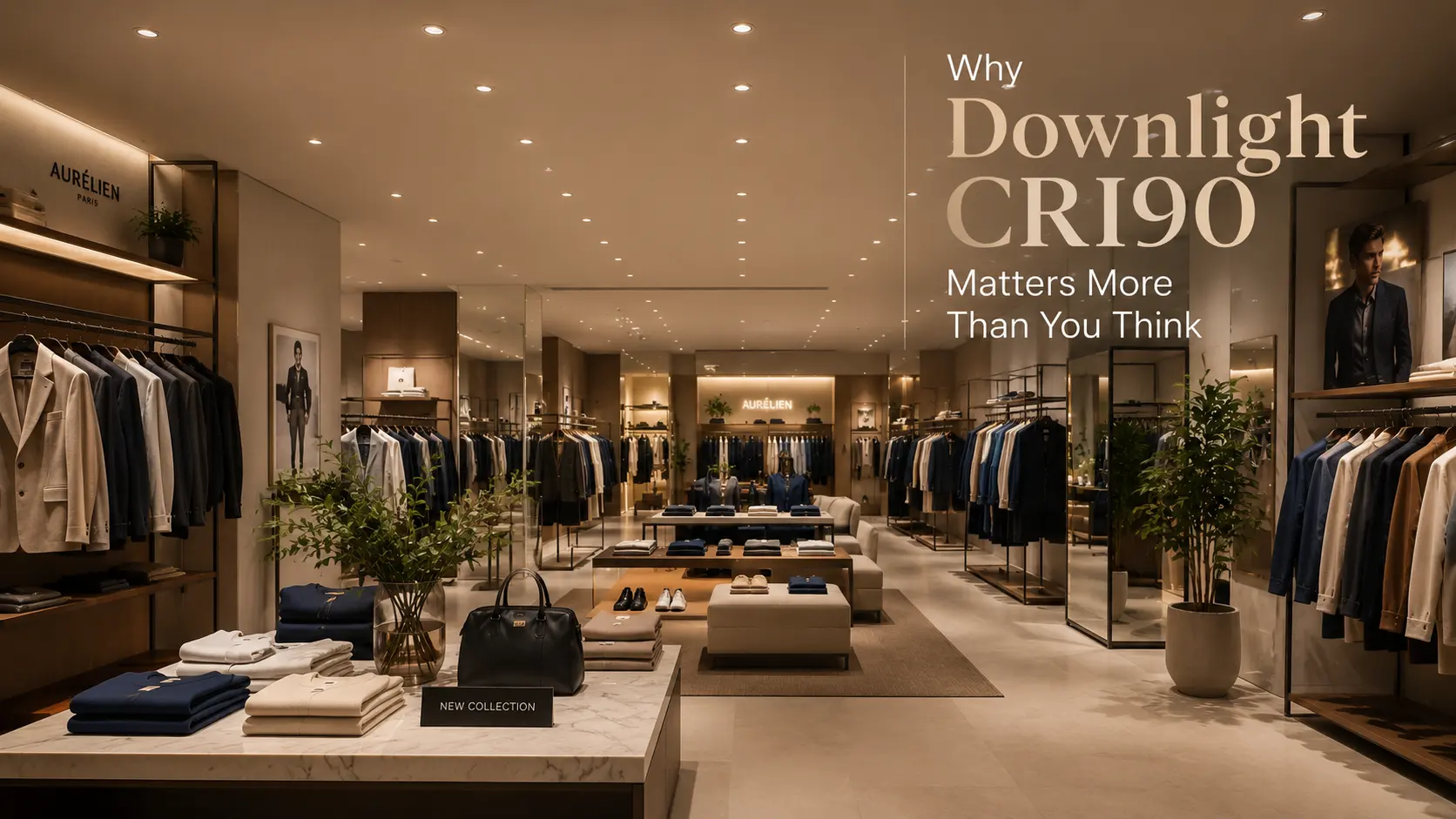
In today’s premium commercial lighting and luxury residential projects, Downlight CRI90 has evolved from a simple technical specification into a key benchmark for high-quality lighting design.
Architects, lighting designers, and project contractors are no longer focused only on brightness and wattage. More than ever, they care about how lighting affects the way a space feels, how products look, and how people experience the environment.
A retail store can have plenty of light and still feel flat.
A luxury hotel lobby can look expensive but somehow lack warmth.
A showroom may display premium products, yet the colors still appear dull or lifeless.
In many cases, the issue is not brightness — it’s color rendering.
That’s why more international buyers are actively searching for terms like:
- Is 90 CRI enough for commercial lighting?
- CRI90 vs CRI80 downlight
- Does higher CRI reduce LED efficiency?
- Best high CRI downlights for retail stores
- 2700K or 3000K CRI90 downlight
As lighting standards continue to rise across Europe, Australia, and North America, high color rendering has become an essential part of creating premium commercial spaces.
What Does Downlight CRI90 Actually Mean?
To understand the value of high CRI lighting, it’s important to first understand what CRI really measures.
CRI stands for Color Rendering Index. It measures how accurately a light source reveals the true colors of objects compared to natural daylight.
The scale ranges from 0 to 100:
| CRI Level | Lighting Quality |
|---|---|
| CRI70 | Basic industrial lighting |
| CRI80 | Standard commercial lighting |
| CRI90 | Premium commercial lighting |
| CRI95+ | Professional color-critical lighting |
Natural sunlight is considered the perfect reference point with a CRI of 100.
A downlight rated at CRI90 can reproduce over 90% of the colors seen under natural daylight conditions. This creates a more natural, vivid, and visually comfortable environment.
Why Downlight CRI90 Is Often Confused With Brightness
One of the most common questions from overseas buyers is: “How bright is 90 CRI?”
This is actually a misunderstanding.
CRI measures color quality, not brightness.
Brightness is determined by:
- Lumens
- Wattage
- Luminous efficacy (lm/W)
However, there is a technical relationship between high CRI and efficiency.
To achieve higher color rendering, LED manufacturers must use more advanced phosphor coatings to fill missing red and green wavelengths in the light spectrum. This process improves color accuracy but can slightly reduce luminous efficiency.
Traditionally, upgrading from CRI80 to CRI90 resulted in:
- Lower efficacy
- More heat generation
- Higher production costs
But modern LED technology has changed that significantly.
Today, many high-end commercial downlights can achieve:
- CRI90+
- 140–160lm/W efficacy
- Low glare performance
- Flicker-free dimming
- Long lifespan
This means buyers no longer have to sacrifice efficiency for better color quality.
Why Downlight CRI90 Makes a Bigger Difference Than You Expect
Many people assume CRI90 is just a minor specification upgrade.
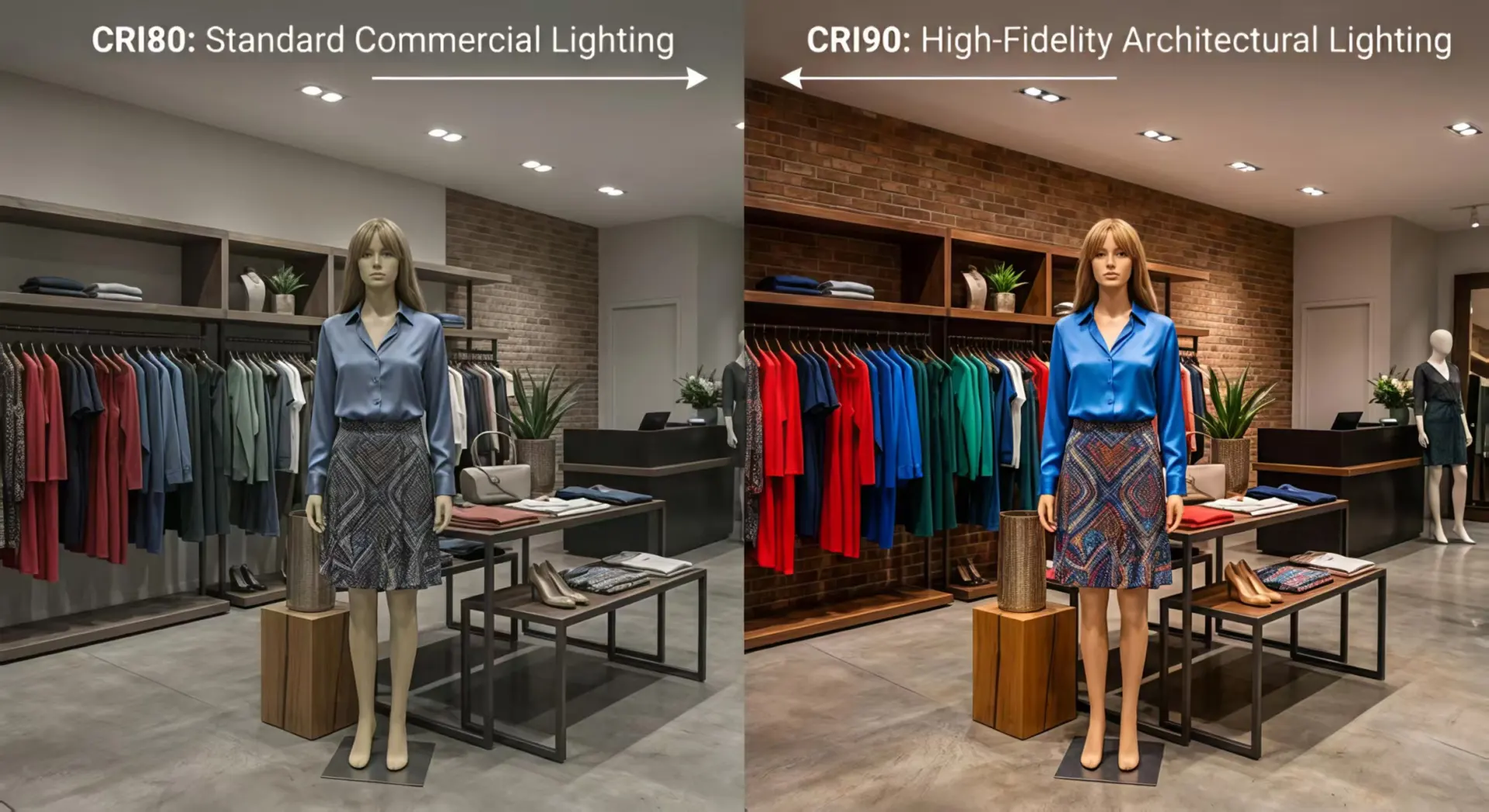
In reality, it directly affects:
- Product presentation
- Interior atmosphere
- Material texture
- Skin tone appearance
- Customer experience
That’s why high CRI lighting is becoming standard in premium commercial environments.
How Downlight CRI90 Improves Retail Product Presentation
Retail lighting is no longer just about visibility.
It’s about making products look more desirable.
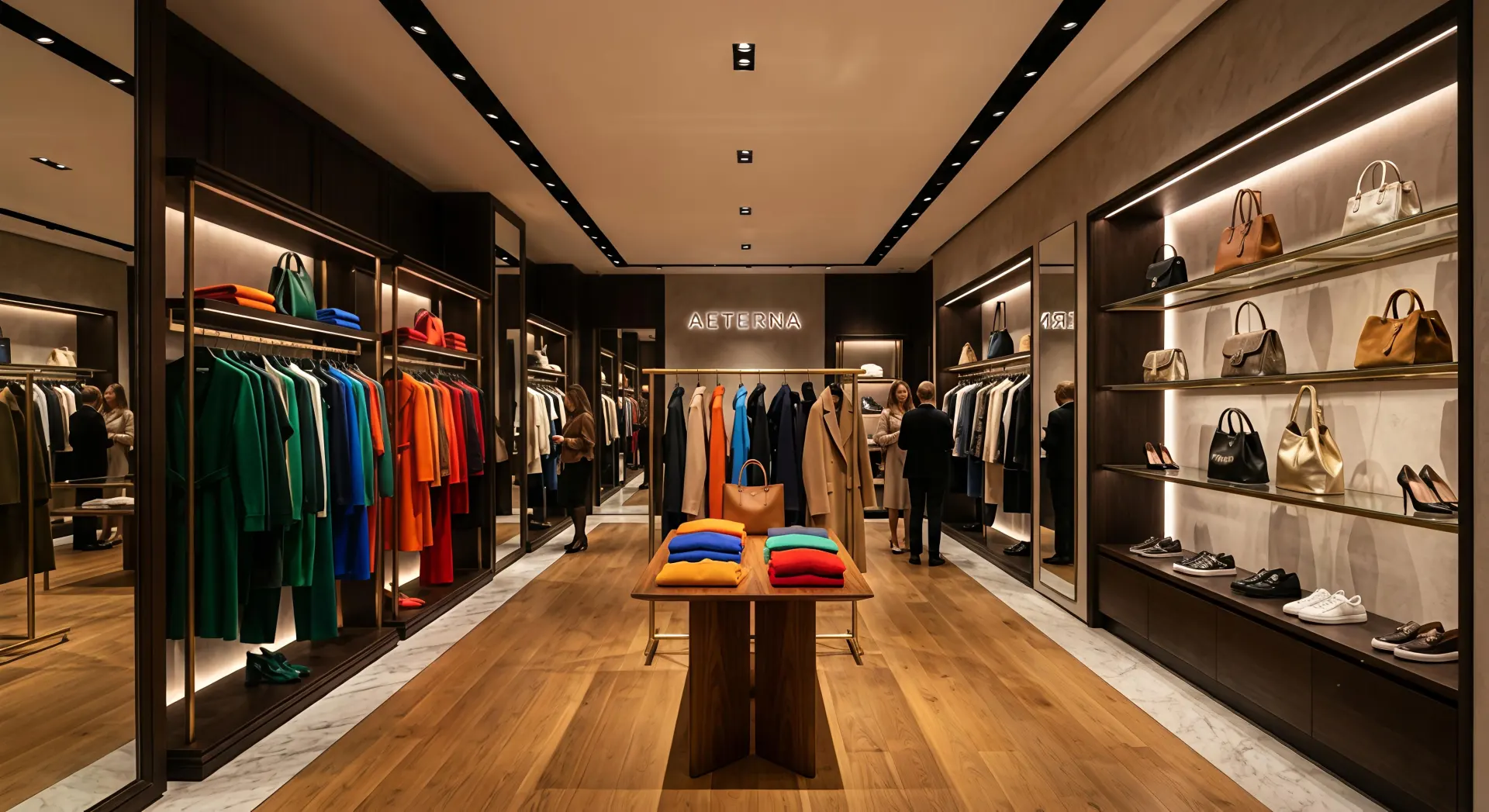
This is especially important in:
- Fashion stores
- Jewelry boutiques
- Cosmetics shops
- Automotive showrooms
- Luxury furniture stores
Low CRI lighting often causes:
- Faded blacks
- Washed-out whites
- Dull reds
- Flat wood textures
- Poor material definition
High CRI downlights reveal richer colors and more realistic textures, helping products appear more premium.
For retailers, this can directly influence:
- Customer perception
- Store atmosphere
- Purchase decisions
This is one reason why many international brands now specify:
- High CRI
- Deep anti-glare optics
- Precise beam angles
as standard requirements for modern retail lighting.
Why Downlight CRI90 Creates Better Interior Atmospheres
Modern lighting design is shifting away from simple illumination.
Today, lighting is expected to create emotion and visual comfort.
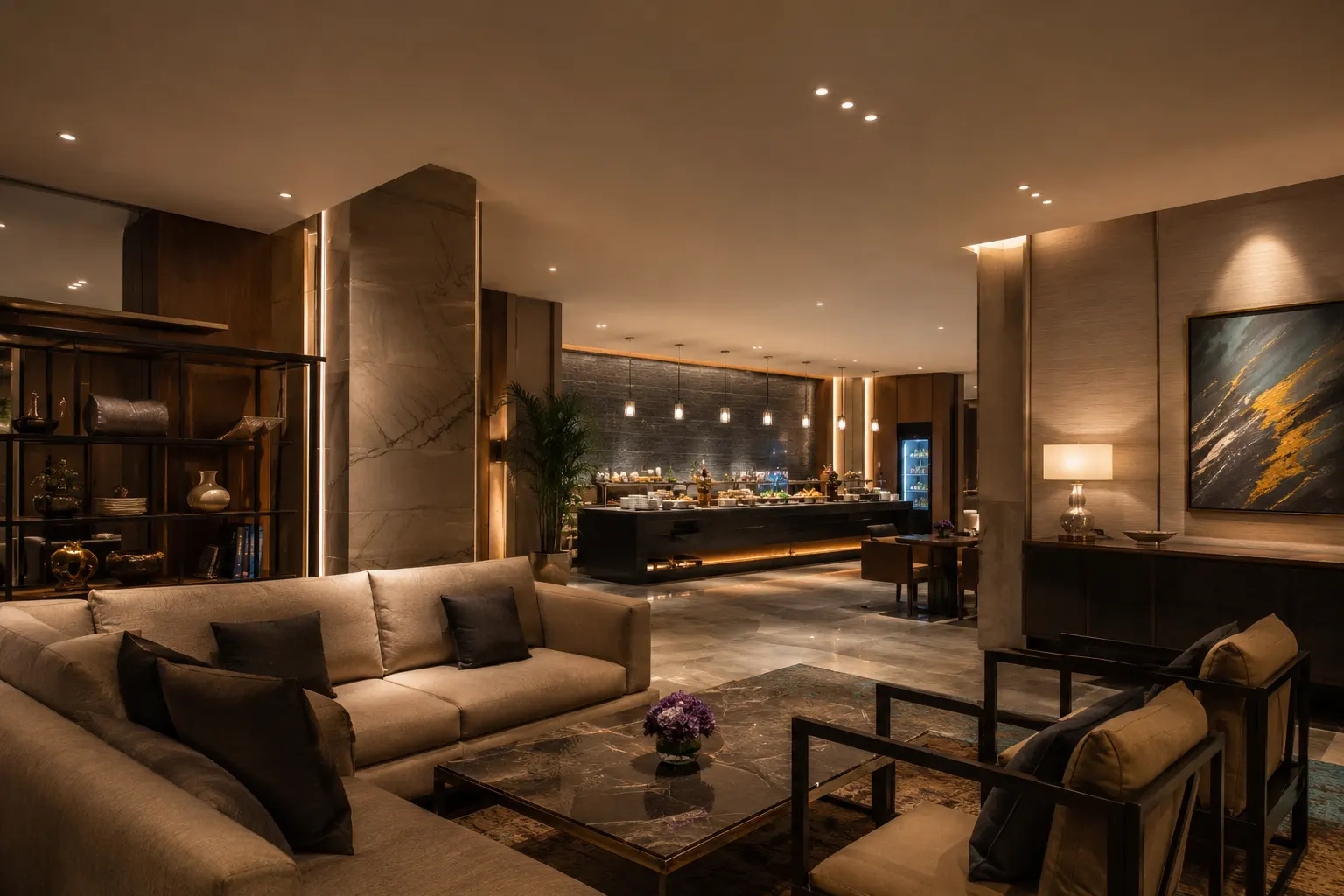
High CRI lighting helps interiors feel:
- Warmer
- More natural
- More layered
- More luxurious
This becomes especially noticeable in:
- Hotels
- Restaurants
- Cafés
- Luxury residences
- High-end offices
Materials such as:
- Wood
- Stone
- Marble
- Fabrics
- Decorative finishes
all appear more refined under high color rendering lighting.
This is why designers often combine:
- CRI90
- Warm color temperatures
- Anti-glare downlights
to create sophisticated architectural environments.
Downlight CRI90 vs CRI80: Is the Upgrade Worth It?
This is one of the most searched questions in commercial lighting today.
Here’s the practical difference:
| Feature | CRI80 | CRI90 |
|---|---|---|
| Color accuracy | Standard | More natural |
| Retail presentation | Basic | Premium |
| Material texture | Limited | Richer detail |
| Skin tone rendering | Average | More realistic |
| Interior atmosphere | Functional | Sophisticated |
For basic applications, CRI80 may still be acceptable.
But for:
- Hospitality projects
- Retail environments
- Showrooms
- Luxury homes
- Premium offices
the difference between CRI80 and CRI90 is often immediately visible.
Many buyers only realize the impact after seeing both side by side.
When Is CRI95+ Necessary?
Although CRI90 works perfectly for most commercial projects, some applications demand even higher color accuracy.
These include:
- Art galleries
- Museums
- Luxury fashion stores
- Medical aesthetics clinics
- Premium salons
In these spaces, designers often specify:
- CRI93+
- CRI95+
because even small color shifts can affect the visual experience.
Why R9 Matters in High CRI Lighting
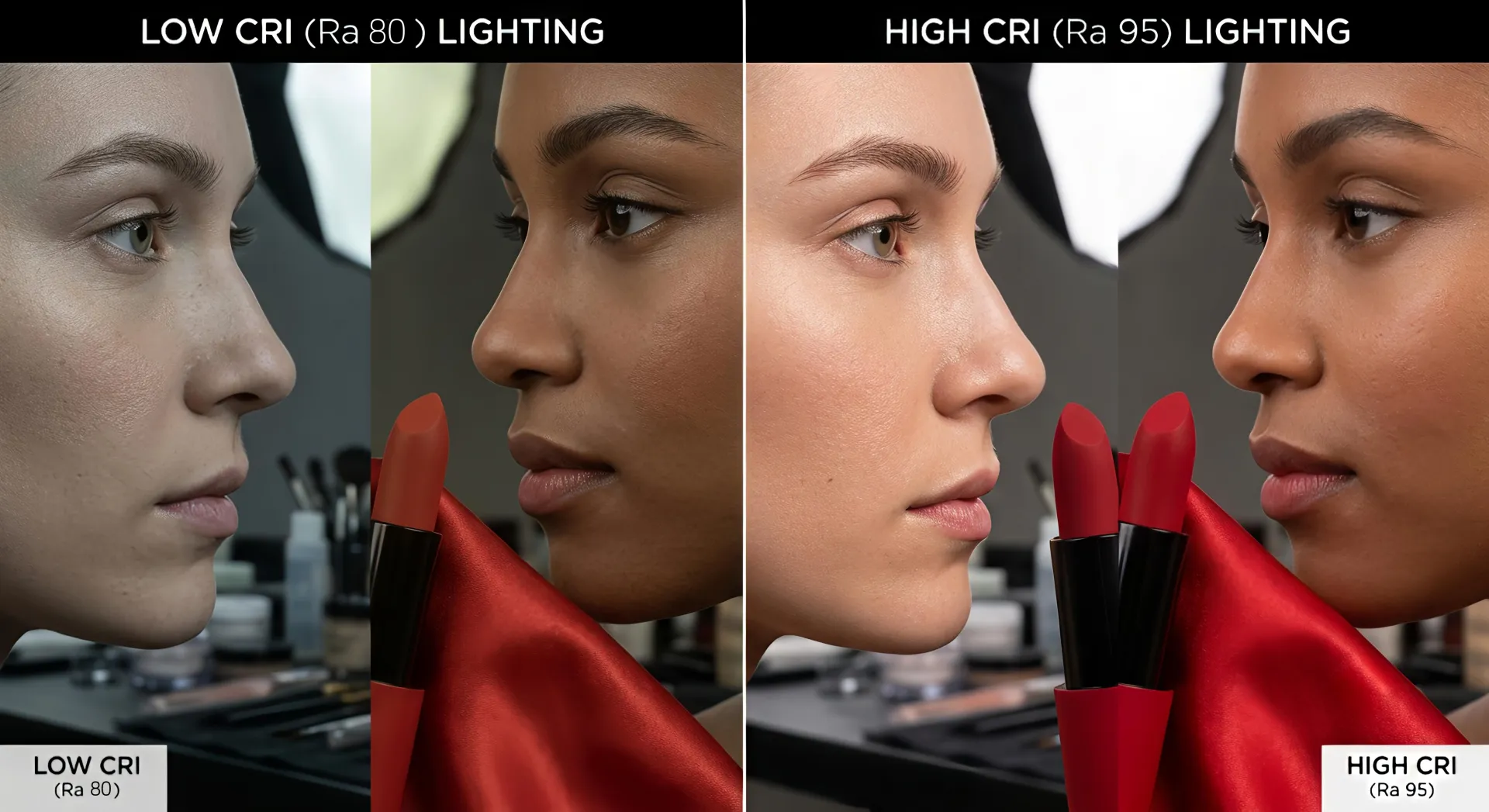
Another important factor is R9.
Standard CRI calculations only measure R1–R8 color samples.
However, R9 measures saturated red tones, which are critical for:
- Skin tones
- Food presentation
- Red fabrics
- Luxury products
A standard CRI90 fixture may have an R9 value around 50.
A premium CRI95+ downlight can achieve: R9 above 90
This creates richer reds, healthier skin tones, and more vivid product presentation.
For hospitality and beauty-focused environments, R9 performance is often just as important as overall CRI.
Best Color Temperatures for Downlight CRI90
High CRI lighting performs best when paired with the right color temperature.
The two most popular options in premium projects are:
- 2700K
- 3000K
Downlight CRI90 With 2700K
This combination creates:
- Warm
- Relaxing
- Luxurious environments
It works especially well in:
- Boutique hotels
- Luxury residences
- Fine dining restaurants
- Private lounges
2700K lighting enhances warmth and softness while maintaining excellent color quality.
Downlight CRI90 With 3000K
3000K has become one of the most popular choices in modern architectural lighting.
It offers:
- A cleaner appearance
- Better visual clarity
- A more contemporary atmosphere
without feeling too cold.
This combination is widely used in:
- Modern retail stores
- High-end offices
- Luxury living rooms
- Automotive showrooms
Why Anti-Glare Matters With High CRI Downlights
High color quality alone is not enough.
Modern commercial spaces also demand: visual comfort.
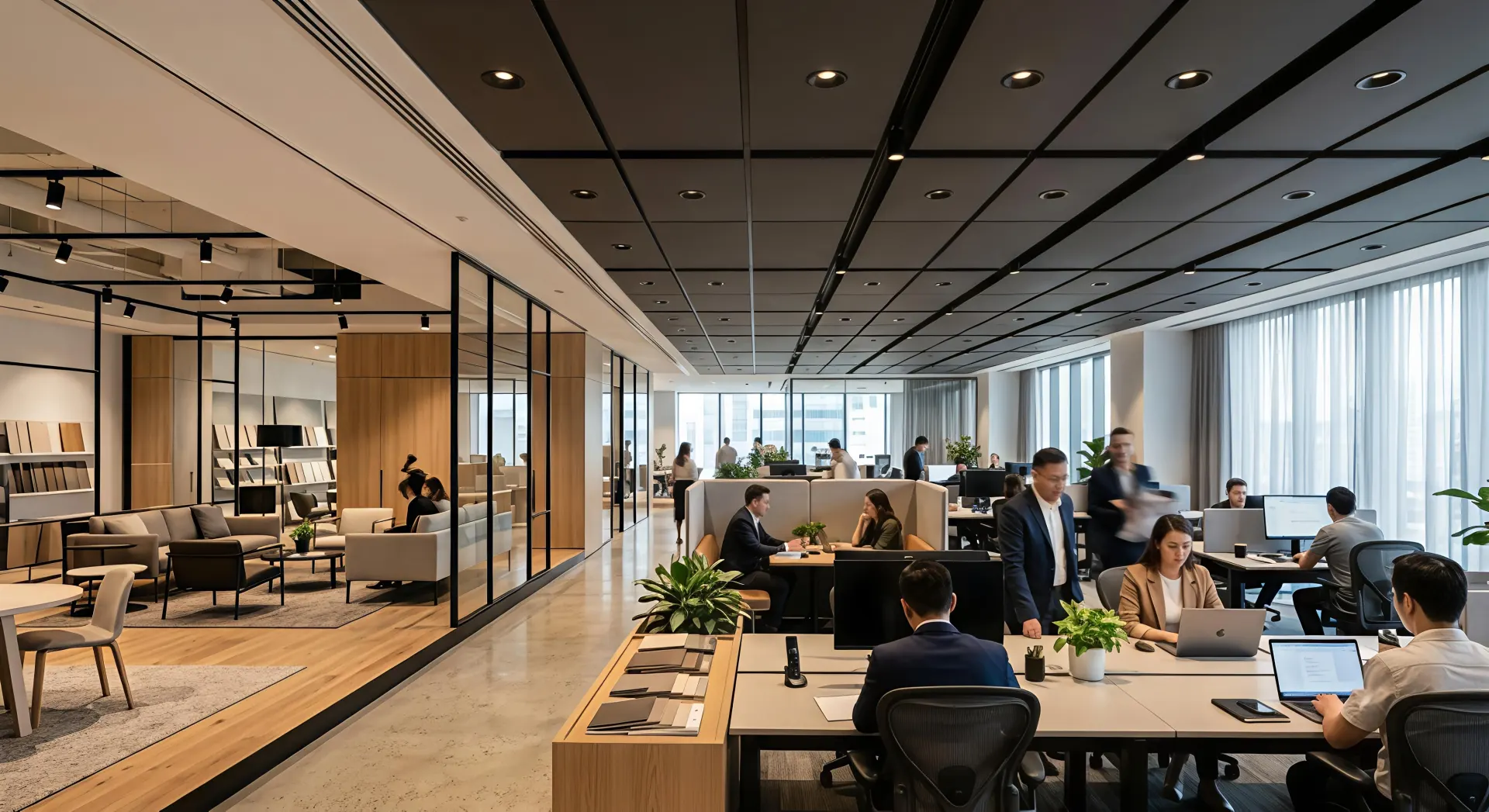
That’s why premium downlights increasingly combine:
- High CRI
- Deep anti-glare optics
- Low UGR ratings
Low glare lighting helps reduce:
- Eye fatigue
- Visual discomfort
- Harsh reflections
especially in spaces where people spend long periods of time.
Many high-end commercial projects now target: UGR <19 or even: UGR <13 for superior visual comfort.
Why Gimbal Downlights Are Growing in Popularity
Adjustable gimbal downlights are becoming increasingly popular in:
- Retail stores
- Galleries
- Automotive showrooms
- Luxury display spaces
because they combine:
- High CRI performance
- Flexible aiming
- Precise accent lighting
This allows lighting designers to highlight products without creating distracting shadows or uneven lighting.
What International Buyers Should Check Before Purchasing CRI90 Downlights
Many buyers focus only on the CRI number itself.
But long-term performance matters just as much.
Important considerations include:
1. Dimming Stability
Poor-quality fixtures may:
- Flicker at low dimming levels
- Shift color when dimmed
- Produce unstable output
This is especially problematic in DALI-controlled projects.
2. Certification Compliance
For markets like Australia and New Zealand, certifications such as:
- SAA
- RCM
- IC-4
are essential for commercial projects.
For more information about IC-4 standards, you can visit the official Australian certification resource:
IC-4 Compliance Overview
3. Custom Cutout Sizes
Commercial projects often require different cutout dimensions such as:
- 70mm
- 90mm
- 125mm
Reliable manufacturers should offer modular sizing and customization options.
The Future of Commercial Lighting
Commercial lighting is no longer only about brightness.
The industry is moving toward:
- Better visual comfort
- More natural color rendering
- Lower glare
- Smarter dimming systems
- Human-centric lighting experiences
That’s why high CRI downlights are becoming a core requirement in modern lighting design.
As standards continue to rise globally, buyers are no longer simply purchasing fixtures.
They are investing in: better spaces, better experiences, and better visual quality.
For additional technical guidance on color rendering and lighting quality, the Illuminating Engineering Society also provides useful educational resources:
IES Lighting Education Resources
FAQ
Q: Is 90 CRI enough for commercial lighting?
A: Yes. For most premium commercial applications such as retail stores, hotels, offices, and luxury residences, CRI90 is considered the modern industry standard.
Q: Does higher CRI reduce LED efficiency?
A: Traditionally, higher CRI slightly reduced efficacy. However, modern LED technology now allows many high CRI fixtures to maintain excellent efficiency levels.
Q: What is the difference between CRI90 and CRI95?
A: CRI95 provides even more accurate color rendering, especially for red tones and skin tones. It is commonly used in museums, luxury retail, and medical aesthetics environments.
Q: Which color temperature works best with CRI90 downlights?
A: 2700K is ideal for warm luxury environments, while 3000K offers a cleaner and more modern appearance for commercial spaces.
Q: Why is R9 important in high CRI lighting?
A: R9 measures saturated red rendering, which strongly affects skin tones, food appearance, and luxury product presentation. Higher R9 values create more vivid and natural visuals.

