



Adjustable Beam Track Light for Gallery Lighting: Better Artwork Presentation with Precise Beam Control
By JC

In gallery lighting, the quality of presentation depends not only on brightness, but also on how accurately the light is controlled. A painting, sculpture, display wall, or showroom product can look completely different under different beam angles. When the beam is too wide, too much spill light may fall around the artwork. When the beam is too narrow, the display may look harsh or incomplete. This is why an adjustable beam track light for gallery lighting is a practical solution for modern museums, galleries, showrooms, and refined retail spaces.
Unlike fixed beam spotlights, adjustable beam track lights allow the beam angle to be changed according to the size of the artwork, the distance from the track to the wall, and the visual effect required. This gives lighting designers and project owners more flexibility when creating clean, focused, and comfortable display lighting.
Why Beam Angle Matters in Gallery Lighting
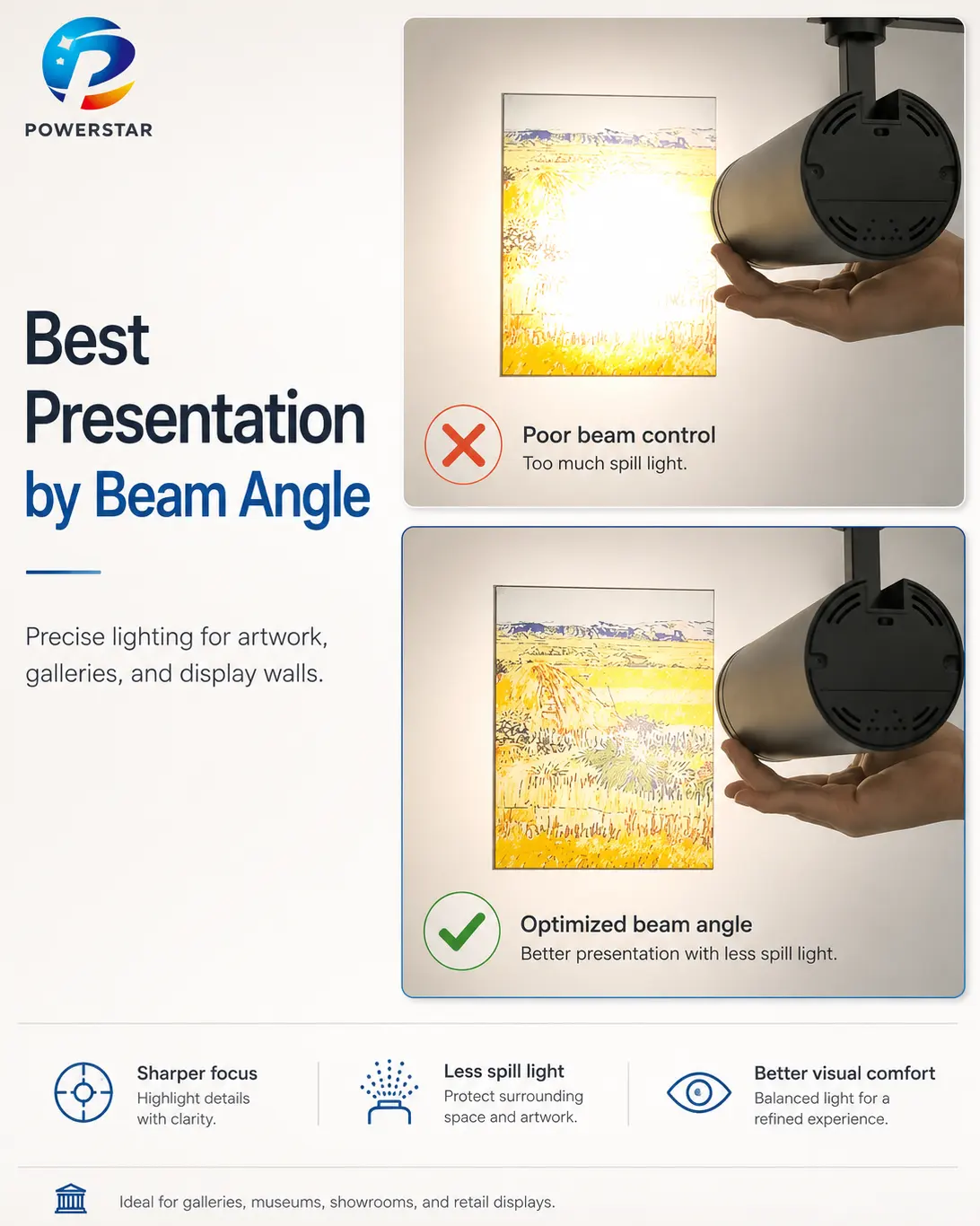
Beam angle directly affects how the light lands on an artwork or display surface. A narrow beam creates a concentrated highlight, while a wider beam covers a larger area with softer illumination. In gallery lighting, the goal is not simply to make the artwork bright. The goal is to make the artwork visible, balanced, and visually comfortable.
If the beam angle is not suitable, several problems may appear. The artwork may become overexposed in the center. The surrounding wall may receive too much spill light. The frame, label, or nearby artwork may also be affected by unwanted brightness. These issues can reduce the professional look of the space.
An adjustable beam track light helps solve this problem because the beam can be changed on site. Instead of replacing the fixture or changing lenses, the installer can adjust the beam angle directly to match the display requirement.
Fixed Beam vs Adjustable Beam Track Light
Traditional fixed beam track lights can work well when the display layout is stable. For example, if every artwork has the same size and position, a fixed 24°, 36°, or 40° beam may be enough. However, galleries and museums often change exhibitions. Artwork sizes, wall positions, and display heights may vary from one project to another.
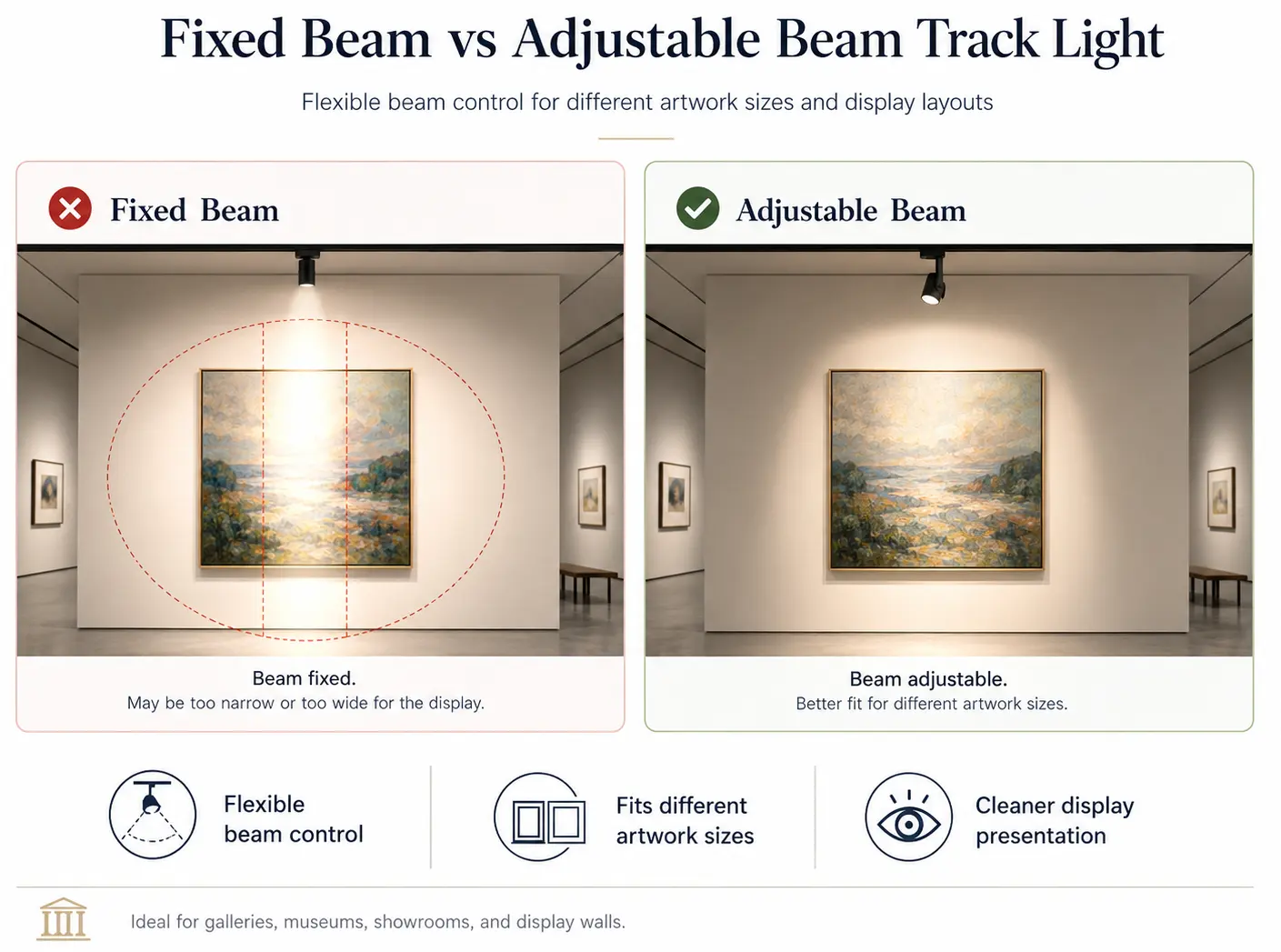
This is where adjustable beam lighting becomes more valuable. One track light can support different display needs by changing the beam angle. A narrower beam can be used for small paintings or accent details. A wider beam can be used for larger artworks, display walls, or product presentations.
For galleries, this means fewer lighting limitations. For wholesalers and contractors, it also means one product family can cover more project requirements.
Better Artwork Presentation with Less Spill Light
One of the biggest advantages of an adjustable beam track light for gallery lighting is better spill light control. Spill light refers to light that falls outside the intended target area. In artwork lighting, too much spill light can make the wall look messy and reduce the focus on the artwork.
With proper beam control, the light can be directed more precisely onto the display. The artwork becomes the visual center, while the surrounding area stays cleaner and calmer. This is especially important for museums, galleries, luxury showrooms, and high-end retail spaces where visual quality is part of the customer experience.
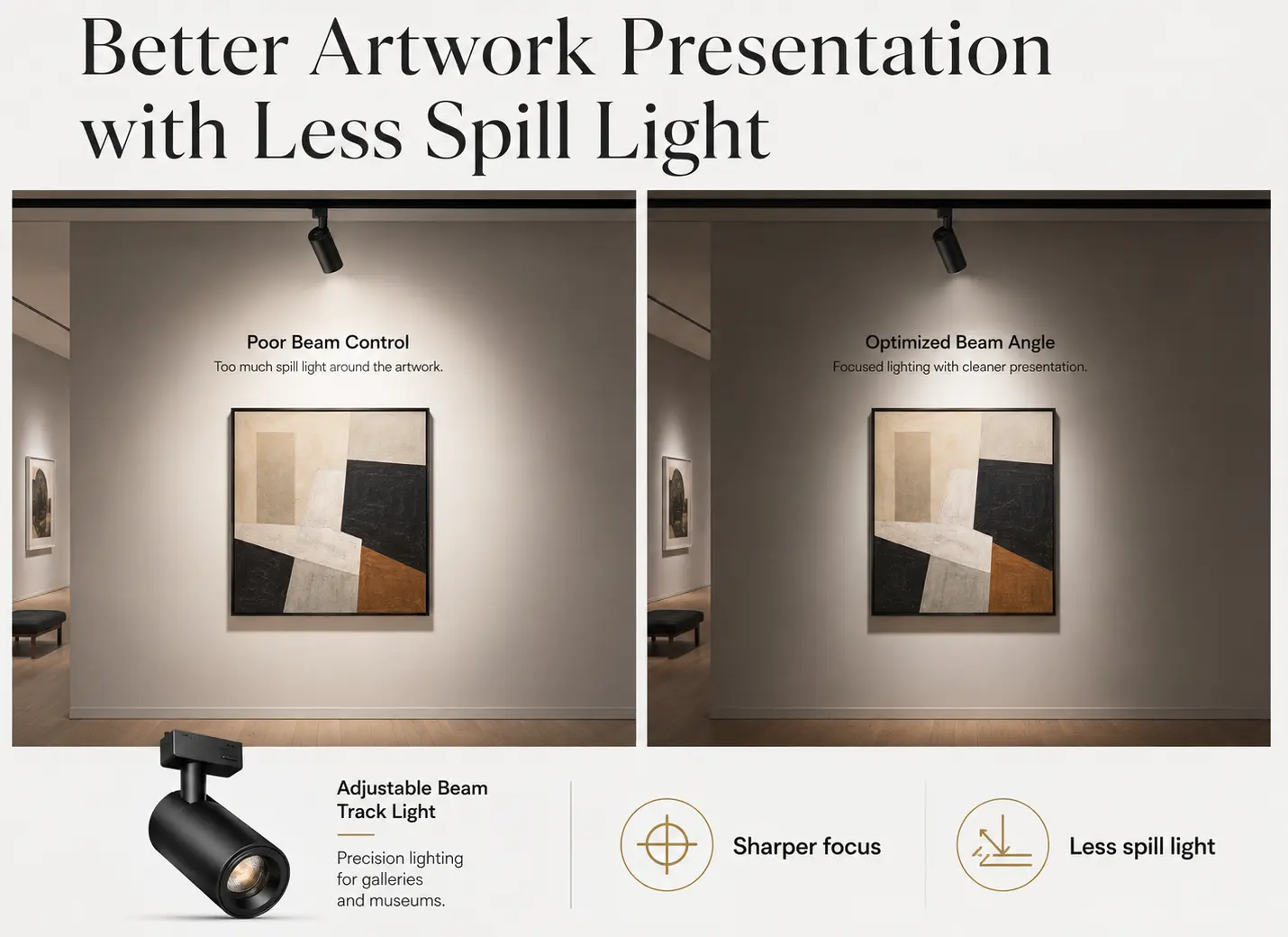
Less spill light also helps create a more refined atmosphere. Instead of flooding the whole wall with unnecessary brightness, the lighting can guide attention to the artwork or product itself.
Flexible Lighting for Changing Exhibitions
Gallery and museum spaces are rarely fixed forever. Paintings may be replaced. Sculptures may be moved. Display walls may be redesigned. Seasonal exhibitions may require a different atmosphere. If the lighting system cannot adapt, the project team may need extra fixtures, different beam angles, or repeated installation work.
Adjustable beam track lights give the space more long-term flexibility. When the exhibition changes, the beam angle can be adjusted to match the new display. This reduces the need to purchase multiple fixed beam models for different applications.
For project owners, this means better control over future exhibitions. For lighting contractors, it makes installation and adjustment more efficient. For wholesalers, it creates a more versatile product to offer to different customers.
Suitable Applications for Adjustable Beam Track Lights
Adjustable beam track lights are especially useful in spaces where display quality matters. Common applications include art galleries, museums, exhibition halls, showrooms, retail displays, cultural spaces, and private collection rooms.
In art galleries, they can highlight paintings, photographs, and framed artwork. In museums, they can help illuminate exhibits with different shapes and sizes. In retail stores, they can be used for product display walls, premium shelves, or window displays. In showrooms, they can improve the presentation of furniture, fashion items, jewelry, watches, or other high-value products.
The same lighting principle applies across these spaces: the light should support the display, not distract from it.
How Adjustable Beam Track Lights Improve Visual Comfort
Visual comfort is another important factor in gallery lighting. If the beam is too strong, too scattered, or poorly aimed, visitors may feel glare or visual fatigue. A good lighting design should allow people to view artwork comfortably without harsh brightness or distracting reflections.
Adjustable beam control helps improve this experience. By narrowing or widening the beam, the lighting can be balanced according to the artwork size and surface material. For glossy paintings, glass-covered frames, or reflective display products, careful beam adjustment can help reduce uncomfortable reflections.
In refined commercial spaces, visual comfort also affects how premium the environment feels. Clean lighting, controlled brightness, and balanced contrast can make the whole space look more professional.
Why Track Lighting Works Well for Galleries
Track lighting is widely used in galleries because it offers flexibility. Fixtures can be moved, added, removed, or repositioned along the track. This makes it easier to adapt the lighting layout when the display changes.
When track lighting is combined with adjustable beam technology, the system becomes even more flexible. The fixture position can be changed on the track, and the beam angle can be adjusted according to the target area. This gives lighting designers more control over both direction and coverage.
For gallery lighting projects, this combination is very practical. It supports different wall layouts, ceiling heights, artwork sizes, and exhibition concepts without making the ceiling design too complicated.
Choosing the Right Beam Angle for Artwork Lighting
There is no single beam angle that works for every gallery project. The right beam angle depends on several factors, including artwork size, installation distance, ceiling height, wall position, and desired contrast.
A narrower beam is suitable for small artworks, focused highlights, or detailed accent lighting. A medium beam is useful for standard paintings and display walls. A wider beam can cover larger artworks or create softer illumination over a bigger area.
The benefit of using an adjustable beam track light is that the beam does not need to be decided permanently before installation. The installer can test and adjust the beam on site until the presentation looks right.
Benefits for Lighting Wholesalers and Project Contractors
For lighting wholesalers, adjustable beam track lights can help simplify product selection. Instead of keeping many fixed beam versions in stock, one adjustable beam model can cover multiple beam requirements. This helps reduce SKU pressure while still offering more flexibility to customers.
For project contractors, the main benefit is on-site adaptability. If the client changes the display layout or requests a different visual effect, the installer can adjust the beam angle instead of replacing the fixture. This saves time during installation, mock-up testing, and final project adjustment.
For end users, the advantage is long-term usability. The same lighting system can continue to support future display changes, renovation updates, or new exhibition themes.
Adjustable Beam Track Light for Gallery Lighting and Retail Display
Although this lighting solution is highly suitable for galleries and museums, it is also useful for retail display projects. Many retail spaces also need precise lighting control. Fashion boutiques, jewelry stores, watch shops, furniture showrooms, and lifestyle stores all rely on lighting to improve product presentation.
In these spaces, adjustable beam track lights can help highlight key products, reduce unwanted spill light, and create a more premium visual atmosphere. When the product display changes, the lighting can be adjusted without changing the whole system.
This makes adjustable beam track lighting a practical choice for both cultural spaces and commercial display environments.
Conclusion
An adjustable beam track light for gallery lighting offers more than simple illumination. It gives designers, contractors, and end users better control over artwork presentation, beam coverage, spill light, and visual comfort.
For galleries, museums, showrooms, and display walls, precise beam control can make the difference between ordinary lighting and professional presentation lighting. By adjusting the beam angle according to each artwork or display area, the lighting becomes more focused, flexible, and visually refined.
For projects where exhibitions, products, or display layouts may change over time, adjustable beam track lights provide a smart and practical solution. They help reduce lighting limitations, improve presentation quality, and support a cleaner, more professional visual experience.

