



Why More Commercial Projects Are Choosing Led Ugr 19 Lighting
By Vincent
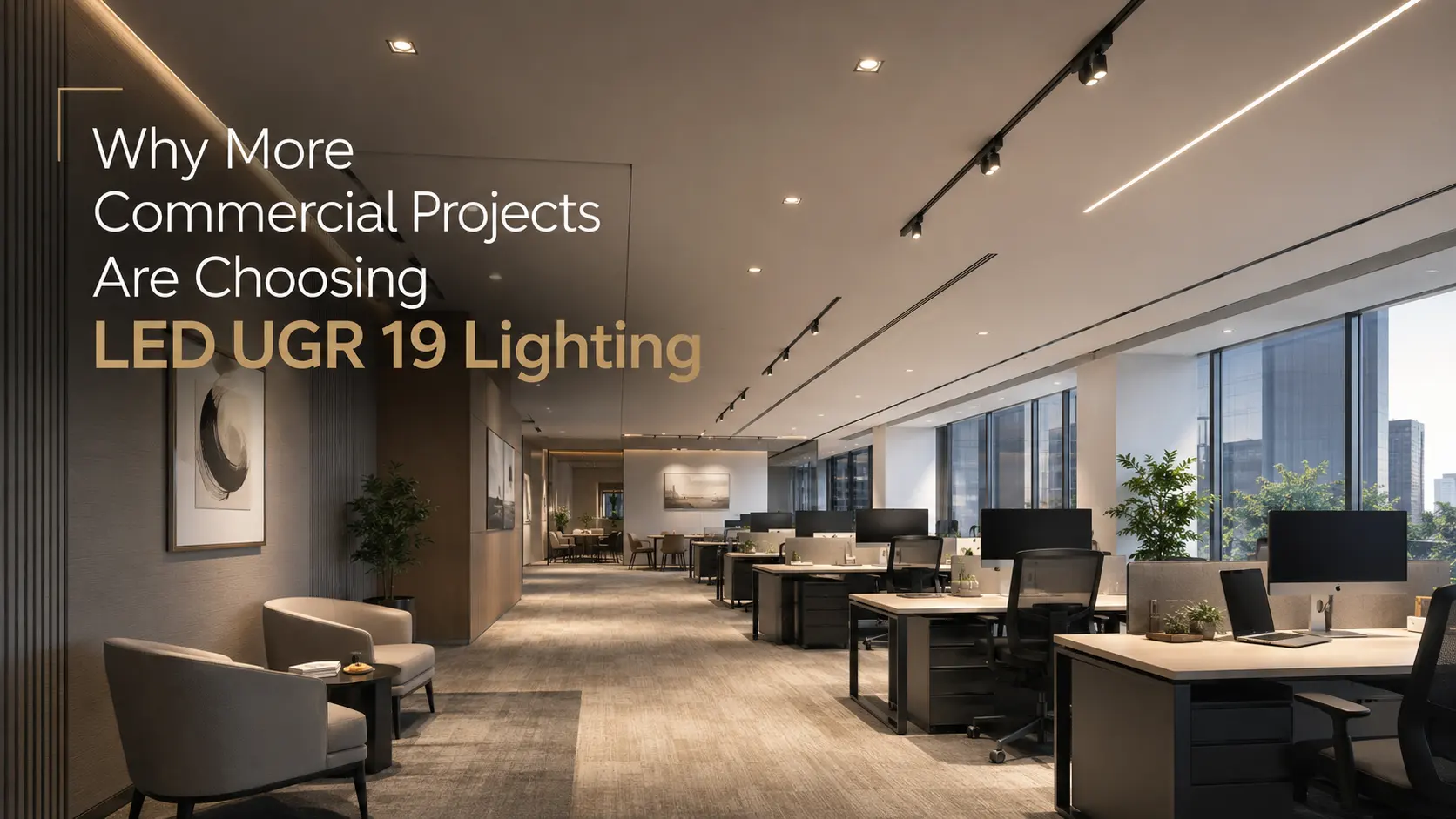
For many years, commercial lighting projects were judged by two simple criteria: energy efficiency and brightness. Today, that approach is changing. As workplaces, retail environments, and public buildings place greater emphasis on occupant well-being and visual comfort, LED UGR 19 lighting has become a key specification in modern lighting design. Architects, lighting consultants, and project managers are increasingly selecting low-glare lighting solutions not only to meet compliance requirements but also to create healthier, more productive, and more attractive spaces.
Understanding LED UGR 19 Lighting and Why It Matters
UGR (Unified Glare Rating) is an internationally recognized method for evaluating how much discomfort glare a lighting installation creates for occupants.
In simple terms, UGR measures how likely a light source is to feel uncomfortable or distracting when viewed within a space. The lower the number, the lower the perceived glare.
The concept is particularly important in commercial environments where people spend extended periods working, studying, shopping, or interacting with digital screens.
How the UGR Rating Scale Works
The following table illustrates common UGR classifications and their typical applications.
| UGR Value | Visual Comfort Level | Typical Applications |
|---|---|---|
| Above 22 | Noticeable glare | Warehouses, corridors, storage areas |
| 22 or below | Acceptable comfort | General commercial spaces |
| 19 or below | Low-glare standard | Offices, classrooms, meeting rooms |
| 16 or below | Very low glare | Premium workplaces and public buildings |
| Below 13 | Ultra-low glare | Museums, galleries, luxury showrooms |
For most commercial applications, UGR ≤ 19 is considered the ideal balance between visual comfort and lighting performance.
For more information about workplace lighting recommendations, lighting professionals often refer to the European standard EN 12464-1 available through the European Committee for Standardization (CEN).
Why Low-Glare Commercial Lighting Is Becoming Essential
Meeting illuminance requirements alone is no longer enough. Modern buildings must also provide comfortable visual environments.
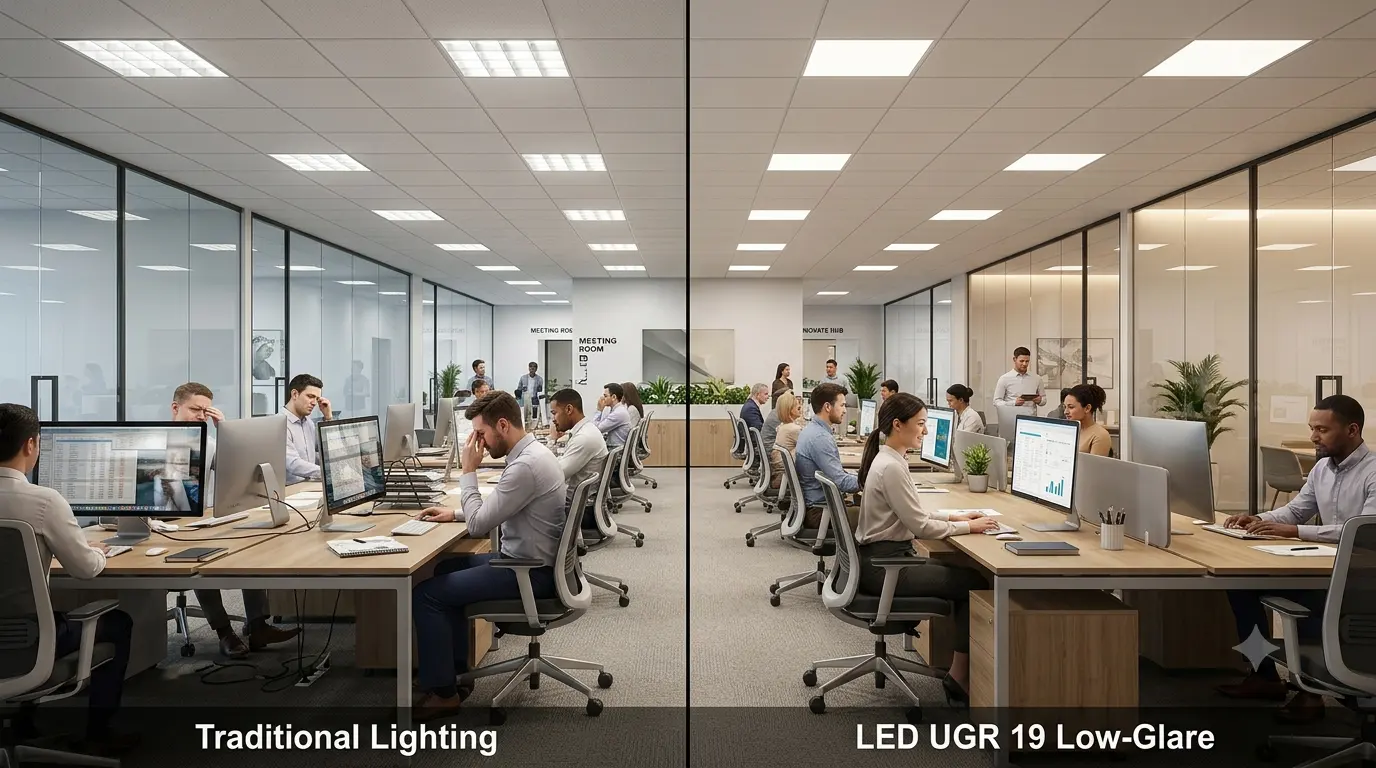
Low-Glare Office Lighting Reduces Visual Fatigue
Employees now spend much of their day in front of computer monitors.
When lighting systems produce excessive glare, occupants may experience:
- Eye strain
- Reduced concentration
- Screen reflections
- Visual discomfort
- Increased fatigue
A well-designed low-glare office lighting system can help create a more comfortable working environment while supporting productivity.
Comfortable Retail Lighting Improves Customer Experience
In retail stores and showrooms, lighting directly affects how products are perceived.
Excessive glare can:
- Distract shoppers
- Reduce product visibility
- Make materials appear less attractive
- Shorten customer dwell time
As a result, many retailers now prioritize anti-glare track lighting for retail stores and low-glare downlighting solutions.
Human-Centric Lighting Is Driving New Standards
The rise of Human-Centric Lighting (HCL) has shifted attention toward occupant well-being.
Leading certification systems such as WELL and LEED increasingly recognize the importance of visual comfort. Lighting designers are therefore paying greater attention to glare control alongside energy efficiency and sustainability.
For guidance on healthy building design principles, many professionals consult the International WELL Building Institute (IWBI).
Four Reasons Commercial Projects Prefer Ugr-Compliant Led Lighting
1. Low-Glare Lighting Helps Meet International Standards
Many commercial projects now specify maximum glare limits during the design phase.
This is especially common in:
- Corporate offices
- Educational facilities
- Healthcare buildings
- Government projects
- International retail chains
Selecting fixtures with verified photometric reports helps simplify compliance and project approval.
2. Visual Comfort Supports Workplace Productivity
Comfortable lighting contributes to a better work environment.
By reducing direct and reflected glare, low-glare luminaires can help occupants remain focused for longer periods while reducing visual stress.
Although productivity depends on many factors, lighting quality plays a measurable role in employee satisfaction and workplace performance.
3. Anti-Glare Lighting Enhances Architectural Aesthetics
Premium interiors aim to create a sense of visual refinement.
One of the hallmarks of sophisticated lighting design is the ability to illuminate surfaces effectively without drawing attention to the light source itself.
Low-glare fixtures help create the popular “light without glare” effect, producing clean ceilings and comfortable spaces.
4. High-Performance Lighting Delivers Long-Term ROI
For property owners and developers, lighting is more than an operational expense.
High-quality lighting systems can contribute to:
- Improved tenant satisfaction
- Stronger leasing appeal
- Better workplace experience
- Reduced maintenance costs
Over the lifecycle of a building, these benefits can significantly increase the overall value of the property.
How LED UGR 19 Fixtures Achieve Low-Glare Performance
A common misconception is that glare control simply involves adding a frosted diffuser.
In reality, achieving low UGR values requires sophisticated optical engineering.
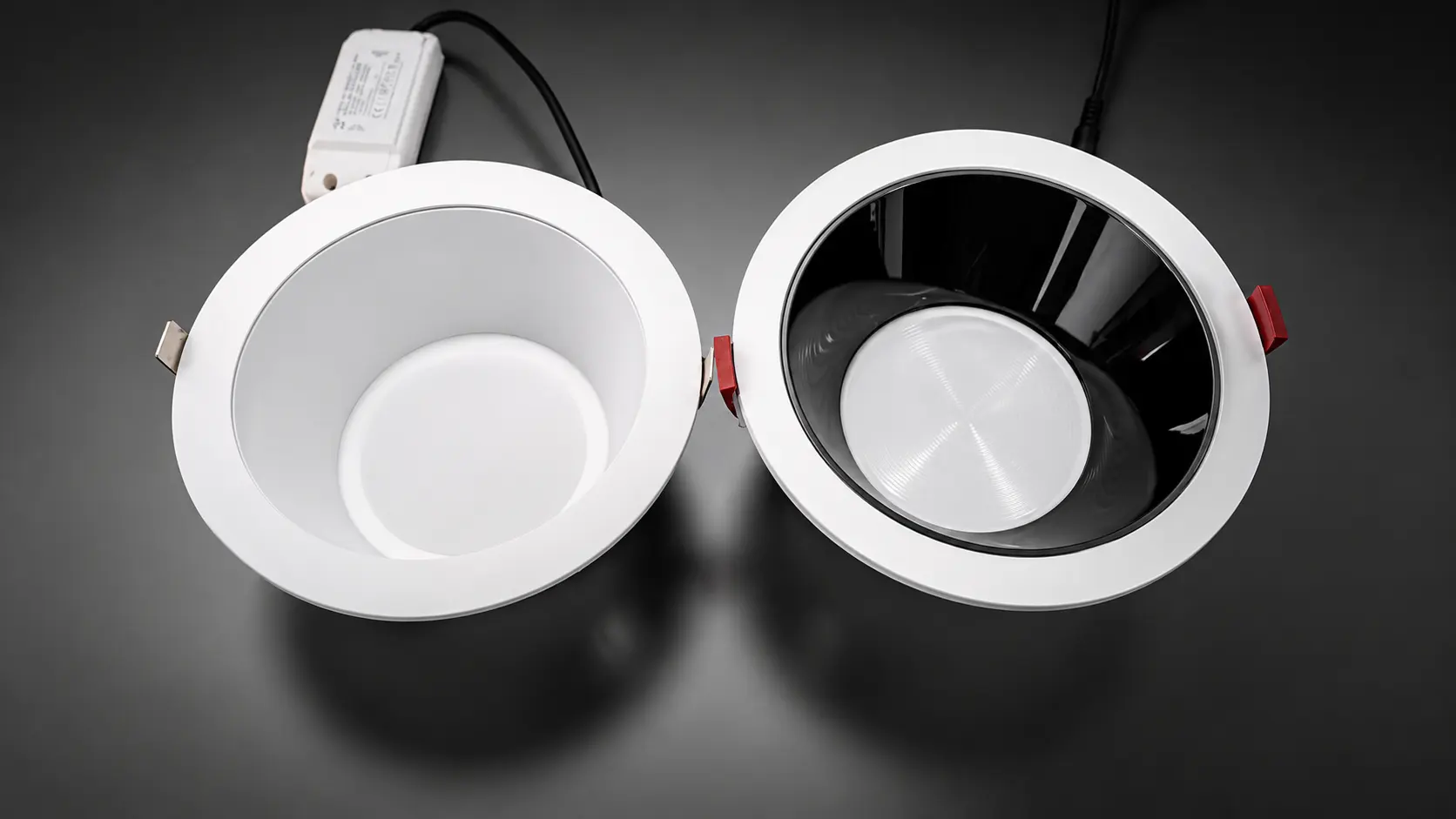
Deep Recessed Downlight Design for Glare Control
Deep recessed optics position the light source further inside the fixture.
This reduces direct visibility of the LED and minimizes discomfort glare.
This approach is widely used in UGR 19 downlights for office lighting.
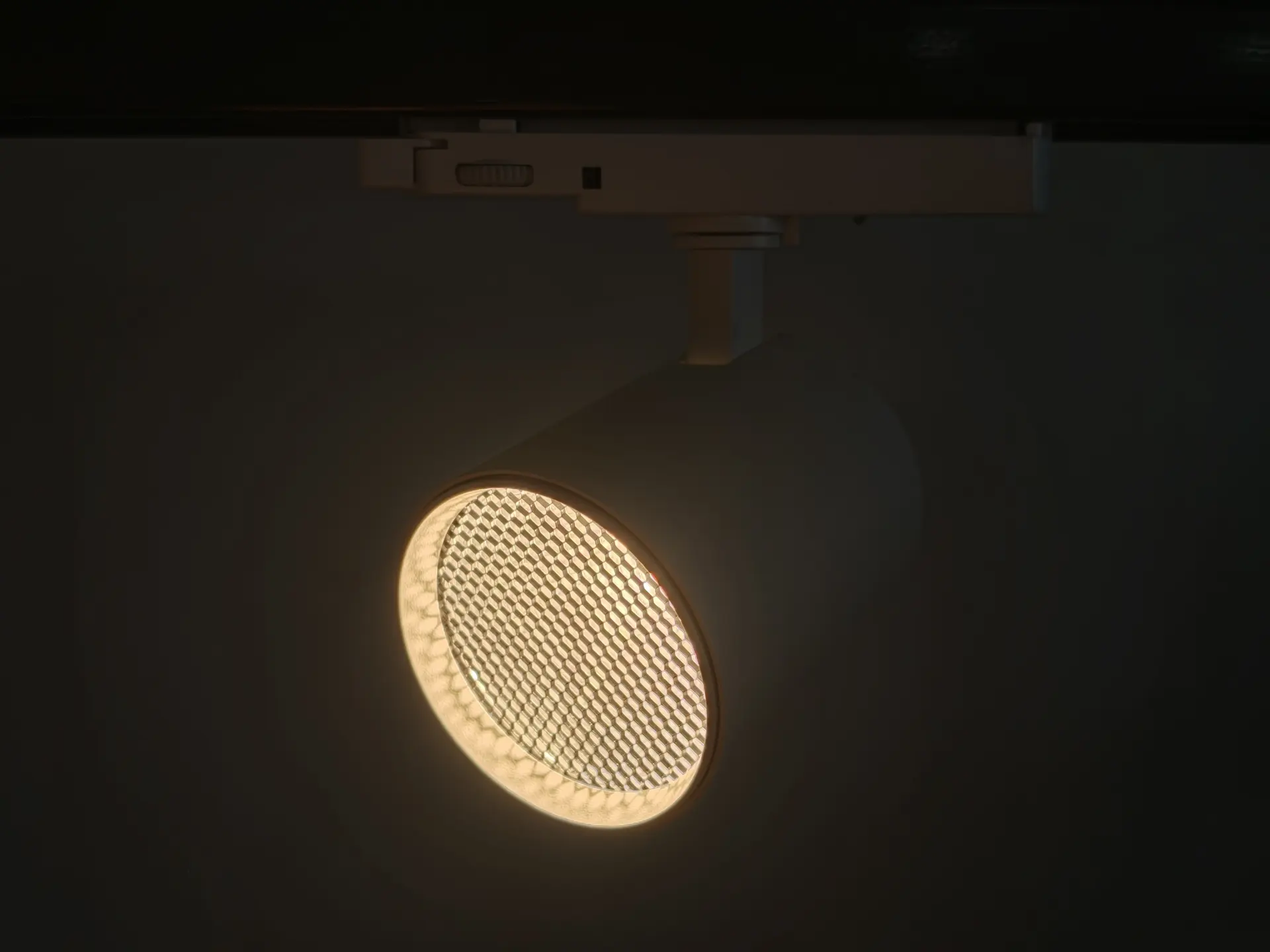
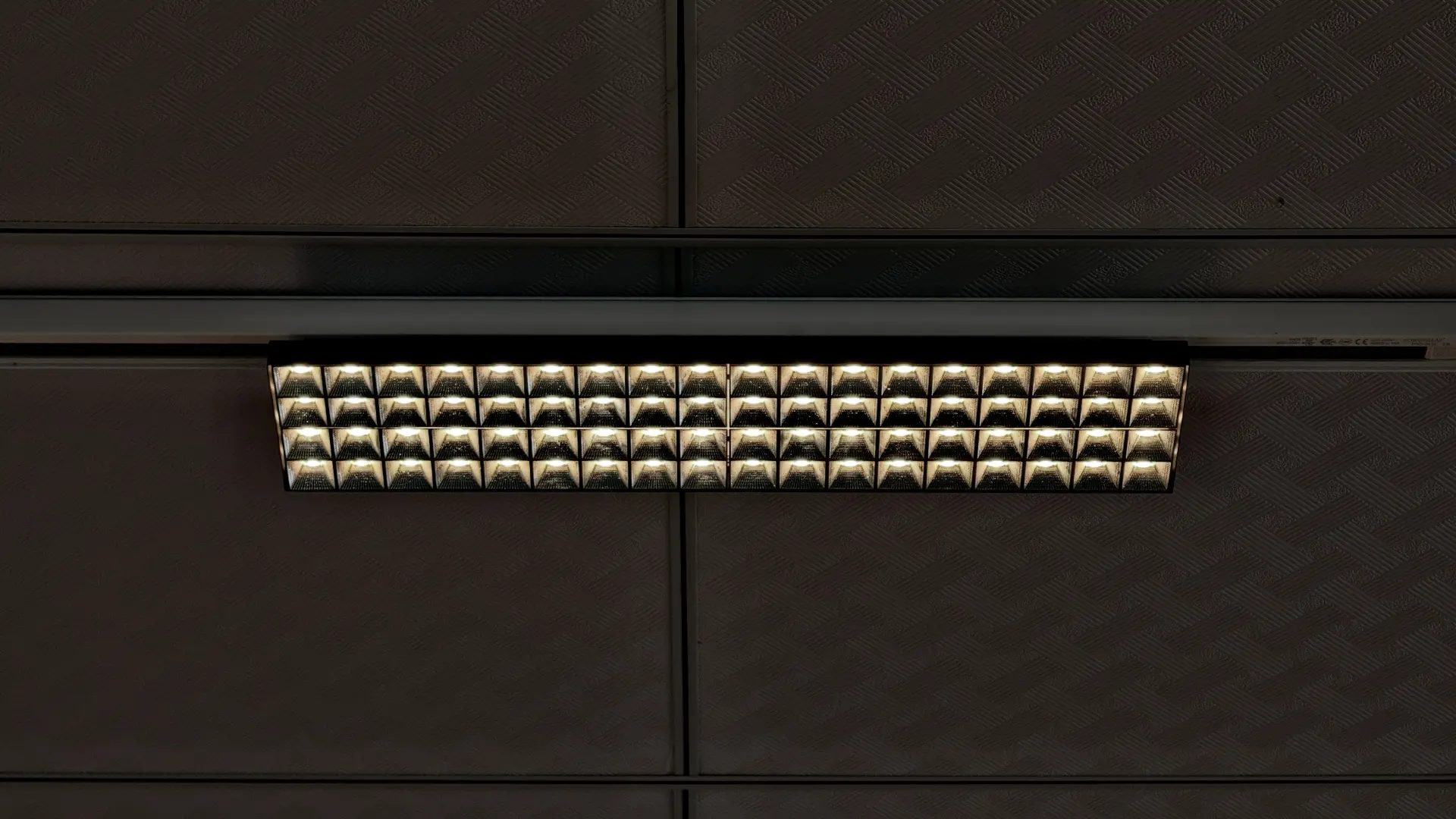
Honeycomb Louvers in Anti-Glare Track Lighting
Honeycomb louvers limit high-angle light output while maintaining beam precision.
They are commonly found in:
- Retail track lights
- Museum lighting
- Hospitality lighting
Micro-Prismatic Diffusers for Low-Glare LED Panels
Micro-prismatic technology redirects light more precisely than traditional opal diffusers.
This makes it a popular solution for:
- Office panel lights
- Educational lighting
- Linear office luminaires
Optical Grilles for Commercial LED Lighting
Precision grilles control beam distribution and improve visual comfort without significantly reducing efficiency.
Choosing the Right UGR 19 Lighting Solution for Different Commercial Spaces
Different applications require different fixture types.
| Application | Recommended Fixture Type | Key Benefit |
|---|---|---|
| Offices | Linear lights, panel lights | Reduced screen glare |
| Meeting rooms | Recessed downlights | Comfortable visual environment |
| Schools | Low-glare classroom lighting | Better visual comfort for students |
| Retail stores | Anti-glare track lighting | Enhanced product presentation |
| Hotels | Downlights and linear systems | Premium guest experience |
| Showrooms | Adjustable accent lighting | Comfortable product highlighting |
UGR 19 Office Lighting Applications
Open-plan offices typically benefit from linear lighting systems designed to minimize glare from multiple viewing angles.
Low-Glare Lighting for Educational Facilities
Classrooms often combine glare control with high color rendering to support learning environments.
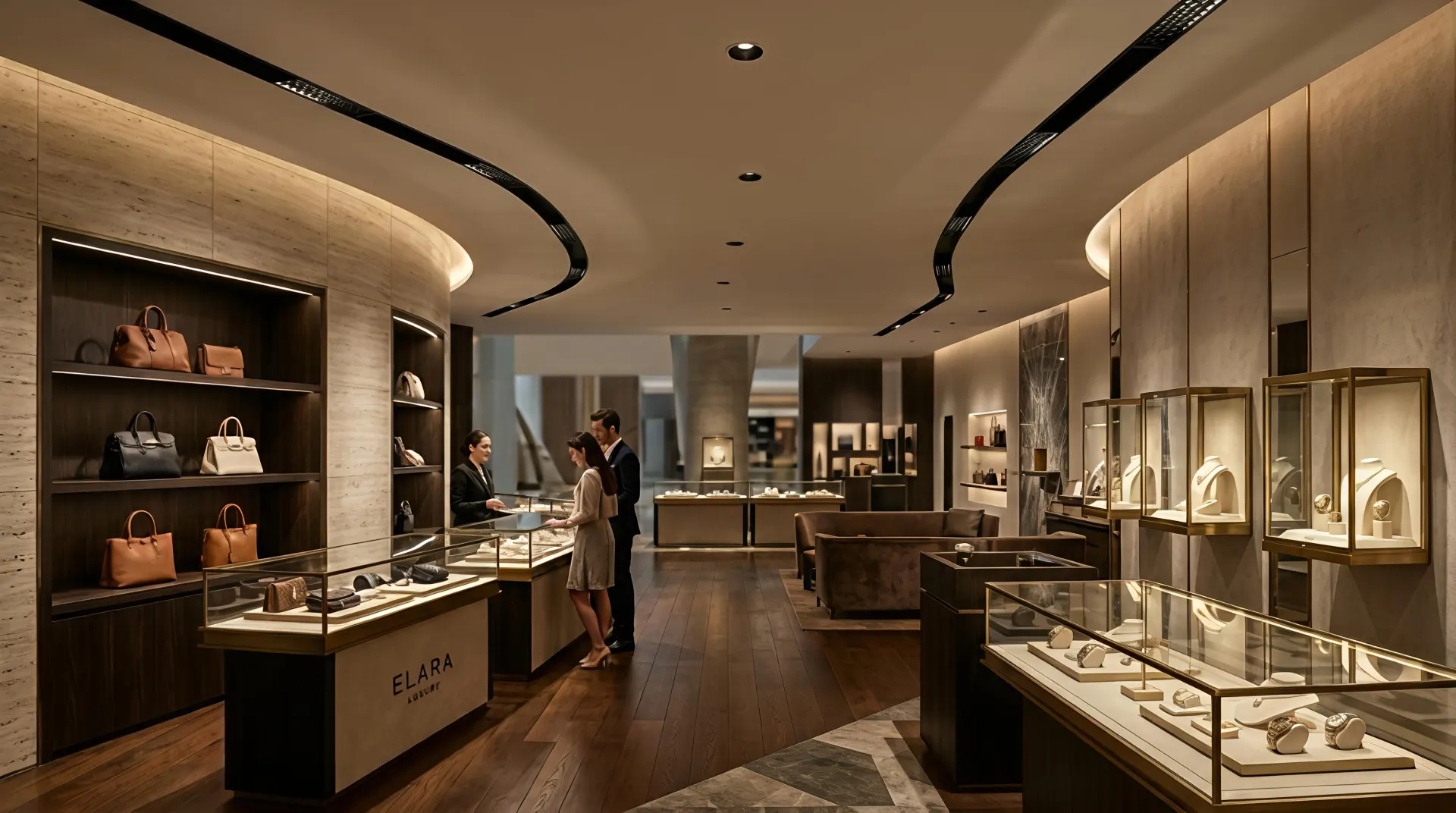
Anti-Glare Track Lighting for Retail Stores
Retail environments frequently use track lighting to highlight merchandise while maintaining customer comfort.
Commercial Downlights for Hospitality Projects
Hotels and restaurants often rely on deep-recessed luminaires to achieve a sophisticated atmosphere without visible glare.
Beyond UGR: What Defines High-Quality Commercial Lighting?
Glare control is important, but it should be considered alongside several other performance factors.
High-Efficiency Commercial LED Lighting
A quality fixture should maintain low glare while still delivering excellent luminous efficacy.
Many modern commercial luminaires achieve efficiencies above 140 lm/W.
High CRI Lighting for Commercial Interiors
For premium applications, a Color Rendering Index (CRI) of 90 or higher is recommended.
Luxury retail and hospitality projects often target CRI 95+.
Smart Lighting Controls and UGR-Compliant Fixtures
Advanced lighting systems increasingly support:
- DALI
- DALI-2
- DT8
These technologies allow lighting levels to adapt throughout the day while maintaining visual comfort.
Certifications for Global Commercial Projects
Depending on the target market, products may require:
- CE
- RoHS
- SAA
- RCM
- IC-4
Certification compliance remains an important consideration during product selection.
The Future of Low-Glare LED Lighting in Commercial Buildings
Commercial lighting is evolving beyond brightness and energy consumption.
Today’s projects increasingly focus on:
- Employee well-being
- User experience
- Sustainability
- Architectural quality
- Healthy indoor environments
As these priorities continue to shape the industry, low-glare solutions will likely become the standard rather than the exception.
Whether the application involves offices, schools, retail stores, or hospitality venues, lighting systems designed around visual comfort are expected to play a central role in future commercial developments.
FAQ about LED UGR 19 Lighting
What does UGR 19 mean in lighting?
UGR 19 refers to a Unified Glare Rating of 19 or lower. It indicates that a lighting installation provides a low-glare environment suitable for offices, classrooms, meeting rooms, and other spaces where visual comfort is important.
Is UGR 19 required for office lighting?
Many office lighting standards and project specifications recommend or require UGR ≤ 19 because employees spend long periods working under artificial lighting and viewing computer screens.
What is the difference between LED UGR 19 and UGR 22?
A UGR 19 fixture produces less perceived glare than a UGR 22 fixture. While both may be acceptable in commercial environments, UGR 19 is generally preferred for visually demanding spaces.
Can track lights achieve UGR 19?
Yes. Modern anti-glare track lights can achieve UGR 19 through deep recessed optics, honeycomb louvers, precision reflectors, and advanced optical control.
How can I verify whether a light fixture is truly UGR 19?
Ask the manufacturer for independent photometric reports, UGR calculations, and IES files. Reputable suppliers should be able to provide documented test results.
Is low-glare lighting worth the additional investment?
In most commercial applications, the answer is yes. Improved visual comfort, enhanced occupant satisfaction, compliance with project requirements, and long-term property value often outweigh the initial cost difference.

