



Boost Foot Traffic Instantly: The Magic of Smart Retail Lighting Solutions
By Powerstar
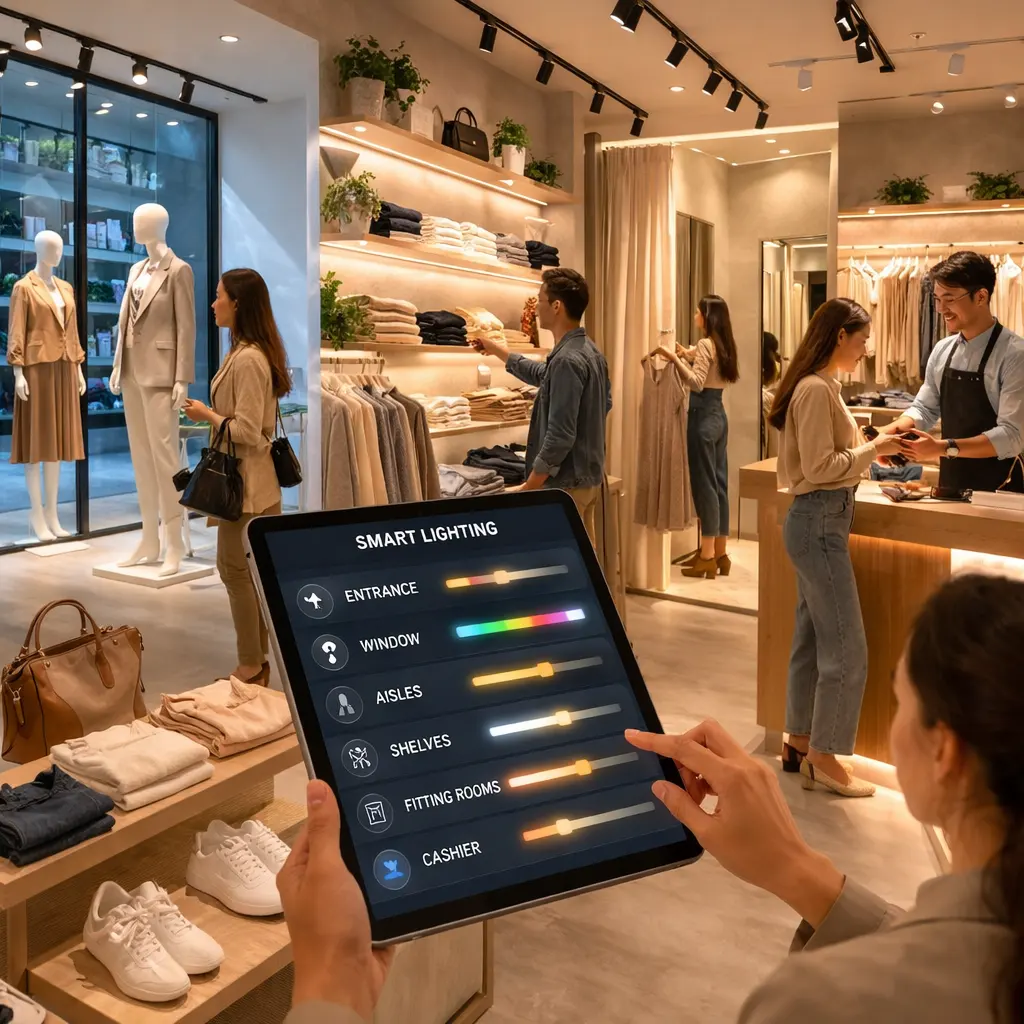
Retail lighting is no longer just about making a store bright enough for customers to see products clearly. In today’s competitive market, lighting affects customer emotion, product presentation, brand identity, store flexibility, and operating costs. That is why more businesses are turning to smart retail lighting solutions as a practical way to improve both the shopping experience and day-to-day store management.
Traditional retail lighting systems often create limitations. They may provide enough illumination, but they are usually static, difficult to adjust, and unable to respond quickly to changing merchandising strategies or promotional campaigns. This becomes a problem in modern retail environments where layouts change frequently, product displays evolve by season, and brands need visual consistency across multiple locations.
Smart lighting changes that equation. When combined with RGBW technology, retailers gain more than dimming or scheduling. They gain flexible lighting that can support general illumination, highlight key products, create themed atmospheres, and adapt to different operational needs from morning opening hours to evening promotions.
Why Retail Stores Need Smarter Lighting Strategies
Retail spaces are dynamic. Window displays are updated, featured products shift, seasonal campaigns come and go, and promotional zones need to attract attention quickly. Fixed lighting systems are often too rigid for this reality.
A traditional lighting layout may work well on opening day, but over time it can become inefficient. Store managers often face the same recurring problems: some areas feel visually flat, displays do not stand out enough, lighting adjustments require manual effort, and the overall environment lacks flexibility. In chain retail environments, another issue appears—different stores may look inconsistent because lighting settings are not standardized.
This is where smart retail lighting solutions become especially valuable. They allow retailers to control lighting by zone, time, function, or campaign. Instead of treating lighting as a static utility, businesses can use it as a controllable tool that supports sales, branding, and customer engagement.
The Main Pain Points in Traditional Retail Lighting
Many stores still rely on conventional lighting systems that can illuminate the space but fail to solve deeper operational and visual challenges.
One major issue is the lack of flexibility. A store may need bright white light during peak shopping hours, a softer tone in the evening, and bold brand-related colors during special events. Traditional systems cannot easily make these transitions without physical changes or extra decorative lighting.
Another pain point is poor product emphasis. General lighting may keep a space bright, but brightness alone does not create visual hierarchy. If all areas look the same, featured products lose impact and displays become less memorable.
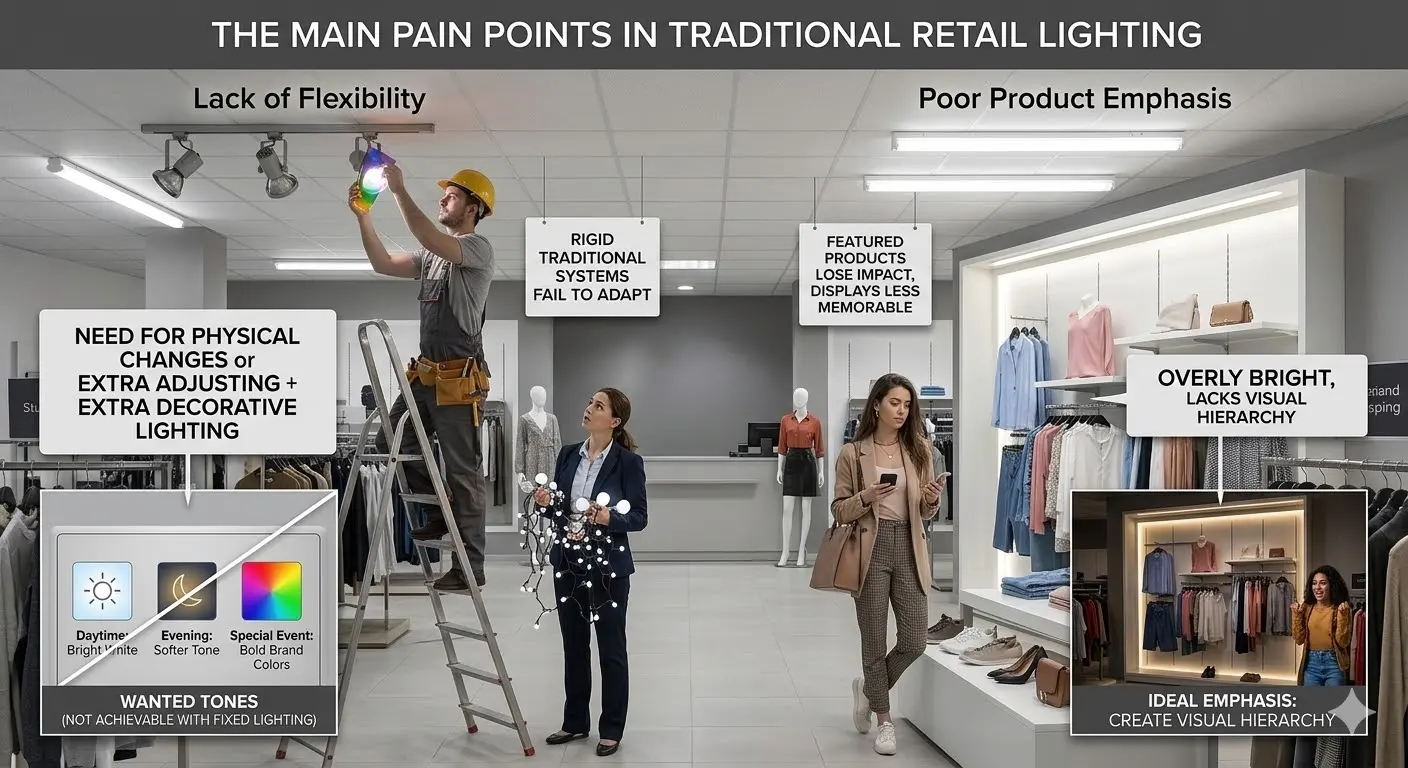
Operational inefficiency is also common. Staff may need to manually switch circuits, dim individual areas, or work around a system that was never designed for multiple scenes or rapid changes. This wastes time and reduces consistency.
Energy use can also become a hidden problem. When all fixtures operate at full output for long business hours, electricity costs increase unnecessarily. Without intelligent control, it is difficult to match lighting output to actual store activity, daylight conditions, or different time periods.
Finally, traditional systems often make renovations and merchandising changes more complicated. Instead of adjusting light scenes digitally, retailers may need to add new fixtures, re-aim existing luminaires, or partially redesign the lighting layout.
How Smart Retail Lighting Solutions Address These Challenges
The real strength of smart retail lighting solutions lies in adaptability. Retailers can create lighting scenes for opening hours, busy periods, premium product launches, seasonal campaigns, and evening ambiance without changing the entire physical system.
Smart controls make it possible to divide a store into zones such as entrance areas, window displays, central aisles, shelving sections, fitting rooms, cashier counters, and feature displays. Each zone can then operate with different brightness levels, schedules, or color settings according to its purpose.
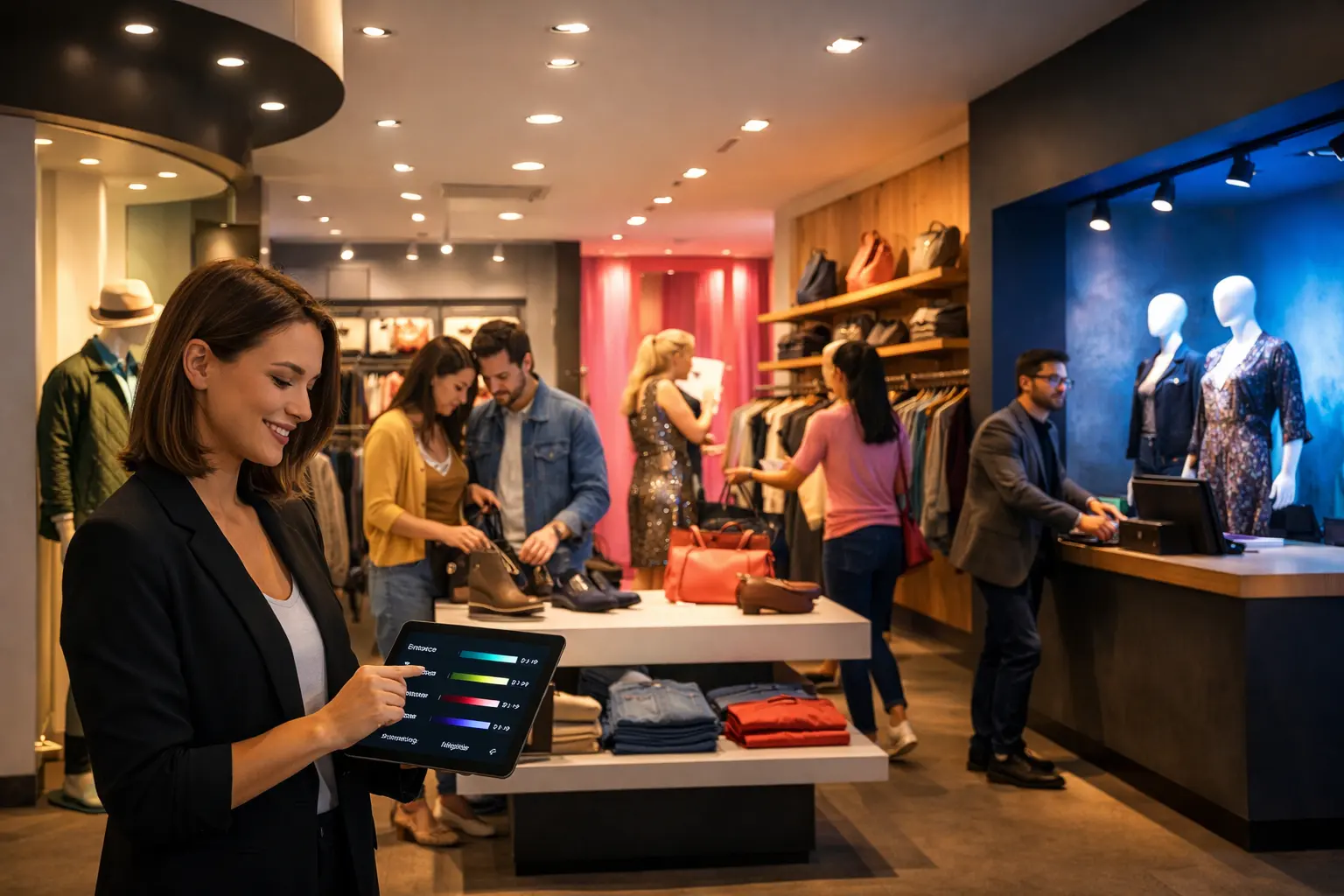
This helps solve several problems at once. Entrance lighting can be designed to make a strong first impression. Display zones can become more dramatic. General areas can remain comfortable and efficient. Promotional corners can be activated with special scenes only when needed.
Instead of relying on a “one setting fits all” approach, retailers gain a much more refined lighting strategy that matches the actual needs of the space.
Why RGBW Lighting Adds More Value to Retail Environments
RGBW lighting is especially important in modern retail because it combines color-changing capability with a dedicated white light channel. This gives retailers both decorative flexibility and practical daily usability.
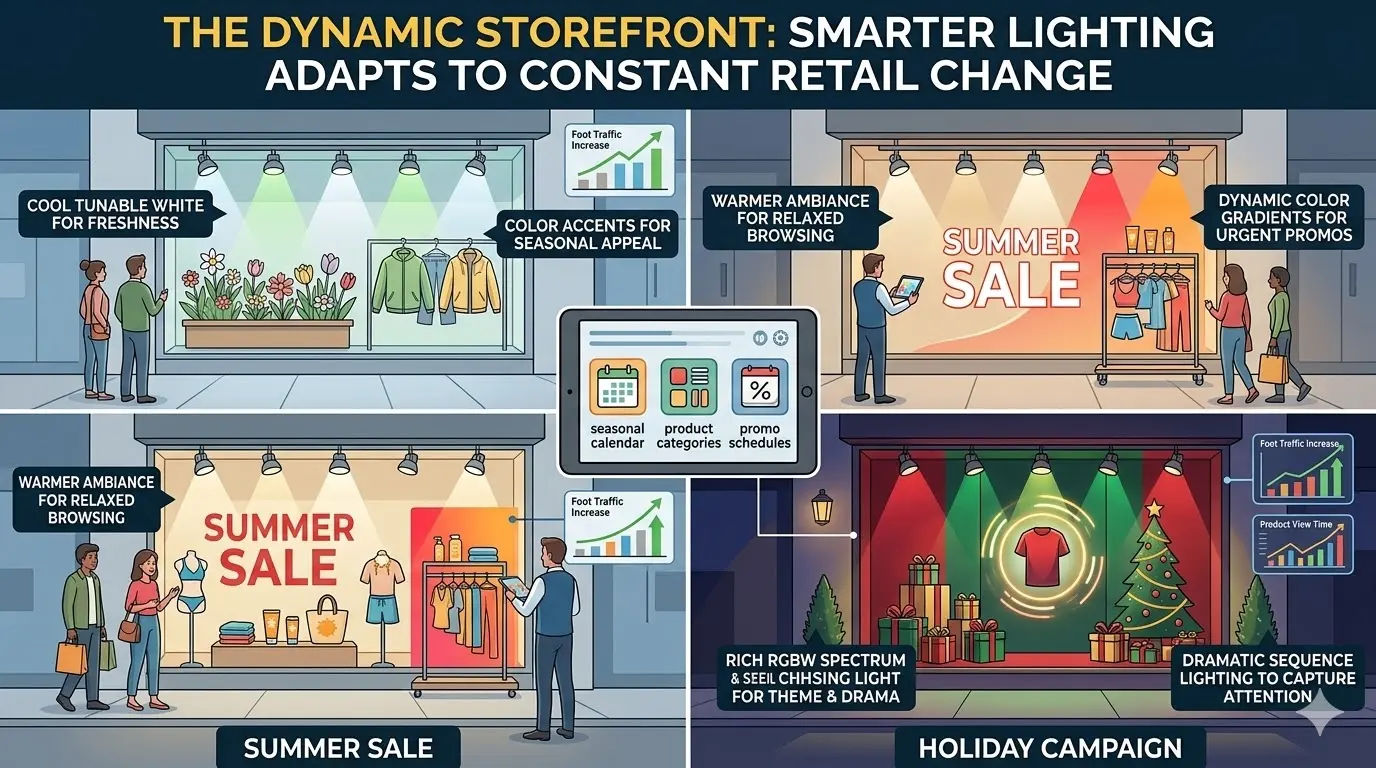
Standard RGB lighting can create colorful effects, but it is often not ideal for normal retail operation because pure color lighting may reduce comfort or distort product appearance. RGBW solves this issue by allowing stores to use clean white light for everyday illumination while adding color accents only when needed.
This creates several commercial advantages.
First, stores can maintain a professional shopping environment during regular hours while still having access to vibrant lighting for promotions, themed campaigns, and brand storytelling.
Second, RGBW makes it easier to align lighting with brand identity. A retailer can use brand colors in entrances, display zones, or event areas without relying on temporary decorative fixtures.
Third, RGBW improves visual layering. White light can support visibility and product clarity, while colored accents can guide attention, shape mood, and increase the emotional impact of selected zones.
For retailers, this means lighting no longer has to choose between “functional” and “dramatic.” RGBW allows both.
Better Customer Experience Through Intelligent Lighting
Lighting has a direct influence on how customers feel inside a store. A well-lit retail environment can appear more open, more organized, more premium, and more inviting. On the other hand, flat or poorly controlled lighting can make even a strong product assortment feel ordinary.
Smart retail lighting solutions improve customer experience by making the environment more responsive and intentional. For example, a fashion store may use bright, crisp lighting in central display areas to make colors and textures stand out, then introduce warmer or more atmospheric tones in lounge-style zones or fitting rooms.
A beauty retailer might use carefully controlled white light to support accurate product viewing while adding subtle RGBW effects in promotional areas to create a more immersive brand experience.
Even small changes in lighting scene can affect the way people move through a store, where they stop, and what they notice first. This is why smart lighting is increasingly viewed not just as a technical upgrade, but as part of the customer journey.
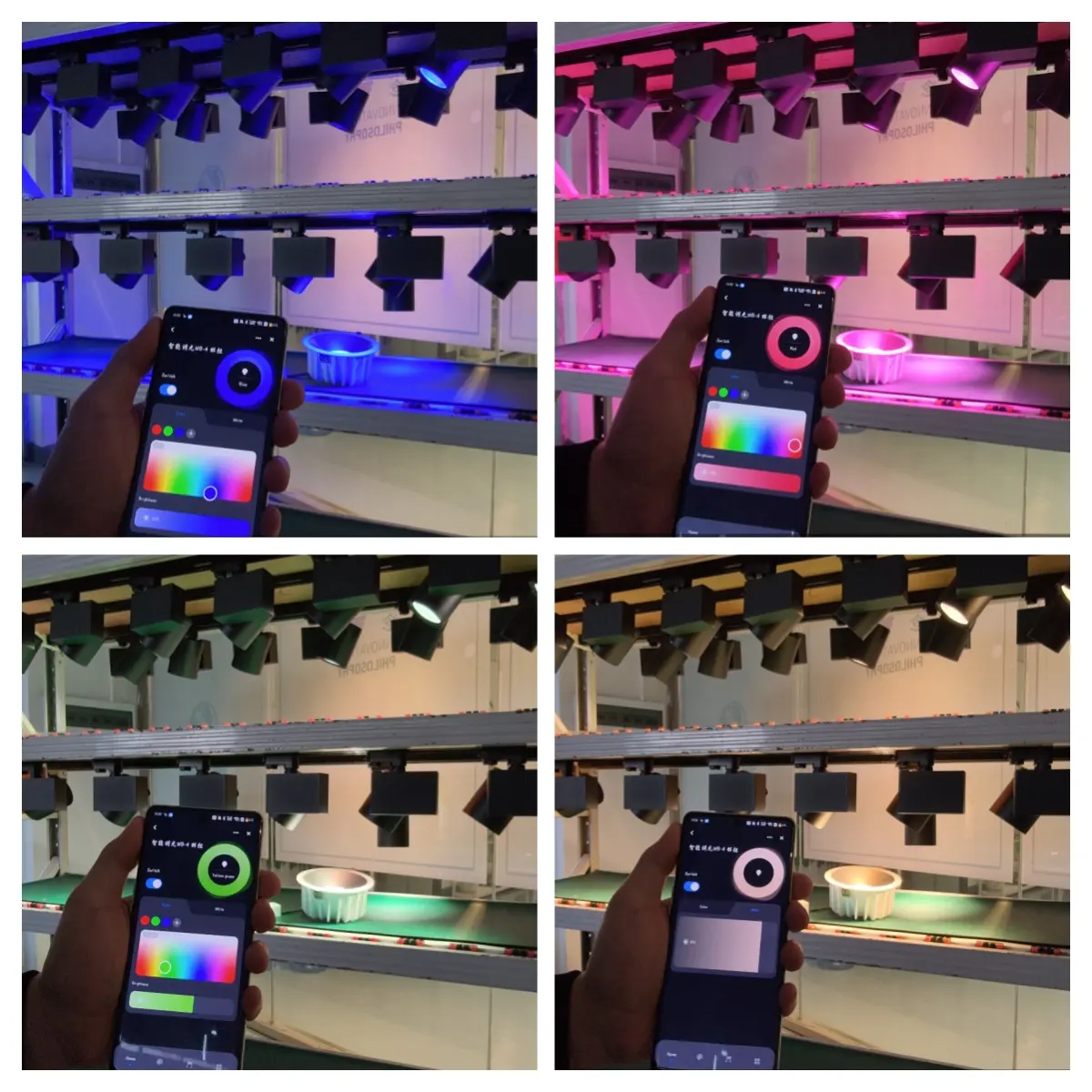
Improving Visual Merchandising and Product Presentation
Visual merchandising depends on contrast, focus, and hierarchy. If every shelf, table, and pathway receives the same treatment, customers may struggle to identify what is new, premium, or important.
With smart retail lighting solutions, lighting can be used more strategically to shape attention. Featured products can be emphasized through brighter levels, different beam direction, or more dramatic surrounding contrast. Promotional displays can be separated from standard merchandise through scene changes or subtle RGBW accents.
This is especially useful in stores where displays change regularly. Instead of rebuilding the lighting concept each season, retailers can adapt scenes digitally and keep the space aligned with current campaigns.
In practical terms, this helps stores look more dynamic, more curated, and more professional. It also supports stronger storytelling around product collections, seasonal drops, or limited-time offers.
Energy Savings and Easier Store Management
Retail lighting often runs for long hours every day, making energy efficiency a major concern. Intelligent control helps reduce waste by allowing lights to operate according to schedule, occupancy, daylight contribution, or real store activity.
Rather than keeping all zones at full brightness from opening to closing, stores can fine-tune usage. Window displays may run stronger during key traffic periods. Secondary zones may dim slightly during quieter times. Decorative RGBW scenes can be activated only for campaign windows instead of operating continuously.
This controlled approach lowers operating costs while extending the useful life of the lighting system.
Management also becomes easier. Staff no longer need to adjust multiple switches manually or remember which lights should be changed for each event. Preset scenes can simplify operation and improve consistency across shifts and across branches.
For chain stores, centralized control can also support brand standardization, helping multiple locations deliver a similar visual experience.
Why Smart Retail Lighting Solutions Are Ideal for Modern Store Upgrades
Retail renovation projects often happen in stages. A business may want to refresh brand image, improve merchandising performance, or update the customer experience without completely rebuilding the entire space.
This is another area where smart retail lighting solutions offer strong value. Because much of the improvement comes from control, zoning, and programmable scenes, retailers can often gain greater flexibility without relying only on major structural changes.
That makes smart RGBW lighting especially attractive for boutiques, fashion stores, supermarkets, beauty retailers, electronics showrooms, lifestyle stores, and shopping mall units that need to stay agile in a fast-changing market.
As consumer expectations continue to rise, lighting must do more than illuminate shelves. It must support business strategy.
Conclusion
The best retail lighting systems today are not just brighter—they are smarter. Smart retail lighting solutions help businesses solve real commercial pain points, including inflexible layouts, weak product emphasis, inconsistent atmosphere, high manual control demands, and unnecessary energy use.
When RGBW technology is added, the value becomes even greater. Retailers gain the ability to combine practical white light with dynamic color control, creating spaces that are functional during normal operation and visually powerful during campaigns or special events.
For modern retail brands, smart lighting is no longer a luxury feature. It is a practical tool for improving customer experience, strengthening visual merchandising, reducing operational friction, and building a more adaptable store environment for the future.

