



Why Linear Lighting for Modern Commercial Spaces Is Becoming the Go-To Solution for Interiors
By Powerstar
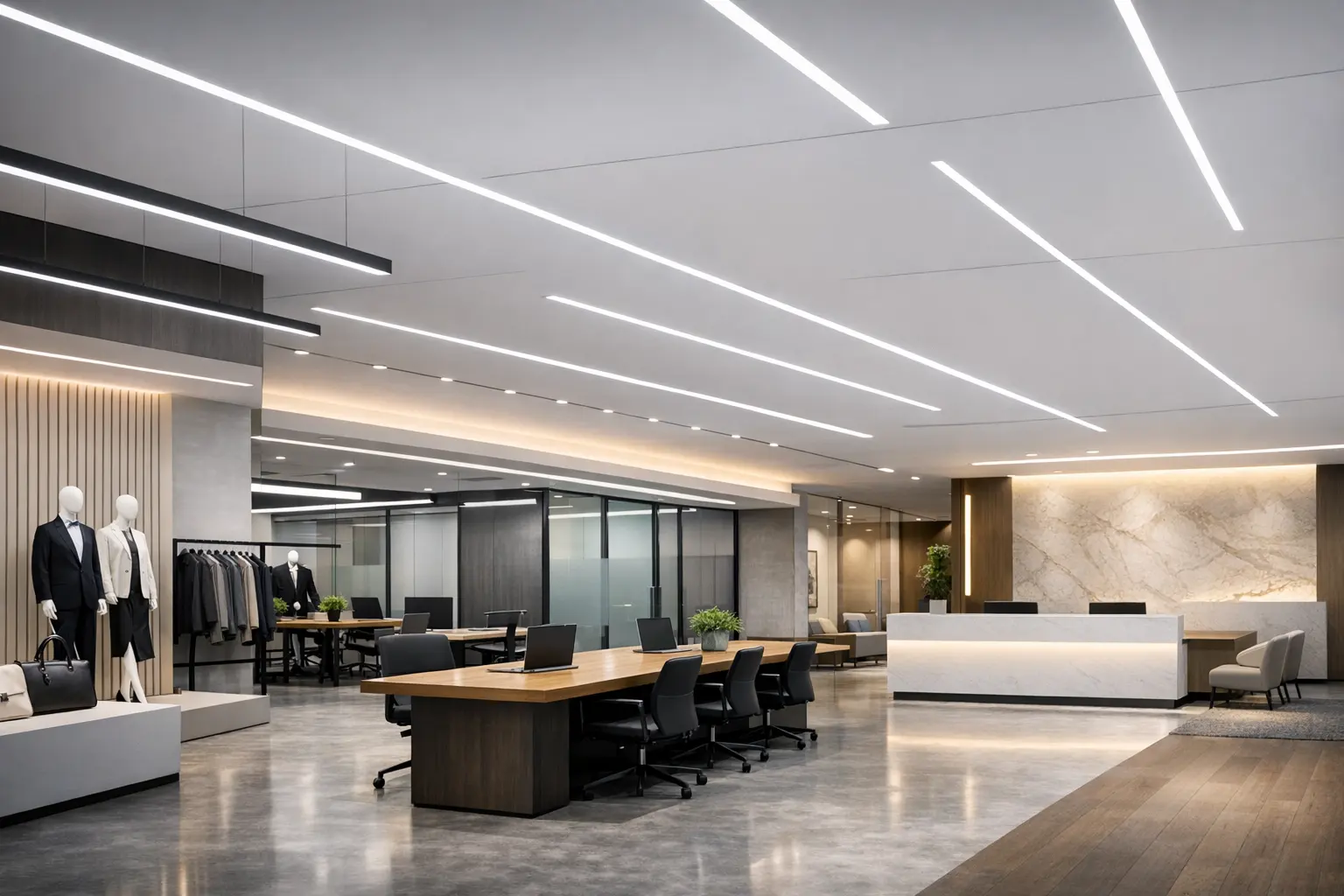
Commercial lighting today is expected to do far more than simply make a space visible. In retail stores, offices, showrooms, supermarkets, hospitality venues, and mixed-use commercial interiors, lighting influences customer perception, employee comfort, product presentation, spatial clarity, and overall brand image. That is why more designers, architects, and business owners are paying closer attention to linear lighting for modern commercial spaces.
Unlike traditional point-source fixtures that can create fragmented brightness and visual clutter, linear lighting delivers a cleaner, more continuous approach. It helps solve many of the common lighting problems found in commercial environments, from uneven illumination to poor ceiling aesthetics and weak spatial guidance.
This article explains why linear lighting for modern commercial spaces has become such an important solution, and how it helps address real-world commercial lighting pain points.
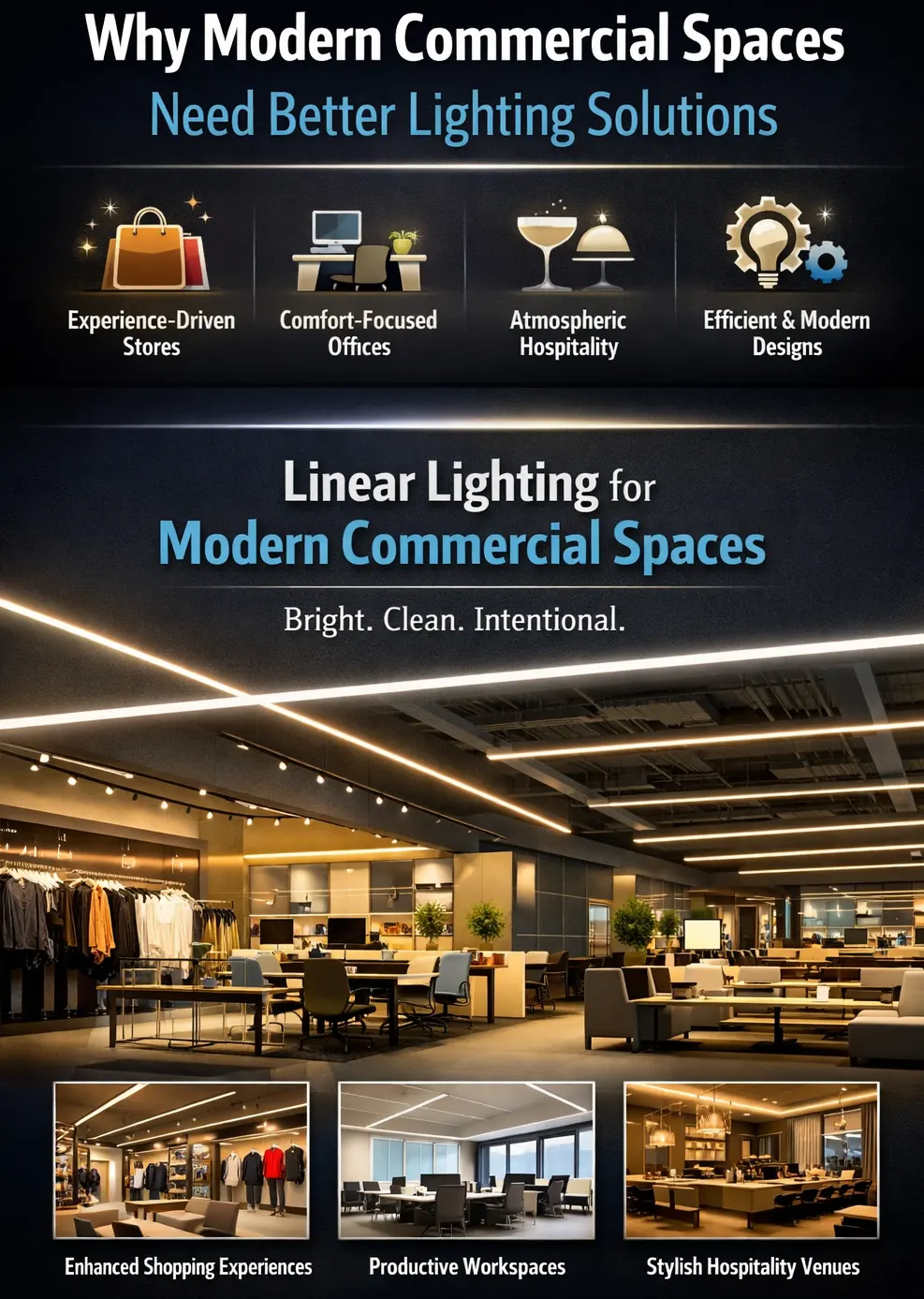
Why Modern Commercial Spaces Need Better Lighting Solutions
Commercial environments have changed significantly. Stores are becoming more experience-driven. Offices are focusing more on comfort and productivity. Hospitality venues want lighting that supports both atmosphere and functionality. At the same time, businesses want systems that look modern, perform efficiently, and align with evolving layouts.
Traditional lighting methods often struggle to meet all of these needs at once. A space may be bright enough, but still feel uncomfortable, visually messy, or poorly organized. In many projects, the problem is not a lack of light, but a lack of lighting consistency and strategy.
This is where linear lighting for modern commercial spaces stands out. It combines practical illumination with architectural simplicity, allowing businesses to create environments that feel brighter, cleaner, and more intentional.
Solving Uneven Illumination Across Commercial Interiors
One of the most common pain points in commercial lighting is uneven brightness. In spaces that rely too heavily on downlights or isolated fixtures, some areas become overly bright while others remain dim. This creates poor visual balance and can make a commercial interior feel less inviting.
Linear lighting helps solve this issue by producing a more continuous spread of light. Instead of creating scattered pools of illumination, linear fixtures can provide a smoother and more uniform lighting effect across ceilings, walkways, counters, shelving zones, and work areas.
This is especially useful in:
- Retail aisles
- Open-plan offices
- Reception areas
- Supermarkets
- Showrooms
- Long corridors
- Checkout areas
Better lighting uniformity improves the overall visual experience. Customers can move through the space more comfortably, and employees benefit from a more stable and practical working environment.
Improving Ceiling Aesthetics and Reducing Visual Clutter
In commercial design, the ceiling matters more than many businesses realize. A cluttered ceiling filled with disconnected fixtures, mismatched shapes, and irregular lighting points can make a space feel chaotic or outdated.
Linear lighting for modern commercial spaces helps solve this by creating a more organized visual language. Whether recessed, suspended, surface-mounted, or integrated into architectural elements, linear fixtures offer a cleaner and more structured appearance.
This helps commercial spaces achieve:
- A more modern look
- Better visual consistency
- Stronger architectural alignment
- A more premium brand impression
- A simpler and more elegant ceiling layout
For businesses that want their interiors to feel contemporary and professional, linear lighting offers both functional and aesthetic value. It is particularly effective in minimalist interiors, technology-driven retail spaces, premium offices, and branded environments where design cohesion matters.
Supporting Clearer Spatial Direction and Customer Flow
Lighting in commercial settings is not only about visibility. It also influences how people move through the space. Poor lighting design can make layouts feel confusing, disconnected, or visually flat. In contrast, well-planned linear lighting can strengthen spatial direction and improve wayfinding.
Because linear fixtures naturally follow lines, they work well with architectural geometry and circulation paths. They can be installed along walkways, above aisles, across product display zones, or parallel to workspace layouts. This helps define how the space is used and understood.
For example, linear lighting can:
- Lead customers through a store
- Emphasize main pathways
- Support zoning between public and private areas
- Reinforce the layout of desks or shelving systems
- Clarify the organization of a larger interior
In modern commercial projects, this sense of visual guidance is extremely important. It improves both function and experience, especially in retail, office, and public-facing environments.
Matching the Shape of Long and Open Commercial Spaces
Many commercial interiors are naturally linear in form. Think about supermarket aisles, office desk rows, reception counters, hotel corridors, clothing racks, and open-plan circulation zones. These spaces often feel awkward when lit only with scattered spotlights or isolated downlights.
Linear lighting is more compatible with these long or open formats because it reflects the actual geometry of the space. Instead of fighting the layout, it works with it.
This creates several benefits:
- More logical lighting distribution
- A stronger sense of continuity
- Better proportional balance
- Fewer interruptions in visual rhythm
- A more coherent relationship between light and architecture
When lighting aligns with the form of the space, the result feels more intentional and less forced. That is one reason linear lighting for modern commercial spaces continues to gain popularity across so many project types.
Enhancing Visual Comfort and Reducing Lighting Harshness
Another major commercial lighting pain point is discomfort. Even when a space appears bright enough, it may still feel unpleasant if the light is too harsh, too contrast-heavy, or poorly controlled. Excessive glare can reduce comfort for both customers and staff, especially in environments where people spend long periods of time.
A well-designed linear lighting system can help improve visual comfort by delivering more diffuse, balanced, and controlled illumination. While performance depends on fixture quality and optical design, linear systems are often used to create softer ambient layers that reduce the aggressive brightness associated with poorly placed direct lighting.
This is especially valuable in:
- Offices
- Retail environments
- Hospitality settings
- Clinics and wellness spaces
- Educational commercial interiors
- Waiting areas and lounges
Comfortable lighting encourages longer dwell time, better concentration, and a more pleasant overall experience. In commercial design, that directly supports both operational goals and customer satisfaction.
Creating Better Lighting Layers for More Depth and Flexibility
Commercial interiors often suffer when lighting is too one-dimensional. A space that uses only downlights may feel flat and generic. A space that relies only on spotlights may feel too dramatic or uneven. The most effective environments typically use layered lighting, where different fixture types work together to create balance.
Linear lighting for modern commercial spaces plays an important role in this layered approach. It often works as the main ambient or general lighting layer, while accent lights highlight products, wall washers brighten vertical surfaces, and decorative fixtures add visual character.
This layered strategy makes it easier to achieve:
- Better lighting depth
- Improved mood control
- Stronger product emphasis
- More adaptable scene composition
- A more sophisticated commercial atmosphere
For retailers, this can improve merchandising impact. For offices, it can support both function and comfort. For hospitality spaces, it can help shape mood without sacrificing clarity.
Making Commercial Spaces Feel More Modern and Brand-Aligned
Lighting is now a major part of brand expression. Businesses do not only want lighting that works. They want lighting that reflects who they are. In many commercial settings, outdated lighting makes the entire environment feel less relevant, even when the products or services are strong.
Linear lighting helps communicate a more modern identity because it is strongly associated with clean design, architectural integration, and contemporary space planning. It can make a commercial interior feel more refined, more organized, and more current.
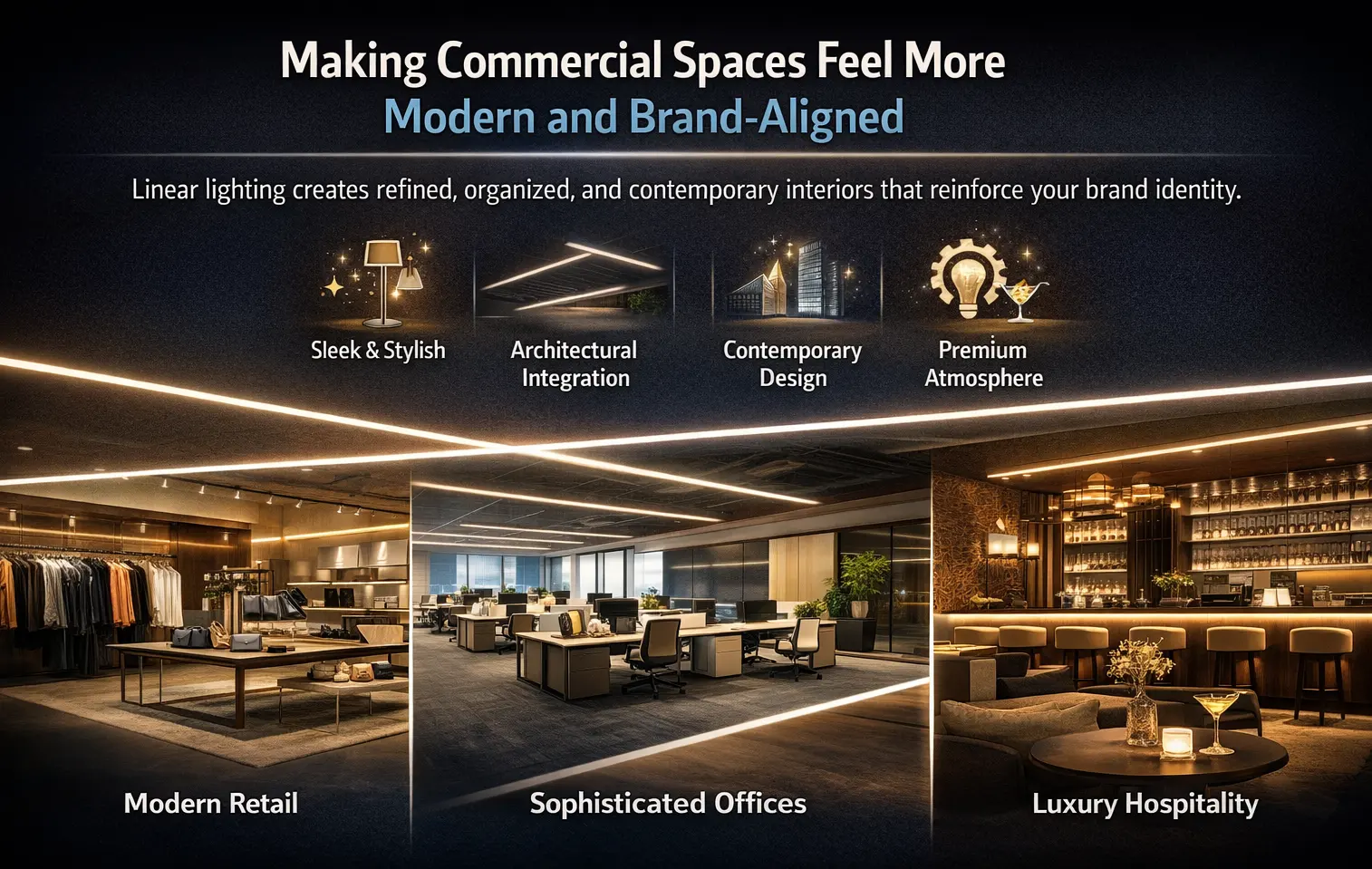
This is particularly important for:
- Fashion retail
- Technology stores
- Corporate offices
- Showrooms
- Commercial lobbies
- Premium service environments
When businesses invest in linear lighting for modern commercial spaces, they are often investing in more than illumination. They are shaping how the brand is perceived the moment someone enters the room.
Supporting Efficiency and Future Layout Changes
Commercial interiors rarely stay unchanged forever. Stores update their merchandising. Offices reconfigure workstations. Showrooms adjust presentation zones. Lighting systems that are too rigid can become inconvenient when these changes happen.
Linear lighting systems are often easier to integrate into modular or structured layouts. Depending on the product and installation method, they can support more flexible planning and cleaner upgrades over time.
For commercial users, this can mean:
- Easier alignment with renovations
- Better consistency across multiple locations
- Simpler expansion of lighting layouts
- More future-ready interior planning
- Improved long-term design efficiency
In modern business environments, adaptability matters. A lighting solution should not only serve today’s layout but also support tomorrow’s changes.
Why Linear Lighting Is a Smart Choice for Modern Commercial Design
The growing popularity of linear lighting for modern commercial spaces is not just a design trend. It reflects a practical response to real lighting problems that businesses face every day. Uneven brightness, ceiling clutter, weak spatial flow, poor comfort, flat lighting layers, and outdated visual presentation are all issues that linear lighting can help address.
Its strength lies in the combination of performance and simplicity. It provides the continuous illumination needed for commercial function while also reinforcing the clean, structured, and modern visual qualities that many businesses now want from their interiors.
Whether the goal is to improve a retail experience, modernize an office, organize a showroom, or elevate a hospitality environment, linear lighting offers a solution that is both strategic and visually effective.
Conclusion
Commercial lighting is no longer just about installing enough fixtures to make a space usable. Businesses now need lighting systems that solve operational pain points while also supporting design quality, user comfort, and brand identity. That is exactly why linear lighting for modern commercial spaces has become such a valuable option.
By improving illumination uniformity, enhancing ceiling aesthetics, guiding movement, reducing visual discomfort, and supporting layered lighting strategies, linear lighting helps modern commercial interiors perform better on every level.
For businesses seeking a cleaner, more adaptable, and more professional lighting solution, linear lighting is not just an upgrade in appearance. It is a smarter approach to commercial space design.

