



Say Goodbye to Color Inconsistency with SDCM<3 LED Linear Downlights
By Vincent
In premium commercial interiors, lighting is never just about illumination. It defines how a space feels, how materials are perceived, and ultimately how a brand is experienced. That’s why more architects, lighting designers, and contractors are specifying SDCM<3 LED linear downlights for luxury retail stores, hotels, galleries, offices, and architectural projects. In large-scale installations, even slight color inconsistencies can instantly ruin an otherwise flawless design.
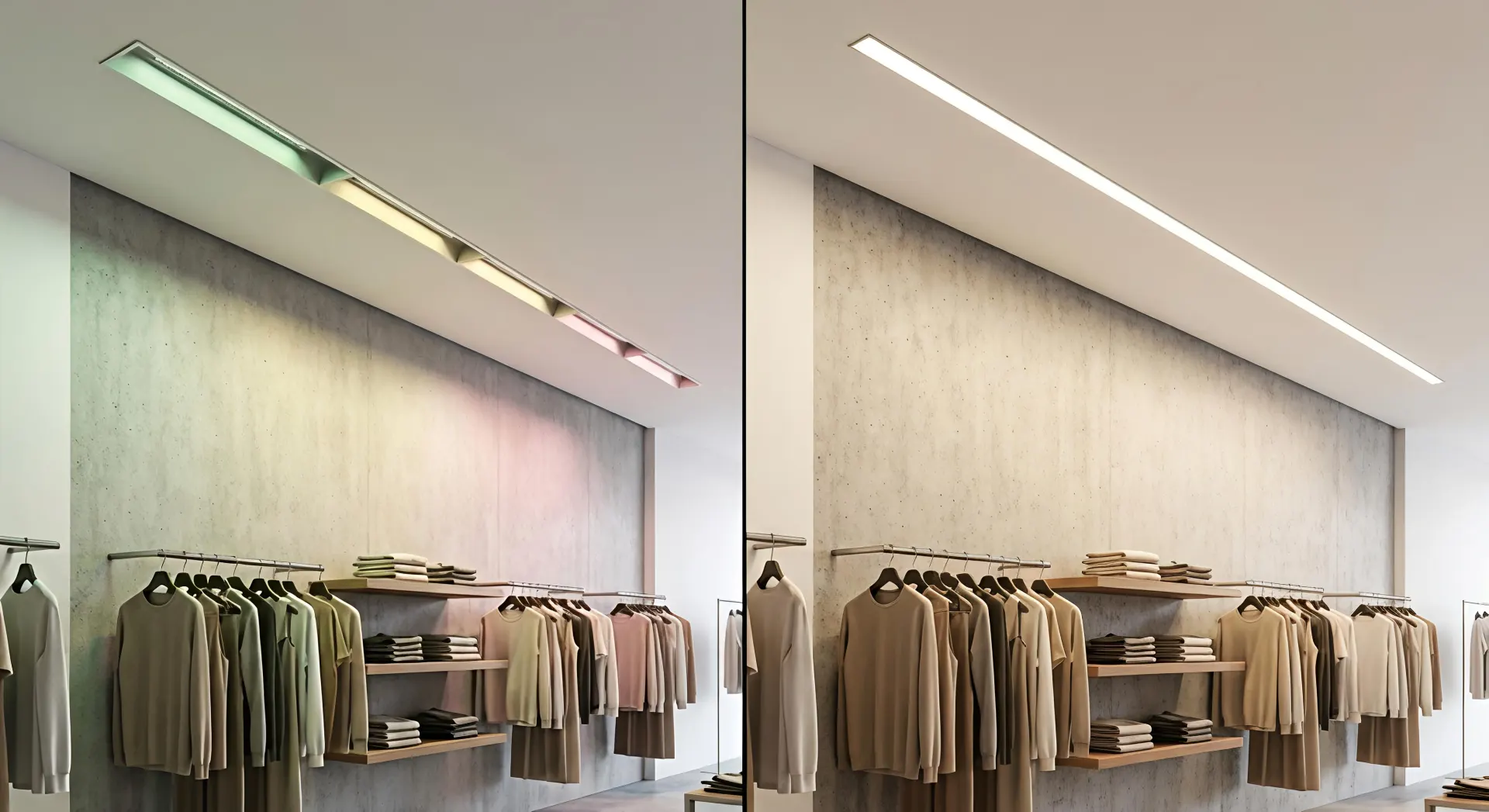
A ceiling that should appear seamless suddenly looks patchy. A clean white wall reveals uneven warm and cool tones. One section of lighting appears slightly green, while another feels pinkish or yellow. These problems are known in the industry as:
Color Inconsistency in LED Lighting
And in premium projects, color inconsistency is not a cosmetic issue — it’s a project risk.
Why Color Consistency Matters in Premium Lighting Design
Human eyes are extremely sensitive to subtle variations in color, especially in modern minimalist spaces dominated by:
- White finishes
- Neutral tones
- Continuous ceiling lines
- Large illuminated surfaces
Even a small difference in light output can make a space feel visually “off.”
This is why industries beyond lighting also enforce strict color control standards.
Industries That Demand Tight Color Tolerance Standards
| Industry | Why Color Accuracy Matters |
|---|---|
| Printing | Brand colors must remain identical across every page and package |
| Textile & Fashion | Fabric color variations lead to product rejection |
| Fine Art Galleries | Incorrect lighting alters artwork appearance |
| Fine Dining Restaurants | Lighting affects food presentation and appetite |
| Luxury Retail | Inconsistent lighting weakens premium brand perception |
The same principle applies to architectural lighting.
In high-end commercial environments, inconsistent lighting immediately reduces the perceived quality of the entire space.
Color Difference vs Color Tolerance in LED Lighting
Many people confuse color difference with color tolerance, but they are not the same thing.
| Term | Meaning | In Lighting |
|---|---|---|
| Color Difference | A visible variation between colors | One fixture looks warmer or greener than another |
| Color Tolerance | The acceptable range of variation | Controlled through SDCM standards |
In simple terms:
- Color difference is the problem
- Color tolerance is the control standard used to prevent the problem
For LED lighting, the most widely used color tolerance measurement is:
SDCM (Standard Deviation of Color Matching)
For a technical overview of MacAdam ellipses and color tolerance standards, the explanation from LED Professional is a useful reference.
Why SDCM<3 LED Linear Downlights Matter in Commercial Projects
Not all LEDs with the same color temperature actually look identical.
Two fixtures labeled “3000K” may still produce visibly different shades of white due to manufacturing tolerances in LED chips.
That’s where LED binning and SDCM control become critical.
| SDCM Level | Visual Result | Typical Application |
|---|---|---|
| >5 SDCM | Visible color inconsistency | Low-cost commercial lighting |
| ≤5 SDCM | Acceptable variation | Standard office lighting |
| ≤3 SDCM | Minimal visible difference | Premium commercial lighting |
| ≤2 SDCM | Ultra-precise consistency | Museums & luxury galleries |
In practical terms:
- Lower SDCM = tighter color consistency
- Higher SDCM = more noticeable color shift
Today, 3-step MacAdam ellipse LED downlights are widely considered the benchmark for premium architectural lighting.
Understanding MacAdam Ellipses and LED Binning
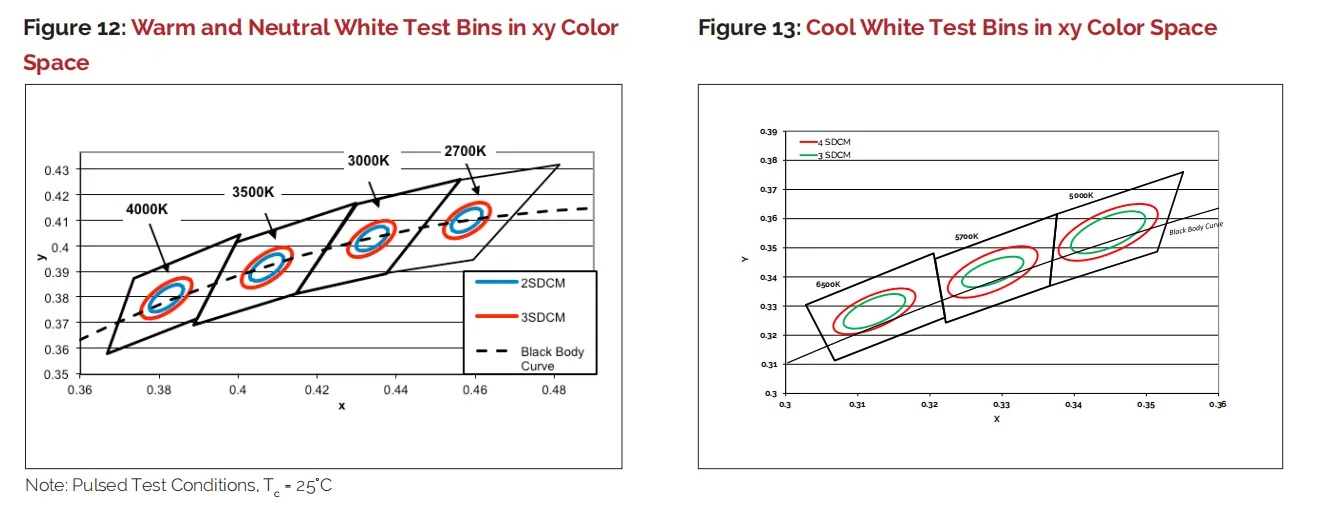
The MacAdam ellipse is one of the most important concepts in professional lighting.
It defines the range of color variation the human eye can detect.
Smaller ellipses mean tighter color control and more uniform lighting performance.
In premium-grade anti-glare linear LED downlights, manufacturers use strict LED binning processes to keep color points tightly grouped within the 2-step or 3-step MacAdam ellipse range.
This ensures:
- Seamless ceiling appearance
- Consistent wall washing effects
- Cleaner architectural lines
- Better visual comfort
Manufacturers that control color consistency well also tend to maintain tighter quality control across future production batches — an important advantage for long-term commercial projects.
For more about LED binning and color consistency, Cree LED Color Binning Guide provides additional technical background.
Why Linear Architectural Downlights Reveal Color Shift More Easily
Among all commercial lighting products, recessed linear LED downlights expose color inconsistency the fastest.
There are two main reasons.
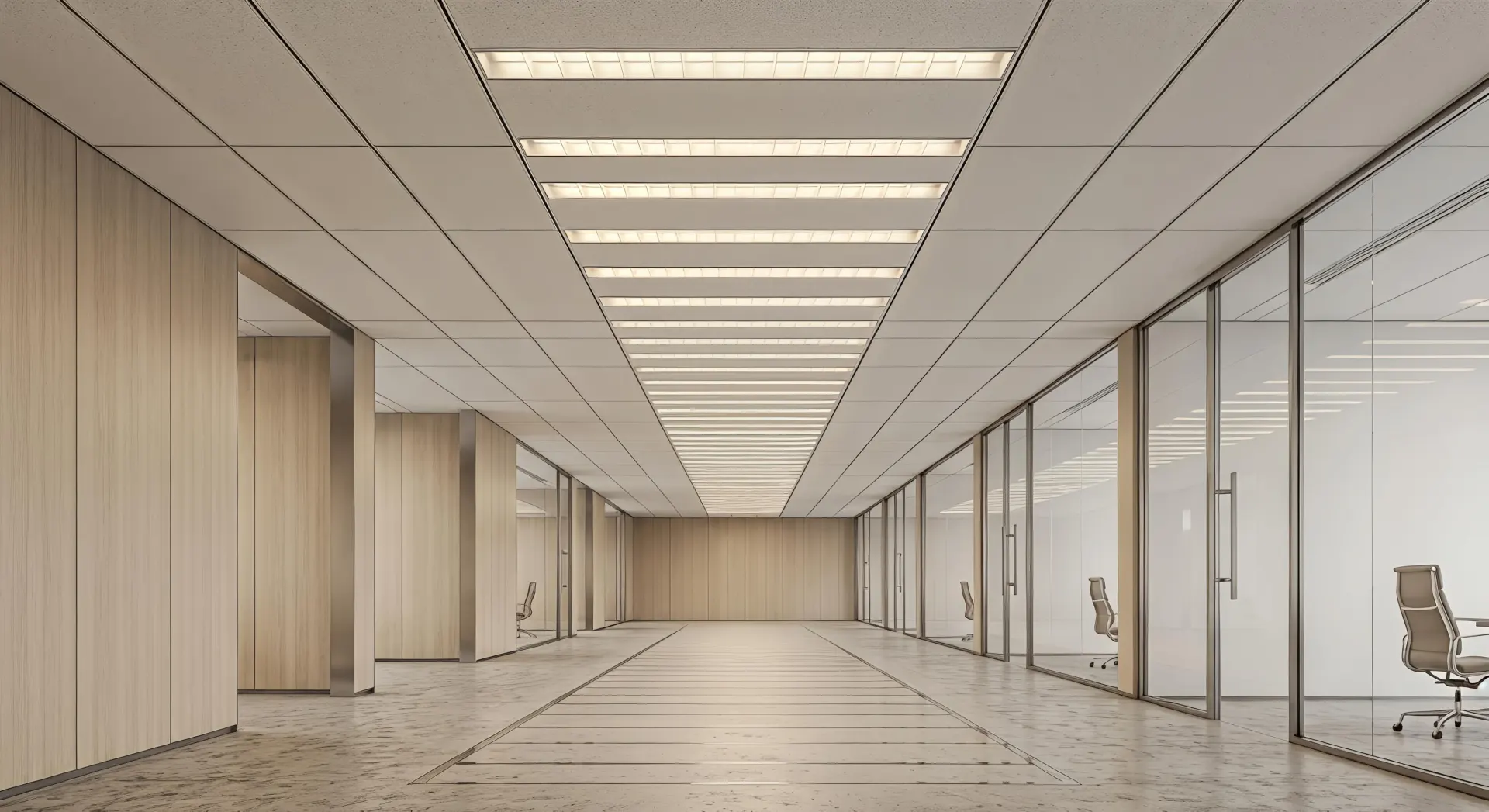
1. Continuous Installation Amplifies Differences
Linear lighting is typically installed in long uninterrupted rows.
In:
- Corporate offices
- Hotel corridors
- Luxury retail spaces
- Showrooms
- Conference rooms
fixtures are positioned directly next to each other.
Even slight color shifts become immediately visible when viewed as a continuous line.
| Fixture Type | Visibility of Color Difference |
|---|---|
| Standard recessed downlights | Low |
| Track lighting | Medium |
| Linear LED downlights | Very high |
2. Wall Washing Magnifies Inconsistency
Many high CRI linear downlights for retail lighting are used for wall washing applications.
When multiple beams overlap on white walls or textured surfaces, even tiny variations in color become exaggerated.
This often creates:
- Uneven wall tones
- Patchy illumination
- Broken visual rhythm
For minimalist architecture, this completely destroys the intended aesthetic.
Why Premium Projects Specify SDCM<3 Linear Lighting Fixtures
For luxury commercial projects, SDCM<3 is no longer considered an upgrade.
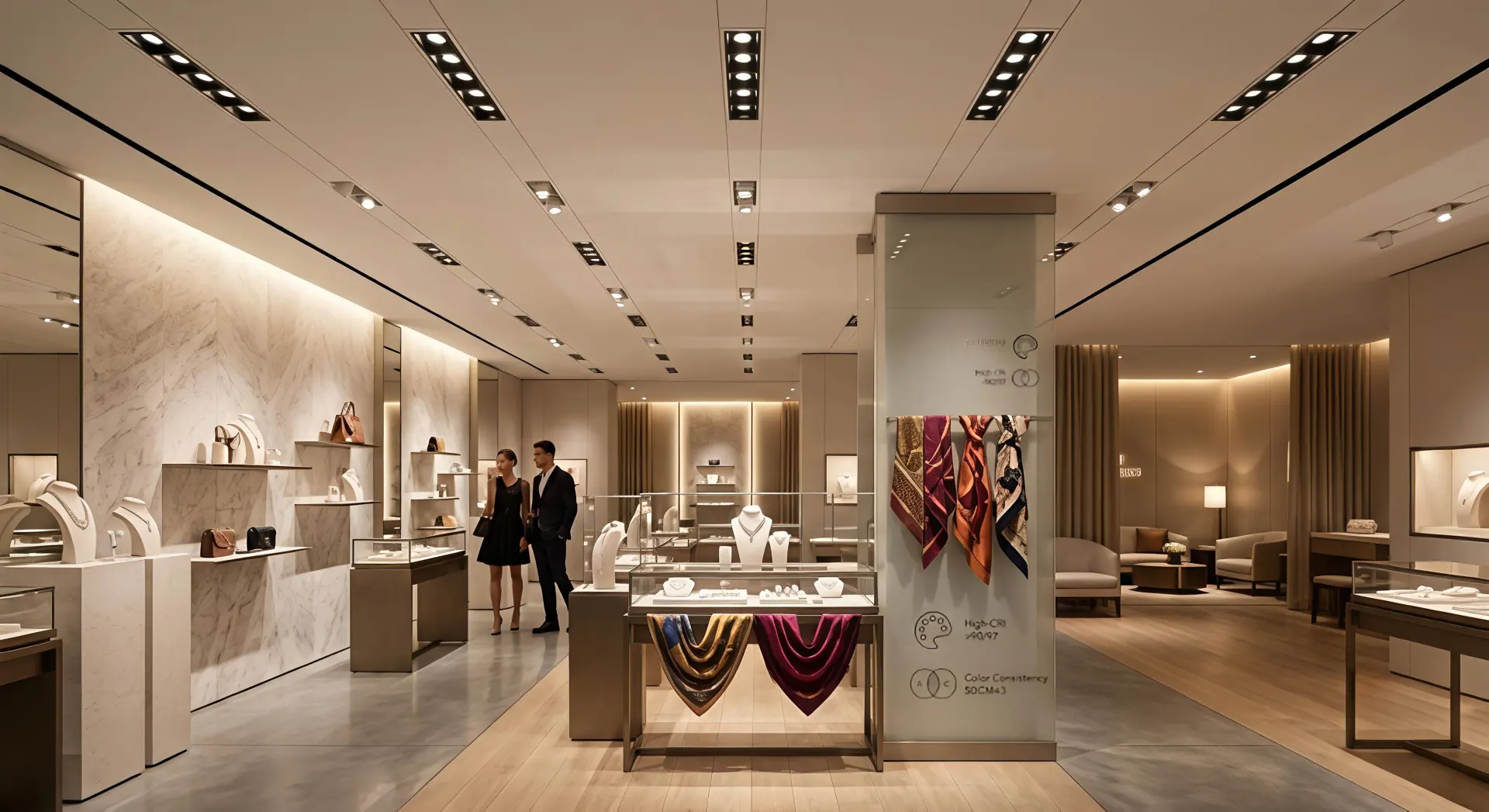
It’s a baseline requirement.
| Project Requirement | Benefit |
|---|---|
| Seamless lighting effect | Minimal visible color variation |
| Luxury visual appearance | Cleaner and more refined lighting |
| Large-scale installations | Better uniformity across fixtures |
| Easier project approval | Reduced inspection risk |
| Future maintenance | Better consistency between batches |
| Brand presentation | Stronger premium perception |
More Than Just Color Consistency
High-quality architectural linear downlights with low color tolerance usually include several additional premium specifications.
Common Features of Premium Linear Downlights
- CRI90+ or CRI97+ for accurate color rendering
- UGR<16 low glare design
- Flicker-free drivers
- Deep anti-glare optics
- Precise beam control
- Stable long-term performance
Together, these features create lighting environments that feel cleaner, calmer, and more sophisticated.
FAQ About SDCM<3 LED Linear Downlights
What does SDCM mean in LED lighting?
SDCM stands for Standard Deviation of Color Matching. It measures how much color variation exists between LED fixtures.
Is SDCM<3 necessary for commercial lighting?
For luxury retail, hospitality, galleries, offices, and architectural projects — absolutely.
Linear lighting installations make color inconsistencies much easier to notice.
Is SDCM<2 better than SDCM<3?
Yes, but SDCM<2 is typically reserved for extremely demanding applications such as museums and fine art galleries.
For most premium commercial projects, SDCM<3 is considered the ideal balance between performance and cost.
Why are SDCM<3 fixtures more expensive?
Because they require:
- Tighter LED chip selection
- More precise binning
- Better manufacturing control
- Higher-quality drivers and optics
The additional cost helps reduce future project risks and replacement costs.
Final Thoughts
In premium architectural lighting, details define quality.
And few details are more important — or more overlooked — than color consistency.
A beautifully designed ceiling can instantly lose its elegance when lighting colors don’t match. A luxury retail environment can feel unexpectedly cheap because of subtle green or yellow shifts. A high-end office can lose its clean visual rhythm due to inconsistent linear lighting.
That’s why SDCM<3 LED linear downlights have become the standard for premium commercial lighting projects.
They deliver:
- Better visual consistency
- Cleaner architectural aesthetics
- Reduced project risk
- More reliable long-term performance
In modern commercial spaces, eliminating color inconsistency is no longer optional.
It’s part of delivering truly professional lighting design.

