



Is a UGR < 16 rating really that important anti glare linear light for office?
By JC
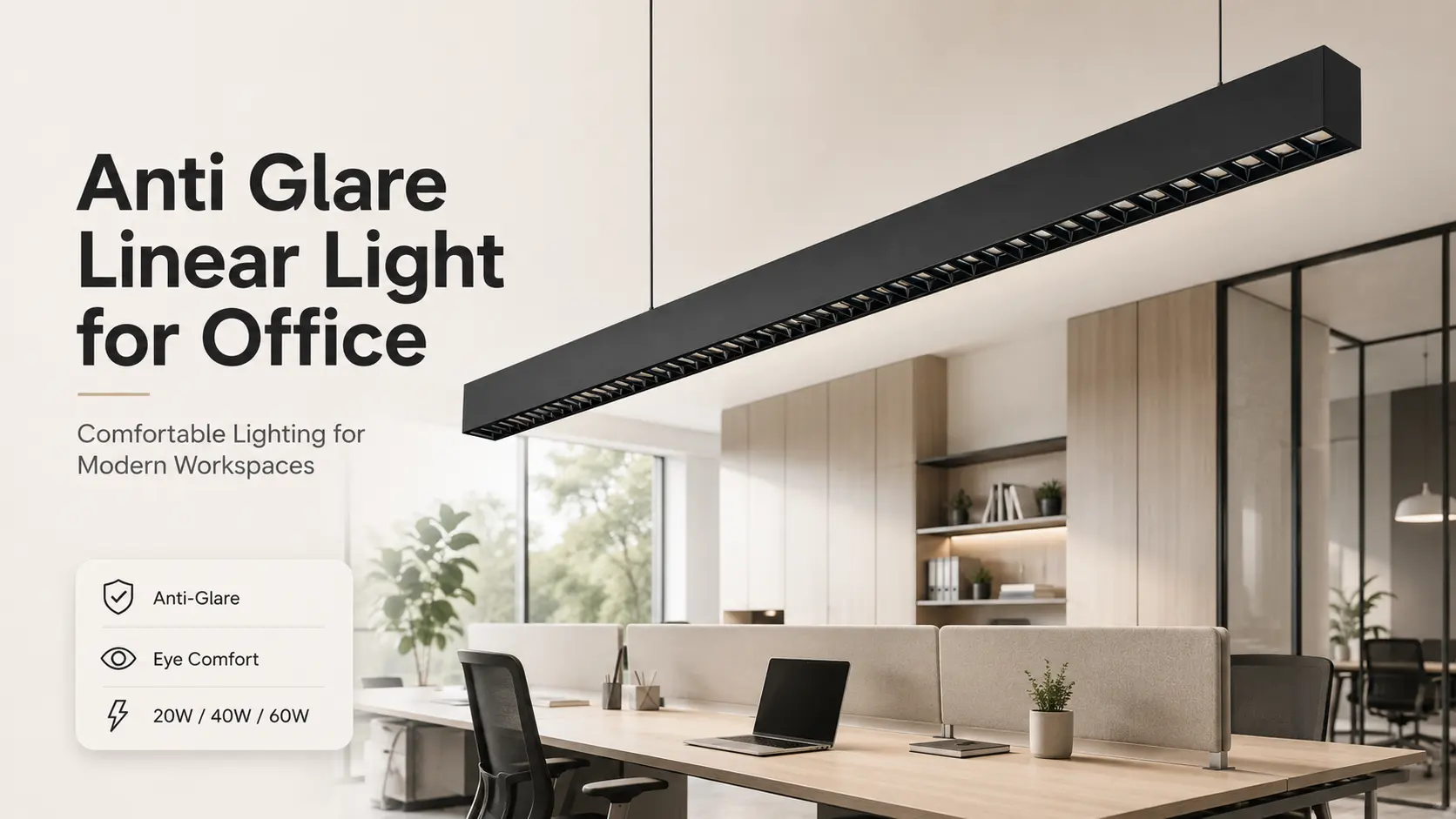
In modern commercial architecture, lighting is no longer just about brightness. It is about visual comfort, productivity, and human-centered design. Among all lighting solutions, the anti glare linear light for office has become one of the most important choices for architects, designers, and facility managers.
With increasing awareness of eye strain, screen fatigue, and workplace wellness, anti-glare lighting is now a standard requirement in premium office environments.
Why Anti Glare Lighting is Important in Office Design
Office workers spend long hours under artificial lighting, often combined with computer screens. Poor lighting design can cause:
- Eye fatigue
- Headaches
- Reduced focus
- Visual discomfort
- Lower productivity
The anti glare linear light for office solves these problems by controlling brightness and eliminating harsh light spots.
Eye Comfort and Productivity
Studies in workplace ergonomics show that proper lighting can significantly improve:
- Concentration levels
- Work efficiency
- Mood stability
- Overall employee satisfaction
This is why modern companies in Europe, the Middle East, and high-end Asian offices increasingly adopt anti-glare lighting systems.
How Anti Glare Linear Light Works
The key to anti-glare performance lies in optical engineering.
Deep Louver / Grille Structure
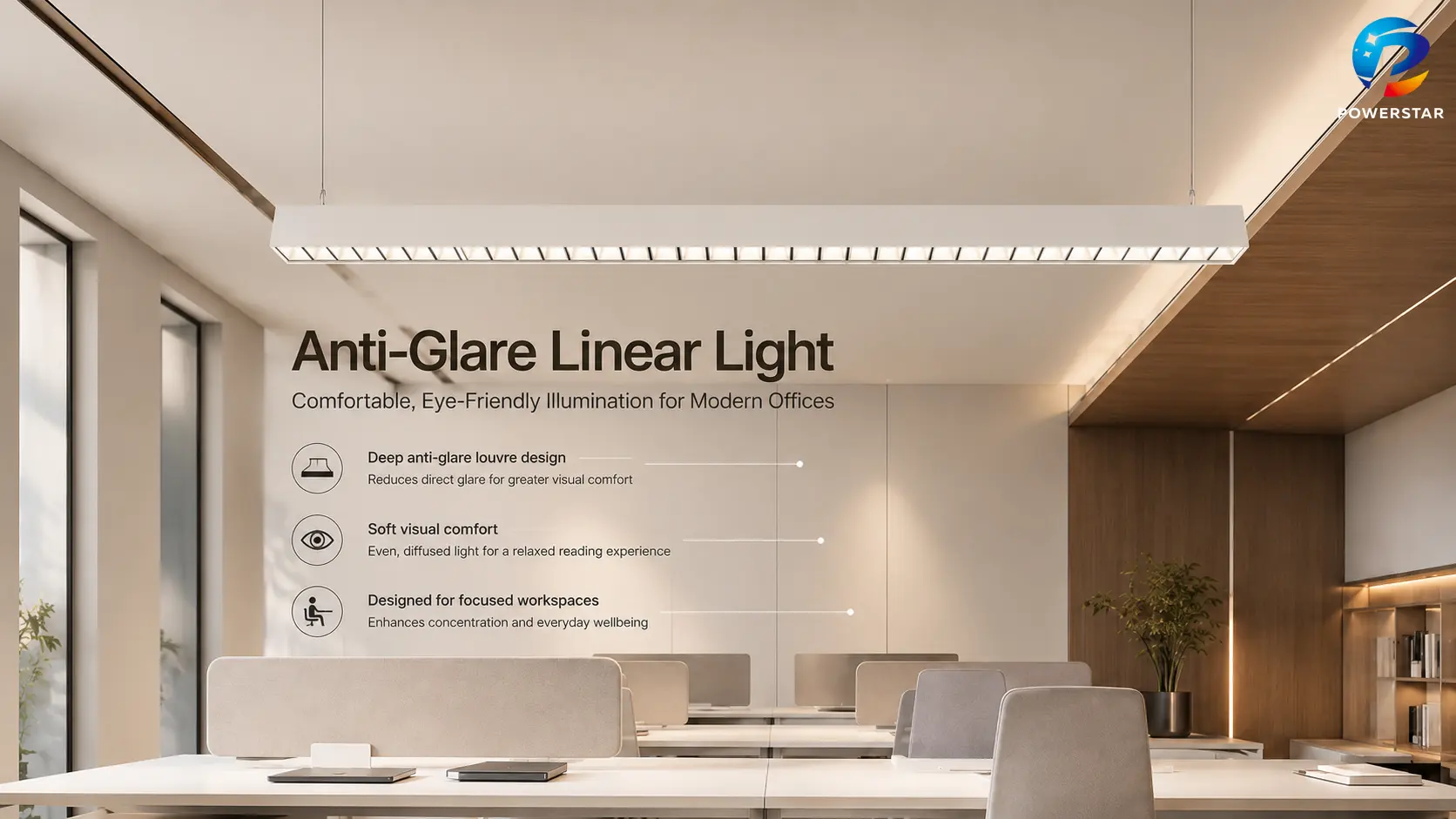
Most high-quality anti-glare linear lights use a deep louver design, which hides the LED source inside structured cells.
This design ensures:
- Light is directed downward only
- No direct LED exposure to eyes
- Reduced reflection on screens and desks
Micro-Optical Reflection System
Advanced models use:
- Micro reflectors
- Optical lenses
- Diffusion plates
These elements help soften light output while maintaining high efficiency.
Result: Visual Comfort
Instead of harsh illumination, the space receives:
- Soft ambient lighting
- Even brightness distribution
- No flickering or glare zones
Benefits of Anti Glare Linear Light for Office Spaces
The adoption of anti glare linear light for office brings both functional and aesthetic advantages.
1. Reduced Eye Strain
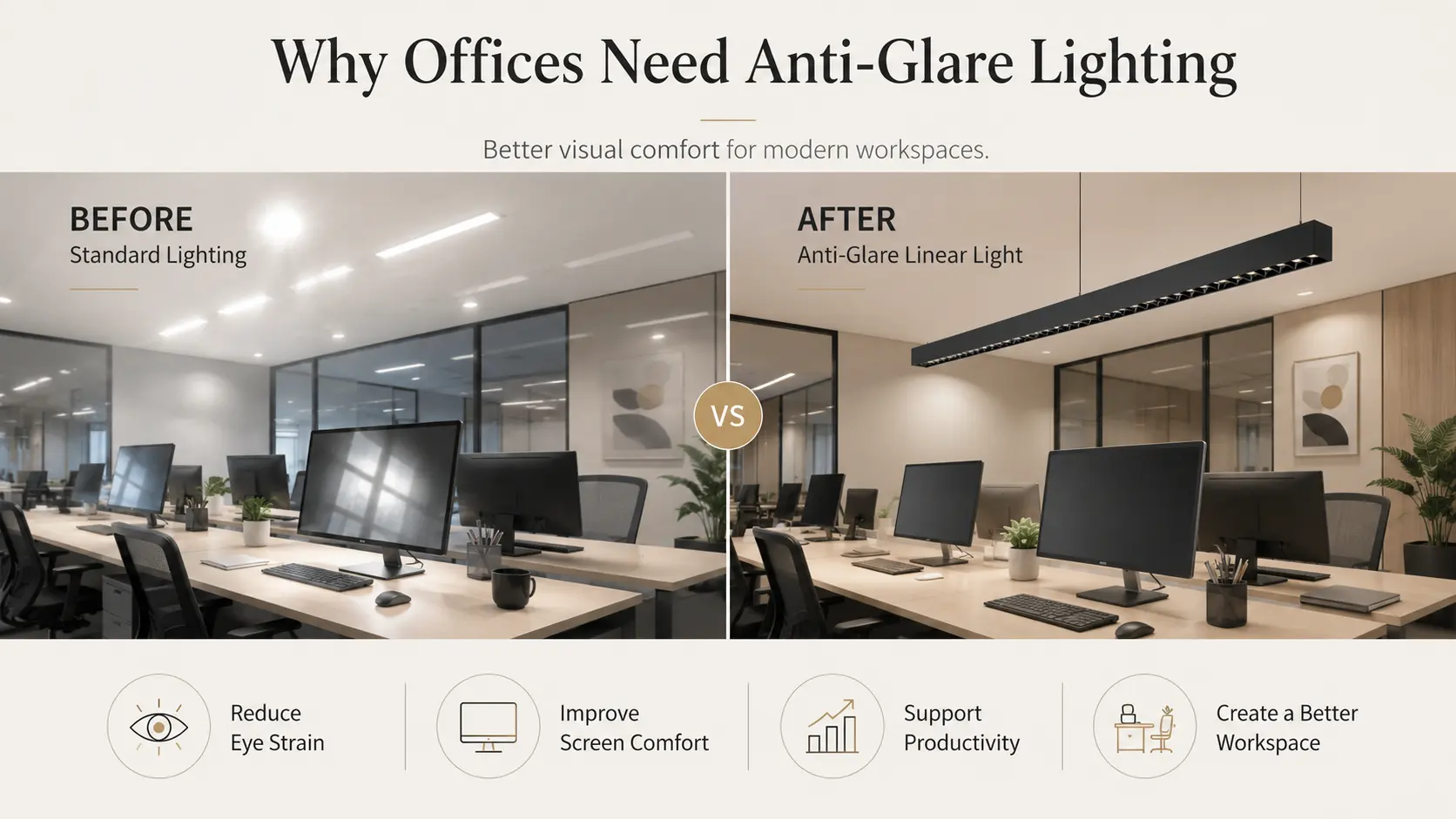
The biggest benefit is minimizing direct glare, which reduces stress on the eyes during long working hours.
2. Better Screen Visibility
Employees working on computers experience:
- Less reflection on monitors
- Higher screen clarity
- Reduced visual distraction
3. Modern Minimalist Design
Linear lighting systems are designed with a clean architectural look:
- Slim profiles
- Suspended installation
- Seamless integration into ceilings
This matches modern European office aesthetics.
4. Energy Efficiency
LED-based linear lights offer:
- Low power consumption
- High luminous efficacy
- Long lifespan (50,000+ hours)
This reduces long-term operational cost.
5. Flexible Office Lighting Design
Anti-glare linear systems can be used in:
- Open-plan offices
- Meeting rooms
- Conference spaces
- Co-working environments
- Executive offices
Applications of Anti Glare Linear Light in Modern Offices
The versatility of anti glare linear light for office makes it suitable for multiple workplace scenarios.
Open Plan Workspaces
In large office areas, uniform lighting is critical.
Anti-glare linear lights ensure:
- Even brightness across desks
- No hot spots or shadows
- Comfortable shared environment
Meeting Rooms
For collaboration spaces, lighting must support focus and communication.
Benefits include:
- Soft lighting for presentations
- Reduced screen glare during video calls
- Professional visual atmosphere
Executive Offices
High-end offices require both aesthetics and comfort.
Linear anti-glare lighting provides:
- Premium architectural look
- Calm and balanced environment
- High-end visual identity
Co-working Spaces
In flexible work environments:
- Lighting must support long usage hours
- Reduce fatigue for freelancers and teams
- Maintain consistent comfort across zones
Design Trends in Anti Glare Office Lighting
Modern architecture is moving toward human-centric lighting design.
Minimalist Architectural Lighting
Designers prefer:
- Hidden light sources
- Slim suspended lines
- Clean ceiling integration
Neutral Color Temperature
Common choices:
- 3000K warm white (relaxing)
- 4000K neutral white (balanced office use)
Black and White Contrast Fixtures
Most premium office lighting uses:
- Matte black finish (modern tech look)
- White interiors (light reflection control)
Choosing the Right Anti Glare Linear Light for Office
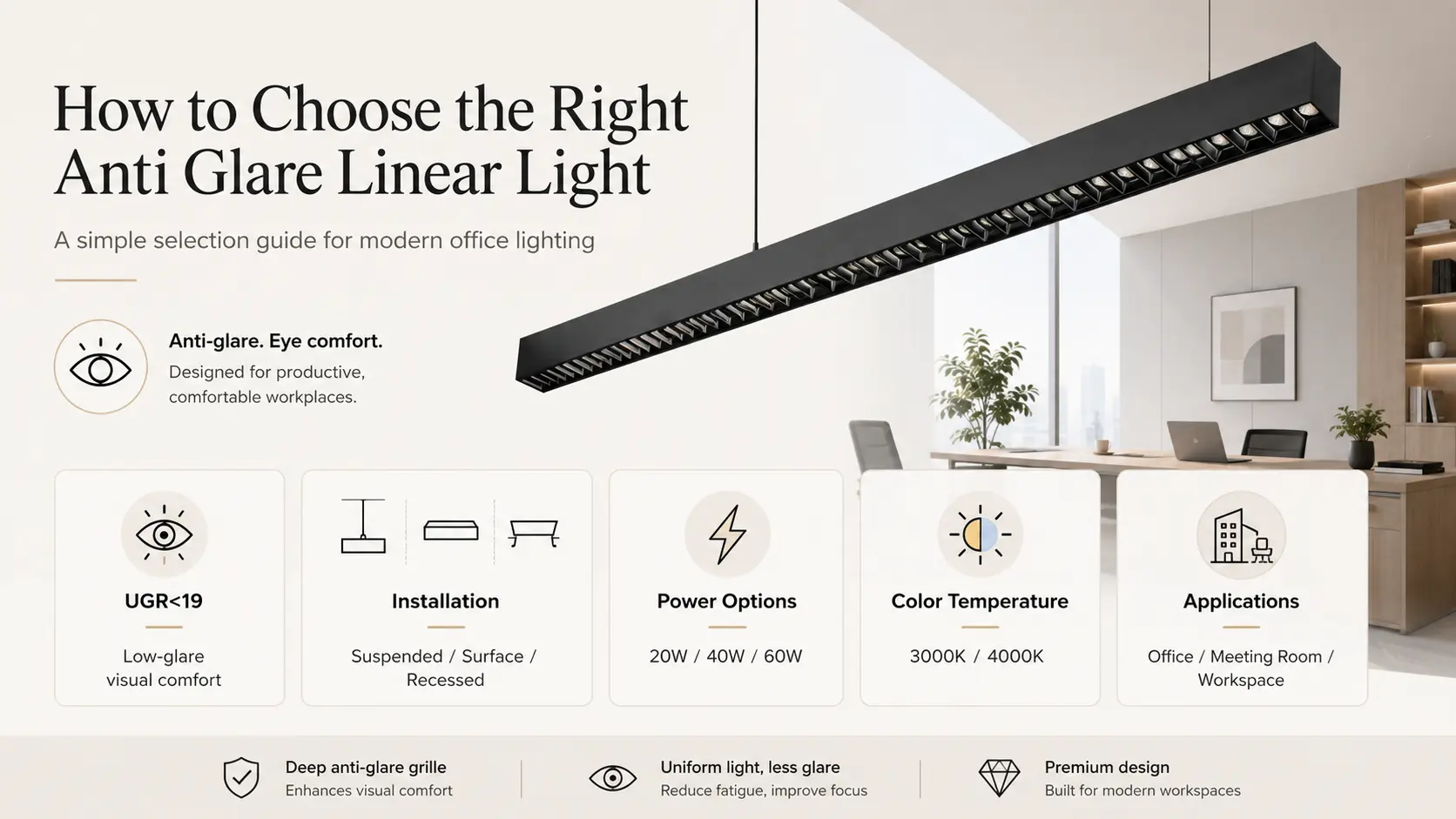
When selecting a lighting system, consider the following factors:
1. UGR Rating
For offices, choose:
- UGR < 19 for visual comfort
- Lower values for high-end environments
| Item | UGR < 19 (Standard Office Anti-Glare) | UGR < 16 (Premium Visual Comfort Level) |
|---|---|---|
| Glare Control Level | Standard glare control | Advanced glare suppression |
| Visual Comfort | Good for general office use | Excellent for long-hour visual comfort |
| Eye Fatigue | Moderate reduction | Significantly reduced eye strain |
| Suitable Office Type | Standard offices, open-plan workspaces | High-end offices, executive spaces, design studios |
| Screen Reflection Impact | Acceptable performance | Very low reflection, clearer screen visibility |
| Optical Design Requirement | Deep louver / diffuser system | Advanced deep louver + precision optical control |
| Cost Level | More cost-efficient | Higher cost due to advanced optics |
| Industry Standard | Widely used in commercial offices | Premium architectural lighting projects |
| Recommended Applications | Coworking spaces, general office lighting | Executive offices, premium workspace design |
How Anti Glare Linear Light Reduces UGR
Modern anti glare linear lighting systems are engineered to control light distribution and reduce direct brightness exposure.
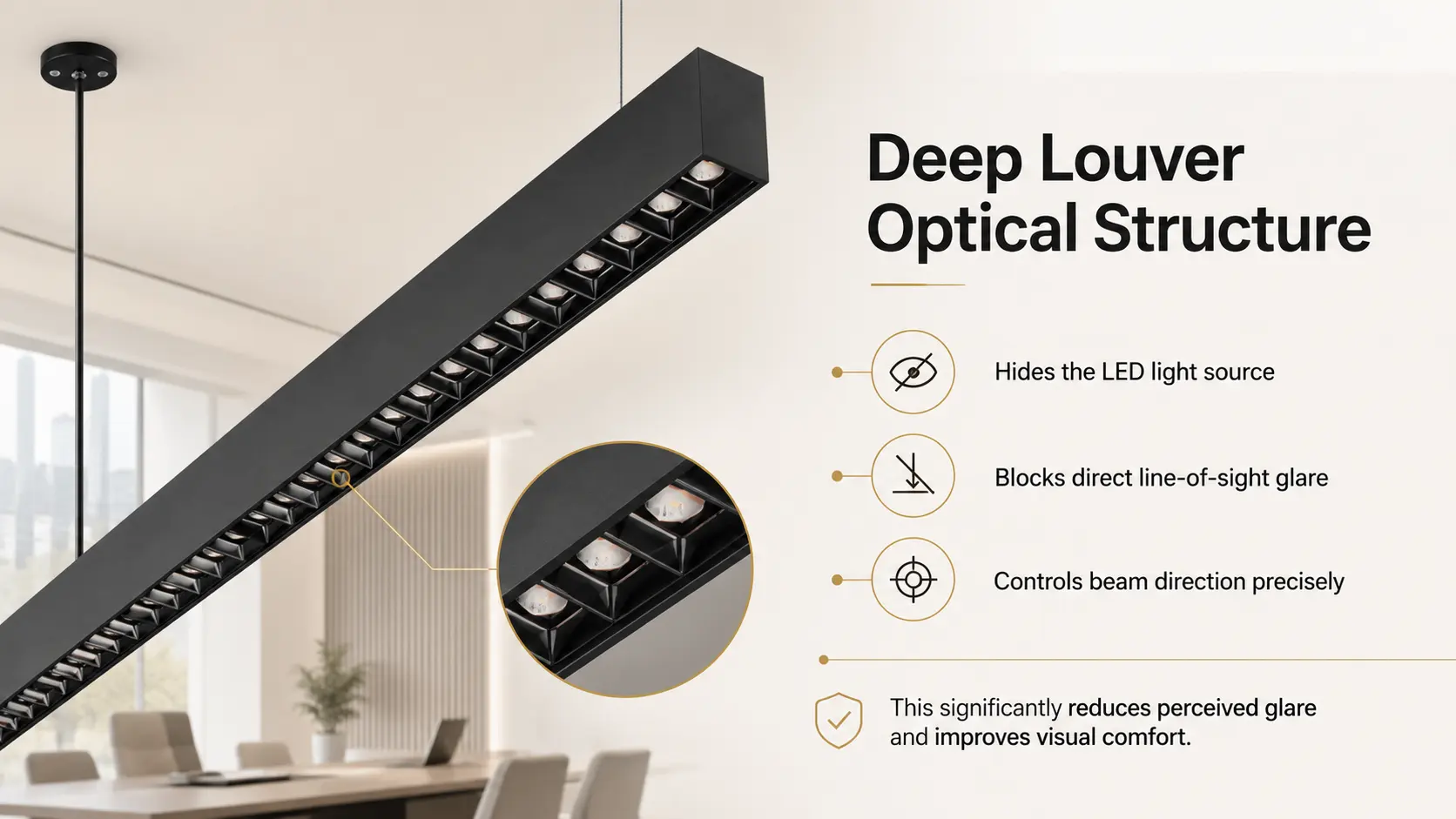
Deep Louver Optical Structure
High-quality anti glare linear lights use a deep louver grille design, which:
- Hides the LED light source
- Blocks direct line-of-sight glare
- Controls beam direction precisely
This significantly reduces perceived glare and improves visual comfort.
2. Optical Design
Look for:
- Deep louver structure
- Micro-reflector system
- Diffusion technology
3. Installation Type
Options include:
- Suspended linear light
- Surface-mounted linear light
- Recessed linear systems
4. Power Options
Common wattage:
- 20W (small rooms)
- 40W (standard office zones)
- 60W (large open areas)
Future of Anti Glare Linear Lighting in Offices
The demand for anti glare linear light for office will continue to grow due to:
- Hybrid working trends
- Increased screen time
- Wellness-focused workplace design
- Energy efficiency regulations
Future lighting systems will integrate:
- Smart dimming
- Human-centric circadian lighting
- IoT control systems
- Motion-based adjustment
Conclusion
The anti glare linear light for office is no longer a luxury—it is a necessity in modern workplace design.
By combining optical engineering, minimalist design, and human comfort principles, it delivers:
- Better visual experience
- Higher productivity
- Reduced eye strain
- Modern architectural aesthetics
For architects, designers, and commercial lighting projects, it represents the ideal balance between performance and comfort.

