



Why Choose an Anti Glare Linear Downlight for Office Lighting?
By Vincent
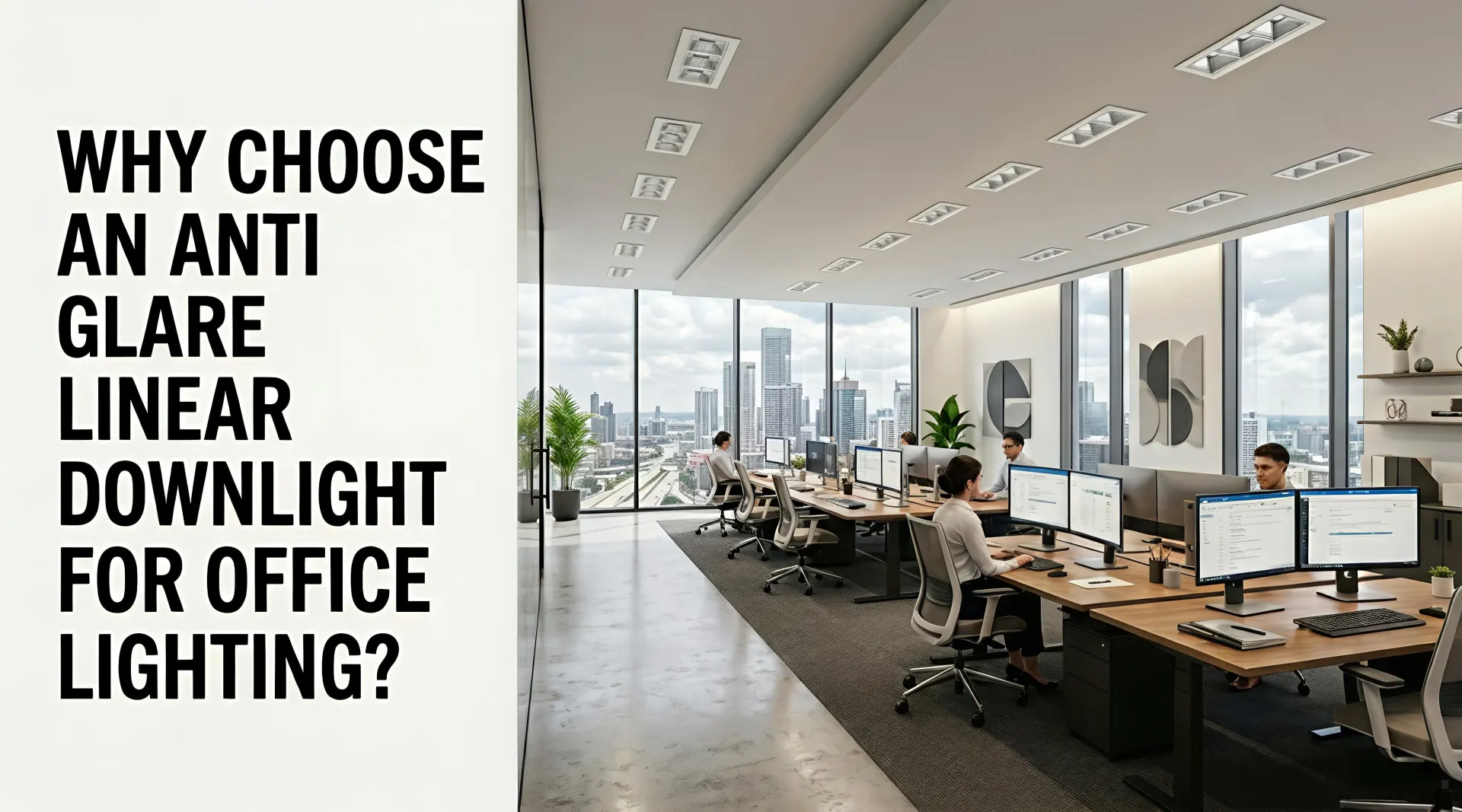
An anti glare linear downlight is no longer just a premium lighting option for modern offices — it has become an essential part of creating healthier, more productive workspaces. In today’s commercial environments, employees spend up to 8–10 hours a day under artificial lighting while working in front of computer screens. Poor lighting design often leads to screen glare, eye strain, headaches, and reduced concentration, all of which quietly affect workplace performance.
That’s why architects, lighting designers, and facility managers are increasingly turning to low glare linear lighting solutions for offices. Compared with traditional LED panels or fluorescent fixtures, anti glare linear downlights deliver better visual comfort, cleaner architectural aesthetics, and more precise illumination for task-oriented workspaces.
What Is an Anti Glare Linear Downlight?
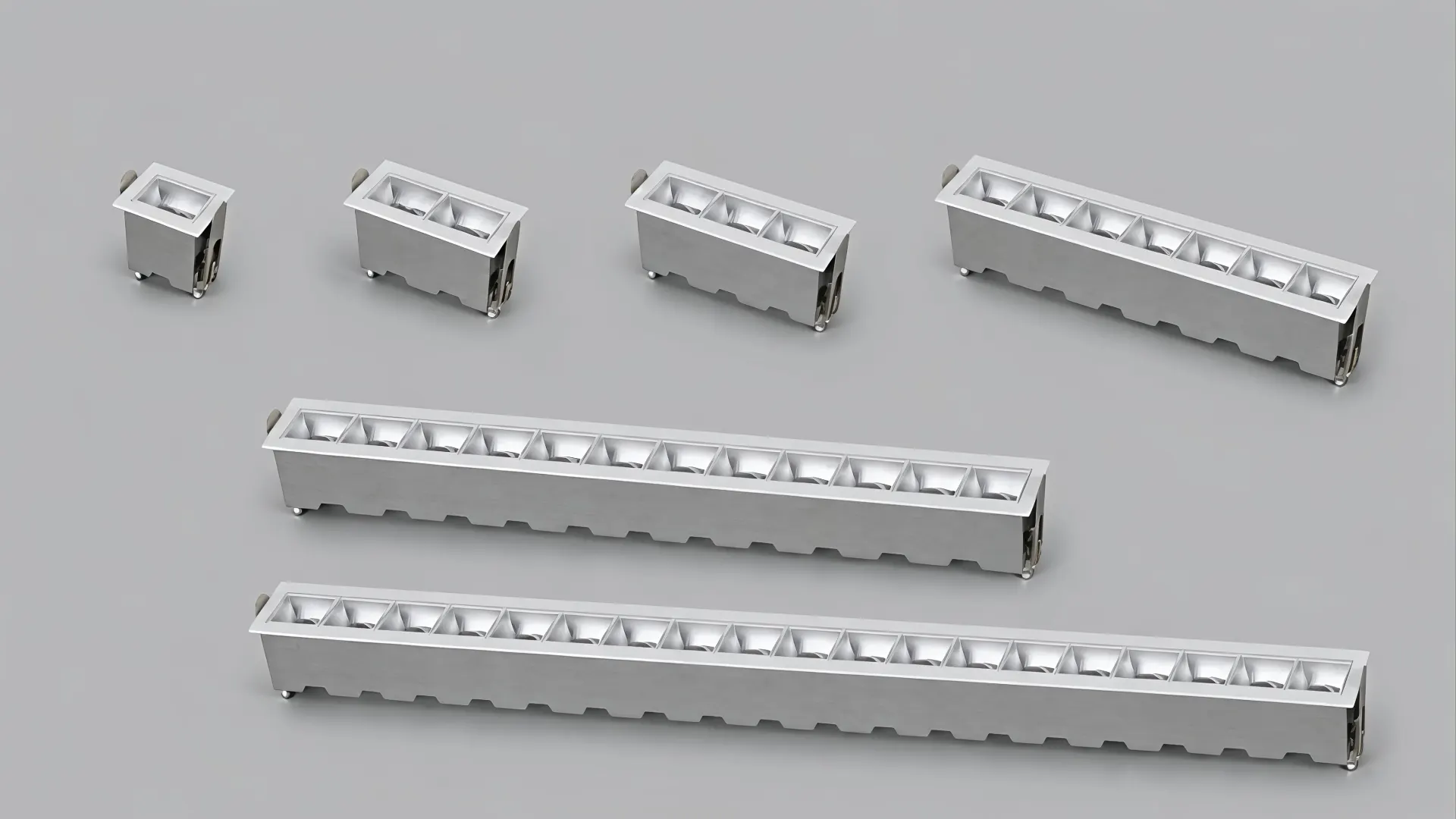
An anti glare linear downlight combines the sleek appearance of linear architectural lighting with the focused beam control of a recessed downlight system.
Unlike conventional linear fixtures that spread light broadly across a room, this type of commercial office lighting uses deep-recessed optics and controlled beam angles to direct light exactly where it’s needed.
Most high-end low glare LED linear downlights include features such as:
- Deep anti-glare baffles
- Black reflectors
- Micro-prismatic diffusers
- Dark light technology
These technologies help reduce direct glare while maintaining excellent brightness and lighting uniformity.
For office environments, glare performance is commonly measured by the Unified Glare Rating (UGR). According to recommendations from the International WELL Building Institute, office lighting should typically maintain:
$UGR < 19$
Lower UGR values create a more visually comfortable environment, especially for employees working long hours at computer stations.
Why Low Glare Linear Lighting Matters in Modern Offices
Many office lighting problems are caused by excessive brightness and uncontrolled light distribution.
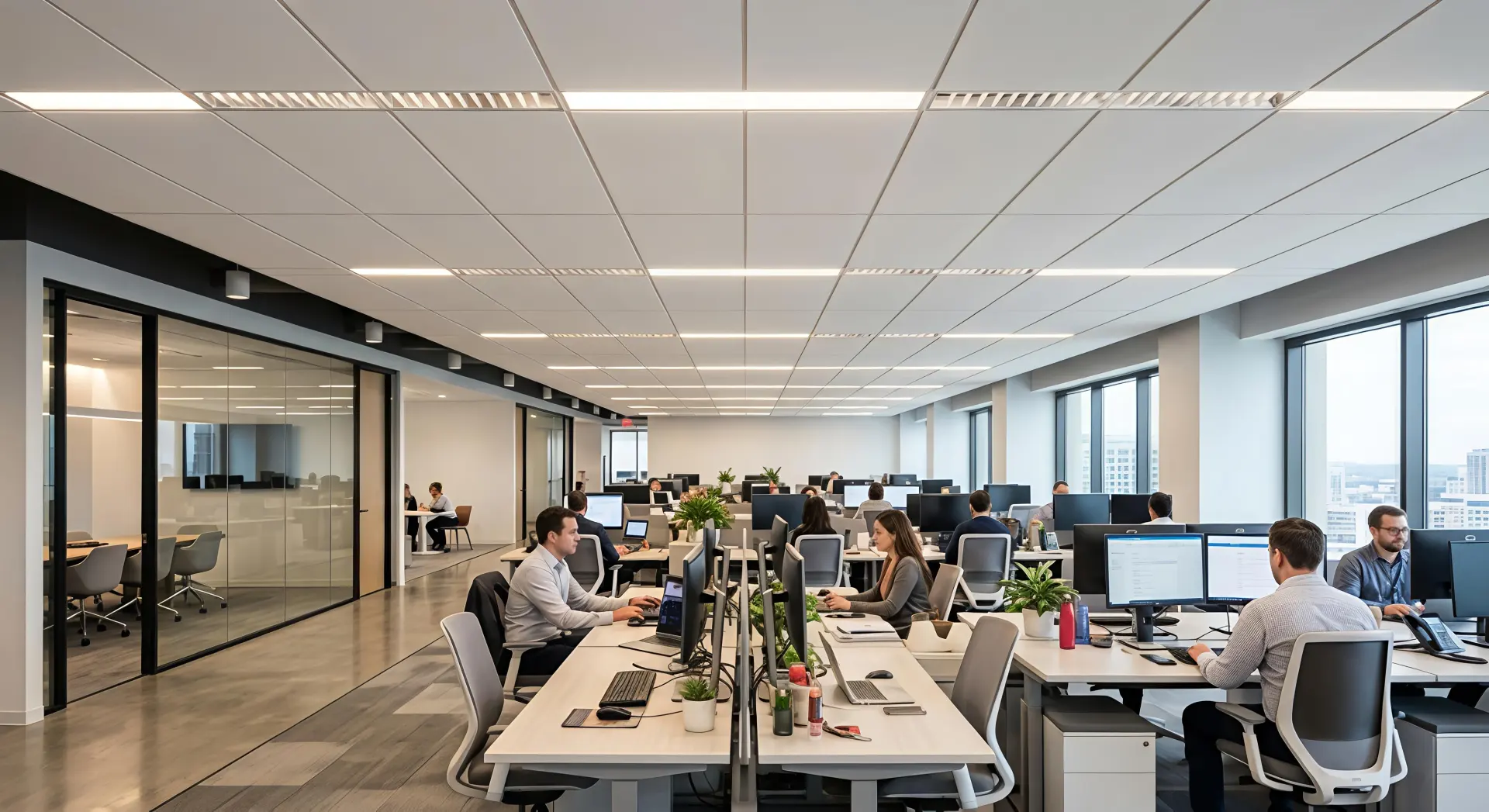
Traditional LED panel lights often create harsh reflections on computer screens. Employees may unconsciously change posture throughout the day just to avoid uncomfortable glare.
Common symptoms of poor office lighting include:
- Eye fatigue
- Dry eyes
- Headaches
- Reduced focus
- Visual discomfort
- Increased mental fatigue
A well-designed anti glare linear downlight minimizes these issues by directing light downward while shielding the light source from direct view.
This creates a softer, more balanced visual environment that supports concentration and long-term comfort.
Benefits of Anti Glare Linear Downlights for Commercial Spaces
Improved Visual Comfort With Low Glare Office Lighting
Visual comfort is one of the biggest reasons companies upgrade their lighting systems.
A low glare office lighting solution helps reduce visual stress during long work sessions. Because the light source is recessed and carefully shielded, employees experience less discomfort from direct brightness and screen reflections.
This is especially important in:
- Open-plan offices
- Design studios
- Financial institutions
- Tech companies
- Coworking spaces
Better Productivity Through Comfortable LED Office Lighting
Lighting has a direct impact on workplace performance.
Studies published by the U.S. Department of Energy show that high-quality LED lighting can improve both comfort and energy efficiency in commercial buildings.
With anti glare linear downlights, employees can work in a more focused environment with fewer visual distractions. Balanced lighting reduces fatigue and supports better concentration throughout the day.
| Feature | Traditional LED Panel | Anti Glare Linear Downlight |
|---|---|---|
| UGR Rating | Usually above 22 | Typically below 19 |
| Screen Reflection | High | Minimal |
| Light Distribution | Wide and uncontrolled | Focused and precise |
| Visual Comfort | Moderate | Excellent |
| Workspace Aesthetics | Standard | Modern architectural look |
Modern Architectural Aesthetics With Linear Downlight Systems
Modern offices increasingly prioritize clean and minimal interior design.
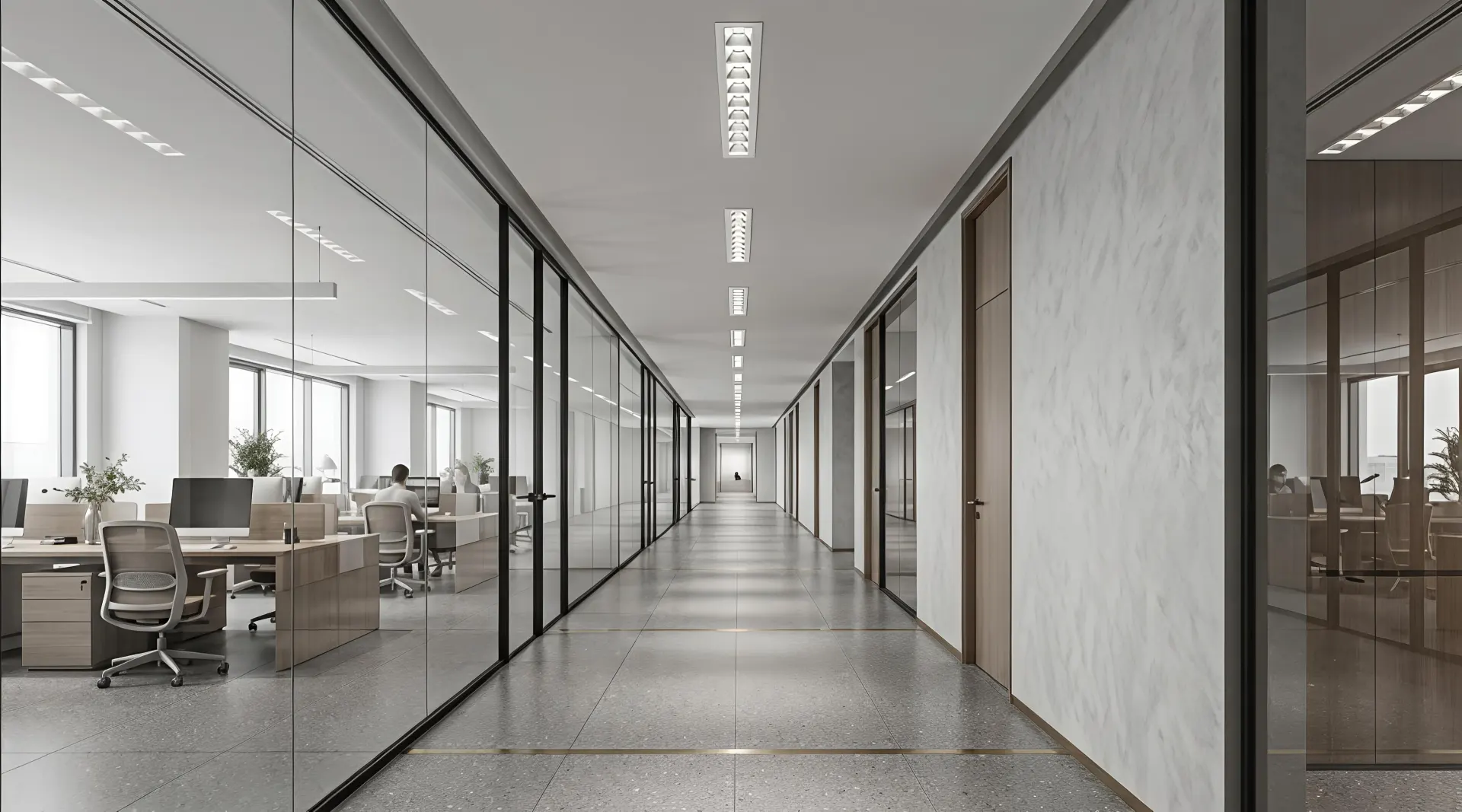
Linear recessed downlights create continuous ceiling lines that integrate naturally into contemporary architecture. Depending on the project, they can be installed as:
- Recessed linear downlights
- Suspended linear fixtures
- Trimless architectural lighting systems
In addition to improving aesthetics, linear lighting can also help define circulation paths and functional zones within open office layouts.
Energy Efficiency and Smart Lighting Integration
Another major advantage of anti glare commercial lighting is energy performance.
Most architectural LED linear downlights use high-efficiency LED chips combined with intelligent control systems such as:
- DALI dimming
- 0-10V dimming
- Daylight sensors
- Motion sensors
These features help reduce unnecessary energy consumption while supporting green building certifications such as WELL and LEED.
| Category | Traditional Office Lighting | Low Glare Linear Downlight |
| Energy Efficiency | Average | High |
| Maintenance Cost | Higher | Lower |
| Lighting Precision | Limited | Excellent |
| Smart Controls | Rare | Common |
| Lifespan | Shorter | Longer |
Best Applications for Anti Glare Linear Downlight Systems
Open Plan Office Lighting
For open offices, designers typically recommend:
- 4000K neutral white light
- CRI above 90
- UGR below 19
This combination creates a bright yet comfortable workspace suitable for long hours of computer-based work.
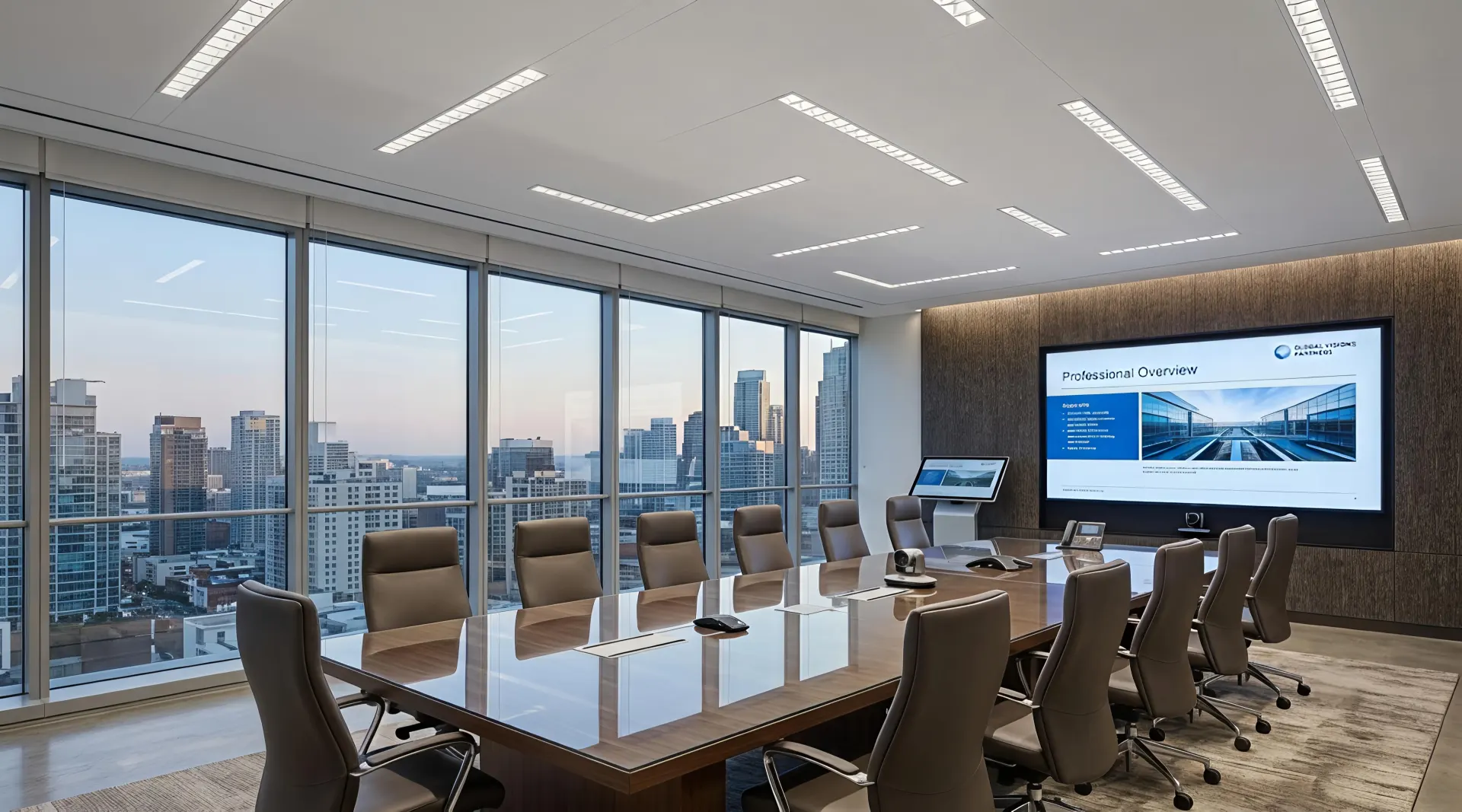
Conference Room Linear Lighting
Meeting rooms often require flexible lighting scenes for presentations, video calls, and collaborative discussions.
Dimmable anti glare linear downlights allow users to adjust brightness levels while maintaining visual comfort for all participants.
Executive Office Architectural Lighting
Executive spaces often combine linear downlights with accent spotlights to create layered lighting effects.
This approach improves task lighting while highlighting artwork, shelving, or feature walls.
How to Choose the Right Anti Glare Linear Downlight
When selecting commercial office lighting fixtures, consider the following factors:
| Selection Factor | Recommendation |
| UGR Rating | Below 19 |
| Color Temperature | 4000K for offices |
| CRI | Above 80 or 90 |
| Installation Type | Recessed or suspended |
| Dimming Compatibility | DALI or 0-10V preferred |
Long-tail keywords commonly searched by buyers include:
- best anti glare linear downlight for office
- low glare LED lighting for workspace
- recessed linear office lighting
- UGR19 office lighting solution
- architectural linear downlight system
FAQ About Anti Glare Linear Downlights
What is the ideal UGR rating for office lighting?
For most office environments, a UGR below 19 is recommended. Lower glare ratings improve visual comfort and reduce eye strain during long working hours.
Are anti glare linear downlights better than LED panels?
In many commercial office settings, yes. They offer better glare control, improved architectural aesthetics, and more precise lighting distribution compared to standard LED panels.
Which color temperature works best for office lighting?
4000K neutral white is widely considered the best balance for office environments because it supports focus without feeling overly cold.
Can anti glare linear lighting reduce screen reflections?
Yes. Deep-recessed optics and controlled beam angles help minimize direct reflections on computer monitors.
Are linear downlights suitable for smart office systems?
Absolutely. Most modern anti glare linear downlight systems support DALI, motion sensors, and intelligent dimming controls for energy-efficient operation.
Final Thoughts
Choosing the right anti glare linear downlight is about more than upgrading a ceiling fixture. It’s an investment in employee comfort, workplace productivity, and long-term building performance.
As offices continue shifting toward healthier and more human-centric environments, low glare architectural lighting is quickly becoming the new standard for modern commercial spaces.

