



How Recessed Grille Downlights Reduce Glare and Improve Comfort
By Vincent
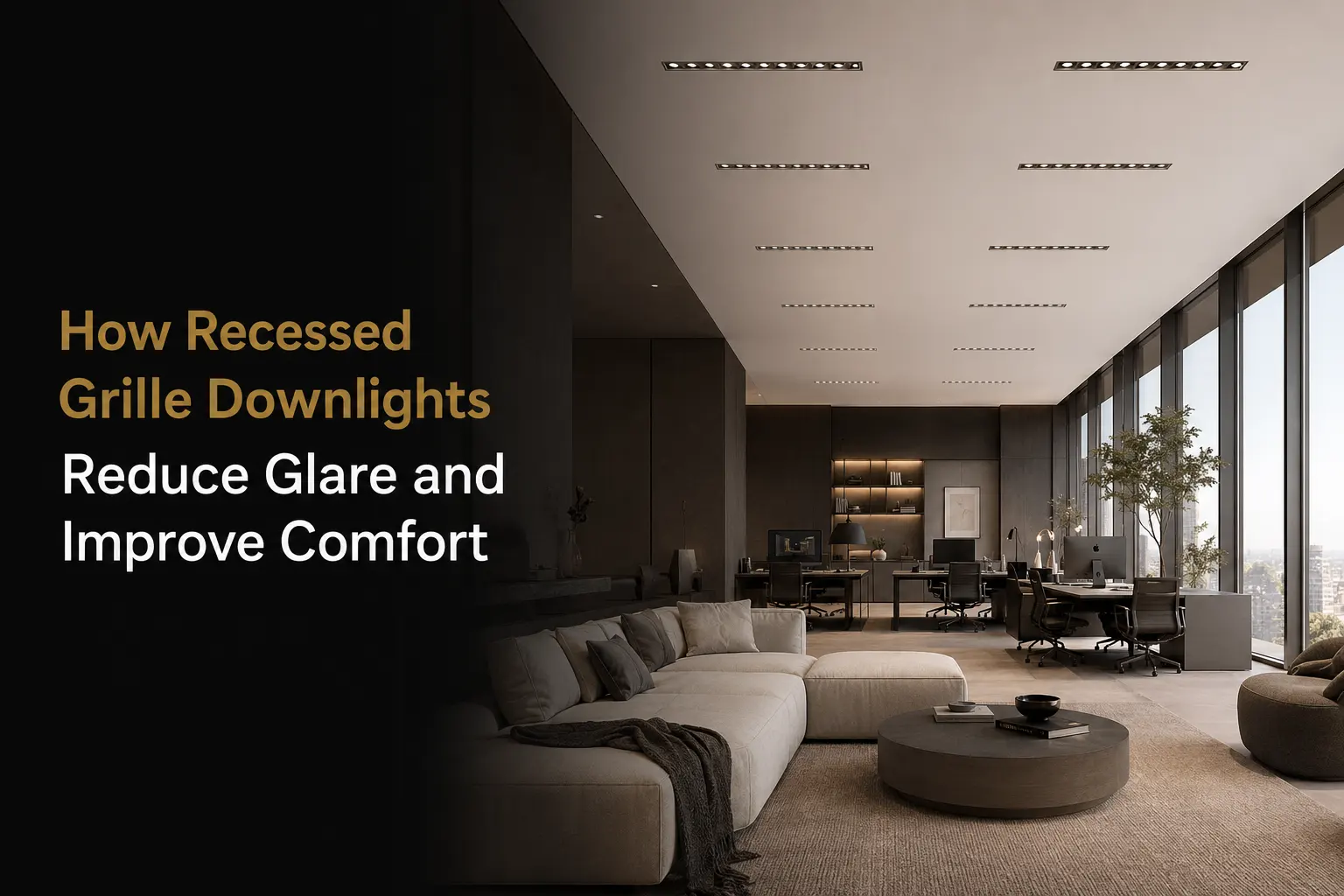
Modern interior design has shifted toward cleaner ceilings, minimalist aesthetics, and layered lighting schemes. As a result, recessed grille downlights have become increasingly popular in residential, hospitality, and commercial projects. Yet many spaces that look visually stunning still suffer from one common issue: glare. Whether you’re relaxing on a sofa, working in a home office, or walking through a hotel corridor, exposed LED light sources can quickly create eye strain and visual fatigue.
This is exactly why anti-glare recessed lighting has become a priority in modern lighting design. By combining deep recessed optics with controlled beam distribution, recessed grille downlights help create softer, more comfortable illumination without sacrificing brightness or architectural aesthetics.
What Are Recessed Grille Downlights?
Recessed grille downlights are a type of recessed ceiling light designed with integrated anti-glare louvers or honeycomb grilles. Unlike standard recessed LED fixtures that expose the light source directly to the eye, these luminaires position the LED module deeper inside the housing.
This design serves two important purposes:
- It reduces direct glare
- It improves beam control
Many modern fixtures also include black reflector technology, matte optical surfaces, and precision optics to further enhance visual comfort.
Because of their ability to deliver low-glare illumination, recessed grille downlights are widely used in:
- Luxury residential interiors
- Office lighting projects
- Boutique retail stores
- Museums and galleries
- Hotels and hospitality environments
For a deeper understanding of glare ratings and lighting ergonomics, the <a href=”https://www.cibse.org/” target=”_blank”>CIBSE lighting guidelines</a> provide useful industry standards for visual comfort.
Why Standard Recessed Lighting Often Causes Glare
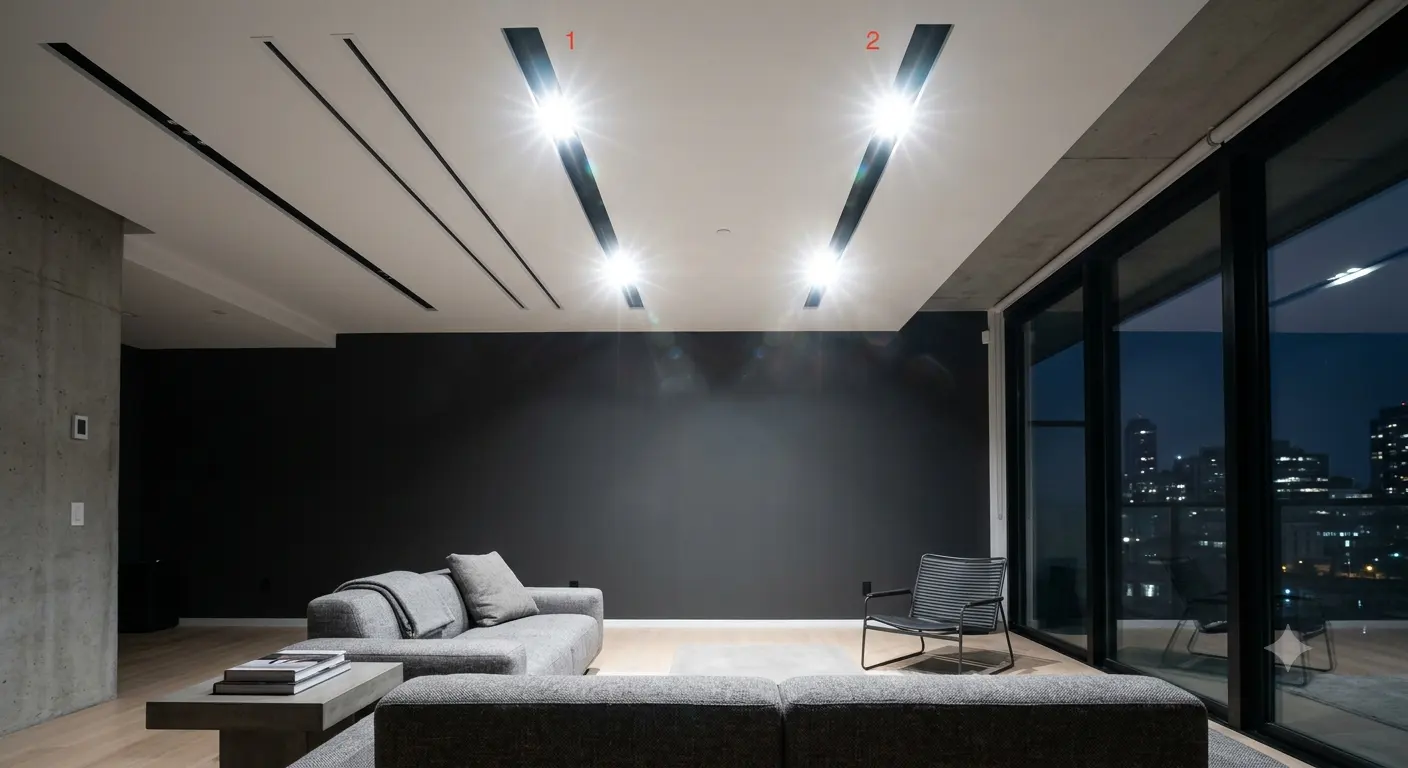
One of the biggest problems with conventional recessed lighting is direct glare.
Many standard downlights are designed with shallow housings and wide exposed light surfaces. While this creates broad illumination, it also means the LED source remains visible from normal viewing angles. When a person looks upward at roughly 30° to 45°, the intense brightness can shine directly into the eyes.
Over time, this may lead to:
| Common Glare Problems | Impact on Users |
|---|---|
| Excessive brightness | Eye strain |
| Exposed LED hotspots | Visual discomfort |
| High contrast lighting | Mental fatigue |
| Screen reflections | Reduced productivity |
This issue becomes even more noticeable in spaces where people spend long periods of time, such as offices, living rooms, conference rooms, and study areas.
How Anti-Glare Recessed Grille Downlights Work
The effectiveness of recessed grille downlights comes from a combination of optical engineering and physical shielding.
Deep Recessed Optics in Low Glare Downlights
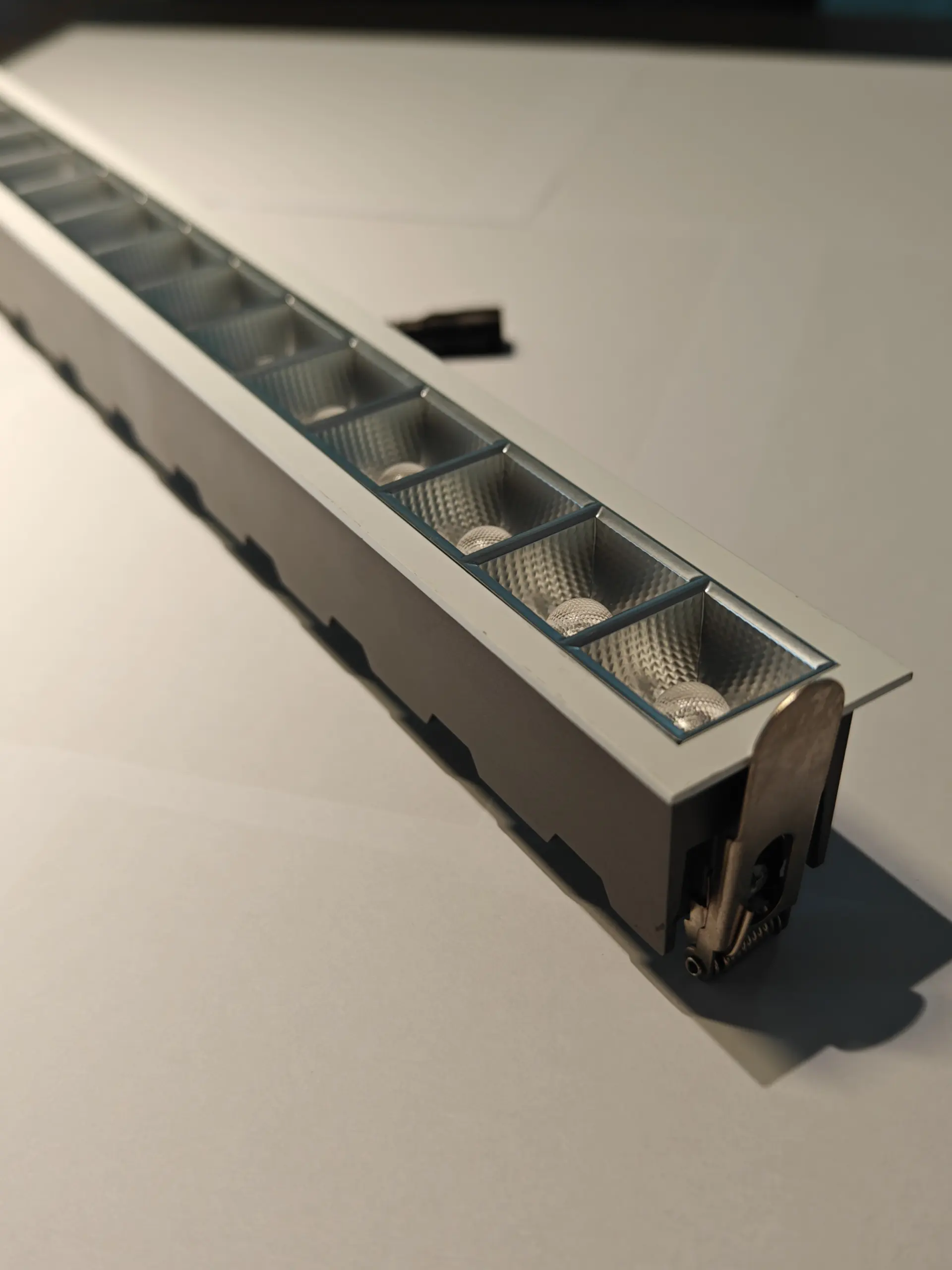
One of the most important anti-glare features is the deep recessed light source.
Instead of positioning the LED flush with the ceiling, the light engine is set deeper inside the fixture. This increases the shielding angle and prevents direct exposure to the brightest part of the LED.
In practical terms, this creates the popular “see the light, not the source” effect often found in luxury hotels and high-end residential projects.
This type of deep recessed LED downlight is especially effective in:
- Living rooms
- Bedrooms
- Lounge areas
- Premium retail environments
Grille-Controlled Beam Distribution in Recessed Ceiling Lights
The grille or louver structure is the defining characteristic of this lighting category.
These micro-baffles control the direction of light and block unwanted high-angle brightness. Instead of allowing stray light to scatter across the room, the grille focuses illumination downward where it is actually needed.
Compared with conventional fixtures, recessed grille downlights offer:
- Better visual comfort
- Reduced spill light
- Cleaner ceiling appearance
- More precise accent lighting
Many professional lighting designers specify fixtures with UGR<19 or even UGR<16 for spaces that require enhanced comfort and reduced glare.
The https://www.cibse.org also emphasizes glare control as a critical factor in human-centric lighting environments.
Black Reflector Technology in Modern Recessed Downlights
Many premium anti-glare recessed lights feature matte black reflector systems, often referred to as “black cup” optics.
These surfaces absorb unwanted reflections inside the luminaire and minimize secondary glare. As a result, the light output appears softer and more refined.
Black louvers are especially popular in modern minimalist interiors because they visually disappear into darker ceiling openings while maximizing glare reduction.
How Recessed Grille Downlights Improve Visual Comfort
Lighting comfort is not only about brightness levels. It also depends on how smoothly light interacts with the human eye.
Better Eye Comfort in Residential Lighting
Harsh lighting forces the eyes to constantly adapt to brightness changes. By softening the beam and reducing direct exposure, recessed grille downlights create a far more relaxing atmosphere.
This is especially valuable in:
- Home theaters
- Bedrooms
- Reading corners
- Open-plan living spaces
Improved Workplace Lighting Performance
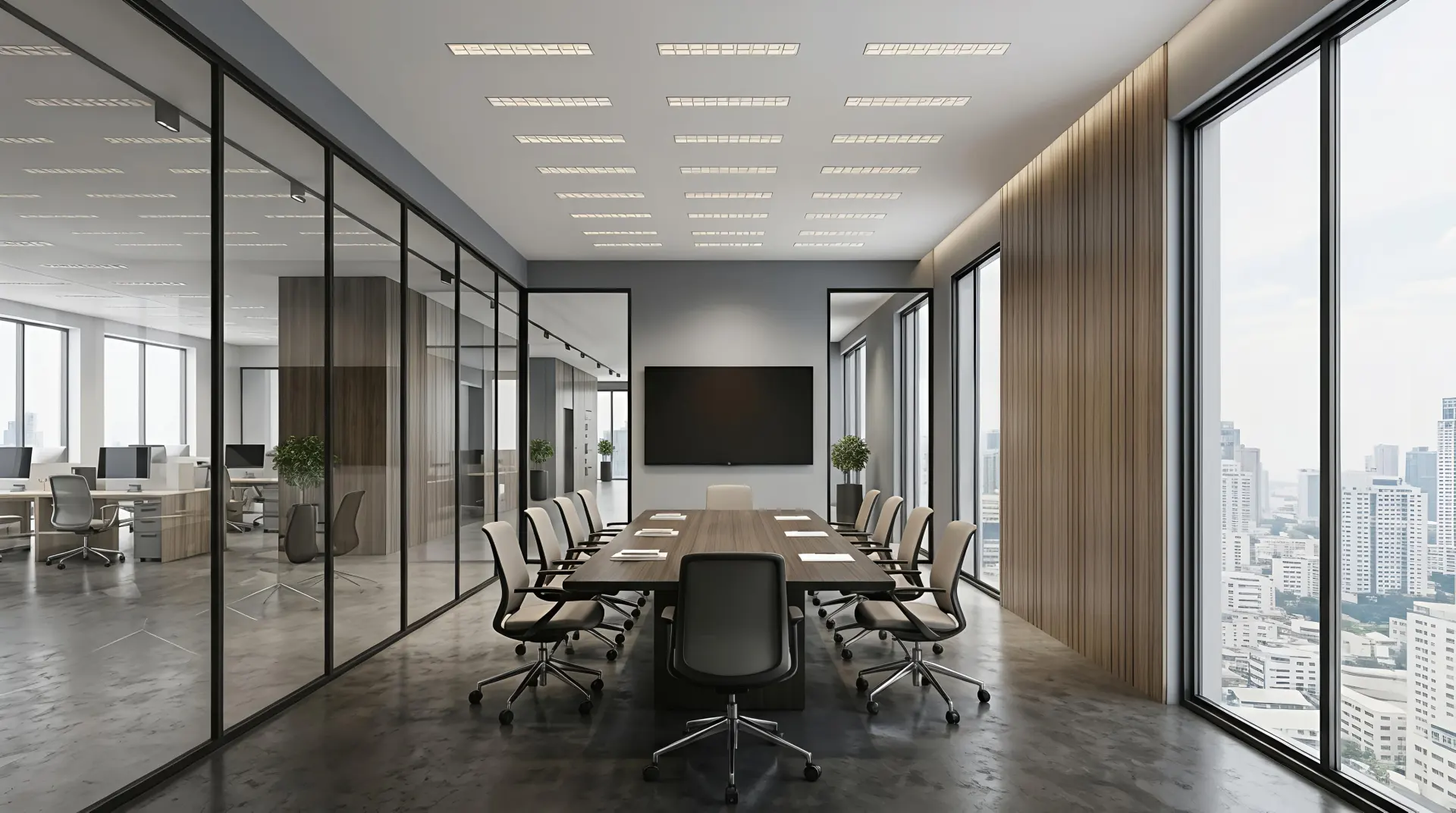
In office environments, glare reduction can significantly improve concentration and productivity.
Low glare recessed lighting helps reduce:
- Screen reflections
- Eye fatigue
- Mental exhaustion
- Visual distractions
That is why anti-glare recessed ceiling lights are increasingly used in modern workplaces and conference rooms.
Enhanced Architectural Atmosphere
Controlled lighting creates cleaner shadows, softer transitions, and stronger material definition.
Instead of flooding the room with uncontrolled brightness, recessed grille downlights help shape the space with intentional layers of light. This creates the sophisticated atmosphere commonly associated with luxury hospitality design.
Best Applications for Recessed Grille Downlights
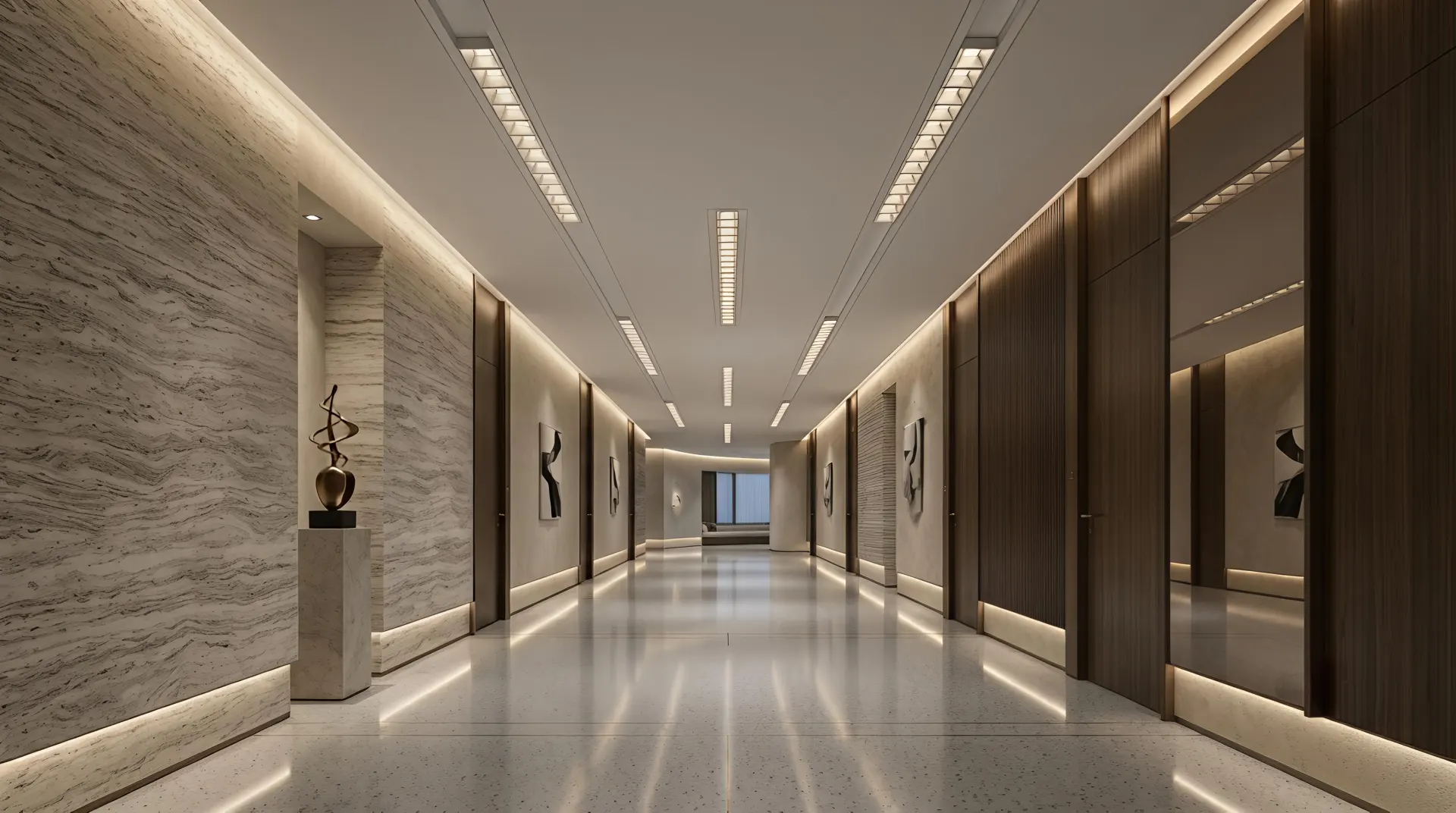
Because of their balance between aesthetics and comfort, these fixtures work well in a wide variety of interiors.
| Application Area | Recommended Use |
| Residential interiors | Ambient and accent lighting |
| Office spaces | Low glare task lighting |
| Retail stores | Highlighting merchandise |
| Hotels | Creating premium atmosphere |
| Galleries & museums | Controlled visual focus |
| Corridors & hallways | Comfortable directional lighting |
For best results, many lighting designers combine recessed grille downlights with concealed linear lighting. This layered approach balances ambient brightness while maintaining a visually calm environment.
How to Choose the Right Anti-Glare Recessed Lighting
When selecting recessed grille downlights, several technical specifications should be considered.
UGR Rating
UGR (Unified Glare Rating) measures perceived glare levels.
- UGR<19: Recommended for offices
- UGR<16: Ideal for premium residential or hospitality spaces
Lower values generally indicate greater visual comfort.
Beam Angle Selection
Different beam spreads serve different purposes:
| Beam Angle | Typical Use |
| 15°–24° | Accent lighting |
| 36° | General residential lighting |
| 60° | Wide ambient illumination |
Color Temperature and CRI
- 3000K creates a warm, relaxing atmosphere
- 4000K works well for offices
- CRI>90 improves color accuracy and material appearance
FAQ About Recessed Grille Downlights
Are recessed grille downlights better than standard downlights?
Yes. They provide significantly better glare control, improved visual comfort, and more precise beam management compared with traditional recessed lighting.
What is the ideal UGR rating for anti-glare lighting?
For most residential and commercial applications, UGR<19 is considered comfortable. High-end projects often target UGR<16.
Are recessed grille downlights suitable for residential spaces?
Absolutely. They are especially effective in living rooms, bedrooms, home theaters, and study areas where visual comfort matters most.
Do black grilles reduce glare more effectively?
Yes. Matte black louvers absorb excess reflections more efficiently than reflective finishes, which helps minimize secondary glare.
Can recessed grille downlights be used for general lighting?
Yes, but they are most effective when combined with layered lighting strategies such as linear lighting, wall washing, or indirect illumination.
Final Thoughts
Good lighting should never dominate the space or create visual stress. The best lighting quietly enhances architecture while making people feel comfortable within it.
By combining deep recessed optics, precision grille control, and advanced anti-glare technology, recessed grille downlights offer a refined solution for modern interiors. Whether used in homes, offices, hotels, or retail environments, they help create spaces that feel calm, elegant, and visually balanced.
As demand for human-centric and low glare lighting continues to grow, recessed grille downlights are becoming an essential part of contemporary architectural lighting design.

