



Commercial Solar Street Lights: Applications, Benefits and Project Solutions
By Vincent
Introduction: Why Commercial Solar Street Lights Are Becoming Essential
In 2026, energy transition is no longer optional—it has become a core indicator of business sustainability, asset value, and long-term competitiveness. For commercial real estate projects such as shopping malls, hotels, and mixed-use developments, lighting systems are undergoing a fundamental shift.
Solar Street Lights are rapidly gaining traction as a practical and scalable solution. Traditional grid-powered lighting is facing rising electricity costs, complex installation, and high maintenance requirements. In contrast, solar-powered systems offer a cleaner, more flexible alternative.
According to industry data, lighting accounts for 25%–35% of total energy consumption in commercial projects, with outdoor lighting contributing a significant share. As electricity prices continue to increase globally, reducing operational costs has become a top priority.
At the same time, the growth of the night economy has raised expectations for safety, ambiance, and visual appeal. This is where Commercial Solar Street Lights stand out—offering off-grid operation, zero electricity cost, and intelligent control.
For further insights on global energy trends, refer to
👉 International Energy Agency
(https://www.iea.org)
What Are Commercial Solar Street Lights?
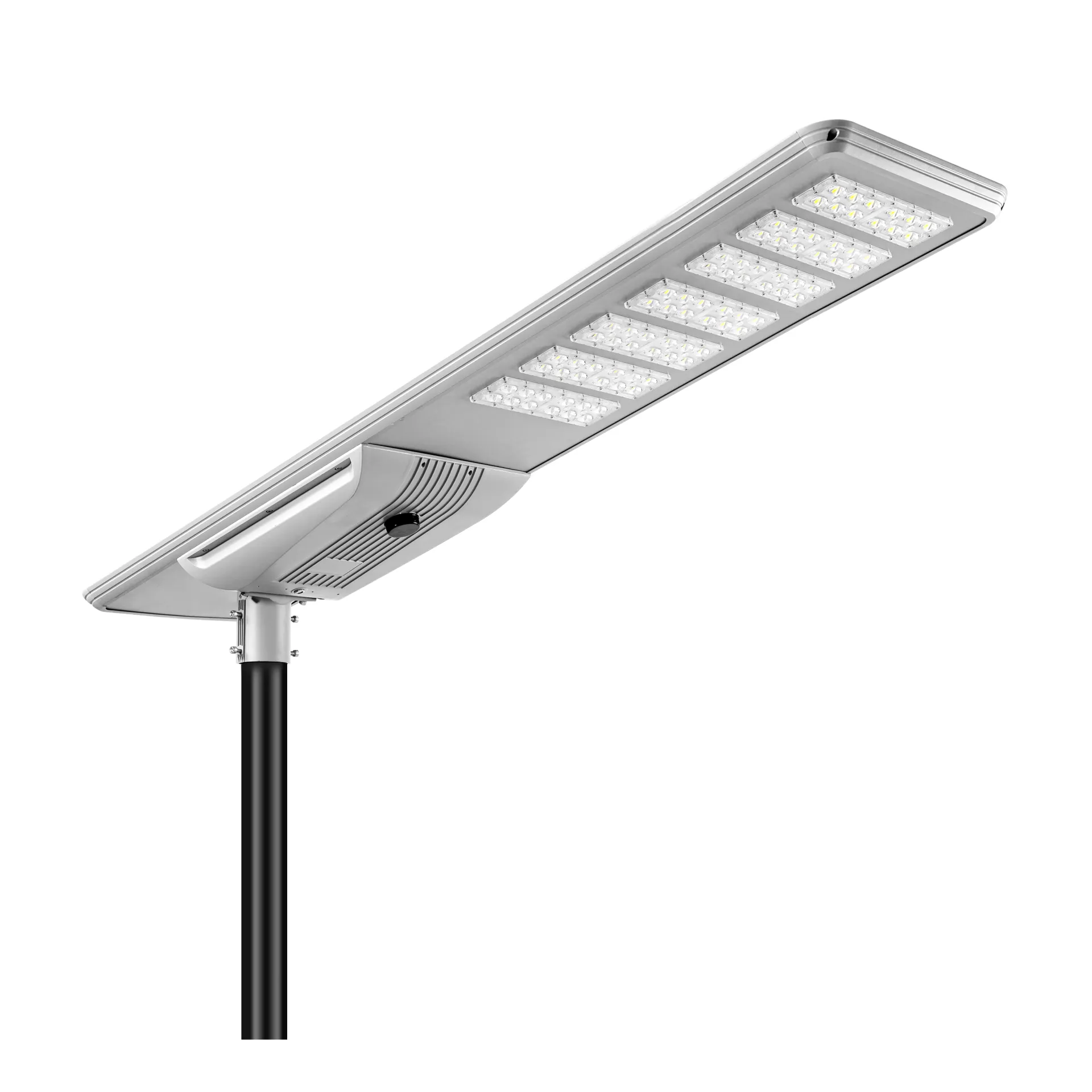
It is outdoor lighting systems designed specifically for commercial environments. They convert solar energy into electricity through photovoltaic panels and power high-efficiency LED lighting.
A typical system includes:
- LED light source
- Monocrystalline solar panel
- Lithium battery (LiFePO4)
- MPPT controller
- Smart control system
In recent years, all-in-one solar street lights have become the preferred choice. These integrate all components into a single unit, making installation faster and improving system reliability.
Commercial vs Municipal vs Residential Solar Lights
| Feature | Commercial Solar Street Lights | Municipal Lights | Residential Solar Lights |
|---|---|---|---|
| Brightness | High (≥180 lm/W) | Medium | Low |
| Battery Backup | 7 days | 3–5 days | 1–2 days |
| Control System | Smart + IoT | Basic timer | Simple sensor |
| Design | Customizable | Standard | Basic |
| Application | Business projects | Roads | Gardens |
Key Applications of Commercial Solar Street Lights
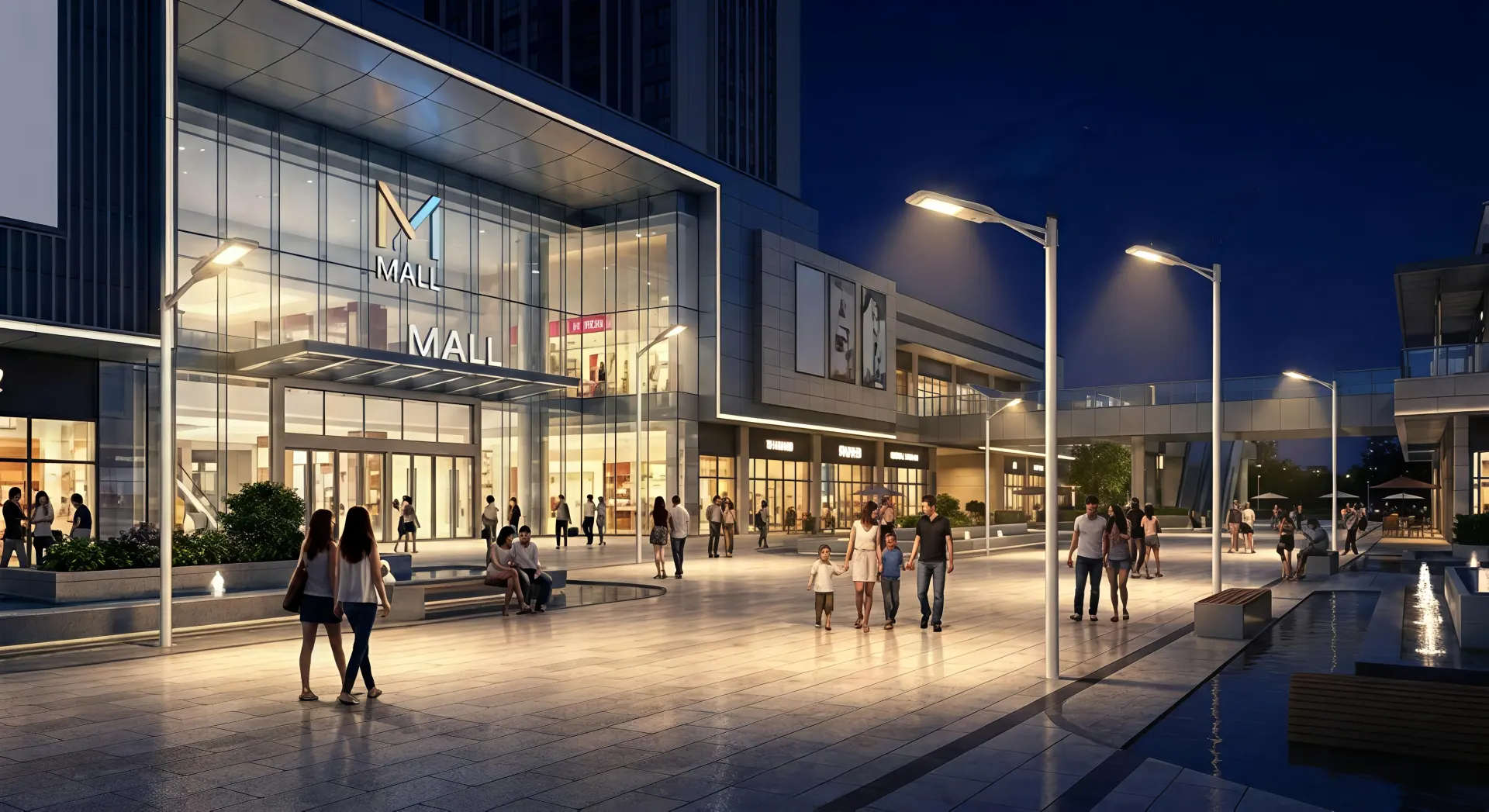
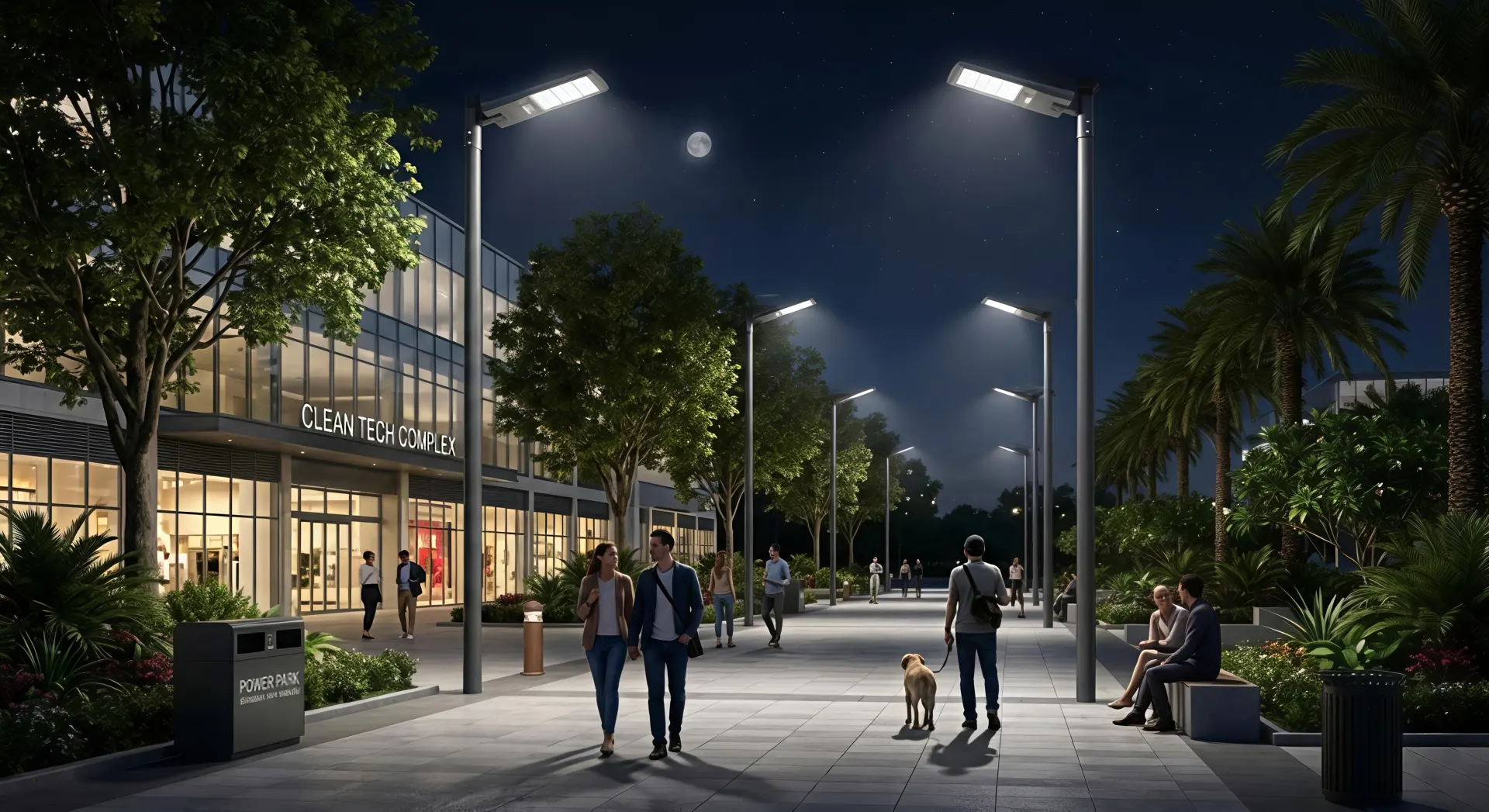
1. Shopping Mall Exteriors and Public Plazas
Lighting in shopping mall surroundings is more than functional—it shapes the first impression.
Commercial Solar Street Lights provide:
- Uniform illumination for safety
- Enhanced architectural visibility
- Reduced installation costs (no trenching required)
They are ideal for mall plaza lighting, outdoor retail zones, and commercial squares.
2. Parking Lot Solar Lighting Solutions
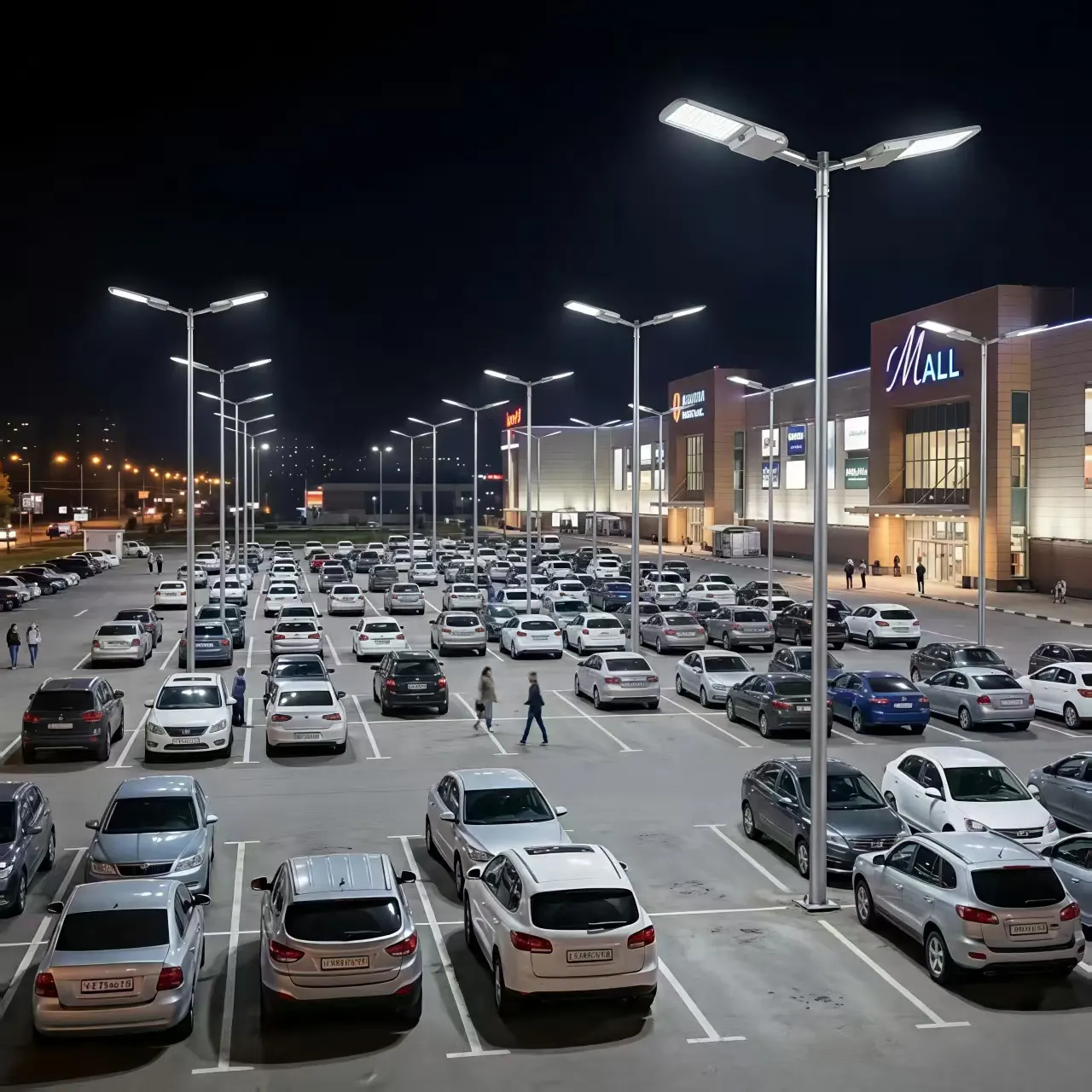
Parking areas require consistent and reliable lighting for safety.
With Commercial Solar Street Lights:
- Large areas can be covered efficiently
- Motion sensors reduce energy consumption
- No underground cabling is needed
These systems are widely used in outdoor parking lot solar lighting projects, especially in areas with limited grid access.
3. Parks and Commercial Landscape Lighting
For commercial parks and tourism-oriented spaces, lighting must balance function and aesthetics.
Solar lighting solutions:
- Blend into landscape design
- Support eco-friendly development
- Enable flexible installation in remote areas
They are perfect for urban parks, cultural tourism projects, and waterfront landscapes.
For sustainable lighting guidelines, see
👉 U.S. Department of Energy
(https://www.energy.gov)
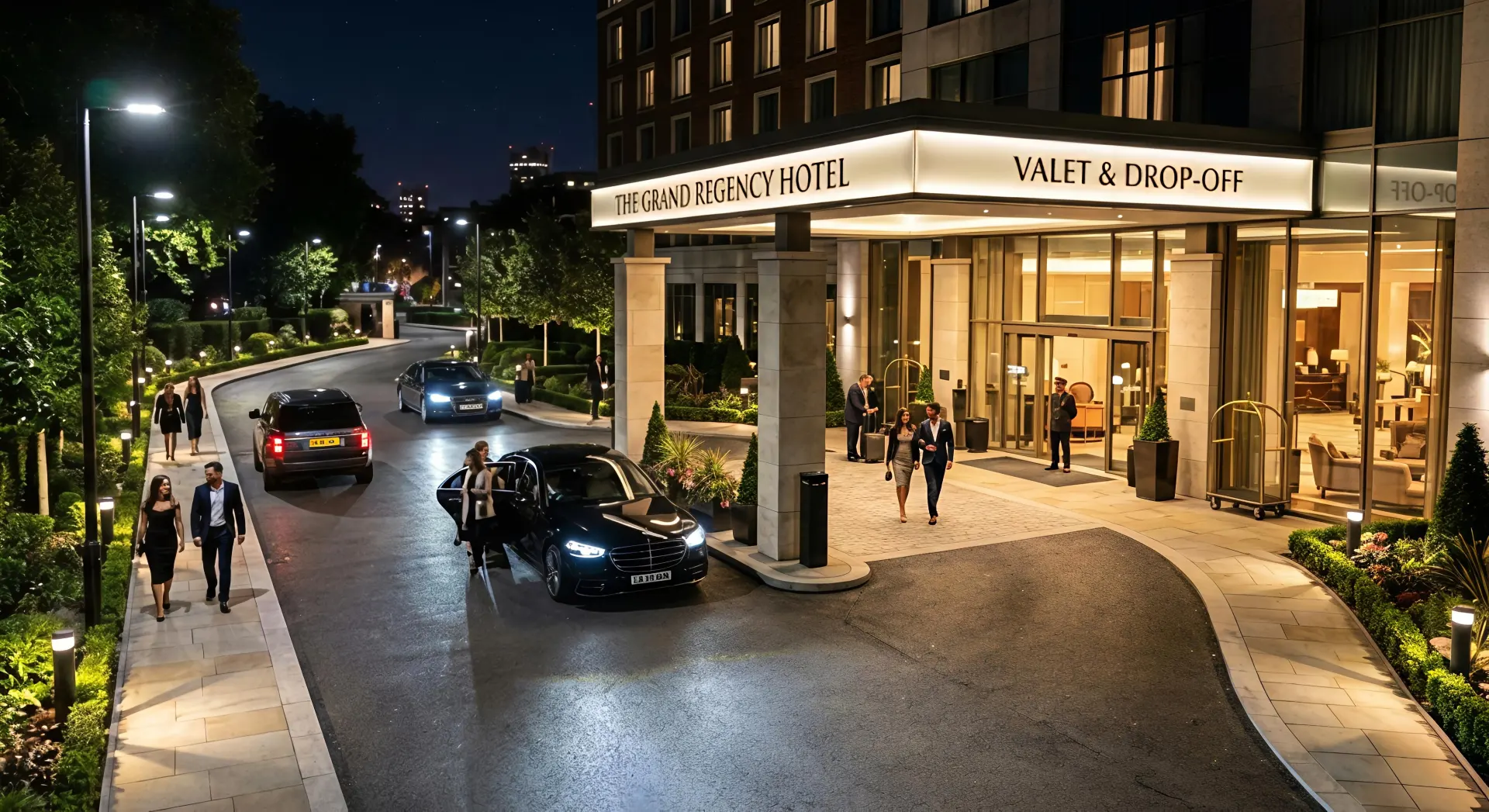
4. Hotel and Resort Outdoor Lighting
In hotels and resorts, lighting directly impacts guest experience.
Commercial Solar Street Lights help:
- Reduce light pollution
- Maintain quiet environments
- Support green hotel certifications
Typical applications include:
- Driveways
- Garden paths
- Resort internal roads
Key Benefits of Solar Street Lights
1. Zero Electricity Cost
No reliance on grid power means long-term savings.
2. Easy Installation
No trenching or cabling required.
3. Sustainable and Eco-Friendly
Supports ESG goals and carbon reduction.
4. Smart Lighting Control
Includes motion sensors, dimming, and remote monitoring.
5. Low Maintenance
Long lifespan reduces service costs.
How to Choose the Right Solar Street Lights
Selection Guide
| Scenario | Recommended Power | Key Features |
|---|---|---|
| Parking Lots | 80W–120W | High brightness, wide coverage |
| Commercial Streets | 40W–80W | Balanced lighting |
| Parks | 30W–60W | Soft lighting, aesthetic design |
| Hotels | 40W–80W | Low glare, warm lighting |
Key Considerations
- Battery capacity (7–15 rainy days backup)
- Solar panel efficiency (>23%)
- Smart control system
- Installation height
All-in-One vs Split Solar Street Lights
For most commercial projects, all-in-one Solar Street Lights are the better option.
Advantages:
- Faster installation
- Higher reliability
- Cleaner design
- Lower maintenance
Split systems are only suitable for:
- Extremely high-power requirements
- Low sunlight regions
Conclusion
The Solar Street Lights are no longer just an alternative—they are becoming the standard for modern outdoor lighting.
From shopping malls and parking lots to parks and hotels, these systems deliver:
- Lower operational costs
- Greater flexibility
- Strong sustainability value
For developers, contractors, and facility managers, investing in Commercial Solar Street Lights is not just about lighting—it is about long-term value, efficiency, and future-ready infrastructure.

