



How to Choose the Best Smart LED Recessed Lights for Commercial Spaces
By Vincent
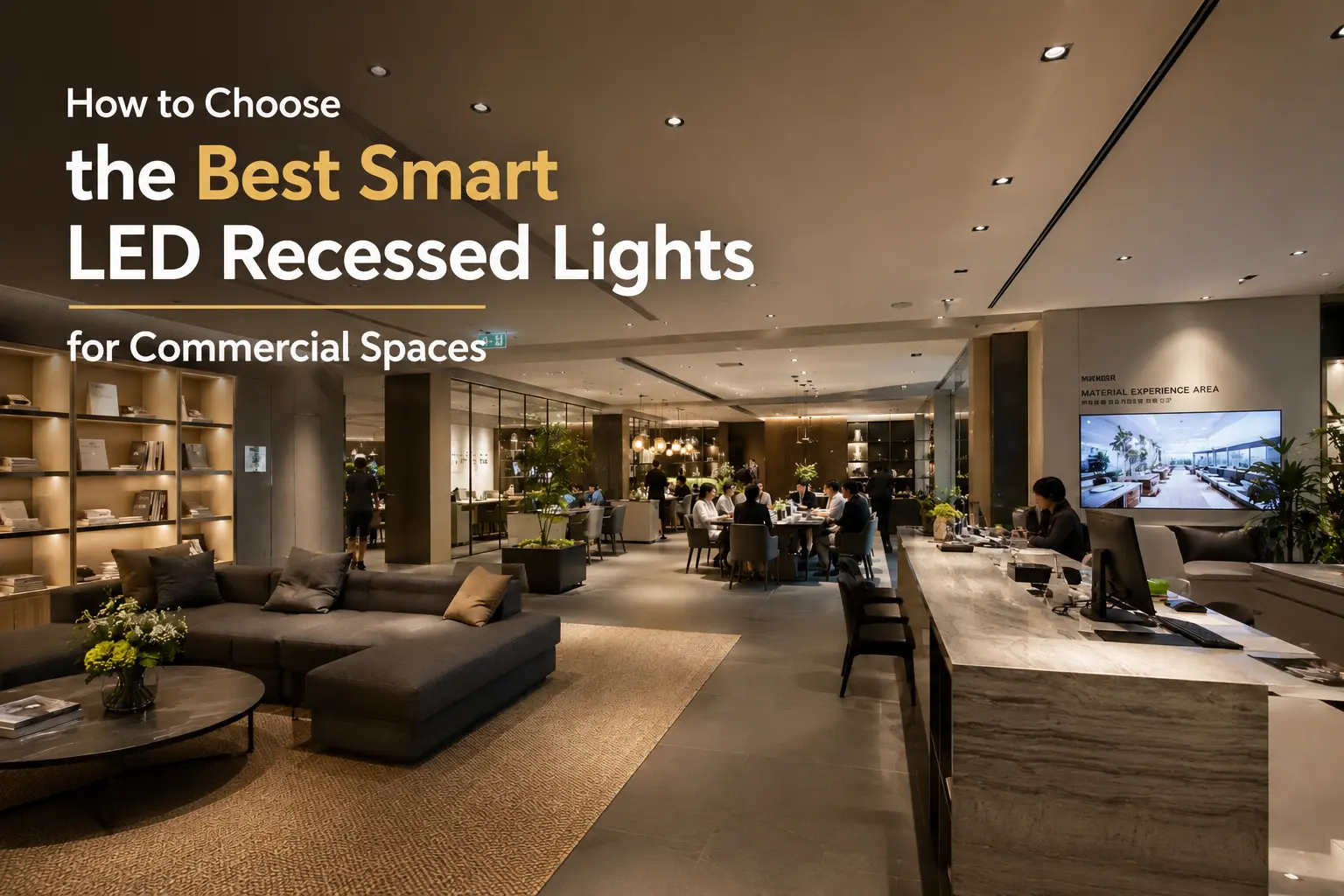
Modern commercial spaces demand far more from lighting than simple illumination. Today, lighting directly impacts energy efficiency, employee comfort, customer experience, and even brand perception. As businesses continue investing in smarter and more flexible environments, Smart LED Recessed Lights have become one of the most popular solutions for offices, retail stores, hotels, healthcare facilities, and modern showrooms.
Unlike traditional lighting systems, smart recessed lighting combines high energy efficiency with advanced digital control, allowing businesses to optimize both operational costs and lighting performance. From daylight-responsive dimming to app-based scene management, modern recessed lighting systems are transforming how commercial spaces operate.
However, with countless products, control systems, and technical specifications on the market, choosing the right solution can quickly become overwhelming for architects, contractors, lighting designers, and project buyers.
This guide breaks down the key factors to consider when selecting commercial smart recessed lighting, including performance standards, glare control, smart ecosystems, installation requirements, and ROI considerations.
Why Smart LED Recessed Lights Are Becoming the Standard in Commercial Spaces
Commercial lighting is no longer just about brightness. Today’s businesses expect lighting systems to deliver:
- Lower energy consumption
- Better visual comfort
- Flexible lighting scenes
- Long-term reliability
- Smarter building integration
This shift is especially noticeable in modern retail stores, offices, hospitality projects, and mixed-use commercial environments.
For example:
- Retailers use intelligent lighting scenes to improve product presentation.
- Hotels create different moods throughout the day using tunable white lighting.
- Offices rely on human-centric lighting to improve employee comfort and productivity.
- Showrooms use precise beam control to highlight textures and architectural details.
As a result, smart commercial downlights are rapidly replacing traditional recessed fixtures in both new construction and retrofit projects.
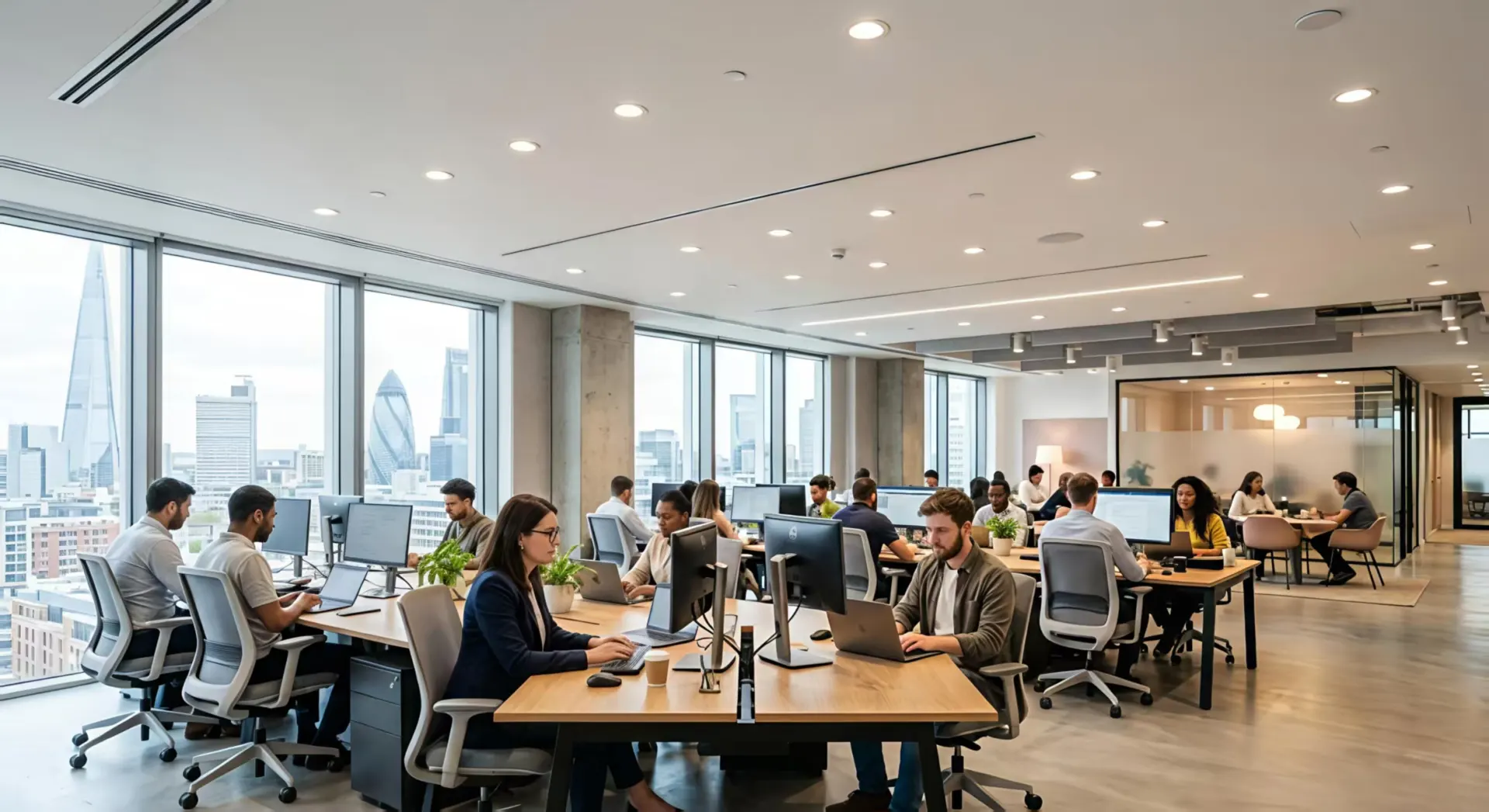
Why Residential Fixtures Cannot Replace Commercial Smart LED Recessed Lights
One of the most common mistakes in commercial projects is using residential-grade fixtures in demanding commercial environments.
While they may look similar externally, commercial recessed lighting is designed to meet much higher standards for durability, heat management, optical performance, and continuous operation.
Operating Hours and Lifespan in Commercial LED Lights
Residential lighting is typically designed for 3–5 hours of daily use.
Commercial environments often require fixtures to operate:
- 12 hours daily
- 16 hours daily
- Or even 24/7
Because of this, commercial-grade fixtures should offer a minimum L70 lifespan of 50,000 hours or more.
This means the fixture still maintains at least 70% of its original lumen output after 50,000 hours of operation.
Higher Lumen Requirements for the Lights in Commercial Buildings
Commercial ceilings are usually much higher than residential spaces.
| Space Type | Typical Ceiling Height | Recommended Lumen Output |
|---|---|---|
| Residential | 2.4m – 2.8m | 600–1200 lm |
| Office Spaces | 3m – 4m | 2000–3500 lm |
| Retail & Hospitality | 4m – 6m | 2500–4000 lm |
This is why many buyers search for terms like:
- brightest smart recessed lighting
- high lumen smart downlight
- commercial recessed lighting solutions
High lumen output becomes essential for maintaining proper illumination levels in large-scale commercial environments.
Thermal Management Matters
Heat is one of the biggest factors affecting LED lifespan and driver reliability.
High-quality commercial fixtures often use:
- Die-cast aluminum heat sinks
- Advanced thermal pathways
- Professional-grade LED drivers
Proper thermal management helps prevent:
- Color shifting
- Premature lumen depreciation
- Driver failure
- Flickering issues
This becomes especially important in projects where fixtures operate continuously for long hours.
Are Smart LED Recessed Lights Worth It for Commercial Projects?
Many project buyers ask:
- Are smart recessed lights worth it?
- Are LED recessed lights worth the investment?
For most commercial applications, the answer is yes — especially when evaluating long-term operating costs.
Energy Savings with High-Efficiency Smart LED Recessed Lights
In commercial projects with hundreds or thousands of fixtures, even small efficiency improvements can significantly reduce electricity costs.
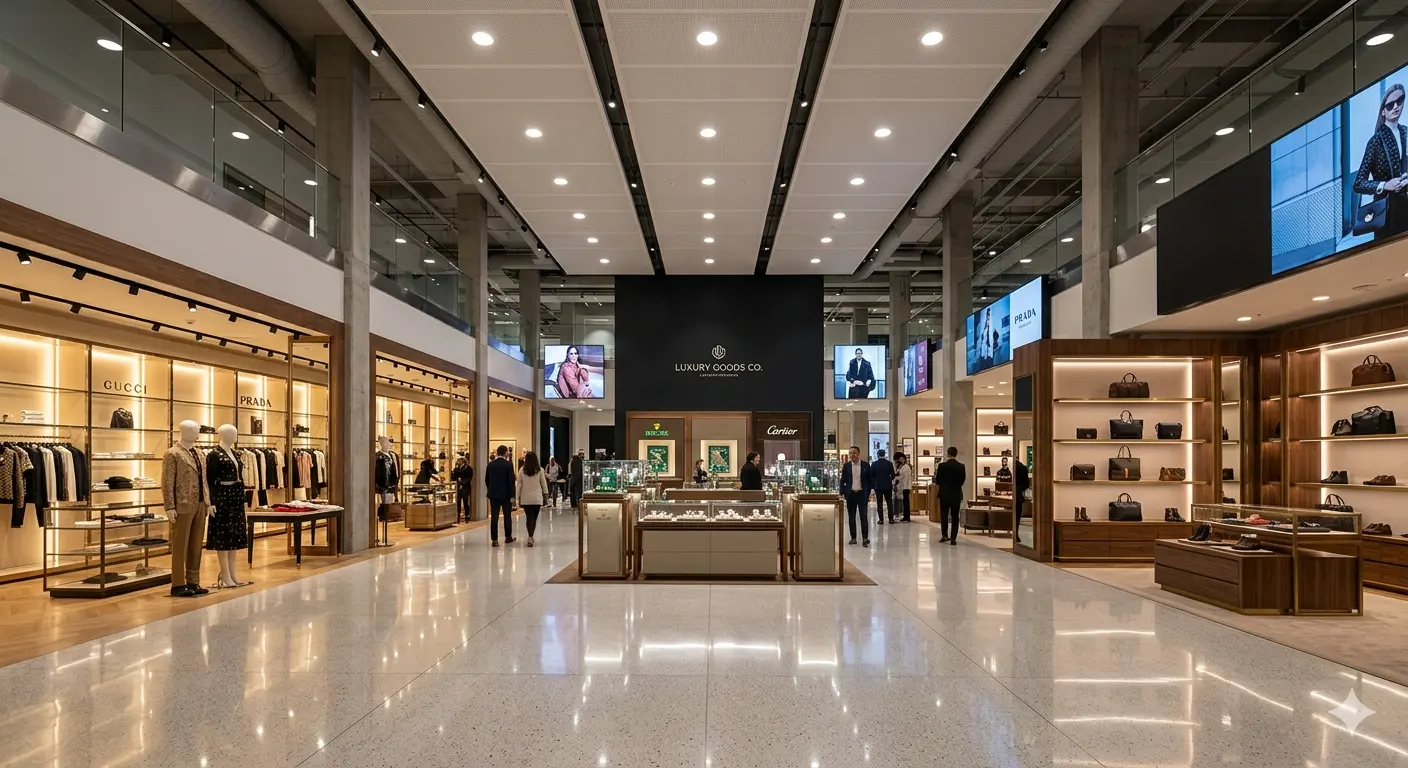
Modern commercial fixtures now commonly achieve:
- 110 lm/W
- 120 lm/W
- 130 lm/W or higher
Higher efficacy means: More light output with lower energy consumption.
This not only reduces electricity usage but also lowers HVAC cooling loads due to reduced heat generation.
For reference:
| Fixture Type | Typical Efficacy |
|---|---|
| Conventional LED Downlight | 80–90 lm/W |
| High-Efficiency Commercial Fixture | 120–150 lm/W |
Smart Lighting Controls Improve Commercial Space Management
Modern smart recessed lighting systems offer much more than app control.
Commercial lighting platforms now support:
- Scene presets
- Group control
- Wireless dimming
- Occupancy sensing
- Daylight harvesting
- Scheduling automation
- Remote monitoring
These features help businesses create more adaptive and energy-efficient environments.
Key Technical Specifications for Smart LED Recessed Lights
Choosing the right fixture requires more than comparing prices.
Several technical specifications directly affect lighting quality, comfort, and long-term performance.
CRI and Color Quality in Smart LED Recessed Lights
Color rendering is critical in commercial environments.
Poor color quality can make products, interiors, and even skin tones appear dull or unnatural.
Recommended standards:
| Application | Recommended CRI |
|---|---|
| Offices & Corridors | CRI ≥ 80 |
| Retail & Hospitality | CRI ≥ 90 |
| Art Galleries & Luxury Retail | CRI ≥ 95 |
For retail applications, R9 values are especially important because they improve the appearance of:
- Red fabrics
- Skin tones
- Food displays
UGR and Anti-Glare Performance in Smart LED Recessed Lights
Brightness alone does not create visual comfort.
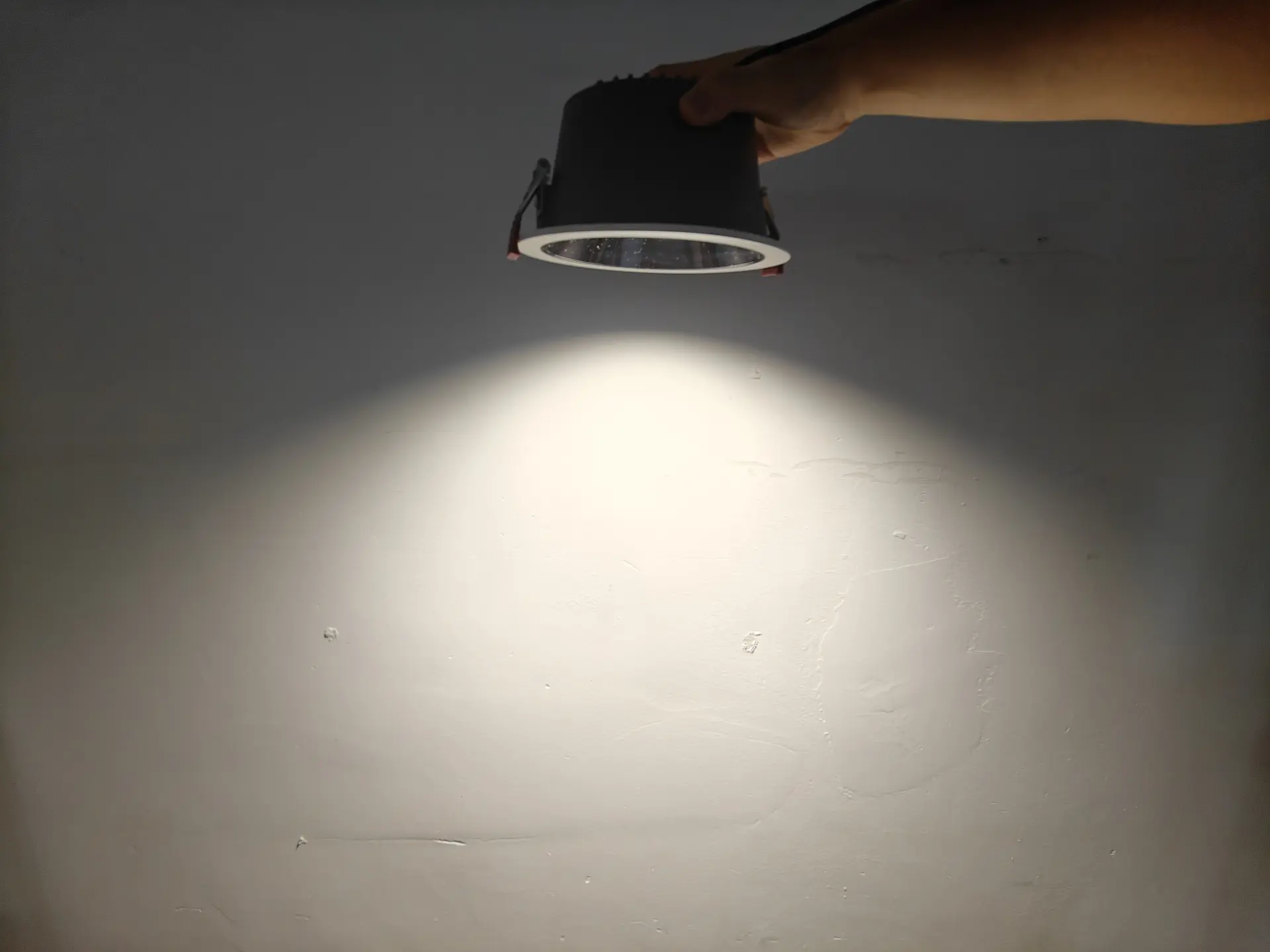
Poor glare control can lead to:
- Eye strain
- Visual fatigue
- Reduced workplace productivity
For office environments, experts typically recommend:
- UGR < 19
Professional anti-glare fixtures often include:
- Deep recessed optics
- Black anti-glare reflectors
- Precision beam control
- Low-glare lens systems
This creates the “see the light, not the source” effect preferred in premium commercial spaces.
Smart Control Systems for Commercial Smart LED Recessed Lights
When evaluating smart lighting systems, compatibility is just as important as fixture quality.
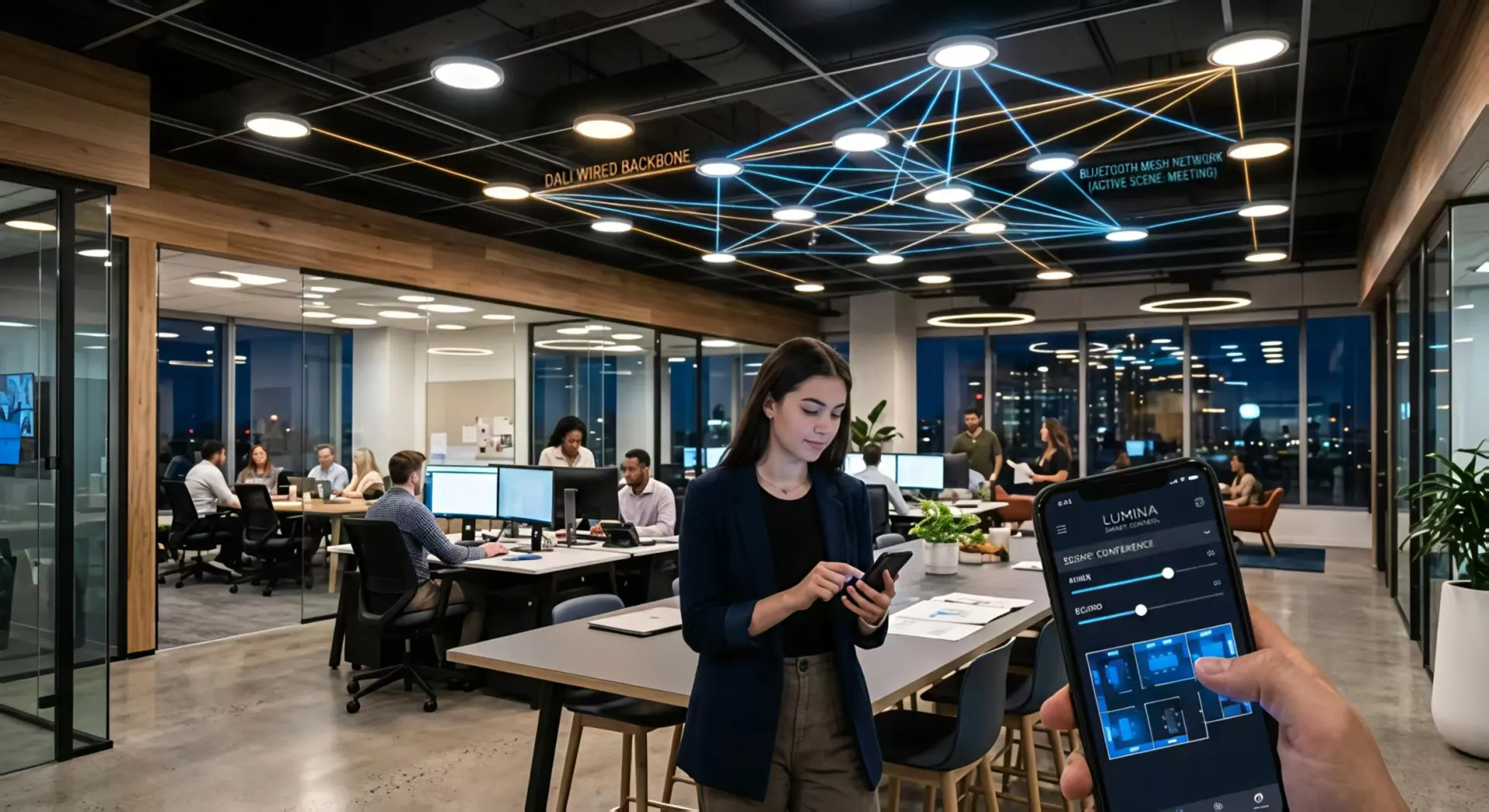
DALI Smart LED Recessed Lights for Large Commercial Projects
DALI and DALI-2 remain among the most popular standards for high-end commercial projects.
Benefits include:
- Individual fixture addressing
- Accurate dimming
- System-wide control
- Status monitoring
DALI systems are widely used in:
- Office towers
- Hotels
- Airports
- Healthcare facilities
Learn more about DALI technology at
DALI Alliance
Wireless Smart LED Recessed Lights for Retrofit Projects
Wireless protocols such as:
- Zigbee
- Bluetooth Mesh
- Casambi
have become increasingly popular in retrofit applications because they reduce rewiring costs.
Wireless systems are ideal for:
- Flexible office spaces
- Retail renovations
- Smart building upgrades
For additional information about Bluetooth Mesh lighting, visit
Bluetooth SIG
Human-Centric Smart LED Recessed Lights for Offices
Human-centric lighting is becoming a major trend in workplace design.
These systems automatically adjust:
- Brightness
- Color temperature
throughout the day to simulate natural daylight cycles.
Typical operation includes:
- Cool white light in the morning for alertness
- Neutral light during work hours
- Warm light in the evening for relaxation
This approach may help improve employee comfort and workplace wellbeing.
Recommended Smart LED Recessed Lights for Different Commercial Applications
Different commercial environments require different lighting priorities.
Smart LED Recessed Lights for Office Spaces
Recommended priorities:
- UGR < 19
- Flicker-free dimming
- Daylight harvesting
- Human-centric lighting
Recommended lumen range:
- 2000–3500 lm
Smart LED Recessed Lights for Retail Stores and Showrooms
Recommended priorities:
- CRI ≥ 90
- Adjustable beam angles
- Smart scene control
- Precise accent lighting
Recommended aperture sizes:
- 4-inch to 6-inch
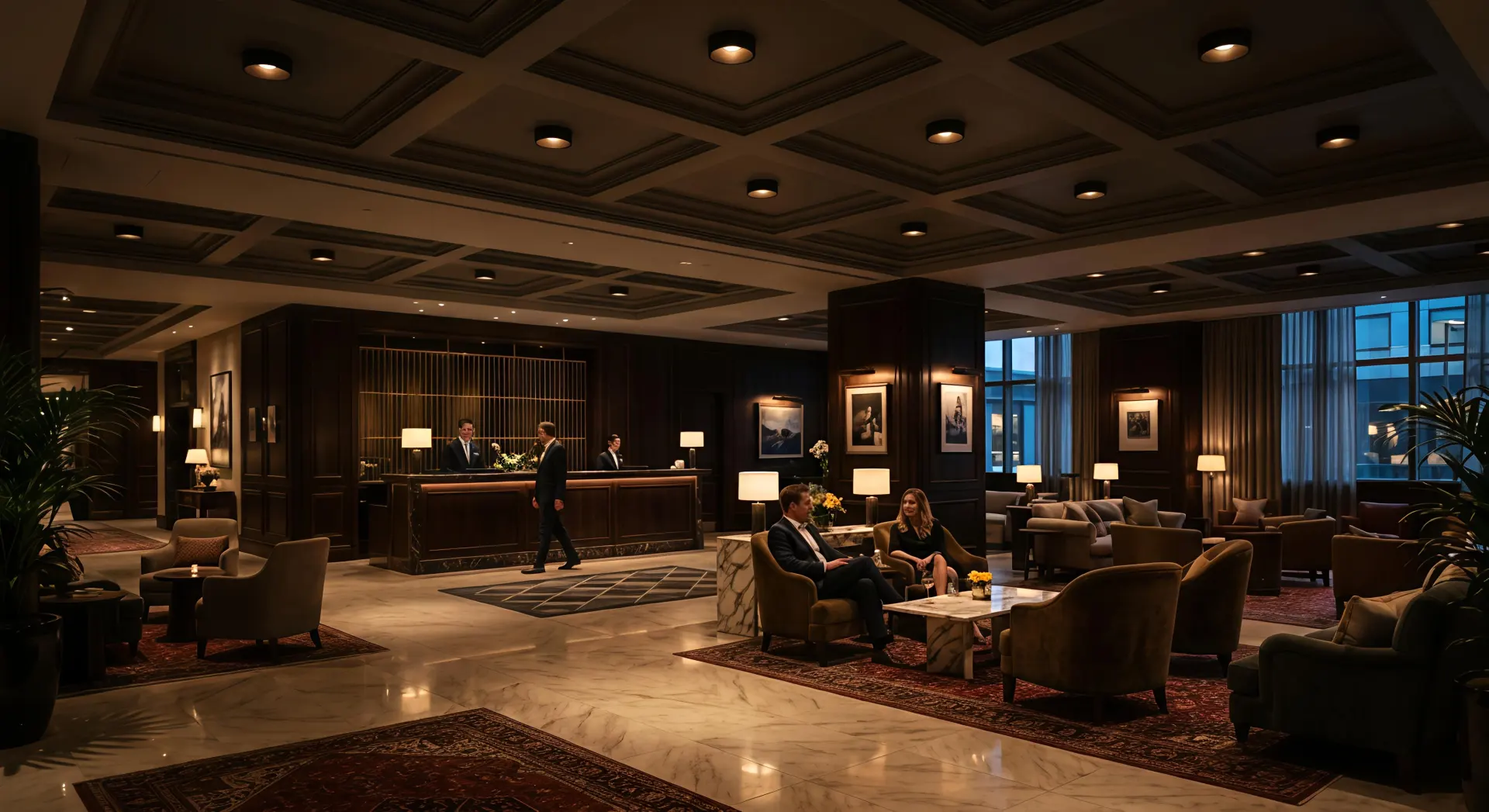
Smart LED Recessed Lights for Hospitality Projects
Hotels and hospitality spaces prioritize atmosphere and architectural aesthetics.
Recommended features:
- Warm dimming
- Deep anti-glare design
- Tunable white lighting
- Seamless integration with control systems
Installation Considerations for Smart LED Recessed Lights
Many buyers search for:
- how to install smart recessed lights
- do recessed lights need housing
- retrofit smart recessed lights
Installation simplicity is becoming increasingly important in commercial projects.
Key considerations include:
- Existing cutout compatibility
- Driver accessibility
- Retrofit capability
- Ceiling clearance requirements
- Wired vs wireless control systems
Simpler installations reduce:
- Labor costs
- Downtime
- Project complexity
Compliance and Certifications for Commercial Smart LED Recessed Lights
Commercial projects often require strict compliance with electrical and building regulations.
Important certifications may include:
- UL
- ETL
- CE
- ENERGY STAR®
- DLC Premium
In North America and Europe, energy-certified lighting products may also qualify for utility rebates and government incentives.
Some projects can recover 20–50% of lighting upgrade costs through rebate programs.
ROI of Smart LED Recessed Lights in Commercial Projects
Thanks to:
- High efficacy
- Smart dimming
- Occupancy sensing
- Daylight harvesting
many commercial lighting upgrades now achieve payback periods of:
- 1.5 to 3 years
Beyond energy savings, businesses also benefit from:
- Lower maintenance costs
- Better customer experiences
- Improved workplace comfort
- Enhanced architectural appearance
Final Thoughts on Choosing Smart LED Recessed Lights
Selecting the right commercial recessed lighting system is not simply about choosing a fixture with the lowest price.
It is a long-term investment in:
- Energy efficiency
- User comfort
- Smart building integration
- Operational flexibility
- Brand experience
The best commercial lighting systems combine:
- High efficacy
- Excellent glare control
- Reliable smart controls
- Long lifespan
- Flexible installation options
As commercial spaces continue moving toward intelligent building ecosystems, well-designed recessed lighting will play an increasingly important role in both sustainability and user experience.
FAQ
Q: Is the lights for commercial spaces?
A: Yes. They provide better energy efficiency, automation, and lighting flexibility compared to traditional fixtures.
Q: What is the best color temperature for commercial recessed lighting?
A: It depends on the application:
- Offices: 4000K–5000K
- Retail: 3000K–4000K
- Hospitality: 2700K–3000K
Q: Does it require a hub?
Some systems require a gateway or hub, while others use direct Bluetooth or WiFi communication.
Q: What is considered high efficacy for commercial recessed lighting?
Generally:
- 90 lm/W is acceptable
- 120–150 lm/W is considered high efficiency
Q: Are wireless smart lighting systems reliable for commercial projects?
Yes. Modern Bluetooth Mesh and Zigbee systems are widely used in commercial retrofit and smart building projects.
Q: How long do commercial smart recessed lights last?
Most high-quality commercial fixtures are rated for:
- 50,000 to 100,000 hours
depending on operating conditions and thermal management quality.

